

At 62, a lot of Americans are quietly mourning a part of life they assume is over. In plenty of European couples, it’s still happening, still talked about, and still treated like a normal part of health.
The headline sounds like clickbait until you look at the numbers.
Across several European surveys, a large share of adults in their 60s and early 70s report they’re still sexually active, and many report they’re satisfied, even when health conditions are present. Comparable U.S. surveys show older Americans remain active too, but the overall rates are often lower, and the drop-off can be steeper for women.
No, this is not “Europeans are hornier.”
It’s three boring forces, repeated across studies:
- partner availability
- health and mobility
- whether symptoms get treated or ignored
If you’re an American reader thinking about Europe, or just trying to understand why your peers abroad seem less resigned, this is the part nobody explains.
It’s not culture as in “Europe is sexy.” It’s culture as in “people treat sexual health like health.”
General info only. If you have pain, bleeding, or big changes in function, talk to a qualified clinician.
The Numbers Are Not Subtle

Start with the U.S. baseline most researchers cite: the National Social Life, Health, and Aging Project work led by Lindau and colleagues (older adults 57–85). In that dataset, the share reporting sexual activity in the past year declines with age: 73% (57–64), 53% (65–74), and 26% (75–85).
Now compare that with a probability survey across four European countries (Norway, Denmark, Belgium, Portugal) of adults 60–75. In that cross-national dataset, the share reporting they were sexually active in the past year was higher: in men, 83% to 91%, and in women, 61% to 78%, depending on country.
Even inside Europe, it varies. The point is that the “over 60 equals no sex” story does not match the data, and in several European samples, it looks even less true.
Also, a reality check: definitions matter. Some studies count “sexual activity” broadly, others focus on intercourse, and some focus on partnered activity. So don’t obsess over a single number. Look at the pattern.
The pattern is that a meaningful share of European adults in their 60s and early 70s are still active, and the biggest predictors are surprisingly practical.
Not romance. Not youth.
Partnership status, health, and whether people get support for the unglamorous problems.
“More Sex” Often Means “More Partnered People, Still Together”
This is the first quiet reason European couples look more active.
If you do not have a partner, “sexual activity” becomes harder. Not impossible, but different. And across aging populations, partner loss is a major driver of declining sexual activity, especially for women.
Many U.S. declines in reported activity are explained by widowhood, illness, and partner availability, not a sudden disappearance of interest. That pattern shows up in American research and in European research, over and over.
Here’s what Americans miss when they turn it into a culture story.
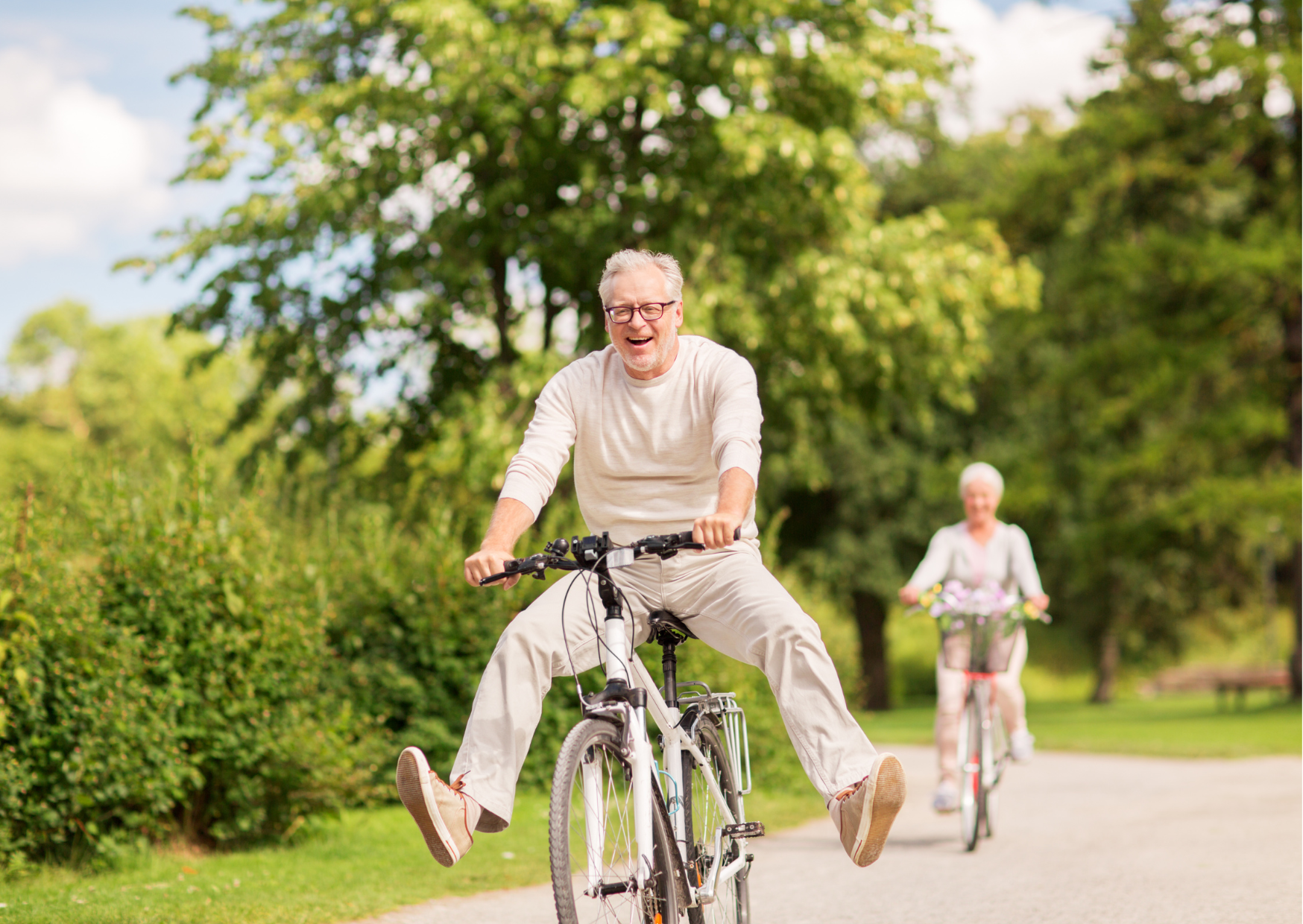
Europe has a long tradition of couples building life around proximity and routine. More walking, more shared meals, more time in the same physical space. That doesn’t automatically create desire, but it does support intimacy in a way that “separate cars, separate schedules, separate stress” often doesn’t.
And European older adults can also be more open to relationship forms that preserve desire.
Living apart together relationships are a real phenomenon in Europe, including among older adults. For some people, separate homes and chosen togetherness keeps the relationship from turning into constant friction.
So yes, partnership status matters, but so does what partnership looks like.
If you want to understand why a couple is still sexually connected at 65, you often find something boring behind it: less isolation, more routine, and fewer years spent living like roommates who share a mortgage.
Health Predicts Sex Better Than “Libido,” and Europe Ages Differently
There’s a reason so many studies land on the same conclusion: sexual activity in later life is closely tied to self-reported health.
When you’re exhausted, inflamed, sedentary, stressed, sleeping badly, and managing multiple medications, intimacy becomes another task. Even if you love your partner.
European countries vary, but many have older adults who walk more as part of daily life. That shows up in bodies.
Walking is not a moral virtue. It’s circulation, stamina, mood, sleep, and joint function. Those are the foundations of sexual activity at 60+.
In several datasets, the story is not “older adults stop wanting sex.”
It’s “older adults stop feeling well enough.”
This is where Americans get trapped. They try to fix intimacy with a romance strategy, when the real fix is a body strategy: sleep, mobility, pain management, cardiovascular health, and medication review.
In English data on older adults’ sexuality, health conditions reduce activity, but a lot of people are still active even with health issues. That matters because it tells you something hopeful: ill health changes sex, but it doesn’t automatically end it.
When people have support and treatment, activity persists longer.
Menopause Care Is a Major Divider, Especially for Women

If you want the no-sugar-coating truth, here it is.
Many American women stop having sex after 50 not because they “lost interest,” but because it starts to hurt, or it stops being rewarding, or they feel dismissed.
Genitourinary syndrome of menopause is common and treatable. Vaginal dryness, irritation, and pain with sex can be addressed with local therapies and, when appropriate, systemic strategies. The tragedy is how many women are told to tolerate it, or get handed a vague suggestion and no follow-up.
European care is not perfect. But in many European settings, there’s less cultural panic about menopausal hormone therapy and more routine use of targeted treatments, especially local vaginal estrogen when appropriate. In guideline-driven systems, symptom relief is treated as legitimate medicine, not vanity.
When women’s symptoms are treated, couples stay sexually active longer. It’s not mysterious.
It’s also why “European couples” look different. A couple can only be intimate if both bodies are supported.
And if you’re wondering why American doctors hesitate, that’s largely the shadow of the WHI era and decades of fear baked into practice. That’s the previous article in this batch for a reason.
In plain terms: less untreated pain means more intimacy.
Erectile Dysfunction Is Treated Like a Normal Condition, Not a Personal Failure

This is the male side of the same story.
Erectile changes happen with age. Vascular health changes. Nerves change. Medication side effects show up. Stress shows up. Alcohol shows up.
In a lot of American marriages, ED becomes a silence problem. Men feel ashamed. Women avoid initiating to spare feelings. Couples slowly stop trying.
European older adults are not magically immune to shame, but the clinical framing can be more straightforward: ED is often treated as a common health issue, and it’s discussed in primary care settings as part of overall health.
When a couple treats ED as a medical and relational problem, not a masculinity crisis, they keep intimacy alive.
Also, European couples often broaden what counts as sex earlier. Less “performance or nothing,” more “affection, touch, and pleasure that works with the body you have.”
This isn’t ideology. It’s adaptation.
If your only definition of sex is the most mechanically demanding version, the odds of giving up after 60 go up fast.
If your definition includes touch, closeness, oral intimacy, and other forms of connection, activity stays higher, and satisfaction can stay surprisingly stable.
That pattern shows up in qualitative work and in broader discussions of aging sexuality.
The Script Is Different: Less Performance, More Practicality
One of the most underrated differences between older couples who stay connected and couples who fade out is the story they’re living inside.
A lot of Americans absorbed a performance script: sex is youthful, spontaneous, athletic, and validation-based.
That script collapses after divorce, after menopause, after a health scare, after grief, after 20 years of work stress. Then people assume the whole thing is over.
European couples are not immune to media scripts, but many have a more pragmatic relationship to sex in later life. The conversation is allowed to be plain.
Plain conversation prevents drift.
- “This hurts now.”
- “This medication changed things.”
- “I want more affection.”
- “I miss you.”
- “Let’s talk to a doctor.”
It’s not sexy, but it works.
Research in older European couples highlights the role of relationship satisfaction, intimacy, and communication as correlates of sexual well-being. That sounds obvious until you notice how many couples never build a structure for those conversations.
If you want a simple translation: European older couples are often less embarrassed to treat sex as part of normal life maintenance.
They talk about it the way they talk about sleep, knees, and cholesterol.
The Real “Why,” in One Line
When studies show higher activity in some European samples, it’s not a magic culture.
It’s this:
more support for the body, more acceptance of aging intimacy, and less shame around getting help.
And if you’re waiting for your libido to return on its own, you’re using the wrong lever.
The lever is treating sexual function as health.
Because at 60+, the biggest threat to sex is not aging.
It’s avoidance.
A 7-Day Reset for Couples Who Want Intimacy Back After 60
This is not a “spice it up” plan. It’s a stability plan. It’s designed to rebuild comfort, trust, and physical readiness without turning sex into a performance review.
Day 1: Agree on a shared definition
Talk for 15 minutes and define what counts as intimacy this week. Include touch, kissing, closeness, not just intercourse. This removes pressure.
Day 2: Fix the sleep leak
Pick one sleep habit you can change for seven days. Earlier screens off, less late alcohol, cooler room, a short walk after dinner. Better sleep is libido’s cheapest ally.
Day 3: Do one body check that is not cosmetic
A brisk walk, mobility work, or light strength. Not to “get sexy.” To feel better in your body. Energy and circulation matter.
Day 4: Make the medical list
Write down what has changed: pain, dryness, ED, low desire, medication changes, depression, anxiety, blood pressure issues. This becomes your appointment agenda. Name the problem so it stops being a fog.
Day 5: Schedule a real healthcare conversation
If pain or ED is part of the picture, schedule a clinician visit that explicitly includes sexual health. Do not bury it at the end of a rushed appointment. Ask directly.
Day 6: Do one low-pressure intimacy session
Think: shower together, massage, making out, lying close, touching without an “end goal.” The goal is comfort and connection, not scoring points.
Day 7: Review without blame
Ask two questions: What felt good this week? What made things easier? Then choose one change to keep. Keep it boring. Consistency beats intensity.
If you do nothing else, do this: stop treating sex after 60 like a youth test you’re failing, and start treating it like a health and relationship domain you can actively support.
That’s what the couples who keep it going are doing, whether they call it that or not.
What This Means for Americans Considering Europe
If you’re reading this because you’re planning a move, the takeaway is not “Europe will fix your sex life.”
The takeaway is that Europe often makes it easier to build the conditions that support intimacy in later life:
- more walking without thinking
- less daily chaos
- more normalized medical discussions about menopause and sexual function
- less cultural permission to quietly give up
But you can also bring those conditions into your life in the U.S. if you stop waiting for motivation and start building a system.
The most European thing you can do is not moving.
It’s treating intimacy like part of adult life maintenance, and getting help early, before avoidance becomes your new normal.

About the Author: Ruben, co-founder of Gamintraveler.com since 2014, is a seasoned traveler from Spain who has explored over 100 countries since 2009. Known for his extensive travel adventures across South America, Europe, the US, Australia, New Zealand, Asia, and Africa, Ruben combines his passion for adventurous yet sustainable living with his love for cycling, highlighted by his remarkable 5-month bicycle journey from Spain to Norway. He currently resides in Spain, where he continues sharing his travel experiences with his partner, Rachel, and their son, Han.