
You can be eating lunch on a Spanish terrace or walking a Portuguese riverfront in six months, but only if you treat residency like a paperwork project, not a daydream.
What “Still Offering Residency” Really Means in 2026
A lot of Americans hear “Europe is closing the doors” and assume it’s over.
It’s not over. It’s just more honest now.
Most of the residency paths that still work for Americans fall into two buckets: you don’t need a local job, or you already have income from elsewhere. Europe is fine with you being here, as long as you’re not about to become a public expense.
That’s the quiet rule underneath all the glossy expat stories. The bar is not “Do you love the culture.” The bar is Can you support yourself, prove it on paper, and keep proving it later.
The countries below are “still offering residency” in the only way that matters: there’s a legal route that a normal, non-billionaire American can actually take. Not a loophole. Not a unicorn. Not a golden visa fantasy that requires throwing money at property in a housing crisis.
You’ll notice something else. The easiest places on the map are not always the easiest on the ground.
Consulates behave differently. Local offices have their own rhythms. Some countries are fast but picky. Some are slow but forgiving. And some are friendly until renewal, when they suddenly want every document you’ve ever touched, translated, stamped, and presented in triplicate.
If you want the blunt version: residency is a recurring subscription, paid in documents, patience, and cash flow. You either build a system for it, or it eats your year.
The Dossier You’ll Build No Matter Which Country You Pick
Here’s the part nobody puts in the dreamy relocation video: the country choice matters, but the dossier matters more.
Most of these programs want the same core proof, just dressed up with local flavor:
- Income and assets: pension statements, dividends, rental income, bank balances, brokerage statements, pay stubs if you’re remote.
- Health coverage: private insurance that meets local requirements, usually with full coverage and no weird gaps.
- Clean record: background checks that are recent, properly apostilled, and sometimes translated.
- Housing: a lease, deed, or official accommodation proof. Not “I’ll figure it out after I land.”
- Consistency: you are trying to convince a bureaucrat that you are stable, not improvising.
This is where Americans get blindsided. In the U.S., you can often “explain” your way through a process.
In much of Europe, you either have the document in the correct format, or you don’t. Your story is not the point. Your paperwork is the point.
It also means your real risk is not rejection. It’s delay.
Delays burn money. They burn lease time. They burn travel plans. They burn the emotional stamina of a couple who thought this would feel like freedom and instead found themselves arguing about apostilles.
If you take nothing else from this: start building the dossier before you fall in love with a country. The best country in Europe is the one you can get legal status in without torching your finances or your relationship.
Portugal: Two Lanes That Still Work for Americans

Portugal keeps showing up in American expat conversations for a reason. It’s not perfect, but it still has routes that work.
There are two common lanes Americans use:
D7 (passive income) and D8 (remote work “digital nomad”).
The practical difference is simple. D7 is built for people living off pensions, investments, rentals, or other non-employment income. D8 is built for people earning from outside Portugal through remote work or independent services.
Portugal also ties a lot of its math to the national minimum wage. In 2026, Portugal set the national minimum wage at €920 per month. That number matters because it shows up as a baseline in multiple visa conversations.
For D7, you’ll see the system framed around demonstrating you can support yourself for a meaningful period, not just this month. Think stable income plus credible access to funds. Portugal wants you to look boring on paper.
For D8, the income bar is higher. The documentation used for the digital nomad temporary stay route includes a threshold based on four minimum wages. With a €920 minimum wage, that puts the common target around €3,680 per month.
And yes, that’s the point. Portugal is saying: remote workers are welcome, but they should be earning enough to live without stress.
The unsexy reality in 2026 is that Portugal is not the “cheap secret” it used to be, especially in Lisbon and parts of the Algarve. So even if you technically qualify, you still need to ask a harder question: will you actually enjoy your life at your income level, or will you be quietly panicking every month?
Portugal can still be a win. Just don’t confuse “visa threshold” with “comfortable life.”
Spain: The Non-Lucrative Visa Is Still a Workhorse
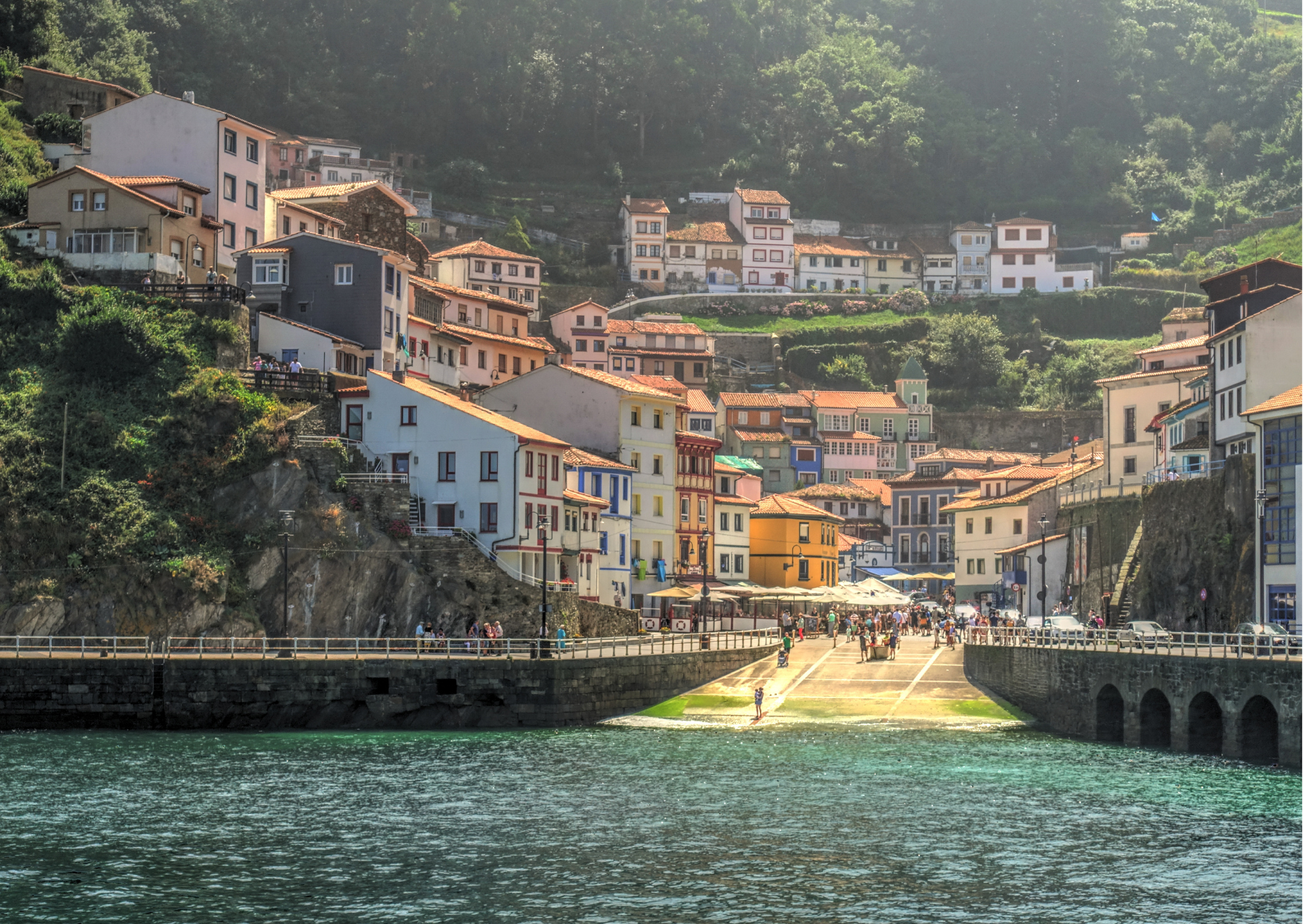
Spain’s non-lucrative visa is one of the most common residency routes Americans use when they’re not planning to work locally.
The tradeoff is obvious and non-negotiable: you’re living in Spain, but you’re not using the visa to take Spanish employment. That’s the deal.
Spain’s consular guidance ties the income requirement to IPREM, and the U.S.-facing consular info spells out what that means in plain numbers.
The baseline is 400% of IPREM for the main applicant, plus 100% of IPREM for each dependent.
The Washington consulate page lists IPREM at €600 per month and gives the annual math: €28,800 per year for the main applicant (400%), and €7,200 per year for each dependent (100%).
This is where Americans need a reality check.
Spain is not asking, “Are you rich?” Spain is asking, “Can you live here without becoming a problem.”
For a lot of retirees, that’s achievable. For a lot of pre-retirees, it’s achievable if they stop pretending their finances are more stable than they are.
The part that hurts is that Spain often wants the proof to be clean, consistent, and ideally boring. Big random deposits do not always help. A portfolio is great, but you still need clear statements, clear ownership, and clear access.
Also, Spain is Spain. The lifestyle can feel like a reward. The paperwork does not.
If you want to live here long-term, you treat the residency file like a permanent folder in your life. You keep copies. You track renewal timelines. You stop thinking of it as a one-time project.
France and Italy: “Visitor” and “Elective” Routes That Test Your Discipline

France and Italy are both classic American fantasies.
They’re also where reality often punches through the fantasy, because these routes are less “plug and play” and more “prove you’re serious.”
France’s long-stay visitor style route is the quiet option many Americans miss. It’s not marketed as an expat hack. It’s basically France saying: you can live here, but you’re living off your own resources.
France wants to see sufficient resources and health coverage that actually covers you. The vibe is: be self-supported, be insured, and do not create a public burden.
Italy’s elective residence route sits in a similar emotional bucket. Italy is not trying to recruit you with a glossy brochure. It’s more like: demonstrate resources, demonstrate housing, demonstrate that you are stable.
What trips Americans up in both places is that the paperwork burden is not just the initial application. It’s the ongoing behavior.
If your plan is “we’ll rent something short-term and figure it out,” these are the countries where that plan starts to wobble.
If your plan is “we’ll wing the health insurance piece,” these are the countries where you get stuck.
And if you’re relying on messy finances, this is where things get uncomfortable. A lot of Americans have money, but not documentable stability. France and Italy tend to reward people who can show tidy, predictable resources.
If you have that, both can work.
If you don’t, you can end up spending your first year in Europe stressed, instead of enjoying the thing you moved for in the first place.
Greece: A Clear Number, a Clear Rule, and a Different Kind of Appeal

Greece has a financially independent residence category that is blunt about the income level.
The headline number that matters is €3,500 per month for the main applicant, with increases for family members. It’s not a rumor. It’s referenced in professional guidance tied to the ministerial decision that sets the amount.
That number is higher than what many Americans expect, because Greece has become more explicit about what “financially independent” should mean.
The upside is clarity. You’re not guessing. You’re not trying to read the consulate’s mood. The target is the target.
The other upside is that Greece is not trying to turn you into a local wage worker. It’s built for people with outside income who want to live in Greece without entering the Greek labor market.
But here’s the no-sugar-coating part: Greece is amazing when you have money and patience. It can be exhausting when you don’t.
If you move to Greece with “just enough,” the bureaucracy feels personal. If you move with cushion, it feels like a speed bump.
This is also the country where Americans do best when they pick the right geography. Athens is not the same as a smaller city. An island is not the same as the mainland. Your day-to-day will depend on whether you’re trying to live like a tourist, or like a resident.
If you want warm weather, beautiful coastlines, and you can clear the income bar cleanly, Greece stays on the serious list.
Malta: The Remote Option With the Clearest Threshold

Malta is not everyone’s dream, but it’s one of the cleaner “remote work” propositions on paper.
Malta’s Nomad Residence Permit is explicit about eligibility, including a minimum annual income threshold of €42,000.
That clarity is valuable, especially if you’re the kind of person who wants a clean checklist instead of a vague interpretation.
Malta also has a different cultural feel than Spain, Portugal, or Italy. It’s English-friendly, administratively focused, and more transactional.
The downside is cost. Malta is not a “cheap Europe” story. If you’re moving abroad to cut your monthly spending in half, Malta probably isn’t your hero.
If you’re moving abroad to improve quality of life while maintaining a professional income, Malta can make sense.
The other downside is that Malta is small. Some people love that. Some people start to feel it quickly.
So the Malta pitch is not romance. It’s practicality.
If you want a remote-work friendly setup with clear thresholds, Malta is one of the most straightforward options still on the table.
The Next 7 Days: Pick a Track and Build the File Once
If you do this right, you build one “residency machine” and reuse it.
Here’s a realistic first-week sequence that keeps you moving without spiraling.
Day 1: Pick your lane.
Not your country. Your lane. Passive income (Portugal D7, Spain NLV, Greece FIP) or remote work (Portugal D8, Malta Nomad). This prevents you from wasting weeks reading the wrong rules.
Day 2: Lock your income story on paper.
Decide what you’re going to show. Pension. Dividends. Rental income. Remote salary. Then pull three to twelve months of statements and make sure they look consistent. If your money is scattered, consolidate what you can so the file reads as stable.
Day 3: Start the background check clock.
This is where people lose time. Background checks expire. Apostilles take time. Don’t wait until you’re emotionally ready. Get the process started.
Day 4: Quote real health insurance.
Not vague research. Real quotes that match the country you’re targeting. This is often the difference between “we’re moving this year” and “we’re still talking about it next year.”
Day 5: Create your housing proof plan.
Decide whether you’re doing a lease, a longer-term rental, or another legitimate proof route. Stop pretending you can solve it after arrival with a weekend on Airbnb.
Day 6: Build the binder.
Yes, an actual binder or a digital equivalent. Put everything in one place: passports, birth certificates, marriage certificates, statements, insurance, background checks, translations.
Day 7: Pick the country, then pick the consulate reality.
By this point, you’ve earned the right to choose a country based on lifestyle. Now you check how that country’s consular process actually works for your jurisdiction, because that’s what determines how quickly you can move.
This is the part Americans hate, but it’s also the part that makes the move real.
What to Choose When You Want the Truth
If you want the blunt ranking logic, it usually looks like this:
- If you have remote income high enough to clear a real bar, Portugal D8 and Malta are the cleanest stories.
- If you have passive income or retirement income, Spain’s non-lucrative visa remains one of the most used routes.
- If you want romance and can prove stable resources, France and Italy can work, but they reward tidy documentation.
- If you want Greece, make sure you can clear the income level without sweating, because stress will poison the experience fast.
The best country in Europe is not the one you “love” from afar.
It’s the one where your income profile, paperwork tolerance, and daily-life preferences line up without you having to pretend.
That’s the no-sugar-coating answer.

About the Author: Ruben, co-founder of Gamintraveler.com since 2014, is a seasoned traveler from Spain who has explored over 100 countries since 2009. Known for his extensive travel adventures across South America, Europe, the US, Australia, New Zealand, Asia, and Africa, Ruben combines his passion for adventurous yet sustainable living with his love for cycling, highlighted by his remarkable 5-month bicycle journey from Spain to Norway. He currently resides in Spain, where he continues sharing his travel experiences with his partner, Rachel, and their son, Han.