
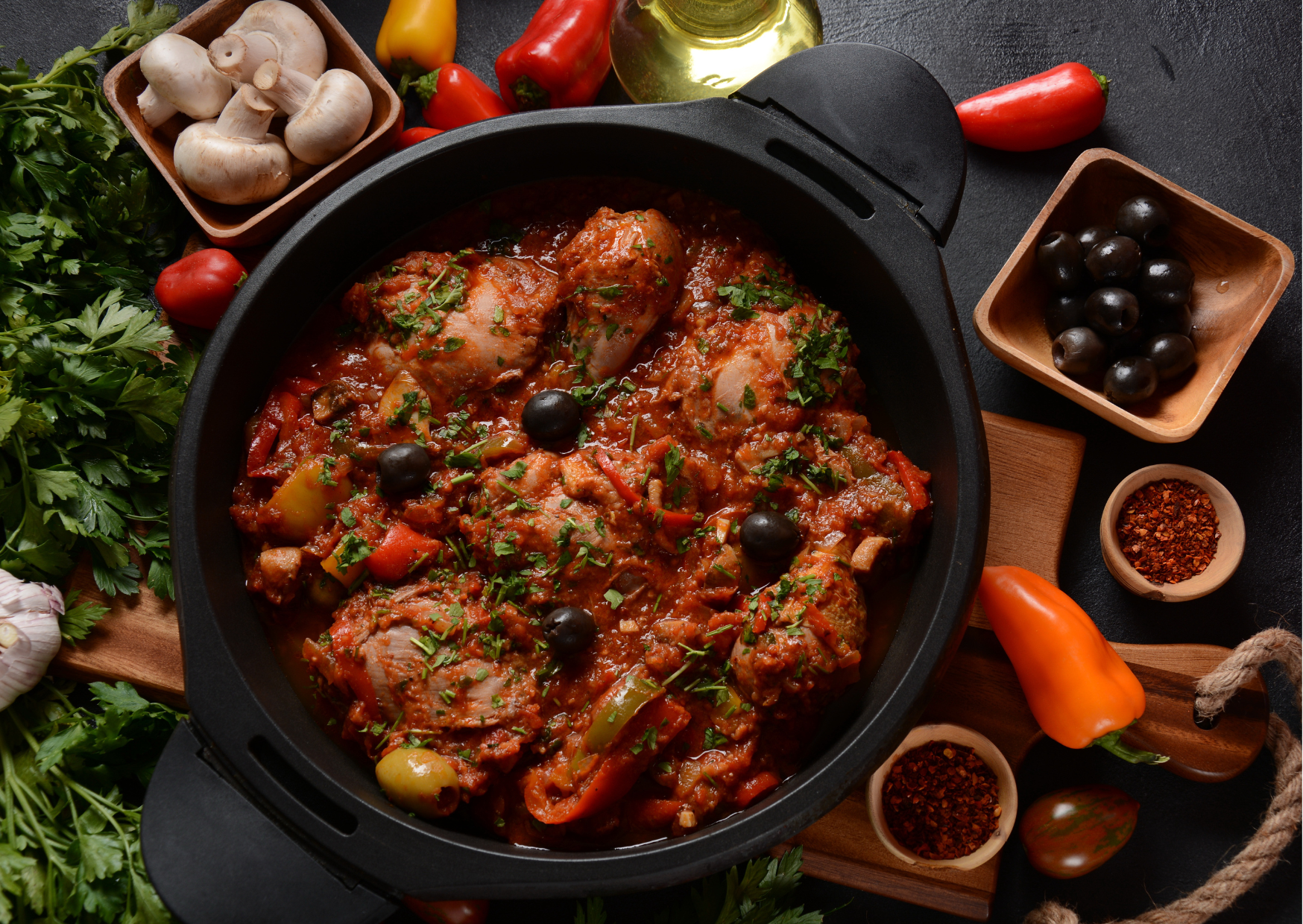
In the American version, the sauce is basically marinara with chicken. In the Italian version, the chicken is the point, and the sauce is what happens when you brown meat properly and finish it with restraint.
The American Cacciatore Trap: Breasts, Marinara, and a Slow Cooker
Most American chicken cacciatore is built for convenience, not flavor.
It starts with boneless skinless chicken breast, because that’s what U.S. grocery culture has trained people to buy. Then it gets drowned in jarred marinara, “Italian seasoning,” and sometimes a pinch of sugar because the sauce tastes flat. Then the whole thing goes into a slow cooker until the chicken is shreddable and the sauce is thick.
That combo is exactly why it tastes nothing like Italy.
Breast meat is lean, and lean meat has a narrow window between “cooked” and “sad.” In a braise, thighs stay juicy and actually contribute flavor. Breasts just sit there while the sauce does all the talking.
Jar sauce is designed to be the star. It’s already seasoned, already sweetened, already cooked down. It turns your “cacciatore” into a tomato product with chicken pieces.
And the slow cooker does one specific thing really well: it softens. It does not brown. Browning is the difference between rustic Italian depth and “I made this on a Tuesday because the kids had practice.”
If your cacciatore tastes like spaghetti sauce with chicken, it’s not because you “did it wrong.” It’s because you made an American dish that borrowed an Italian name.
What Italians Mean by “Alla Cacciatora”
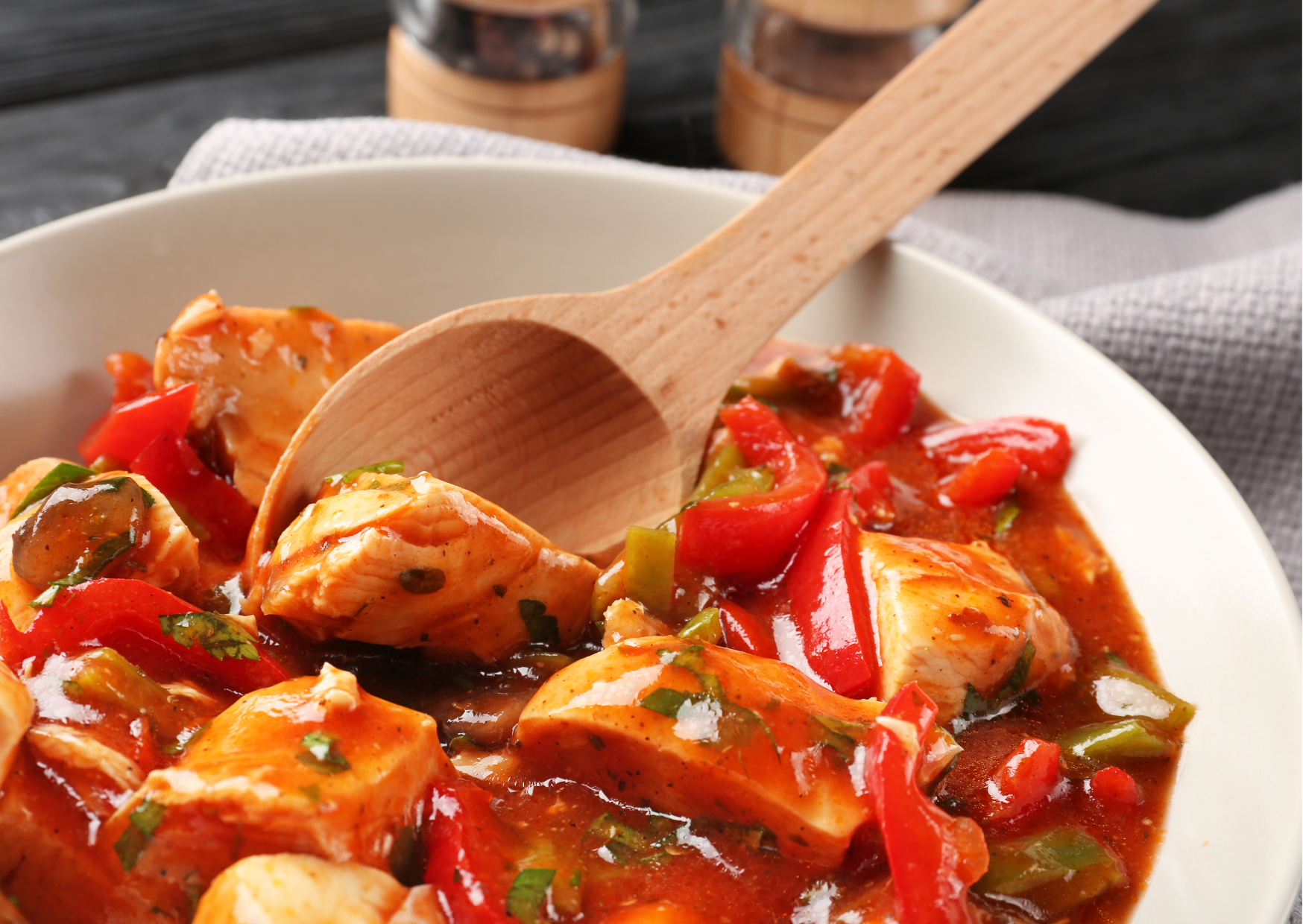
“Cacciatore” means hunter-style, and the idea is simple: a practical, pan-based braise with what’s around.
In Italy, “alla cacciatora” is not one rigid recipe. There are tomato versions. There are versions with almost no tomato. There are versions that go vinegar and rosemary, and versions that lean on wine and onions. Some include olives. Some don’t. The point is the method, not the jar.
The consistent backbone looks like this:
- Chicken in pieces, usually bone-in, often skin-on
- Aromatics like onion, garlic, sometimes carrot and celery
- Wine to lift the browned bits
- Tomato used with restraint, or skipped entirely in some regional styles
- Herbs that make sense, like rosemary, sage, bay, parsley
- Served with bread, polenta, or potatoes, not buried under pasta
That last part matters. In a lot of American kitchens, cacciatore is treated like a pasta sauce. In Italy, it’s closer to a stew. The sauce clings, it doesn’t flood.
The Italian Flavor Blueprint in Plain English
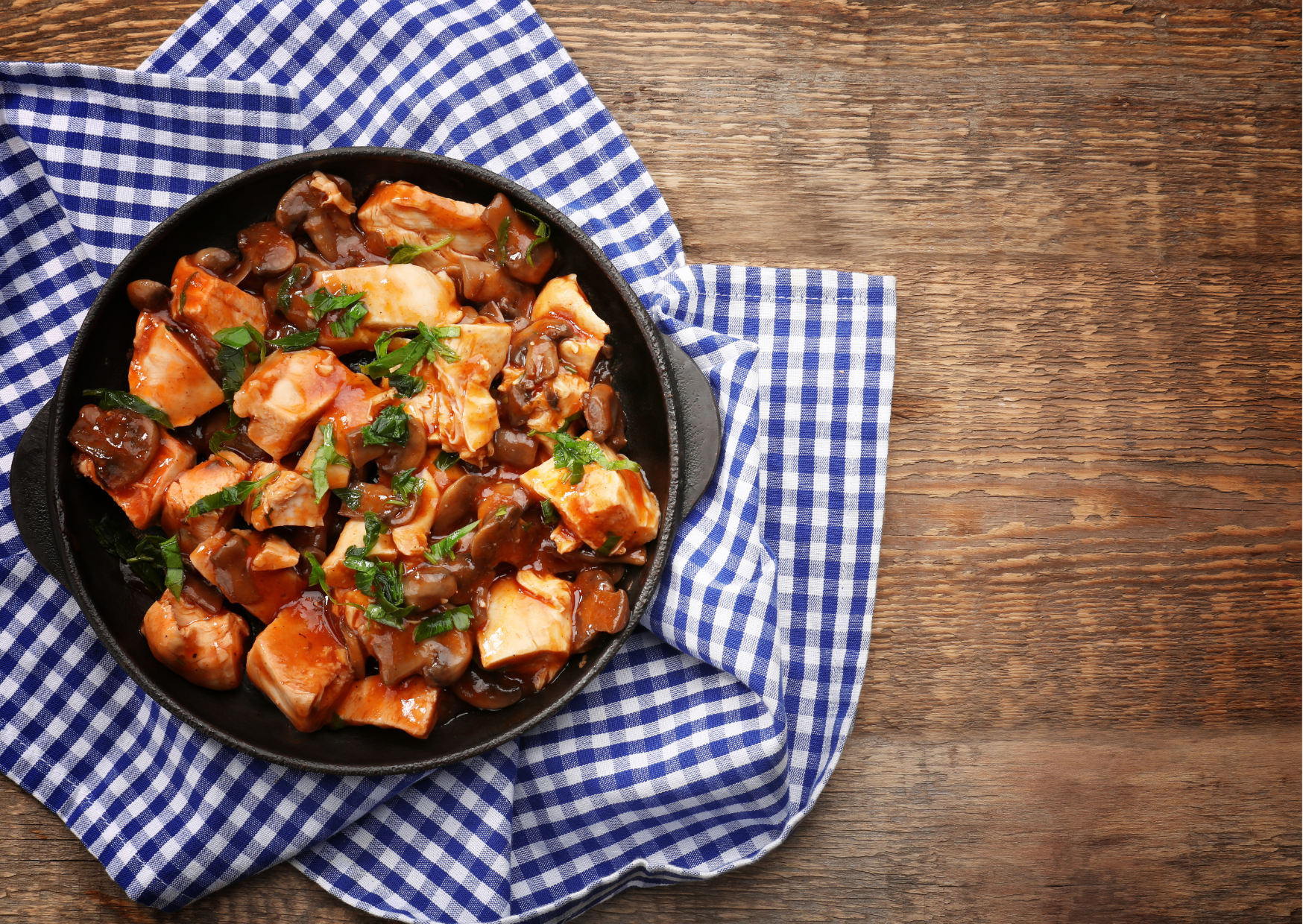
If you want the Italian taste, you don’t need a culinary degree. You need a few non-negotiables.
First: brown the chicken. Not “it turned white.” Brown. You want color. You want rendered fat. You want the pan to look like it has stories.
Second: build the base in that same pan. Onion first, then garlic, then a little carrot and celery if you’re doing the more classic soffritto vibe. You are creating sweetness naturally, not adding sugar.
Third: deglaze with wine. The wine is not a vibe. The wine is a solvent. It lifts those browned bits and turns them into sauce.
Fourth: add tomatoes, but don’t turn it into a tomato-only dish. Think tomato as structure, not tomato as identity.
Fifth: finish with something sharp. A splash of vinegar or lemon at the end is the difference between “tastes fine” and tastes alive.
Now you’re cooking the way Italian home cooks actually approach it: method-first, ingredient-second, no jar in sight unless you are truly stuck.
Real Italian-Style Chicken Cacciatore (That Doesn’t Taste Like Marinara)
This version is tomato-forward enough to feel familiar, but tomato-light compared to the American “pasta sauce” approach. It also includes an optional Roman-style finish that gives you that “wait, what is that flavor?” depth.
Serves
4 hungry adults, or 4 adults plus leftovers.
Time
About 60 to 75 minutes total. Most of it is hands-off simmering.
What you need
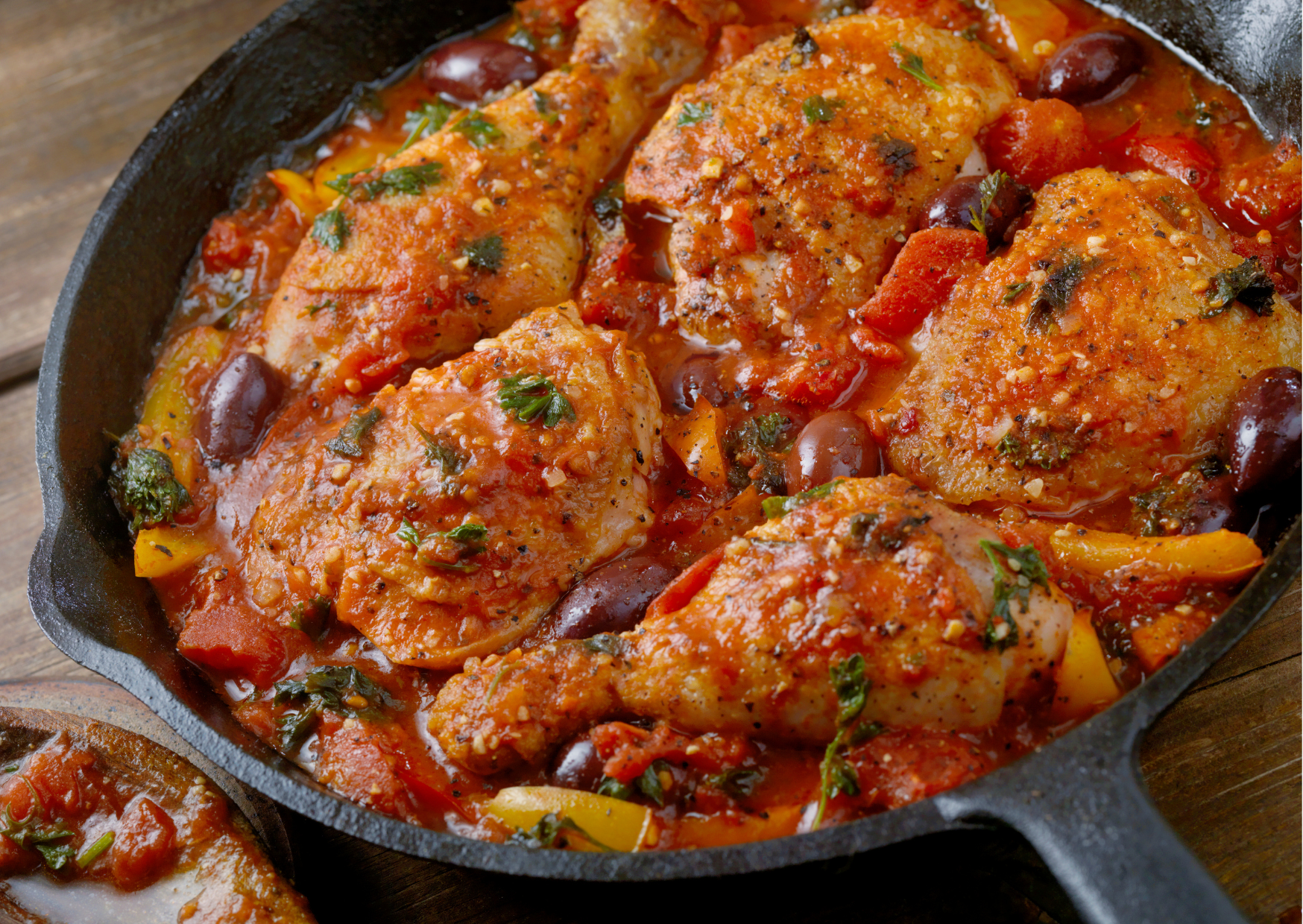
Chicken and seasoning
- 1.2 to 1.5 kg chicken thighs and drumsticks, bone-in and skin-on preferred
- 1 1/2 tsp fine salt, plus more to taste
- Black pepper
- 2 to 3 tbsp flour (optional, helps browning and slightly thickens sauce)
Base
- 3 tbsp extra virgin olive oil
- 1 large onion, sliced thin
- 2 carrots, diced small (optional but very good)
- 1 celery stalk, diced small (optional)
- 4 garlic cloves, lightly smashed
- 1 sprig rosemary (or 1 tsp dried)
- 6 to 8 sage leaves (optional)
- 1 bay leaf (optional)
Liquids and body
- 200 ml dry white wine (or dry red if that’s what you have)
- 400 to 500 g crushed tomatoes or peeled tomatoes, hand-crushed
- 150 to 250 ml water or light chicken stock, as needed
Finish
- 80 to 120 g green olives, drained (optional but very “Italy”)
- 1 to 2 tsp red wine vinegar, or a squeeze of lemon
- Chopped parsley to serve
Optional Roman depth
- 2 anchovy fillets (the salty little ones in oil), mashed into the sauce at the end
How to cook it
- Dry the chicken and season it hard.
Pat the chicken dry. Salt and pepper it. If using flour, dust lightly and shake off the excess. This is about better browning, not breading. - Brown the chicken in batches.
Heat olive oil in a wide, heavy pan. A Dutch oven is perfect. A big skillet with a lid also works.
Place chicken skin-side down and don’t touch it for 6 to 8 minutes. When the skin releases easily and looks deeply golden, flip and brown the other side for 3 to 4 minutes.
You are building pan fond, and you cannot fake it later.
Remove chicken to a plate.
- Cook the onion base in the same pan.
Lower heat to medium.
Add onion (and carrot/celery if using). Scrape the browned bits into the onion as it softens. Give it 8 to 10 minutes. The onions should look glossy and lightly golden, not raw.
Add garlic, rosemary, and sage. Cook 60 seconds, just until you smell it.
- Deglaze with wine.
Pour in the wine and stir aggressively, scraping the pan. Let it bubble for 2 to 3 minutes so the alcohol cooks off and the flavor concentrates.
This is where the sauce stops tasting like tomatoes and starts tasting like a real braise.
- Add tomatoes, then return chicken.
Stir in the tomatoes.
Return the chicken, along with any juices on the plate. Add a small splash of water or stock, just enough so there’s some liquid around the chicken, not drowning it.
Bring to a gentle simmer.
- Cover and simmer low.
Cover and cook on low for 30 to 40 minutes, depending on the size of the pieces. You want the chicken to be tender, but not falling apart like pulled pork.
If the sauce gets too thick, add a splash of water. If it’s too thin, cook uncovered for a few minutes at the end.
- Add olives near the end.
Stir in olives for the last 10 minutes so they warm through and share their briny flavor. - Finish sharp, then taste.
Turn off heat. Stir in vinegar or lemon. This is the “Italy switch.” Taste and adjust salt and pepper.
If using anchovy, mash it into the sauce now. It will not taste like fish. It will taste like deep savory.
- Rest 10 minutes, then serve.
Resting lets the sauce tighten and cling.
Serve with crusty bread, polenta, or roasted potatoes. If you put it on pasta, keep it modest. This is not a spaghetti bath.
Storage and reheating
- Fridge: 2 to 3 days, tightly covered.
- Freezer: yes, but texture is best within 2 months.
- Reheat gently on the stove with a splash of water.
Here’s the annoying truth: day-two cacciatore usually tastes better than day-one.
Why This Tastes Different: Fat, Acid, and Timing
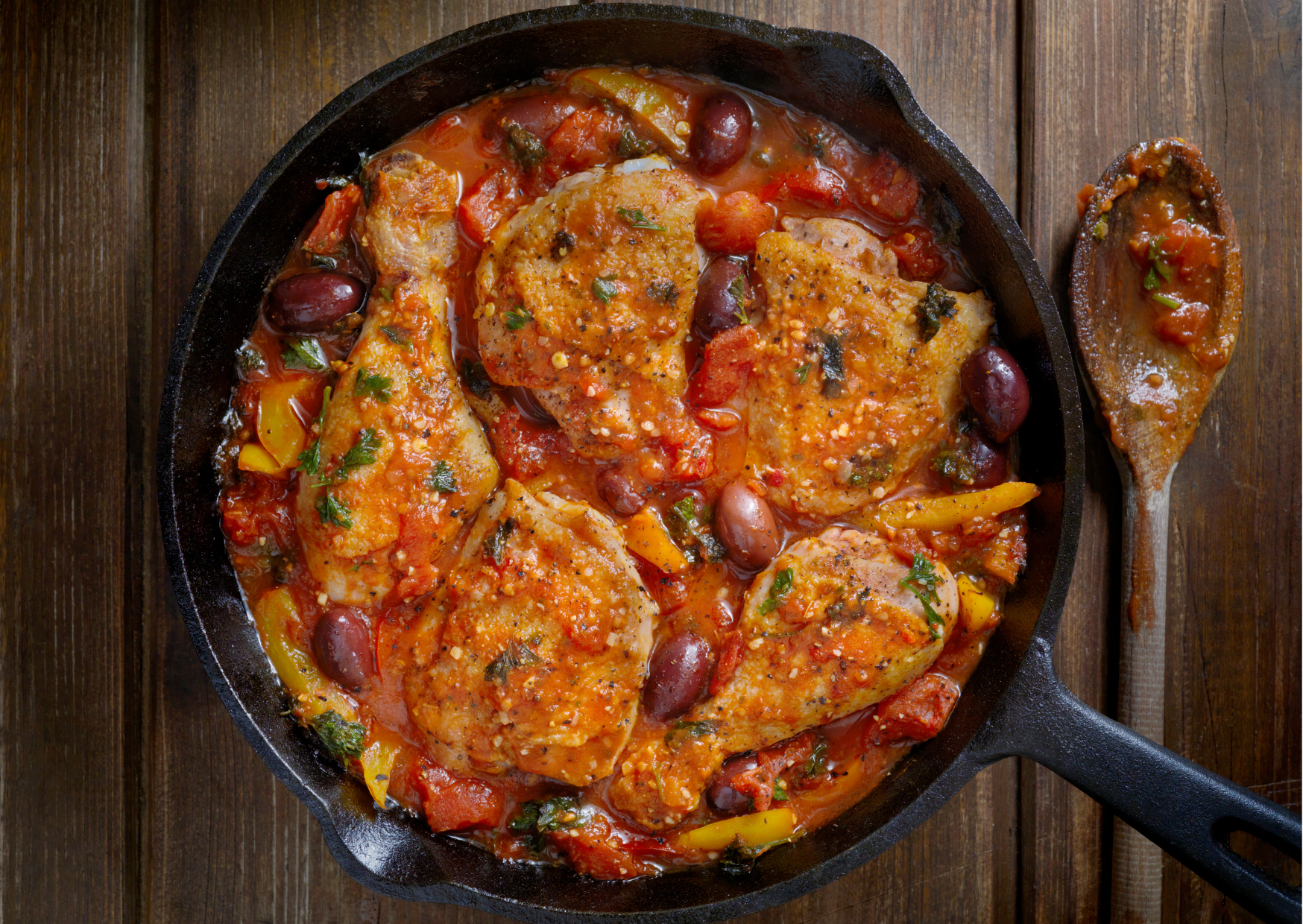
American cacciatore often tries to get flavor from more seasoning.
Italian cacciatore gets flavor from technique.
Skin-on thighs give you rendered fat, which carries aroma and makes sauce feel richer without cream or sugar. Breast meat can’t do that. It’s not a moral failure. It’s physics.
Browning creates hundreds of flavor compounds. You cannot sprinkle those in from a jar.
Wine deglaze pulls the browned bits into the sauce and adds acidity. That acidity is what keeps tomato from tasting flat and heavy.
Then you finish with a small hit of sharpness. Vinegar or lemon sounds optional until you try it. After that, it becomes the thing you notice when it’s missing.
If you’re cooking this as part of a health reset, this dish also has a sneaky advantage: it’s satisfying. Protein plus fat plus a savory sauce that doesn’t rely on sweetness tends to reduce the “I need something after dinner” feeling. If you’re on diabetes medications and you make big changes to carbs or alcohol, it’s worth checking in with your clinician. Food shifts can move numbers.
The Money Reality: What This Costs in Spain vs the U.S. Right Now
Prices move, but the pattern is consistent: the U.S. pays a premium for convenience cuts, and Spain often wins on basics if you cook simply.
Here’s a real-world basket comparison using commonly listed supermarket prices in early 2026.
Spain-style basket (February 2026)
- Chicken thighs/drumsticks: around €5.55/kg (example: skin-on thigh cuts)
- Olive oil: about €4.95 per liter for store-brand extra virgin
- Crushed tomatoes: about €0.64 for 400 g
- Green olives: about €2.80 per jar (you use a fraction)
- Cooking wine: about €0.90 per liter for basic table wine
For a 4-person pot, the rough math typically lands around €9 to €12 total, depending on how much chicken you use and whether you add olives. That can land near €2.50 to €3 per serving for a real dinner, before bread or sides.
U.S.-style basket (early 2026 examples)
- Crushed tomatoes: $1.52 for 28 oz store-brand
- Olive oil: $9.12 for 25.5 fl oz store-brand extra virgin (often higher for imported)
- Chicken prices vary wildly by state and cut, but official U.S. averages show the pattern: boneless breasts cost far more than legs and darker cuts
This is where the American version goes off the rails financially. If you build the dish around $4-plus per pound chicken breast and then add a $4 to $8 jar sauce, you’re paying for the convenience choices, not the dish.
If you build it the Italian way, you’re buying cheaper cuts, using less processed sauce, and getting more meals out of it.
Leftovers That Don’t Feel Like Punishment
If you want this to become a repeat dinner, you need leftovers that feel intentional.
Here are options that keep the flavor intact and avoid the “wet chicken” problem:
- Turn it into a stew bowl with white beans and wilted greens. The beans soak up braise flavor like a sponge.
- Shred leftover chicken into a skillet with sautéed peppers, then crack eggs on top for a weekend brunch situation.
- Stuff it into a baked potato with a little parsley and a spoon of sauce, not a flood.
- Make a quick soup: water or stock, leftover sauce, shredded chicken, chickpeas, and spinach.
- Build a sandwich: toasted bread, chicken, a smear of aioli or plain yogurt, and just enough sauce to stain the bread.
- Toss with pasta, but do it like Italy does: small amount, plenty of chicken, finish with a splash of pasta water so it emulsifies.
- Eat it with rice if that’s what you’ve got, but keep the sauce clingy and bright.
This is one of those dishes where the second-day payoff is real. It’s why these rustic braises survive across cultures. They’re economical, forgiving, and they make a normal week feel less chaotic.
Mistakes That Keep It Tasting “American” (And How to Fix Them)
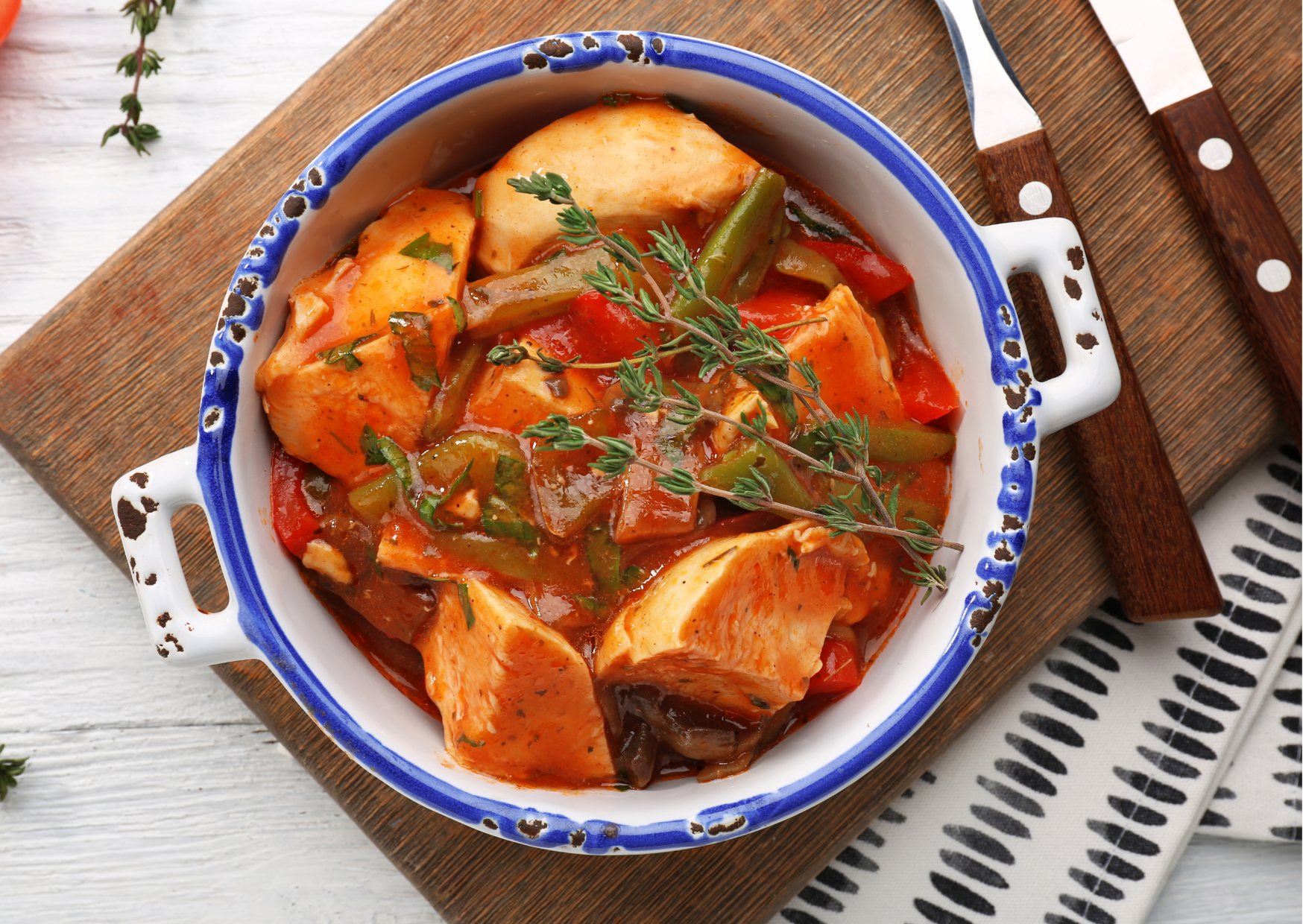
If you want the Italian taste, these are the big landmines.
- Using chicken breast
Swap to thighs and drumsticks. If you insist on breast, cook it separately and add it late, or it will dry out. - Skipping browning
If you don’t brown the chicken, you’re making tomato chicken. Browning creates the base flavor. - Too much tomato, too little everything else
Use 400 to 500 g tomatoes, not a liter of sauce. Let chicken and aromatics lead. - “Italian seasoning” as the main flavor
Pick one or two herbs that make sense. Rosemary and sage. Rosemary and bay. Parsley at the end. Keep it coherent. - Sweetness to “fix” acidity
Don’t add sugar. Add time, browning, and a small splash of vinegar or lemon at the end. That’s how you get brightness without dessert vibes. - Mushrooms and green peppers as default
They’re not wrong, but they push the dish into American-Italian territory fast. If you love them, add a small amount and keep the sauce restrained. - Serving it like pasta sauce
Bread, polenta, potatoes. If pasta happens, it’s a side, not the foundation.
If you do nothing else, remember this: less sauce, better technique.
The 7-Day Cacciatore Test: One Pot, Four Dinners, Two Lunches
If you’re trying to cook more like Europe, the biggest threat is burnout. Not taste.
Here’s a realistic week that fits a normal life.
Day 1 (Cook day, 75 minutes)
Make the full pot. Serve with bread and a simple salad.
Day 2 (Leftover night, 10 minutes)
Reheat gently. Add white beans and spinach to the sauce to stretch it. Serve in bowls.
Day 3 (Reset night, 15 minutes)
Use leftover chicken and sauce over roasted potatoes, or a baked potato. Add parsley and lemon for freshness.
Day 4 (Lunch anchor)
Pack leftover stew-like version with beans. This is the kind of lunch that stops the 3 pm vending machine moment.
Day 5 (Small-batch refresh, 20 minutes)
Cook a quick pan of greens, then top with shredded cacciatore chicken and a spoon of sauce. Finish with vinegar.
Day 6 (Free choice night)
If you want pasta, do it here. Keep portions modest, lean into chicken, and make it feel like a treat, not your default.
Day 7 (Prep for next week)
Freeze one portion, or turn the last bit into soup. You’ve now got a future dinner that costs you almost no effort.
This is what Mediterranean-style home cooking looks like in practice. Not perfection. Just a few repeatable wins that make your week cheaper and easier.

About the Author: Ruben, co-founder of Gamintraveler.com since 2014, is a seasoned traveler from Spain who has explored over 100 countries since 2009. Known for his extensive travel adventures across South America, Europe, the US, Australia, New Zealand, Asia, and Africa, Ruben combines his passion for adventurous yet sustainable living with his love for cycling, highlighted by his remarkable 5-month bicycle journey from Spain to Norway. He currently resides in Spain, where he continues sharing his travel experiences with his partner, Rachel, and their son, Han.