
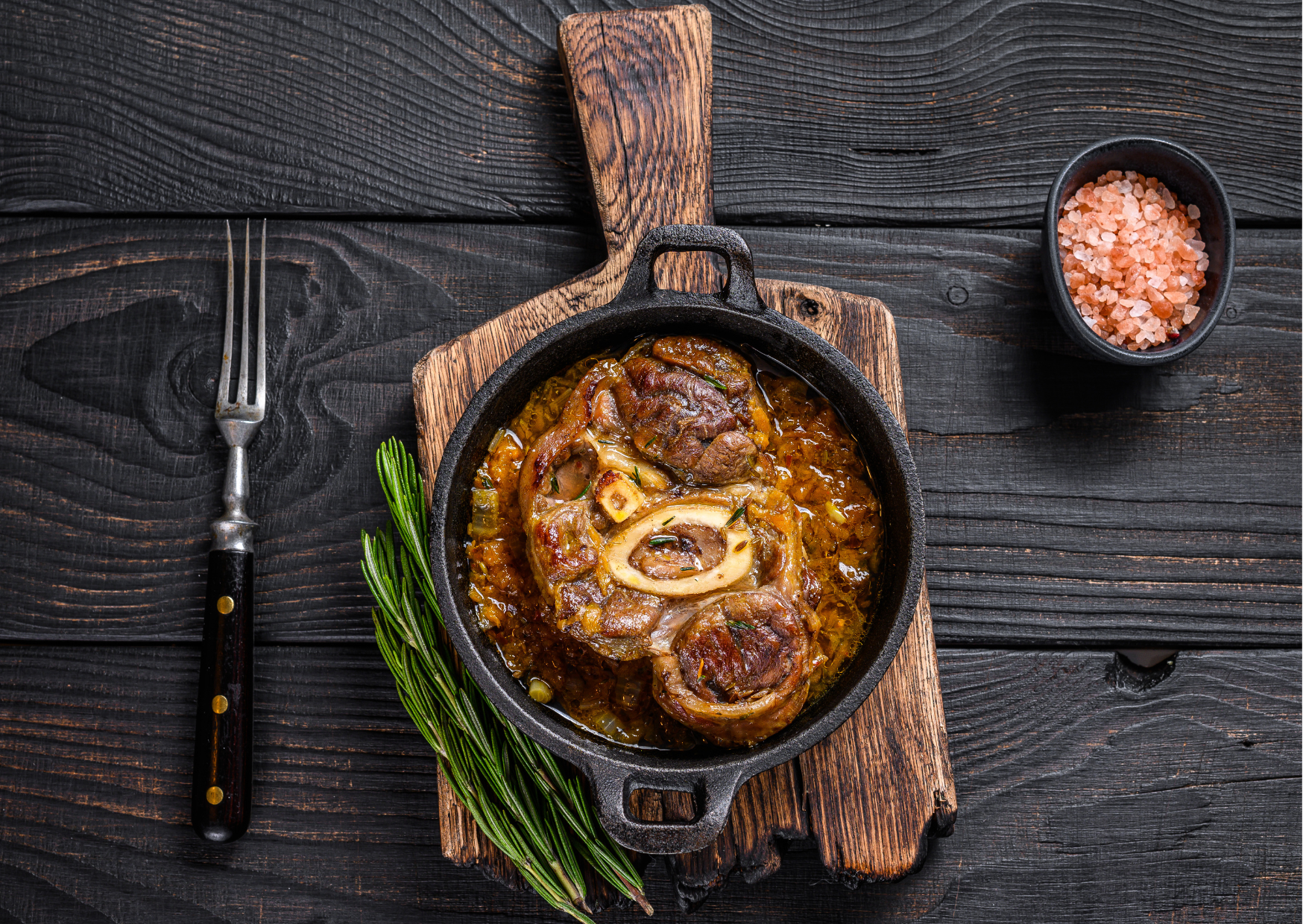
You lift the lid and the shanks sigh back at you, sauce glossy, marrow shimmering in the bone. A spoon, not a knife, tells you dinner is ready.
The difference between collapse-tender osso buco and a stringy stew is not folklore. It is the way you choose the shanks, how you brown, the liquid you use, and the temperature and time you hold without poking. Do those four well and three hours later the meat loosens from the bone, the marrow stays intact, and the sauce tastes like the street outside a Milanese trattoria at eight.
What most American versions do instead is rush. Thin shanks, high heat, too much tomato, lid askew, impatience at the two-hour mark. The result is tight fibers and a watery, red sauce that never learned to gloss.
This is the clean map: how to buy the right cut, why low oven beats stovetop, how much wine and tomato you actually need, the exact three-hour schedule, the gremolata that wakes the plate, and a step-by-step recipe that works on a Tuesday if you start at four.
What Makes Osso Buco Collapse Tender
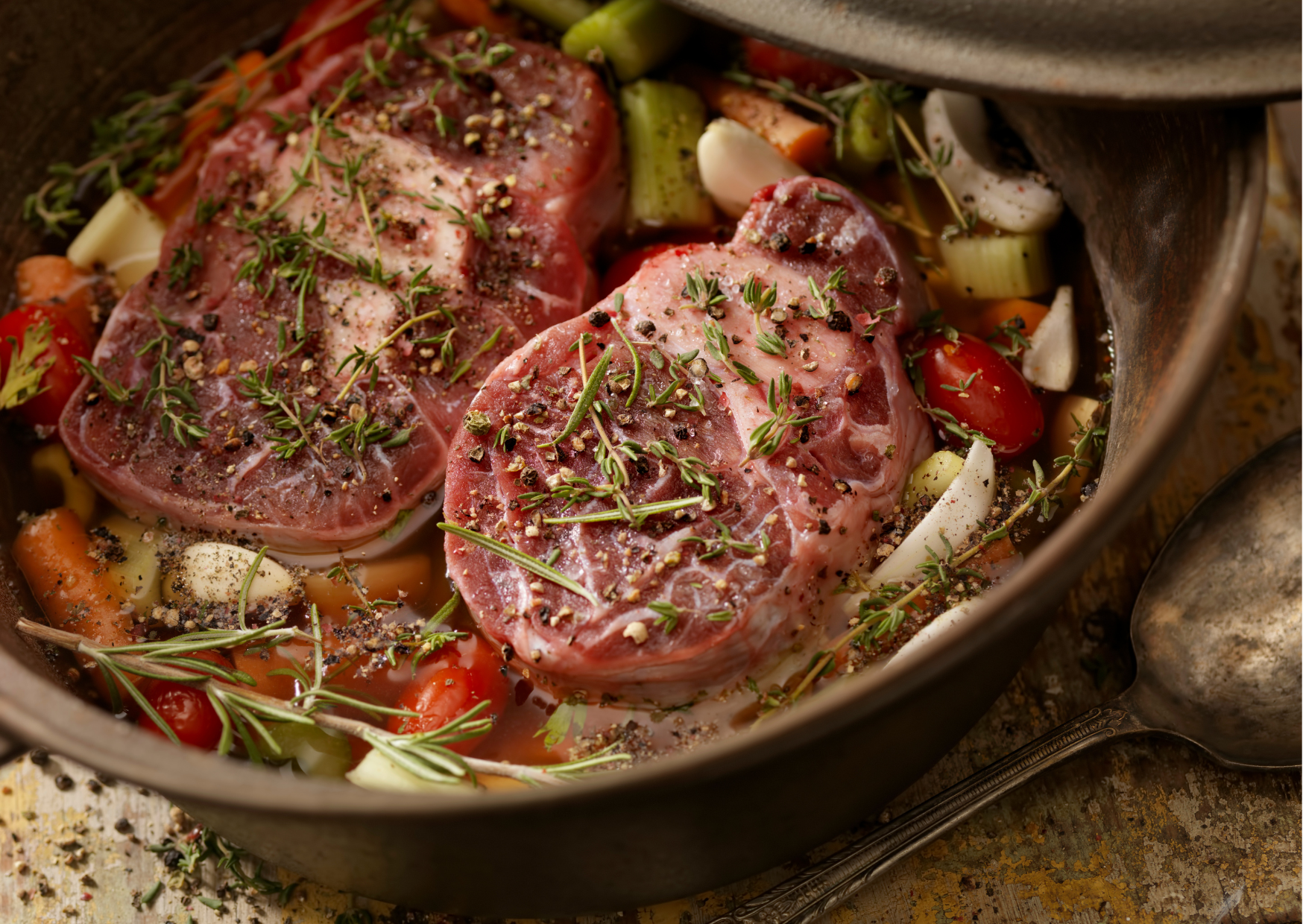
Osso buco is not a steak braise. It is collagen to gelatin, not quick sear and pray. Veal shank is full of connective tissue that needs time around 88 to 92 C internal to melt into the liquid and back into the meat. When that happens, the fibers that felt ropey at one hour suddenly slide apart at three. Time at temperature matters more than any trick.
Moisture is the second pillar. Braising is not boiling. You want meat in sauce, not submerged, so steam and gentle heat work together. A tight lid traps vapor, the surface stays moist, and the top never crusts. Tight lid, shallow bath, steam plus sauce, no boil.
Third is acidity and balance. Dry white wine and a restrained amount of tomato keep the sauce bright without turning it into spaghetti night. Acid helps tenderize slowly and keeps the marrow and meat tasting like themselves. Wine for lift, tomato for color, veal stays front and center.
Finally, the rest. Pulling from the oven and diving in is a rookie move. Ten to fifteen minutes under a tilted lid lets bubbles calm and gelatin settle, which is why the meat feels silkier at the table than it did at the stove. Short rest, better texture, sauce tightens on its own, patience pays.
Buy The Right Shanks, Cut Right
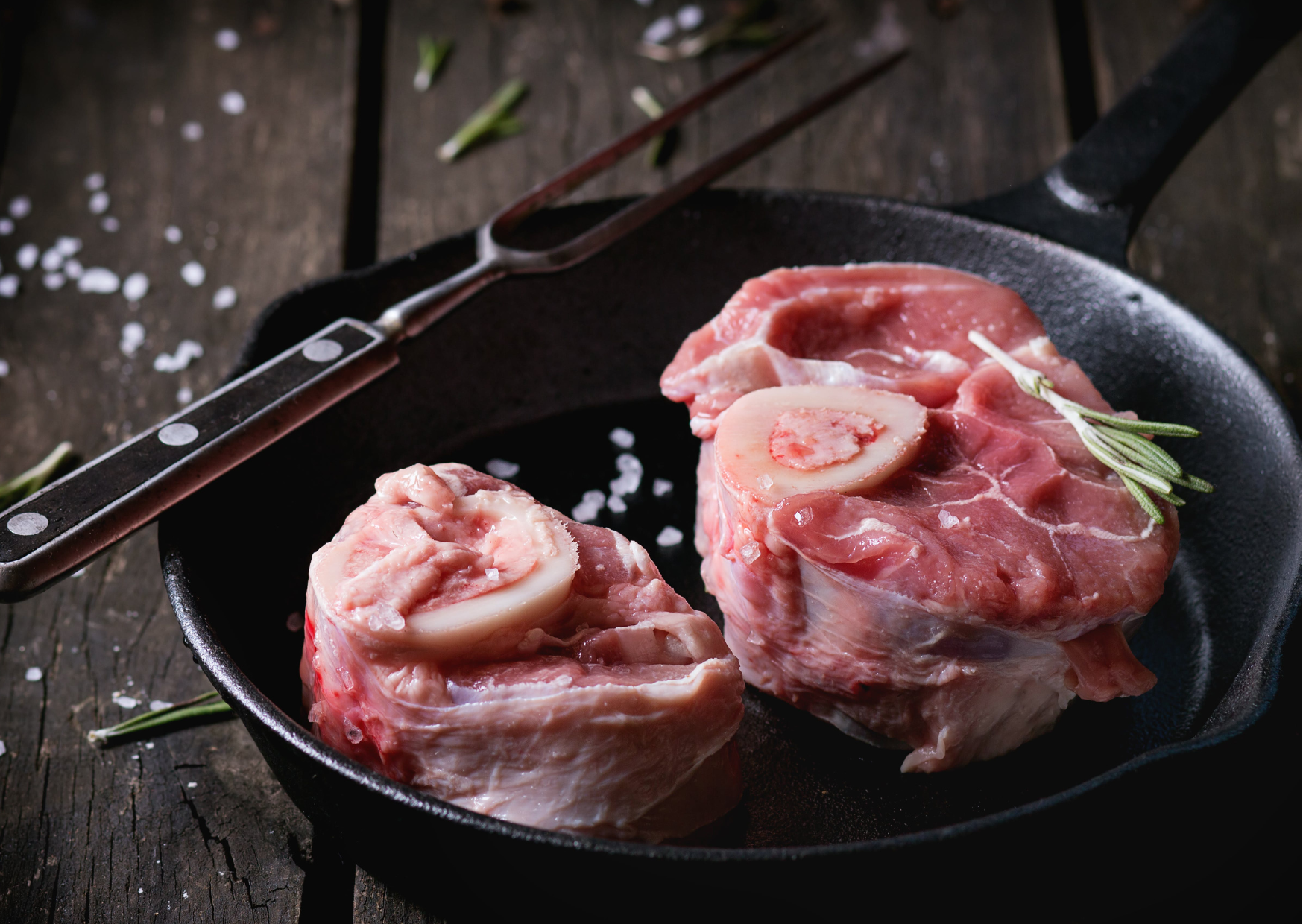
The shank determines everything that follows. Look for center-cut veal shanks, cross-cut 5 to 6 cm thick, each piece 350 to 500 g. Thin shanks dry before collagen melts. Thick ones give you marrow that stays whole, meat that bastes itself, and a cook window you can actually hit.
If you cannot find veal, use beef shanks cut 4 to 5 cm thick, and plan on adding 30 to 45 minutes to the braise. Beef brings stronger flavor and a slightly coarser texture, so the finish loves a little more lemon in the gremolata. Veal for classic silk, beef for deeper bass, thickness is non-negotiable.
Ask the butcher to tie each piece with kitchen twine around the circumference, or do it at home. The tie keeps the shank intact as connective tissue relaxes and marrow softens. You will remove the strings before plating. Tie to keep shape, marrow stays put, cleaner pan.
Last, check the cut face. You want specks of connective tissue and a broad bone channel with creamy marrow, not skinny bones and lean meat. These shanks self-sauce. Lean ones just stew.
Build Flavor The Milanese Way
Classic osso buco tastes layered because the base is layered. That begins with a moderate sear, the right soffritto, and a braising liquid that reads as wine and stock with tomato as an accent.
Brown the tied shanks in olive oil and a bit of butter until they show even, deep blond patches, not a hard dark crust. A too-aggressive sear turns the surface bitter and makes the sauce murky. Even browning beats hard sear, fond should be bronze, not black, butter for perfume.
Soffritto is the next quiet win. Finely diced onion, carrot, and celery cook low until sweet. Add garlic only at the end of the sauté so it does not burn. The soffritto carries the sauce and gives the shanks a pillow to finish on. Sweet soffritto, garlic late, patience in the pan.
Deglaze with dry white wine. Reduce to a sticky glaze so the alcohol is gone and the acidity is left. Add good stock and a small amount of tomato. Many American versions dump a can and call it a day. Milan uses restraint. You want a rosy, glossy braise, not a red bath. Wine reduced, stock leads, tomato accents.
A bouquet of thyme and bay, a ribbon of orange peel, and a spoon of anchovy paste or a minced anchovy fillet are the quiet secrets that make your sauce taste restaurant deep without yelling fish. They melt in. They do not read as themselves. Herbs and peel for lift, anchovy for umami, flavor without clutter.
The Three-Hour Oven Schedule You Can Trust
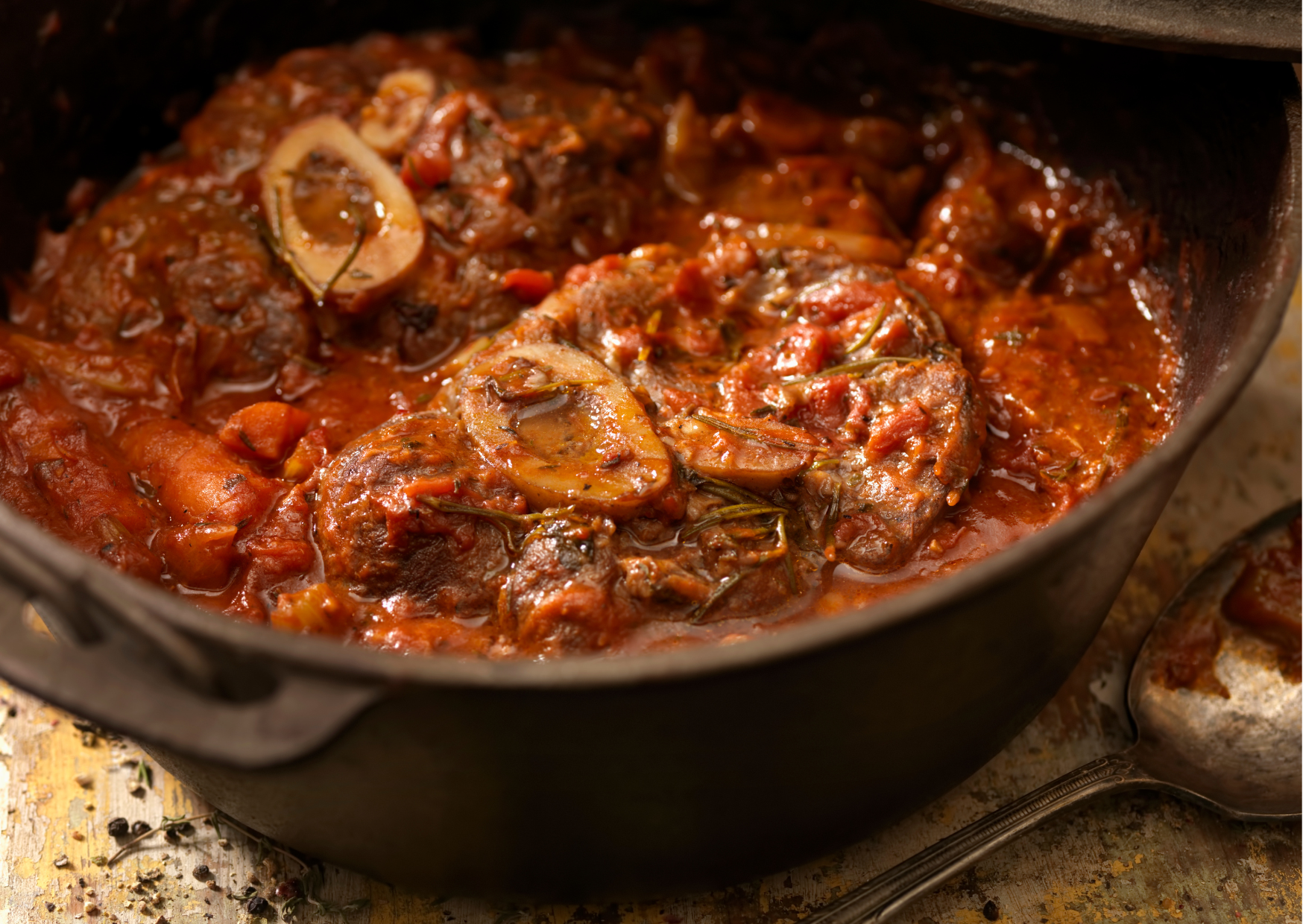
Stovetop heat drifts. Ovens hold. For shanks, the oven is the easier way to get low oven, tight lid, steady braise without fiddling.
- 0:00 to 0:30 Brown the shanks and build the soffritto. Reduce wine.
- 0:30 to 0:40 Nestle shanks back in, add stock and tomato to halfway up the sides, tuck in herbs and peel. Liquid should simmer gently on the stove.
- 0:40 to 2:10 Move to a 160 C oven. Do not open for 90 minutes. Gelatin needs time at heat, not interruptions. No peeking, steady heat, moist environment.
- 2:10 Check: liquid should be gently bubbling, meat slumping. Turn shanks once, spoon sauce over, and return.
- 2:10 to 3:00 Continue until a skewer meets minimal resistance and meat pulls from bone with a gentle tug. If using beef shanks, go to 3:30 or 3:45.
- 3:00 to 3:10 Remove shanks to a warm platter. Simmer sauce on the stove 5 to 10 minutes to nappe consistency if needed. Skim fat. Adjust salt and a touch of lemon.
- 3:10 to 3:25 Return shanks to the sauce, lid tilted, rest. Short rest sets gelatin, sauce clings, serving is clean.
This timing assumes 5 to 6 cm veal shanks and a heavy, tight-lidded braiser. If your pot is thin or your oven runs cooler, add 15 to 20 minutes.
The Recipe: Osso Buco Alla Milanese That Yields To A Spoon
Serves 4 to 6, active time about 45 minutes, total about 3 hours plus resting
Ingredients
Shanks and braise
- 4 to 6 veal shanks, center-cut, 5 to 6 cm thick, 350 to 500 g each, tied
- 1 tsp fine salt and black pepper
- 2 tbsp all-purpose flour for dusting, optional
- 2 tbsp olive oil
- 2 tbsp unsalted butter
- 1 large onion, 1 carrot, 1 celery stalk, all finely diced
- 3 garlic cloves, minced
- 250 ml dry white wine
- 500 to 650 ml unsalted veal or chicken stock, warmed
- 200 g crushed tomato or passata, about ¾ cup
- 1 tsp anchovy paste or 1 anchovy fillet, minced
- 2 sprigs thyme, 1 bay leaf
- 1 strip orange peel, 6 to 8 cm, no white pith
Gremolata
- Zest of 1 lemon, very fine
- 1 small garlic clove, pasted with a pinch of salt
- 2 tbsp flat-leaf parsley, minced
- 1 tsp olive oil
To serve
- Risotto alla Milanese, soft polenta, or mashed potatoes
- Lemon wedges, optional
Method
- Season and brown. Pat shanks dry. Season with salt and pepper. Lightly dust cut faces with flour if you want extra gloss in the sauce. Heat oil and butter in a wide, heavy braiser over medium heat. Brown shanks cut side down until deep blond with golden patches, about 4 to 5 minutes per side. Do not scorch. Transfer to a tray.
- Soffritto. Lower heat. Add onion, carrot, and celery with a pinch of salt. Cook slowly until tender and sweet, 8 to 10 minutes. Stir in garlic for 30 seconds. Soffritto should glisten, not brown hard.
- Deglaze and build the bath. Raise heat. Pour in wine. Scrape fond and reduce until almost syrupy, 3 to 4 minutes. Stir in stock, crushed tomato, anchovy, thyme, bay, and orange peel. Bring to a gentle simmer. Taste the liquid. It should be savory and bright, not sour or salty.
- Braise. Nestle shanks into the pot so liquid comes about halfway up. Spoon liquid over the tops. Cover tightly. Transfer to a 160 C oven. Braise 90 minutes without opening.
- Turn and continue. Uncover. Turn shanks carefully, spoon sauce over, re-cover, and braise 50 to 60 minutes more until a skewer slides in with little resistance, meat slumps off the bone, and marrow quivers but holds. If using beef, add 30 to 45 minutes.
- Reduce and rest. Move pot to the stove. Lift shanks to a warm platter. Simmer sauce uncovered 5 to 10 minutes until it lightly coats a spoon. Skim fat. Adjust salt. Squeeze a teaspoon of lemon if it needs a lift. Return shanks to the pot, lid tilted, rest 10 to 15 minutes.
- Gremolata. Mix lemon zest, garlic paste, parsley, and a teaspoon of olive oil. The oil helps it cling.
- Serve. Cut strings. Spoon shanks and sauce over risotto alla Milanese, polenta, or mashed potatoes. Shower with gremolata. Add a lemon wedge for people who like more lift.
Why This Works
- Thick, tied shanks hold marrow and shape as collagen melts.
- Moderate sear builds fond without bitterness, sweet soffritto builds body.
- Wine reduced, stock led, restrained tomato keeps veal at the center.
- Low oven, tight lid, three hours gives gelatin time to form and sauce time to gloss.
- Short rest relaxes the meat and tightens the nappe.
Gremolata, Risotto, And Polenta: The Finish That Wakes It Up
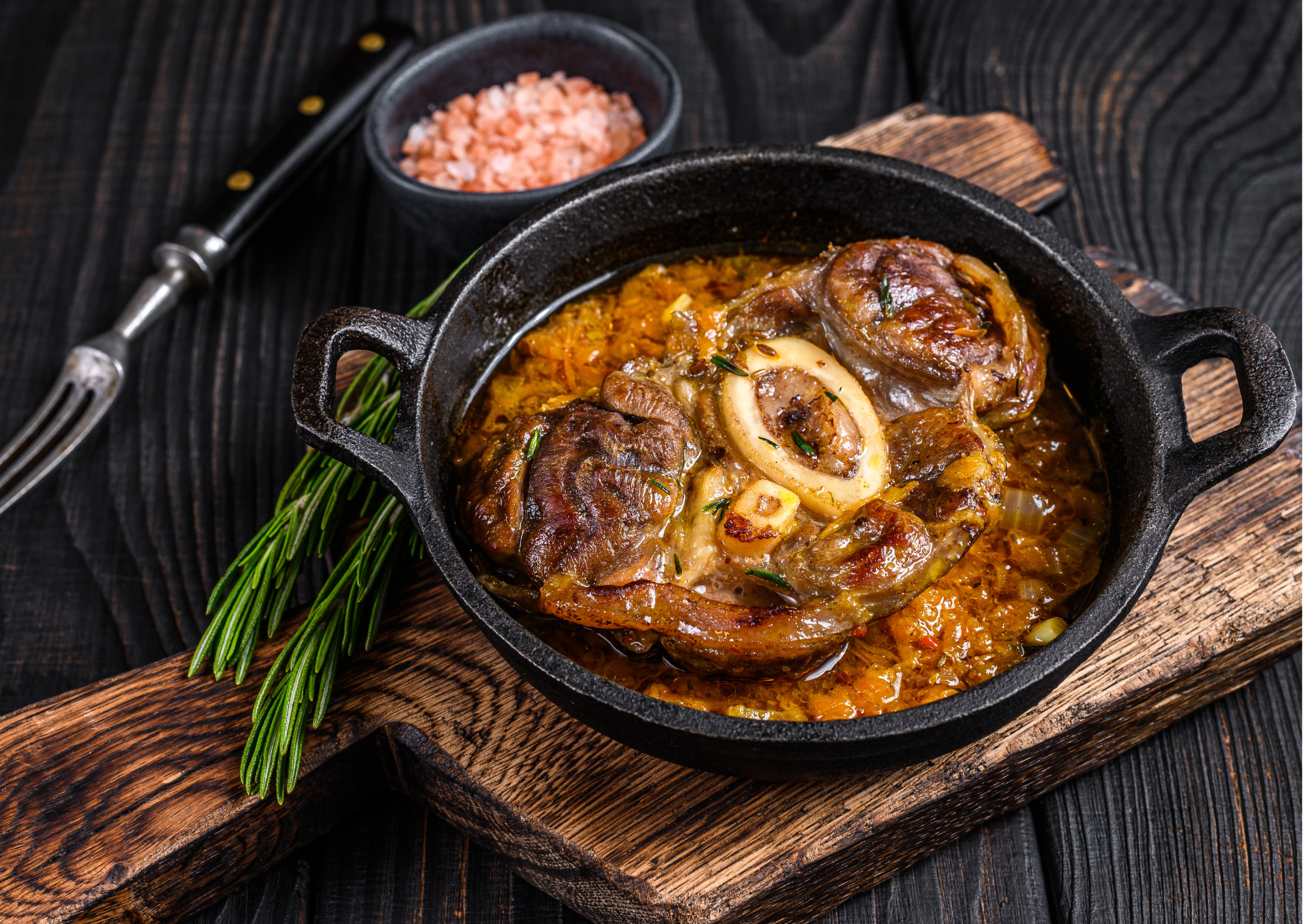
Milan serves osso buco with risotto alla Milanese, saffron and bone marrow in a golden rice that hums under the sauce. At home, you can swap soft polenta or buttery mashed potatoes and still get the right effect, a soft bed that traps juices and shows contrast. Soft starch to catch sauce, saffron if you want tradition, polenta for a weeknight.
Gremolata does more than look pretty. Citrus oils and raw garlic slice through richness, and parsley brings a green snap the braise lacks on its own. Keep it fine, keep it fresh, keep it off the heat until the last second. Zest and parsley for lift, garlic for snap, no cooking the garnish.
If you want to go full Milan, stir a spoon of bone marrow into the risotto at the end and let it melt. It is optional, it is also perfect.
Fixing Common Problems Without Starting Over
Osso buco is forgiving if you make the right mid-course corrections.
Meat is still tight at 2 hours.
It should be. Keep going. The danger window is the impatient hour between two and three. Test again at the three-hour mark. Time beats fiddling, do not raise the oven, let collagen finish.
Sauce is thin.
Lift shanks to a platter, tent loosely. Simmer sauce briskly 5 to 10 minutes until it clings to a spoon. If you dusted the meat with flour, it will tighten quickly. If not, mash a spoon of carrot and onion into the liquid or whisk in a teaspoon of cold butter. Reduce, do not dump starch, vegetables are natural thickeners, butter polishes.
Sauce is too tomato forward.
Add stock and reduce again. Finish with a knob of butter and a strip of orange peel to bring it back to balance. Stock dilutes, butter rounds, peel lifts.
Marrow fell out.
Scoop it gently back into the bone with a small spoon before you serve. Or stir it into the sauce, which is how restaurants make plates taste expensive. Marrow is flavor, no waste, hide the evidence in gloss.
Top dried out.
You probably used a shallow pan or loose foil. Spoon sauce over the tops, cover, and give it 10 to 15 minutes more in a low oven or on the gentlest stove heat to rehydrate. Baste, cover, wait, steam fixes dryness.
Using a slow cooker.
You can, but you lose reduction. Brown in a pan, slow cook on low 7 to 8 hours, then reduce the liquid in a saucepan to gloss. Return meat to sauce to rewarm. Crock for convenience, stove for gloss, same garnish.
Swaps, Sourcing, And Make-Ahead Strategy
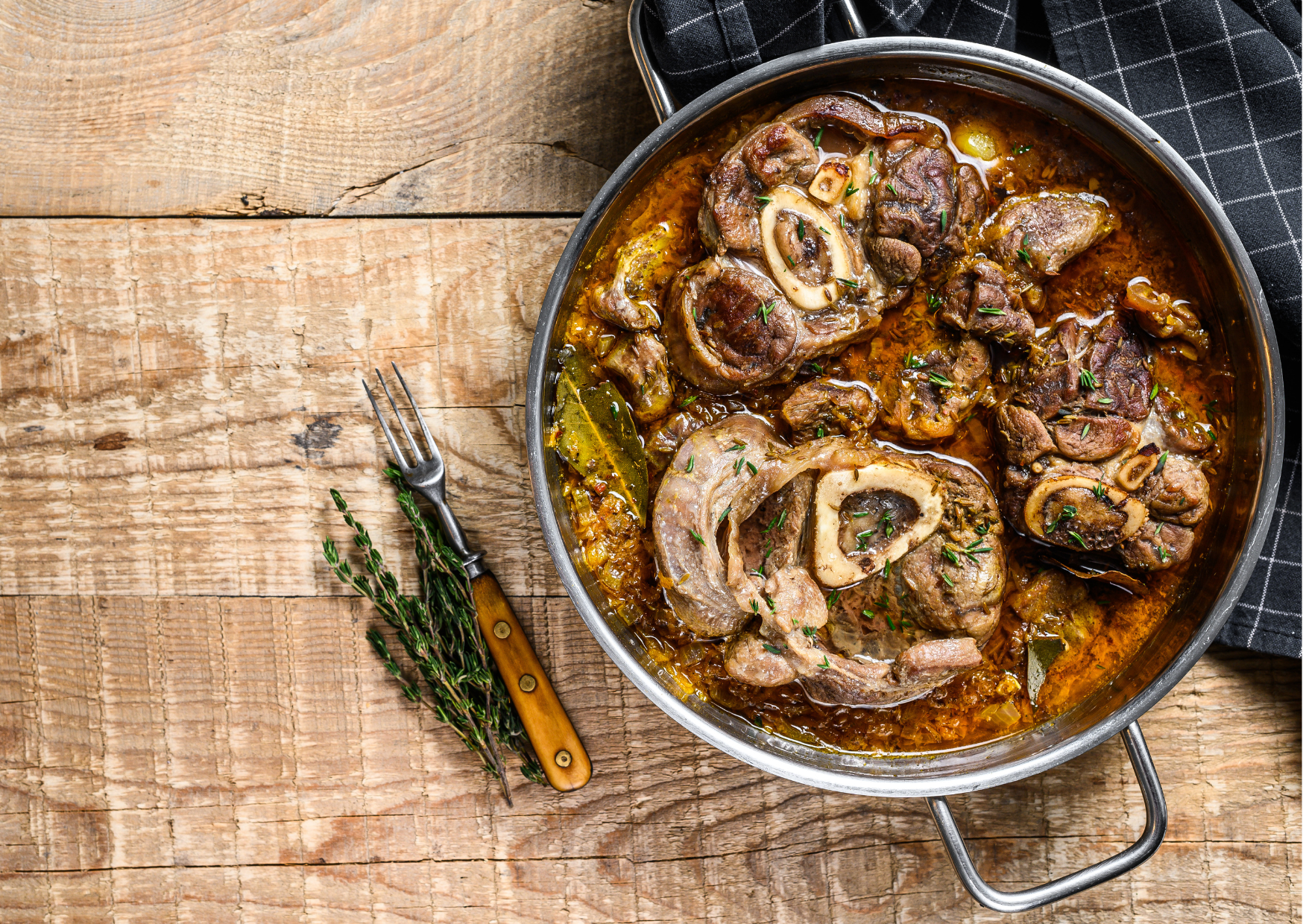
Veal can be expensive or scarce. Here is how to pivot without losing the spirit.
Beef shanks.
Use 4 to 5 cm thick slices, same method, add 30 to 45 minutes. Beef loves a touch more tomato and a gremolata with orange plus lemon. More time, bigger flavor, citrus balance helps.
Pork shanks.
Use hind shanks, browned, then braised 2½ to 3 hours. Choose stock lightly seasoned, cut tomato in half, and be generous with gremolata. Pork is sweeter, so the garnish does real work. Gentler tomato, brighter finish, watch the salt.
Stock.
Unsalted chicken stock is the safest base. Veal stock gives lush body if you have it. Avoid dark, reduced beef stocks that overpower veal. Light stock for veal, veal stock for luxury, skip heavy beef bases.
Tomato.
Passata or crushed tomato gives consistency. Fresh tomatoes work in summer if you cook them down. Keep it to 200 g for six shanks. Tomato is an accent, not the theme, color, not soup.
Wine.
Dry Pinot Grigio, Soave, or similar is ideal. Red wine is fine for beef shanks, but it darkens veal’s sauce and shifts the profile. White for veal, red for beef, reduce either.
Make-ahead.
Osso buco improves overnight. Chill in its sauce, covered. Next day, scrape firm fat, rewarm gently, and finish with fresh gremolata. The rest tightens the sauce and deepens flavor. Chill, skim, reheat, next-day magic, garnish fresh.
Pan choice.
Use a heavy, tight-lidded braiser that holds the shanks in one layer. If your lid leaks steam, cover pot with parchment, then lid. Heavy pot, tight lid, parchment as insurance, one snug layer.
Side dishes, American pantry.
If saffron is not on your shelf, serve with buttered orzo, parmesan grits, or creamy mashed potatoes. All do the same job, which is catching sauce and letting veal be veal. Soft starch, high gloss, no wrong answer, keep it simple.
What This Means For Your Table
You do not need a pressure cooker, a chef badge, or a hack. You need thick, tied shanks, a low oven, and three honest hours. Brown without burning, build a sweet soffritto, deglaze and reduce, keep tomato light, and cover tight. The rest is the clock.
When you plate, keep the garnish bright and the side soft. Then watch the marrow spoon out, the meat slide off the bone, and the sauce hold a shine without breaking. That is the whole promise of osso buco in a sentence, tenderness that reads as skill when it was mostly discipline.

About the Author: Ruben, co-founder of Gamintraveler.com since 2014, is a seasoned traveler from Spain who has explored over 100 countries since 2009. Known for his extensive travel adventures across South America, Europe, the US, Australia, New Zealand, Asia, and Africa, Ruben combines his passion for adventurous yet sustainable living with his love for cycling, highlighted by his remarkable 5-month bicycle journey from Spain to Norway. He currently resides in Spain, where he continues sharing his travel experiences with his partner, Rachel, and their son, Han.