
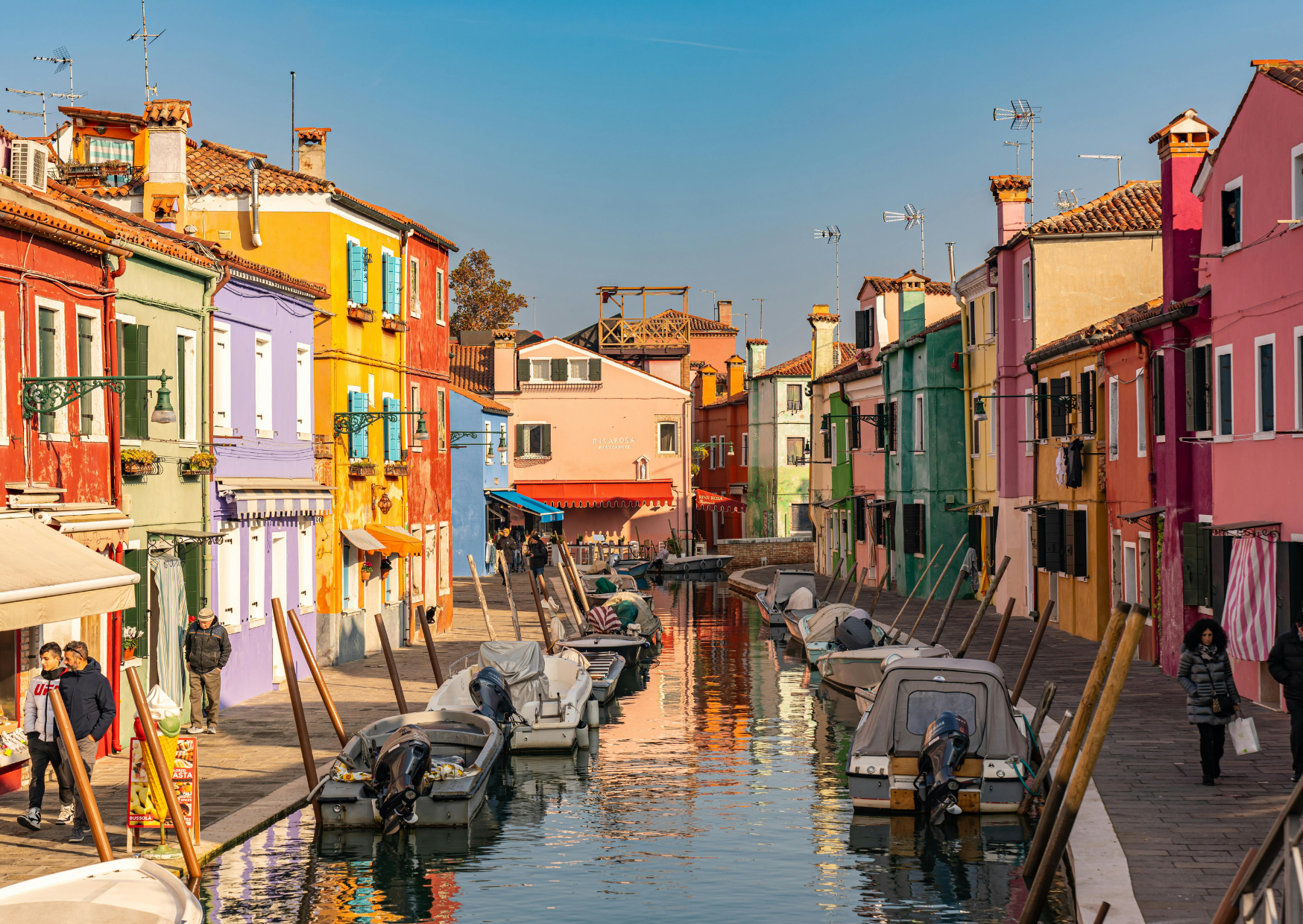
The Italy version of life looks perfect on a screen: morning markets, cheap espresso, small towns that feel like movie sets. The real Italy experience has stamps, queues, and a calendar that revolves around someone else’s office hours.
Americans move to Italy for a reason. They want a softer life and a harder floor. Less chaos, fewer bills that feel like punishment, more walking, more real food, more human rhythm.
And then some of them come back.
Not angry. Not embarrassed. Not doing the “Europe was a scam” routine.
Just honest: it was worth doing, and they’re still glad they left.
This is what that looks like, without the fantasy layer.
What They Thought Italy Would Fix
Their Michigan life wasn’t “bad.” That’s the point.
They had a mortgage that behaved, a neighborhood that felt safe, and a decent income on paper.
What they didn’t have was ease.
The American version of “convenience” had started to feel like constant paying. Subscriptions, insurance premiums, deductibles, tips, service fees, the creeping sense that everything costs more and works less.
They wanted fewer moving parts.
Italy looked like a reset. Smaller life. More walking. Food that didn’t come with a lecture. A healthcare system that didn’t feel like a trap door.
They also wanted something emotional and hard to quantify: to prove to themselves that the second half of life didn’t have to be a narrower version of the first.
So they did it properly. Not a two-week trip. Not a year-long sabbatical with one foot still in Michigan.
They went all in for two years.
They rented an apartment, registered, dealt with the bureaucracy, learned enough Italian to survive, and did the thing Americans always say they’ll do later.
They did it now.
And they still came home.
Not because Italy “failed.” Because the reality of day-to-day living in Italy is not a vacation lifestyle, and for their life stage, the tradeoffs stopped making sense.
The Paperwork Tax Nobody Budgets For
Italy has a real cost that never shows up in cost-of-living calculators: time spent proving you exist.
In the U.S., a lot of life runs on credit history and apps. In Italy, life runs on documents, stamps, in-person appointments, and rules that can change depending on the office you happen to land in.
The Michigan couple didn’t mind paperwork in theory.
What surprised them was the frequency.
Every system had its own gate. Every gate had its own form. And every form needed a code or a certificate that required another appointment.
It wasn’t just “do the residency process once.” It was constant.
A common example: the permesso di soggiorno process. The official cost table includes €16 for the marca da bollo, €30.46 for producing the permit, and a contribution fee that depends on permit duration, plus additional handling costs. You can find the same cost stack repeated across official portals and Poste guidance. It adds up fast, and it repeats every renewal cycle.
It wasn’t the money that broke them. It was the drip.
You can handle a big hard thing once.
It’s harder to handle small hard things every month while you are also trying to build a real life: banking, contracts, healthcare registration, utilities, mail, appointments, and the constant question of whether a document will be accepted today the way it was accepted last week.
And yes, the stereotype is true.
You will hear “torna domani” often enough that it becomes part of your personality.
The Housing Reality: Italy Can Be Cheap, Until You Want Normal

Italy absolutely can be affordable.
It can also be oddly expensive for the exact type of housing Americans think is “normal.”
If you want a renovated apartment, good insulation, reliable heat, a kitchen that doesn’t feel like a museum exhibit, and a landlord who communicates quickly, you are shopping in a smaller pool.
And the price rises.
Recent national reporting on Italy’s rental market shows average rents around €14.6 per square meter as of October 2025, with huge variation by city and region. Milan and Florence sit in the premium zone, while smaller cities and parts of the south can be dramatically cheaper.
Even more important, Italy’s rental affordability can be harsh in specific markets. One analysis highlighted places where rent can consume a very high share of income, while buying can be less burdensome relative to wages. That doesn’t mean Italy is “unaffordable,” it means the rental experience depends heavily on where you land and what you require.
For the Michigan couple, the money part looked like this:
- They found decent rent, but paid extra for heat that worked and a building that didn’t turn into a damp cave in winter.
- They paid deposits, agency fees, and set-up costs that felt like moving day taxes.
- They learned quickly that “cheap rent” is often paired with expensive compromises: cold, noise, mold, weak internet, or a landlord who disappears.
They could have made it cheaper.
But then they would have been living like they were camping.
They didn’t move to Italy to suffer for authenticity.
They moved to live well.
And “well” cost more than the dream version.
Healthcare Was Better Than the U.S., Then the Edges Showed
This is where Americans get polarized.
Some Americans move to Italy and feel immediate relief. Others get frustrated and go private for everything.
Both reactions make sense.
Italy’s system shields people from the U.S. style of financial catastrophe, especially around hospitals. The EU’s 2025 Italy health profile notes that public funding covers nearly all hospital care costs, and Italy performs strongly on avoidable hospitalizations for chronic conditions like diabetes.
That’s the good news.
The less Instagram-friendly news is that Italy also has high private spending compared to the EU average, largely driven by people paying out of pocket for private specialist services rather than cost-sharing inside the public system. Waiting times for specialist consultations can push people into private visits.
Americans notice this fast because it feels like a familiar pattern: a public system with a private back door.
The Michigan couple’s healthcare story looked like this:
- For basic needs, Italy felt calmer. Less billing drama, fewer forms, fewer surprise costs.
- For anything that required a specialist, they learned the real system: referrals, waiting lists, and the unspoken suggestion that you can always go private if you want it faster.
- Dental was the obvious pain point. Public dental coverage is limited in Italy, and expats learn quickly that a “cheap healthcare country” can still mean expensive teeth.
Then there’s the part most Americans miss until they’re already living there: how your residency category shapes your healthcare costs.
If you’re not in a category that qualifies for free registration, you may need to enroll voluntarily in the national health service, and that has become dramatically more expensive.
In 2025, reporting on Italy’s voluntary SSN registration describes a calculation based on income with a minimum fee of €2,000 and a maximum around €2,788.87, with the minimum raised sharply from the old level at the end of 2023. The fee is for the calendar year and is not prorated.
That number matters.
For an American couple in their 50s or early 60s, €2,000 a year might still feel like a bargain compared to U.S. premiums and deductibles.
But it is not “free healthcare.”
And it is one more recurring line item in the Italy ledger.
The Hidden Cost of “Living Like a Local”
The Michigan couple didn’t return because Italy was too expensive in the obvious ways.
They returned because the total cost of living like a local included things they didn’t want to pay with.
Italy asks you to pay with:
- patience
- schedule flexibility
- language ability
- willingness to be confused in public
- social energy
When you’re 28, this feels like adventure.
When you’re 55, it can feel like a part-time job.
Here’s what surprised them most.
Italy can be low-cost, but it’s not always low-effort.
Small errands become projects. A simple task like changing a utility contract can eat half a day and still not resolve cleanly. A bank appointment can require documents you didn’t know existed. A contractor can say “next week” for six weeks.
It’s not that Italians are lazy.
It’s that the system often operates on relationship and local fluency, not standardized process.
Americans raised on customer service interpret this as incompetence. Italians interpret American expectations as naïve.
The couple started out trying to be flexible.
They ended up managing their life around offices, holidays, closures, and “that one person who knows how to do it” being on vacation.
At a certain point, they realized they were spending their limited adult years chasing stamps.
They didn’t want their retirement arc to be a scavenger hunt.
Community Is the Part Americans Romanticize, Then Miss Back Home
Italy is warm, and it isn’t.
It’s friendly, and it isn’t.
If you’re a tourist, Italians often treat you like a pleasant interruption. If you’re a resident, you become part of the social ecosystem, which can be harder.
Survey data from InterNations captures something many Americans feel but rarely admit: Italy ranks poorly on admin topics and bureaucracy, and expats report high difficulty dealing with authorities. It also ranks lower on feeling at home and welcome for a meaningful share of respondents.
That doesn’t mean Italians are cold.
It means belonging in Italy is not automatic.
If you don’t speak Italian well, you can live there, but you’ll live behind glass. You’ll have acquaintances, not deep community. You’ll have pleasant interactions, not the kind of relationships that carry you when you’re sick or tired or grieving.
The Michigan couple made friends.
But most of their closest connections ended up being other foreigners, because the social friction was lower.
Then they started feeling the loss.
In Michigan, community was imperfect but easy. Family dinners. Old friends. People who knew their history.
In Italy, they had beauty and novelty, but they had fewer people who would show up at 9 p.m. with soup if someone got sick.
And that matters more as you age.
They didn’t return because Italy was lonely.
They returned because Michigan was more theirs.
Work, Money, and the Michigan Math They Couldn’t Ignore
The couple didn’t blow their finances in Italy.
They ran the numbers. They tracked spending. They weren’t pretending.
But Italy changed how they thought about money in three uncomfortable ways.
First, Italy made them see how expensive American healthcare really is.
In the United States, the average annual premium for employer-sponsored health insurance in 2025 was $9,325 for single coverage and $26,993 for family coverage, with workers paying a meaningful share out of paycheck. That number sits in the background of American life like a fog.
Second, Italy made them see how much “cheap life” depends on your income source.
If you’re living off U.S. income, Italy can feel like a discount.
If you’re trying to earn locally, it can feel like a squeeze.
The couple wasn’t trying to build an Italian career, but they still felt the structural reality: Italian wages and job markets are not built for American expectations, and expats consistently report dissatisfaction with career prospects in Italy in major surveys.
Third, coming back to Michigan had costs they couldn’t ignore, but they also had clarity.
Michigan is not cheap in every category. Car insurance is an obvious one.
Recent U.S. insurance data puts Michigan’s average annual car insurance around $2,847 in late 2025 data, with other sources estimating higher for full coverage depending on methodology. The point is not the exact number. The point is that Michigan is not the “low cost” version of America people imagine when they compare it to coastal states.
But Michigan gave them predictability.
And predictability is a financial asset.
They could budget for insurance. They could schedule appointments without wondering which office was closed for a local holiday they missed. They could manage life without feeling like every process was an obstacle course.
They traded Italy’s romance for Michigan’s stability.
And they were fine with that.
Coming Back Was Its Own Culture Shock, But It Felt Like Relief

The first weeks back weren’t a victory lap.
They felt weird.
The U.S. feels louder after Italy. The roads feel angrier. The shopping feels aggressive. Portions look comical. People eat in cars like it’s normal.
And the healthcare pricing hits like a slap again.
But the couple noticed something that mattered more than aesthetics.
They felt competent again.
In Italy, they had spent two years as beginners. They were always learning, always second-guessing, always unsure whether they were doing something wrong or just encountering a system that doesn’t care.
Back in Michigan, competence returned quickly.
They could call a company and get an answer. They could renew something online. They could read every form in their own language and know exactly what it meant.
This is the part that gets lost in expat fantasy.
Living abroad is not just new scenery. It is living inside a permanent learning curve.
Some people love that.
Some people eventually want to stop performing adulthood in hard mode.
The Michigan couple didn’t regret Italy because they didn’t frame it as “forever.” They framed it as a chapter.
They got what they went for:
- a reset in rhythm
- a clearer relationship with food
- proof they can handle discomfort
- memories that feel expensive, in the best way
Then they came home before the admin fatigue turned into bitterness.
That’s the real win.
The Seven-Day Reality Check Before You Commit to Year Three
Most Americans don’t leave Italy because of one dramatic failure.
They leave because of accumulation.
So if you’re in Italy now, and you’re trying to decide whether to extend, here’s a blunt one-week test that surfaces the truth quickly.
Day 1: Do the paperwork you’ve been avoiding.
Pick one admin task that has been sitting on your list for months. Bank issue. residency renewal prep. health registration. If you dread it like a dentist appointment, pay attention.
Day 2: Track your real spending for a full day.
Not the romantic spending. The actual. Rent, utilities, transport, groceries, pharmacy, coffee, random fees. Write it down. The Italy story changes when you look at true monthly totals.
Day 3: Test healthcare access, not healthcare ideology.
Book an appointment that is not an emergency. GP, specialist consult, dental. Measure the wait. Measure the friction. If you end up paying privately to avoid delays, that’s not a failure. It’s your real system.
Day 4: Spend an entire afternoon in Italian.
No expat bubble. No English. Just you navigating life. If you can do that without feeling depleted, you’re building real resilience.
Day 5: Ask yourself who would help you in a bad month.
Not who you have coffee with. Who would show up if you were sick for two weeks. If that answer is “nobody nearby,” it doesn’t mean Italy is wrong, but it changes what you’re buying.
Day 6: Do one annoying local errand on purpose.
Car paperwork. utilities call. appointment booking. If it takes three hours and ruins your day, don’t pretend that doesn’t matter.
Day 7: Choose the tradeoff you actually want.
Italy offers beauty and a slower rhythm. The U.S. offers competence and speed. Neither is morally superior. The question is what you want at this stage.
If your honest answer is “I’m tired,” that is allowed.
If your honest answer is “I still want more Italy,” that is also allowed.
The mistake is turning a two-year experiment into a ten-year resentment because you can’t admit the chapter is done.

About the Author: Ruben, co-founder of Gamintraveler.com since 2014, is a seasoned traveler from Spain who has explored over 100 countries since 2009. Known for his extensive travel adventures across South America, Europe, the US, Australia, New Zealand, Asia, and Africa, Ruben combines his passion for adventurous yet sustainable living with his love for cycling, highlighted by his remarkable 5-month bicycle journey from Spain to Norway. He currently resides in Spain, where he continues sharing his travel experiences with his partner, Rachel, and their son, Han.