
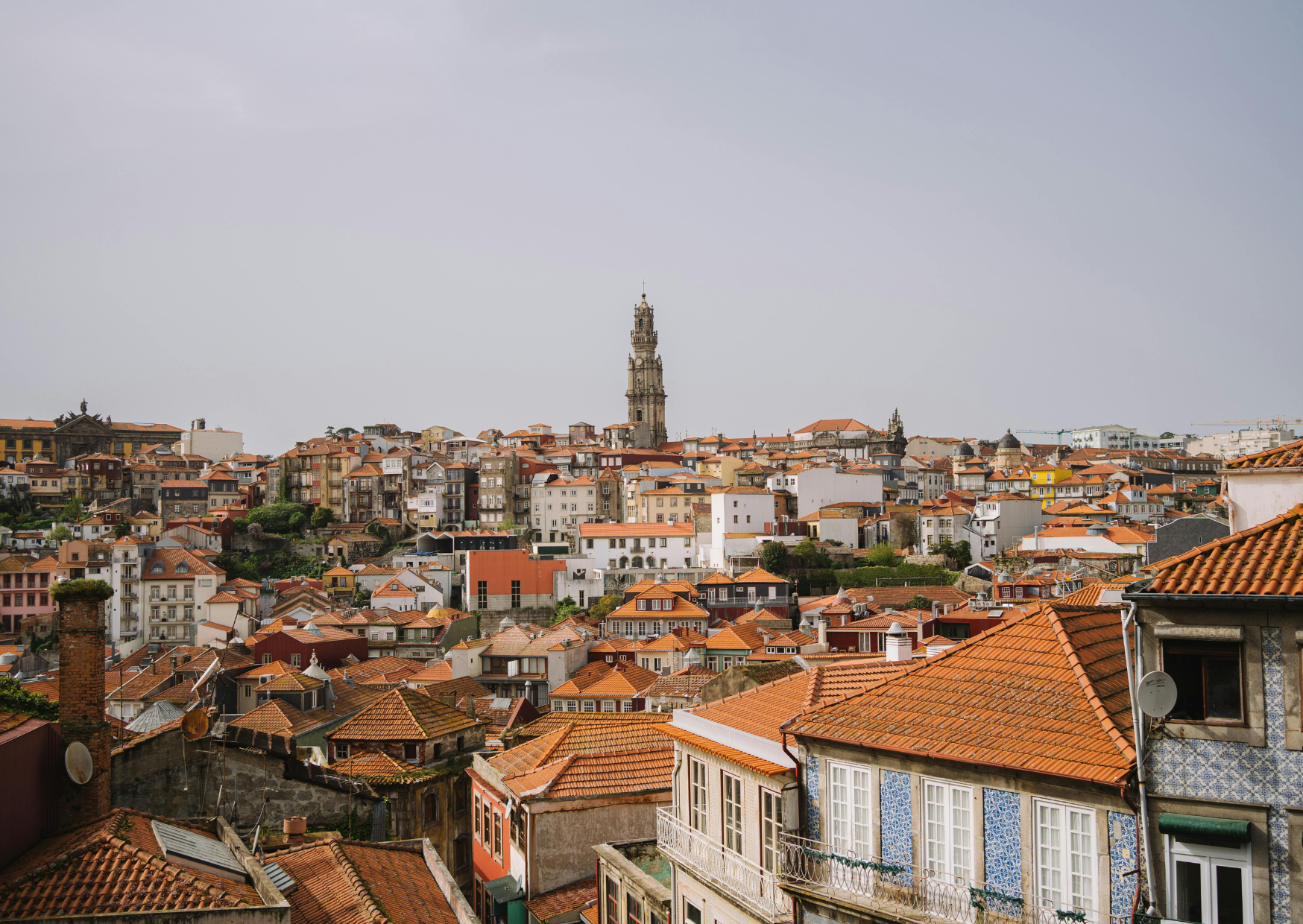
Portugal still looks simple on paper: a residence visa, a sunny landing, a calmer life. The part Americans don’t expect is that the visa is only the first gate, and the second gate is moving slowly because the system is overloaded.
Americans tend to describe Portugal with one word: easy.
Easy climate. Easy food. Easy pace. Easy people.
Then they start the residency process and suddenly “easy” becomes a 14-month calendar where nothing is technically wrong, but everything takes longer than a reasonable adult expects.
This is the part that breaks people psychologically.
Not the forms. Not the fees. The waiting.
The weird in-between life where you have a real plan and a real lease, but your residence permit still isn’t in your hands. Where you can’t travel freely, can’t fully exhale, and start questioning whether the whole move was a mistake.
Portugal did not become impossible. It became slow, and many Americans are not emotionally trained for slow bureaucracy.
Here’s what’s actually happening, why the timeline stretched, and how to plan like a person who wants to win instead of a person who wants to feel optimistic.
The “easy” Portugal visa is two different processes Americans mash together

The first reason Americans get blindsided is simple: they talk about “the visa” like it’s one thing.
It’s not.
It’s two separate systems that touch each other once, then diverge:
- The consulate process in the U.S. (or through a visa center) to get a residence visa sticker in your passport.
- The residence permit process inside Portugal, handled by AIMA.
Americans often assume the first one is the main event. It feels like the big hurdle. You gather documents, get apostilles, show funds, prove accommodation, do the appointment, and then you get approved.
But the visa sticker is basically a bridge. It gets you into Portugal so you can do the second process.
That second process is where the time stretches.
Portugal’s own official visa information is clear that a residence visa is valid for four months and allows two entries. It’s designed to get you into Portugal so you can request the residence permit. That design choice is important because it creates pressure. You have a short validity window for the entry document, and a slower system waiting on the other side.
So when an American says, “My Portugal visa is taking forever,” what they often mean is: “I’m stuck between entry and residency.”
That gap is where 14 months happens.
And once you see it as a two-stage pipeline, the timeline starts to make sense in a depressing, practical way.
Stage 1 looks like “60 days,” but it rarely behaves like 60 days
Portugal’s residence visa decision time is often described as 60 days, and you’ll see that number repeated across official guidance and visa center checklists.
But Americans tend to interpret “60 days” as: I submit on January 1, I get an answer on March 1.
In practice, 60 days is not your full timeline. It’s a decision target that starts counting once your file is actually at the consular section and considered properly submitted. It also sits inside a process where documents can be questioned, updated, or reissued.
Here’s where the extra time usually sneaks in:
- Document freshness rules. Some documents are expected to be recent, and “recent” can mean different things depending on the consulate and your case. A file that is technically complete can still be treated as stale if it took you too long to assemble.
- Banking proof that is correct, but not “consulate-correct.” Americans love tidy spreadsheets. Consulates love documents that map cleanly to their checklist. If your income proof is legitimate but messy, you can lose weeks fixing presentation.
- Accommodation proof that looks improvised. If you show a plan that looks like a placeholder, you may get more scrutiny.
- Holiday math. Consular calendars and local holidays matter more than Americans expect.
This is why the people who move fastest are often not “the most qualified.” They’re the most administratively boring. Their documents are clean, recent, and match the checklist with no creative interpretation.
So your stage 1 reality is usually this:
Even if the official number says 60 days, you should plan two to four months from “I decide to apply” to “I have a visa sticker,” because your prep time is part of the real clock.
That is not pessimism. It’s schedule hygiene.
Stage 2 is where the backlog lives, and it’s why year one feels like limbo
Stage 2 is where Americans lose their minds, because it’s the part they did not budget emotionally.
After you arrive in Portugal with a residence visa, you need the AIMA step to convert that entry document into a residence permit card. Historically, many applicants expected an AIMA appointment to be scheduled as part of the system.
Then a key change landed.
In December 2025, Portugal’s official visa portal published guidance stating that if, at the time of issuing the residence visa, there are no appointments available with AIMA, the visa sticker will be issued without an appointment. That sounds administrative, but it changes the lived experience completely.
Because when a visa is issued without an appointment:
- You land in Portugal and you are immediately in a scheduling chase.
- Your timeline is now shaped by appointment availability, not your own organization.
- You lose the psychological comfort of a date on the calendar.
This is why the “easy” visa now often feels like a 14-month slog. The pipeline is strained at the exact point where your life needs the system to move.
The backlog is not a rumor. Even major professional immigration firms have publicly described long appointment delays as creating operational and travel challenges for foreign nationals arriving on residence visas.
So what is actually causing stage 2 to stretch?
A few forces stack together:
- High demand. Portugal has been attracting large numbers of new residents.
- System transition. AIMA replaced SEF, and transitions create bottlenecks even when intentions are good.
- Appointment scarcity. Even when the system is processing files, appointment supply can remain tight depending on city, staffing, and workflow.
This is why one person can get lucky and move through faster, while another waits months for the same step in the same country.
It’s not personal. It’s capacity.
And capacity is the real reason your “simple move” becomes a waiting game.
The four-month visa validity creates pressure, and that pressure is the trap
Portugal’s own rules matter here because they shape how stressful the wait becomes.
A residence visa is valid for four months and allows two entries. That’s not a long time. It is not designed to be a comfortable, flexible “long stay” document. It’s designed as a bridge to the residence permit.
So when stage 2 drags, the stress spikes because:
- The entry document has a clear end date.
- Your new life is already in motion, rent, utilities, routines, commitments.
- Your ability to travel, even for family reasons, is not as flexible as Americans assume.
This is where people start making expensive mistakes.
They try to “fix” uncertainty by spending money. They upgrade rentals. They hop cities. They hire services they don’t fully understand. They chase shortcuts.
The hard truth is that the visa validity window was never designed to hold you comfortably while a slow appointment system catches up.
That mismatch is what creates the emotional experience of being stuck.
And it is why you must plan your move like you will have a bureaucratic winter, even if the weather is mild.
The hidden reason timelines stretch: documents expire while you wait, and rework multiplies
Americans usually think delays are about the government moving slowly.
Sometimes they are. But a big part of the 14-month experience is rework.
When you are stuck in limbo, you keep living. Time passes. Documents age out. Proof gets stale. Requirements evolve. You get asked for updates.
This is where 14 months quietly becomes normal.
Common rework triggers include:
- Proof of funds needing updated statements. Even if nothing changed, you may need current evidence that nothing changed.
- Insurance coverage adjustments. People arrive with an insurance plan that worked for the visa stage, then discover they need to align it with the residence permit stage expectations.
- Address stability. If you move rentals mid-process, your paperwork trail can become messy.
- Dependent documentation. Families often get hit with extra rounds of proof simply because there are more moving parts.
Rework matters because it doesn’t just add days. It adds decision fatigue.
This is why the people who survive the long Portugal timeline best are the people who treat the process like a project:
- One folder.
- One checklist.
- One timeline.
- No improvisation.
The people who suffer are the ones trying to “live normally” while doing admin casually.
Portugal punishes casual admin.
Not out of cruelty. Out of system design.
The travel trap is real, and it’s where the process hurts most
Americans planning a European retirement often assume mobility is part of the deal.
A month in Italy. A week in Paris. Back to Portugal. Repeat.
But during the in-between period, travel becomes complicated because the residence visa has two entries and a limited validity period. If you leave Portugal at the wrong time, you can create a re-entry problem, and airlines do not care about your story. They care about whether your document set matches entry requirements.
This is one reason the limbo feels worse than it “should.”
It’s not just paperwork. It’s life constraints.
You can still have a great year in Portugal while waiting, but only if you adjust expectations:
- Treat travel as something you do after stability is in place.
- Plan family visits to Portugal rather than bouncing out repeatedly.
- Avoid building a life strategy around casual border movement while your status is not fully documented.
Americans who ignore this often end up paying a “stress tax”:
- last-minute flights
- last-minute housing changes
- legal consult fees that could have been avoided
- emotional fallout that makes Portugal feel hostile when it’s really just procedural
If you want the calm version of Portugal, you have to respect the phase you’re in.
Phase two is not the “Europe travel season.” It’s the “stay steady and finish the process” season.
Why “14 months” is the new realistic planning number
Fourteen months is not a magical official number. It’s a realistic composite timeline that reflects how the two-stage pipeline behaves when demand is high and appointments are tight.
Here is a sample timeline that matches what many Americans experience when nothing goes dramatically wrong, but nothing is unusually fast either.
A realistic timeline example
Months 0 to 2: Pre-application build
Gathering documents, apostilles, proof, insurance setup, accommodation proof.
Months 2 to 4: Consulate processing and back-and-forth
The file is submitted, and any clarifications or updates get handled.
Month 4: Visa issued
You now have a residence visa valid for four months, two entries.
Months 4 to 5: Move and settle
Arrival, initial housing, basic setup.
Months 5 to 10: Waiting phase
This is the appointment bottleneck era. If your visa was issued without an AIMA appointment, you are now chasing one. Even with an appointment, the scheduling may be months out depending on location.
Months 10 to 12: Appointment and processing
You do the in-country step, provide what’s needed, then wait for the formal outcome and card steps.
Months 12 to 14: Cleanup and stabilization
Card issuance, renewal portal steps if relevant, alignment of healthcare and admin life.
That’s how 14 months becomes a normal story.
And here is the most important part: most people who reach month 14 are not failing. They are simply living inside the system as it currently operates.
If you plan for 14 months, you feel steady.
If you plan for six, you will feel betrayed.
That difference matters, because emotional betrayal is what makes Americans bail out and go home.
The first 7 days that make the difference between calm and chaos
If you want Portugal to feel “easy,” you have to do the unsexy work early.
Here’s the 7-day plan that prevents the most common mistakes.
Day 1: Decide which life you’re building.
If you want a calm retirement life, you need administrative stability, not constant movement. Write down your first-year goal in one sentence. Keep it practical.
Day 2: Build a timeline that assumes delay.
Put 14 months on the calendar as your planning horizon. Not as a prophecy, as a buffer. Buffer is sanity.
Day 3: Lock housing for stability, not perfection.
Pick a place that supports paperwork and routine, not just charm. A stable address matters more than a view.
Day 4: Create a document system that can survive rework.
One folder, digital and physical. Every receipt, every letter, every updated statement. Order beats memory.
Day 5: Treat appointments like airline tickets.
If you see an AIMA slot, take it. Don’t wait for “better.” Better is imaginary when systems are tight.
Day 6: Plan travel like a person with constraints.
Assume limited mobility during the in-between phase. If family needs you, plan their visit to Portugal when possible. Avoid the re-entry drama that ruins months of progress.
Day 7: Budget the stress tax honestly.
Even if Portugal is cheaper than your U.S. baseline, the first year often includes: higher rent for furnished housing, extra trips, document costs, and occasional professional help. Don’t pretend it won’t. Pretending is what breaks budgets.
Portugal is still one of the more appealing places in Europe for Americans 45 to 65.
But it’s not “easy” in the way Americans mean easy.
It’s easy in the lifestyle sense once you are fully settled. It is not easy in the administrative sense while the system is catching up.
If you plan for a long runway, you will feel calm when others feel panicked. And calm is the real luxury retirees are chasing.

About the Author: Ruben, co-founder of Gamintraveler.com since 2014, is a seasoned traveler from Spain who has explored over 100 countries since 2009. Known for his extensive travel adventures across South America, Europe, the US, Australia, New Zealand, Asia, and Africa, Ruben combines his passion for adventurous yet sustainable living with his love for cycling, highlighted by his remarkable 5-month bicycle journey from Spain to Norway. He currently resides in Spain, where he continues sharing his travel experiences with his partner, Rachel, and their son, Han.