
If you want to know whether Portugal actually fits your retirement life, Lisbon is the loudest, priciest, most distorted way to test it. These towns show you the country you will actually live with, day after day, week after week.
There is a moment that repeats itself every season.
An American couple lands in Lisbon with two suitcases and a plan: “Just one month. We’ll see how it feels.”
They book a pretty apartment in a neighborhood that looks calm in photos. Day three, they are already negotiating with themselves. The hills hurt. The noise is constant. The prices feel… suspiciously un-Portuguese. And every errand takes longer than expected because the city is built for locals who have decades of muscle memory, not newcomers trying to read a pharmacy label while dodging scooters.
Lisbon is not a bad city. It is just a bad baseline.
If your goal is slow travel retirement, meaning one to three months in a place with real routines, you want towns where the “Portugal part” is loud and the “tourist machinery” is quiet. You want somewhere you can practice daily life without paying a premium for other people’s vacations.
This guide is that shortlist. Not fantasy villages. Not “hidden gems.” Real towns with supermarkets, clinics, sidewalks that do not feel like a dare, and enough rhythm to tell you the truth about yourself.
Why Lisbon is a distorted test for retirement life
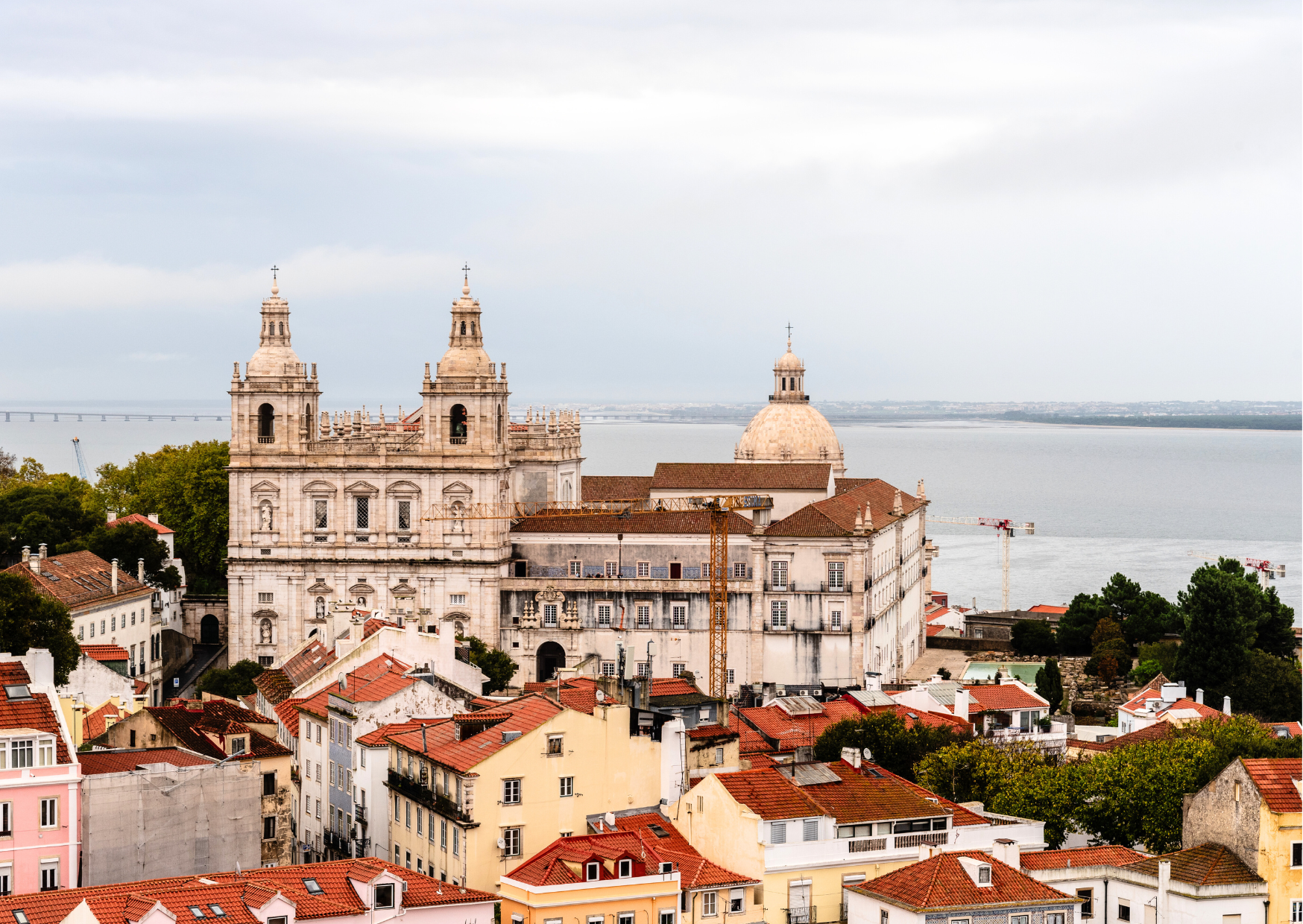
The problem with Lisbon is not that it is too touristy. The problem is that it teaches the wrong lessons.
In a month, Lisbon will teach you how to navigate crowds, how to tolerate noise, how to climb stairs you did not ask for, and how to pay city prices. That is useful information, but it is not “Portugal.” It is Portugal under pressure.
If your retirement dream is calmer mornings, routine walks, and predictable costs, Lisbon tempts you into a false conclusion: “Portugal isn’t for me.”
Sometimes what they really mean is: “This particular version of Portugal, in this particular city, with this particular housing market, isn’t for me.”
Lisbon is also a trap for decision-making. People spend more to feel comfortable, then decide the country is expensive. Or they downgrade comfort to save money, then decide the country is uncomfortable.
Both things are true at the same time. Lisbon is vibrant, and Lisbon can grind you down.
A better test is a town where you can live like a local without trying. Where the default is quiet competence, not constant negotiation.
The slow travel checklist that makes a town worth a month
Before the town list, here’s the filter. If a place fails these, it can still be a lovely week. It will not be a good retirement test.
- A daily loop you can repeat without thinking: flat enough, safe enough, pleasant enough. You want boring walkability, not “scenic when you’re in the mood.”
- A grocery routine that feels normal: a supermarket, a produce market, and a bakery within a sane radius. The goal is everyday food, not restaurant life.
- Healthcare access you can actually use: at minimum, clinics and pharmacies that are easy to reach. For longer stays, you want a hospital within simple transport. Retirees underestimate how much medical proximity affects stress.
- Housing stock that exists outside peak tourism: towns with a real long-term rental market are easier. Pure vacation markets tend to punish you for staying longer.
- A winter reality that matches your body: Portugal can be cold inside. If you are testing in winter, you need heating you can live with, not heating you can tolerate. This is comfort, not luxury.
- A social surface area: places where it is easy to have small, repeat interactions. The barista, the neighbor, the market vendor. You are looking for light social contact, not instant best friends.
Now the towns.
Coimbra is the best all-around reality check

This is the town that quietly saves people from expensive mistakes.
It’s big enough to function like a real city, but not so big that you spend your month fighting it. It has a university heartbeat, which matters more than people think. Students keep the place alive. Cafés stay open. There’s movement, but it’s not frantic.
For slow travel retirees, the big win is predictable daily living. You can run errands, cook at home, walk by the river, and still have culture on tap when you want it.
It also forces a useful question: can you handle a town that is not performing for tourists?
Because this place does not chase you. It does not flatter you. It just works.
The money reality, in numbers
In December 2025, the long-term rent price on Idealista’s index for the city is 11,9 €/m². That is not what you will always pay for a one-month stay, but it tells you what the local market looks like when it is not packaged as a vacation.
A simple way to think about it:
- 50 m² apartment at 11,9 €/m²: €595/month baseline
- 70 m² apartment at 11,9 €/m²: €833/month baseline
For a furnished one-month rental, expect a premium. The point is not to find the perfect deal. The point is to see whether the underlying town feels livable without tourist-pressure pricing.
What this town tests for you
- Can you enjoy a place that has real Portuguese rhythm, not expat entertainment?
- Do you like a social scene that is mixed, students, families, older locals, not just retirees?
- Are you okay with some hills, but not the constant stair workout of Lisbon?
If you want a month that feels like actual life, this is where many people should start.
Braga and Guimarães are where social life becomes easier
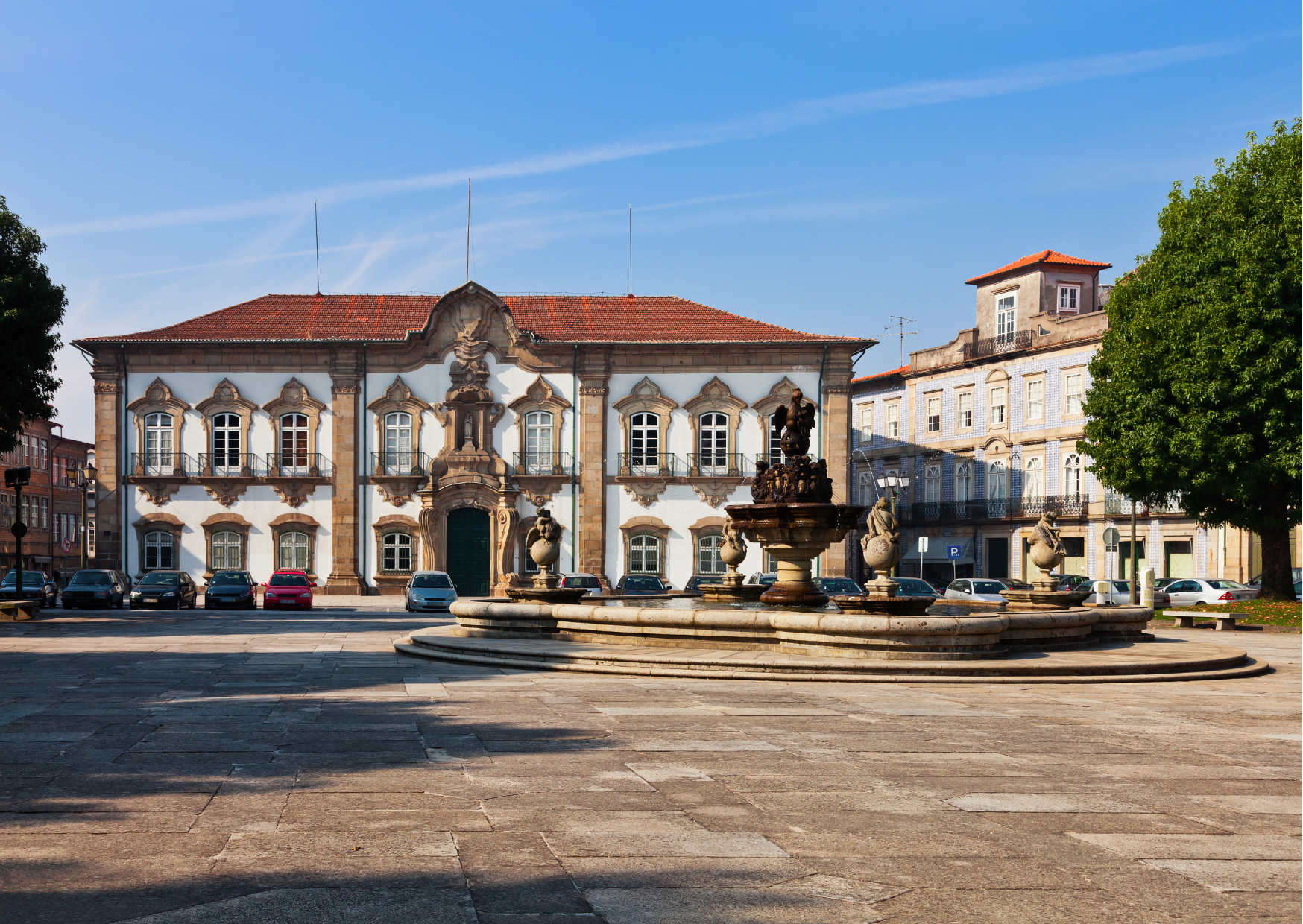
Northern Portugal has a different personality.
People are out more. The streets feel lived-in. The social fabric is tighter, which can be comforting or suffocating depending on your temperament. For slow travel retirees, it is often comforting because you get more of those small repeat interactions that make you feel human.
The larger of the two is modern in a way that surprises newcomers. It has shopping, transit, parks, and a steady flow of local life. The smaller one feels more historic, more compact, and more “weekend walkable.”
They work as a pair because you can base in one and visit the other without turning it into a whole travel day. That’s the slow travel sweet spot: short-distance variety.
The money reality, in numbers
In December 2025, Idealista’s index shows 10,1 €/m² for the city and 10,3 €/m² at the district level. The nearby historic town sits at 10,3 €/m² on the same table.
Quick math for baseline expectations:
- 60 m² at 10,1 €/m²: €606/month
- 80 m² at 10,1 €/m²: €808/month
Again, your one-month furnished price can be higher. But the underlying market is not Lisbon-level inflated, and that changes how retirement math feels in your body.
What this pair tests for you
- Do you want more community by default?
- Can you handle a place where English is present but not the operating system?
- Are you okay with a climate that can be damper, and a winter that feels real?
If you are the kind of person who gets lonely easily, northern towns often make that problem smaller. Not because everyone befriends you, but because you are surrounded by everyday social friction, the good kind.
Aveiro and Ílhavo are for flat walking, water air, and “easy mode” routines
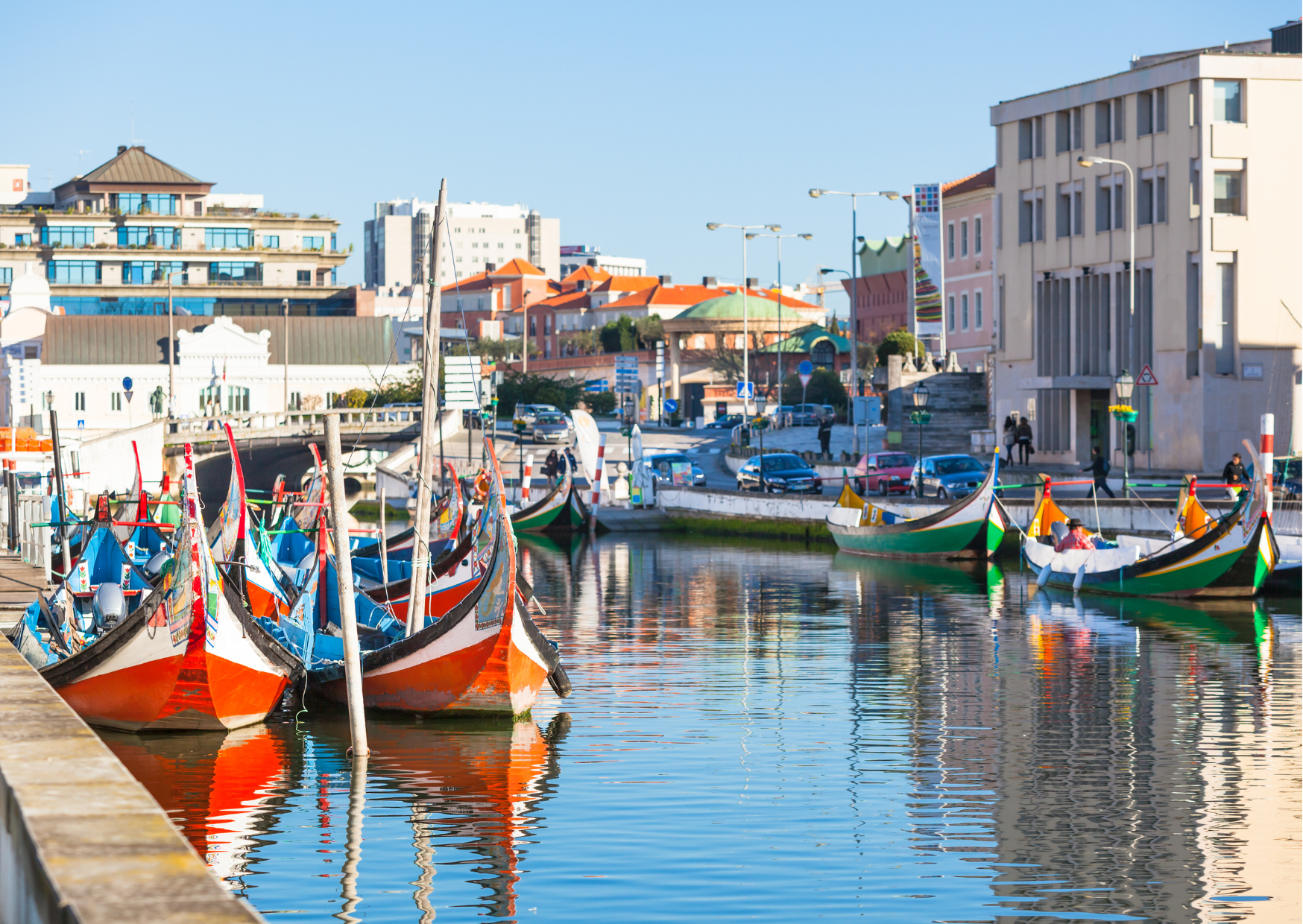
Some retirees do not want a big cultural statement.
They want a place where it is easy to wake up, walk, eat, and feel calm. Water helps. Flat streets help. A town that doesn’t demand constant navigation helps.
This area delivers that. The famous canals are the postcard, but the real value is how functional daily life can be. It is easier to walk here. It is easier to do errands without turning it into a physical event.
The nearby smaller municipality can be a quiet alternative when the center feels too busy. It’s also where some people find more space and less tourist churn.
The money reality, in numbers
In December 2025, Idealista’s index shows 11,5 €/m² for the city and 9,8 €/m² for the nearby municipality, with the broader district at 10,1 €/m².
Baseline math:
- 55 m² at 11,5 €/m²: €633/month
- 70 m² at 11,5 €/m²: €805/month
- 70 m² at 9,8 €/m²: €686/month
This area is a good reminder that Portugal is not one price. Even nearby towns can shift your monthly reality in a meaningful way.
What this area tests for you
- Do you prioritize flat, repeatable movement over nightlife and novelty?
- Do you want a town where “pretty” is present, but daily function is the main feature?
- Are you okay with a place that can feel quieter socially unless you make an effort?
If your dream month is long walks, simple meals, and a calmer nervous system, this is a strong bet.
Caldas da Rainha plus São Martinho do Porto is the Silver Coast setup that retirees actually use
This is the pattern a lot of practical retirees settle into, even if they never say it like this.
They want “near the coast” without paying “on the coast” prices. They want access to beaches without living inside a summer circus. They want a town with services and a weekly rhythm, then a smaller coastal place for reset days.
This pairing does that.
The inland base has markets, shops, real housing stock, and a less seasonal feel. The coastal spot is for when you want sea air and a long promenade walk, but you still want to sleep.
The money reality, in numbers
In December 2025, Idealista’s index for the inland base is 9,9 €/m².
Baseline math:
- 60 m² at 9,9 €/m²: €594/month
- 85 m² at 9,9 €/m²: €842/month
This is where slow travel gets interesting. When the baseline is calmer, paying a premium for a one-month furnished stay does not feel like betrayal. It feels like a temporary cost for a low-stress test month.
What this setup tests for you
- Do you like a town that feels practical first, charming second?
- Can you handle summer crowds if you plan around them?
- Do you want coastal access without the Algarve price pressure?
If you want to try Portugal without the capital-city distortion, this is one of the most retiree-friendly patterns.
Évora is for people who want quiet, heat, and less outside influence
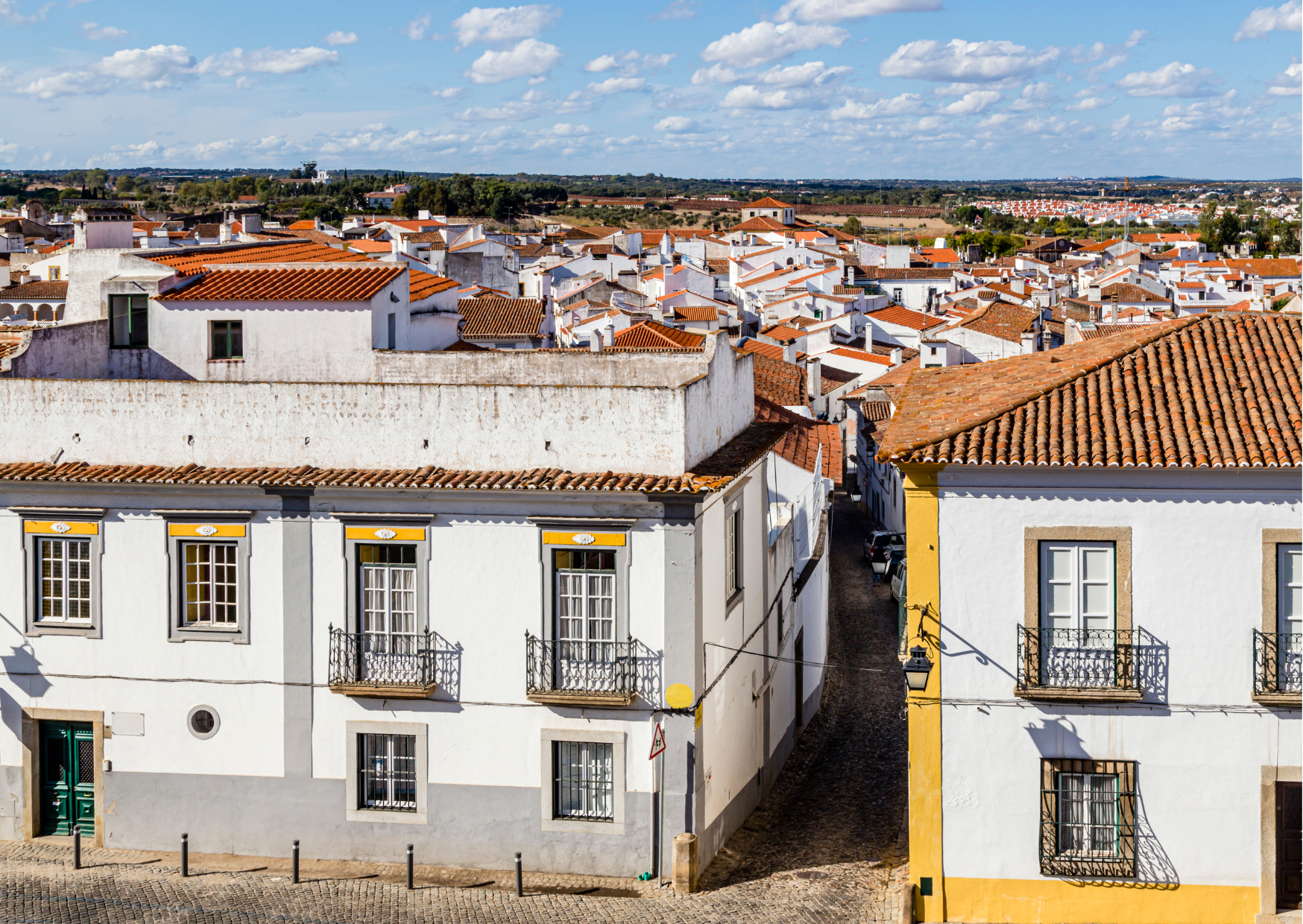
This is not for everyone, and that’s the point.
Some Americans come to Portugal and still want a lot of English, a lot of expat infrastructure, and a lot of international convenience. This town is not that.
It is slower. More self-contained. More Portuguese in the sense that your life will run on local systems and local pace. If you like history and calm, it can feel deeply nourishing.
The tradeoff is that you have to be honest about what you need. If you require constant variety, this can feel small. If you require cool summers, you need to plan carefully because the interior heat is real.
The money reality, in numbers
In December 2025, Idealista’s index shows 11,1 €/m².
Baseline math:
- 55 m² at 11,1 €/m²: €611/month
- 75 m² at 11,1 €/m²: €833/month
The surprise here is not the rent index. The surprise is how quickly comfort costs can rise if you pick an apartment that traps heat or an older place that is chilly in winter. Housing choice matters more than the town itself.
What this town tests for you
- Can you enjoy a life with less external stimulation?
- Are you okay being more of a visible outsider, at least at first?
- Do you value calm enough to accept some logistical friction?
If you want to know whether you can live in Portugal without leaning on expat scaffolding, this is an honest test.
Tavira is Algarve without the party tax
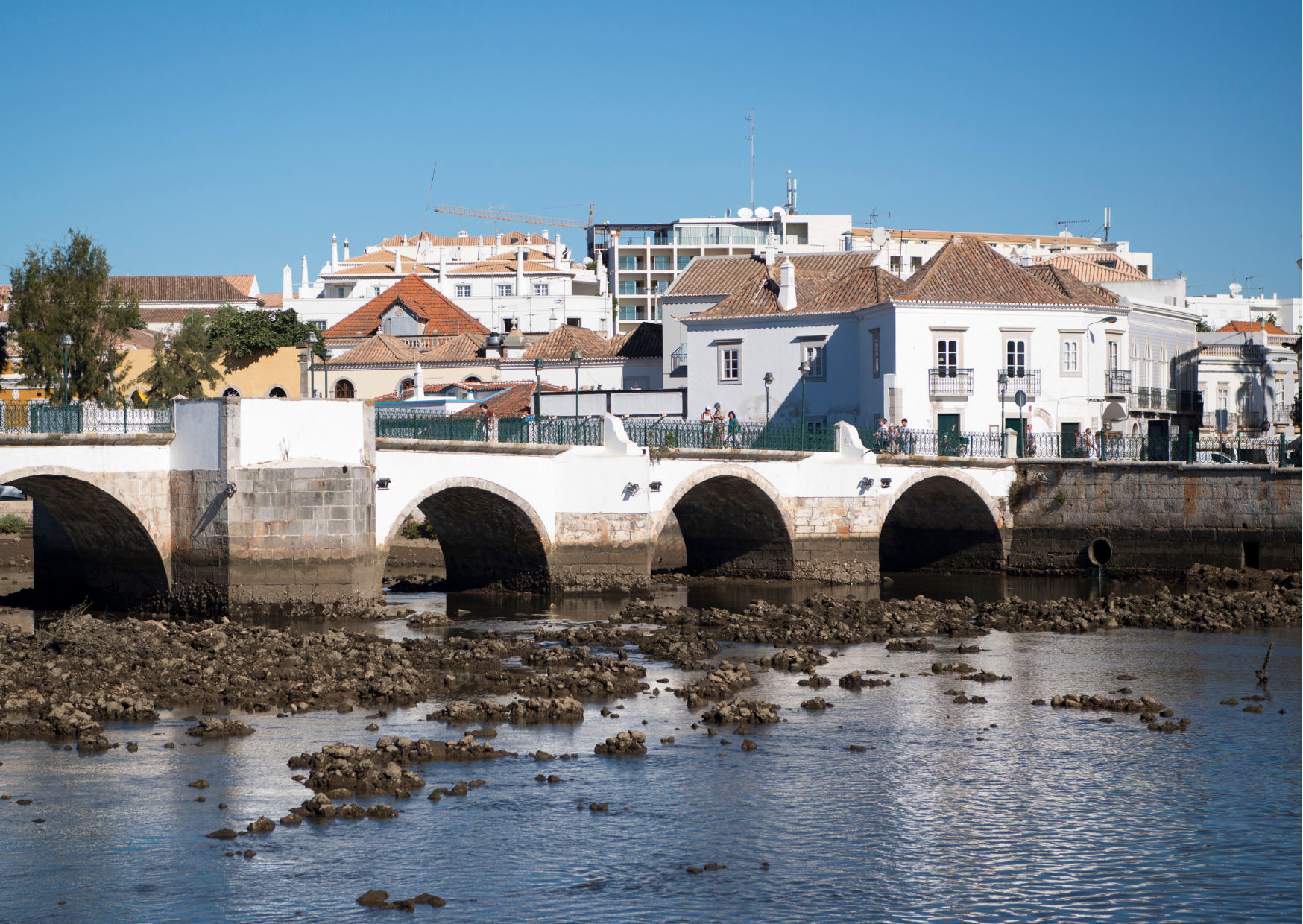
If you are thinking “Algarve,” you probably have two competing pictures in your head.
Picture one is beaches, sunshine, outdoor lunches, and that soft retirement pace.
Picture two is crowds, inflated prices, and a town that feels like it exists for visitors.
This place is closer to picture one.
It is not a secret. It is not cheap in the way inland can be cheap. But it has a calmer personality than the louder coastal hubs, and it still feels like a real town with real routines, not just a rotating cast of holiday makers.
The money reality, in numbers
In December 2025, Idealista’s index shows 13,6 €/m².
Baseline math:
- 55 m² at 13,6 €/m²: €748/month
- 70 m² at 13,6 €/m²: €952/month
That is the Algarve truth: higher baseline rent, in exchange for a climate and lifestyle that many retirees prioritize.
If you slow travel here, be realistic. Furnished one-month rentals in the Algarve can jump sharply in peak seasons. The retiree move is to travel in shoulder seasons and treat summer as a visit, not a base.
What this town tests for you
- Do you need sun enough to pay for it?
- Can you plan around seasonality and still feel settled in routine?
- Do you want a place where walking is pleasant and life stays quieter at night?
If you want an Algarve month that does not feel like you accidentally booked inside a tourism engine, this is one of the cleaner options.
The 7-day town test that prevents expensive retirement mistakes
Here is the practical move: stop trying to decide “Portugal” in the abstract. Decide one town at a time, with a repeatable test that makes your brain quiet.
Day 1: Pick a finish line that is not romantic.
Write one sentence: “I want a town where I can walk daily, shop easily, sleep well, and feel calm.” The finish line is functional, not aspirational.
Day 2: Map your life radius.
From your rental, identify the grocery store, pharmacy, café, and a pleasant walking loop. If those are not within your comfort zone, your month will be work.
Day 3: Run the admin micro-test.
Buy a SIM, deal with a small customer service interaction, and do one errand that requires patience. This is where you learn whether the town’s pace feels peaceful or oppressive to you.
Day 4: Eat at home twice.
Not because restaurants are bad, but because cooking is retirement reality. If you can’t cook comfortably, your costs rise and your routines collapse.
Day 5: Practice the social surface area.
Go to the same café twice. Shop the same produce vendor twice. You are not hunting friends. You are testing whether light social contact is available without strain.
Day 6: Do a day trip and come back tired.
Retirement life includes small adventures. The question is whether you return to a home base that feels easy.
Day 7: Make a decision in three lines.
- Go longer if the town made you calmer by day five.
- Reconsider if you spent the week negotiating basic comfort.
- Test a different town if the problems were “city-specific,” not “country-specific.”
A month is not long enough to become local. It is long enough to learn whether you can live inside the systems, the pace, and the housing reality.
That’s what matters.
Portugal is not one experience. Lisbon is not the whole story. And if you pick your town like a retiree, not like a tourist, you get a clearer answer with less regret.

About the Author: Ruben, co-founder of Gamintraveler.com since 2014, is a seasoned traveler from Spain who has explored over 100 countries since 2009. Known for his extensive travel adventures across South America, Europe, the US, Australia, New Zealand, Asia, and Africa, Ruben combines his passion for adventurous yet sustainable living with his love for cycling, highlighted by his remarkable 5-month bicycle journey from Spain to Norway. He currently resides in Spain, where he continues sharing his travel experiences with his partner, Rachel, and their son, Han.