

The first time an American retiree stands in a Spanish supermarket cereal aisle, the confusion is not about language. It’s about sameness. The boxes look familiar, the mascots look familiar, the prices feel different, and the ingredient list quietly tells you this is not the same product.
A lot of Americans arrive in Europe with a mental shortcut: “Food is stricter here, so everything must be healthier.”
That shortcut is partly true, but it’s also sloppy.
What’s true is that the EU has banned at least one very common U.S. “appearance” additive that shows up in processed foods, including some breakfast cereals. It’s not sugar. It’s not salt. It’s not even a flavor.
It’s a whitening pigment: titanium dioxide.
In the EU, titanium dioxide was authorized as food additive E171 for years, then removed after European regulators concluded they could not rule out genotoxicity concerns. In the U.S., it’s still permitted as a color additive under FDA rules, and it may appear on labels as “titanium dioxide” or simply as “artificial color.”
If you’re 45 to 65 and thinking about retiring abroad, this is not trivia. It’s one of those small, specific differences that reveals a bigger truth: when you move countries, you’re also moving into a different regulatory philosophy. That affects what ends up in your pantry, even if you keep buying “the same” kinds of foods.
The ingredient isn’t there for nutrition, it’s there for the glow
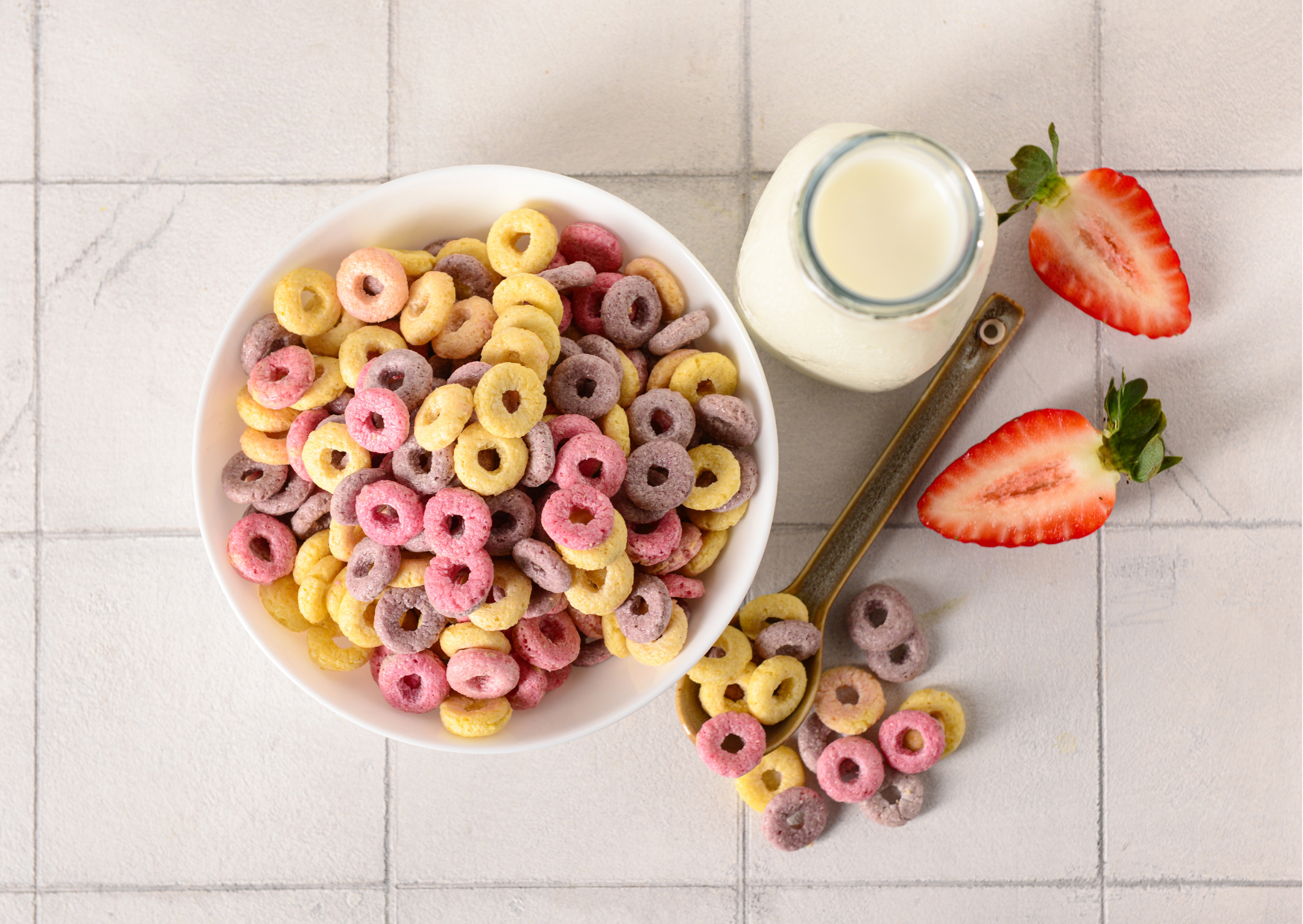
Titanium dioxide is a white pigment. In food, it’s used to make products look brighter, whiter, more opaque. Think frostings, coatings, powdered mixes, candies, and yes, some cereals that want that crisp, bright look in marshmallow pieces or frosted bits.
This is why it shows up in places that surprise people. It’s not doing anything functional for your body. It’s doing something visual for the product.
That’s also why it hits a nerve with Americans.
People can tolerate “processed food” when it tastes good. What they hate is realizing some ingredients exist purely for aesthetics. A visual additive feels different than a preservative that prevents spoilage. One feels like a tradeoff. The other feels like a cosmetic decision you never consented to.
The European Commission describes titanium dioxide as a colorant used to impart white color to foods and notes it has been used for decades across multiple categories.
So if you’ve ever eaten a very white, very bright processed product in the U.S., there’s a decent chance this pigment was part of the visual effect.
Why the EU banned it, and what that ban actually means in practice
The EU’s titanium dioxide story is unusually direct.
In May 2021, the European Food Safety Authority (EFSA) published an updated opinion that could not rule out genotoxicity concerns. The European Commission’s position is basically: if safety cannot be confirmed, that is enough to remove authorization for a food additive.
The Commission then adopted Regulation (EU) 2022/63 withdrawing authorization. According to the Commission’s Q and A, the regulation entered into force on 7 February 2022, with transitional measures that allowed foods containing E171 to be placed on the market until 7 August 2022, and then remain until their best-before date.
So when Americans say “banned,” here’s the clean version:
- It’s not allowed as a food additive in the EU now.
- There was a phase-out window in 2022.
- Products formulated for EU shelves had to be reformulated, replaced, or removed.
Also worth knowing: the EU communications around this ban explicitly note that titanium dioxide remains authorized in medicinal products until alternatives are found, to avoid shortages.
So the ban is specific to its role as a food additive, not a blanket “Europe bans titanium dioxide everywhere” headline.
How it shows up in American breakfast cereal without anyone noticing
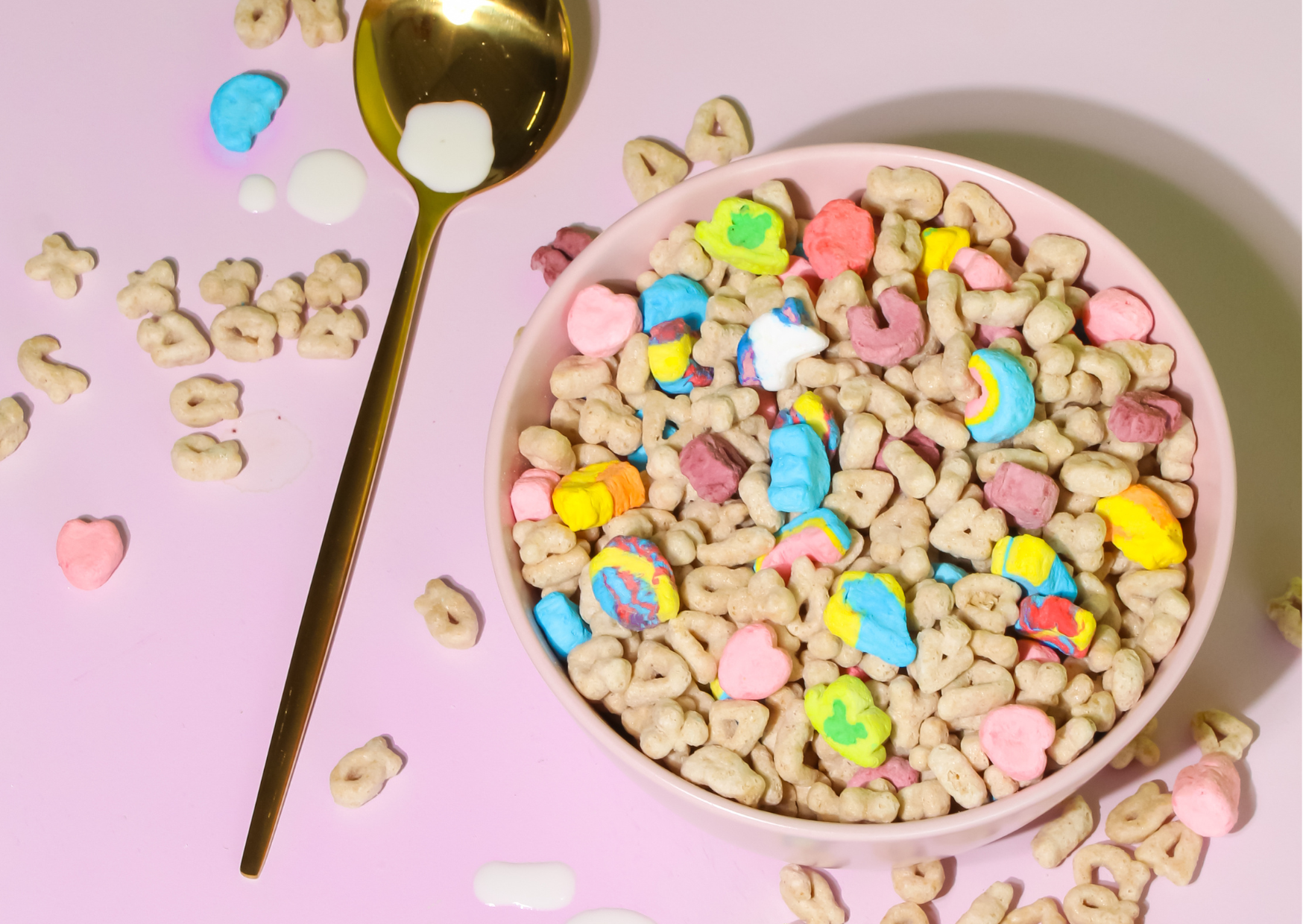
If you want to see the ingredient in plain view, look at U.S. cereal ingredient lists that include it explicitly.
A Kroger cereal product page for “Shining Stars with Marshmallows” lists “Titanium Dioxide (for Color)” in the ingredients.
EWG’s Food Scores entry for a similar “frosted oat cereal with marshmallows” also shows titanium dioxide in the ingredient list.
This matters because it answers the obvious question Americans ask: “Okay, but is this actually in cereal?”
Yes, it can be.
And it tends to appear in a specific kind of cereal: those with frosted coatings, bright bits, or marshmallow-style inclusions that benefit from a whiter, more opaque appearance. It’s less about the plain oat ring and more about the “fun” pieces.
In other words, it’s not your steel-cut oats. It’s your cereal-as-candy.
That’s why it’s such a useful example for expat life. A person can move to Europe thinking they’ll eat the same breakfast they always ate. Then they realize the “same breakfast” was partly being engineered visually in the U.S. in ways the EU no longer permits.
The U.S. labeling trap: it can hide behind “artificial color”
Here’s where Americans get genuinely annoyed, and I understand why.
The FDA notes that in foods that contain titanium dioxide, it may appear on the ingredient label as “artificial color” or “colored with titanium dioxide,” and it is not required to be listed by name.
That creates a strange dynamic:
- You might be reading labels and doing your best.
- You might still not know whether a whitening pigment is in your food.
- Because the label allows the category name, not the specific compound.
This is why Americans sometimes feel that European labels are “more honest,” even when they are not reading the language fluently. The EU’s additive labeling system is different, often including specific additive names or E-numbers.
Once you see how often U.S. labels use umbrella terms like “artificial colors,” you start realizing how much is happening behind that phrase. One vague line can cover multiple additives.
If you’re health-conscious and skeptical of U.S. ingredient practices, this is one of those details that makes your skepticism feel less emotional and more procedural.
The deeper point: Europe and the U.S. optimize for different kinds of certainty

People love to turn this into a culture war story. It’s more useful as a systems story.
The EU ban is rooted in a precautionary stance: if the available evidence can’t rule out a specific type of harm, authorization can be withdrawn.
The U.S. approach, as reflected in the FDA page, is that titanium dioxide is permitted under specified conditions including a limit that it not exceed 1% by weight of the food, and the agency is reviewing a petition filed in April 2023 asking the FDA to revoke that regulation.
So as of January 2026, here is the practical reality:
- In the EU, E171 is out for foods.
- In the U.S., titanium dioxide is still allowed within the FDA’s current regulatory framework, while petitions and debates continue.
For an American considering Europe, this matters in a specific way. You do not have to “become European” to benefit from European regulations. You benefit simply by shopping in a system where certain additives are not on the shelf.
That’s why so many Americans report that their diet changes without trying. Not because they got disciplined. Because the default options shifted.
What changes for Americans in Europe: not just ingredients, but expectations
From Spain, we see two reactions when Americans learn about something like titanium dioxide.
One group feels relieved. They treat it as confirmation that they made a smart move. Their breakfast gets simpler: yogurt, fruit, bread, eggs, coffee, maybe muesli.
The other group feels irritated. They don’t want a new breakfast identity. They want their old life, just cheaper and sunnier. When a familiar cereal isn’t available or is reformulated, it feels like a petty loss. And petty losses accumulate.
This is where the expat piece matters.
A lot of return-to-the-U.S. stories are built from “small annoyances” that were never resolved. Food is one of the easiest places to feel that friction because it’s daily. If your daily breakfast becomes a mild disappointment, day after day, it bleeds into how you evaluate the whole move.
So the practical approach is to treat it like any other system shift. Don’t fight it. Build a new default that you actually enjoy.
That doesn’t mean you become a wellness person. It means you stop trying to import your U.S. routine into a different regulatory environment and then acting surprised when it doesn’t fit.
The “cereal replacement” that works for real retirees, not Pinterest retirees
If you’re 55 and moving to Europe, you don’t need a perfect Mediterranean breakfast. You need a breakfast you can repeat without thinking.
Here are options that actually work in Spain, Portugal, and much of France, and don’t require you to become a morning chef:
- Plain yogurt with fruit and nuts, and if you want sweetness, add honey deliberately. Simple protein base.
- Toast with olive oil and tomato in Spain, or toast with butter and jam elsewhere. Fast and normal.
- Oats or muesli you can portion for the week. One bowl habit.
- Eggs a few days a week, not as a performance, just as a reliable option.
The health benefit here is not mystical. It’s structural. You’re reducing exposure to the category of foods where brighteners and cosmetic additives tend to appear, and you’re eating breakfast that feels like food.
For Americans worried about healthcare costs and long-term health, breakfast is one of the easiest leverage points because you repeat it so often. You don’t need 30-day challenges. You need repeatable defaults.
And if you still love cereal, you can absolutely buy cereal in Europe. The point is not to moralize cereal. The point is to understand that some U.S. cereal formulations rely on additives that won’t be present on EU shelves anymore, and that changes what “the same cereal” means.
A 7-day plan if you split time between the U.S. and Europe
A lot of Americans in the 45 to 65 band don’t fully relocate at first. They do three months in Europe, back to the U.S., then longer the next year. That is where ingredient reality gets confusing because you bounce between two systems.
Here’s a clean first-week plan that keeps you sane.
Day 1: Identify your non-negotiable breakfast.
Not your ideal breakfast. Your realistic one. Decide your baseline.
Day 2: In the U.S., treat “artificial color” as a flag, not a detail.
It doesn’t mean “poison,” but it does mean “you don’t know exactly what this is without deeper digging.”
Day 3: In Europe, buy two breakfasts you can repeat without translation fatigue.
Don’t experiment every morning. Reduce decisions.
Day 4: Pick one “fun” breakfast item and keep it intentional.
If cereal is your comfort, buy it, but don’t let it become your default if you’re trying to change how you feel day-to-day.
Day 5: Learn the one label habit that matters.
In the U.S., scan for “artificial color.” In the EU, you’ll see ingredient lists structured differently, and titanium dioxide as E171 should not be present in food now.
Day 6: Stop expecting identical products across regions.
This is the emotional work. Same brand is not same formula.
Day 7: Lock your breakfast routine for the month.
Retirees thrive on routines that remove friction. Your goal is not to become perfect. It’s to stop breakfast from being a daily negotiation.
This is how you make the move feel easier instead of constantly “different.”
Because that’s what pushes people back to the U.S., not one big crisis, but thousands of small daily frictions that never get solved.

About the Author: Ruben, co-founder of Gamintraveler.com since 2014, is a seasoned traveler from Spain who has explored over 100 countries since 2009. Known for his extensive travel adventures across South America, Europe, the US, Australia, New Zealand, Asia, and Africa, Ruben combines his passion for adventurous yet sustainable living with his love for cycling, highlighted by his remarkable 5-month bicycle journey from Spain to Norway. He currently resides in Spain, where he continues sharing his travel experiences with his partner, Rachel, and their son, Han.