

An American couple we’ve met here in Spain kept buying “yogurt” and feeling weirdly betrayed. Same habit, different continent. The problem wasn’t taste. It was the label. They were trying to recreate a U.S. product category inside a European rulebook, and Europe is petty about words in a way Americans don’t expect.
Let’s translate the headline so it’s actually useful.
American yogurt is not illegal to eat in Europe. Nobody is confiscating your breakfast.
What is illegal across the EU-27 is selling many U.S.-style yogurt products as they’re commonly labeled and marketed in the U.S. without changing the wording, the claims, and sometimes even the category name.
In Europe, the spoon is fine. The label is the crime.
If you’re 45 to 65 and researching retirement abroad, this matters more than it sounds. Food is one of the first “wait, what?” moments that either becomes a funny adjustment or becomes a daily irritation that quietly erodes the whole move.
This is the reality gap: Americans think Europe is strict about ingredients. Europe is often strict about definitions, claims, and naming. That difference shows up in a yogurt aisle faster than it shows up in a visa office.
Illegal where, exactly? The EU-27 cares about the label more than the spoon

The European Union is a single market, which means products sold in EU member states have to comply with EU-wide rules on things like labeling and health claims. National rules also exist, especially for traditional food names, but the EU-wide layer is the big one Americans trip over.
So when people say “illegal in 27 countries,” what they usually mean is this:
A product that’s totally normal in the U.S. can become non-compliant in the EU-27 because:
- the name on the front implies something Europe defines differently
- the packaging uses a health claim Europe does not allow
- the marketing uses terms like “probiotic” in a way regulators treat as a claim, not a description
Americans are used to a marketplace where the front label is more like persuasion and the ingredient list is the fine print. Europe often flips that. Words are regulated. The front label is not allowed to freeload on implication.
That’s why this topic matters for expats. It’s not about yogurt. It’s about learning the European habit of asking, “What category is this product legally allowed to be?”
Because once you understand that habit, grocery shopping gets easier. You stop feeling like Europe is withholding “normal food” from you and start recognizing the taxonomy.
The yogurt definition that surprises Americans: live cultures are the point

In several European countries, yogurt is defined in a way that feels almost moral. Not in a preachy way, just in a “this is what the word means” way.
France is the cleanest example because it’s explicit.
Under France’s rules, the name “yaourt” or “yoghourt” is reserved for fermented milk obtained from the growth of specific thermophilic lactic bacteria, and those bacteria must be alive in the finished product at sale, at a minimum level of 10 million bacteria per gram. That’s not a vibe. That’s the legal definition. Live cultures are not optional in that definition.
This is where Americans get tripped up.
In the U.S., “yogurt” is a broad category that includes products with live cultures and products that have been treated after culturing for shelf life. In Europe, in many contexts, yogurt is understood as something alive. If it’s not alive, it may still be a fermented dairy product, but it often needs a different name.
So the European consumer expectation is baked into the law: if you call it yogurt, it’s supposed to behave like yogurt, meaning fermented and still containing viable cultures.
That’s why European yogurt aisles look boring to Americans. They look repetitive. Same few ingredients, lots of small variations.
It’s not that Europe is incapable of making fun yogurt. It’s that the category is anchored by a tighter definition in many places, and the “dessert-like” products get pushed into adjacent categories.
Heat-treated “yogurt” exists in the U.S., and Europe makes you rename it
Here’s the most important technical point, and it explains a huge chunk of the “illegal” claim.
Under U.S. federal regulation, yogurt may be treated after culturing to inactivate viable microorganisms to extend shelf life. If it’s treated that way, the label must include a statement like “does not contain live and active cultures” accompanying the name.
That means a product can be called yogurt in the U.S. even when it has no live cultures, as long as it’s labeled accordingly.
This is normal in American grocery logic: convenience and shelf life are allowed, and disclosure is done through a required phrase.
In Europe, that product often becomes a naming problem.
Not necessarily because the product is banned, but because it cannot always be sold under the plain, casual word “yogurt” the way Americans expect. It may need to be marketed as a heat-treated fermented milk product or sold under a dairy dessert category, depending on the country and the product.
So when an American says, “Why don’t they sell yogurt that lasts forever here?” the answer is: they do sell long-life fermented dairy products, but Europe is picky about what can be called yogurt, and long-life usually implies heat treatment, which changes the legal identity of the product.
This matters for expats because it’s the first time many Americans realize that “the same product” is not one thing.
It’s a relationship between:
- fermentation
- bacterial viability
- shelf life
- and the legal definition printed on the front
Europe isn’t trying to ruin your breakfast. Europe is trying to keep words from getting blurry.
Spain’s loophole that proves the rule: “yogur pasteurizado” and why it confuses Americans
Living in Spain adds a twist, and it’s a good one to understand because it shows how Europe can be strict and flexible at the same time.
Spain explicitly defines a category called “yogur pasteurizado después de la fermentación.” It is a product obtained from yogurt that, due to a heat treatment after fermentation equivalent to pasteurization, loses the viability of the specific lactic bacteria, while meeting the other yogurt requirements except for the allowed exceptions.
In plain language: Spain allows a product that started as yogurt, got heat-treated, and no longer has live cultures, to still sit under the yogurt umbrella, but only if the label says what it is.
That label phrase is doing the work Americans assume the word “yogurt” does.
This is why American expats in Spain get confused. They see the word “yogur,” they buy it, and then they realize some products are shelf-stable or behave differently. Or they see products in the dairy case that look like yogurt but are labeled as something else entirely.
Spain has fought about this. It has been a long, very Spanish argument where industry, regulators, and consumer expectations collided.
The practical takeaway for an American retiree is simple:
- If you want live cultures, buy yogurt that’s refrigerated and labeled as standard yogurt.
- If you see “pasteurizado después de la fermentación,” you are buying a product that does not have viable cultures by definition.
Neither choice is sinful. But pretending they’re the same thing is how people end up feeling tricked.
And if you’re trying to replicate an American product that’s basically dessert with a health halo, Spain will often push it into a different category name. That’s the taxonomy at work.
The word “probiotic” is basically contraband on EU packaging
Now we get to the part that is truly EU-wide, and it’s where the “illegal in 27 countries” headline becomes more literal.
In the EU, nutrition and health claims are governed by Regulation (EC) No 1924/2006. The basic rule is simple: a health claim can’t be used unless it’s authorized, based on scientific assessment.
The European Commission has repeatedly treated the term “probiotics” as a health claim because it implies a beneficial effect on health. The European Ombudsman has addressed complaints about this stance, and the Commission’s position has remained that the term implies a health benefit and therefore falls under the claims framework.
The result is this: in many EU contexts, slapping “PROBIOTIC” on the front of a yogurt the way American brands do is not treated as cute marketing. It’s treated as an unauthorized health claim unless tied to an authorized claim, and there are effectively no authorized “probiotic” claims on the EU register in the broad way Americans expect.
This is where a lot of American yogurt branding runs into a wall.
In the U.S., “probiotic” is used broadly in yogurt marketing. In Europe, the same word can be treated like you just printed “improves health” without permission.
So if you take a typical U.S. yogurt cup with bold front-of-pack language like:
- “Probiotic”
- “Supports gut health”
- “Boosts immunity”
- “Clinically proven”
That exact packaging can become illegal to sell in EU member states because of the claims, not because of the dairy.
This is the part Americans underestimate. They think the fight is about sugar. Europe is often fighting about implication and authorization.
What Europe does allow: sugar, stabilizers, and the myth of the pure ingredient list

A quick reality check, because this is where Americans swing into fantasy.
Europe does not ban sugar.
Europe does not ban every stabilizer.
Europe does not force all yogurt to be plain and virtuous.
Flavored yogurts in Europe can still contain sweeteners, fruit preparations, and additives permitted under the EU’s additives framework. The EU’s food additive regulation includes categories for fermented milk products, including flavored versions and even heat-treated products as a recognized category for additive authorization.
So the difference isn’t “Europe only allows three ingredients.” The difference is more specific:
- Certain marketing language is policed harder. Health halo words are constrained.
- Certain product names have protected meanings in specific countries. Definitions matter.
- Products that blur categories get moved into adjacent names, like fermented milk product or dairy dessert, instead of letting the word “yogurt” stretch infinitely.
This is why American retirees sometimes feel disappointed.
They come expecting a European yogurt aisle that magically fixes their health. Instead they find:
- plenty of sweetened yogurt
- plenty of dessert-like dairy
- lots of products that look similar but are labeled differently
And then they realize the real “European difference” is not moral purity. It’s regulation of what a claim can imply and what a name is allowed to mean.
Both things are true:
- Europe can be stricter about certain risk decisions and claims frameworks.
- Europe still sells plenty of sugar, and nobody is stopping you from buying it.
The win for health-conscious Americans is not that Europe bans temptation. It’s that Europe often limits how aggressively products can borrow the language of health.
How this plays out in real supermarkets in Spain and Portugal
In Spain, you’ll see three patterns that matter for American expats:
First, a strong separation between plain yogurt and dessert-like dairy. You’ll see products that look like yogurt, sit near yogurt, and are eaten like yogurt, but the label pushes them into “postre lácteo” or “especialidad láctea” categories.
Second, the presence of “yogur pasteurizado después de la fermentación” as a distinct thing. It’s not hidden. It’s printed. The label is telling you what happened to the cultures.
Third, less aggressive health language on the front of the package than Americans are used to, especially around “probiotic” style messaging. Brands still market, obviously. But they often lean into taste, texture, protein, or tradition rather than big front-of-pack medical vibes.
Portugal is similar in the broad sense, although the brand mix differs.
For American retirees, this becomes a practical issue, not a philosophical one.
If someone is used to buying a U.S. yogurt that functions as a health supplement and a dessert at the same time, Europe forces a choice:
- Buy a plain yogurt and add what you want.
- Buy a sweet dairy dessert and admit it’s dessert.
- Buy a functional product, but don’t expect the front label to promise your intestines a better life.
This is why Americans often say “European yogurt is less exciting,” and Europeans say “it tastes like yogurt.”
They are talking about different product categories.
And if the move to Europe is already emotionally loaded, this small daily mismatch can become symbolic. The yogurt aisle becomes a stand-in for “I don’t fit here.”
It’s not that deep, but it feels deep when it’s every morning.
A 7-day yogurt reset for Americans who want the benefits without the friction
If an American is moving to Europe and wants yogurt to be part of a healthier routine, the best approach is not hunting for the perfect American equivalent. That hunt becomes exhausting and weirdly expensive.
Instead, do a one-week reset that builds a European default.
Day 1: Decide what you want yogurt to do.
Taste, protein, digestion, convenience. Pick the job. If the job is “tastes like dessert,” own that. If the job is “daily protein,” buy plain.
Day 2: In Spain, learn the two labels that matter.
Look for standard yogurt versus pasteurized after fermentation wording. They are not the same product functionally.
Day 3: Stop relying on front-of-pack health language.
In the EU, a lot of that language is constrained for a reason. Buy based on ingredients and category, not promises.
Day 4: Build your “add-ins” habit.
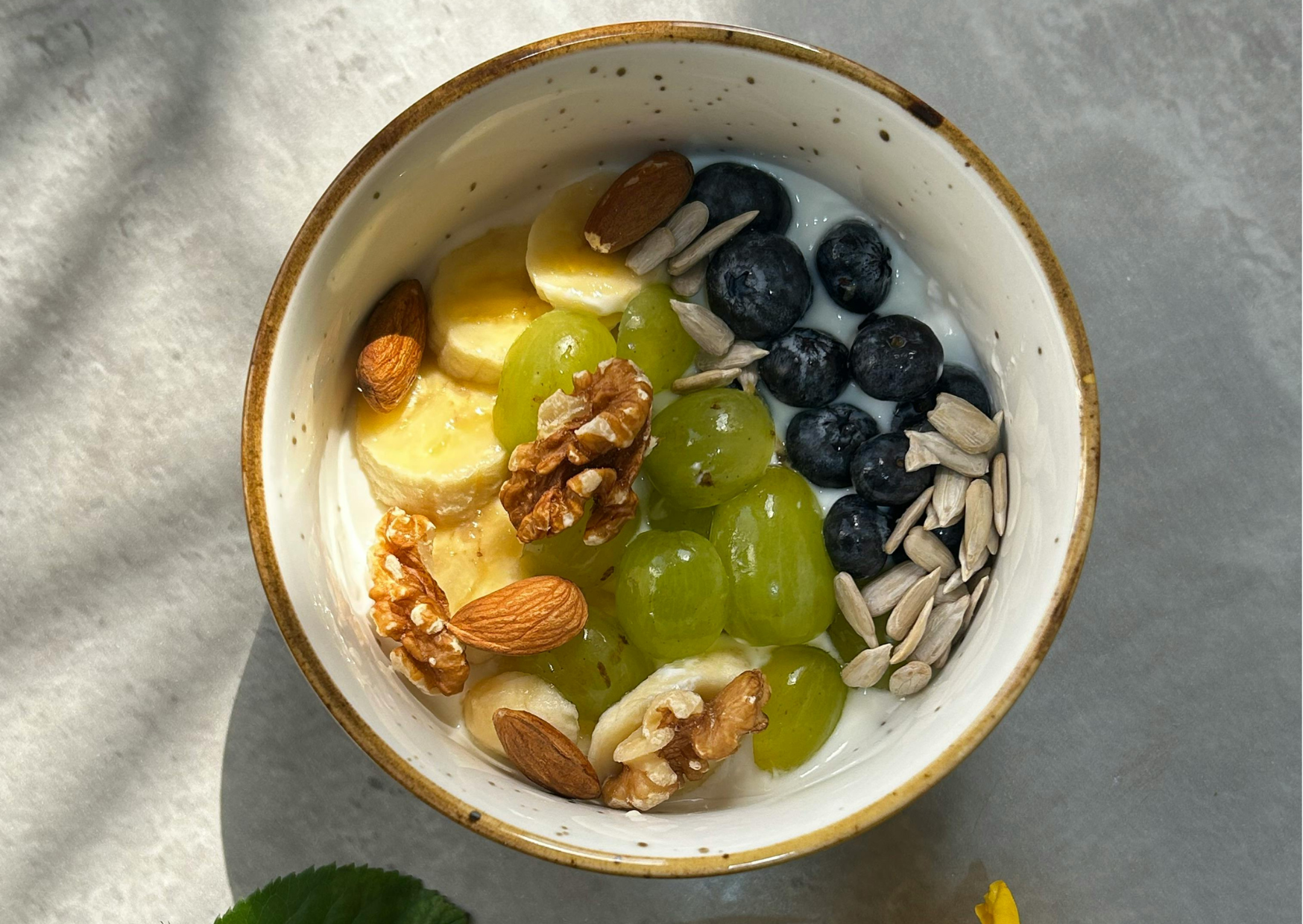
Fruit, nuts, honey, cinnamon. Make it yours. This is how Europeans get variety without turning yogurt into candy.
Day 5: Choose your sweet option intentionally.
Pick one sweet dairy product you actually enjoy and stop pretending it’s medicine. Pleasure is allowed. Confusion is the problem.
Day 6: Lock a repeatable breakfast.
Retirees do best with routines that reduce decisions. Yogurt works when it becomes a default, not a scavenger hunt.
Day 7: If you split time between the U.S. and Europe, accept that categories change.
Same word, different rulebook. Same brand, different formula. Fighting this is how people stay irritated.
This isn’t about becoming European. It’s about reducing daily friction so your move doesn’t die by a thousand tiny annoyances.
Because that’s how a lot of “we moved back” stories actually happen. Not through dramatic failure. Through quiet, repetitive dissatisfaction that never gets addressed.

About the Author: Ruben, co-founder of Gamintraveler.com since 2014, is a seasoned traveler from Spain who has explored over 100 countries since 2009. Known for his extensive travel adventures across South America, Europe, the US, Australia, New Zealand, Asia, and Africa, Ruben combines his passion for adventurous yet sustainable living with his love for cycling, highlighted by his remarkable 5-month bicycle journey from Spain to Norway. He currently resides in Spain, where he continues sharing his travel experiences with his partner, Rachel, and their son, Han.