

It usually starts with a spreadsheet and a mood.
Not a dramatic mood. A slow, tired one. The kind that creeps in after a few years of U.S. healthcare bills, hurricane insurance, grocery inflation, and the sense that retirement is turning into a second job. Europe becomes the alternative not because it’s perfect, but because it looks like a different deal.
So the couple sells the house, downsizes, books a one-way flight, and tells friends they’re “going to try Portugal first.” Then Spain. Then maybe France, because the food. Three countries in one year sounds adventurous, strategic even.
In real life, it’s usually the opposite.
By month nine they’re exhausted. By month twelve they’re arguing about things that used to be easy. By month fifteen they’re back in Florida, telling everyone Europe was lovely but “not for us.”
Here’s what actually happens in that three-country arc, why it breaks so many couples, and how to run the experiment without turning it into a slow-motion retreat.
They didn’t “fail Europe.” They ran out of margin.
A lot of Americans frame this story as success or failure. They tried Europe. It didn’t work. They came back.
That framing is too neat.
Most of the time, the couple didn’t run out of money. They ran out of margin, the extra energy you need to do hard things without spiraling.
Europe asks for margin in ways Americans underestimate:
- Margin for language fatigue, even if you “can get by.”
- Margin for paperwork that is slow, local, and non-negotiable.
- Margin for smaller housing and different comfort standards.
- Margin for building a social life from scratch in your 50s or 60s.
If you arrive with a thin margin, the first year becomes a series of small losses. Not dramatic losses. Annoying ones. Missed appointments. Confusing letters. A bank account that takes longer than expected. A landlord who wants documents you’ve never heard of. A neighbor who is polite but not warm.
Each one is survivable. Together, they create constant low-grade stress.
And that stress changes how you make decisions. You stop exploring and start optimizing for relief. The easiest relief is retreat, back to the place where you know how everything works.
From Spain, the pattern is predictable: the couples who stay aren’t always richer or tougher. They’re the ones who arrived with enough margin to absorb the first year without turning every inconvenience into a referendum on the entire move.
Country #1: Portugal, the paperwork honeymoon ends fast

Portugal is often the first stop because it’s friendly, well-marketed, and has a deep ecosystem of expat services. It also looks manageable on paper.
But the “Portugal first” plan often runs into a hard truth: your first European country is where you pay the full learning cost. You’re not just learning Portugal. You’re learning how Europe works.
The money requirement is usually the first reality check.
Portugal’s official guidance for national visas ties means of subsistence to the minimum monthly wage, which is €920 in 2026. People often interpret that as “easy.” In practice, consulates and processes can involve more documentation, more proof, and more waiting than newcomers expect.
Then housing hits.
Short-term rentals are flexible but pricey. Long-term rentals can require local documentation, deposits, and proof you don’t have yet. You’re trying to become “normal” in a system that doesn’t know you.
So the couple does what many do. They overpay for flexibility. They rent something furnished. They tell themselves it’s temporary. They stay in tourist-adjacent neighborhoods because it’s easier in English.
That convenience has a cost. Not just money. Social isolation.
You can live in Lisbon or the Algarve and still feel like you never entered Portugal. The expat bubble is comfortable, but it doesn’t build roots. When you’re tired, bubbles feel safe. Then six months pass and you realize your daily life is built around other foreigners and WhatsApp groups, not local friendships.
This is where the “we’ll do Spain next” idea becomes a coping strategy. The couple isn’t moving forward. They’re trying to reset the feeling of possibility.
Country #2: Spain, where life is livable but integration is slow

Spain is where many couples realize something uncomfortable: the day-to-day life can be great, and they can still feel uneasy.
Spain often delivers what Americans actually want, walkable neighborhoods, good food, public life, and a slower rhythm that can be genuinely calming.
But Spain also demands administration, and it’s not the “submit a form online and wait two days” style of administration many Americans expect.
If you’re relying on a non-lucrative residence path, Spain’s published requirement is 400% of IPREM for the main applicant. With IPREM commonly cited at €600 per month, that maps to €2,400 per month, or €28,800 per year, for one person, plus additional amounts for dependents.
That’s not impossible for many retirees. The problem is not always the number. It’s the process plus the lifestyle constraints attached to it, and the way the process becomes your full-time job for stretches.
Then there’s the “three countries” issue.
A lot of couples try to keep the experiment flexible by not committing. They do long stays without residency, hopping around the Schengen area like it’s one big playground. That’s where the 90/180 rule becomes the wall: 90 days in any 180-day period for short stays across Schengen.
And as of 12 October 2025, the EU’s Entry/Exit System (EES) began rolling out, with full operation expected by 10 April 2026, which makes tracking overstay much more automated. In other words, the casual “we’ll just keep moving” approach is getting harder to coast on.
Spain often becomes the turning point. Couples either decide to commit, get legally anchored, and accept the slower integration curve, or they decide they still want the fantasy of easy movement. That fantasy usually dies in the third country.
Country #3: France, the social wall and the language tax
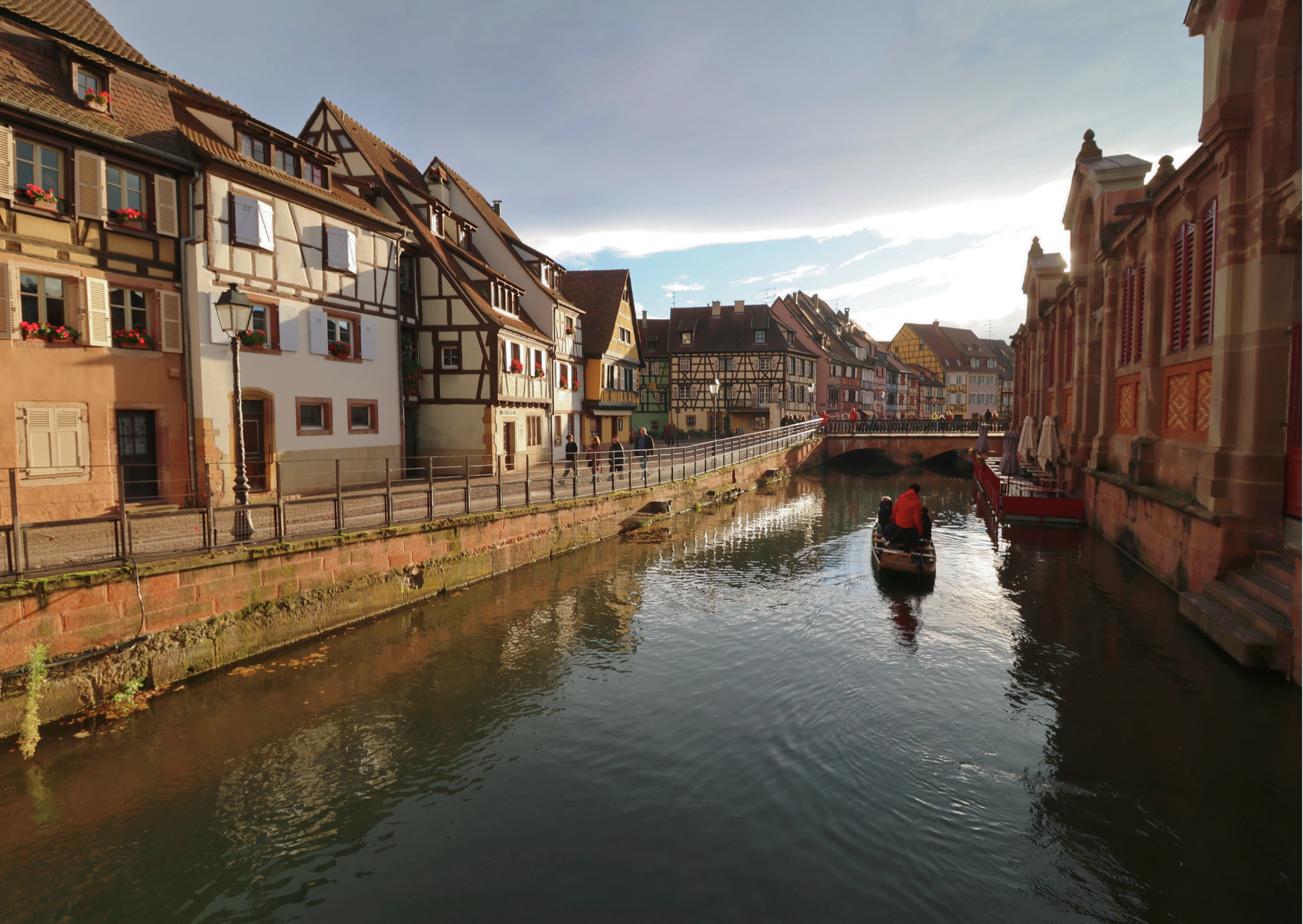
France is where the dream often collapses.
Not because France is hostile. Because France can be socially demanding in a way Americans don’t anticipate.
If you arrive without strong French, daily tasks cost more energy. Not money, energy. Grocery shopping, phone calls, medical appointments, landlord negotiations. You spend your day translating your own life, then you’re too tired to socialize.
And if you’re too tired to socialize, France can feel colder than it is.
This is not just anecdote. In InterNations’ Expat Insider 2024 reporting for France, nearly half of respondents said it wasn’t easy to make local friends, and a meaningful minority reported dissatisfaction with their social life. That aligns with what many Americans describe: people are polite, systems are functional, and yet you can still feel alone.
So what happens to the couple?
They start eating convenience food because cooking feels like work. They stop going out because ordering feels stressful. They spend evenings inside, scrolling U.S. news, talking about how “in Florida we could just…”
The relationship takes the hit.
If one partner is more socially resilient, they try harder. The other withdraws. Now you’re not only dealing with France. You’re dealing with two different coping styles inside one marriage.
France becomes the country they blame because it’s the last one. But the real issue is that they arrived there with depleted margin from two previous moves, and France is not a place that gently carries you when you’re depleted.
It asks you to show up. Linguistically, socially, emotionally.
If you can, it’s wonderful. If you can’t, it’s punishing.
The three rules they keep breaking without noticing

The “three countries” strategy usually fails for boring reasons, not dramatic ones. Here are the three rules couples break without realizing it.
First, legal days matter. The Schengen short-stay limit is not a vibe. It’s math. Once you’re living under the 90/180 rhythm, you’re not living, you’re counting.
Second, housing is not neutral. A couple can tolerate almost anything for three months. The cracks show at month six. If you keep moving, you keep choosing “temporary” housing, which usually means worse insulation, worse kitchens, and more friction. Temporary housing keeps you in permanent transition.
Third, healthcare is a residency story, not a tourist story. Americans often assume, “We’ll just buy private insurance.” You can, and many do, but the reality is more layered. Coverage rules, reimbursement processes, provider networks, language, and documentation can turn “great European healthcare” into a confusing personal project if you’re not legally settled.
When couples fail, it’s rarely because Europe was bad. It’s because they tried to live a settled life with an unsettled structure.
Every system in Europe is easier when you’re anchored. The three-country plan avoids anchoring. Then it’s shocked when life feels unstable.
The hidden budget that kills the experiment
Couples love to talk about rent. They rarely talk about the hidden costs that come from being new repeatedly.
Here’s what eats the budget in a three-country year, even when you think you’re being careful:
- Double deposits and overlap weeks when you move, because leases rarely align perfectly.
- Furnished premiums because you can’t justify buying a full household for “maybe six months.”
- Administrative costs: document translations, apostilles, courier fees, passport photos, legal help when you get stuck.
- Transport resets: new SIMs, new transit cards, new bank requirements, new delivery addresses that don’t accept your packages.
- Energy surprises in winter, especially if you’re heating with electricity in a leaky rental.
The U.S. comparison trap is that Americans expect cost-of-living savings to appear automatically. In practice, savings appear when you live like a local. The three-country lifestyle forces you to live like a newcomer.
A realistic example for a couple doing “three countries in one year” might look like this:
- Short-term rent premiums: €400 to €900 per month above a long-term local lease in many markets
- Move costs and overlap: €1,200 to €3,000 across a year
- Paperwork and documentation: €600 to €2,500, depending on complexity
- Flights and long-distance transport: €800 to €2,000
- Winter utilities in a bad rental: €80 to €250 per month more than expected
None of these numbers are catastrophic alone. Together, they erase the “Europe is cheaper” narrative and replace it with a more accurate one: Europe is cheaper when you stop moving.
The relationship stress nobody budgets for

This is the part couples rarely say out loud, but it’s the core of the Florida return.
Moving countries in your 50s or 60s is not a vacation. It’s identity stress.
One partner often wants novelty. The other wants stability. One partner treats challenges as puzzles. The other treats them as threats. In the U.S., those differences can be manageable because life is familiar. Abroad, those differences get amplified because you’re operating outside your normal competence zone.
Typical friction points look small until they aren’t:
- Who handles paperwork
- Who does the language-heavy errands
- Who makes friends, and who doesn’t
- Who needs comfort, and who can tolerate discomfort
- Who is willing to “live small,” and who feels trapped
This is why the three-country plan is so risky. It repeats the highest-stress phase, the setup phase, three times.
If you want to protect the relationship, you do the opposite: you reduce resets. You create routines. You build one stable base and let novelty come from travel, not relocation.
Couples who return to Florida often say they missed home. Sometimes that’s true. Sometimes what they missed was the feeling of being competent together.
Europe didn’t break the marriage. Europe exposed the weak joints.
If you don’t want the Florida boomerang, do this in your first 30 days
If you’re still determined to “try Europe,” fine. Just don’t try it in a way that guarantees stress.
Here’s the practical approach that keeps couples from boomeranging back to the U.S. out of exhaustion.
Week 1: Choose a base and stop shopping for the perfect country.
Pick one city and commit to at least six months. Perfection is a fantasy. Stability is the advantage.
Week 2: Get legal clarity before lifestyle decisions.
Count your days. Understand whether you’re pursuing residency or living on short stays. Don’t build a life on assumptions.
Week 3: Build a routine that produces energy instead of consuming it.
Same café, same walking route, same grocery circuit, same gym class. Routine is not boring, it’s margin manufacturing.
Week 4: Build one social thread that isn’t an expat bubble.
Language exchange, volunteer shift, local class, anything repeatable. You don’t need a dozen friends. You need one reliable connection that anchors you emotionally.
And one rule that saves a lot of couples: don’t change countries when you’re depleted. Changing countries feels like progress. Often it’s just escape.
If you want Europe to work, treat the first year like an adaptation project, not a tour. The couples who stay aren’t the ones who found the perfect country. They’re the ones who stopped resetting their life every 90 days and gave their nervous system time to settle.

About the Author: Ruben, co-founder of Gamintraveler.com since 2014, is a seasoned traveler from Spain who has explored over 100 countries since 2009. Known for his extensive travel adventures across South America, Europe, the US, Australia, New Zealand, Asia, and Africa, Ruben combines his passion for adventurous yet sustainable living with his love for cycling, highlighted by his remarkable 5-month bicycle journey from Spain to Norway. He currently resides in Spain, where he continues sharing his travel experiences with his partner, Rachel, and their son, Han.