

The shock isn’t that Europe gets cold. The shock is that many European homes don’t feel designed to fight cold the way American homes do. Americans don’t just feel chilly, they feel personally offended by the idea of wearing socks indoors.
Every winter we watch the same scene play out in Spain.
An American friend visits, or a newly arrived retiree settles into their “Mediterranean dream” apartment, and by day three they are sitting on the sofa in a coat. Not because it’s freezing outside. Because the apartment has tile floors, a drafty window, a small heater that’s trying its best, and a cultural assumption that indoor life should not feel like a tropical resort.
They usually say some version of: “I can’t get warm.”
They’re not exaggerating. They are experiencing a full-body mismatch between what their nervous system expects indoors and what a lot of European housing actually delivers in winter.
This is the reality behind the shivering, why it’s more common in Europe than Americans expect, and what to do in the first seven days so winter doesn’t become the reason you start browsing flights home.
Europe heats for “safe and functional,” not “t-shirt comfortable”

The first thing to understand is that Europe does not have one winter standard. Sweden is not Spain. Poland is not Portugal.
But across many countries, the default approach to heating is closer to “keep the home safe” than “keep the home consistently warm.”
The numbers explain the emotional gap.
A widely cited safe minimum indoor temperature for cold seasons is 18°C, and the WHO Housing and Health Guidelines describe 18°C as a proposed safe and well-balanced indoor temperature for general populations in temperate or colder climates. Many Americans are used to living rooms in the 21°C to 23°C range, sometimes higher, because U.S. systems and home designs often support that without turning the whole house into a logistics project.
So when an American retiree sits in a European flat that hovers around 18°C to 19°C, they interpret it as “the heating is failing.”
A lot of Europeans interpret it as normal.
This is not about toughness. It’s about the cultural definition of comfort.
In many European households, comfort is created by warming the person (layers, slippers, throws, hot drinks) instead of warming every cubic meter of air to the same level.
If you arrive with an American expectation that “indoors equals reliably warm,” you will feel cold even when the thermometer says you shouldn’t.
The temperature you set is only half the story, radiant cold does the rest
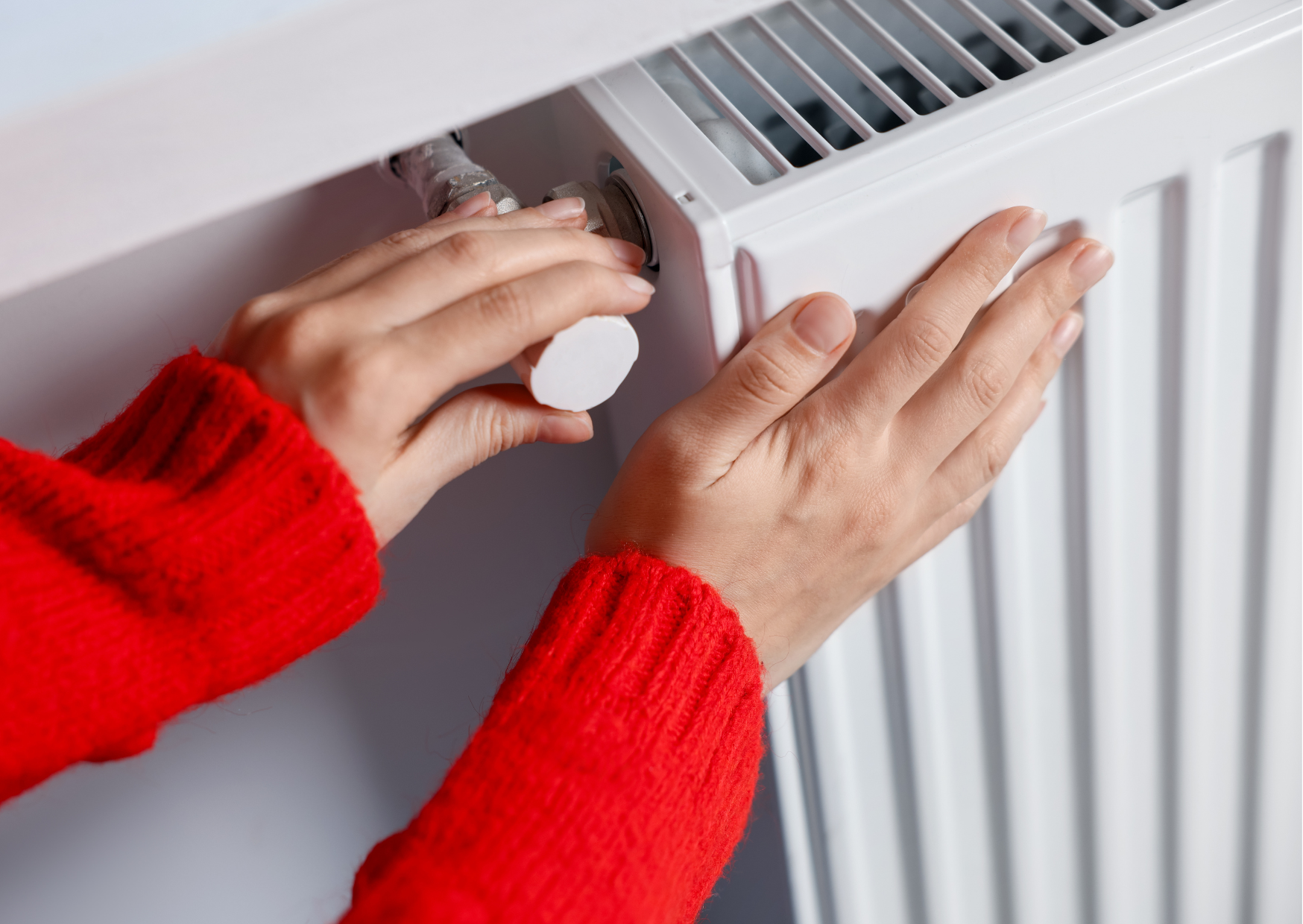
This is the part Americans rarely anticipate: the air temperature is not the only thing that determines how cold you feel.
A room can be 19°C and still feel miserable if the surfaces around you are cold.
Cold windows. Cold walls. Cold tile floors. A cold ceiling above you in an older building. Those surfaces pull heat away from your body through radiation and conduction. It’s why standing near a single-glazed window can feel like the room is colder than it is.
Americans often grew up with:
- thicker walls and insulation in many regions
- forced-air systems that move warm air through the home
- carpeting that blocks the “cold floor” effect
- central heating that reduces temperature swings
In Spain, a lot of apartments have tile floors, which are great in summer and brutally efficient at making your feet cold in winter. Combine that with minimal insulation in older buildings and you get a specific sensation Americans describe perfectly: “I can’t get warm, even when the heater is on.”
That sensation is real.
A practical mindset shift helps: think less about thermostat numbers and more about where your body is losing heat.
If your feet are cold, you will feel cold.
If your back is against a cold wall, you will feel cold.
If you’re sitting near a draft, you will feel cold.
It’s not weakness. It’s physics.
Mediterranean housing is often built to survive summer, not to pamper winter
Americans often move to southern Europe thinking winter will be easy. “It’s Spain, it’s Portugal, it’s Italy.”
Then they discover the indoor winter problem.
Southern European buildings often prioritize hot-weather survival: keeping heat out, encouraging airflow, using tile, shutters, and cross ventilation. That’s rational when summer is long, bright, and relentless.
But the tradeoff is that winter comfort can be underbuilt, especially in older stock or cheaper rentals.
You can feel this in common design choices:
- tile and stone surfaces everywhere
- minimal carpeting
- windows that may not seal perfectly
- heating that is localized, not whole-home
- rooms that are closed off because heating is expensive
In Spain, it is also common enough to find homes with limited heating, and in some regions, even no installed heating, especially in older or coastal properties. When Americans hear that, they assume it’s an outlier. In practice, it can be part of the market reality in certain areas.
The important point is not “Europe is cold indoors.” The point is that winter comfort is unevenly engineered, and you must treat it like a feature you shop for, not a guarantee.
Heating systems are different, and Americans misread what “normal” heat looks like
A lot of American homes use forced-air heating. You feel warm air moving. You hear the system kick on. The whole house drifts toward one setpoint. It feels decisive.
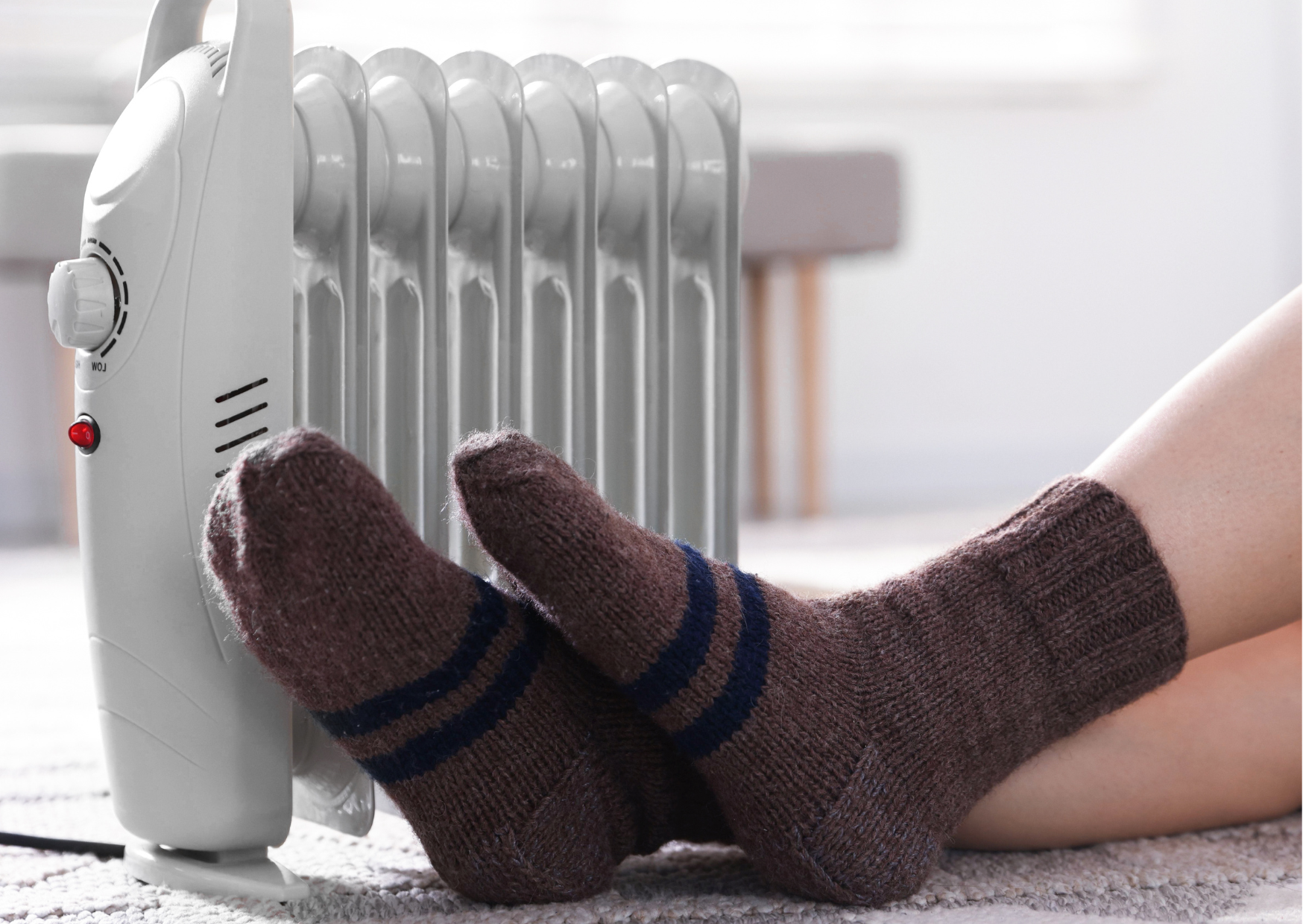
In much of Europe, residential heat delivery is often hydronic (radiators) or localized (heat pumps that blow warm air in one room, space heaters, pellet stoves). The heat is there, but it’s not always distributed in the “whole-house blanket” way Americans expect.
That changes the lived experience:
- Radiators can warm you slowly and steadily, but rooms can still feel cold near windows or floors.
- Mini-split heat pumps can be efficient, but they can leave hallways and bedrooms colder unless you actively manage zones.
- Portable heaters can make one spot warm, while the rest of the home stays chilly.
Also, the way Europeans heat is often room-based. People heat the living area, not the whole home. Bedrooms can be cooler by design. Doors are closed. Curtains are used strategically. It’s more like managing microclimates than flipping one switch.
Americans often interpret this as “the home is not properly heated.”
Europeans often interpret it as “why would I heat rooms I’m not using.”
If you accept the room-based logic, winter gets easier. If you fight it, you will spend the season shivering and resenting your apartment.
Humidity is the secret reason 19°C can feel like 15°C
Americans from drier climates often underestimate how much humidity changes cold comfort.
In coastal Spain, Portugal, parts of France, and many older European buildings, winter damp can be real. Humid air makes cold feel colder on skin. Damp walls and condensation also keep surfaces colder, which increases radiant chill.
This is why Americans often say, “I’m colder here than I was somewhere that was technically colder.”
Because the experience isn’t only temperature. It’s temperature plus damp plus cold surfaces plus drafts.
In the UK, public health guidance commonly points to 18°C as a minimum temperature for health in winter, and UK reviews have cited higher targets for vulnerable groups in living areas. The reason these numbers show up repeatedly is not comfort aesthetics, it’s the health reality that cold indoor environments increase risk for certain people, especially older adults.
Even if you are healthy, damp discomfort can grind you down.
Practical, unsexy fix that helps enormously: measure humidity. Buy a cheap hygrometer. If your indoor humidity sits high in winter and you’re constantly cold, a dehumidifier can make a room feel warmer at the same temperature because your body loses heat less aggressively.
It also helps reduce condensation and mold risk, which becomes a second winter problem in many European homes.
Energy costs and cultural boundaries make “all-day heating” uncommon
Americans are used to paying for comfort and expecting it to work.
Europe has a more complicated relationship with heating because energy prices and policy pressures have shaped behavior over decades, and especially since the energy crisis period.
Recent EU-level statistics show that household energy prices remain elevated compared with pre-2022 levels, even when they stabilize. That reality encourages a specific cultural habit: heat less, zone more, tolerate cooler indoor temperatures, wear more layers.
You see this as a norm even among people who can afford to heat more.
There’s also a quiet moral element in some places: heating your home to t-shirt temperatures in winter can be seen as wasteful, not aspirational.
Americans are not wrong to want to be warm. But they often arrive assuming the default European approach will match their own. It often doesn’t.
So the “shivering” problem is not only building design. It’s also behavior shaped by cost, culture, and habit.
If you arrive and immediately try to heat the home the American way, you may get sticker shock, or you may find the system simply can’t deliver that kind of uniform warmth without major upgrades.
The coping tools Europeans use look silly until you try them

This is where Americans either adapt quickly or stay miserable.
Europeans often use what you could call “personal heat infrastructure.” It’s not fancy. It’s specific.
- slippers that actually insulate
- thick socks, often wool blends
- a heated throw on the sofa
- a hot water bottle in bed
- heavier duvets than Americans are used to
- closing interior doors to hold heat where life happens
- shutters and thick curtains to cut radiant chill
- airing out briefly, then sealing back up
Americans sometimes resist this because it feels like surrender. “Why should I need slippers indoors?”
Because tile floors are cold, and radiators don’t heat floors.
Because heating the whole home uniformly can be expensive or impractical.
Because the cultural solution is to warm the person, not the building.
Once Americans adopt the personal heat approach, many stop shivering within a week, even without changing the heating system.
Also, this is where retirees have an advantage. Retirees can build a winter routine that follows the sun, follows the warmest room, and avoids cold parts of the day. They can design the day instead of battling it.
The people who suffer most are the ones who try to live a U.S. indoor lifestyle inside a European building envelope.
How to shop for a winter-proof European home without getting fooled by sunshine
If you’re choosing housing in southern Europe, you cannot shop only for light and terraces.
You have to shop for winter livability, even if you don’t think winter will matter.
Here’s what to check, in plain language:
- double glazing or at least modern window seals
- heating type, not just “has heating”
- insulation level if known, and whether the building has been renovated
- orientation and sun exposure in winter
- humidity indicators: visible condensation, musty smells, mold marks
- whether the living space can be closed off and heated effectively
- whether electricity capacity supports heating loads if you’ll rely on heat pumps or electric heaters
Also, in much of Europe, energy performance certificates exist in some form and can give a rough signal about efficiency, though quality and usefulness can vary by country and implementation. Still, as a screening tool, it can be better than guessing.
If you are already in the home, the best test is brutally simple: spend one cold, rainy day in it. If you cannot get comfortable without running heaters nonstop, winter will become a daily stressor.
A 7-day plan to stop shivering without turning your home into a furnace
If you’re an American retiree already in Europe and winter is getting into your bones, treat this as a systems problem, not a toughness problem.
Do this for one week.
Day 1: Measure what’s happening
Buy a cheap indoor thermometer and hygrometer. Put it where you actually sit.
A lot of people are shocked to learn their living room is 16°C to 18°C, or that humidity is high enough to make everything feel colder. Data ends the guessing.
Day 2: Fix feet first
Get real slippers with insulation, not thin house shoes. Add thick socks.
This sounds small, but warm feet change everything. If your feet stay cold, you will keep chasing heat and never feel satisfied.
Day 3: Block drafts and radiant cold
Use draft stoppers at doors. Add thicker curtains if your windows feel icy. Close shutters at night if you have them.
You’re not trying to seal a submarine. You’re trying to reduce the constant heat leak that keeps your body tense. Draft control is comfort.
Day 4: Create one warm zone
Pick one room or one corner and make it the winter living zone. Heat that zone consistently.
Room-based heating is not failure. It’s how a lot of Europe functions. One stable warm zone beats whole-home swings that never feel truly comfortable.
Day 5: Add personal heat, not just air heat
A heated throw on the sofa and a hot water bottle or electric blanket for bed can transform your baseline comfort.
This is where Europeans are quietly smart. You don’t need the entire apartment at 22°C if you can keep your body warm where you actually are. Warm the person first.
Day 6: Tackle humidity
If humidity is high, run a dehumidifier or ventilate strategically: short bursts of fresh air, then close up and heat.
This can make 19°C feel like a different temperature entirely. Dry air feels warmer at the same reading.
Day 7: Decide what you’ll change permanently
If you’re relying on portable heaters and still miserable, don’t just suffer. Decide what gets upgraded.
That might be a better heater, better bedding, window seals, or choosing a different apartment next winter. The point is not to endure. The point is to build a winter setup you can live inside.
The honest conclusion: Americans aren’t weak, they’re calibrated differently
If you grew up in a country where indoor winter comfort is an expectation, Europe can feel like a step backward.
But it’s not a backward country. It’s a different calibration.
Europe often trades indoor uniform warmth for walkability, smaller homes, older housing stock, and cultural boundaries around energy use. In southern Europe, it also trades winter comfort for summer survivability in buildings that were never designed for climate-controlled perfection.
Once Americans stop reading shivering as personal failure and start treating it like an engineering and habit mismatch, winter gets dramatically easier.
And if you’re choosing housing with retirement in mind, this is one of the most important truths you can know early: sunshine does not heat tile floors at night.

About the Author: Ruben, co-founder of Gamintraveler.com since 2014, is a seasoned traveler from Spain who has explored over 100 countries since 2009. Known for his extensive travel adventures across South America, Europe, the US, Australia, New Zealand, Asia, and Africa, Ruben combines his passion for adventurous yet sustainable living with his love for cycling, highlighted by his remarkable 5-month bicycle journey from Spain to Norway. He currently resides in Spain, where he continues sharing his travel experiences with his partner, Rachel, and their son, Han.