
The food is not the problem. The kitchen is. European kitchens are built around a different life rhythm, and American retirees feel the mismatch every single day, usually while trying to chop an onion on a cutting board balanced over the sink.
The first week is always the same.
An American retiree moves into a perfectly nice apartment in Spain, Portugal, France, somewhere that looks like the dream in photos. They buy beautiful produce. They buy olive oil that actually tastes like olives. They come home feeling optimistic.
Then they try to cook a normal dinner.
The cutting board doesn’t fit anywhere. The oven behaves differently. The fridge is smaller than expected. The extractor fan sounds like it’s working, but the kitchen still smells like garlic until Tuesday. There’s no garbage disposal, so they’re scraping scraps into a tiny bin while the sink strainer fills up like a trap.
They’re not failing. They’ve just walked into a system designed around different assumptions.
American kitchens are often built around abundance, storage, and convenience. In the U.S., even the average kitchen in a newly built single-family home is reported at 161 square feet. In many parts of Europe, the average home itself is smaller, and the kitchen is treated as a functional work zone, not a lifestyle stage.
Both things are true: European food can be excellent, and the kitchen can still drive you slightly insane.
The kitchen is sized for daily shopping, not a “stock up once a week” life
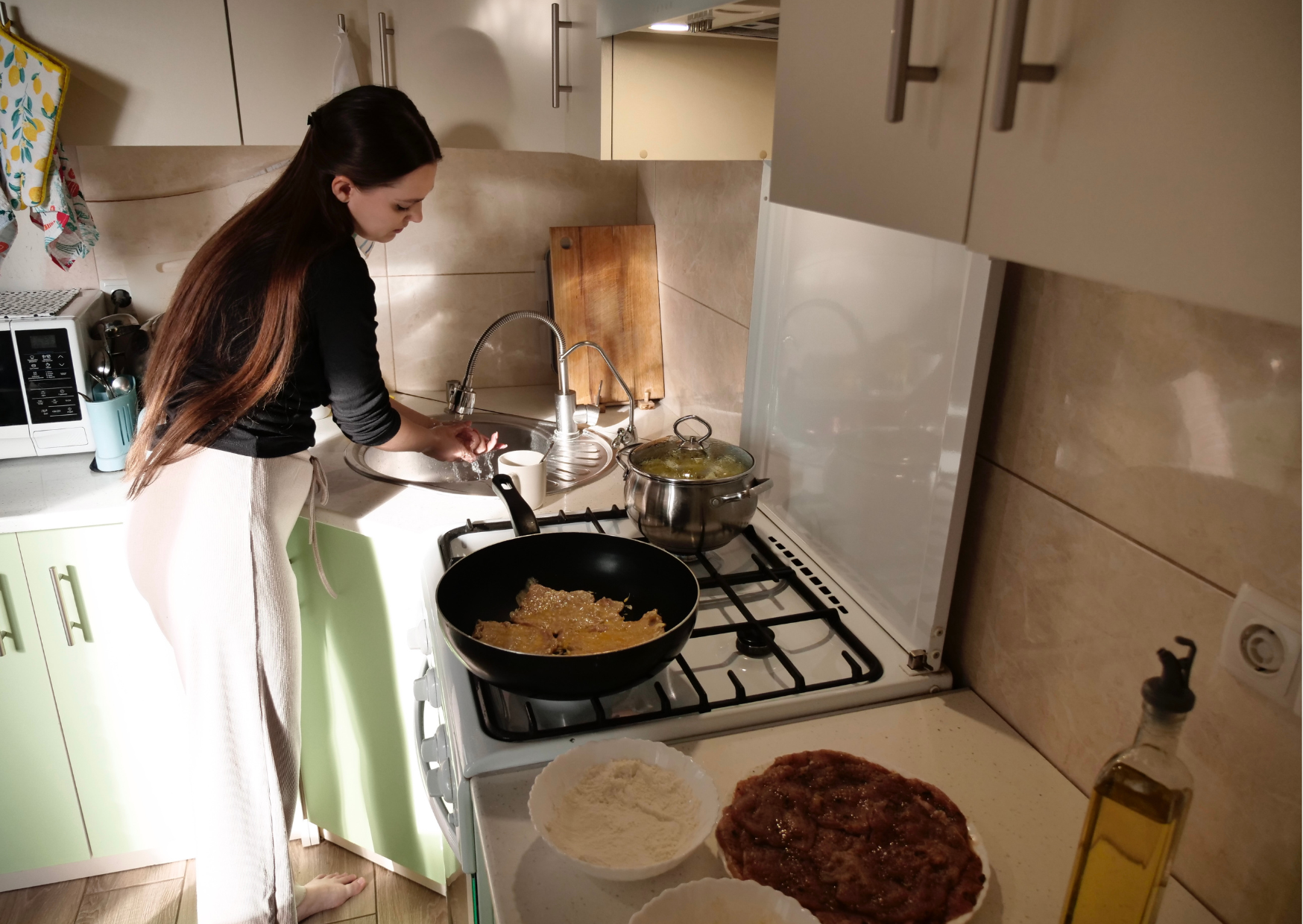
Most American retirees arrive with a grocery habit that assumes storage.
A weekly shop. A fridge with room for trays, leftovers, and backup everything. A pantry that can absorb bulk. If you cook for comfort, this matters more than you think.
A lot of European homes simply aren’t designed for that rhythm. Not because Europeans don’t cook, they do. But the whole setup assumes you’ll buy less, more often.
So American retirees keep running into tiny, repeating frictions:
You can’t store what you want, so you shop more often.
You shop more often, so you cook with what’s available.
You cook with what’s available, so your familiar recipes feel harder.
That cycle is why people get emotionally tired.
This is also why the adjustment hits retirees harder than younger expats. Retirees often cook more at home, and they lean on routine for stability. Cooking becomes the anchor, so when the kitchen fights back, the whole relocation feels shakier than it should.
From Spain, we’ve watched the mood shift in real time: someone is thrilled about the market on Saturday, then oddly discouraged by Tuesday, and they can’t explain why.
It’s not the produce. It’s the fact that their “normal” kitchen logic no longer works.
Counter space is the silent villain, and it changes how you cook
The fastest way to spot an American cooking in a European kitchen is the improvisation.
The cutting board goes over the sink.
The pot lid lives on the stove because there’s nowhere else.
Someone is chopping garlic on a plate because the counter is full of drying dishes.
European kitchens can be beautifully designed, but they’re often compact and efficient rather than expansive. That efficiency is great once you learn it. At first, it feels like you’re cooking inside a corridor.
This is where Americans get trapped in the wrong interpretation. They assume the kitchen is “badly designed.” Often it’s designed for a different style of cooking:
Smaller prep batches.
More fresh ingredients.
Less reliance on assembling five side dishes at once.
Less expectation that you’ll have three people working in the kitchen together.
American retirees feel the loss because so much American home cooking is built around spreading out. Put the salad ingredients here. Lay out the meat there. Open six containers. Stage the meal.
In a small European kitchen, staging is the first thing you lose.
A practical fix that sounds almost insulting because it’s so simple: go smaller on prep.
Use two smaller cutting boards instead of one big one.
Prep in a bowl, not on the counter.
Cook in stages, not all at once.
It isn’t glamorous advice, but it stops the kitchen from feeling like a daily argument.
And yes, it can feel ridiculous to tell someone who has cooked for 40 years how to manage a cutting board.
That’s the point. The kitchen is retraining you.
The appliances are smaller, the standards are different, and nothing fits your instincts
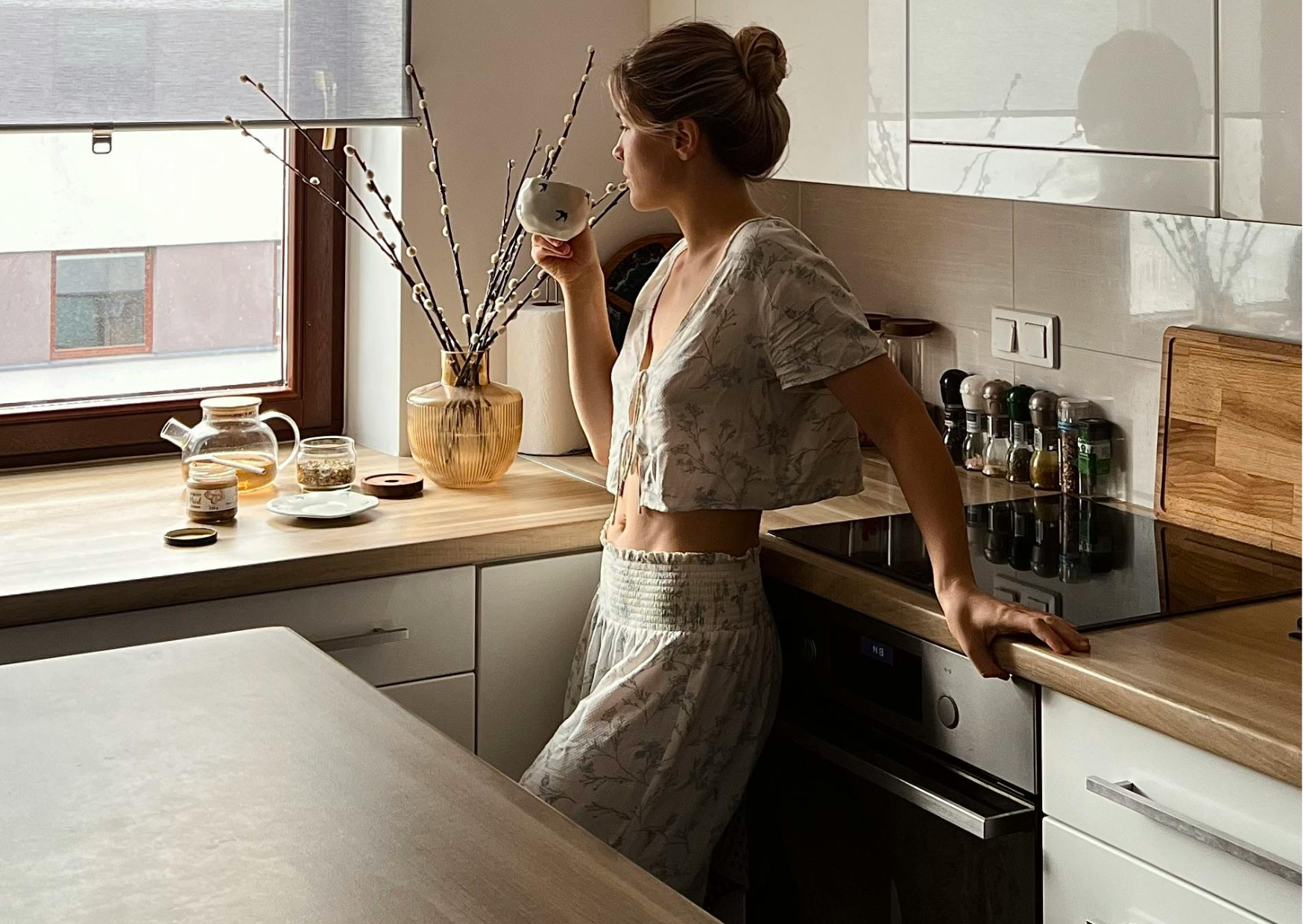
This is where frustration becomes specific.
European kitchens are commonly built around standardized appliance dimensions. A built-in oven is often designed around a 60 cm by 60 cm standard. Dishwashers are commonly around 60 cm wide, but slimline models around 45 cm are widely sold for tighter kitchens. Fridges are often sold in the “about 60 cm wide” category, which sounds normal until you remember what a lot of Americans call “normal.”
In the U.S., “standard” kitchen appliances are frequently bigger. A typical American family fridge is often in the 30 to 36 inch width world, and 36 inches is a very common large-family reference point. That’s without even touching “American-style” side-by-side models that Europeans view as enormous.
So an American retiree moves into a Lisbon or Barcelona apartment, opens the fridge, and immediately realizes: this is not a U.S. refrigerator with a different plug. It’s a different lifestyle assumption in a white box.
Then the stove and oven get involved.
Many Europeans cook with convection as the default. Many ovens behave differently than American ovens, and American recipes do not always translate cleanly. Broilers are often different. Temperature is Celsius. Bakeware sizes don’t always match.
The result is the kind of frustration that feels petty until you live it: “Why doesn’t my sheet pan fit?” “Why is the lasagna browning weird?” “Why does everything cook faster or slower than I expect?”
The fix is not to fight the kitchen. The fix is to localize your equipment:
Buy one European-sized baking tray that fits your oven.
Buy one pan set that works with your stovetop.
Stop trying to force a U.S. Thanksgiving workflow into a Spanish apartment kitchen.
This is not about lowering standards. It’s about stopping the daily irritation tax.
Induction stoves and European cookware rules catch Americans off guard
In many European rentals today, induction is common enough that Americans should expect it sooner or later.
Induction is fantastic once you’re used to it. It’s also a trap for new arrivals because it punishes the wrong kind of confidence.
An American retiree sees a sleek glass cooktop and assumes it’s like electric. It’s not. They put their favorite old pan on it, and nothing happens.
Then they realize: induction requires cookware that is magnetic. If a magnet doesn’t stick, the stove won’t heat it.
So now you have a kitchen where:
Your old pans don’t work.
Your new pans are expensive if you buy them carelessly.
Your cooking muscle memory is slightly wrong because induction responds instantly.
This is where people start saying, “I hate cooking here,” when what they really mean is, “My tools don’t work and I feel incompetent.”
A calmer way to handle it:
Test all your cookware with a fridge magnet.
Replace only what fails.
Buy one good induction-friendly skillet and one good pot first, then build slowly.
Induction is not a downgrade. It’s just unfamiliar. The learning curve is real, and retirees often get angrier about learning curves because they moved to reduce stress, not add it.
Also worth knowing: induction is often cheaper than people expect in Europe. There are reports showing that across multiple EU countries, induction models are sometimes priced competitively with gas.
The obstacle isn’t always cost. It’s the emotional annoyance of re-buying “basics” you assumed you already owned.
Ventilation is weaker than Americans expect, so food smells linger
This sounds minor until it becomes daily.
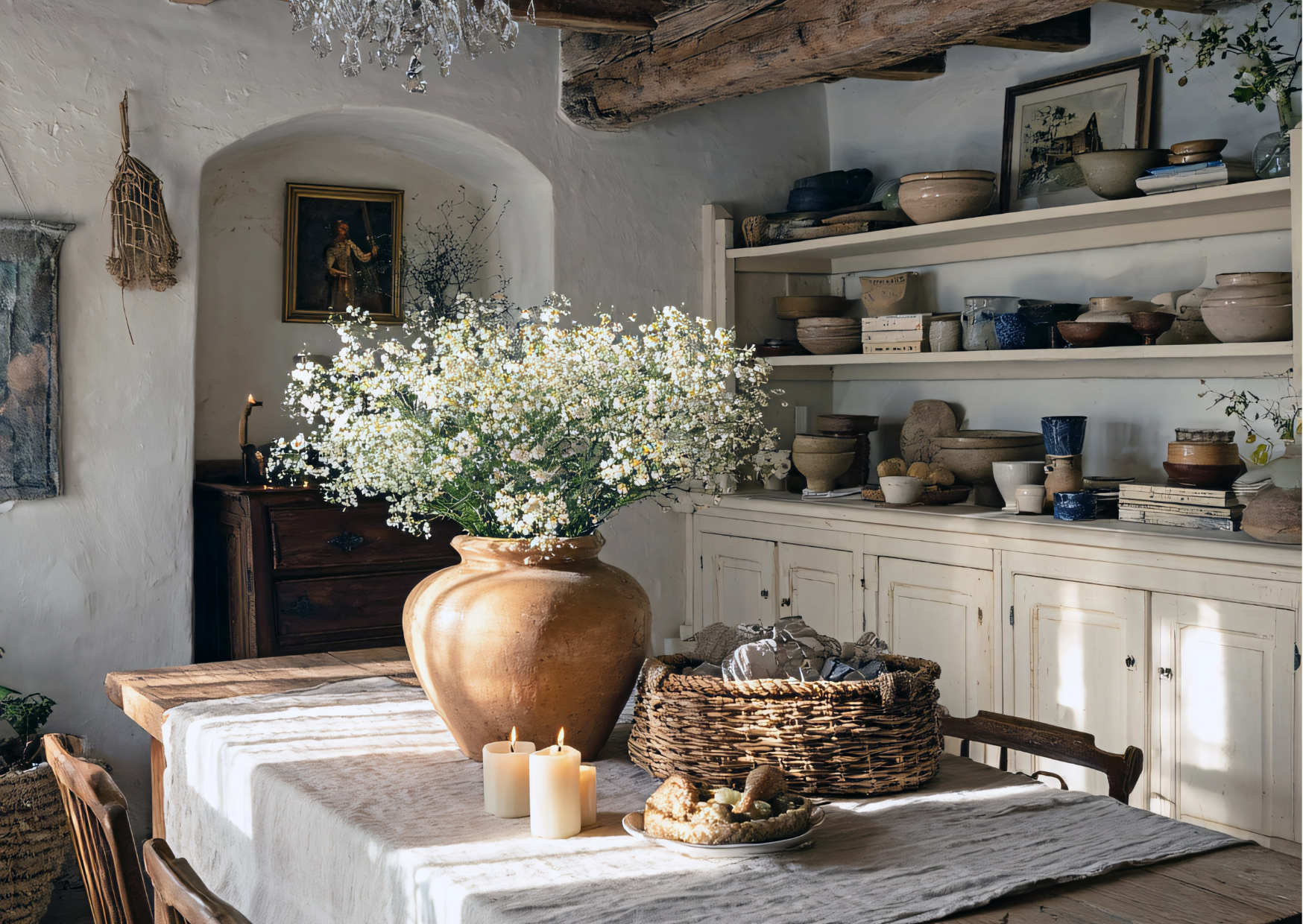
A lot of European apartments have extractor hoods that recirculate air through filters rather than venting it fully outside. Some vent properly, many do not. Even when they vent, the airflow can be weaker than what Americans are used to in suburban U.S. kitchens.
So you fry something once and the apartment holds the smell.
Fish lingers.
Onions linger.
Curry lingers.
Bacon, especially, lingers like a personal insult.
American retirees often read this as “the apartment is dirty” or “the building is old.” Sometimes it’s just the ventilation design and the reality of compact spaces.
In a larger American home, cooking smells disperse. In a smaller European flat, the kitchen is not isolated from the living area in the same way, even when it’s physically a separate room. Odors move faster. Everything shares air.
The practical fixes are annoyingly unromantic:
Use lids more than you think you need.
Open windows even in winter for short bursts.
Replace hood filters on schedule.
Accept that deep-frying at home may be a once-a-month activity, not a weekly one.
A lot of retirees eventually adopt a European workaround without realizing it: they cook simpler on weekdays and save the heavy, fragrant stuff for when they plan to ventilate the whole place.
This is one of those cultural adjustments that looks like “less cooking” from the outside, but it’s actually cooking with the building instead of against it.
Power is different, and it changes what “normal appliances” even mean
This one shows up in the first week when someone unboxes the thing they brought from the U.S. to “save money.”
Hairdryer. Blender. Instant Pot. Coffee maker. Toaster.
Europe runs on a different electrical standard than the U.S., and it matters in the kitchen because kitchen appliances draw serious power. International standards like IEC 60038 include nominal systems such as 230 V (common in 50 Hz regions) and 120/240 V split-phase (common in North America). Translation: a random U.S. appliance often will not behave nicely in a European outlet, even with an adapter.
An adapter changes the plug shape. It does not change what the appliance is built to handle.
So retirees either:
Risk frying a beloved appliance, or
Buy a heavy voltage converter, or
Give up and buy European versions anyway
This is also why Europeans love electric kettles. With higher voltage availability in typical household circuits, kettles are often designed in the 2,200 to 3,000 watt range in the UK and similar markets, which boils water fast. Americans notice this because a U.S. kettle often feels slow by comparison.
This is the cruel irony: American retirees move to Europe for a simpler life, and within days they’re learning about voltage, frequency, and converters like they’ve joined a hobbyist forum.
The practical advice is boring but saves money and stress:
Bring almost nothing that heats.
Buy local for kettles, toasters, and coffee makers.
Only bring dual-voltage electronics that explicitly support 100 to 240 V.
This is not a moral rule. It’s a “stop creating problems” rule.
Because kitchen frustration compounds, and nothing compounds like starting your day with a burnt-out coffee machine.
No garbage disposal, stricter waste sorting, and suddenly cleanup feels like work
A lot of American retirees don’t realize how much their cooking workflow depends on a garbage disposal until it’s gone.
In many European homes, the sink has a strainer, and the expectation is simple: scrape food scraps into the bin, not into the drain.
Then add modern European waste rules. Many places push separate food waste collection and recycling targets, and the household routine often reflects that. The kitchen becomes a sorting station whether you like it or not.
So you’re cooking, and now you’re also:
Separating packaging.
Separating glass.
Separating organic scraps.
Rinsing containers more than feels reasonable.
To Europeans, it’s normal. To Americans, it can feel like punishment for eating.
This is also where retirees get resentful because cleanup feels like it takes longer in a smaller kitchen. The bin is smaller. The under-sink cabinet is tighter. You can’t hide a big trash can in a pantry or garage. Your waste is in your face.
The adjustment that helps most is setting up the kitchen like a system, not a vibe:
Two small bins under the sink, not one big one.
A countertop compost caddy if your area collects food waste.
A simple sink strainer that’s easy to empty and clean.
Once the sorting is physically easy, the resentment drops.
Not to zero. But enough that cooking doesn’t feel like it comes with a mandatory cleanup penalty.
The first week setup that makes cooking feel normal again
If cooking is becoming your daily stress point, don’t “push through.” Reset the kitchen like a project.
Here’s a practical seven-day setup that works for most American retirees living in Europe.
Day 1: Buy the two tools that replace American kitchen habits
A digital kitchen scale and a good chef’s knife.
Europe is a grams-and-ml world. A scale removes the constant conversion headache. A good knife compensates for limited counter space because it makes prep faster and cleaner. Speed reduces frustration.
Day 2: Standardize your prep zone
Pick one surface that will always be the prep surface, even if it’s small.
If it has to be over the sink, make it intentional. Get a board that fits. Stop improvising every day. Routine beats annoyance.
Day 3: Solve the pan problem once
If you have induction, test with a magnet and replace only what fails.
Start with one skillet and one pot that you like. Do not buy an entire set out of panic. Replace strategically, not emotionally.
Day 4: Localize your bakeware
Buy one tray that fits your oven and one dish that fits your recipes.
Stop forcing U.S. sheet pans into a European oven. It turns every bake into a bad mood. Fit matters more than brand.
Day 5: Fix ventilation expectations
Replace or clean hood filters if you can. Buy a splatter screen. Cook with lids.
Then decide which foods you’ll cook at home and which you’ll eat out. In Spain, plenty of people eat fried things out, not because they can’t cook, but because it’s easier. That’s not failure, it’s local logic.
Day 6: Build your “lazy dinner” list for Europe
American lazy dinners often rely on big fridges and convenience products.
European lazy dinners can be eggs, bread, cheese, olives, yogurt, rotisserie chicken when available, canned tuna, simple salads. Create five low-effort meals you’ll actually eat. A safety net keeps you sane.
Day 7: Set your appliance boundary
Decide: no U.S. heat appliances in European outlets. Period.
Buy the kettle, toaster, and coffee setup locally. Then stop thinking about it. Decision is relief.
If you do this week seriously, cooking stops being the daily referendum on whether moving was a mistake.
It becomes what it should be: just dinner.

About the Author: Ruben, co-founder of Gamintraveler.com since 2014, is a seasoned traveler from Spain who has explored over 100 countries since 2009. Known for his extensive travel adventures across South America, Europe, the US, Australia, New Zealand, Asia, and Africa, Ruben combines his passion for adventurous yet sustainable living with his love for cycling, highlighted by his remarkable 5-month bicycle journey from Spain to Norway. He currently resides in Spain, where he continues sharing his travel experiences with his partner, Rachel, and their son, Han.