
If you are picturing “Mediterranean life” as one interchangeable vibe, this is where reality gets sharp. Italy and Spain can look similar on a postcard, and feel completely different when you are a single woman trying to build a real life, on purpose, at 55 or 62.
There is a moment you see it clearly.
In Italy, a woman walks into the same bar at the same time, orders the same coffee, and the room quietly makes space for her. Not because she is special, but because the ritual is bigger than her. She belongs because she repeats.
In Spain, a woman can do everything “right” and still feel like she is circling the edges. The café is full, the streets are loud, the terraces look alive, and yet the social doors stay half-closed unless someone ushers you through. She is visible, but not placed.
Both countries have warmth. Both countries have loneliness. The difference is how the culture assigns you a role when you arrive alone and older, without the built-in social scaffolding of a couple.
This is not travel talk. This is the mechanics of whether you will have friends, routine, and emotional safety by month six, or whether you will still be eating dinner alone, telling yourself it is temporary.
Italy hands you a social script. Spain makes you earn one.
The women who thrive in Italy tend to describe the same thing, even if they never use the same words: the country gives you a script.
Not a government plan, not an expat program, not a magical community that appears because you moved to Tuscany. A daily, repetitive rhythm that makes it easier to become familiar without having to “sell” yourself socially.
Italy is built around small, repeatable public rituals: the bar at the same hour, the same bench after the market, the same evening walk when everyone resurfaces. You do not need to be charismatic to benefit from this. You need to be consistent.
In Spain, there is also routine, but it often runs through closed loops: family networks, school-parent circles, long-standing friend groups, neighbors who have known each other for decades. The social life is real, but it is owned. If you arrive alone at 58, you are not automatically slotted into it.
This is where Americans get surprised. Spain can feel more outwardly friendly on day one. People talk. People joke. Someone calls you “guapa” at the bakery. But “friendly” is not the same as “integrated.”
The mistake is treating social connection like a vibe you absorb, instead of a structure you join.
If you are a single woman over 55, Italy’s structure is often easier to enter because it rewards repetition over invitation. Spain, especially outside the most international pockets, rewards introduction. Not knowing who to come with is the hidden tax.
Practical implication: if you are testing Spain, pick one “third place” and behave like a regular for 30 days. Same time, same seat, same two sentences in Spanish. Not because it is cute, but because familiarity is currency here.
Spain is friendly, but it is built for couples and family units
Here is the part people do not say out loud because it sounds unkind.
Spain’s older life is structurally couple-heavy and family-connected in a way that shapes everything from weekend plans to who gets invited where. And if you arrive as a single older foreign woman, you often land in the gap between “nice acquaintance” and “real friend.”
A September 2025 Funcas brief (using Eurostat data) noted that Spain stands out for having a low share of older adults living alone, 23% of people aged 65+, compared with 32% across the EU. It also highlighted that 22% of Spaniards aged 65+ live with other relatives, well above the EU average cited in the same brief. In other words, older life in Spain is less solitary by default, and more embedded in household structure.
That is good news if you are Spanish and aging in place with family nearby.
It can be rough if you are an American woman who moved alone and assumed “social street life” would equal social belonging.
Italy has its own deep family culture, but there is also a demographic reality of solo households that normalizes older people living alone. Italy’s national statistics agency notes that single-person households are now the most common household form, 36.2% of households (two-year period 2023–2024), and that people living alone represent 16.3% of the population in that same period.
That matters because cultures build informal systems around what is common.
If “older single” is normal, there are more everyday pathways for it: daytime social clubs, neighborhood routines, women-led volunteering, casual check-ins. If “older coupled” is normal, being alone can quietly read as temporary, sad, or simply unusual, even when nobody is trying to be rude.
This is the single-seat problem: the default table is a couple table. If you are the only single person in the room, you need a plan that does not rely on being spontaneously absorbed.
Practical implication: in Spain, aim for contexts where single participation is already normal. Language classes, hiking clubs, choir, volunteering, neighborhood associations, sports groups, and structured workshops beat “let’s grab a drink sometime” every time.
The schedule mismatch that quietly breaks older singles
If you want one brutally practical reason some women do better in Italy than Spain, start here: time-of-day culture.
Spain is famous for late life. Late dinners. Late noise. Late socializing. The problem is not that women over 55 cannot handle it. The problem is that making friends often requires repeated attendance, and repeated attendance at 10:00 p.m. dinners is harder to sustain if you are not already embedded.
In Italy, the social window many older newcomers actually use is earlier: the pre-dinner walk, the aperitivo hour, the evening piazza orbit. It is easier to show up consistently when the social peak starts before your energy drops.
In Spain, the most socially dense hours can land exactly when a solo newcomer is most likely to say, “Maybe tomorrow.” That “maybe tomorrow” becomes six months.
This is why coastal expat life can be a trap for single women. If your only social option is late drinking culture, you will either opt out or feel like you are forcing yourself into a scene that is not built for you.
Spain does have earlier social rituals, but you have to choose them intentionally:
- Morning cafés where locals actually linger
- The midday menu crowd (weekday lunch is where you see regulars)
- Late afternoon paseo hours
- Early evening vermut culture in certain cities and neighborhoods
Your best Spanish social life might look boring at first. It is not boring. It is repeatable.
Practical implication: design your social strategy around the hours you can reliably attend. Consistency beats intensity. If you can do two early-week lunches and one Sunday morning routine every week, that can build a real network faster than chasing late-night invitations you will not sustain.
Language is not the barrier people think it is, but identity is
Americans often assume the main difference between thriving and struggling will be language.
Language matters, but it is rarely the whole story.
Spain actually scores well in expat surveys on feeling at home and getting used to the culture. In InterNations’ Expat Insider 2024 country report, Spain ranks 4th overall, with 84% of expats saying they are happy there. It also reports that 77% feel at home and welcome, and that 53% say making local friends is easy (higher than the global comparison in the same report).
So why do some single women still struggle?
Because there is a difference between “locals are friendly” and “locals make you one of theirs.” Spain can be open in public, yet private socially. Many relationships deepen at home, through family events, long-standing circles, and invitations that come slowly.
And then there is identity.
In parts of Spain, especially in heavily international cities or coastal zones, foreigners can get categorized fast. Not always with hostility, sometimes with laziness. You become “the expat.” A category is not a relationship.
Italy is not necessarily easier on paper. In that same Expat Insider 2024 series, Italy ranks much lower overall and shows weaker results on social integration metrics, including Local Friendliness and Finding Friends.
But for single American women over 55, the women who thrive in Italy often do so through a different mechanism: they attach themselves to place-based identity, not expat identity. They become “the woman who walks every evening,” “the woman who buys ricotta on Tuesdays,” “the woman who volunteers at the festival committee.” They are known for a habit, not for being foreign.
Practical implication: in Spain, do not aim to be “the American who moved here.” Aim to be “the person who is always at this thing.” Your identity should be built on repetition and contribution, not origin.
Italy’s solo-woman ecosystem is surprisingly mature
This is where the Italy versus Spain conversation gets uncomfortable, because it is not about which country is “better.” It is about what kind of expat infrastructure exists for older single women.
Italy has long attracted foreign retirees and long-stay newcomers who build their lives around culture, food, small towns, and slower routines. Over time, that has created a quietly robust ecosystem of hobby-based social life that is not centered on couples.
Think cooking classes, walking groups, art workshops, restoration projects, language intensives, church and town festivals, charity events, and local associations that still function as real social glue. A single woman can plug in without needing a plus-one.
Italy’s demographic trajectory also points to solo living becoming even more common. Official projections highlight growth in lone-person households and specifically note that women living alone are expected to increase in absolute numbers over coming decades.
Spain, by contrast, has enormous expat infrastructure, but much of it is concentrated in places that skew toward couples and social drinking culture, especially in certain coastal retirement corridors. That is not a moral judgment. It is a design fact. And if you are a single woman who wants daytime connection, purpose, and routine, you can land in the wrong ecosystem without realizing it.
This is why two women can move to “the Mediterranean” and have opposite lives.
One joins a women-heavy network of classes, volunteering, and daytime rituals. The other lands in a couple-centric expat bubble and becomes an outsider in both directions: not fully local, not fully included in the expat scene.
Practical implication: when you research a town, do not just look at rent and climate. Look for structured third places: adult education centers, cultural associations, local festivals with volunteers, walking clubs, and language schools that attract long-stayers, not tourists.
Spain’s best places for single women are not the beach towns
Spain can be an excellent place to live as an older single woman, but the success cases are often not where Americans default.
The default is “beach town, expat community, easy life.” The problem is that easy can become isolating if the social scene is built around couples, seasonal residents, and alcohol-centered bonding.
If you want Spain to work, you generally want one of two things:
- A real city with layered social infrastructure
- A smaller town with strong local associations where you can become known through routine
InterNations’ 2024 Expat City Ranking is not a perfect predictor for a specific demographic, but it does underline something important: several Spanish cities rank extremely well for expats, including Valencia, Málaga, and Alicante in the top tier, with Madrid also ranking strongly in that report.
Those places tend to offer the kind of scaffolding single women need:
- walkable neighborhoods where you can become a regular
- adult education, gyms, choirs, clubs, and classes that run year-round
- public transit that makes social life accessible without relying on a partner
- a bigger mix of ages and life stages
Meanwhile, some beach-town expat zones can be socially repetitive: the same bars, the same conversations, the same seasonal churn. If you arrive alone and older, it can feel like watching life through glass.
Spain is not the problem. The setup is.
Practical implication: if Spain is your goal, start your search with “daily life infrastructure” and only then filter for sunshine. The order matters.
The housing choice that decides whether you will have friends
People treat housing like a private decision. In Southern Europe, housing is a social decision.
If you live far from the center, in a quiet development, you will have quiet. You may also have isolation.
If you live near the daily orbit of the town, you will have noise. You may also have community.
This is where single women over 55 can accidentally sabotage themselves. They choose comfort first: bigger space, quieter street, “better value.” Then they discover that social life requires movement, and movement requires friction.
A simple example from Spain-based daily life:
- A central apartment near a market means you run into the same vendors, neighbors, and café staff every week. Accidental contact becomes relationship.
- A villa outside town means you need a reason to go in, and a reason to stay. Without a partner, it is easy to default to staying home.
Italy rewards centrality even more because so much social life is built around the piazza pattern. Spain has plazas too, but the private-circle factor means you need more repeated public exposure to convert friendliness into connection.
If you want a practical test: ask yourself how many “micro-interactions” your home location will force you into.
- Do you pass the same bakery?
- Do you cross a plaza where people sit?
- Do you have a regular café within 3 minutes on foot?
- Can you do errands without driving?
If the answer is no, you are building a life where every social moment requires effort.
Practical implication: prioritize a home base that makes it easy to be seen, repeatedly, without planning. Visibility with repetition is how you stop being a stranger.
A 7-day test that tells you which country fits you
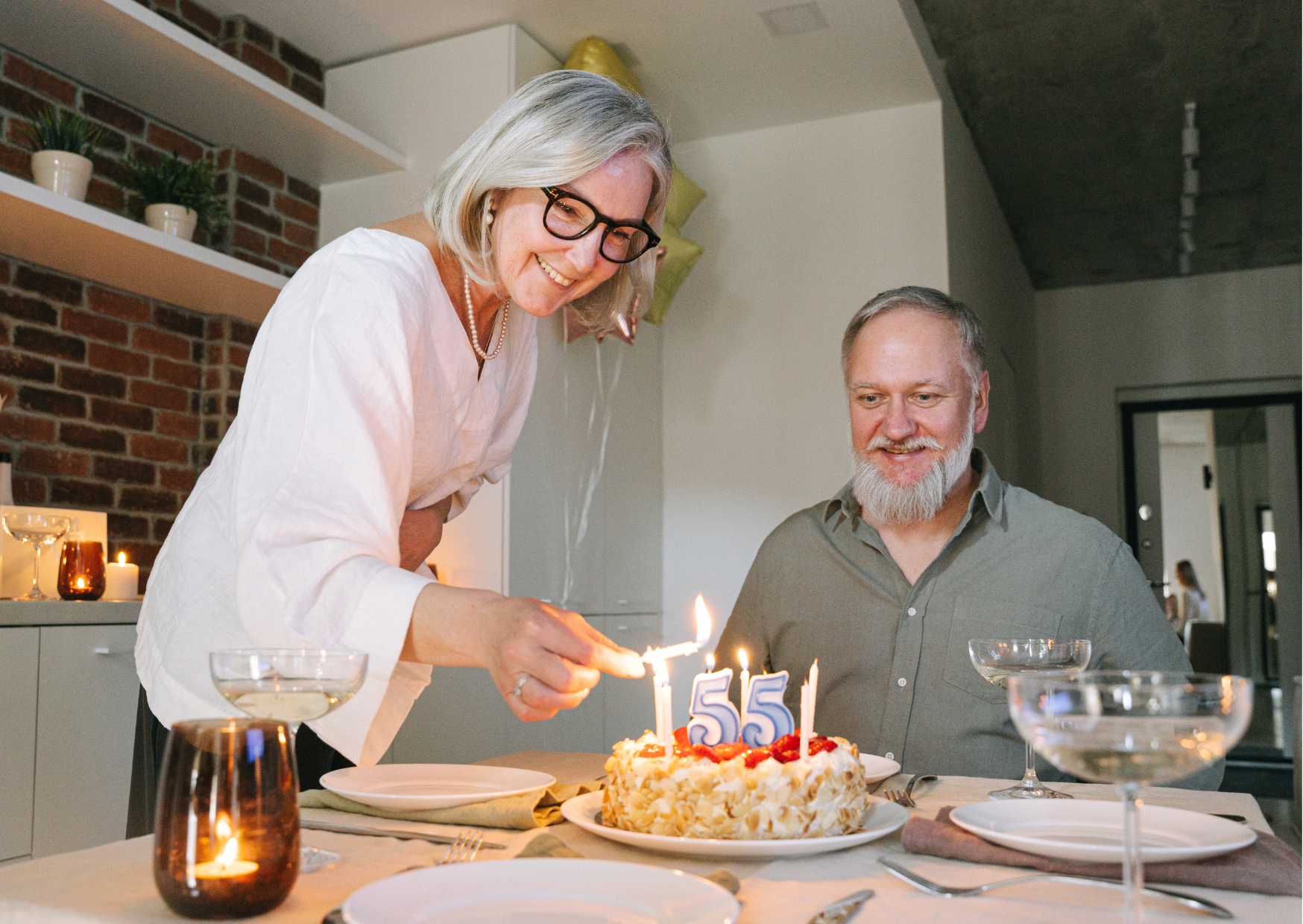
If you are choosing between Italy and Spain, do not decide from a two-week vacation. Do not decide from Instagram. And do not decide from the first friendly conversation that makes you feel hopeful.
Run a deliberate test week designed around the real question: can you build a sustainable social life here as a single older woman?
Here is a seven-day plan you can do in either country.
Day 1: Choose your third place.
Pick one café or bar you can realistically visit three times in the week. Same time, same seat if possible. Order simply. Learn two staff names.
Day 2: Buy one routine.
Enroll in something that meets at least weekly: language class, gym class, choir, ceramics, walking group. Do not overthink it. You are buying repetition.
Day 3: Do errands on foot.
Market, pharmacy, bakery, small purchases. The goal is micro-familiarity, not productivity.
Day 4: Attend one local, non-expat event.
A neighborhood talk, a festival committee meeting, a civic center class, anything where locals attend because they live there. Introduce yourself once, then show up again later.
Day 5: Find the daytime social window.
In Italy, that might be late afternoon into aperitivo hours. In Spain, it might be late morning cafés or weekday lunch. Identify the time block where you feel most alive and others are also present.
Day 6: Ask one person for a practical recommendation.
Not “want to be friends,” but “where do people go for X,” or “what class do you recommend.” Practical questions create low-pressure connection.
Day 7: Audit your emotional state.
Be honest: did you feel drained by the effort, or energized by the structure? Did you feel placed, or did you feel like you were performing?
Decision framework, blunt version:
- Choose Italy if you want ritual-driven belonging, earlier social windows, and you like the idea of being known through routine in a specific town.
- Choose Spain if you are willing to build through introductions and structured groups, you want excellent day-to-day quality of life, and you will choose your location strategically (often a real city over a resort corridor).
- Reconsider both if your plan depends on “meeting people naturally” without designing your week. That is not how this works when you arrive alone at 58.
The good news is that this is not about being “good at making friends.” It is about choosing a culture that matches your inputs.
And then showing up long enough to let the culture do what it does.

About the Author: Ruben, co-founder of Gamintraveler.com since 2014, is a seasoned traveler from Spain who has explored over 100 countries since 2009. Known for his extensive travel adventures across South America, Europe, the US, Australia, New Zealand, Asia, and Africa, Ruben combines his passion for adventurous yet sustainable living with his love for cycling, highlighted by his remarkable 5-month bicycle journey from Spain to Norway. He currently resides in Spain, where he continues sharing his travel experiences with his partner, Rachel, and their son, Han.