

Most Americans don’t “fail to integrate” because they’re rude or lazy. They fail because they bring an American model of friendship into a European system that runs on repetition, proximity, and unglamorous consistency.
The first year in Spain has a specific sound. It’s the quiet hum of an apartment at 6:30 p.m., when you expected you’d be out with people by now. It’s the WhatsApp notifications that never arrive, even though everyone you met seemed friendly. It’s the strange feeling of being surrounded by life, bars full, sidewalks loud, and still feeling invisible.
If you’re American and 45 to 65, this can hit harder than you expect. You’ve already built a life once. You know how to be likable. You probably have a résumé full of competence. None of that automatically translates into a social life in Europe.
Here’s what this article will do: name the single social mistake that quietly ruins most first years abroad, explain why it’s so common for Americans, and give you a practical way to build a real support network in Spain (and most of Europe) without turning your life into a never-ending networking event.
The mistake is treating friendship like a plan instead of a place

Americans tend to build adult friendships through planned social events. Dinner invitations. Weekend get-togethers. “Let’s grab coffee sometime.” It’s direct, it’s verbal, it’s calendar-based, and it works in a country designed around driving, private homes, and separated lives.
Spain is not built like that. Social life here is built through being a regular. Not a regular at “fun nights out.” A regular at ordinary life.
The most common first-year error is this: Americans try to “meet people” without committing to repeatable contact in the same physical places. They treat socializing as an activity layer on top of life, instead of the infrastructure of life itself. So they spend months doing one-off interactions that never compound into real connection.
You can see it play out in small decisions that feel rational:
- Choosing housing for the view, not for the street life.
- Doing errands in one big weekly run, not as daily micro-routines.
- Waiting to feel “settled” before joining anything.
- Using expat groups as a temporary bridge, then never crossing it.
The result is predictable: you know plenty of people’s names, but you don’t have a person you can call at 9 p.m. when the boiler dies or the landlord stops replying.
And if you think you’re the only one experiencing this, you’re not. In a large international survey, only 38% of expats worldwide said finding local friends is easy. And research from AXA Global Healthcare found 87% of expats have felt isolated during their time abroad.
Spain can be friendly, but friendliness is not a social plan. It’s a door. You still have to walk through it, repeatedly.
Why this hits Americans in midlife, even the socially competent ones
Both things are true: Spain can be socially rich, and American newcomers can feel socially starved.
Midlife Americans often arrive already running on fumes. Many are leaving behind a routine built around work, caregiving, and long-distance friendships maintained by text. When that scaffolding disappears, you discover how much of your social life was actually structural, not personal.
There’s also a backdrop Americans rarely name out loud: the United States has been dealing with rising disconnection for years. The U.S. Surgeon General’s advisory on social connection frames loneliness and isolation as a serious public health concern, with wide downstream health impacts. And research published in American Psychologist found middle-aged Americans report higher loneliness than their peers in European regions.
So when an American moves to Europe and loses their existing network, they are not starting from neutral. They are often starting from social deficit.
Then the European reality arrives:
- Fewer “hosted” social gatherings at home.
- More socializing that happens spontaneously, in public, with little notice.
- More reliance on language nuance, humor, and local context.
- A slower timeline to be considered “inside.”
If you expect your social life to rebuild through charm and effort alone, the first year can feel like rejection. It’s not rejection. It’s a mismatch of systems.
Spain runs on micro-routines, not big invitations
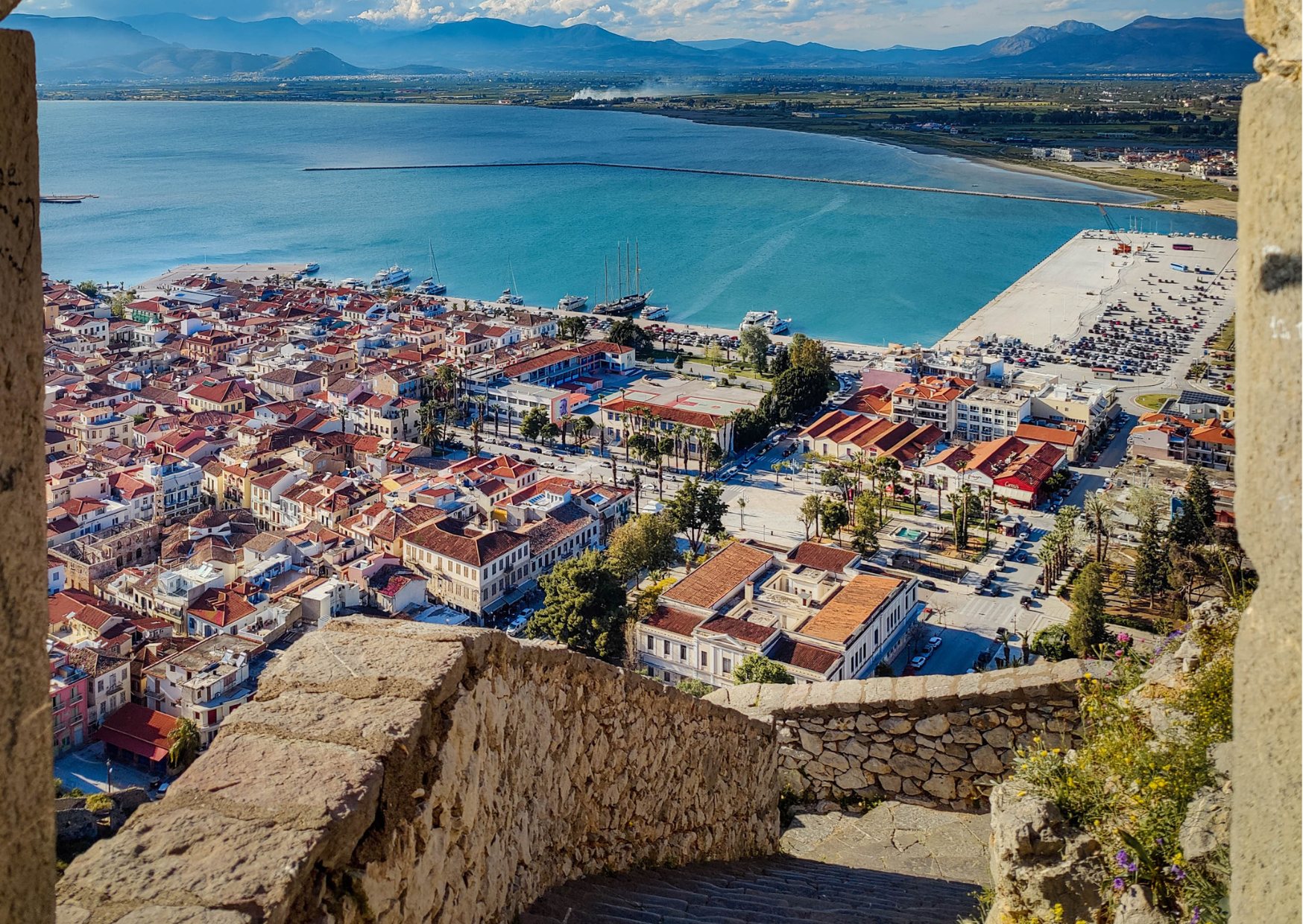
If you want to understand Spain socially, stop watching for invitations and start watching for patterns.
Spanish social life is built out of tiny repetitions: the same café at the same time, the same bakery, the same bench near the school, the same bar for the same pre-dinner drink. The point is not the activity. The point is recognition.
In our neighborhood, we didn’t “make friends” in a dramatic way. We became familiar faces. Then familiar faces became conversations. Conversations became favors. Favors became relationships.
This is what that looks like in practice:
- A €1.70 café con leche at the same counter three mornings a week.
- The same fruit stall at the mercado, even if it’s not the cheapest.
- Standing in the same spot at school pickup, not rushing off.
- A simple “Buenas” and a smile that repeats until it becomes normal.
To an American, this can feel inefficient. To Spaniards, it’s how trust is built without anyone needing to say, “Let’s be friends.”
If you’re waiting for a Spanish neighbor to invite you to dinner in month two, you might wait a long time. Not because they dislike you. Because in many towns and cities, home is private and social life is public.
And yes, Spain is known for friendliness. But surveys also show friendliness doesn’t automatically translate into deep connection. The global expat experience is full of places that are pleasant yet still socially hard, and one reason is that newcomers underestimate how much time-in-place matters.
The expat bubble isn’t evil, it’s just socially expensive
It’s easy to dunk on the “expat bubble,” but let’s be honest. It exists because it works, in the short term.
Expat circles offer:
- Fast intimacy.
- Shared language.
- Shared confusion.
- A social calendar without translation fatigue.
The problem is what it does to your first year. It trains you into a pattern of event-based socializing that doesn’t integrate with local life. You meet great people, but you’re still not anchored.
InterNations data gives you a blunt snapshot of the dynamic: in the 2024 Ease of Settling In write-up, 37% of expats worldwide said their friends are mostly other expats. That’s not a moral failure. It’s a statistical description of how easy it is to stay in the socially convenient lane.
For Americans, there’s an extra layer: if you move to Spain thinking “I’ll integrate naturally,” the expat bubble can become a stealth trap because it feels like progress. You are busy. You have plans. You are social.
But you’re social in a way that often doesn’t produce what you actually need at 45 to 65: a practical support network that overlaps with your neighborhood, your healthcare system, your school, your town hall, your daily life.
If your closest people all live 45 minutes away in a different expat cluster, you’re not integrated. You’re commuting to your own social life.
A healthier framing is this: use expats for sanity, and build locals for stability. The mistake is letting the first one replace the second.
You don’t need fluent Spanish, you need enough repetition to be remembered
A lot of Americans treat language as the gatekeeper. “Once my Spanish is better, then I’ll join things.” That feels responsible. It’s also backwards.
The social advantage you need is not eloquence. It’s low-stakes consistency. People get used to you before they get close to you.
This is where Americans often underestimate how friendship actually forms. Research on friendship development suggests it takes meaningful time together to move from acquaintance to friend. One study widely summarized by the University of Kansas found roughly 50 hours to shift from acquaintance to casual friend, about 90 hours to become a friend, and 200+ hours to become close friends.
That matters because it tells you what not to do: don’t treat friendship like a series of one-hour coffee dates with strangers scattered across the city.
Do this instead:
- Choose one neighborhood third place and rack up hours.
- Pick activities where talk is optional: walking groups, volunteering, sports, parent associations.
- Learn ten functional phrases you can repeat comfortably, instead of chasing fluency.
In Spain, a lot of social life is built around easy, repeated exchanges. The magic is not the sentence. The magic is that you show up again tomorrow.
And once you become a familiar presence, Spaniards often become far more generous than Americans expect, especially in day-to-day support. But you have to get past the “polite stranger” phase, which is a time problem more than a language problem.
The housing decision most Americans get wrong, and it’s secretly social
This is the part no one wants to hear, because it sounds unromantic.
In Spain, housing is not just housing. It’s a social strategy.
Many Americans choose an apartment like they’re choosing a vacation rental. Light. View. Quiet. A terrace. “It feels peaceful.”
Then they accidentally move into a socially dead pocket, or into a building where nobody lingers, or into an area where all daily life requires a car or a long walk. They end up living beautifully and socializing rarely.
If you want a real life, prioritize social density over aesthetic calm.
Look for:
- A plaza within a five-minute walk.
- A strip of cafés with regulars, not just tourists.
- A market, bakery, or pharmacy you can become a known face in.
- A school zone or family-heavy street if you have kids, because it generates natural contact.
This is also where Americans misread Spanish “noise.” The sound of life is often the sound of connection. A quiet neighborhood can be lovely, but it can also be socially barren, especially if you arrived alone or as a couple without built-in community.
The practical test is simple: stand outside the building at 8:30 p.m. on a weekday. If you don’t see anyone walking, talking, stopping, greeting, that area will require you to manufacture your social life from scratch.
That’s possible. It just costs more effort, more commuting, and more time. And time is the one thing most pre-retirees say they want to protect.
A realistic social system for Americans: one anchor, one ladder, one bridge
If you’re reading this and thinking, “Okay, but what do I actually do,” here’s a system that works in Spain without turning you into an extrovert-for-hire.
You need three lanes, each with a different job:
- The anchor (your neighborhood regular place)
One place you go at least three times a week. Café, bar, gym, mercado, dog park. The goal is recognition. - The ladder (a structured group that meets weekly)
Something with attendance: language class, hiking club, choir, volunteering shift, sports league, neighborhood association. The goal is repeated contact with the same people. - The bridge (a mixed circle that includes locals and immigrants)
Not “Americans abroad.” Mixed. Spaniards, Latin Americans, other Europeans, long-term residents. The goal is social overlap.
Here’s why this matters: if you only do the ladder, you have acquaintances. If you only do the anchor, you have friendly staff and familiar faces. If you only do the bridge, you have a social scene that may not touch your daily life.
When you do all three, you get redundancy, which is what makes a life stable.
A key detail Americans often miss is that Spain is heavily WhatsApp-driven. Social life is organized in messy group chats, not in polished invitations. Your goal is not to become “popular.” It’s to end up in the right two or three chats where normal life is coordinated: kid logistics, neighborhood updates, casual meetups, local events.
That’s when you stop feeling like you’re visiting and start feeling like you belong.
Your first 7 days in Spain: a plan that creates momentum without forcing friendships
If you’re in your first year, you don’t need inspiration. You need a sequence.
This is a seven-day plan designed to build social infrastructure fast, without being performative. The actions are small on purpose. You are creating repeatable contact, not chasing instant intimacy.
Day 1: Pick your anchor place
Choose one café or bar within a 10-minute walk. Go at the same time you can realistically repeat. Order the same simple thing. Tip normally. Be calm. You are starting a pattern.
Day 2: Join one structured weekly thing
Register for a class, a volunteer shift, a walking group, a gym class, a language exchange that meets weekly. Pay €10 to €40 if you have to. Think of it as buying time with the same humans.
Day 3: Create a “small yes” habit
Say yes to one low-stakes interaction: stay for the second coffee, join the short walk, accept the invitation to stand outside and chat for five minutes. The point is lingering, which many Americans are not trained to do.
Day 4: Build the bridge
Find one mixed group: a local hiking club, a neighborhood clean-up, a parent association, a community center activity. Your goal is not “Spanish best friends.” Your goal is proximity to people who already live local life.
Day 5: Learn ten phrases you will actually use
Not grammar. Function. Things like:
- “¿Qué tal?”
- “¿Siempre vienes por aquí?”
- “Estoy aprendiendo, voy despacio.”
- “Nos vemos mañana.”
Then use them at your anchor place. The point is repeatable ease, not linguistic perfection.
Day 6: Host a small, European-style invitation

Americans often think hosting means dinner. In Spain, hosting can be much smaller. Invite two people for a merienda. Coffee and something sweet at 5:30 p.m. Or a simple drink before dinner. Keep it short. The goal is to signal openness without demanding a whole evening.
Day 7: Lock in next week’s repetition
Put three anchor visits and one ladder activity on your calendar. Non-negotiable. This is where most people fail, not because they don’t want friends, but because they don’t protect the repetition.
If you do this for a month, something shifts. You stop “trying to meet people” and start living in a system where people expect to see you.
And in Spain, expectation is the beginning of belonging.

About the Author: Ruben, co-founder of Gamintraveler.com since 2014, is a seasoned traveler from Spain who has explored over 100 countries since 2009. Known for his extensive travel adventures across South America, Europe, the US, Australia, New Zealand, Asia, and Africa, Ruben combines his passion for adventurous yet sustainable living with his love for cycling, highlighted by his remarkable 5-month bicycle journey from Spain to Norway. He currently resides in Spain, where he continues sharing his travel experiences with his partner, Rachel, and their son, Han.