
Spain is still the first love. The language, the healthcare reputation, the big-city energy, the “this could be permanent” feeling.
But something has shifted in the last couple of years across the expat WhatsApp groups and late-night Reddit spirals. A very specific type of American is quietly choosing Croatia instead of Spain, not because Croatia is objectively better, but because Croatia is offering a simpler deal for a very modern problem: “I want to live in Europe, keep my U.S. income, and not spend my first year trapped in administrative purgatory.”
Spain can deliver the dream, but it often asks for patience, paperwork stamina, and a higher tolerance for tax complexity than people admit.
Croatia is being chosen because it’s blunt. There’s a clear temporary stay category for digital nomads, a clearly stated income threshold, and a process that is designed around “you work for someone outside the country, you just want to live here for a while.”
That does not mean Croatia is easier in every way. It means it is easier in the exact ways that decide whether someone stays long enough to feel settled.
The Croatia change that made Spain suddenly feel like hard mode
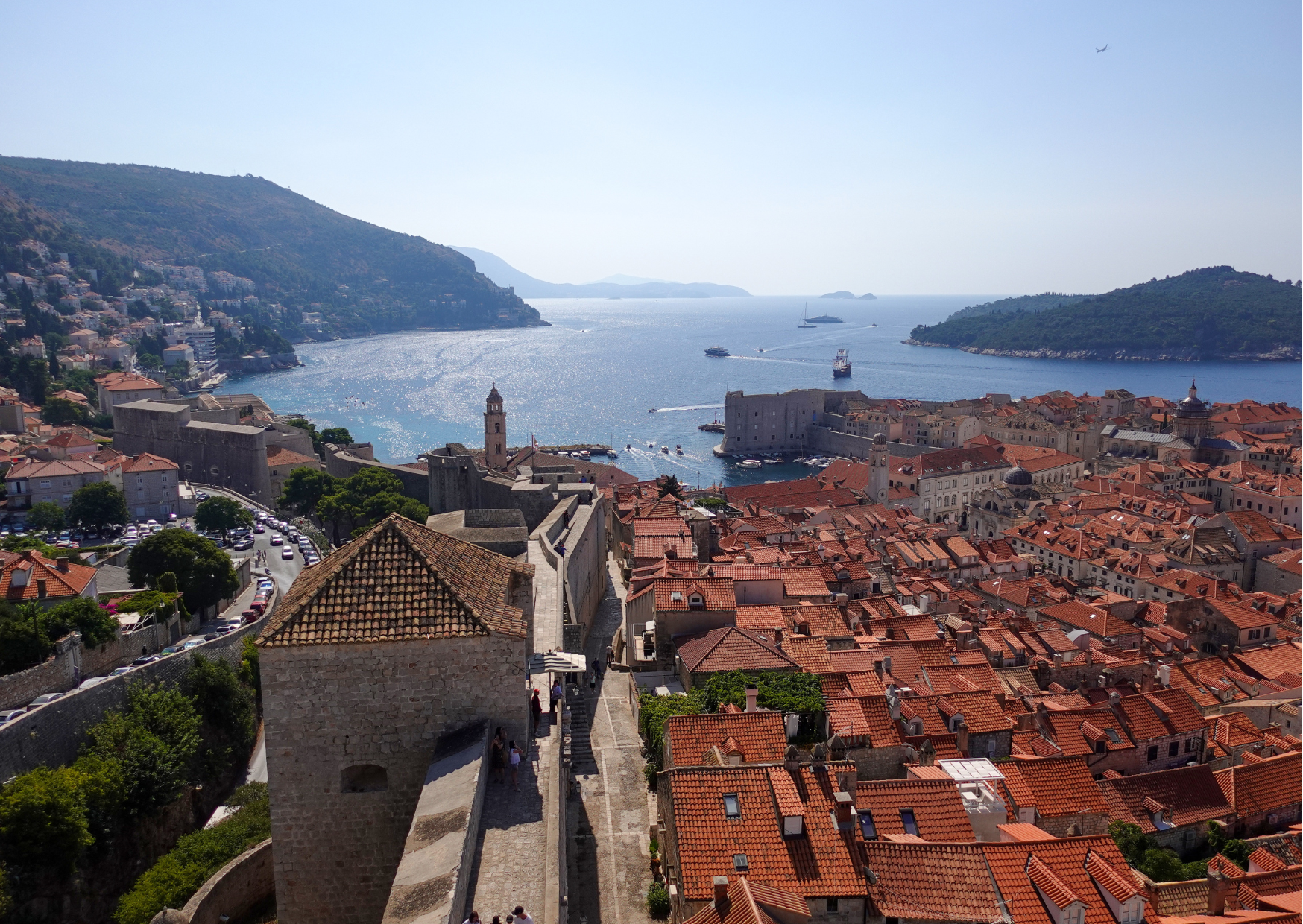
Croatia had a digital nomad residence path before, but the big practical change is that it’s now set up to support a real stretch of life, not a long vacation.
The Croatian Ministry of the Interior defines a digital nomad as a non-EU national working remotely for a foreign company or their own company that is not registered in Croatia, and they cannot provide services to Croatian employers. The headline detail is the duration: up to 18 months of temporary stay. That is enough time to stop living like a visitor and start living like a person with routines.
The other detail is the money number, because money numbers are where people stop fantasizing and start planning. Croatia ties proof of means to a formula based on average net salaries, and the Ministry currently lists the required monthly amount as €3,295. They also spell out the lump-sum proof option: for a 12-month stay, €39,540 in the bank, and for an 18-month stay, €59,310.
That bluntness matters. Americans do better when a system tells them exactly what “enough” looks like, even if the number is high.
There is also a tax advantage that gets talked about constantly, and not always accurately. An EU Commission ad hoc report describing Croatia’s digital nomad framework notes that Croatia’s income tax amendments include a tax exemption intended to support the digital nomad category.
That combination, 18 months, clear proof-of-funds rules, and an explicit tax policy signal, is why Croatia is pulling people who would have defaulted to Spain.
Spain is not the problem, but Spain is a bigger commitment than people admit
Spain’s digital nomad option is real, and for many people it’s worth it. The issue is that Spain often functions like a country you move to, not a country you try.
Spain’s economic requirement is commonly presented as a multiple of the minimum wage. Spanish consular guidance for the digital nomad visa describes the minimum as 200% of Spain’s Minimum Interprofessional Salary (SMI), with additional percentages for family members.
That sounds fine until you translate it into lived logistics:
- You are proving income in a way that will survive scrutiny, not just “I have a job.”
- You are documenting private health insurance in a format Spain accepts.
- You are navigating apostilles, background checks, and translations without missing a step.
- You are entering a tax conversation whether you want to or not, because Spain is a place people actually settle.
Spain also has a social gravity. Once you choose Spain, you tend to build a life that is harder to unwind. It’s not just a base. It becomes a long-term plan, which means every administrative delay feels heavier because the stakes feel higher.
Croatia is being chosen by Americans who want Europe without the psychological weight of permanence. They want an on-ramp, not a marriage.
Spain remains a better fit for Americans who want:
- a deep expat ecosystem across multiple cities
- easier long-term integration through language and culture
- a bigger labor market if remote work changes
- a clearer “this could become forever” narrative
Croatia is pulling Americans who want:
- a defined temporary stay window
- less pressure to decide long-term immediately
- a cleaner separation between foreign income and local life
- a base that still feels European without demanding full integration on day one
Croatia is not replacing Spain. It’s absorbing the people who were never ready for Spain’s level of commitment.
The money math that makes Croatia feel “lighter,” even when it isn’t cheaper
A mistake Americans make is assuming this is purely about cost. It’s more about cost predictability and friction.
Spain’s big cities and high-demand coastal markets have rent pressure. Málaga, for example, has been reported around €15.2/m² for rents, which translates to roughly €1,200/month for an 80 m² apartment using that benchmark.
Croatia’s coastal hot spots are not cheap either. Split is a prime example of a market that can swing wildly depending on season and whether you are dealing with long-term local stock or tourist-optimized apartments. Some cost-of-living summaries put a 1-bedroom city-center rent around €740 on average, but ranges are wide.
This is why the comparison that matters is not “Spain is cheaper” or “Croatia is cheaper.”
The comparison is: where does your monthly budget feel like a stable platform rather than a moving target?
Here’s a practical way Americans end up comparing it, line by line, when they are honest.
A workable Spain monthly base in a popular secondary city
(think Málaga or Valencia style living, not Barcelona center)
- Rent: €1,100 to €1,500
- Utilities and internet: €150 to €250
- Groceries: €350 to €550
- Eating out: €180 to €350
- Local transport: €40 to €80
- Private health insurance: €120 to €250 per person depending on age and exclusions
- Admin and paperwork buffer: €75 to €150
For a couple, it is easy to land at €2,600 to €3,400 without trying to live lavishly.
A workable Croatia monthly base outside peak-tourist pricing
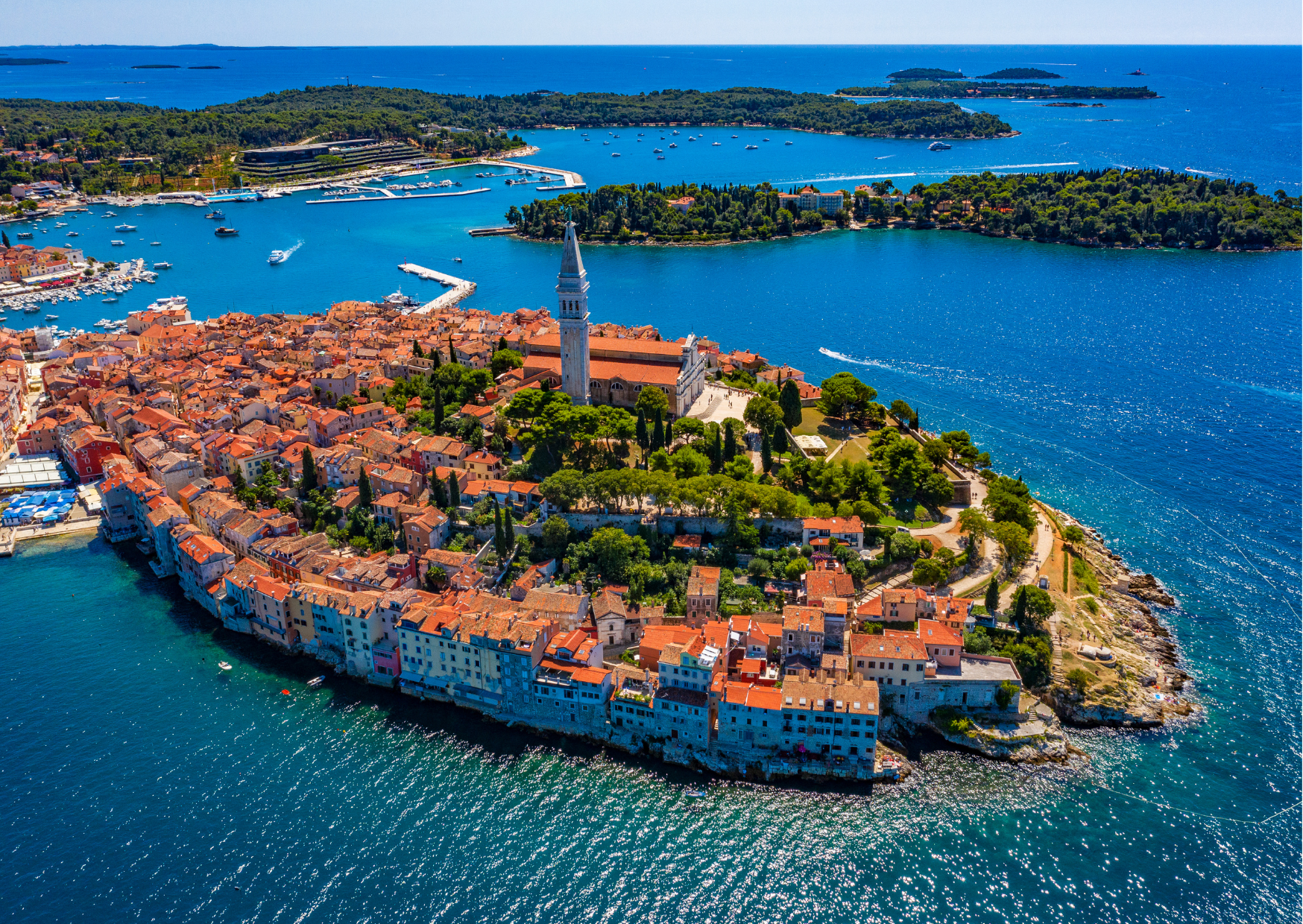
(think Zagreb, or a smaller coastal town with year-round life)
Zagreb rental listings have been reported around €15/m² in late 2025 on one major Croatian property portal, which gives a sense of where the capital is trending.
- Rent: €900 to €1,400 depending on city and size
- Utilities and internet: €150 to €250
- Groceries: €300 to €500
- Eating out: €160 to €320
- Local transport: €35 to €70
- Private health insurance or travel-style coverage: varies widely, but people often carry a policy that satisfies residency requirements plus practical coverage needs
- Admin and document costs: €50 to €150
Again, a couple can land at €2,200 to €3,100.
Those ranges overlap. That’s the point.
Croatia can feel “lighter” because the residency framework is designed around temporary stay with foreign income, and because the Croatian government explicitly states the proof-of-funds number for the digital nomad category. Predictable thresholds reduce panic spending and reduce the feeling of being judged by an invisible bureaucratic standard.
When people say Croatia feels cheaper, they often mean Croatia feels less emotionally expensive.
The weekly rhythm is what actually determines whether people stay
A lot of Americans choose Spain imagining a full Mediterranean transformation: morning markets, long lunches, spontaneous friends, and a healthier nervous system.
Then reality shows up: paperwork days, appointment chasing, and the fact that building community in a new country is slow even when you speak the language.
Croatia is winning a certain demographic because the lifestyle model is easier to execute quickly:
- the country is compact
- travel between towns is straightforward
- the social culture is not as “performative” for newcomers
- the expat infrastructure for short stays is mature along the coast
The routine that makes Croatia work tends to look like this:
- Monday: admin, banking, document scans, rent and bills
- Tuesday: gym or long walk, cook at home, language practice if you’re doing it
- Wednesday: one social anchor, coworking day or a regular café loop
- Thursday: errands, pharmacy, apartment maintenance, laundry
- Friday: meal out, then a quiet evening
- Weekend: local travel, hike, market, beach walk, or a day trip
Spain can absolutely support the same rhythm, but Spain often comes with more pressure to integrate immediately. Spain has a stronger “become local” expectation. Croatia offers a more comfortable middle ground: you can be a respectful outsider while you build your footing.
This matters for older Americans and for couples, because community building is not romantic when it’s happening. It’s repetitive. It requires showing up in the same places until you become familiar.
Croatia’s digital nomad setup is compatible with that kind of slow repetition because the time window is long enough to stop rushing. 18 months is long enough to be seen.
Pitfalls most Americans don’t see until Croatia stops feeling like a hack
Croatia is not a cheat code. People run into the same three traps over and over.
1) Picking a town that only works in summer
A Croatian coastal town in July is a different country than the same town in January.
If you choose a place that is mostly tourist apartments and seasonal restaurants, you will hit the winter wall: fewer social options, fewer services, and a feeling of isolation that surprises people who thought the coast meant “constant life.”
The fix is boring but effective: choose a base with year-round infrastructure, or commit to a seasonal split where winter is in a city and summer is on the coast.
2) Treating the income requirement as a suggestion
Croatia’s Ministry lists the digital nomad monthly requirement as €3,295, and they specify how to prove it. That’s not vibes, that’s the standard.
Americans sometimes try to “explain” income creatively. That works until it doesn’t. The system is telling you the lane. Stay in the lane.
3) Confusing tax marketing with tax reality
Yes, Croatia’s framework has been described in EU materials as including an income tax exemption intended to support digital nomads.
But Americans still have U.S. tax obligations, and tax residency rules depend on facts, not internet certainty. The intelligent move is not to assume you are “tax free.” The intelligent move is to treat Croatia as potentially tax-advantaged on the Croatian side and then plan your U.S. compliance cleanly.
People get burned when they build a life around a tax rumor.
4) Assuming Croatia is a stepping stone to EU permanence
Croatia can be a beautiful base. The digital nomad category is still a temporary stay designed around remote work for foreign employers. If your real goal is long-term EU residence, Spain may still be the more straightforward “settle” environment in practice, even if it is more paperwork up front.
Croatia works best when you treat it as a deliberate chapter, not a loophole.
What to do in the next 7 days if you’re choosing between Spain and Croatia
If someone is genuinely torn, the fastest way to decide is to stop arguing with yourself and run a short operational test.
Day 1: Choose two locations in each country
Not dream locations. Realistic ones. One city and one smaller base.
- Spain example: Málaga and Valencia
- Croatia example: Zagreb and Split, or Zagreb and Zadar
Day 2: Build a rent reality check
Pick one apartment size and one budget ceiling, then check what exists. The goal is not perfection. The goal is whether your budget produces options or despair.
Day 3: Compare the residency thresholds like an accountant
Spain’s consular guidance frames the income requirement around 200% of SMI. Croatia’s Ministry states the digital nomad monthly amount as €3,295.
Decide which one you can prove cleanly with your actual documents, not your theoretical income.
Day 4: Run a paperwork simulation
Gather the exact documents both systems tend to require:
- passport validity
- background check planning
- proof of insurance
- proof of income
- address plan
This is where people discover whether they are a “Spain person” or a “Croatia person.” The answer is usually emotional, not logical.
Day 5: Build a one-month “arrival budget”
Include the costs Americans forget:
- temporary accommodation while apartment hunting
- deposits, often 1 to 2 months
- a furniture and setup buffer
- document translation costs
- extra transport while learning your base
Day 6: Design a weekly rhythm before you arrive
Pick the repetition points you will use to build community:
- one café ritual
- one exercise loop
- one market
- one social anchor
If you can’t see your week, you will drift.
Day 7: Decide what you are optimizing for
Be blunt. Pick one:
- speed to legal residency
- lowest monthly burn
- long-term settlement potential
- social life density
- healthcare confidence
- “I want to try Europe without committing forever”
Croatia is stealing Americans from Spain because those Americans are optimizing for low-friction legality and a defined “try Europe” window, not for the deepest version of Spanish life.
The real decision is not Spain vs Croatia, it’s “permanent” vs “possible”
Spain is a country many Americans can build a second life in. It is culturally rich, logistically robust, and emotionally satisfying when it clicks.
Croatia is a country many Americans can build a chapter in that feels like Europe without immediately becoming a forever decision.
The digital nomad framework is why. Croatia tells you the rules, gives you a long enough stay to settle, and keeps the relationship between your foreign income and your local life unusually clean in policy terms.
Spain can still be the better destination if you want permanence, deeper integration, and the feeling that you are not just visiting Europe, you are joining it.
Croatia wins when you want a stable base that makes Europe feel possible right now, without demanding that you solve your entire future in the first six months.
That’s not a small advantage. For the Americans actually making these moves, it’s the whole game.

About the Author: Ruben, co-founder of Gamintraveler.com since 2014, is a seasoned traveler from Spain who has explored over 100 countries since 2009. Known for his extensive travel adventures across South America, Europe, the US, Australia, New Zealand, Asia, and Africa, Ruben combines his passion for adventurous yet sustainable living with his love for cycling, highlighted by his remarkable 5-month bicycle journey from Spain to Norway. He currently resides in Spain, where he continues sharing his travel experiences with his partner, Rachel, and their son, Han.