
Last updated on February 28th, 2026 at 01:19 pm

The first invite feels like winning.
Someone in your building says, “Come up for a drink,” and you immediately file it under proof. Proof you’re not stuck in an expat bubble. Proof people like you. Proof the move is working.
The second invite feels like momentum. You bring wine, you compliment the apartment, you stay a bit longer, and you go home thinking, “Okay, we’re in.”
Then the third invite happens, and after that, nothing. You still smile on the stairs. You still exchange pleasantries. But the invitations stop.
Most Americans interpret that as rejection, or worse, European coldness. In reality, it’s usually something more ordinary and more fixable: you treated the home invite like a casual hang, and your neighbor treated it like a small act of trust with rules attached.
In Spain, this is one of the most common social misunderstandings we see with newcomers, especially retirees. Europeans are not allergic to friendship. They just don’t use the home the same way Americans do, and they don’t invite people into it on the same timeline.
If you keep getting invited out but not invited in, it’s not a mystery. It’s a signal. And the signal is almost always about rhythm, reciprocity, and boundaries, not about whether you’re “likable.”
Quick Easy Tips
Pace return invitations thoughtfully. If someone hosts you, consider reciprocating within a reasonable timeframe, even if the gathering is simple.
Pay attention to visit length. In many European homes, shorter, well-timed visits are often preferred over extended drop-ins.
Bring a small host gift when invited. Wine, flowers, or quality chocolates are widely appreciated gestures.
Watch the local rhythm. Notice how often neighbors socialize at home versus meeting in cafés or public spaces.
One of the most debated aspects of this topic is whether Europeans are truly more private at home or simply operate under different social pacing. In many regions, the home is treated as a more protected personal space than in typical American social culture.
Another point of discussion is reciprocity. In some European countries, repeated invitations without clear return gestures can feel unbalanced. Americans, who often treat invitations more casually, may not immediately recognize this expectation.
There is also wide regional variation. Southern European countries often have more open, family-centered home cultures, while parts of Northern Europe may maintain stronger boundaries around private space. Broad generalizations can miss these nuances.
Finally, online narratives sometimes exaggerate the “three visits” idea. Social dynamics are influenced by personality, urban versus rural settings, and individual relationships far more than by any fixed numerical rule.
What the third invite really means
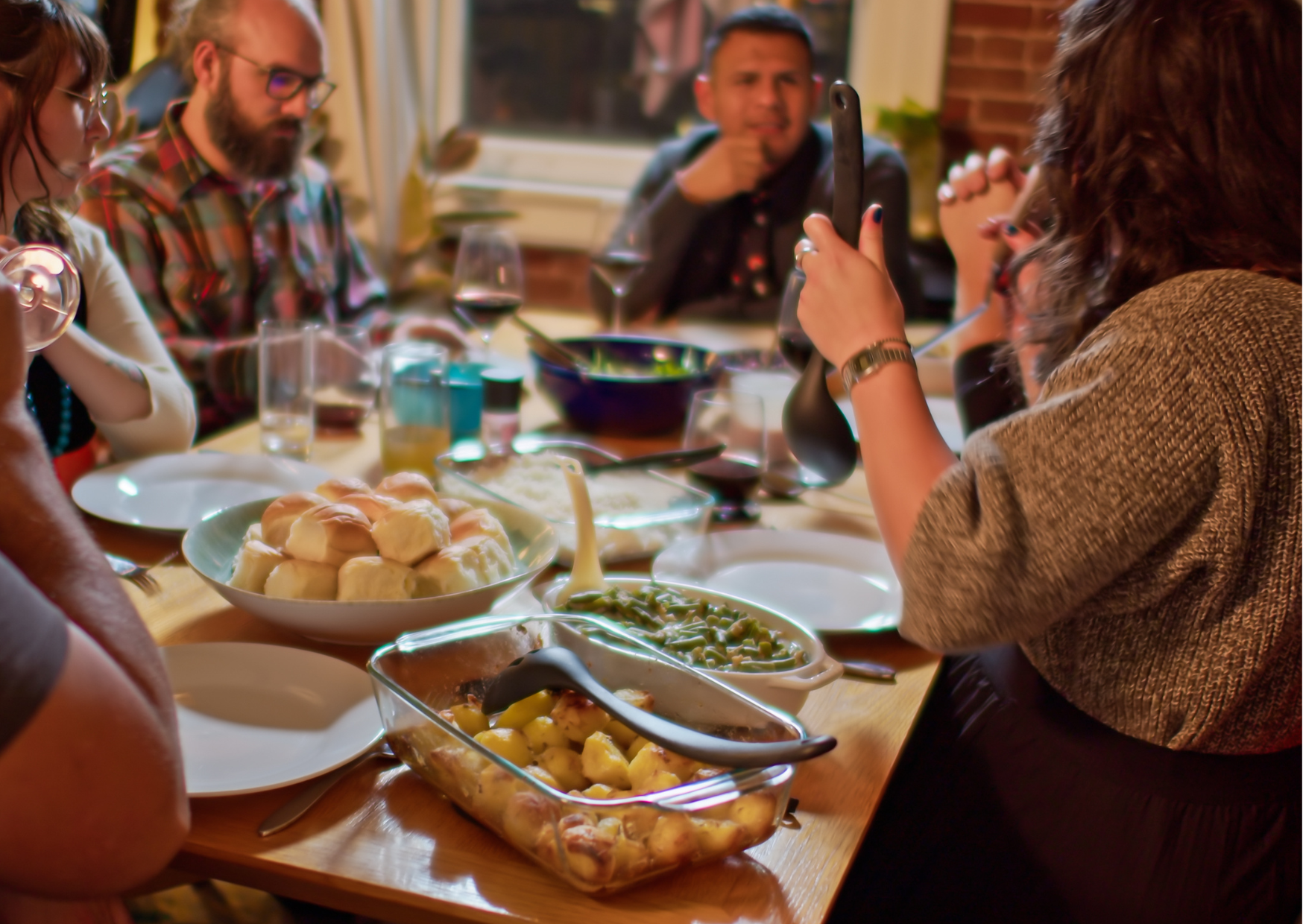
In a lot of American social life, inviting someone over can be light. Your house is big, hosting is part of the culture, and the default assumption is “Come by, it’s casual.”
In many European cities, inviting someone into the home is a higher-trust move. Not a marriage proposal, but not nothing.
By the third visit, your neighbor has enough data to decide whether you are:
- a pleasant guest who fits their rhythm, or
- a social obligation that adds work to their week
That sounds harsh until you remember what hosting actually is in a small apartment. It’s cleaning, rearranging, shopping, timing food, and managing the emotional energy of the evening. Europeans do this, but they do it selectively.
The “three visits” pattern is usually a quiet test period.
Visit 1 is curiosity. You are new, you are interesting, and it’s a friendly gesture.
Visit 2 is calibration. They are checking how you behave once the novelty fades.
Visit 3 is decision. They decide whether you become part of the background of their life or remain an occasional guest.
This is why “being nice” is not enough. The deciding factors are often practical:
- Do you show up on time, or do you arrive early and force them to host sooner?
- Do you leave when the moment peaks, or do you stay until the host is trapped?
- Do you bring something useful, or something awkward?
- Do you reciprocate in a way that makes sense locally?
A weekly rhythm detail matters here. If your neighbor’s Friday night is their decompression ritual, your long visit might feel like you borrowed their oxygen. If their Sundays are for family lunches, your request to “do Sunday” might land as tone-deaf.
The third invite is when the host decides if you understand their calendar.
Why European homes stay private

A big part of the mismatch is physical. Many European homes, especially in cities, are smaller than what Americans are used to. A typical Spanish rental unit size in national data has been cited around 96 m², while a new U.S. single-family home sold in 2024 had a median size of 2,210 sq ft. That difference changes everything about hosting, storage, noise, and comfort.
When your living room is also your dining room and your work area, having guests is not a casual add-on. It’s a disruption.
There’s also a cultural piece that matters in Spain and much of Southern Europe: social life often lives in public space. The bar terrace, the plaza, the paseo, the café, the market route. That’s not a stereotype, it’s the daily operating system. People see each other out. They socialize without opening their private space.
So when Americans push for home-based intimacy early, it can feel premature. You might be thinking, “Let’s be real friends.” They might be thinking, “Why is this person trying to jump levels?”
European neighbors often prefer a long runway:
- repeated hellos in the stairwell
- short chats by the mailbox
- a few coffees outside
- a shared complaint about the building
- then, eventually, the home
This is also why the invitation sometimes shifts outward. You stop getting invited upstairs, but you keep getting invited to one drink at the bar downstairs, or to a neighborhood event. That is not a downgrade. It is the normal track.
The practical mistake Americans make is treating the home as the main friendship arena. In many European contexts, the home is the inner circle arena. You earn it through repetition and low-friction presence.
The invisible clock at the table

This is the one that ends invitations faster than anything else: not knowing when to leave.
Americans often stay too long because they are trying to signal warmth. Europeans often stop inviting because they are trying to protect their week.
A typical American hosting mindset is open-ended: “Hang out, we’ll see.” A typical European hosting mindset is more bounded, even if nobody says it out loud.
In Spain, evenings can start later, but that does not mean they are infinite. There is still an endpoint, and it’s often signaled subtly:
- the host starts cleaning while talking
- the lighting changes
- the conversation dips
- someone mentions “mañana” in a tired way
- the host stops offering food or drinks
If you miss those cues, you become a trap.
A useful heuristic, especially early on: aim for 90 minutes on the first home visit, 2 hours on the second, and only go longer if the host actively extends the night with a clear invitation. If you are still there after the third “no, no, it’s fine,” you are not being polite. You are being heavy.
Arrival matters too. Showing up 15 minutes early can force a host into performance mode before they’re ready. In small apartments, there is no “hide the mess in the spare room.” Early arrival is a stress spike.
There’s also a rhythm mismatch around food. Americans often arrive hungry, assume dinner will happen, and settle in. In Spain, a home invite might be a drink and a snack, not a full meal, unless explicitly stated. If you behave like you are waiting to be fed, the host will read you as high-maintenance.
This is where invitations die. Not in drama. In fatigue.
People stop inviting guests who do not respect the clock, because they do not want to spend their next day recovering from “social obligations.”
The reciprocity ledger that decides the next invite
European neighbors keep an invisible ledger, and it is not about money. It is about effort and balance.
Americans often bring wine. That’s fine. But sometimes it misses the point, especially if:
- they bring a bottle that requires a specific opener or glassware
- they bring something expensive, which creates obligation
- they bring something impractical for the host’s diet or preferences
The best contributions are often small and usable:
- €6 to €10 pastries from a local bakery
- good olives, chips, or fruit
- a simple bottle that fits the table without ceremony
- something for the host’s kids if kids are present, like a small treat
But the bigger reciprocity issue is not what you bring. It’s what you give back socially.
If you are invited three times and you never create an easy counter-invitation, you become a one-way relationship. Americans sometimes think, “I’ll host later when my place is perfect.” That delay is costly in Europe. Hosting does not need to be perfect, it needs to be reciprocal.
Reciprocity can be local-style, not American-style. You do not need to host a three-course dinner.
You can reciprocate with:
- “Café downstairs on Thursday, my treat.”
- “We’re going to the market Saturday, want to join for one lap?”
- “One drink after your workday, 45 minutes.”
Short invitations are powerful because they do not trap anyone.
Another ledger item Europeans notice fast: do you offer to help. Not performatively, but lightly.
- clearing plates
- asking where to put something
- saying thank you in a way that feels final, not endless
In many European homes, the host does not want you scrubbing the kitchen. But they do want you to show you understand hosting is work.
If you leave without any gesture of contribution, you can feel like a consumer of hospitality. After three visits, that becomes a pattern.
The conversational habits that make you feel like work

This is uncomfortable, but it matters.
Many Americans, especially retirees, bring a heavy conversational style into European homes. They over-share, they interview, they turn the night into a life story seminar. They mean well. They want connection. But it lands as labor.
Common patterns that wear hosts out:
- asking personal questions too fast, health, money, politics, family conflict
- making every topic comparative, “In America we would never,” “In America we always”
- talking loudly in small rooms, where sound bounces
- treating the host as a guide, “Tell us what we should do,” for two hours
European neighbor friendships often grow through smaller talk loops before deeper topics. Not shallow, just paced. You build comfort first.
A very practical language habit also matters: if you only speak English and you rely on the host’s English, you are asking them to work. If they’re fluent, it still costs cognitive energy. After a long day, hosting in your second language feels like a job.
You do not need perfect Spanish to fix this. You need effort signals:
- greet properly
- use basic phrases
- accept being slow
- laugh at your mistakes without making it a performance
The goal is to reduce the host’s load.
If your neighbor feels they have to “carry” the evening, socially or linguistically, they will stop scheduling it.
The practical etiquette mistakes that stack up fast
Most people do not get uninvited for one mistake. They get quietly deprioritized for a stack of small ones.
Here are the repeat offenders that show up in Europe, especially in apartment buildings:
- Shoes: don’t assume. Look at the entryway. Ask once, then follow the house norm.
- Perfume and smoke: strong scents linger in small spaces. What feels normal to you can be suffocating to someone else.
- Kids and noise: in dense buildings, noise has consequences. Neighbors care because they get complaints.
- Food assumptions: do not bring a surprise dish that requires oven space or special serving. The host’s kitchen is not a staging area.
- Pets: never assume pets are welcome, even if you love animals.
- Arrival drift: showing up 30 minutes late without notice reads as disrespectful in many contexts.
- Bathroom behavior: small home, thin walls, limited supplies. Be low-impact.
- Photos: do not take photos inside someone’s home unless invited. Privacy is not a joke.
- Overstaying: again, this is the top killer. Leave while it’s still good.
If you want a simple rule, follow this: act like the home is a private workspace, not a party venue. Because in many European households, that’s closer to the truth.
Also remember the physical reality. If the home is under 100 m², your presence is not background. You are a full environmental change.
If you respect that, people relax. If you ignore it, people stop inviting.
A 7-day reset that gets you invited again
This is for the person reading this who realizes they have become “nice, but tiring.”
You can fix it without begging for invitations. You fix it by changing how you show up for one week.
Day 1: Choose one neighbor-friendly ritual
Pick something you can repeat weekly, like the same café after the market. Make it consistent. Consistency is what turns you from visitor to familiar.
Day 2: Send one clean thank-you message
Short, specific, and final. “Thanks for having us, the tortilla was great, we had a really nice time.” No follow-up demands, no “we should do this again” pressure.
Day 3: Make a low-pressure counter-invite
Offer something that costs little time and does not involve your home. 45 minutes is a gift. “We’re grabbing a coffee Thursday morning, want to join?”
Day 4: Fix your timing habits
Decide your new default: arrive on time, leave on time. If you are invited at 7:30, arrive at 7:30, not 7:10. Plan your exit before you arrive.
Day 5: Bring the right contribution once
Next time, bring something usable and small, €6 to €12 range, pastries, fruit, a simple bottle. Not a statement gift.
Day 6: Reduce your conversational load
Do one evening where you talk 30% less than usual. Ask one question, then let silence exist. Europeans often tolerate silence better than Americans. Silence can be comfort, not failure.
Day 7: Build a weekly structure
Pick one recurring activity where you see the same faces. A class, walking group, volunteer slot. Friendship follows repetition. This is where Timing beats willpower becomes real.
If you do this week and nothing changes immediately, that’s normal. You’re rebuilding trust and low-friction presence. Most Europeans do not reward change with instant warmth. They reward it with gradual inclusion.
Why You Should Understand This Social Dynamic
Learning local social rhythms helps you build stronger relationships abroad. Small adjustments in timing, reciprocity, and expectations often make interactions feel more natural on both sides.
Awareness also reduces unnecessary overthinking. When you understand that invitation patterns may differ culturally, you are less likely to misinterpret normal shifts in social frequency.
There is a practical benefit for expats and long-term visitors. People who adapt to local hosting norms often integrate more smoothly into neighborhood life.
Understanding these patterns can also improve your confidence when accepting invitations. Knowing what is typically expected helps you respond in ways that feel appropriate without guessing.
Most importantly, cultural flexibility tends to deepen connections. Showing sensitivity to local social habits is often noticed and appreciated, even when the differences are subtle.
Why You Shouldn’t Take the “Three Visits” Idea Too Literally
At the same time, it is important not to treat this concept as a hard rule. European social behavior varies enormously by country, city, and individual personality.
Many European hosts are highly welcoming and informal, especially in international cities or among younger social circles. Invitation patterns often reflect personal chemistry more than national culture.
There is also a risk of self-conscious overcorrection. Worrying too much about visit frequency or perceived etiquette can make interactions feel stiff or overly calculated.
Friendships everywhere develop at different speeds. Some neighbors naturally become close quickly, while others maintain more distance regardless of cultural background.
In the end, the best approach is relaxed attentiveness. Be observant, reciprocate thoughtfully, and communicate warmly. Most cross-cultural friendships thrive not because every rule is followed perfectly, but because goodwill and respect are clearly present.
The choice: be a guest, or become a neighbor

A guest is someone who appears, consumes hospitality, and leaves. Pleasant, but optional.
A neighbor is someone who fits the rhythm. Predictable, reciprocal, easy to have around.
If you want to keep getting invited into European homes, you do not need to become quieter, smaller, or less American in your personality. You need to become lower-friction in your behavior.
That means respecting the private nature of the home, the size constraints, and the invisible rules around time and reciprocity.
If you want to keep living like a visitor, keep doing what you’re doing. You’ll still have a good life, cafés, terraces, friendly small talk, and plenty of social contact outside.
If you want to be invited in, you have to choose the neighbor track: repetition, boundaries, and a calendar that makes you easy to include.
Most people don’t fail because they are rude.
They fail because they treat a European home invite like a casual American hang, and then they wonder why it stops after three visits.
Cross-cultural social habits often operate quietly in the background, which is why they can catch even well-meaning visitors off guard. What feels friendly and normal in the United States may carry a different tone in parts of Europe, particularly around home invitations and frequency of visits. Small mismatches in expectations can gradually shape how relationships develop.
In many European settings, home invitations tend to be more deliberate and less casual than some Americans are used to. Being invited over repeatedly can carry an unspoken expectation of balance, reciprocity, or pacing. When those rhythms feel out of sync, hosts may naturally pull back without any direct conversation.
The encouraging reality is that these situations are rarely personal. Most of the time, what looks like cooling enthusiasm is simply a difference in social timing, hosting culture, or household privacy norms. Once understood, the adjustment is usually straightforward.
Ultimately, the goal is awareness rather than self-consciousness. With a bit of observation and flexibility, most Americans find they can build strong, comfortable friendships with European neighbors over time.

About the Author: Ruben, co-founder of Gamintraveler.com since 2014, is a seasoned traveler from Spain who has explored over 100 countries since 2009. Known for his extensive travel adventures across South America, Europe, the US, Australia, New Zealand, Asia, and Africa, Ruben combines his passion for adventurous yet sustainable living with his love for cycling, highlighted by his remarkable 5-month bicycle journey from Spain to Norway. He currently resides in Spain, where he continues sharing his travel experiences with his partner, Rachel, and their son, Han.