

If you retire to Europe, you start seeing money differently. The espresso is cheaper, the pharmacies do not feel like hostage negotiations, and a normal weekday can cost less than an American weekend.
Then you get asked a tiny question at a card terminal in Spain.
“Pay in euros or dollars?”
Most Americans choose dollars because it feels safer. You want to know what you spent. You want the number to land in familiar units. You want to feel in control.
That one tap is the slow leak.
It is called dynamic currency conversion. It is marketed as convenience, and it often comes with a worse exchange rate and an added markup. You do not feel it because it does not look like a fee. It looks like a helpful service.
If you live on retirement income, that markup becomes a recurring tax on your life. Coffee, groceries, taxis, household items, train tickets, pharmacy runs, and all the boring purchases that make Europe feel livable.
The best part is that this leak is one of the easiest to plug. You just need rules you follow even when you are tired.
The fee you agree to in one tap

Dynamic currency conversion, DCC, is what happens when a merchant terminal or ATM offers to convert your purchase into your home currency on the spot. For Americans, that means charging you in dollars instead of euros.
It feels friendly because it solves a real friction. Your brain wants the dollar figure.
But DCC is not a neutral conversion. It is usually a conversion with a markup, and the markup is often higher than what you would get if you simply paid in euros and let your card network and issuer handle the conversion.
The reason it is so damaging is that it hits the purchases you make constantly. Not the big dramatic ones, the everyday ones. You might never notice it as a single event, but you will feel it at the end of the year when you wonder why the “Europe is cheaper” math is not showing up in your bank balance.
It also shows up in the ugliest way possible: tiny annoyances.
- Your grocery run is always a little higher than expected.
- Your cash withdrawals feel strangely expensive.
- Your “small” purchases do not feel small anymore.
This is why it drains retirement accounts. Retirement is a long game. Any fee that shows up daily is not small, it is structural.
If you want one sentence to live by, it is this: when the terminal asks, always choose EUR, never USD.
That one habit alone can save you more than most “retire abroad” hacks.
Where the money goes when you pick dollars

When you select dollars, you are letting a third party set the conversion rate, usually the merchant’s acquiring setup or the ATM operator’s conversion service. That service often includes a margin.
When you select euros, your purchase goes through your card network and your card issuer’s conversion process. That path can still include costs, but for many people it is cheaper than DCC.
Here is why the DCC offer is so persuasive:
- It gives you a clean dollar number before you tap.
- It makes you feel like you avoided uncertainty.
- It looks official, it is on a screen in front of you.
But you are not avoiding uncertainty. You are buying certainty at a price, and that price is often higher than you think.
The subtle trap is how the offer is framed. Sometimes it is not an obvious “DCC fee.” It is a yes-no question.
- “Do you want to pay in USD?”
- “Guaranteed exchange rate?”
- “Convert now?”
Americans see “guaranteed” and think safety. In practice, it often means guaranteed profit for whoever is offering the conversion.
This is also why retirees get hit harder than younger travelers. If you are visiting Europe for ten days, the loss is annoying. If you live here, it becomes a lifestyle tax that compounds across hundreds of transactions.
A useful mental model: DCC is not an exchange rate, it is a product. And like most products sold at the moment of purchase, it is rarely priced in your favor.
The math on a real retiree budget in Spain
Let’s put numbers on it, using a realistic “settled” retiree life in Spain.
Assume a couple living in Valencia, Málaga, Alicante, or a calm part of Madrid. Not luxury, not scraping by.
Monthly spending that commonly hits a card:
- groceries and household: €650
- restaurants and coffee: €350
- transport, taxis, trains: €250
- pharmacy and personal care: €150
- subscriptions, mobile, internet add-ons: €120
- shopping and miscellaneous: €380
That is €1,900 a month before rent, utilities, and insurance, because those are often bank transfers, direct debits, or separate structures.
Now assume you occasionally get the DCC prompt and choose dollars for convenience. Not every time, but often enough.
If DCC adds an average markup of 3% to the purchases where it is used, and you accidentally use it on half your card spending, the cost looks like this:
- €1,900 x 50% = €950 exposed to DCC
- €950 x 3% = €28.50 per month
- €28.50 x 12 = €342 per year
That is the mild version.
Now add the reality that retirees also do bigger purchases and withdrawals:
- a few train tickets for travel inside Europe
- occasional hotel stays
- appliances or home setup costs
- cash withdrawals for markets, tips, small services
If you get hit with DCC on travel spending, the annual drag can jump quickly.
Example:
- €6,000 annual travel and “bigger purchases”
- DCC used on half, €3,000
- 4% markup on those transactions: €120 per year
Add the daily-life number and you are already around €462 a year. That is a nice chunk of groceries or utilities, and that is assuming you only fall into the trap sometimes.
If you are a heavy card spender, if you are using U.S. cards with extra fees, or if you are making frequent ATM withdrawals, the number can easily reach €800 to €1,500 a year.
Retirement budgets do not need dramatic disasters to fail. They just need repeated friction.
This is why I treat DCC like a household pest in Spain. You do not argue with it. You just do not let it in.
Four moments Americans get tricked into paying it

The reason Americans keep paying this fee is that it shows up when your brain is least patient.
1) The restaurant terminal moment
You are social. You are tired. The waiter is standing there. The machine is asking a question you do not want to think about. You pick dollars to end the moment.
This is the most common daily scenario. The fix is a reflex: “euros, please.”
2) The ATM screen that looks like a warning
You withdraw cash and the ATM offers to convert and “guarantee” the rate. It can feel like declining is risky, like you are choosing something unknown.
The fix is the same: withdraw in euros, decline conversion. If the machine offers “continue with conversion” versus “continue without conversion,” you choose without conversion.
3) The “guaranteed rate” during travel purchases
Tickets, hotels, car rentals, and tourist-facing businesses are where DCC shows up aggressively, because providers know travelers are nervous about exchange rates.
Retirees get hit here because travel is part of why they moved.
The fix is boring and slightly uncomfortable: accept you will not know the exact dollar amount at checkout. You will see it later. That is fine.
4) The “I want to see it in dollars” habit
This is the deep cause. Americans are trained to evaluate spending in dollars instantly. When you move to Europe, you have to retrain your spending intuition.
If you keep translating every purchase into dollars, you will keep paying for that translation.
The fix is a mindset shift that saves money: start thinking in euros. You can still track your portfolio in dollars. You just do not need to buy coffee in dollars.
A clean rule I have seen work for Americans in Spain: treat €20 as your “small money” threshold and stop translating anything below it. The brain adapts faster than you expect.
The local method for spending and moving money without leaking
Spaniards do not think about DCC because they are not constantly converting currencies. That is your job as an American retiree abroad: you are living with currency friction, so you need a system.
A stable system has three parts.
1) Spending rules you never break
- Always pay in EUR when prompted.
- Decline currency conversion offers at ATMs.
- Avoid “helpful” conversion screens, even when they look official.
This is not about being clever. It is about removing choices. Choices are where fees sneak in.
2) A clean cash rhythm
A lot of Americans withdraw cash impulsively. That is when you use bad ATMs and accept bad conversion offers.
A more stable rhythm:
- Withdraw cash once per week, or once every two weeks.
- Use the same bank-owned ATMs when possible.
- Decide your cash budget in euros, not dollars.
Even if you only withdraw €100 to €200 per week, the difference between a clean withdrawal process and a chaotic one adds up.
3) Transfer behavior that reduces hidden conversion costs
This is adjacent to DCC, but it matters because it is another slow leak that Americans confuse with “normal banking.”
When you move money internationally through traditional bank rails, you can get hit with fees from multiple points in the chain. SWIFT transfers can involve correspondent bank fees, and even when you choose “shared” fees you can still receive less than expected. Some sources estimate correspondent fees in the $15 to $50 range, and they can be higher depending on the banks involved.
If you transfer monthly, those fees are a quiet annual tax.
The fix is a simple behavior change: fewer transfers, larger transfers, and a method that shows you the rate and fee clearly before you send.
If you do only one thing, do this: stop moving money in nervous little drips. Drips get taxed.
A solid retiree pattern is:
- One scheduled transfer per month, or every six weeks
- A buffer account in euros for two months of living costs
- No emergency transfers unless something truly breaks
You are not trying to be a forex trader. You are trying to reduce friction.
Your first 7 days to stop the bleed
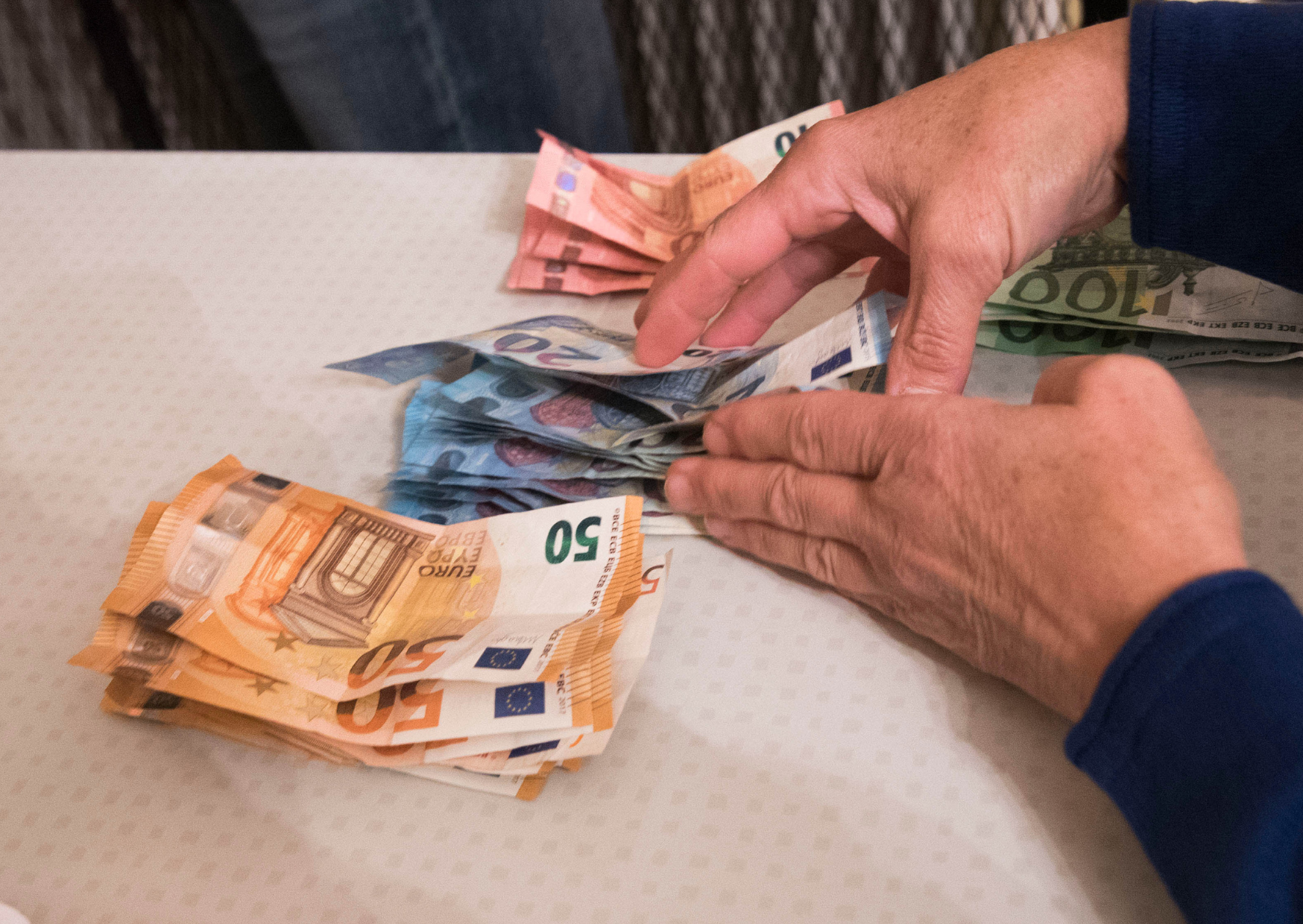
If you are already in Europe, this is a one-week cleanup that makes a visible difference.
Day 1: Audit the last 30 card transactions
Look for any transaction that posted in USD, not EUR. Mark them. That is your DCC exposure.
If you see more than five in a month, you are paying the fee often enough to matter.
Day 2: Choose your permanent rule at terminals
You say it out loud once, because it makes it stick: “I always pay in euros.”
Then you follow it even when the waiter is impatient.
Day 3: Fix your ATM behavior
Pick one or two reliable ATM locations you can return to. Withdraw on a schedule. Decline conversion.
Make it a routine. Routines beat good intentions.
Day 4: Stop converting small purchases into dollars
Choose a threshold, like €20 or €30, and stop translating those purchases for one week. Your brain will complain. Let it complain.
Day 5: Consolidate your transfer behavior
If you are doing multiple transfers a month, decide on one. Build a buffer, then stop touching it unless necessary.
The psychological payoff here is big. A buffer makes you calmer, and calm people make fewer expensive decisions.
Day 6: Set a simple monthly “money morning”
Pick one morning per week or per month to review:
- card spend
- cash withdrawals
- transfer schedule
- upcoming large expenses
You are not tracking every cent. You are looking for leaks.
Day 7: Teach your partner the same rules
This sounds obvious. It is not. Many couples fail here because one person is disciplined and the other person taps USD without thinking.
Agree on one shared rule for terminals and ATMs. Shared rules protect retirement money better than any clever tool.
The decision that keeps your retirement calm

The real decision is not whether you like Europe. It is whether you can live here without constantly translating it back into America.
If you keep needing the dollar number at the moment of purchase, you will keep paying for it. It is not a moral failing. It is a habit that costs money.
Europe rewards retirees who build stable routines. Grocery day, walking day, paperwork day, and money day. The bank fee problem is the same. You solve it with habit, not vigilance.
Once you commit to paying in euros, something changes. You stop seeing every purchase as a cross-border event. It becomes normal life again. That is what people actually want when they retire abroad.
You still watch your portfolio. You still care about exchange rates when you move large amounts. You just stop paying a daily convenience tax because your nervous system wants to stay American at the checkout counter.
If you want Europe to be cheaper in the way that matters, protect the boring stuff. The boring stuff is where retirement money survives.

About the Author: Ruben, co-founder of Gamintraveler.com since 2014, is a seasoned traveler from Spain who has explored over 100 countries since 2009. Known for his extensive travel adventures across South America, Europe, the US, Australia, New Zealand, Asia, and Africa, Ruben combines his passion for adventurous yet sustainable living with his love for cycling, highlighted by his remarkable 5-month bicycle journey from Spain to Norway. He currently resides in Spain, where he continues sharing his travel experiences with his partner, Rachel, and their son, Han.