

The shock is not that Europe is “cheap.” The shock is how many American costs are compulsory, and how many European costs are optional if you pick the right city and live like a resident.
When Americans hear “$2,100 a month,” they picture deprivation. When they hear “$5,500 a month,” they picture comfort.
California taught a lot of people the opposite. You can spend $5,500 and still feel tense because the money goes to fixed costs you cannot negotiate: housing, health coverage, cars, and the constant “something broke” fees that show up when life is built around driving and outsourcing.
Here in Spain, the same amount of money buys a smaller life on paper, but a calmer one in practice. The trick is not “Spain is cheaper.” The trick is picking a city where you can live without constant upgrades, then building a weekly rhythm that keeps spending boring.
For this breakdown, “$2,100” is roughly €1,800 to €2,000 depending on exchange rate. (In January 2026, the euro hovered around $1.17 per €1, so $2,100 was about €1,795.)
Why $5,500/month in California can still feel broke

Most California budgets fail the same way: they are heavy on fixed costs and thin on joy. You can cut the little things, but the big line items keep eating the month.
A realistic “comfortable but not fancy” California spend for two adults often looks like this:
- Rent for a basic two-bedroom in a decent area: $2,800 to $3,400
- Utilities, internet, phones: $350 to $550
- Health premiums and out-of-pocket: $900 to $1,600 depending on age and plan
- Car insurance: $176 per month on average in California, and more in major cities
- Gas, maintenance, registration, parking, occasional repairs: $300 to $800
- Groceries and household: $900 to $1,200
- Eating out, coffee, “life”: $300 to $800
Even before you talk about travel, gifts, or emergencies, you are already crowding $5,500. And when a car repair or medical bill shows up, the month gets ugly.
This is why California feels expensive even for people with decent income. The cost structure forces you to pre-pay for life.
The emotional side matters too. In California, spending is often used to buy back time: delivery, convenience, services. You are paying for relief because the system is exhausting. The spending does not feel like luxury, it feels like survival.
In Spain, we do not spend to buy time in the same way because daily life is already slower and more walkable. That one shift reduces the “leakage” that makes people feel broke.
What $2,100/month looks like in Spain when you do it on purpose

We are not living on a beach in a designer apartment. We are also not living like students.
The target is simple: a stable life that feels adult, with one big constraint and one big advantage.
The constraint is rent discipline. We do not chase the prettiest street. We chase a livable neighborhood with year-round residents, decent transit, and housing that does not punish us in winter.
The advantage is no-car life. That single choice removes an entire category of American stress spending: insurance, maintenance, parking, gas, and the constant “we should upgrade” pressure.
We also keep the lifestyle honest:
- We eat out, but not daily.
- We travel, but not every weekend.
- We buy good groceries, not expensive brands.
- We treat paperwork like a recurring task, not a crisis.
If you try to live in Spain like you are still in California, you can absolutely spend more than $5,500. Spain will happily take your money. The point is that you do not have to.
The full monthly budget that keeps us under $2,100

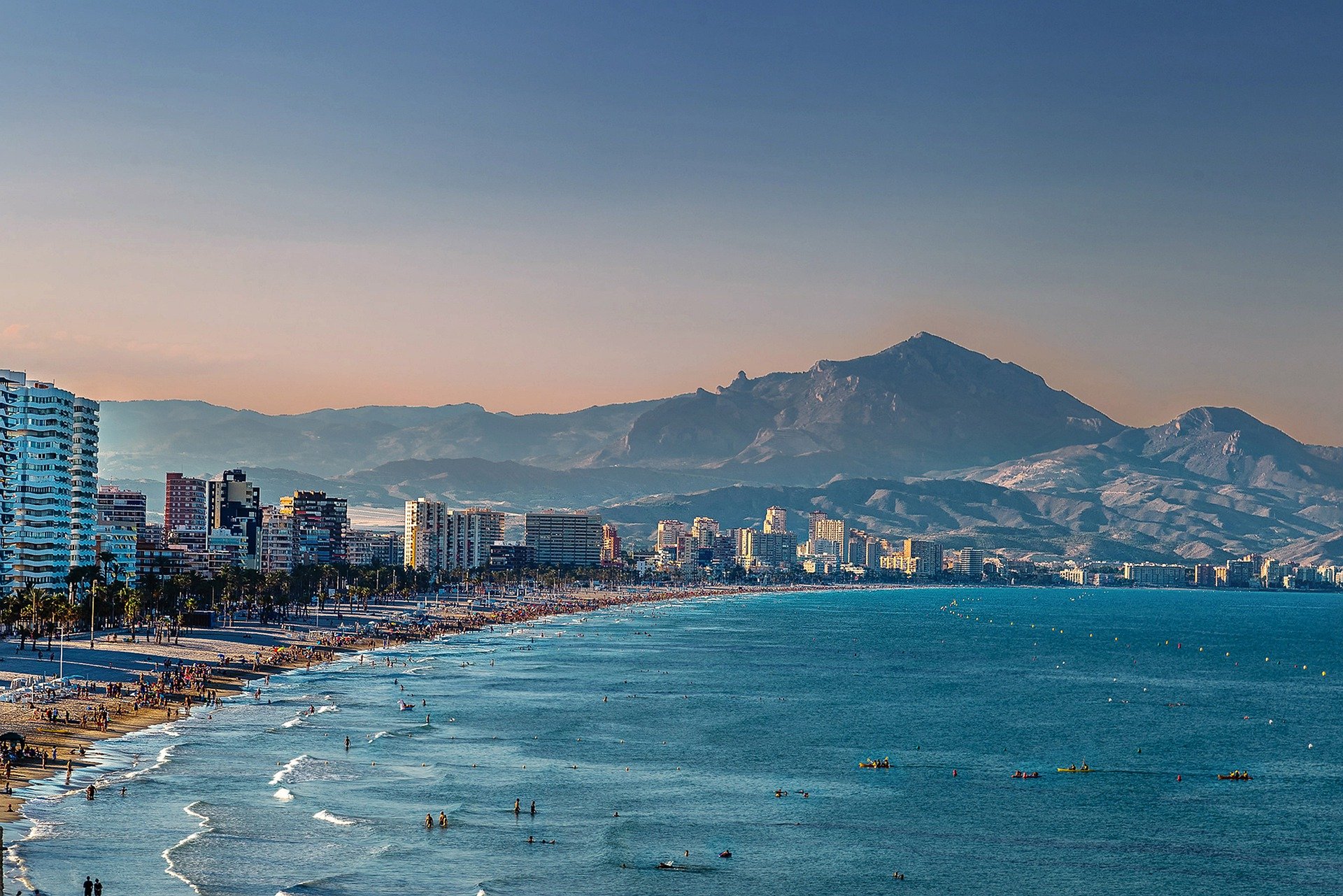
Here is a real-world template that works in a Spanish city that is popular but not priced like Barcelona center. Think Valencia outskirts, Zaragoza, parts of Alicante, or a calmer Málaga neighborhood away from the beachfront.
All numbers below are in euros first. That is how you avoid the mental trap of translating every purchase.
Housing and bills
- Rent (1 to 2 bedroom, outside the hottest districts): €850 to €1,100
- Electricity, water, gas, garbage: €120 to €190
- Internet: €25 to €40
- Mobile plans (2 lines): €20 to €35
Housing is where people blow this budget. Valencia rents have moved up in recent years, and the “easy” expat neighborhoods are the quickest way to overspend. A one-bedroom in Valencia has been cited around €900 to €1,600 depending on location and quality, with listings on major Spanish portals reflecting wide ranges.
Food and daily life
- Groceries and household basics: €360 to €520
- Restaurants, coffee, and the occasional menu del día: €140 to €260
- Pharmacy, toiletries, small home items: €60 to €120
This is where Spain is quietly generous. The spending stays predictable if you shop like a resident: markets, normal supermarkets, and fewer impulse “treats” that are really stress purchases.
Transport
- Public transport cards, occasional taxi, regional trains: €60 to €120
No car changes everything. It does not just remove a cost. It removes a whole set of decisions that generate spending.
Health coverage
This depends heavily on your legal situation.
If you are on a residency path that requires private insurance, you budget for it directly. If you are integrated into the public system through the appropriate route, your monthly private premium may be lower or not needed in the same way.
For planning, retirees often use €200 to €500 per person per month as a realistic private insurance range depending on age and coverage. Some insurers explicitly market senior plans for those over 60, and pricing varies by product type and copays.
For a conservative budget:
- Private insurance for one older adult: €250 to €450
- For a couple: €500 to €900
If you want the $2,100 lifestyle as a couple, you either choose a cheaper city, lock in lower rent, or you are not paying high private premiums for two people.
The “nothing exploded” buffer
- Buffer: €120 to €250
This is not optional. Europeans who look financially calm are often just running a buffer quietly.
A realistic total
For one person:
- Typical all-in monthly range: €1,750 to €2,250
For two adults:
- Typical all-in monthly range: €2,600 to €3,600 unless you have unusually low housing costs or a different healthcare structure
So how does “$2,100 a month” work in real life?
It usually means one of these is true:
- It is one person, not a couple.
- Housing is unusually low because you are outside the hottest markets.
- Healthcare costs are not a large private monthly premium for two people.
- Travel is limited and annualized tightly.
People who pretend it works for every couple in every city are selling fantasy.
The annual costs we fold into the monthly number

A lot of “we live on $2,100” claims are fake because they ignore annual expenses. We do not.
We take the boring yearly costs, divide by 12, and treat them like monthly bills. That is how you keep the budget from lying to you.
Here are the most common annual costs for an American living in Europe:
Flights back to the U.S.
- One round trip per person: $700 to $1,400 depending on season and routing
- Two people once a year can easily be $1,600 to $2,800
If you fly home twice a year, you are no longer in $2,100 territory unless housing is extremely cheap.
Paperwork, renewals, and admin
- Document translation, official copies, random fees: €200 to €800 a year is normal during early years
- If you pay professionals for help, it can climb
Home setup and replacement
- Small appliances, linens, kitchen basics, occasional furniture: €300 to €1,200 a year depending on how settled you are
When we say “$2,100,” we include an annualized line for these costs. A typical annualized bucket might be:
- Flights: $2,200 annually for two people, about $183 per month
- Paperwork and admin: €480 annually, €40 per month
- Home replacement: €600 annually, €50 per month
That is the difference between a cute number and a survivable plan.
The weekly rhythm that makes this feel better, not smaller
The real advantage is not the spreadsheet. It is how the week feels.
Spain rewards routines. The day is built for errands to be done on foot, meals to be normal, and social life to be cheap if you stop chasing tourist experiences.
Our week is not glamorous. That is why it works.
- Two grocery runs: one big, one top-up
- Cooking most nights, with one planned meal out
- One admin block for money and paperwork
- Walks as default entertainment
- A café moment that is small and local, not a lifestyle brand
This is where Americans tend to panic. They think a cheaper life must feel smaller.
It does not, if the system around you does not constantly upsell you. In California, you pay to access basic normality. In Spain, you often access normality by default.
There is also a psychological piece Americans underrate: if you do not drive everywhere, your spending becomes less impulsive. You are not grabbing things because you are already out and you do not want to come back. You buy what you need, then you walk home.
That is what makes €2,000-ish feel calmer than $5,500. Less friction, fewer emergency fixes, and fewer “we deserve it” spending spikes.
Two alternate European cities where the math still works
If you want this lifestyle, city choice matters more than almost anything else.
Here are two places where the “comfortable, simple, resident life” can still be realistic, and why.
Zaragoza, Spain
Zaragoza is not a postcard city for Americans. That is the point.
- Rents tend to be lower than Barcelona or Madrid.
- Transit is straightforward.
- Daily life feels local, not curated.
If you can handle fewer expat crutches and more Spanish, Zaragoza can be a strong budget city.
Porto outskirts, Portugal
Porto has gotten more expensive, but living outside the most famous zones still gives you:
- walkable neighborhoods
- predictable food costs
- a livable pace
Portugal can be a strong choice if you plan carefully, but the “everyone is moving to Lisbon” era has made the obvious neighborhoods pricey. You save money by choosing the less obvious base and keeping travel intentional.
If you pick a hyper-popular expat hub and insist on central, renovated, Instagram-friendly housing, you will not hit $2,100. The math does not care about your dream.
The mistakes that turn Europe into an expensive hobby
Here is what makes Americans burn money in Europe.
- They keep a U.S. cost structure alive
A storage unit, a car, a house they cannot decide to sell. That “just in case” life is expensive. - They rent like tourists
Short leases, prime districts, high churn. The hidden cost is constant moving and re-buying basics. - They travel to escape routine
Europe is close, so weekend trips feel harmless. Then you look up and you are spending €400 to €800 a month on movement you did not plan. - They translate everything into dollars
That mental habit makes you anxious and more likely to overspend on comfort. Living in euros is part of living here. - They solve discomfort with spending
The first year is full of friction: language, paperwork, new habits. People buy their way out instead of adapting.
If you want the calm version of Europe, the strategy is not deprivation. It is eliminating the American leak patterns.
The next 7 days to build a $2,100-style life without lying to yourself

This is the part most people skip. They want inspiration. They need decisions.
Day 1: Pick your “base city” and your “backup city”
Choose one place you want to try and one cheaper alternative. Put both on paper.
Day 2: Set a rent ceiling and do not negotiate with it
Choose one number. If you cannot live under that rent, the city is not your city.
Day 3: Build the all-in monthly number
Include flights, admin, and buffer. If you do not include them, you are not budgeting, you are daydreaming.
Day 4: Decide your transport identity
Are you doing no car, or are you bringing the American car habit with you? Decide now. The money difference is not subtle.
Day 5: Create a weekly spending rhythm
Choose which days are “home days” and which day is “spend day.” If every day is a spend day, your budget will not survive.
Day 6: Run a 30-day trial in your home country
Live the Europe rhythm where you are: walk more, cook more, one planned meal out, fixed errands day. If you cannot tolerate the rhythm, Europe will not fix that.
Day 7: Make one irreversible move
Downsize, sell something, end a subscription cluster, or book a 4 to 6 week scouting stay with real neighborhood time, not tourism.
People who succeed abroad are usually the ones who commit to a structure early. Not because they are braver, but because ambiguity is expensive.
The actual decision behind the headline
A lot of Americans want the $2,100 lifestyle because they want a cheaper life.
What they usually want is a less compulsory life.
Spain gives you that if you accept the trade: less convenience theater, more routine, fewer upgrades, more walking, and a city choice that prioritizes livability over bragging rights.
California can be wonderful, but it can also make you feel like you are constantly paying admission fees just to exist.
Here, the money stretches because the daily system is gentler and because we protect a few non-negotiables. Rent discipline, no-car living, planned spending, and a buffer that keeps small problems from becoming expensive ones.
If you want to copy the outcome, do not copy the number.
Copy the structure.

About the Author: Ruben, co-founder of Gamintraveler.com since 2014, is a seasoned traveler from Spain who has explored over 100 countries since 2009. Known for his extensive travel adventures across South America, Europe, the US, Australia, New Zealand, Asia, and Africa, Ruben combines his passion for adventurous yet sustainable living with his love for cycling, highlighted by his remarkable 5-month bicycle journey from Spain to Norway. He currently resides in Spain, where he continues sharing his travel experiences with his partner, Rachel, and their son, Han.