
A certain kind of American politeness works almost everywhere in the U.S. It’s warm, eager, accommodating, and built to smooth friction before it starts.
In a French restaurant, that same politeness can land as pushy, needy, or oddly performative. Not because French diners are cruel. Because the system is calibrated differently.
Midwesterners get singled out in this conversation for a reason: the Midwest tends to prize friendliness as a baseline, plus an almost reflexive habit of over-explaining, over-thanking, and trying to make service feel “easy” for everyone involved.
French dining is not optimized for “easy.” It’s optimized for pace, boundaries, and a specific kind of formality that looks stiff until you understand what it’s doing.
If you want France to feel welcoming, you don’t need to become someone else. You just need to stop using American politeness in the two or three moments where it reads as pressure.
The mismatch is not manners, it’s the job description
In a lot of the U.S., the server’s job is to manage your emotions: check in often, anticipate needs, keep the table happy, keep the tips flowing. The guest’s job is to be pleasant and appreciative, and to signal needs early so the server can “win.”
In France, the server’s job is closer to running a dining room: take the order, pace the courses, be available, and otherwise let you eat in peace. The guest’s job is to be civilized, not to be entertained.
That difference is why a very Midwestern style of politeness can backfire. The classic Midwestern moves are designed to keep social temperature high:
- lots of smiling
- lots of “sorry”
- lots of “just checking”
- lots of reassurance that you are “no trouble”
In France, those moves can create two unintended signals.
First, they can signal impatience. “Just checking” can sound like “why aren’t you here right now?” even if you said it with a warm voice.
Second, they can signal hierarchy. Overly cheerful, overly directive friendliness can read like you are managing the staff rather than interacting as equals.
This is why the French version of politeness looks quieter. It is not less polite. It is less performative.
If you’re used to Midwestern friendliness, your goal in France is not to be colder. It’s to be simpler. You greet, you ask clearly, you wait, you thank. You don’t narrate your request like you’re trying to prove you’re a good person.
That one shift fixes most restaurant friction.
The greeting that opens doors, and the “Hi” that closes them
If you do one thing differently in a French restaurant, do this: greet first.
Not a wave. Not a “Hi, table for two?” Not an eager launch into your request.
A clear bonjour when you enter, and bonsoir in the evening.
This sounds minor until you watch how French service actually works. Greeting is not a cute cultural flourish. It’s a signal that you recognize the other person as a person before you treat them as staff.
Midwesterners often skip it because they’re trying to be efficient and friendly at the same time. They walk in smiling and start talking. In the U.S., that reads as normal. In France, it can read as barging.
A clean entry interaction is almost boring:
- “Bonjour.”
- Then: “Une table pour deux, s’il vous plaît.”
If you don’t speak French, you can still do the greeting and a “s’il vous plaît.” The point is not fluency. The point is the order of operations.
This one detail also shows up at the table. When the server comes over, you start with a quick greeting. You don’t start with “We’re ready and we have questions and also…”
The irony is that Midwesterners are trying to be polite by being upbeat. The French system reads politeness as acknowledgment first, request second.
It’s the same intention, different code.
The pacing is the point, and Midwestern “helpfulness” speeds it up
In France, a meal is allowed to take time. It’s not necessarily slow, but it’s paced. Courses come when you’re done, not when the kitchen is trying to turn the table.
Midwestern diners often try to “help” the process along. They stack plates, they signal early that they’re finished, they ask for the check while dessert is still on the table, they say things like “We don’t want to keep you.”
That’s considerate in the U.S. In France, it can create awkwardness because it implies the staff is failing to manage time properly, or that you are trying to control the flow.
French service tends to check in less. That can feel like neglect to Americans. It’s usually the opposite. You are being left alone to eat.
So what do you do if you actually need something?
You catch the server’s eye, and you ask once, clearly. You don’t do the constant “just checking” loop.
A useful phrase that keeps the tone calm is s’il vous plaît paired with whatever you need:
- “Une carafe d’eau, s’il vous plaît.”
- “Encore un verre, s’il vous plaît.”
And if you are in a hurry, you say so plainly. You don’t hint it.
- “On est un peu pressés.”
French staff can move faster when needed, but they need you to state it. Midwestern indirectness, smiling while hoping they infer urgency, often fails here.
One small mindset shift helps: you’re not buying speed, you’re buying a dining room experience. If you want speed, choose a different format, a counter spot, a café, a bakery, a simpler brasserie.
The French restaurant is not rude. It’s just not rushing you to perform American efficiency.
The menu friction: substitutions, sharing, and the “we’re easy” trap
Midwesterners are famously adaptable diners. They’ll say “whatever is easiest,” and they mean it. They’re trying to reduce burden.
In France, “whatever is easiest” can be confusing because the menu already is the system. There are fewer substitutions, fewer custom builds, and less improvisation. Not because the kitchen is stubborn, but because the dish is designed to be served as written.
So Midwestern helpfulness backfires in two ways.
First, Americans ask for changes, then apologize, then add more changes, then say “sorry, we’re easy.” That creates the opposite impression of easy.
Second, Americans treat the server as a collaborator in building a perfect meal. In France, the collaboration is smaller. You choose, they execute, you enjoy.
If you have dietary needs, state them plainly, early. Keep it simple.
- “Je suis allergique à…”
- Or in English: “I have an allergy to…”
Then accept the options offered. French staff can be accommodating, but the accommodation is often “this dish works, that dish doesn’t,” not “we’ll rewrite the dish.”
Sharing and splitting can also get weird if you don’t read the room. In casual places, sharing is fine. In more formal places, it can feel disruptive. The practical move is to order your own plates unless the restaurant clearly leans tapas-style.
Also, don’t underestimate the water code. If you ask for water in English, you might get bottled water by default. If you want tap water, ask for une carafe d’eau.
This is where Midwestern politeness can get expensive. They accept what arrives because they don’t want to seem difficult. Then they pay €6 to €10 for water they didn’t want.
In France, clarity is kinder than deference.
The check is not coming, and asking for it is normal
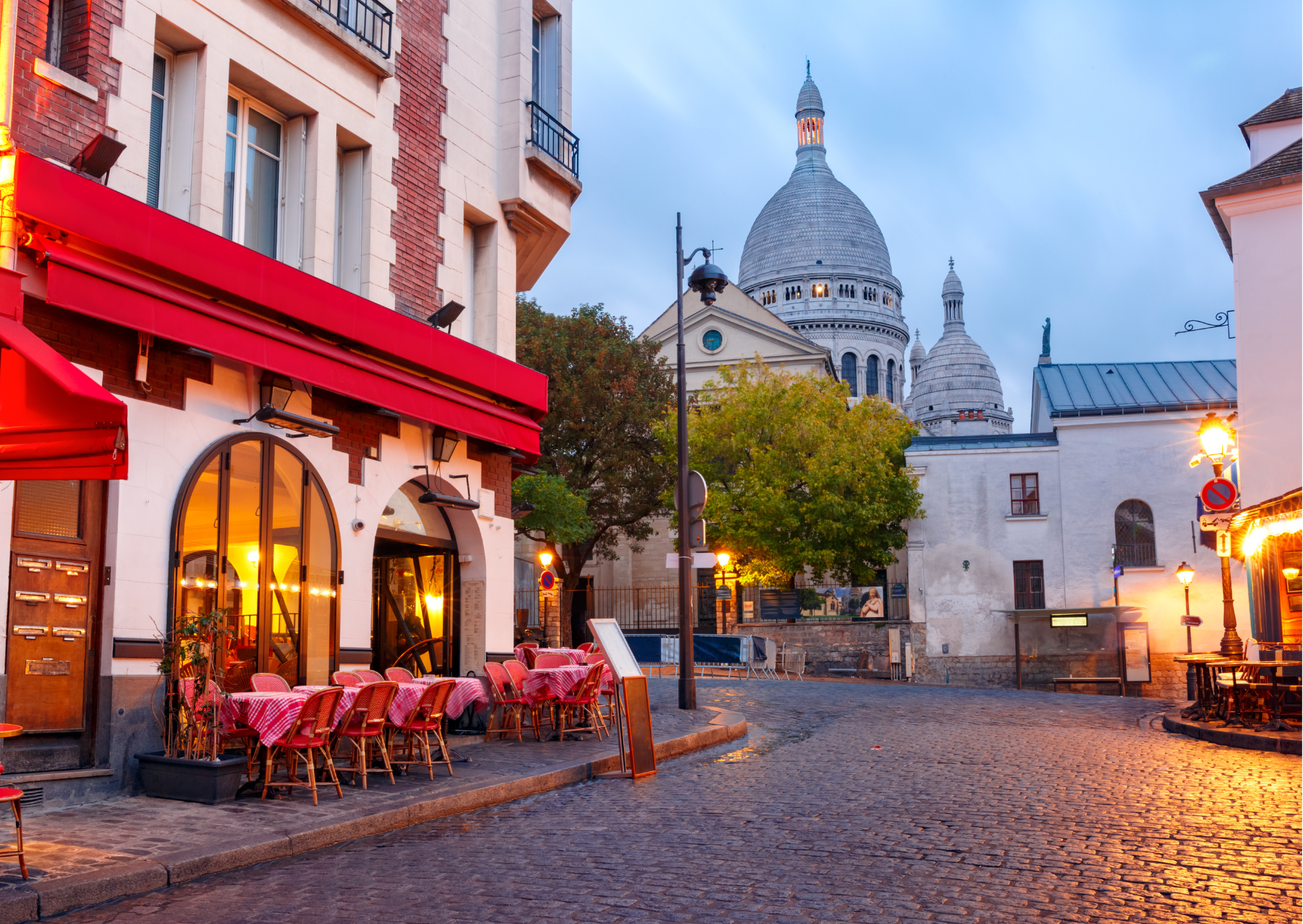
This is the moment that breaks Midwestern brains.
In the U.S., the check arrives as a signal that your time is over. In France, the check often does not arrive until you ask. That is not a passive-aggressive trick. It’s a feature.
It prevents the staff from rushing you out. It also keeps the dining room from feeling like a conveyor belt.
Midwesterners wait, get anxious, then try to be polite about it. They’ll wave vaguely, apologize, and say “whenever you get a chance, sorry.”
That reads as timid and confusing.
Instead, you do it the French way. You make eye contact, small gesture, and say l’addition, s’il vous plaît.
That’s it. No apology needed.
Paying is also different. In many places, the card machine comes to the table. In some casual spots, you may pay at a counter. Don’t interpret this as sloppy service. It’s just a different workflow.
Tipping is another place Midwesterners misfire. In France, menu prices often include service, and tipping is typically smaller and optional. Americans can accidentally turn tipping into a loud performance, which can create awkwardness. If you want to leave something extra, think small, quiet, and proportional, not a required percentage ritual.
Midwesterners often tip big to compensate for cultural uncertainty. They’re trying to be kind. The kindest move is to understand the local baseline so your generosity doesn’t feel like confusion or pity.
The mistakes Midwesterners make, and the fixes that actually work
These are the repeat offenders. They’re not sins. They’re mismatches.
- Skipping the greeting
Fix: lead with bonjour or bonsoir, then speak. - Using constant check-ins
Fix: ask once, clearly, then let the room breathe. - Apologizing for ordering
Fix: order plainly. Save “sorry” for real mistakes. - Asking for heavy substitutions
Fix: choose a dish that already fits your needs. If you must ask, keep it minimal and direct. - Accepting bottled water by accident
Fix: request une carafe d’eau if you want tap. - Trying to hurry the meal without saying so
Fix: state urgency directly, then accept that French pacing is the default. - Waiting forever for the check
Fix: say l’addition, s’il vous plaît when you’re ready. - Treating the server like a performer
Fix: treat the server like a professional running a room.
If you want the deeper cultural truth: Midwestern politeness is built to avoid imposing. French politeness is built to respect roles and boundaries.
Once you understand that, France stops feeling “cold,” and starts feeling calm.
A 7-day reset before your France trip, so you don’t learn this the hard way
If you’re planning a France trip, you can rewire these habits quickly. You don’t need a personality transplant. You just need repetition. Timing beats willpower, because you won’t remember this in a loud dining room when you’re hungry unless you practiced it first.
Day 1: Practice the greeting
Say bonjour before any request in your daily life. Literally. Coffee shop, pharmacy, anywhere. Build the reflex.
Day 2: Cut apologies in half
Notice how often you say “sorry” when you mean “excuse me” or “hey.” Replace it with “thank you” or nothing.
Day 3: Practice one clear request
Ask for exactly what you want in one sentence. No backstory. No “we’re easy.” Just the request.
Day 4: Practice the check phrase out loud
Say l’addition, s’il vous plaît until it doesn’t feel theatrical. The goal is not perfect accent. The goal is confidence.
Day 5: Build your water reflex
Decide now: do you want tap water or bottled? If tap, make carafe automatic.
Day 6: Eat one meal slowly on purpose
No phone, no rushing. Let the pause happen. You’re training your nervous system to tolerate the French pace without reading it as neglect.
Day 7: Choose the right restaurant format
Pick one bistro-style dinner and one café-style meal. Don’t do only formal dinners. France works best when you mix formats.
If you do this, you will walk into a French restaurant and instantly feel less tense. And when you feel less tense, you stop doing the politeness behaviors that create friction.
The decision: adapt to the room, or keep fighting it
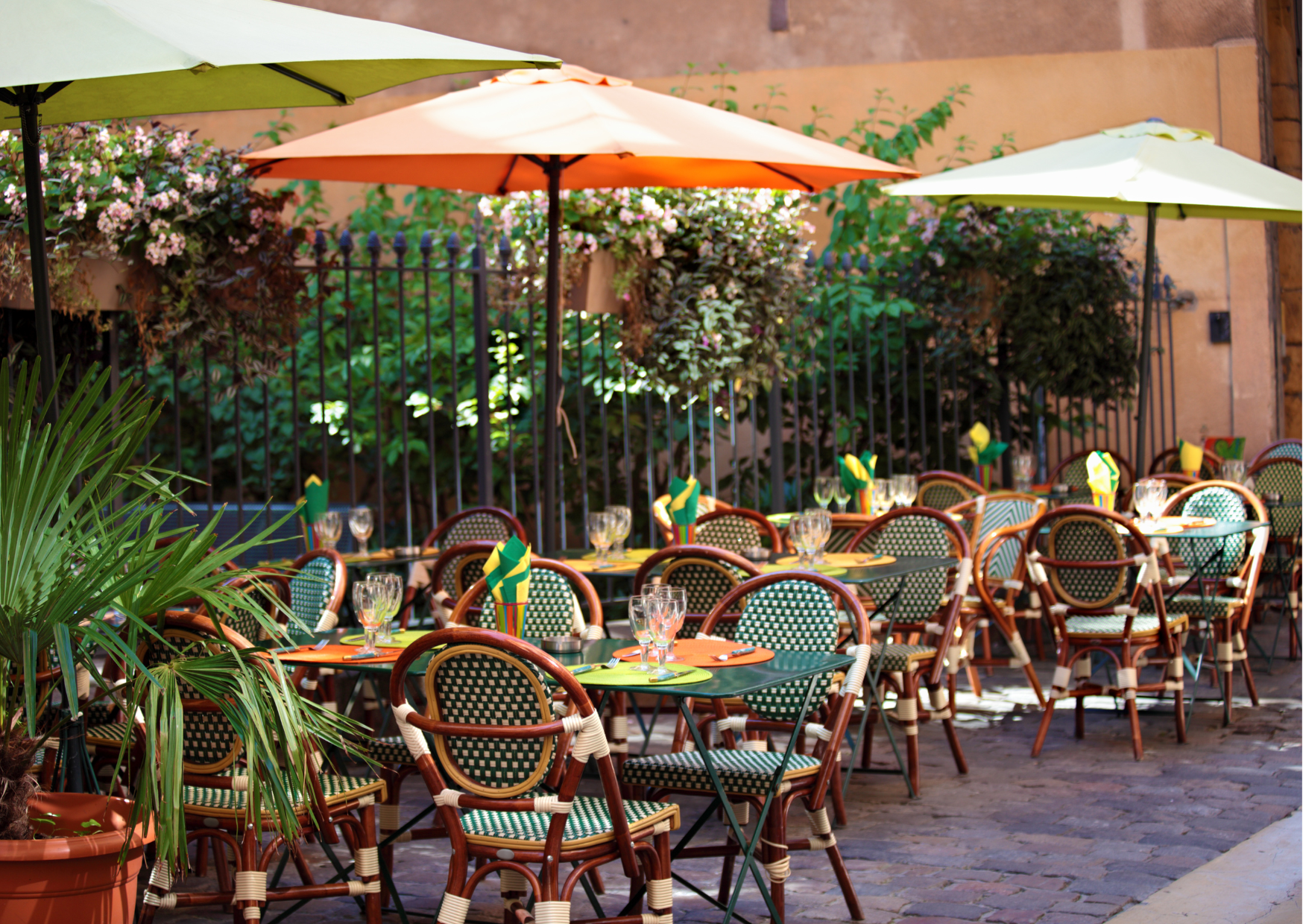
There are Americans who go to France and complain about “bad service” for ten years. They’re not lying about what they felt. They just never updated their interpretation.
French dining is built to protect your meal from interruption. It’s built to keep you from being rushed. It’s built around a baseline of respect that starts with greeting and ends with you asking for the check when you’re done.
If you’re a Midwesterner, your instinct is to smooth everything with friendliness. In France, that friendliness can accidentally become pressure.
So you get to choose.
You can keep doing American politeness and feel mildly frustrated every night.
Or you can adopt the French version of polite, greet first, request clearly, wait calmly, and let the dining room do its job.
The second option is not only easier. It’s the reason people fall in love with eating there.

About the Author: Ruben, co-founder of Gamintraveler.com since 2014, is a seasoned traveler from Spain who has explored over 100 countries since 2009. Known for his extensive travel adventures across South America, Europe, the US, Australia, New Zealand, Asia, and Africa, Ruben combines his passion for adventurous yet sustainable living with his love for cycling, highlighted by his remarkable 5-month bicycle journey from Spain to Norway. He currently resides in Spain, where he continues sharing his travel experiences with his partner, Rachel, and their son, Han.