
The first time I noticed it, it was in a café in Madrid on a normal weekday.
An American couple walked up to the counter and did the full performance. “Sorry, hi, so sorry, could we maybe get two coffees, sorry.” The barista nodded, took the order, and moved on like nothing happened.
No warmth penalty. No annoyance. No social reward for the extra apologizing.
In much of Europe, apologies exist, but they’re often used differently. Short, functional, and situational. What Americans do, especially the conscientious ones, is layer apology on top of politeness, on top of anxiety, on top of a fear of being seen as difficult.
Europeans are not morally superior. They just don’t treat everyday existence as something you need to atone for.
Here are nine places where that difference shows up fast, especially in Spain and France, and why it matters if you want to live well here.
They don’t apologize for taking time to eat

Americans apologize for lunch like it’s a personal flaw. “Sorry, I need to grab food.” “Sorry, I can’t, I have lunch.”
In France and Southern Europe, taking time to eat is normal, and it’s often protected. France is widely cited for spending around 2 hours 13 minutes a day eating and drinking, which is roughly double the time reported for the U.S. in the same OECD-style comparisons.
That doesn’t mean everyone is leisurely every day. It means the culture gives you permission to treat meals as real.
What Europeans don’t apologize for here:
- Eating lunch without justifying it
- Sitting down to dinner without speed-running it
- Treating eating as part of life, not an interruption
If you move here and keep apologizing for meals, you’ll feel like you’re constantly breaking a rule that locals don’t believe exists. You’ll also keep eating like an American, fast, stressed, and slightly guilty, which usually leads to snacking later.
A Spanish household trick is that dinner can be later, but it’s not always heavier. The structure and timing do a lot of the work, not the moral discipline.
They don’t apologize for being unavailable after work

Americans say “sorry” for not answering messages at 19:00 like it’s negligence.
In the EU, there are baseline rules around rest that help shape expectations. The Working Time Directive framework includes minimum 11 consecutive hours of daily rest and 24 hours of weekly rest, and it caps average weekly working time at 48 hours (with details varying by country and sector).
This doesn’t mean everyone clocks out blissfully. It means the legal and cultural scaffolding makes it less normal to act like a worker is permanently “on.”
What Europeans don’t apologize for here:
- Not responding immediately outside working hours
- Protecting the evening as a real boundary
In Spain, you will see this in the simplest way: people walk, they sit, they talk, they handle the day with a slower gear. The evening is not treated as a second shift you owe to your employer.
Americans often bring a U.S. work rhythm into Europe and then feel constantly “behind,” which triggers a loop of apologizing, overworking, and burning out in a country that does not automatically reward it socially.
They don’t apologize for saying no without a 12-line explanation

American “no” is usually wrapped in foam. “I’m so sorry, I wish I could, I feel terrible, maybe another time.”
European “no” is often shorter. It can still be polite, but it doesn’t always come with the emotional caretaking.
What Europeans don’t apologize for here:
- Declining an invitation without performing guilt
- Protecting their schedule without treating it as selfish
This reads as cold to Americans at first. Then, a few months later, you realize it’s a kindness. It wastes less time. It creates clearer expectations. It reduces the weird social debt that Americans accumulate through constant overpromising.
The cultural adjustment is not to become blunt for sport. It’s to stop apologizing for the simple act of choosing how you spend your time.
A practical Spanish example: “Hoy no puedo, otro día.” Today I can’t, another day. That’s it. No apology spiral.
They don’t apologize for being direct, especially when something needs fixing
Americans often apologize before they speak. “Sorry to bother you, but…” “Sorry, quick question…”
In much of Europe, people will still use polite words, but the apologetic padding is thinner. You ask the question. You state the issue. You move forward.
This shows up strongly in practical life: housing, repairs, services, school issues. The expectation is that adults handle problems without turning them into a moral drama.
What Europeans don’t apologize for here:
- Pointing out a mistake
- Asking for a correction without acting ashamed
This isn’t rudeness. It’s functional communication. In service encounters, Spanish and French speakers use apology terms like “perdón,” “pardon,” and “excusez-moi” as quick interaction tools, often more like a conversational reset than a deep admission of guilt. Research on “perdón” in Peninsular Spanish discusses how it functions beyond literal apology, including discourse uses.
Americans often treat apologies as a safety blanket. Europeans often treat them as a tool with a specific purpose.
If you want your life to run smoothly here, especially with paperwork and housing, you cannot pre-apologize your way through every request. You ask clearly. You stay calm. You repeat if needed.
They don’t apologize for not performing friendliness
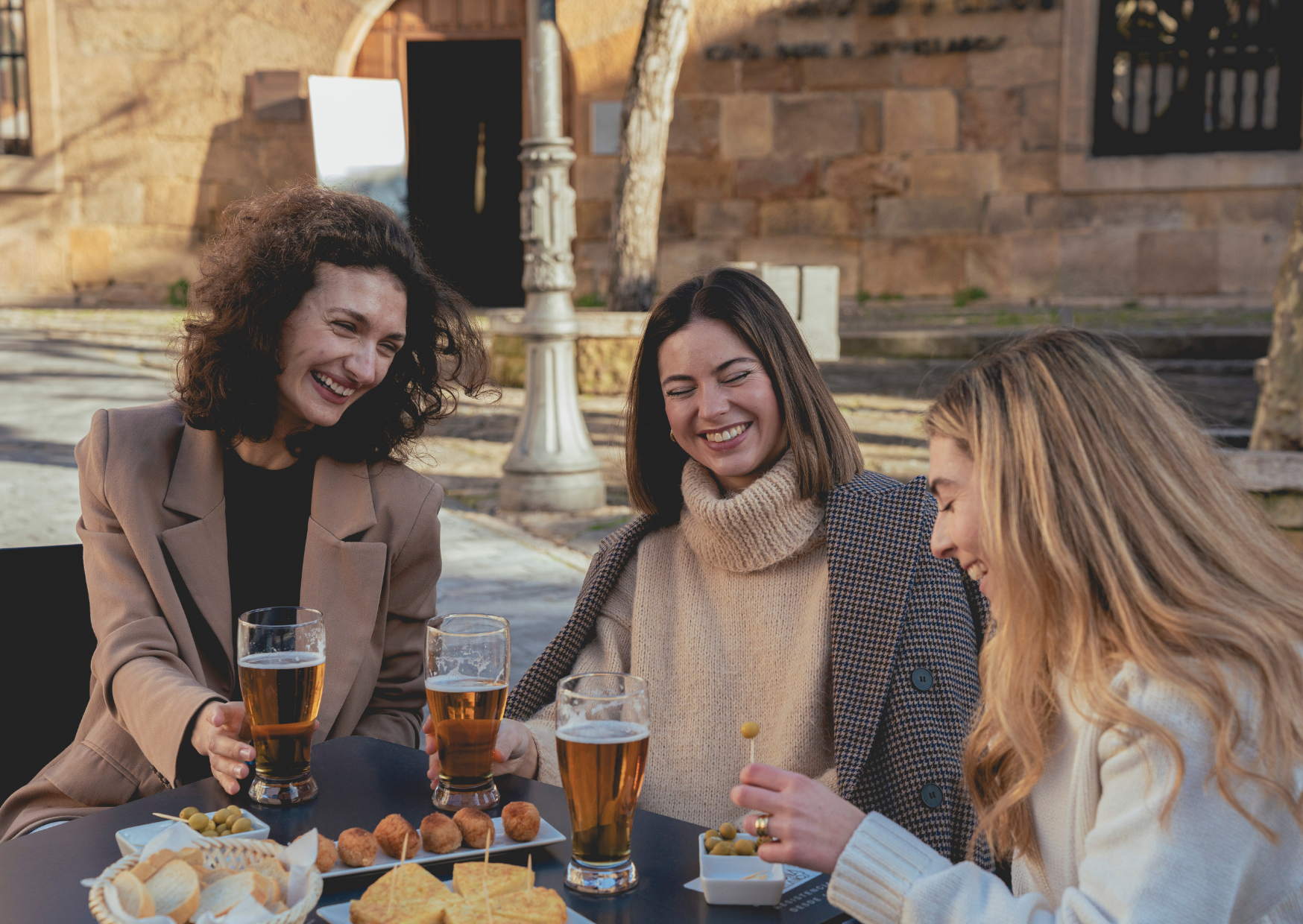
This one shocks Americans because American politeness is often emotional. Smiling, softening, upbeat tone, friendly filler.
In many European contexts, politeness is more procedural. The words matter, not the warmth performance. You can be neutral-faced and still be polite.
What Europeans don’t apologize for here:
- Not smiling at strangers on demand
- Not doing enthusiastic small talk with everyone
- Keeping a neutral tone without it being “mean”
In Spain, this varies by region and neighborhood. Some places are warm and chatty, others are more closed until you’re familiar. In France, you’ll often see a clearer line between public politeness and personal warmth.
Americans read neutrality as hostility because they’re used to friendliness as social lubrication. Europeans often read constant friendliness as fake, or exhausting, or simply unnecessary.
If you move here and keep apologizing for not being bubbly enough, you’ll exhaust yourself. A more realistic goal is clean politeness: hello, please, thank you, and direct communication without the emotional performance.
They don’t apologize for taking up space in public

Watch a Spanish sidewalk at 19:30. People walk slowly. Older couples walk arm-in-arm. Children zigzag. Someone stops to talk. It’s not optimized for maximum throughput.
Americans tend to apologize for being in the way, even when they aren’t. They jump aside. They shrink. They speed up. They treat public space like a fast-moving hallway.
Europeans are often more comfortable treating public space as shared space, not a productivity lane.
What Europeans don’t apologize for here:
- Moving at a normal pace
- Sitting in a plaza and existing
- Taking a table and staying for a while
This is one of the hidden quality-of-life benefits of Europe. If you let yourself absorb it, your stress baseline drops. If you keep living like you’re blocking traffic, you’ll feel constantly tense.
The adjustment is not to become inconsiderate. It’s to stop acting like your presence is an inconvenience.
They don’t apologize for rest, including the unglamorous kind

Americans apologize for rest like it’s weakness. “Sorry, I’m exhausted.” “Sorry, I need a day.”
In Spain, rest is not always a wellness brand. Sometimes it’s just a nap because the afternoon hit you. Sometimes it’s a slow evening because tomorrow is long.
You’ll also see practical home-rest habits that Americans underestimate: shutters down, rooms darkened, a quieter tempo. It’s not laziness. It’s climate, architecture, and rhythm.
What Europeans don’t apologize for here:
- Being tired and acting accordingly
- Protecting sleep
- Choosing a quieter evening over forced productivity
If you want to live well in Europe past 45, this matters. You can’t brute-force energy the way Americans try to. You need weekly recovery built into the plan.
This is also why “Timing beats willpower” is not a cute phrase here, it’s logistics. If rest is scheduled into the week, you don’t need to justify it.
They don’t apologize for children being present in adult life

This is one of the most visible differences in Spain, Italy, and parts of France.
Children are out later. They’re in restaurants. They’re in plazas. They’re part of the social fabric. Parents manage them, but the baseline expectation is that kids exist in public.
Americans often apologize constantly for their kids. “Sorry, sorry, sorry.” Europeans tend to intervene when it’s necessary, but they don’t treat the mere presence of children as a social offense.
What Europeans don’t apologize for here:
- Kids making normal kid noise
- Bringing kids into public spaces
- Letting families be visible
This can feel chaotic if you’re used to quiet, adult-only environments. But it also means family life is less isolated. It’s easier to build community because families aren’t forced indoors.
The key difference is that Europe often trades quiet for integration. Americans often trade integration for control.
They don’t apologize for asking for help, or for making a request

Americans often treat requests as moral burdens. “Sorry to bother you.” “Sorry, could you…”
In many European contexts, you ask directly, with basic politeness, and you move on.
In Spain, “Perdona” can be a quick attention-getter, not an elaborate apology. In France, “Excusez-moi” can function similarly. Linguistics research on apology strategies and their pragmatic functions shows these expressions are often context-dependent tools, not always confessions of guilt.
What Europeans don’t apologize for here:
- Asking a shopkeeper a question
- Requesting a correction
- Needing assistance with a process
If you’re an American moving to Europe, this is where your life either becomes smoother or stays stuck. Because you will need help. With paperwork, with services, with systems that are not intuitive at first.
Over-apologizing can actually make interactions harder because it muddies the signal. People wonder if something is wrong, or if you did something wrong, when you’re really just trying to be polite.
Clean request culture works better: greeting, request, thanks.
A 7-day reset for Americans who want to stop apologizing without becoming rude
This is where people get stuck. They hear “Europeans don’t apologize as much” and translate it into “be blunt.”
Don’t do that. The goal is calmer, not harsher.
Day 1: Track your “sorry” count for one day. Don’t change anything. Just notice.
Day 2: Replace half your apologies with thanks. “Thanks for waiting” instead of “Sorry I’m late.”
Day 3: Make one direct request per day with a greeting and a “please,” and nothing else.
Day 4: Practice one clean “no.” Short, polite, no backstory.
Day 5: Protect one boundary without apology, an evening offline window works well.
Day 6: Eat one real meal without rushing and without justifying it.
Day 7: Have one service interaction without pre-apology. Just “Hola, quisiera…” or “Bonjour, je voudrais…”
If you do this for a week, two things usually happen.
First, your stress drops because you stop narrating your own existence as a problem. Second, your interactions get cleaner because people can respond to what you’re actually asking, not to the emotional fog around it.
The decision you’re making, whether you admit it or not
Over-apologizing is not only about politeness. It’s about fear. Fear of being disliked, fear of being seen, fear of taking up space.
Europe won’t magically remove that fear. But it does offer a different script. A script where you can be polite without constantly shrinking.
If you want to live here long-term, the goal is not to become “European.” The goal is to adopt the parts that make daily life steadier: clearer boundaries, cleaner requests, less performative guilt.
Your time is not a problem. Your needs are not a problem. Your existence is not a problem.
Stop treating it like one.

About the Author: Ruben, co-founder of Gamintraveler.com since 2014, is a seasoned traveler from Spain who has explored over 100 countries since 2009. Known for his extensive travel adventures across South America, Europe, the US, Australia, New Zealand, Asia, and Africa, Ruben combines his passion for adventurous yet sustainable living with his love for cycling, highlighted by his remarkable 5-month bicycle journey from Spain to Norway. He currently resides in Spain, where he continues sharing his travel experiences with his partner, Rachel, and their son, Han.