
If you only know France through travel, you might think French dinners are all romance and candlelight. In real family life, dinner is mostly logistics.
It’s a predictable slot in the day that keeps everyone fed, present, and functioning. Not perfect. Not theatrical. Just consistent.
Americans, especially working Americans, tend to treat dinner like the leftover hour after the real day is done. France treats dinner like the hinge that keeps the day from falling apart.
That difference shows up in health, budget, and household sanity. The French habits aren’t magic. They’re rules that reduce decision fatigue and prevent the nightly spiral of grazing, screen-eating, and “we’ll just order something.”
Below are seven dinner habits you’ll see in French households that feel strict to Americans at first, then feel like relief once you try them.

1) Dinner has a start time, and it’s treated as real
French families don’t always eat early, but they often eat at a consistent time. It’s not “whenever we get hungry.” It’s “dinner is at 20:00,” or “dinner is after the kids’ activity.” The time is not random.
That consistency matters because it stops the snack drift. Americans often start “pre-dinner” snacking at 17:30, then dinner happens at 20:30, then everyone eats again at 22:30 because dinner didn’t feel like a meal.
A fixed dinner time creates a clean boundary. It also shapes the rest of the day. If dinner is at 20:00, you know when lunch needs to be, and you know when the afternoon snack should happen.
A useful rule you can copy:
- Pick a dinner time you can keep 5 nights a week, even if it shifts slightly on weekends.
The goal isn’t rigidity. It’s predictability. Predictability reduces stress. Stress reduction helps sleep and keeps your spending from turning into takeout.
2) They sit down, even when dinner is simple

In a lot of American households, dinner has been downgraded into an activity that happens while other activities happen. People eat standing, in the car, in front of a laptop, or in front of a show.
French families are more likely to treat dinner as a sit-down event, even if the food is basic. Soup, omelette, roast chicken leftovers, yogurt, bread, salad. The food can be humble. The posture is not.
Sitting down matters because it changes pacing. You eat more slowly. You notice fullness earlier. You are less likely to keep grazing for the next two hours.
This habit is also a time saver. It feels like it would take longer, but it often takes less time than chaotic eating because it reduces the “what else can I grab” behavior.
If you want a minimum viable version:
- Sit down for 15 minutes with no phones on the table.
That alone changes the entire feel of the evening.
3) The meal has a shape, even if it’s not fancy
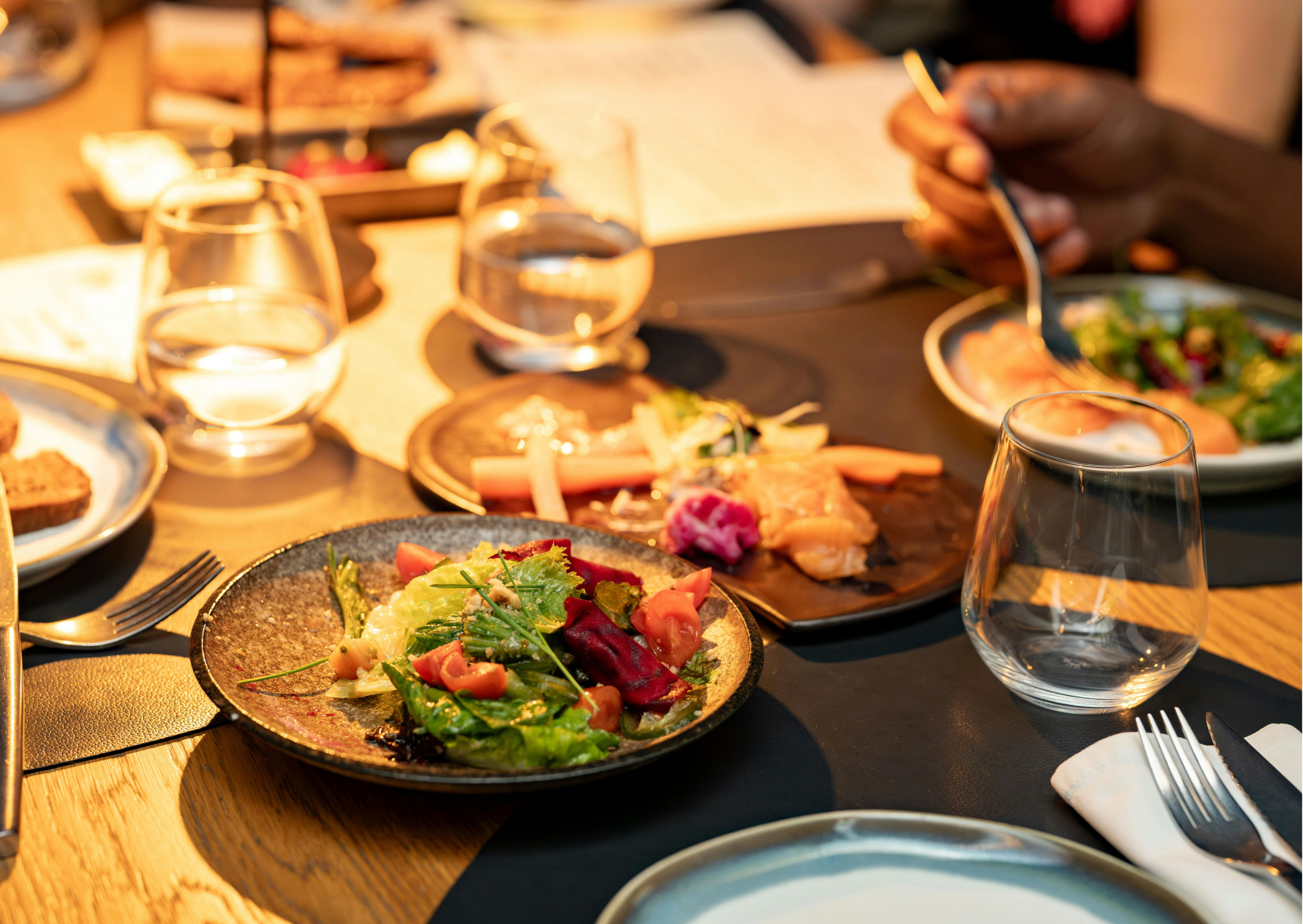
French dinner doesn’t have to be elaborate, but it often has a clear structure: a starter, a main, and a finish. In a family version, that might be:
- simple salad or soup
- a main plate
- fruit or yogurt
The structure is the point. It makes the meal feel complete, which reduces snacking later. Americans often eat a “main” that doesn’t feel like a real meal, then spend the rest of the night hunting for satisfaction.
A French-style dinner structure can be extremely simple:
- Starter: grated carrots with lemon, or a bowl of vegetable soup
- Main: lentils with sausage, or fish with potatoes, or pasta with vegetables
- Finish: yogurt or fruit
Notice what’s missing. There’s no second dinner. There’s no dessert performance. There’s no 900-calorie snack drawer raid at 22:00 because dinner was weird.
A habit worth copying:
- Always include one vegetable starter or soup. It anchors the meal and makes everything else easier.
It also helps your grocery spending. Soup and salad are cheap anchors that make the rest of the meal smaller and more satisfying.
4) They don’t let dinner become an all-night grazing event
This is one of the biggest cultural differences.
In many French households, the meal ends. Plates clear. Kitchen resets. That doesn’t mean nobody ever snacks, but the default is that eating is contained to a time and place.
Americans often violate this nightly. Dinner bleeds into snacks, snacks bleed into dessert, dessert bleeds into “just something while we watch.” Food becomes background entertainment.
The French boundary is blunt: dinner is dinner. When it’s done, it’s done.
If you want to adopt this without feeling punished:
- Make the finish deliberate. Fruit, yogurt, a small piece of chocolate, then stop.
You’re not banning pleasure. You’re keeping pleasure contained so it doesn’t turn into mindless eating.
This habit also protects sleep. Late-night grazing is one of the easiest ways to create middle-of-night wake-ups, reflux, and the “why am I awake at 03:00” problem.
5) They keep weeknight cooking boring on purpose
Americans often treat cooking as a self-improvement project. New recipes, new ingredients, new hacks. That’s fun, until you’re tired and dinner becomes a stressor.
French families often have a predictable rotation. They don’t reinvent dinner nightly. They repeat what works.
Common weeknight French patterns:
- soup and bread
- omelette with salad
- roast chicken used across multiple meals
- lentils or beans with a simple protein
- pasta with vegetables
- fish and potatoes
- a big salad with cheese and bread
The habit is repetition. Repetition makes the meal easy to execute and easy to shop for. It also reduces the “we have nothing” panic that leads to takeout.
A practical weekly rhythm:
- Cook one pot of soup on Sunday or Monday.
- Cook one roast chicken or tray of vegetables mid-week.
- Use eggs for the night when everything else fails.
This is how you eat well without turning dinner into a nightly negotiation. Timing beats willpower, because you’re not deciding everything fresh every day.
6) They keep portions moderate because lunch did more work

American dinner often carries the weight of the day. Lunch is rushed, sad, or skipped. So dinner becomes the main event, and it gets heavy.
France tends to have a stronger lunch culture. Even when people work, lunch is often more substantial, which makes dinner lighter by default.
This doesn’t mean every French person eats a long lunch. It means the cultural logic exists: lunch is for fuel, dinner is for closure.
If your lunch is more real, dinner doesn’t need to be huge. This reduces night discomfort and improves sleep.
A copyable habit:
- Make lunch your “main meal” 2 to 3 days a week, even if it’s leftovers from the night before.
That simple shift reduces the pressure on dinner and makes the evening calmer.
It also reduces the “I’m starving” chaos that leads to overeating at night.
7) Dinner is social, even if it’s quiet
French dinner is often treated as a social check-in. Not a therapy session. Just a moment where people are in the same room, eating the same meal, and acknowledging each other.
Americans often eat in parallel. Same house, different screens, different food. It’s not morally wrong, it’s just destabilizing over time.
A shared dinner, even a short one, has knock-on effects:
- kids’ behavior stabilizes when routines are predictable
- couples talk without scheduling it
- eating slows down naturally
- the night feels like it has an ending
You don’t need to copy the French table culture perfectly. You just need a small ritual that makes dinner feel like dinner.
A minimum viable ritual:
- Everyone sits for 15 minutes.
- Phones off the table.
- One question asked, even a boring one.
This is not about being “French.” It’s about building a household rhythm that doesn’t require constant effort.
The American dinner habits that quietly sabotage everything
If you want to see why these French habits matter, look at the American defaults that make nights feel chaotic.
- Dinner time shifts wildly, so everyone snacks and arrives at the table in different hunger states.
- Dinner is eaten in front of a screen, so people eat faster and keep grazing.
- Meals don’t feel complete, so snacking becomes the second dinner.
- Cooking is treated as entertainment, so on tired nights the system collapses.
- Lunch is inadequate, so dinner becomes a heavy recovery meal.
- There’s no end point, so eating bleeds into bedtime.
None of this is a character flaw. It’s what happens when a culture prizes productivity and treats food as an inconvenience.
The French habit set is basically a countermeasure. It protects evenings from becoming a mess.
A 7-day dinner reset you can run without becoming insufferable
If you want to adopt these habits, do it like a practical experiment, not a personality change.
Day 1: Pick a consistent dinner time for the week.
Day 2: Add a vegetable starter, soup or salad.
Day 3: Sit down for 15 minutes with no phones on the table.
Day 4: Make the meal end with a deliberate finish, yogurt or fruit.
Day 5: Cook something boring on purpose, omelette and salad works.
Day 6: Make lunch more substantial so dinner can be lighter.
Day 7: Repeat the same simple meal again and notice how much easier it feels.
You’re installing a system. The system is what changes your nights. Not motivation.
The decision this forces
You can keep treating dinner as the thing you squeeze in after work, then wonder why nights feel chaotic, sleep is messy, and your budget leaks into takeout.
Or you can treat dinner like a stable anchor in the day.
French families don’t “win” dinner because they have better recipes. They win because they treat dinner as a predictable social routine with a beginning, a middle, and an end.
Try it for a week and you’ll see the difference. The meal will feel smaller, but the night will feel bigger.

About the Author: Ruben, co-founder of Gamintraveler.com since 2014, is a seasoned traveler from Spain who has explored over 100 countries since 2009. Known for his extensive travel adventures across South America, Europe, the US, Australia, New Zealand, Asia, and Africa, Ruben combines his passion for adventurous yet sustainable living with his love for cycling, highlighted by his remarkable 5-month bicycle journey from Spain to Norway. He currently resides in Spain, where he continues sharing his travel experiences with his partner, Rachel, and their son, Han.