
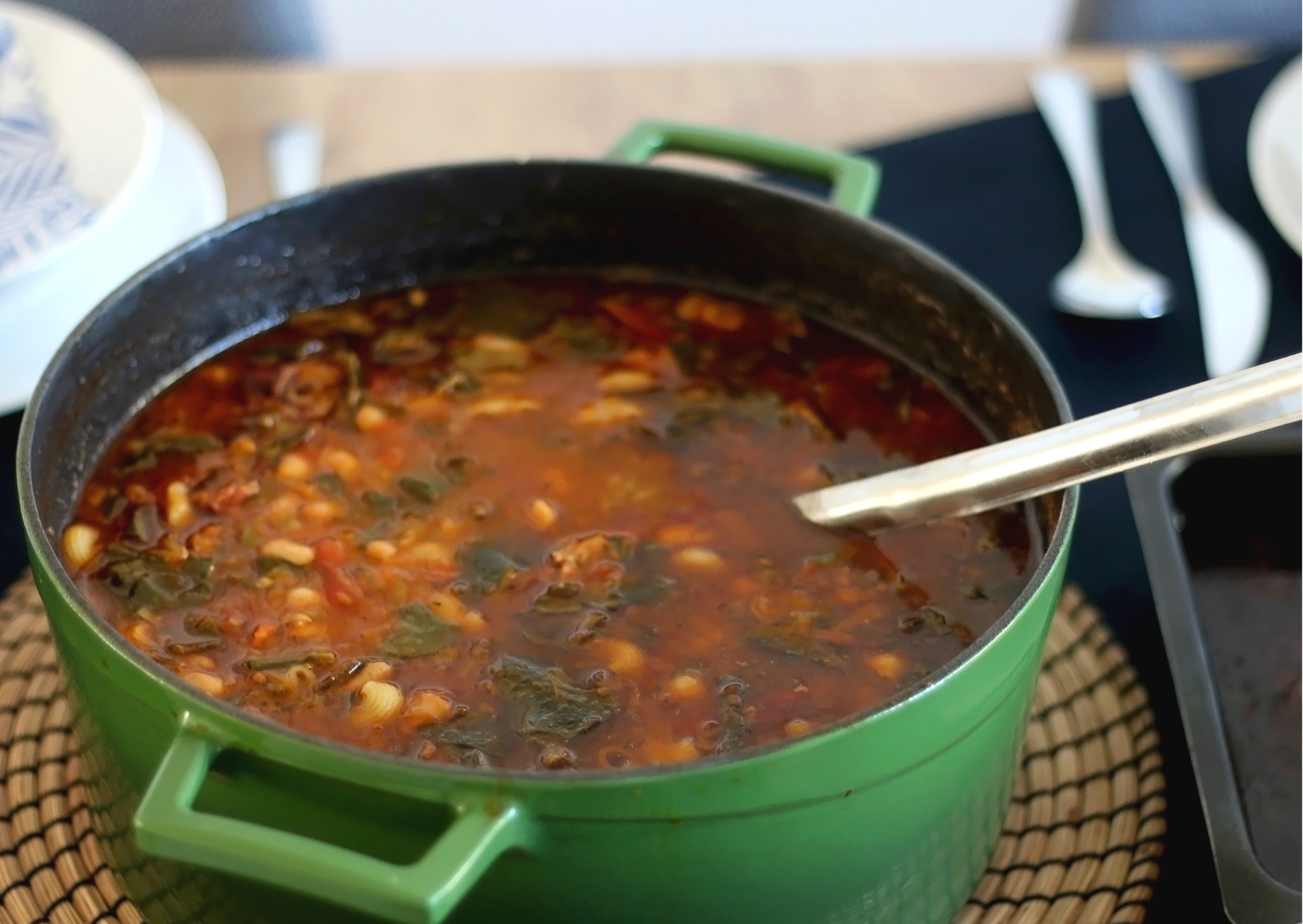
In Spain, winter cooking is usually about one thing: making the house smell like you’ve got your life together, even when you don’t.
Minestrone does that better than almost anything. It turns a random pile of vegetables into a pot that feels intentional. It also solves the most annoying dinner problem: you want something warm and filling, but you don’t want a recipe that asks you to shop like you’re planning a dinner party.
This is why Italian grandmothers don’t “follow” a minestrone recipe. They follow a method. The soup changes depending on what’s cheap, what’s in season, and what needs to be used before it goes soft in the crisper drawer.
The goal here is to give you a method that still tastes like the real thing, with one reliable base, a flexible ingredient grid, and a 7-day plan that makes it pay you back.
What minestrone really is, and why it’s always different
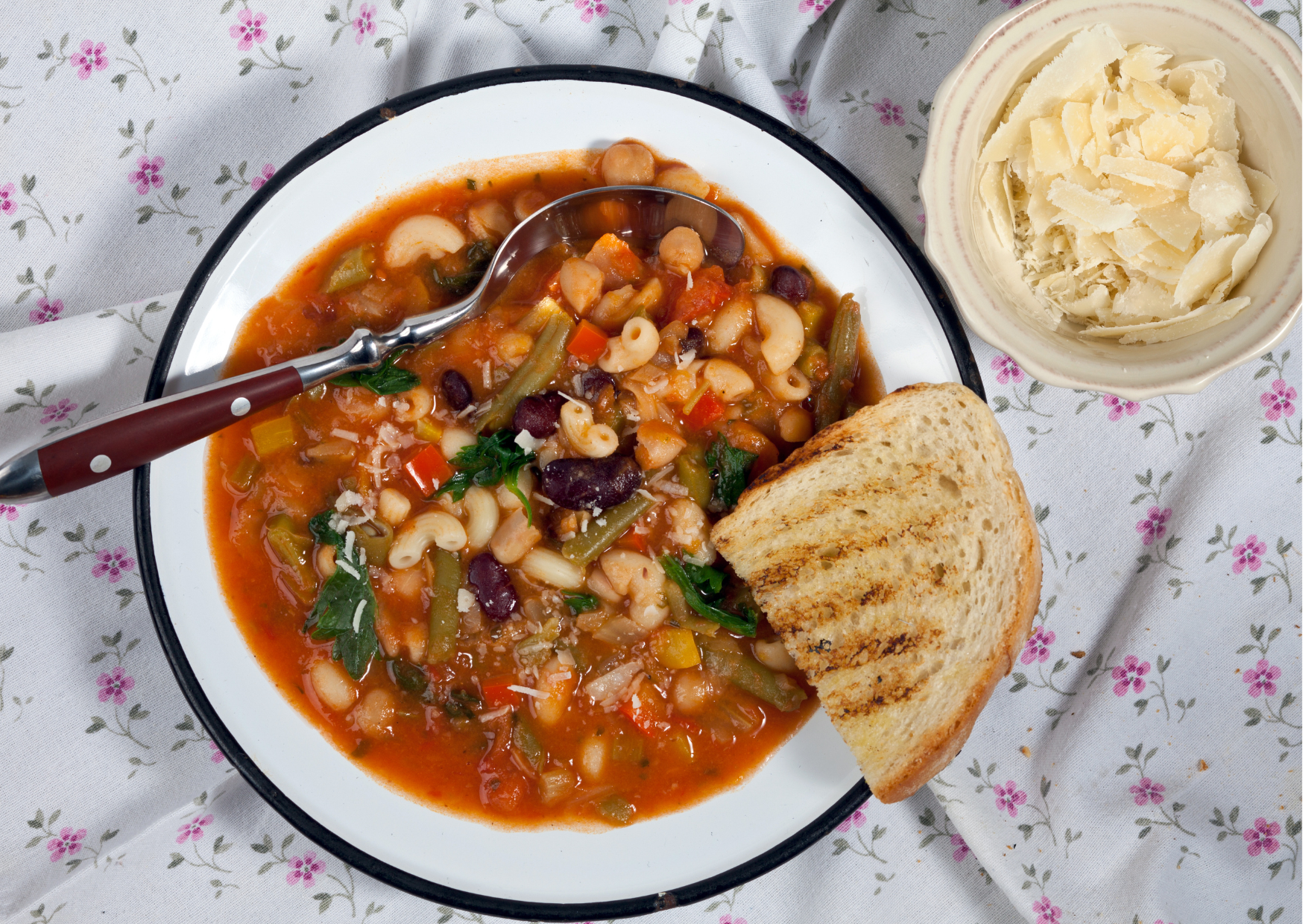
Minestrone isn’t “vegetable soup.” It’s a way of building a full meal out of vegetables plus one or two supporting players: beans, pasta or rice, and sometimes a piece of cheese rind or a spoonful of pesto at the end.
The classic logic looks like this:
- Start with an aromatic base, usually onion plus carrot and celery, cooked slowly in olive oil.
- Add sturdy vegetables first, then tender ones later.
- Add beans for substance.
- Add a starch at the end, pasta or rice, so the soup feels like dinner and not like a wellness punishment.
- Finish with something salty and deep, often Parmigiano rind or a little grated cheese.
That’s the method. The “different every time” part comes from the grid. You pick what you have, then you cook it in the right order.
A good minestrone has three textures:
- vegetables that are soft but still identifiable
- broth that has body from beans and starch
- a finish that tastes like you didn’t just boil produce
If you’ve ever made minestrone that tasted thin and sad, it’s usually because the base wasn’t cooked long enough, the vegetables went in at the wrong time, or the finish was missing.
Ingredients for a pot that feeds you all week
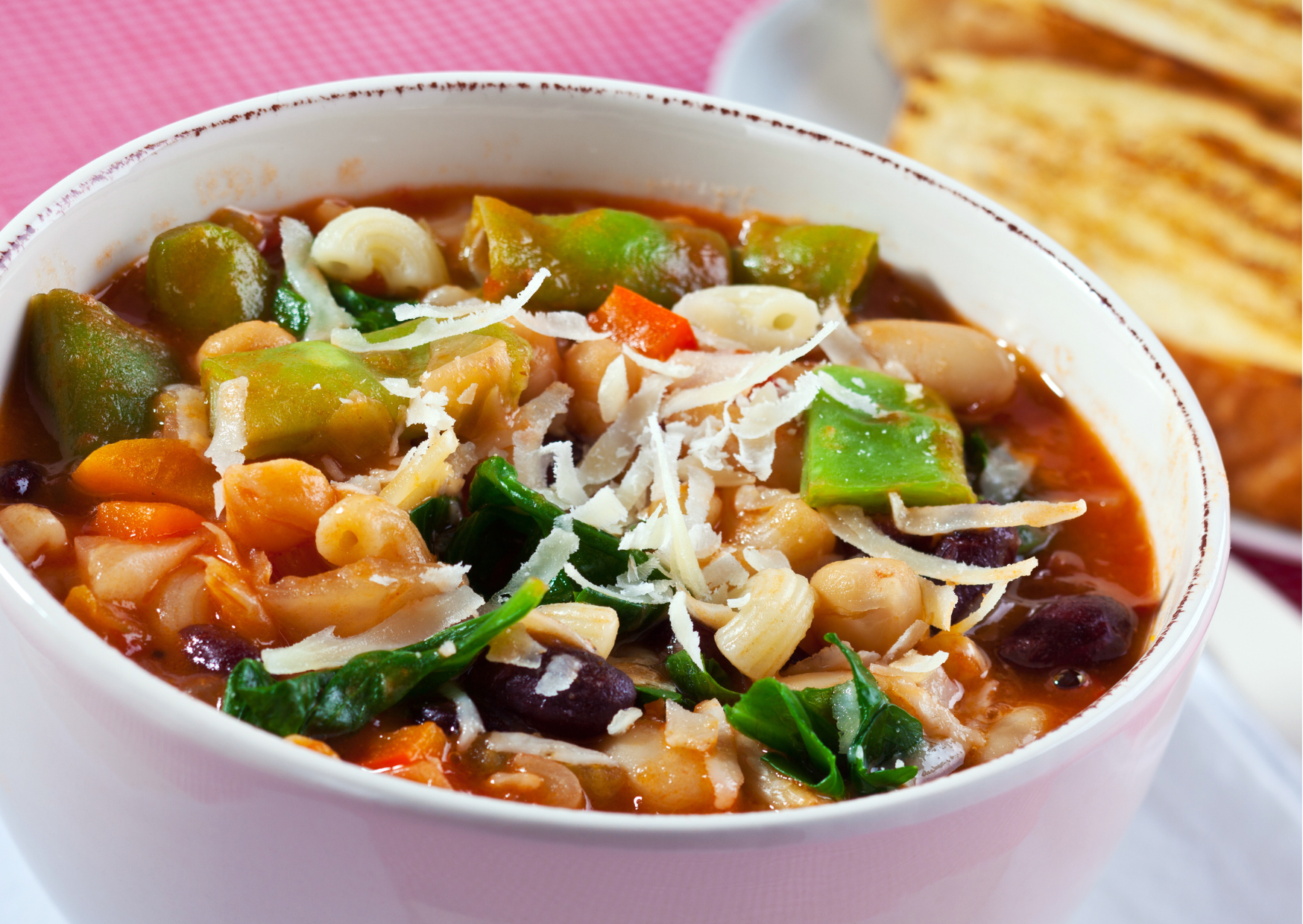
This version makes a generous pot and stays flexible without becoming vague.
Servings: 6 big bowls (or 8 smaller ones)
Prep time: 20 minutes
Active time: 25 minutes
Simmer time: 45 minutes
Rest time: 10 minutes
Total time: about 1 hour 40 minutes
The core ingredients
Aromatic base:
- Olive oil: 3 tbsp (45 ml)
- Yellow onion: 200 g (about 1 large, 1 1/2 cups chopped)
- Carrots: 150 g (about 2 medium, 1 cup chopped)
- Celery: 120 g (about 2 stalks, 1 cup chopped)
- Garlic: 3 cloves (about 10 g), minced
Broth body:
- Tomato paste: 1 tbsp (15 g)
- Canned crushed tomatoes: 400 g (about 1 2/3 cups)
- Vegetable broth or water: 1.5 liters (6 cups)
- Bay leaf: 1
- Salt: start with 1 1/2 tsp, adjust at the end
- Black pepper: 1/2 tsp
- Dried oregano or thyme: 1 tsp
Sturdy vegetables (go in early):
- Potato: 250 g (about 1 1/2 cups diced)
- Green beans: 200 g (about 2 cups, cut)
- Savoy cabbage or kale: 200 g (about 4 cups shredded)
Tender vegetables (go in later):
- Zucchini: 200 g (about 1 1/2 cups diced)
Protein and starch:
- Cooked beans, cannellini or chickpeas: 400 g cooked (about 2 cups)
(or 1 can, drained, about 240 g drained weight) - Small pasta (ditalini, elbow, small shells): 80 g (about 1 cup)
Finish:
- Parmesan rind: 1 piece, optional but powerful
- Grated Parmesan: 30 g (about 1/3 cup), optional
- Lemon zest: 1/2 tsp, optional, brightens everything
Temperature note: Keep the soup at a gentle simmer, around 90°C (195°F), not a rolling boil.
A simple shopping list you can take to the store
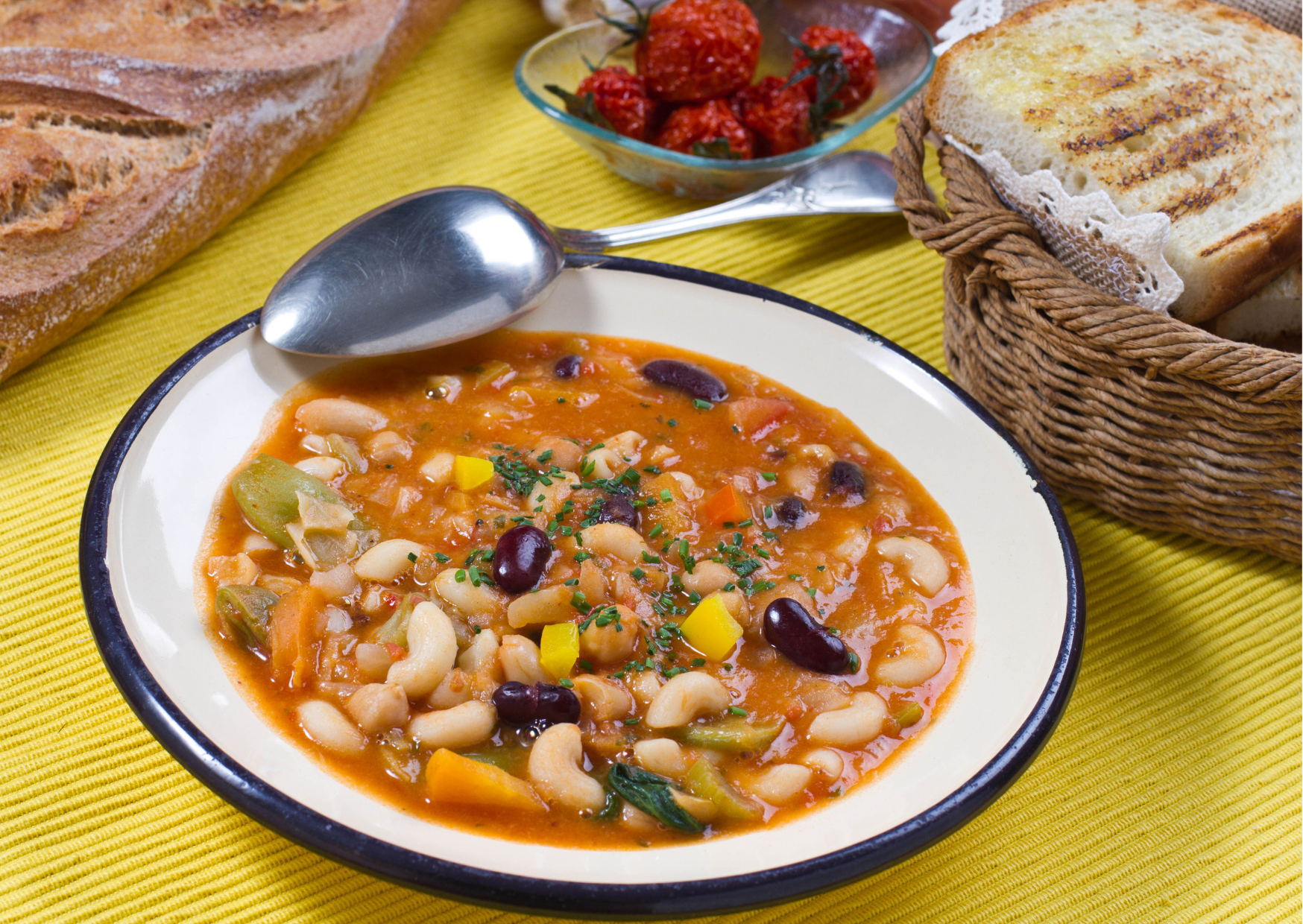
If your pantry already has oil, salt, pepper, and herbs, you’re buying mostly vegetables.
- 1 large onion
- 2 carrots
- 1 small bunch celery
- 1 head garlic
- 1 potato
- 200 g green beans
- 1 small savoy cabbage or a bunch of kale
- 1 zucchini
- 1 can crushed tomatoes
- 1 can beans (or cooked beans)
- 1 small pasta shape
- Optional: Parmesan rind or a chunk of Parmesan
If you want to cook like an Italian grandmother, you don’t buy special ingredients. You buy what’s good and cheap that week.
Equipment and the prep rhythm that makes this easy
The equipment list is short, and if you cook this once, you’ll start keeping it on rotation.
- Large pot, 5 to 6 liters
- Cutting board and knife
- Wooden spoon
- Ladle
- Measuring cups or a kitchen scale
- Fine grater (only if using zest or cheese)
The prep rhythm matters more than perfect knife skills. The goal is vegetables that cook evenly.
- Chop onion, carrot, celery into small, similar pieces so the base cooks evenly and sweetens instead of steaming.
- Dice potato into 1.5 cm chunks so it softens without dissolving.
- Shred cabbage so it melts into the soup without turning into long wet ribbons.
- Cut green beans into bite-size pieces so they don’t feel like a separate side dish.
If you’re cooking after work, do one small favor for your future self: chop the base vegetables first and keep them in one bowl. That bowl is the start of dinner, and it keeps you from drifting into “I’ll just snack.”
Method: the order is the recipe
This is where the “grandmother method” becomes real. You’re not following a rigid recipe. You’re following a sequence.
1) Build the base slowly
Heat olive oil in your pot over medium.
Add onion, carrot, celery, and a pinch of salt. Cook 10 to 12 minutes, stirring often, until the vegetables are soft and glossy. You want the onion sweet, not browned.
Add garlic and cook 30 seconds.
Stir in tomato paste and cook 1 minute. This step matters because it deepens the flavor and reduces the raw tomato taste.
2) Add tomatoes, broth, and the sturdy vegetables
Add crushed tomatoes, broth (or water), bay leaf, pepper, and dried herbs.
Add potato, green beans, and cabbage.
Bring to a boil, then immediately reduce to a gentle simmer. You should see lazy bubbles, not aggressive churning.
If you have a thermometer, aim for 90°C (195°F).
Simmer 35 minutes, stirring occasionally, until potato is tender and the broth tastes like something you want to eat.
3) Add beans and tender vegetables
Add cooked beans and zucchini.
Simmer 10 minutes.
This is where the soup starts looking right: thick, colorful, and cohesive.
4) Add pasta, then stop cooking before you think you should
Add pasta and simmer 8 to 10 minutes, until pasta is tender.
Turn off the heat. Let the soup rest 10 minutes. This rest lets the starch and vegetables settle into the broth.
Taste and adjust salt. If you use Parmesan rind, it adds salt. If you skip it, you may need more.
5) Finish like you mean it
If you have a Parmesan rind, drop it in at the simmer stage, then remove it before serving. If you forgot, you can add grated Parmesan at the end.
A tiny hit of lemon zest wakes the whole pot up, especially in winter.
Serve with a spoonful of grated Parmesan if you want it richer.
If you want the truly Italian move, add a small spoon of pesto to each bowl. It melts in and tastes like you worked harder than you did.
Why this works, and why your soup suddenly tastes like a real meal
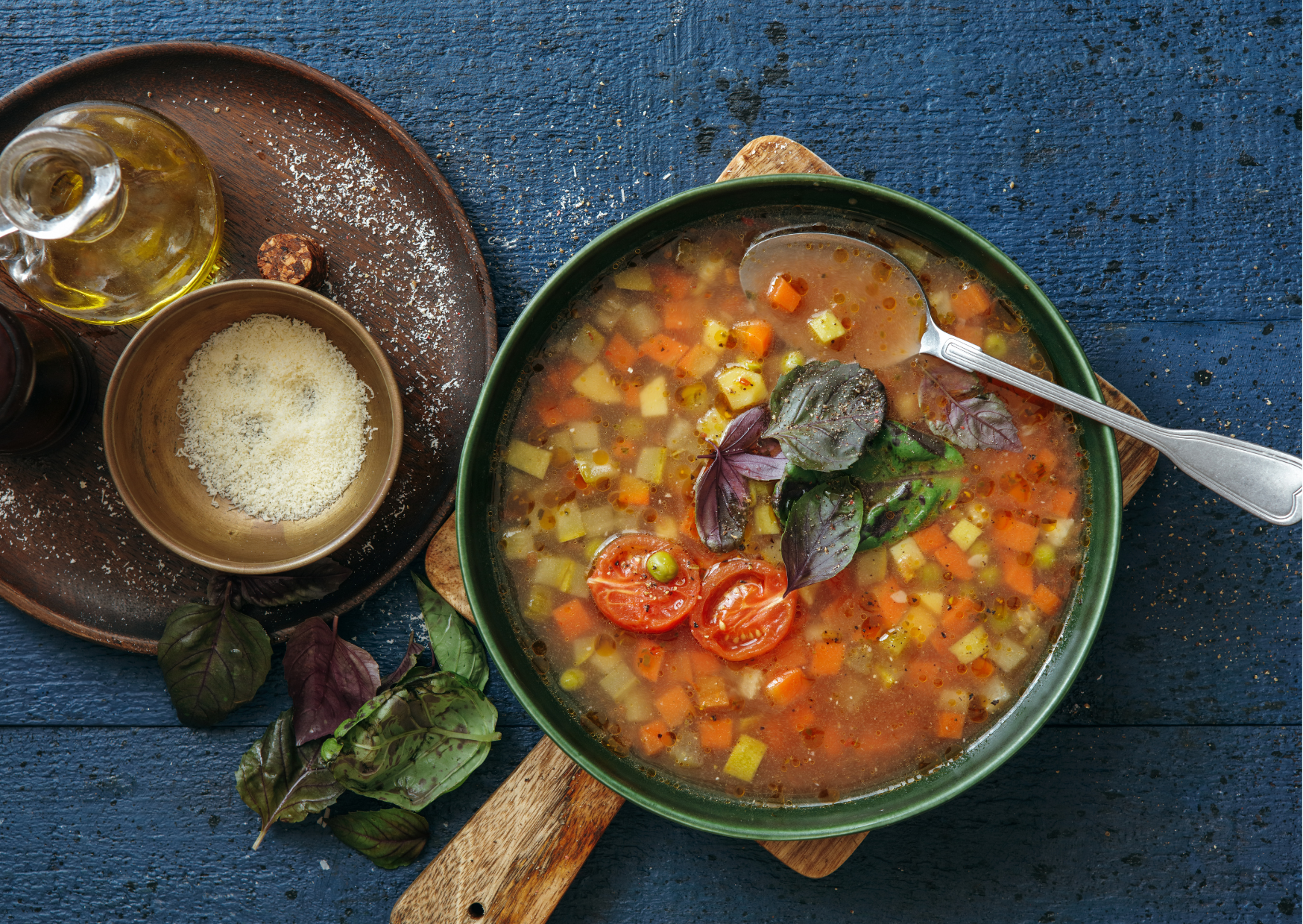
Minestrone tastes “Italian” because of method, not ingredients.
- The slow base builds sweetness and depth. That’s your flavor foundation, and it replaces the need for meat.
- Tomato paste cooked in oil gives you a richer, rounder background note that makes the broth taste intentional.
- The order of vegetables creates layered texture. Sturdy vegetables soften and enrich the broth, tender vegetables stay bright and recognizable.
- Beans give body. Even if you don’t blend anything, beans make the broth feel thicker and more satisfying.
- Pasta is the secret weapon. It turns “soup” into dinner because starch gives the liquid a soft, comforting weight.
- The finish matters. Cheese rind or grated Parmesan adds salt and umami, and a touch of lemon zest adds lift so the soup doesn’t taste flat.
This is also why minestrone is different every time and still feels familiar. The base and finish stay stable. The middle can change.
Once you understand that, minestrone becomes less of a recipe and more of a weekly tool.
The cost angle: how this stays cheap without feeling like “budget food”
This is a soup that was designed to stretch. It’s vegetables, beans, and pasta. You’re not buying anything rare, and you’re not paying for protein as the centerpiece.
A realistic cost breakdown in Spain, using typical supermarket ranges, looks like this:
- Onion, carrot, celery, garlic: €1.80 to €3.00
- Potato, green beans, cabbage, zucchini: €3.50 to €6.50 depending on season
- Canned tomatoes: €0.80 to €1.50
- Beans: €0.90 to €1.60 canned, less if cooked from dry
- Pasta: €0.30 to €0.70
- Parmesan (optional): €0.60 to €1.50 per pot if using a small amount, less if using rind
Total pot: roughly €7.90 to €15.30, which comes out to €1.00 to €2.55 per serving for six servings.
What makes this economical isn’t just ingredient price. It’s behavior.
This soup reduces the expensive stuff:
- fewer last-minute takeout decisions
- fewer “I need something quick” purchases
- fewer grocery runs because you didn’t plan
If you’re cooking for two, this is the kind of pot that makes the week feel handled. In winter, that matters more than any macro tracking.
Substitutions and seasonal swaps, without ruining the soup
This is where you make it yours, and it stays “real minestrone.”
Sturdy vegetables that work:
- pumpkin or butternut squash
- sweet potato
- fennel
- cauliflower
- leek (swap for some onion)
- turnip
Tender vegetables that work:
- spinach (stir in at the end)
- peas (last 5 minutes)
- asparagus (last 5 minutes)
- cherry tomatoes (last 5 minutes)
Beans and protein options:
- cannellini, chickpeas, borlotti, or lentils
- for extra protein, add 150 g diced ham or pancetta at the base stage
(this makes it less “purely vegetable,” but it’s a common real-life move)
Starch options:
- pasta is classic, but rice works too
add 100 g cooked rice at the end, or simmer 60 g uncooked rice earlier - barley is excellent if you want a thicker, stew-like bowl
Flavor boosters that stay traditional:
- Parmesan rind in the simmer
- pesto in the bowl
- a splash of olive oil at serving
- a little lemon zest
The one substitution that usually disappoints people: skipping the base cook time. If you rush the base, the soup tastes like boiled vegetables no matter what else you do.
Storage, reheating, and how to keep pasta from turning to mush
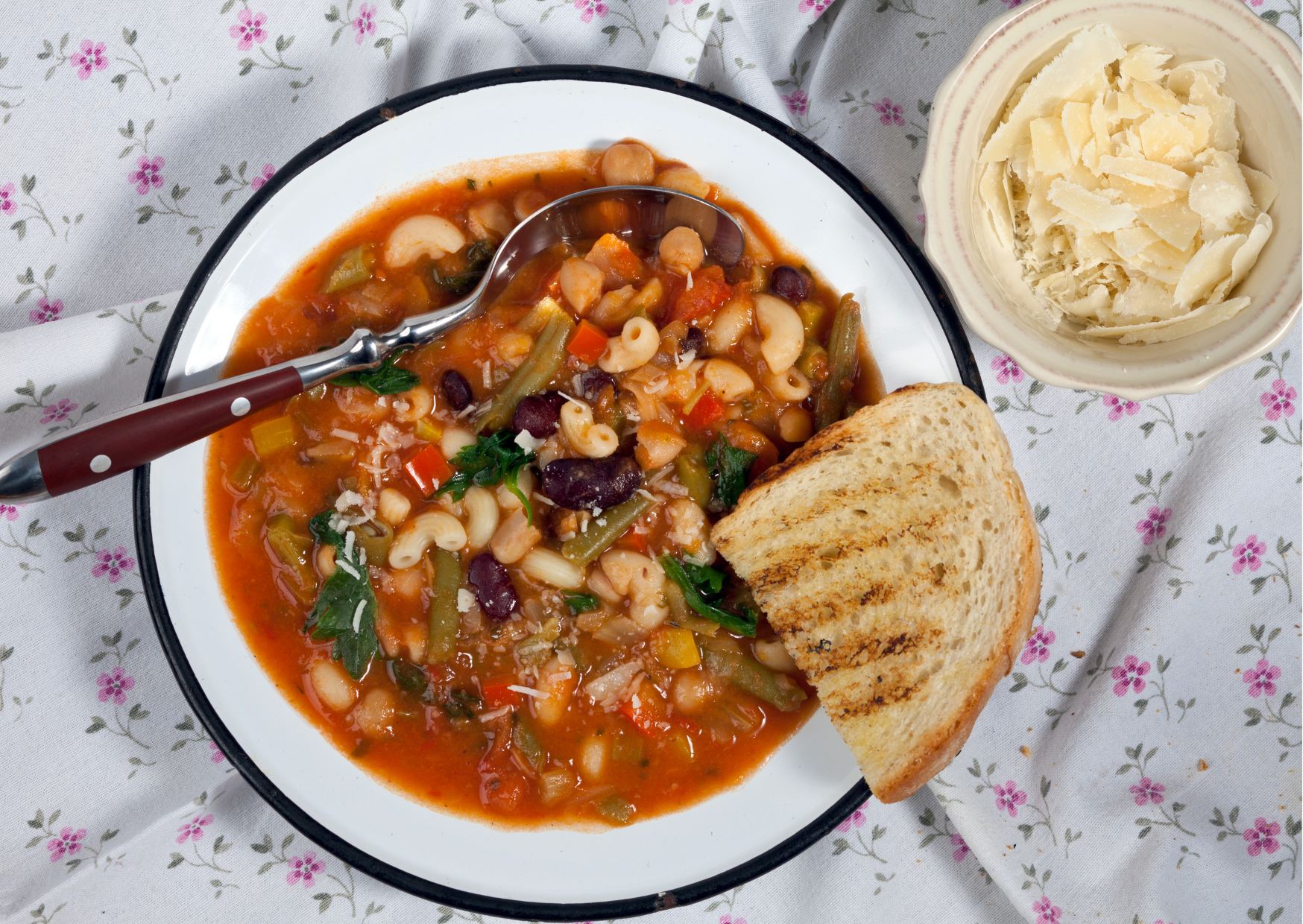
Minestrone stores beautifully, but pasta keeps absorbing liquid. If you want the best leftovers, you have two options:
Option A: Cook pasta in the soup and accept thicker leftovers
This is the easiest. The next day it will be more like a stew. Many people prefer it.
Option B: Cook pasta separately and add per bowl
This keeps the soup brothier and the pasta perfect. If you’re feeding yourself all week, it’s worth it.
Storage
- Fridge: up to 3 to 4 days in a sealed container
- Freezer: up to 3 months for best flavor and texture
Freeze without pasta if you want the best result
Cooling
Let it cool uncovered for a short time, then refrigerate in shallow containers so it cools faster. Soup that sits hot for ages is not a smart habit.
Reheating
- Stovetop: medium-low until steaming hot
- Microwave: short bursts, stir in between
If the soup thickens, add a splash of water or broth. Taste again, add salt if needed.
A 7-day plan that makes this one pot do real work
This soup is the opposite of “cook once, eat the same bowl forever.” You can change the feel with small moves.
Day 1: Classic bowl with grated Parmesan and olive oil.
Day 2: Add pesto to the bowl and a slice of bread, it tastes like a new soup.
Day 3: Turn it into a thicker stew by simmering 5 minutes longer, then top with lemon zest.
Day 4: Blend one cup of soup and stir it back in for a creamier texture without cream.
Day 5: Add extra greens, spinach or kale, and make it feel fresh again.
Day 6: Use it as sauce: reduce it, then toss with pasta for a thick “minestrone pasta” dinner.
Day 7: Freeze two portions, or eat the last bowl and immediately start the next pot with whatever vegetables you still have.
This is the real grandmother move: the pot is not a performance. It’s weekly infrastructure.
And once you have that, winter cooking stops feeling like a chore and starts feeling like a system you can rely on.

About the Author: Ruben, co-founder of Gamintraveler.com since 2014, is a seasoned traveler from Spain who has explored over 100 countries since 2009. Known for his extensive travel adventures across South America, Europe, the US, Australia, New Zealand, Asia, and Africa, Ruben combines his passion for adventurous yet sustainable living with his love for cycling, highlighted by his remarkable 5-month bicycle journey from Spain to Norway. He currently resides in Spain, where he continues sharing his travel experiences with his partner, Rachel, and their son, Han.