
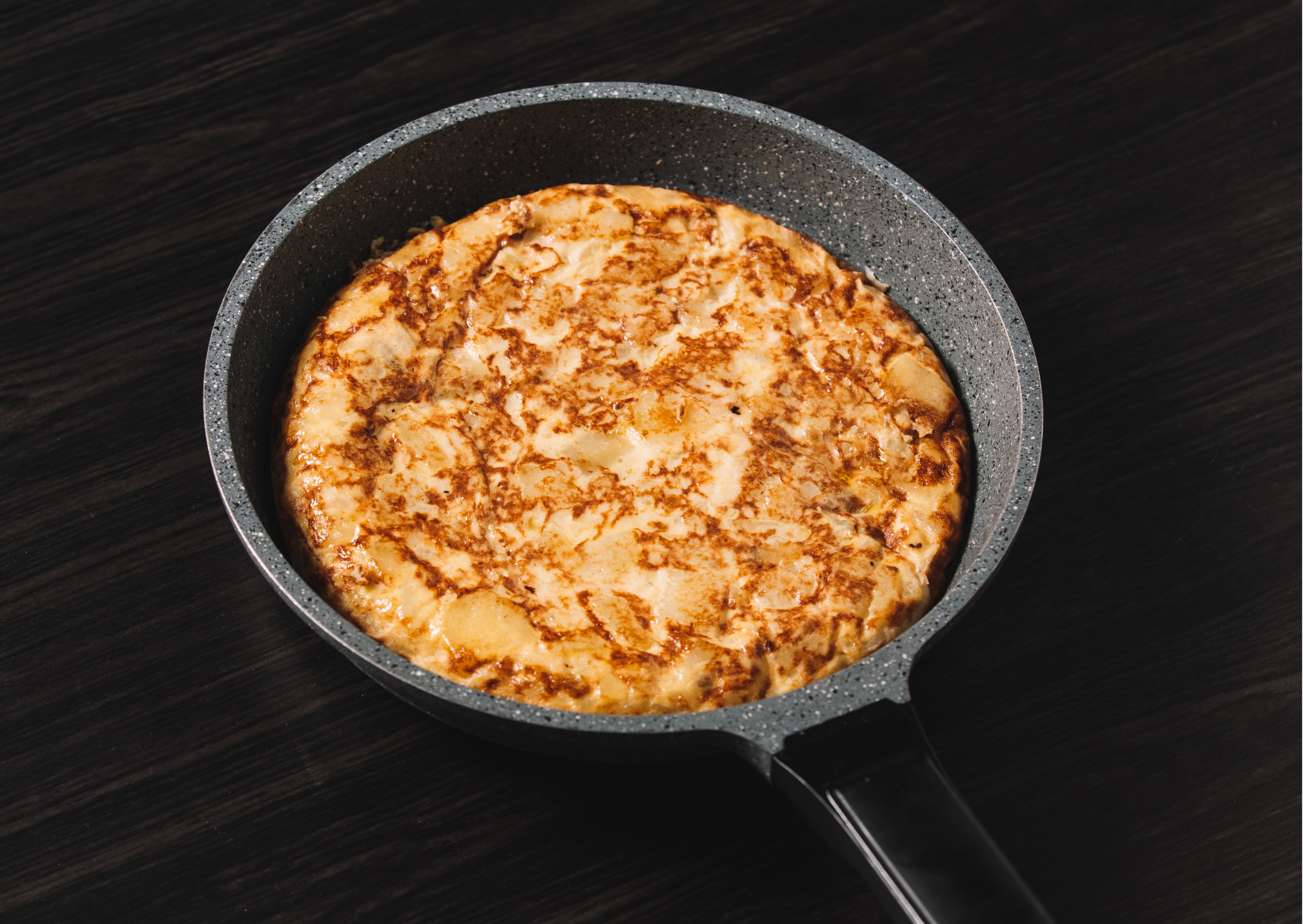
January to March in Spain is when the kitchen quietly takes over. The days are shorter, the air feels damp in older apartments, and dinner stops being a creative project and becomes a survival plan.
This is the dish I default to when I want something that feels like real food, not “snacking arranged as a meal.” It’s also the dish that teaches you something useful about how people here actually eat: simple ingredients, handled properly, turn into dinner without drama.
A tortilla de patatas is not complicated, but it is precise. The difference between “fine” and “why does this taste like every bar in Spain” is three decisions: how you cook the potatoes, how you treat the eggs, and when you stop.
What you’re making and how long it takes
This version is built for speed without tasting rushed.
- Servings: 4 (with a salad, tomatoes, or roasted peppers)
- Prep time: 10 minutes
- Active time: 25 minutes
- Rest time: 5 minutes
- Total time: 40 minutes
The result is a tortilla that’s set on the outside, tender in the middle, and sturdy enough to slice cleanly for leftovers.
In Spanish households, tortilla is normal lunch, dinner, tapa, and next-day sandwich. It’s also one of the rare “cheap meals” that still feels like a proper plate.
Ingredients (5) and the exact amounts
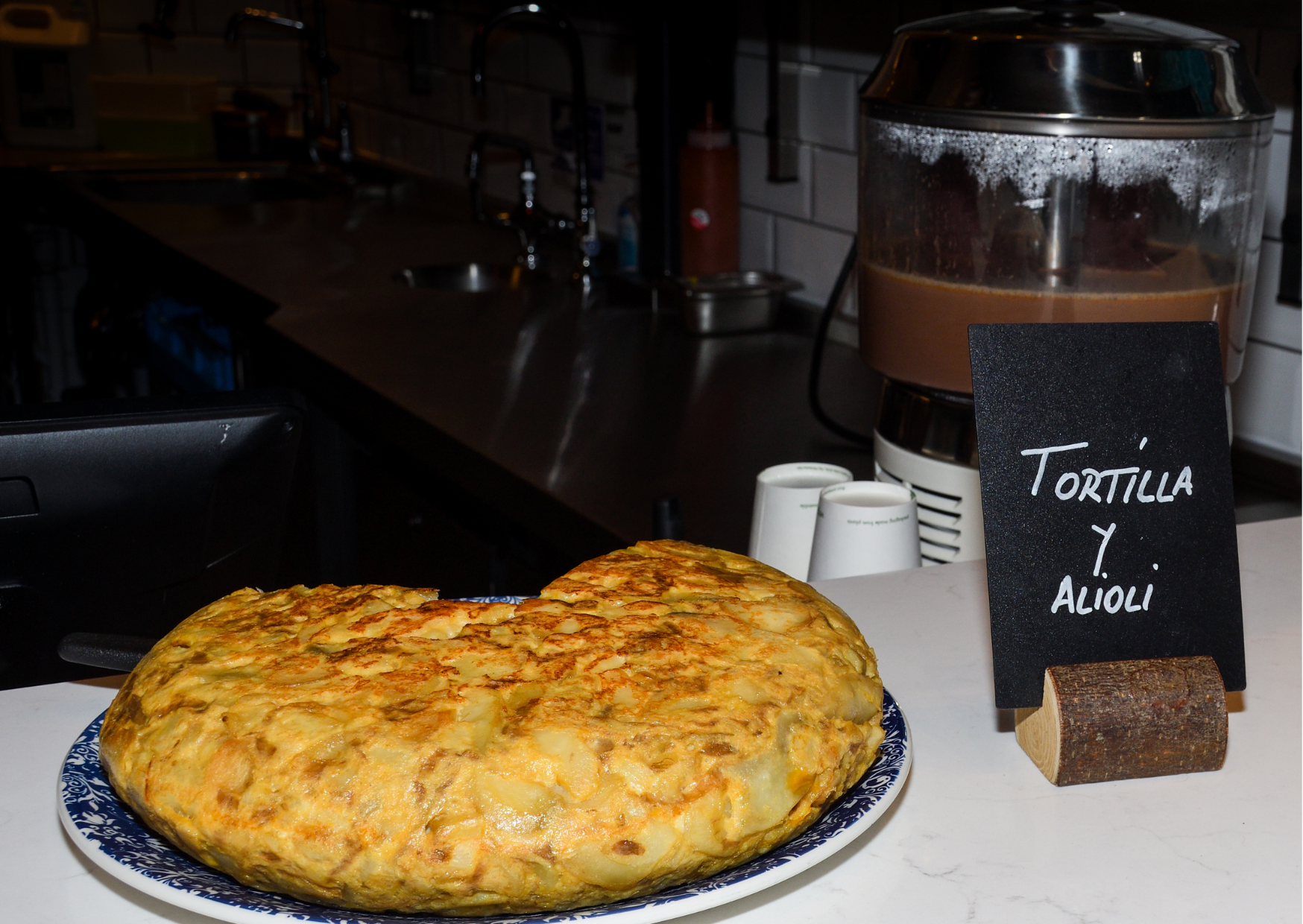
You don’t need more ingredients. You need the right ratios.
Ingredients
- Potatoes: 600 g (about 4 packed cups thinly sliced, 2 to 3 mm)
- Eggs: 6 large
- Onion: 100 g (about 1 small onion, thinly sliced)
- Olive oil: 120 ml (about 1/2 cup) for cooking, you will reuse most of it
- Salt: 1 1/4 tsp, plus to taste
That is it. No garlic. No paprika. No flour. No cheese.
The most controversial ingredient is onion. In Spain, people argue about it like it’s sports. This recipe includes it because it adds sweetness and gives you a more forgiving tortilla when you’re cooking fast. If you hate onion, skip it and keep everything else the same.
Shopping list you can screenshot and carry to the store
If you want this to come in under budget, you buy like a resident: potatoes, eggs, onion, and you treat olive oil as a pantry staple you portion out.
Shopping list for one tortilla includes 600 g potatoes, 6 eggs, and 1 small onion.
If you’re buying for the week, get:
- 3 kg potatoes
- 12 eggs
- 2 to 3 onions
That amount gives you two tortillas plus extra potatoes for soup, roast, or a quick pan fry.
Equipment that makes this painless
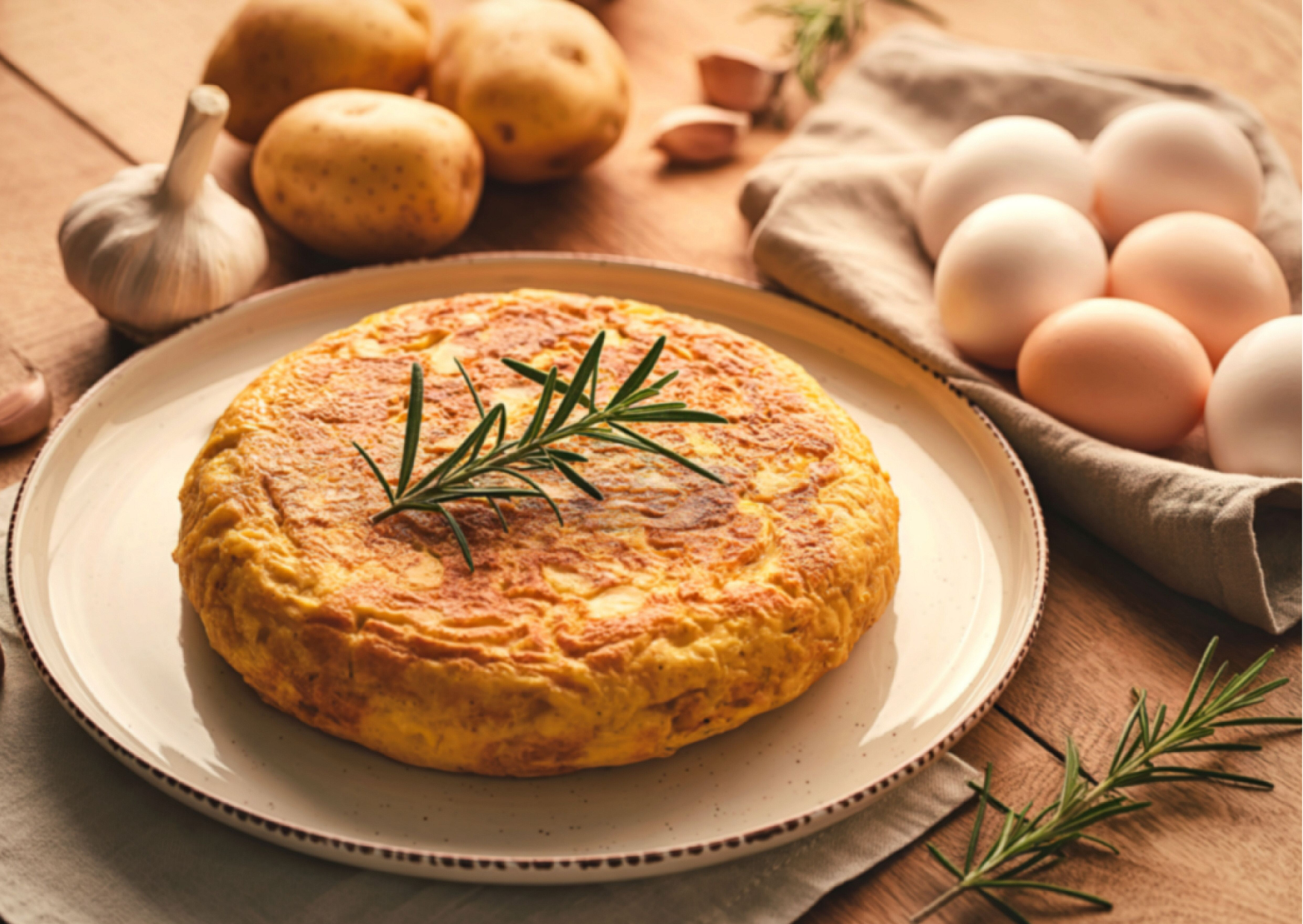
You can do tortilla with almost any pan, but there’s a reason Spanish kitchens keep a few specific things around.
- 20 to 24 cm nonstick skillet (or a well-seasoned pan)
- Large bowl for eggs
- Medium bowl or colander for draining potatoes
- Plate that fully covers the pan (flat, sturdy, slightly larger than the pan)
- Spatula
- Knife and cutting board
If you have a thermometer, great. If you don’t, the cues below are enough.
The method (step-by-step, no drama)
There are two phases: potatoes and eggs, then setting the tortilla.
1) Slice, salt, and start the potatoes
- Peel potatoes (or don’t, if the skins are thin and clean).
- Slice into thin half-moons, about 2 to 3 mm.
- Slice onion thinly.
- Toss potatoes with a big pinch of salt.
2) Cook potatoes and onion gently in oil
Pour 120 ml olive oil into your pan. Heat over medium until the oil is around 150 to 160°C (300 to 320°F).
If you don’t have a thermometer: the oil should shimmer and feel hot, but it should not smoke, and the potatoes should sizzle softly, not violently.
- Add potatoes and onion.
- Stir to coat, then lower heat slightly.
- Cook 12 to 15 minutes, stirring every few minutes.
Your goal is not crispy fries. Your goal is potatoes that are tender and lightly translucent, like they’ve been confited. When you press a slice, it should bend easily.
3) Beat eggs and build the base
While the potatoes cook:
- Crack 6 eggs into a bowl.
- Add 1 tsp salt to start.
- Beat until the whites and yolks are fully combined, about 20 seconds.
Do not overbeat into foam. You’re not making a soufflé.
4) Combine and rest
- Drain potatoes and onion through a colander, saving the oil.
- Let them sit 30 seconds to stop steaming.
- Add potatoes and onion into the eggs and stir gently.
Now let the mixture rest 2 minutes. This is a small pause that makes a noticeable difference. The potatoes soak up egg and the final texture becomes more cohesive.
5) Set the tortilla, first side
Put 1 to 2 tbsp of the reserved oil back in the pan. Heat medium.
Pour in the egg-potato mixture. Stir gently for the first 10 seconds to prevent sticking, then stop.
Cook 3 to 4 minutes. Watch the edges: they should set and pull slightly away from the pan. The top will still look wet, but not soupy.
This is where you decide your center. If you want it slightly runny, you flip earlier. If you want it fully set, you wait another 30 to 60 seconds.
6) Flip safely, then finish
Place your plate over the pan, hold it firmly, and flip in one confident motion. Slide the tortilla back into the pan.
Cook the second side 2 to 3 minutes. The tortilla should feel springy when you press the center lightly.
7) Rest, then slice
Slide onto a plate and let it rest 5 minutes. This is not optional if you want clean slices.
Slice into 8 wedges. Dinner is ready.
Why this works (and why your first attempts often fail)
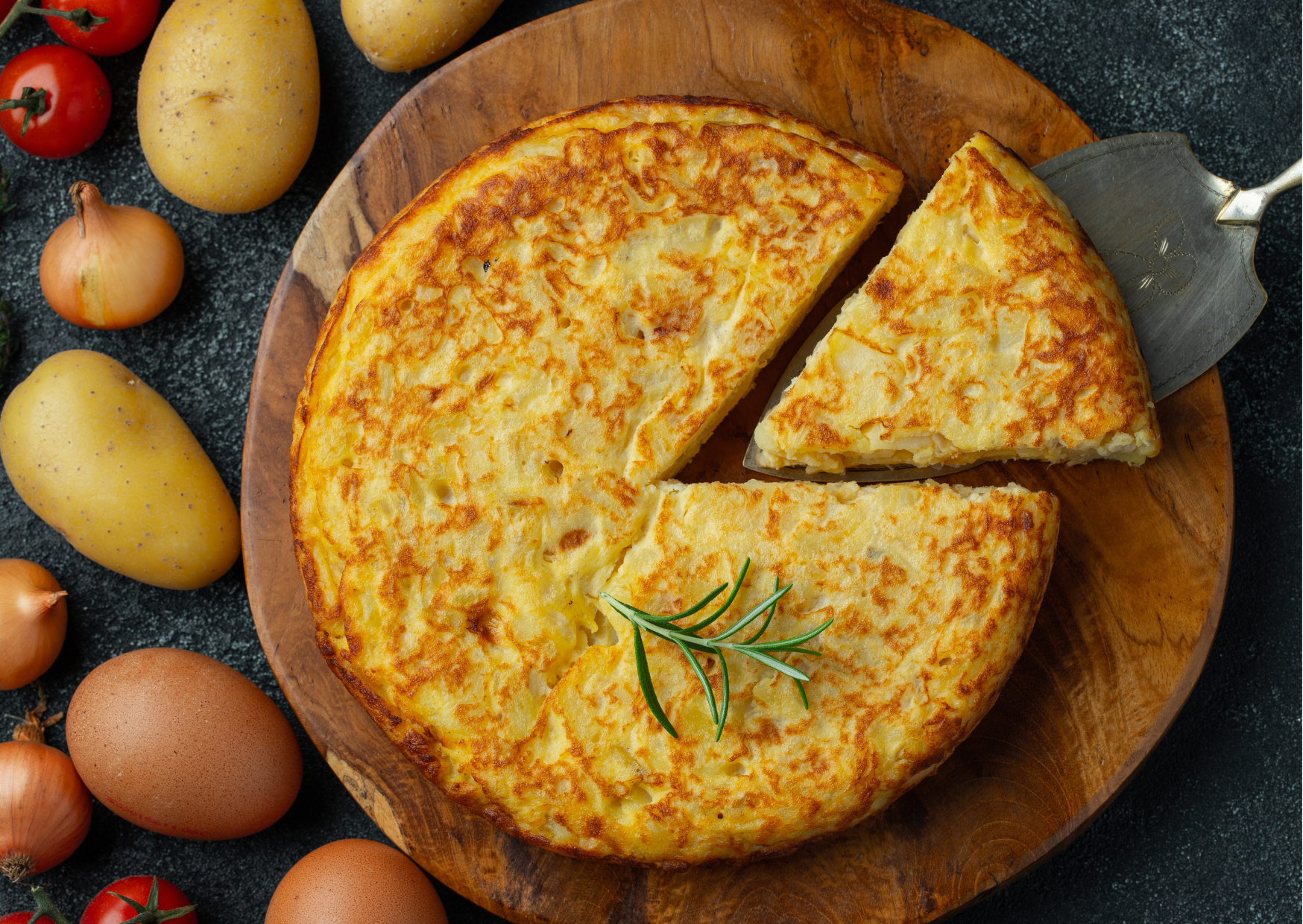
A tortilla looks simple, which is why it humiliates people.
Here’s the actual mechanism.
- The potato step matters because you’re building soft structure. If potatoes are fried hard, they don’t bind with egg. You get a crumbly tortilla that tastes like leftovers.
- The rest step matters because potatoes absorb egg. That creates the custardy interior people chase.
- The flip works because the tortilla has already formed a stable “skin” on the first side. If you rush and flip before the edges set, it breaks.
The center texture comes down to time and heat. A tortilla is basically eggs set around a pile of tender potatoes. If you blast it with high heat, the outside overcooks before the inside stabilizes. Gentle heat gives you the Spanish bar texture: cooked, cohesive, and still tender.
The money math that keeps it under €3
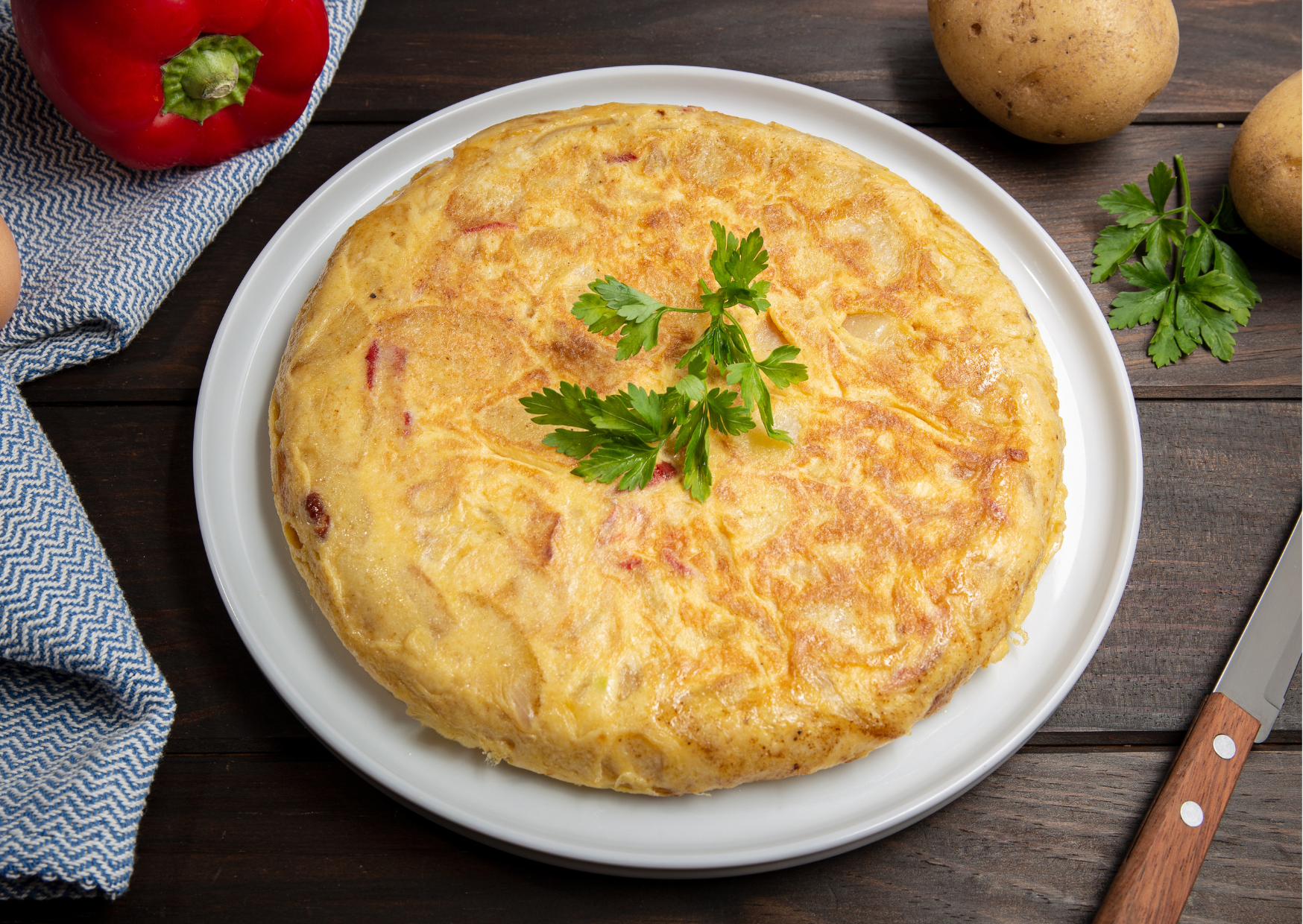
The cheapest dinners in Spain are usually not “special ingredients.” They’re the meals that let staples do the work.
To keep this honest, the math below uses retail price points documented in Spain and counts only what you actually use. Olive oil is the classic budget killer if you count the full bottle, but a tortilla uses a portion of oil and you reuse the rest for the next tortilla or for cooking vegetables.
Here’s one clean example using documented January 2026 shelf prices:
- Potatoes: €0.99/kg on a 3 kg offer, using 600 g = €0.59
- Eggs: €3.30 per 12 large eggs, using 6 eggs = €1.65
- Onion: €1.48/kg, using 100 g = €0.15
- Olive oil: €4.95 per liter, using about 80 ml net consumption = €0.40
- Salt: effectively pennies
Total: €2.79 for a full 20 to 24 cm tortilla that feeds four with something green on the side.
That’s not a fantasy number. It’s a function of portioning. You are not “spending” the whole bottle of oil in one night. You’re using a measured amount, and you’re keeping the rest in a jar for the next cook.
If you want this to stay cheap, do what Spanish kitchens do: after draining potatoes, pour the oil into a jar and reuse it. It will taste like potatoes and onion, which is a bonus.
Substitutions that keep the spirit intact
You can swap small things without breaking the tortilla, but only if you respect the structure.
- Onion: optional. If you skip it, keep potatoes at 600 g and consider a slightly higher salt pinch.
- Potatoes: any all-purpose potato works, but avoid waxy salad potatoes if possible. You want potatoes that soften easily.
- Olive oil: for the classic flavor, keep it olive. If you’re cost-cutting hard, you can use less oil, but then you need to stir more often and accept slightly less tender potatoes.
- Eggs: if your eggs are medium, use 7 instead of 6 for the same bind.
- Salt: do not forget it. Tortilla without enough salt tastes like regret.
Keep the ingredient list short. The whole point is that this is built on cheap fundamentals.
Common mistakes and how to fix them fast
These are the errors that produce a “why did I bother” tortilla.
- Potatoes browned or crisped
Fix: lower heat. You want a gentle cook. If the oil is aggressive, the outside fries before the inside softens. - Tortilla breaks during flip
Fix: wait until the edges are set and the tortilla releases from the pan. Also, use a plate that fully covers the pan and hold it confidently. - Dry, rubbery tortilla
Fix: lower heat and shorten the second-side cook. Resting matters too. A tortilla keeps cooking after you pull it off. - Greasy texture
Fix: drain potatoes properly and let them sit 30 seconds before mixing with eggs. Also, don’t pour all the oil back in the pan. One to two tablespoons is enough to set the first side. - Bland tortilla
Fix: salt the potatoes early and season the eggs. The potatoes are the bulk of the dish. They need salt. - Sticks to the pan
Fix: use a nonstick pan or a well-seasoned surface, and don’t skip the initial oil coating. If your pan is rough, you can line it with a thin film of oil and preheat properly.
Storage, reheating, and the 7-day plan
Tortilla is one of the best leftovers in Spanish life because it behaves.
Storage
- Fridge: 3 days, tightly wrapped or in a sealed container.
- Room temperature: a few hours is normal in Spain for serving, but store leftovers chilled for safety.
- Freezer: possible, but texture softens. If you freeze, slice first and wrap individual wedges.
Reheating
- Best: bring to room temperature and eat as-is.
- Pan: low heat, 2 minutes per side.
- Microwave: works, but can toughen eggs. Use short bursts.
A realistic 7-day tortilla plan
This assumes you make one tortilla and treat it like a tool, not a one-night event.
Day 1: Dinner with a salad and bread.
Day 2: Lunch wedge with tomatoes and olive oil.
Day 3: Bocadillo: tortilla slice in bread with roasted peppers.
Day 4: Small wedge as a mid-afternoon snack, Spanish-style.
Day 5: Tortilla cubes stirred into a quick chickpea salad.
Day 6: Second tortilla night, because you now have the oil ready and it’s faster.
Day 7: Leftover wedge with soup, especially in winter.
This is how the dish pays you back: it reduces decision fatigue and keeps your week from turning into expensive takeout.
The quiet point Americans miss about meals like this
Americans often look for “healthy” through novelty and restriction. Spanish households often look for healthy through repetition, timing, and portioning. Tortilla isn’t a cleanse. It’s just food that fits a week.
That’s why it’s a winter staple: it’s warm, it’s filling, it’s cheap, and it doesn’t require you to manufacture motivation.
Make it once. Save the oil. Make it again the following week in half the time. That’s when it stops being a recipe and becomes a household habit.

About the Author: Ruben, co-founder of Gamintraveler.com since 2014, is a seasoned traveler from Spain who has explored over 100 countries since 2009. Known for his extensive travel adventures across South America, Europe, the US, Australia, New Zealand, Asia, and Africa, Ruben combines his passion for adventurous yet sustainable living with his love for cycling, highlighted by his remarkable 5-month bicycle journey from Spain to Norway. He currently resides in Spain, where he continues sharing his travel experiences with his partner, Rachel, and their son, Han.