

You can tell when an American is serious about leaving because the sentence starts with a number.
“I’ve got $500,000.”
“I’ll have $2,400/month.”
“My Social Security is $3,100 and my spouse is $1,700.”
From Spain, that sounds less like bragging and more like a person trying to buy certainty.
Here’s the part nobody says out loud: Social Security is boring, stable, government-issued income. Immigration offices love boring. What they do not love is vagueness, improv, or “I’ll figure it out when I get there.” They want paper, not optimism.
So this is a practical map: nine countries where a U.S. retiree can use Social Security as the core proof of funds, and what the numbers look like in 2026 thresholds when a rule or wage is explicitly tied to a year.
“Permanent residency” usually means “not right away”
If you’re picturing a single appointment and a shiny permanent card on day 30, adjust your expectations now, before you waste six months and $1,200 in apostilles.
In most countries, Social Security alone can qualify you for a residence visa or permit that is explicitly “non-working.” You live there legally, renew on schedule, and later you qualify for permanent status by time-in-country. That’s the normal path.
So I’m going to split “permanent” into two realities:
- Immediate or near-immediate permanent: you are granted a permanent-style permit early in the process (rare, but it exists).
- Time-served permanent: you get a temporary residence permit first, then permanent status after 21 months, 3 years, or 5 years, depending on the country.
This matters because the lifestyle decision is not “Can I get approved?” It’s “Can I live the rules for long enough to earn permanence?” That means being present, renewing on time, and keeping your paperwork boring.
Also: these are residency routes for people living on pensions. They are built around a simple assumption: you will not show up and compete for local jobs. In practice, that’s often the trade-off for a clean path.
The nine-country shortlist and what counts as “Social Security alone”

When people say “Social Security alone,” they usually mean one of three things:
- One benefit amount (single retiree).
- Two benefit amounts (couple, each with their own benefit).
- Social Security plus cash in the bank, but the ongoing income is still Social Security.
Most immigration rules look for “resources” or “means of subsistence,” and they treat pensions as acceptable because they are predictable. They may still ask for a bank balance, and they may still want private health insurance.
Here’s the list we’re covering:
Europe (usually a 5-year path to permanent status):
- Spain
- Portugal
- France
- Italy
- Greece
Permanent-style permit earlier, but still paperwork-heavy:
- Cyprus
Americas (faster permanent paths for pensioners):
- Panama
- Costa Rica
- Ecuador
If you want the simplest filter before you get emotionally attached: check whether your household Social Security clears the minimum monthly income for the country, and whether you can live with the “no local work” rule without trying to lawyer your way around it.
Spain: the Non-Lucrative Visa is pure math (and Spain is strict about it)
Spain is one of the cleanest examples of an office saying, “Show the number, get the stamp.”
The non-lucrative residence route is anchored to the IPREM index. In practice, the headline requirement is 400% of IPREM for the main applicant, plus 100% of IPREM per dependent.
In 2026, IPREM is listed at €600/month (with annual equivalents), which makes the practical threshold easy to compute: €2,400/month for the main applicant and €600/month per dependent.
What this means in real life:
- A single retiree living on $1,800/month Social Security is usually not a fit for Spain on this route.
- A couple with combined benefits of $3,800 to $4,500/month often clears the income bar, depending on how the consulate interprets proof and buffers.
Spain also expects you to behave like a resident, not a long-stay tourist with a better suitcase. If you treat Spain as a part-time base and disappear for long stretches, renewals get complicated fast.
The mistake Americans make here is trying to negotiate the number. Spain does not negotiate the number. People lose months trying to “explain” why they are financially fine while failing a blunt threshold.
If Spain is your target, you do the math first, then you plan the lifestyle around staying compliant: healthcare coverage, local address stability, and a calendar that assumes bureaucratic errands happen in the morning, on their schedule, not yours.
Portugal: the D7 is the “minimum wage” country, and 2026 moved the goalposts
Portugal is popular because the baseline income threshold is relatively low compared to Spain, and pension income is widely used as proof for residence.
Portugal’s “means of subsistence” framework is explicitly tied to the national minimum wage. The official guidance for 2026 references a minimum monthly salary of €920.
Family scaling is the detail people miss, and it matters if you are applying as a couple. The consular documentation used in practice applies a simple scale:
- 100% for the first adult
- 50% for the second adult
- 30% for each dependent child
So in 2026 numbers:
- Single applicant baseline: €920/month
- Couple baseline: €1,380/month (920 + 460)
- Add a child: + €276/month
That is why Portugal is often the first realistic “yes” for a U.S. retiree whose Social Security is not enormous but is steady.
Two practical realities people learn late:
- Portugal is paperwork-forward. You will be asked to show bank statements and documentation that looks “complete,” not “close enough.”
- The tempo is not American. If you need a system that responds in 48 hours because you get anxious, Portugal will test you.
Portugal can work brilliantly for retirees with modest pensions, but the winning move is treating your application like a finance file: organized, redundant, and calm. The whole point is to look like a person who will not become a problem.
France: “visitor” status is real residency, but they want proof you can live without working

France has a well-established “visitor” pathway for people who want to live in France without employment. You are expected to show resources, housing, and medical coverage, and to commit to no professional activity during your stay.
France is also unusually explicit, in its broader residency framework, about the concept of sufficient resources being tied to the minimum wage in certain contexts. For example, the long-term resident EU status requires stable resources at least equal to the minimum wage.
In 2026, France’s net minimum wage (SMIC) is listed at €1,443.11/month.
What to do with that number:
- Treat ~€1,440/month as the “serious adult” benchmark when you are planning a visitor-style residence file.
- If you are a couple, assume they will look at your household stability, not just the raw total.
France can be a great fit for retirees who want a slower, more structured life, but it is not “casual.” A visitor path is a real commitment. You need to be able to carry your own costs, and you need to be comfortable that French administration is exacting about documentation.
The common failure mode here is emotional: Americans bring a résumé to a money test. France is not asking if you are impressive. France is asking if you are solvent.
Italy: elective residency is made for pensions, and the consulates put a number on it
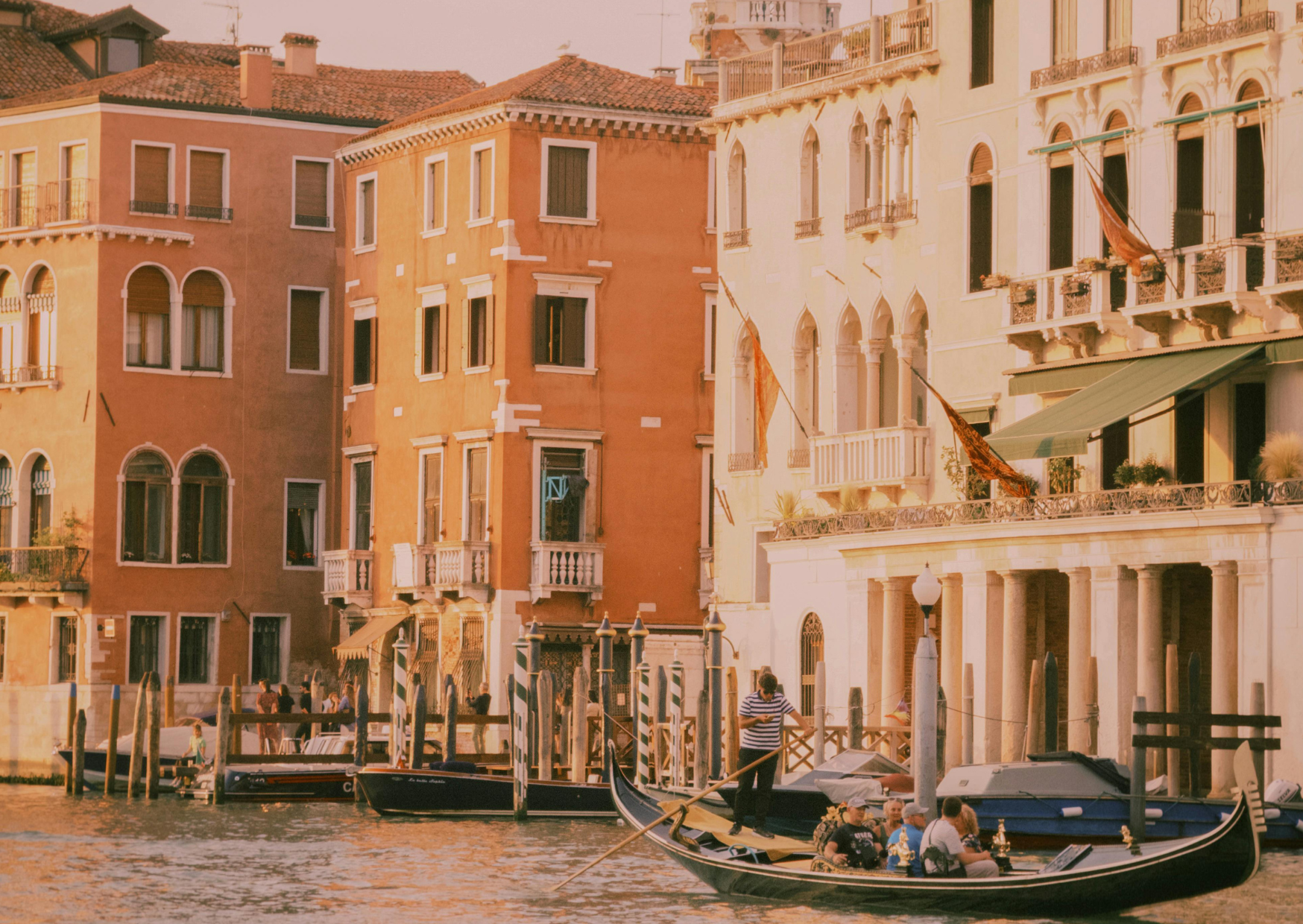
Italy’s elective residency route is one of the most straightforward “retiree” frameworks in Europe: stable passive income, housing, and proof that you are not moving there to job-hunt.
Unlike many countries that stay vague about numbers, Italian consular guidance often names the threshold. For example, the Italian consulate guidance in Boston states documented stable passive income totaling more than €31,000/year per applicant, and it explicitly accepts documentation from U.S. Social Security.
That line is doing a lot of work:
- It tells you pensions count.
- It tells you the bar can be higher than people assume.
- It tells you Italy expects a clean paper trail (tax returns, official letters, and consistent proof).
For a U.S. retiree, Italy becomes realistic in two scenarios:
- You have a higher Social Security benefit (often delayed retirement credits).
- You are a couple and each has a benefit, and you can show the combined stability plus savings.
Italy is also where Americans get seduced by cheap property and forget the residency math. Buying a home does not automatically solve the income threshold. It can help your “housing” proof, but it does not replace stable passive income.
If you want Italy, do not start with “We can buy a place.” Start with €31,000/year and work backwards: what your Social Security pays annually, what your spouse pays annually, and what you can document without creative accounting.
Greece: doable for higher-benefit households, and the rule is blunt

Greece has a financially independent person residence framework that is attractive on paper and strict in the number.
A common minimum cited in the current framework is €3,500/month, with family increases of +20% for a spouse and +15% per child.
This is where “Social Security alone” becomes a narrower club:
- A single average Social Security benefit generally will not touch this.
- A couple with strong combined benefits might, especially if one spouse delayed benefits and has a higher monthly payout.
The lifestyle trade-off is the same as the rest of Europe’s retiree-style routes: Greece is not giving you this because they want you in the labor market. They want financially independent residents who can support themselves.
Greece can be excellent if you are the kind of household that wants a Mediterranean rhythm and can afford it, but it is not a bargain-basement solution.
The mistake here is trying to force Greece to be Portugal. It is not Portugal. The number is the number. Greece is a place you choose because you can clear the bar and you actually want Greece, not because you need the cheapest possible path.
Cyprus: Category F is closer to “permanent,” but expect delays and formality

Cyprus is one of the few places on this list where the permit is commonly framed as a permanent residence category for financially independent people.
The income threshold associated with Category F is often stated as a secured annual income of €9,568 for the main applicant, plus €4,613 per dependent, from abroad.
That number is, frankly, low compared to Spain or Greece. It is also why Cyprus attracts retirees who want permanence without a high monthly income test.
The catch is not the income. The catch is the process:
- Documentation formality can be intense.
- Processing times can be slow, and applicants should assume requests for updated documents as files sit.
If you want Cyprus, plan it like a slow-moving compliance project. You will need patience, tidy paperwork, and a realistic plan for healthcare coverage while you wait.
Cyprus is not for people who need to feel “done” quickly. Cyprus is for people who want a permanent-style status and are willing to let the administrative machine move at its own pace.
Panama, Costa Rica, Ecuador: the pensioner track is faster, and the rules are explicit

If you want a retirement residency plan that is direct, the Americas are where the rules get refreshingly blunt.
Panama (Pensionado / Jubilado Pensionado)
Panama’s pensioner residence status is famous for one reason: the income minimum is $1,000/month, plus $250/month per dependent, and the permit is described as indefinite in official guidance.
This is one of the cleanest “Social Security qualifies” statements you will find, because Social Security is explicitly named as an acceptable pension source.
Costa Rica (Pensionado)
Costa Rica’s pensionado category is anchored to a minimum pension income of $1,000/month.
This is not the “instant permanent card” story, but it is a well-trodden retiree route with a clear income gate.
Ecuador (Temporary retiree visa, then permanent after time served)
Ecuador’s official retiree temporary residence visa requires a monthly pension equal or superior to three SBU (three basic unified salaries).
Ecuador’s SBU is set at $482 for 2026, which makes the retiree threshold $1,446/month.
Ecuador then allows permanent residence by time served: an official process exists for permanent residence after at least 21 months of temporary residence.
The blunt truth: if your goal is “fast permanent,” these three are often more realistic than Europe. The lifestyle question then becomes whether you want Europe for Europe, or you want permanence and lower cost.
The first week plan that saves you months later

Most retiree residency applications fail for one reason: the applicant treats it like travel planning, not like compliance.
Here is a 7-day plan that matches how these systems actually work, and yes, it is boring. Boring wins.
- Day 1: Print your Social Security benefit verification letter and your last 12 months of deposits. Your goal is a clean “this is recurring” story, not a single statement screenshot. (If you are a couple, do both benefits.)
- Day 2: Build one master file: passport scans, birth certificate, marriage certificate (if applicable), and a single page listing your monthly income, annual income, and where it comes from. Keep the summary to one page.
- Day 3: Start apostilles for the documents that will need them. This is where Americans lose time because they wait until everything else is perfect. Apostilles move on their own timeline.
- Day 4: Get a health insurance plan quote that matches the country’s expectations. For several routes, proof of coverage is not optional, and vague “travel insurance” language can get you rejected.
- Day 5: Create your “money trail” folder: tax returns, 1099s, pension letters, bank letters if you need them. You are proving you are stable, not rich.
- Day 6: Choose your address strategy: lease, long-stay booking, or owned property. Some routes are flexible, others are not. Do not improvise this at the last minute.
- Day 7: Book a document review appointment (consulate, lawyer, or experienced adviser) specifically to check completeness. The goal is to avoid the classic rejection reason: “insufficient proof” when you technically had enough, but presented it poorly.
If you do this week well, you stop bleeding time. If you do it casually, you will keep “almost ready” for months, and you will hate yourself every time an office asks for a document you could have ordered on Day 2.
The decision you are actually making
This is not really a list of nine countries.
It’s a decision between two adult lives:
- One where you keep paying for American certainty, even if it feels like a treadmill.
- One where you accept a different kind of certainty: rules, renewals, and the reality that “permanent” is often earned through time served.
If your Social Security clears a threshold, that is only the entry ticket. The real test is whether you can live like a resident: be present, keep your health coverage clean, renew on time, and treat bureaucracy like weather. It is not personal. You do not argue with it. You plan around it.
And if you are choosing Europe specifically, be honest about why. If you want Spain, pick Spain because you want Spain, and your income fits Spain’s math. Do not pick Spain because you want an identity makeover and hope the consulate will be inspired.
These systems reward the same type of person everywhere: organized, consistent, and financially boring.

About the Author: Ruben, co-founder of Gamintraveler.com since 2014, is a seasoned traveler from Spain who has explored over 100 countries since 2009. Known for his extensive travel adventures across South America, Europe, the US, Australia, New Zealand, Asia, and Africa, Ruben combines his passion for adventurous yet sustainable living with his love for cycling, highlighted by his remarkable 5-month bicycle journey from Spain to Norway. He currently resides in Spain, where he continues sharing his travel experiences with his partner, Rachel, and their son, Han.