
There is a quiet category of countries where “I live off a pension, dividends, or rent” is a normal thing to say out loud, on paper, to an immigration office. The catch is that the paperwork costs real money and the clock, not your motivation, decides how fast you move.
You already know the fantasy version: pick a charming town, rent a sunny apartment, “apply for residency,” and suddenly you are a relaxed person who buys oranges without thinking about insurance premiums.
Here is the real version: you spend a month gathering documents that all expire on different timelines, you pay for translations nobody reads twice, and you learn that immigration does not care if you are a good person. It cares if your income is predictable, documentable, and not coming from a local job.
If your steady, foreign-sourced income is around $1,500/month, there are eight places where that number is not a joke. Some are pension-friendly, some accept broader “rentista” style income, and a few are more welcoming than their reputation suggests, once you understand the local method.
What “$1,500/month” really has to look like on paper

Immigration offices do not evaluate vibes. They evaluate what can be verified, repeatedly, without arguing.
In practice, “passive income” means: foreign-sourced and recurring, not a one-time bank balance, and not wages from local employment. The cleanest proof is usually a pension letter, an annuity statement, or official payment documentation that makes your income look boring.
Where people blow this up is trying to be clever:
- They show a brokerage screenshot instead of a letter that confirms periodic payments.
- They show rental income without consistent contracts, tax filings, and deposit records.
- They show a big savings account and assume it “counts” as income. In many systems, it does not.
Another reality check: even when the monthly threshold is modest, cash-on-hand still matters. You are paying for apostilles, translations, medicals, and sometimes a required policy, before you even know the neighborhood you want.
Your weekly rhythm matters here. If you can only focus on this two Saturdays a month, you will time out on police checks and medical certificates. If you can dedicate two 60-minute blocks per week, you can keep documents “fresh” long enough to submit cleanly.
The 8 countries, the visa category, and the number that matters
Below are eight options where $1,500/month is at or above the stated income requirement for a residency pathway. I am giving the program name in plain language, the threshold, and the trade-off that usually surprises people.
- Panama
Panama’s well-known option is the Pensionado program. The headline requirement is a lifetime pension of $1,000/month. The trade-off is that Panama is popular for a reason, which means you are dealing with a system that sees a high volume of applications, and “small mistakes” do not get gently corrected. If you want Panama, plan a document strategy like you are filing taxes, not like you are booking a trip. - Costa Rica
Costa Rica’s pensionado track is built around a monthly pension of $1,000. The trade-off is that Costa Rica can feel straightforward until you hit the document stack, where each item has a format expectation. People lose weeks because they show the right document in the wrong form. The local method is to over-document income and identity so the file is easy to approve, not easy to question. - Peru
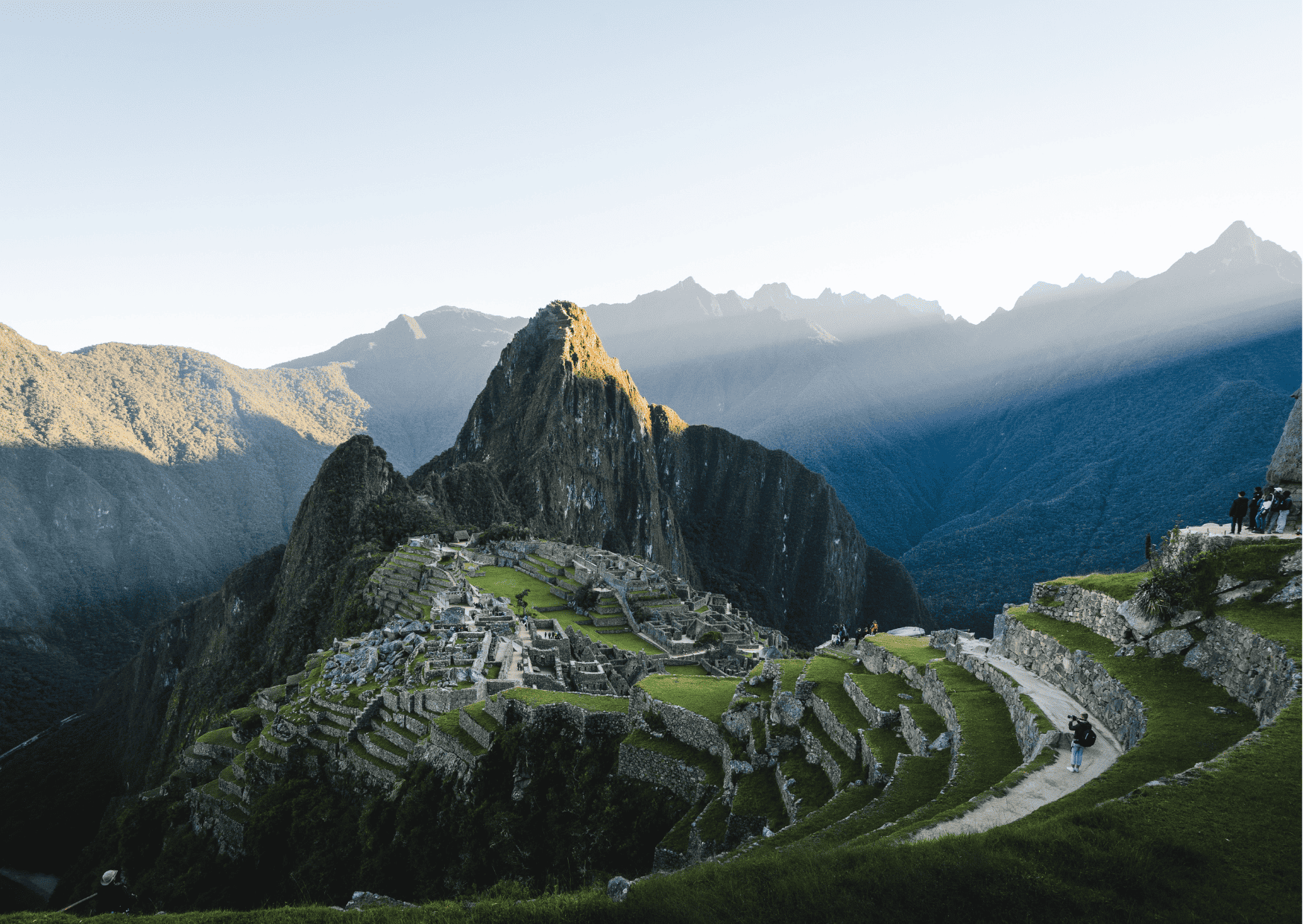
Peru’s rentista residency is one of the cleanest “independent means” frameworks in the region, with a threshold of $1,000/month. The trade-off is that “clean” does not mean “fast.” If you are not organized, you will spend months redoing pieces that expired while you waited. Your week needs a simple cadence: one day for documents, one day for appointments, one day for follow-ups, every week until it is done. - Ecuador
Ecuador’s retirement residency track (temporary residence, jubilado) is pegged to national wage standards rather than a flat dollar figure. The requirement is a pension equal to at least 3 SBU (salarios básicos unificados). In 2026, the SBU was set at $482, which makes the 3x threshold $1,446/month. The trade-off is cost: Ecuador has clearly stated government fees for this process, and you should budget for them upfront rather than pretending it will be “small.” - Colombia
Colombia’s M Pensionado visa uses a wage multiple: a monthly pension not less than 3 minimum wages. In practical terms, that has landed around the mid $1,000s depending on the year and exchange rate. The trade-off is volatility: when a requirement is pegged to minimum wage, it moves. If you are building a plan around “barely qualifying,” you will eventually fall below the line. The sane approach is to treat 3 minimum wages as the floor and keep a buffer. - Dominican Republic
The Dominican Republic has a clear retired/pensioned residency track with a minimum monthly pension of $1,500, and it explicitly excludes salary income in this category. It also specifies $250 per dependent in the same framework. The trade-off is process overhead: medicals, legalized documents, and consular fees add up, and you should treat the first year as a bureaucracy year, not a beach year. - Guatemala
Guatemala offers permanent residence options for rentistas and pensionados, and a commonly cited threshold is $1,250/month in stable monthly income. The trade-off is that “permanent residence” does not mean “no admin.” You are still dealing with recurring compliance, document renewal, and the practical reality that offices expect local-format paperwork. The weekly rhythm that works is boring: one checklist, one folder, and zero improvisation at the counter. - Honduras
Honduras’ pensionado residency threshold is explicitly $1,500/month, and it expects proof that the pension will be received through the national financial system. The trade-off is that Honduras is not a place to wing the documentation. If your proof is sloppy, you do not “almost qualify.” You just do not qualify. Build the file like you are trying to make the reviewer’s job easy.
What it costs before you “live there,” even if the visa looks cheap
People fixate on the monthly income number and ignore the start-up friction. That is how you end up resenting the entire move before you have even signed a lease.
A realistic paperwork budget is not “a few stamps.” It is a mini project with predictable line items. Depending on country and how much you outsource, plan for a total range of €800 to €2,500 for a single applicant, higher with dependents.
Common line items that show up across these systems:
- Apostilles and legalizations for birth certificates, marriage certificates, and police checks
- Sworn translations (some countries want everything in Spanish, in a specific format)
- Medical exam requirements in-country (very common in the Caribbean)
- Government fees that are not “small,” like Ecuador’s stated $50 application and $400 visa fee, plus add-ons for dependents
- Consular visa fees, like the Dominican Republic’s published $200 residency visa fee
The mistake here is psychological: people spend weeks hunting for the cheapest translator and ignore the real cost, which is time. The practical approach is to choose one reliable provider, pay, and move on.
Weekly rhythm that prevents slow-motion failure: set one day a week for “paperwork money.” Pay the fees, book the appointments, request the certificates, and stop making this an emotional decision every time.
The timeline that actually works if you want a clean file
You do not need superhuman discipline. You need a clock.
A workable runway is about 60 to 90 days from “serious” to “submitted,” assuming you are not waiting on unusual documents. If you try to compress it into two frantic weekends, you will discover why police checks, medical certificates, and bank letters all seem to expire exactly when you need them.
A realistic cadence:
- Week 1: order vital records and police checks, request pension or income letters, start a document tracker.
- Week 2: line up apostilles and translations, and identify the specific consulate or in-country office that will receive the file.
- Week 3: gather financial proof in the format the country expects, not the format your bank prefers.
- Week 4: pre-review the file like a hostile stranger is looking for reasons to say no.
This is where “Timing beats willpower” becomes real. If you miss the window, you redo documents, and the redo is what breaks people.
Trade-off: moving quickly usually costs more because you pay for expedited services. Moving slowly usually costs more because you pay twice.
The mistakes that make people “not qualify” even when the income is fine

The most expensive failures are the avoidable ones. Here are the patterns that show up again and again:
- Income proof that is not clearly recurring. A statement balance is not recurring income.
- Documents that are correct but out of date. The office does not care that they were valid last month.
- Using the wrong category. Pensionado and rentista requirements can differ, and some programs explicitly reject salary income (Dominican Republic is clear about this in the pensioned pathway).
- Underestimating dependent math. Ecuador and the Dominican Republic both specify add-on amounts for dependents in their published frameworks.
- Treating the appointment like a negotiation. It is administrative, not personal.
A simple rule: if the officer has to interpret your documents, you have already lost time. Your file should read like a receipt.
Weekly rhythm: every Friday, review the checklist and mark what will expire next. That one habit prevents the classic “everything was ready, and then it wasn’t.”
Your first 7 days: what to do before you pick a city

You can love a country and still hate its bureaucracy. Pick the bureaucracy first.
Here is a clean seven-day sequence that avoids wasted motion:
- Decide whether you are applying as pensionado or a broader independent means category, based on the income you can prove consistently.
- Request an official income letter that states the monthly amount, the source, and that it is ongoing.
- Order new copies of birth and marriage certificates now, not “later,” so you can apostille them without drama.
- Request a police clearance aligned to the country’s expectations (national vs state, and how recent it must be).
- Create one folder with subfolders: identity, civil status, police, income, bank, translations, and receipts.
- Get one quote for translations and do not negotiate yourself into delay.
- Build a realistic cash buffer for the first month of admin costs, including medicals where required.
The mistake is picking a cute neighborhood first and then discovering your best-fit country is somewhere else entirely. People lose six months that way.
Your weekly rhythm for the first month should be simple: two admin sessions per week, one hour each, until you have a submission-ready file.
The choice you are actually making
This is not “Where is the nicest beach?” It is “Where do I qualify cleanly, and will I still like my life once the novelty wears off?”
If your income sits around $1,500/month, you are in a narrow sweet spot. You can qualify in multiple countries, but you cannot afford to be sloppy. The countries that look “easy” from far away are often the ones that punish improvisation.
Pick based on three things:
- The category you qualify for without stretching the truth.
- Whether the income threshold is fixed in dollars or tied to a wage index that will move.
- Whether you want a system that is slower but predictable, or faster but pickier.
Then do the unglamorous work: build the file, submit once, and stop re-living the decision every time you see a new TikTok about a different city.

About the Author: Ruben, co-founder of Gamintraveler.com since 2014, is a seasoned traveler from Spain who has explored over 100 countries since 2009. Known for his extensive travel adventures across South America, Europe, the US, Australia, New Zealand, Asia, and Africa, Ruben combines his passion for adventurous yet sustainable living with his love for cycling, highlighted by his remarkable 5-month bicycle journey from Spain to Norway. He currently resides in Spain, where he continues sharing his travel experiences with his partner, Rachel, and their son, Han.