
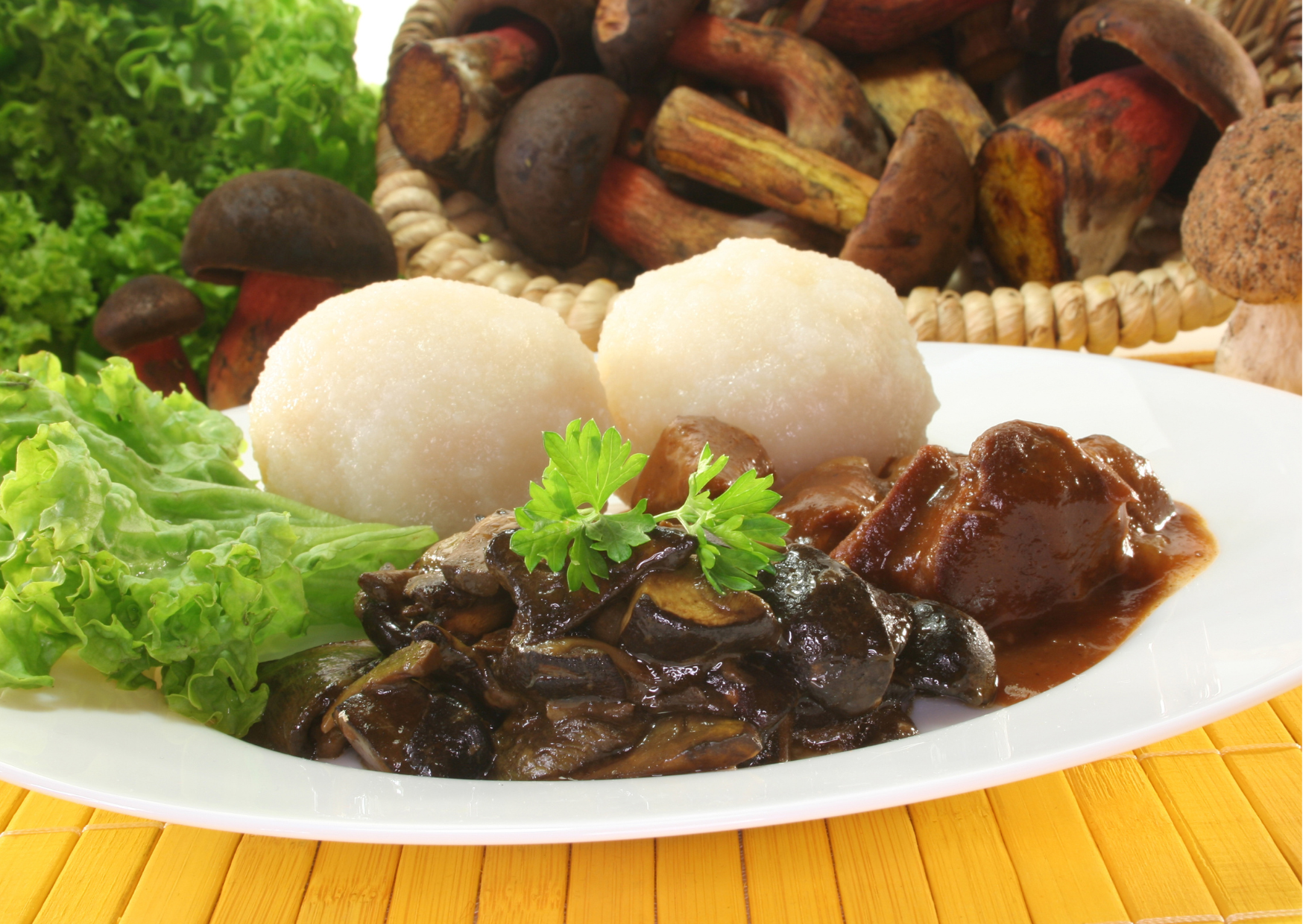
You order goulash in Vienna or Budapest, it arrives glossy and brick red, and there is not a carrot chunk in sight.
If your point of reference is a Midwestern pot of beef, peppers, tomatoes, and elbow macaroni, the European plate feels like a plot twist. Onions and paprika run the show. Meat swims in a thick, brick colored sauce. No bell peppers. No mushroom mix-ins. No vegetable medley hiding under the name.
Here is the turn that fixes the confusion. What many English recipes call “goulash” is a bundle of different Hungarian dishes folded into one word. The meaty, vegetable free classic you will be served as a main in much of Central Europe is pörkölt, a paprika meat stew built on a mountain of onions. The soup with root vegetables that Hungarians themselves call gulyás or gulyásleves is a different thing altogether, hearty and brothy and eaten with spoon and bread. If you want the clean, concentrated flavor that restaurants across the old Habsburg map call goulash, you are cooking pörkölt. If you want the soup with potatoes and carrots, you are cooking gulyás. Britannica and Hungarian culinary writers make the same distinction, even when English language sites blur it.
This piece strips the name down to its working parts. You will see why the vegetable free version tastes more intense, why American recipes drifted toward chunky add-ins and tomato, and how to cook a weekend pörkölt that eats like the plate you ordered on holiday. If you prefer the soup, there is a clear sidebar that shows where vegetables actually belong and how to add them without turning the pot into an Americanized stew.
What Hungarians Actually Mean When They Say Goulash
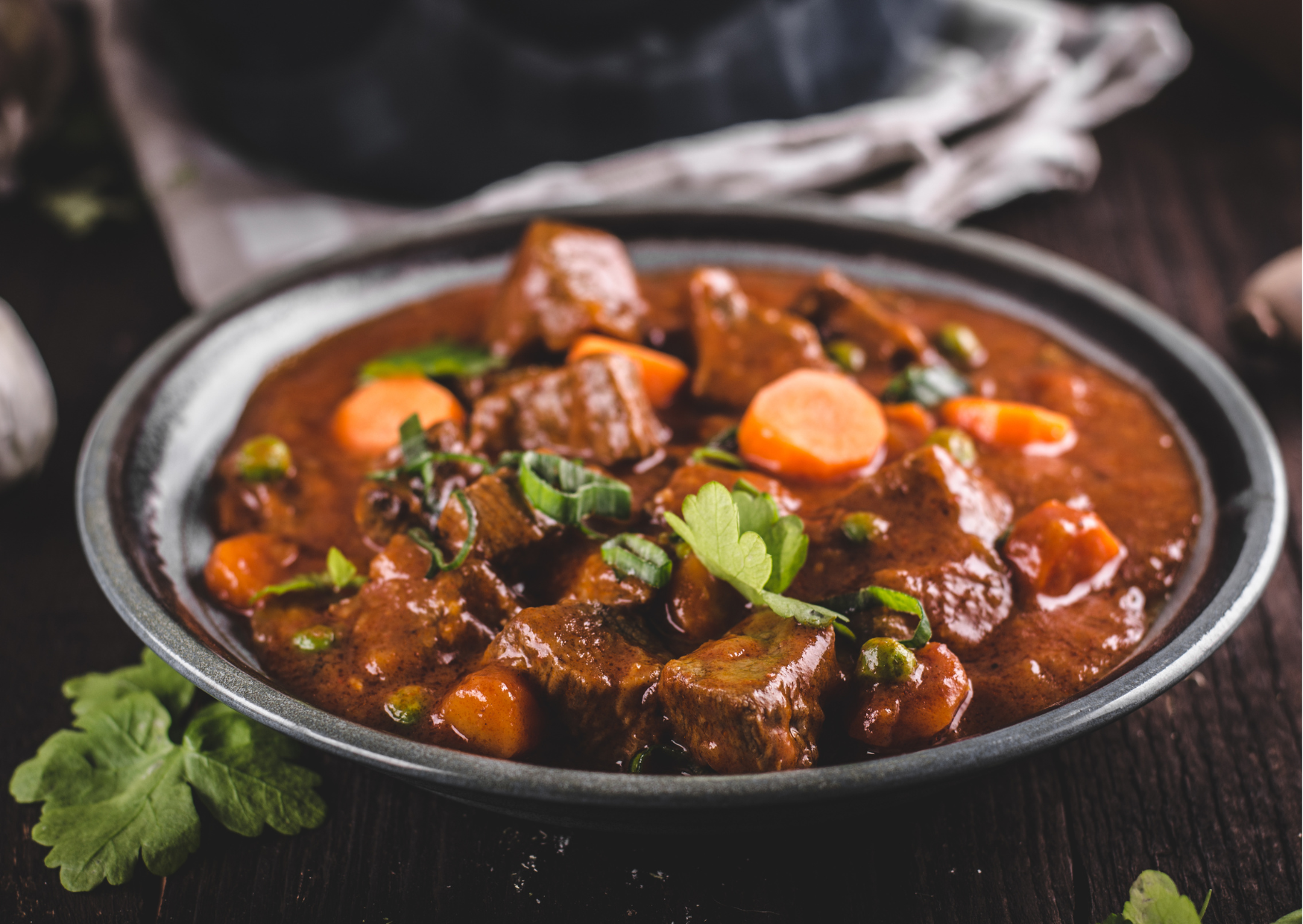
In Hungarian kitchens there are three related dishes that outsiders lump together.
Gulyás is a soup. The word often appears as gulyásleves, literally goulash soup. It is brothy and built to feed work. You will find beef, onions, paprika, caraway, and usually root vegetables like potatoes, carrots, and parsley root, sometimes with small pinched noodles called csipetke. That is the bowl many tourists meet on countryside menus. It is not the thick stew that appears in cafeteria trays and beer halls. Hungarian food historians and popular cookbooks describe this vegetable presence as part of the soup’s identity.
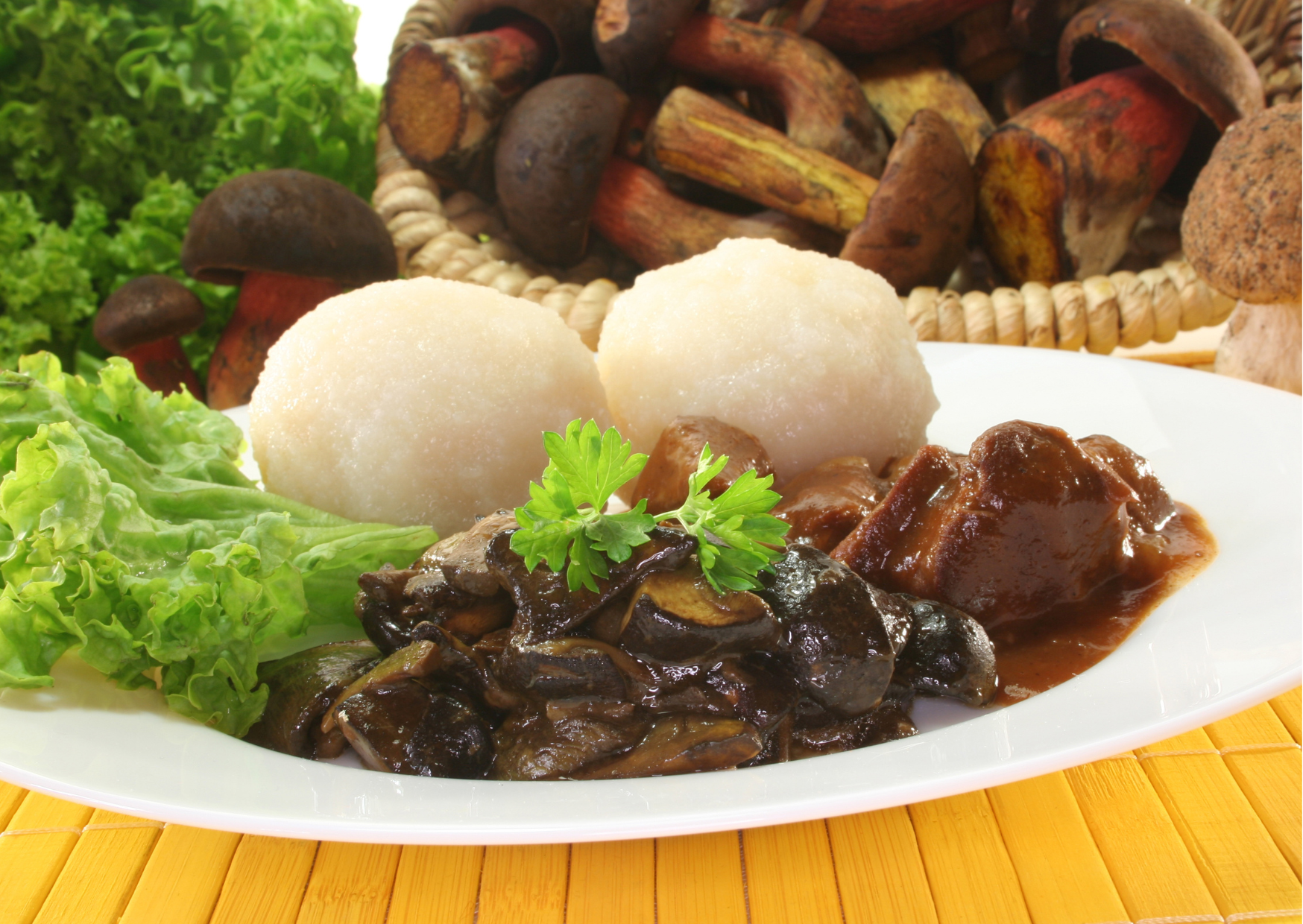
Pörkölt is a stew. It is meat, onions, paprika, fat, and time. That is almost the whole list. Some cooks add a little garlic or caraway. Liquid is minimal. There are no vegetable chunks in the sauce because the onions dissolve and become the sauce. Across Central Europe, the saucy main that many menus call “gulasch” or “goulash” looks and behaves like pörkölt. You get meat and gravy on a plate with dumplings, potatoes, or bread. Hungarian and Austrian sources both stress how spare the ingredient list should be.
Paprikás is the cousin that finishes with sour cream. Chicken paprikás is the most famous. It is still onion and paprika at the core, but the sauce softens with tejföl at the end. National Geographic’s Budapest food guide spells out that cream finish as the chief difference from pörkölt.
If you hold that taxonomy in your head, the vegetable question gets simple. Vegetables belong in the soup. They do not belong in the thick, plated stew that many foreigners order under the goulash name. That stew is pörkölt, a meat and onion reduction that puts paprika at the center.
Why American “Goulash” Grew Vegetables And Tomatoes
Two accidents created the American bowl.
The first was translation drift. English speakers grabbed the most famous Hungarian word, goulash, and applied it to the saucy main that shows up as gulasch from Vienna to Prague. That saucy main is pörkölt, but once the goulash name stuck, recipes at home started bolting on whatever seemed stew like. By the early twentieth century, American community cookbooks were printing “goulash” recipes with beef, tomatoes, and macaroni. Food writers trace that casserole’s popularity to the Midwest and the Depression era, when pasta and canned tomatoes stretched meat. The end result looks nothing like a Hungarian bogrács cauldron. It is still delicious weeknight food. It simply is not the Central European dish you order in a tavern.
The second accident was hotel cooking. As the dish traveled through the Habsburg world and into urban restaurants, cooks added tomato for color and bell peppers for crowd appeal. Even Britannica’s short overview mentions tomatoes and peppers in some kettle goulash variants. Hungarian sources push back by pointing out that paprika supplies the red color on its own, that tomato is a modern add on, and that pörkölt does not rely on vegetable bits for body. The body comes from onions cooked down to sweetness and from collagen melting out of the meat. Saveur’s practical guide reaches the same conclusion when it notes that vegetables are optional and late additions in gulyás and absent in pörkölt.
The pattern is not a mystery. If your aim is a glossy, concentrated sauce that tastes like paprika and beef, vegetables in the pot simply get in the way. They leak water. They force longer reductions. They interrupt that silk texture with chunks the dish does not need. In the soup, they belong. In the stew, they dilute.
The Core Architecture Of The Vegetable-Free Version
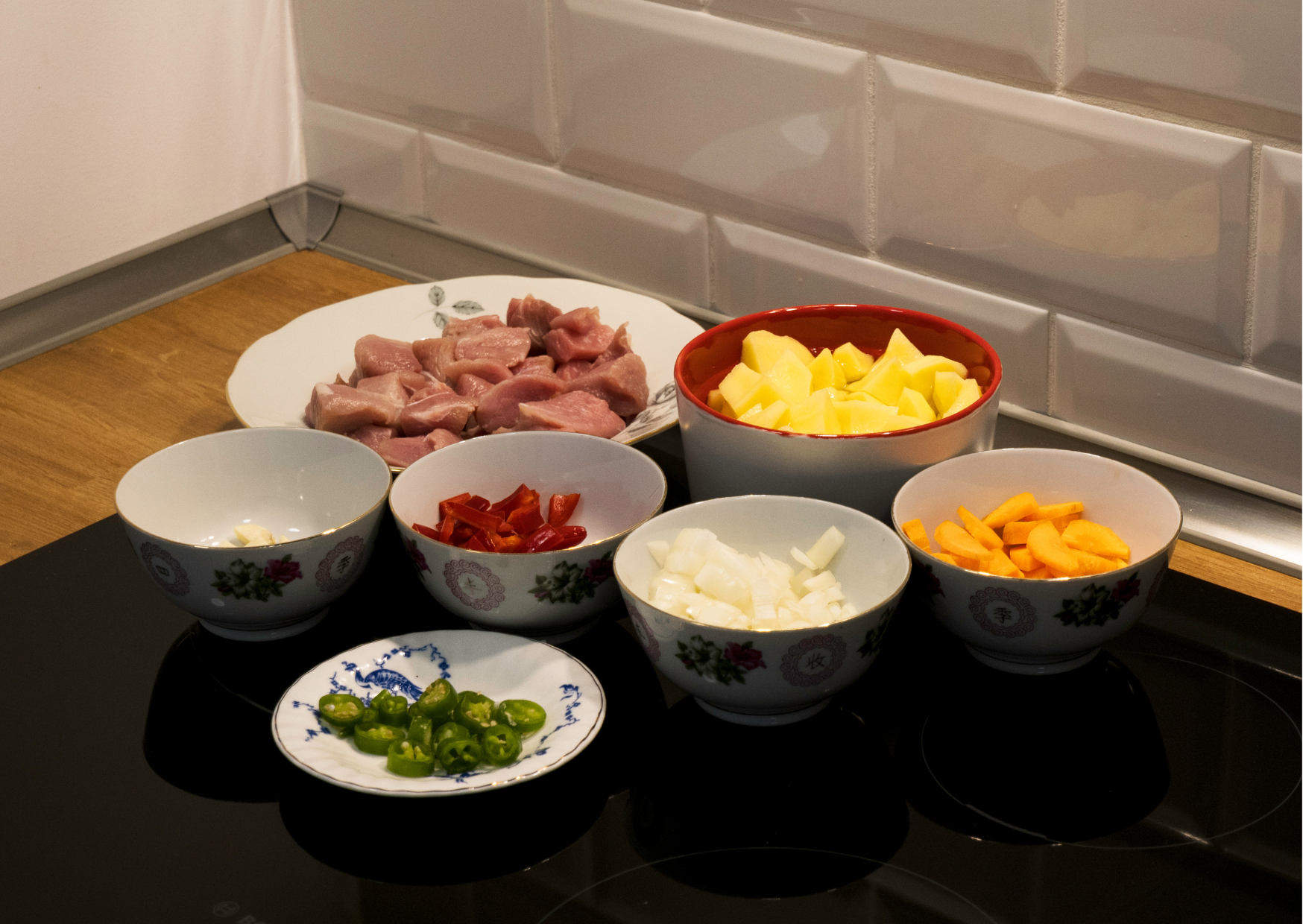
Pörkölt is minimalist and technical in the best way. You make sauce without flour and without vegetables by extracting sweetness from onions and gel from meat.
The onion load. For every kilo of beef you will use at least four large onions, sometimes five. They are sliced or diced, cooked low in lard or neutral fat until translucent, then until sweet. They collapse into the sauce over the hours to come. This is not garnish. It is the foundation of the glaze. Central European and Hungarian recipes repeat this onion ratio like a mantra.
Blooming paprika. You pull the pot off the heat, scatter in generous sweet Hungarian paprika with any hot paprika in smaller measure, stir to coat the onions and rendered fat, then add the meat immediately so the paprika does not scorch. This step makes the color and sets the flavor. Multiple Hungarian sources also use paprika paste like Piros Arany or Erős Pista as a small boost, but the dried spice is the non negotiable.
Short liquid. Water or light stock comes just to the top of the meat or even a bit below. The pot simmers quietly at what cooks call a “short” braise. The goal is not soup. It is to dissolve onion and make a deep sauce that clings. Hungarian writers hammer the point that flour is never used to thicken pörkölt. Time thickens it for you.
Seasoning restraint. Salt, pepper, and a pinch of caraway are normal. Garlic is fine in small amounts. Tomato, if present at all in pörkölt, is a spoon to sharpen, not a sauce base. Many Hungarian cooks skip it entirely.
The finish. The meat should relax but not shred. A spoon should stand in the sauce and come out glossed. There will be no vegetable pieces in that sauce because nothing except onions went in to begin with.
Recipe: Weeknight-Doable Pörkölt That Eats Like Restaurant “Goulash”
This makes four generous portions and tastes even better the next day. Serve it with nokedli dumplings, buttered potatoes, spätzle, tarhonya, or just good bread and a cucumber salad.
Ingredients
- 1 kilogram beef chuck, cut in large bite sized cubes
- 4 to 5 large yellow onions, halved and thinly sliced
- 2 tablespoons lard or neutral oil
- 1 tablespoon sweet Hungarian paprika, plus up to 1 more to taste
- 1 teaspoon hot Hungarian paprika, optional
- 1 teaspoon caraway seeds, lightly crushed
- 2 cloves garlic, minced, optional
- 1 teaspoon salt to start, plus more to taste
- ½ teaspoon black pepper
- 300 to 450 milliliters hot water or light beef stock, added in stages
- 1 teaspoon paprika paste like Piros Arany or Erős Pista, optional
Method
- Sweat the onions. Heat fat in a heavy pot over medium. Add onions and a pinch of salt. Cook slowly until soft and sweet, about 15 to 20 minutes. Do not brown hard. You are building sweetness, not crust.
- Bloom the paprika off the heat. Take the pot off the burner. Stir in sweet paprika, hot paprika if using, and caraway. Add the garlic. Stir for ten seconds. The room should smell like peppers.
- Add the meat immediately. Tip in the beef and stir to coat in the paprika onion mixture. Return the pot to low heat. The moisture from the meat protects the paprika from scorching.
- Season and add just enough liquid. Salt and pepper, then pour in enough hot water or stock to come just shy of the top of the meat. Bring to a quiet simmer.
- Cook low and slow. Cover loosely and simmer gently, stirring occasionally and adding small splashes of hot liquid only as needed to keep a short braise. Expect 90 minutes to 2 hours until the beef is tender. The onions will dissolve into the sauce.
- Adjust and rest. Taste for salt. If the sauce needs more body, simmer uncovered for a few minutes. If you like a hint of paste’s fruitiness, stir in the paprika paste now. Turn off the heat and rest five minutes before serving.
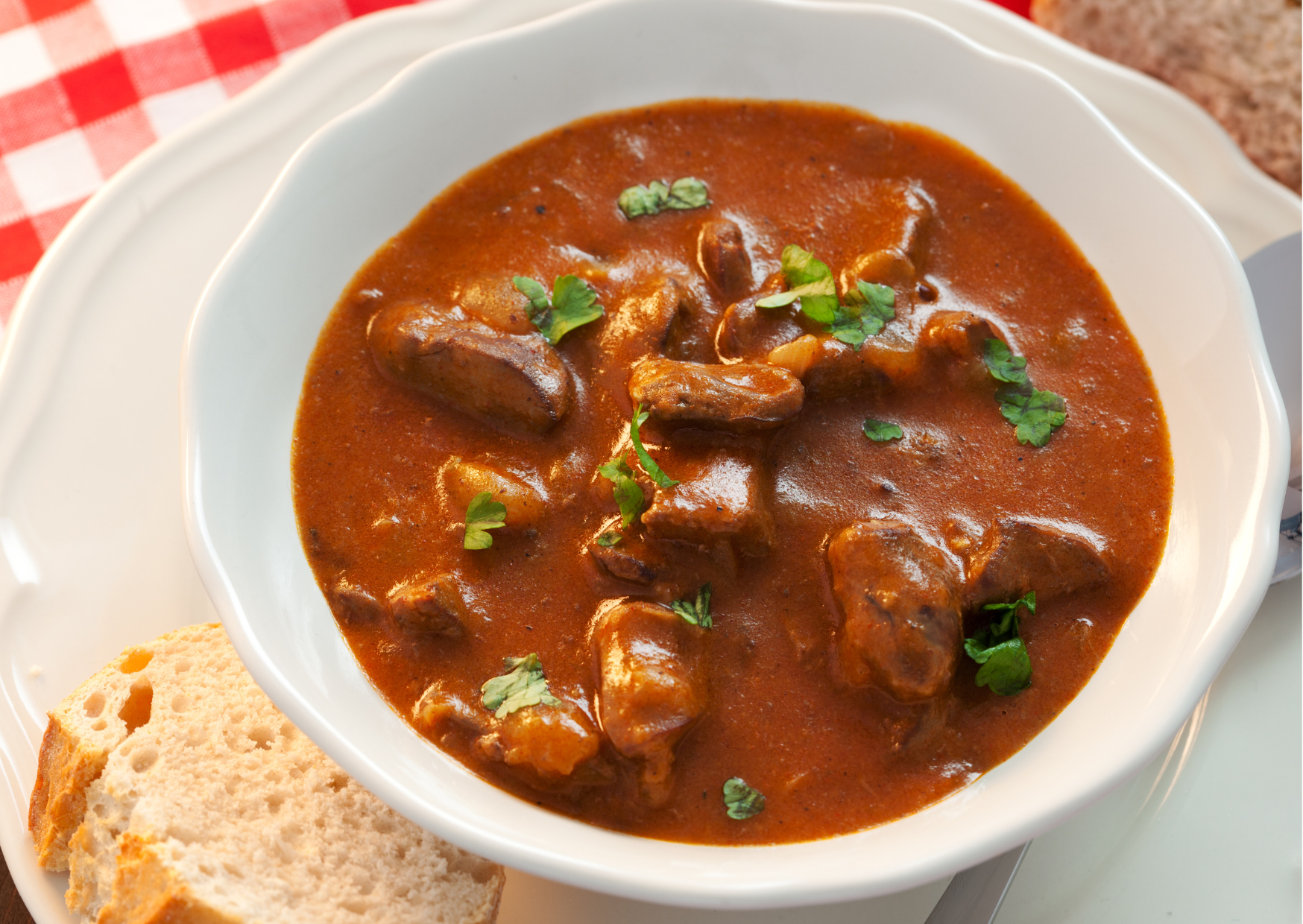
- Serve. Spoon over nokedli or potatoes. Finish with chopped parsley if you like. There should be no vegetable chunks in the pot. The sauce is onions and meat and paprika, nothing else.
This is the plate that Central Europe calls gulasch on menus, the one that made you wonder why your home version tasted like tomato stew. It is the absence of vegetables in the sauce that gives pörkölt its depth.
Where Vegetables Do Belong, And How To Cook That Version
If you are after the soup that Hungarians themselves call gulyás or gulyásleves, vegetables are part of the point. The bowl is broth forward. The meat is in smaller pieces. You will see potatoes, carrots, parsley root, sometimes celery root and fresh csipetke pinched noodles. Paprika provides color, caraway provides the scent, and the spoon does the rest. Hungarian recipe writers and reference entries are plain about these vegetables as standard practice.
A clean gulyás outline looks like this. Sweat onions in lard, bloom paprika off heat, add beef, cover with water, simmer. Midway, add diced carrots, parsnip, and potatoes. Finish with caraway and csipetke if you like. Eat from a bowl with bread. If a recipe tells you to add a bell pepper and a can of tomatoes to a pörkölt and then still calls it goulash, it is mixing lanes.
Fast comparison, so you never mix them up again
- Pörkölt: meat and onions, paprika, short liquid, no vegetable chunks, plated as a main with a side.
- Gulyás: soup with meat and root vegetables, paprika, caraway, lots of broth, eaten with a spoon.
- Paprikás: like pörkölt, then softened with sour cream at the end.
Save this map on your phone and your shopping list will stop fighting you.
Why The Vegetable-Free Version Tastes So Much More Intense
Three mechanics make the difference.
Onion reduction. Four or five onions melt into a thick base that coats the meat. That sweetness balances paprika’s dried fruit profile without sugar, and it gives the sauce body without flour. Austrian and Hungarian guides call this the essence of both pörkölt and the pörkölt like Viennese saftgulasch.
Paprika in fat. Blooming paprika in fat off heat pulls oil soluble aromatics that water alone cannot extract. You taste ripe pepper instead of dry dust. Food writers who focus on Hungarian cooking often mention paprika paste as a helper, but the core technique is the bloom.
Short liquid, long time. A shallow simmer keeps volatile aromas in the pot and collapses collagen into gel. Because there are no vegetables leaking water, the sauce concentrates faster and more cleanly. Hungarian notes on pörkölt’s method emphasize “long simmer, very little liquid” and no flour.
Put those three together and you get the texture you remember. It is why a plate of pörkölt with nokedli sticks in your head long after travel.
Buying The Right Paprika, And Other Small Decisions
If you can, buy paprika from Szeged or Kalocsa producers, sweet for the base and a small tin of hot for lift. Keep it fresh. Old paprika tastes flat and cardboardy. Store tightly and replace often.
Paprika pastes are pantry friends. Piros Arany and Erős Pista bring ripe pepper and salt in a tube. They are optional in pörkölt and common in everyday Hungarian kitchens. A small squeeze late in cooking adds fruit and color, not heat. Food and Wine’s primer is a good simple overview of how Hungarians actually use these pastes.
Meat choice matters less than you think. Beef chuck is the easy answer. Pork shoulder works beautifully. Game and lamb are traditional. Use what braises well and keep the cubes on the large side so they do not dry while the onions melt.
Fat is not a sin here. Lard is correct. Neutral oil works. Butter is not ideal because the milk solids scorch at the bloom step unless you are careful.
If you want the Viennese version you ate near the Ring, use beef, keep the pot very short on liquid, and skip vegetable chunks. Austria’s Wiener saftgulasch is a pörkölt style stew in everything but name.
What Can Go Wrong (and How To Fix It)
Your sauce tastes thin.
You likely added too much liquid or loaded the pot with vegetables by habit. Fix by uncovering and simmering until the spoon comes out glossed. Next time start with less liquid and remember that onions are your thickener, not flour. Hungarian and Austrian references on pörkölt and saftgulasch are explicit about the short liquid rule.
Your paprika tastes bitter.
It scorched. Always pull the pot off heat before adding paprika. Stir meat in right away so moisture protects the spice. If the tin was old, replace it. Hungarian cooking primers flag bloom control and freshness as non negotiable.
You miss the vegetables.
Make gulyás next time. It is the soup where vegetables belong. Cubes of potato, rounds of carrot and parsnip, and sometimes csipetke are common. Save the chunky pieces for the bowl, not the plate.
The meat is tough after 90 minutes.
Keep going. Pörkölt is done when the collagen gives up. Chuck and shoulder cuts can cross the line suddenly between two and three hours. Keep the simmer gentle. Add small splashes of hot liquid only when the pot looks dry.
The sauce dulled after you added tomato.
Tomato is not part of classic pörkölt. If you use a teaspoon for acid near the end, fine. If you dump in a can, you drifted into a different dish. Even sources that allow tomato call it modern and optional.
You cooked a great soup and called it goulash stew.
Welcome to the club. The English language did this to all of us. Call the soup gulyás and the stew pörkölt and you will stop arguing with Central European waiters.
If You Only Cook One Pot, Make It This One
If your goal is the plate you ate on a cold night with dumplings and a pint, cook the vegetable free version. It is not austere. It is focused. Onions give body and sweetness. Paprika brings fruit and color. Meat gives structure. That is the entire point.
Once you have pörkölt in your fingers, making the soup is easy because you already know the base. And once you know the taxonomy, American recipes stop confusing you. You can still love the tomato and macaroni casserole that your aunt calls goulash. You will simply stop pretending it is the same dish.
What matters is that you now have a repeatable path to the flavor that put this family of dishes on a hundred menus. Onions, paprika, meat, quiet heat, patience. No vegetable chunks in the pot. All the payoff in the bowl.

About the Author: Ruben, co-founder of Gamintraveler.com since 2014, is a seasoned traveler from Spain who has explored over 100 countries since 2009. Known for his extensive travel adventures across South America, Europe, the US, Australia, New Zealand, Asia, and Africa, Ruben combines his passion for adventurous yet sustainable living with his love for cycling, highlighted by his remarkable 5-month bicycle journey from Spain to Norway. He currently resides in Spain, where he continues sharing his travel experiences with his partner, Rachel, and their son, Han.