

A normal week in Spain has a specific sound: the washing machine, a WhatsApp ping from the school group, the elevator door, the neighbor’s keys, and then the small, boring conversations that keep life from turning into a financial horror story.
That last part is what surprises Americans.
A lot of American families treat money talk like a quarterly emergency meeting. Or a fight. Or a thing you do when the credit card is already smoking.
Here, money shows up in quick, low-drama check-ins. Not because Europeans are enlightened. Because the system rewards routine. Bills are often automated. Costs are tracked in smaller weekly rhythms. And families have a long memory for “we already agreed on this.”
Europe is not one place, and every country has its own quirks. But the weekly pattern is consistent across a lot of families I’ve seen on the ground: the money talk is frequent, short, and tied to the calendar.
Here are seven conversations that show up weekly, and the exact way they keep households stable.
1) “Are we good for this week?” is asked before anyone swipes anything

This conversation is quick. It usually happens in a kitchen, in a hallway, or in the two minutes before someone runs out the door.
It is not a spreadsheet session. It’s a steering check.
The practical version looks like:
- “We have €320 left for groceries and household stuff until Sunday.”
- “We already paid the internet and the phones.”
- “We have one dinner out, not three.”
Americans often avoid this because it feels unromantic. Or controlling. Or like you’re living paycheck to paycheck, even when you are not.
European families treat it like checking the weather. You are not confessing weakness. You are staying oriented.
Two details make it work:
- The check-in is short, often 10 minutes or less.
- It happens weekly, so no one shows up shocked.
Timing beats willpower, and a weekly steering check prevents the end-of-month panic where every purchase turns into a moral debate.
2) “What bills hit this week?” is normal because so many payments are automated
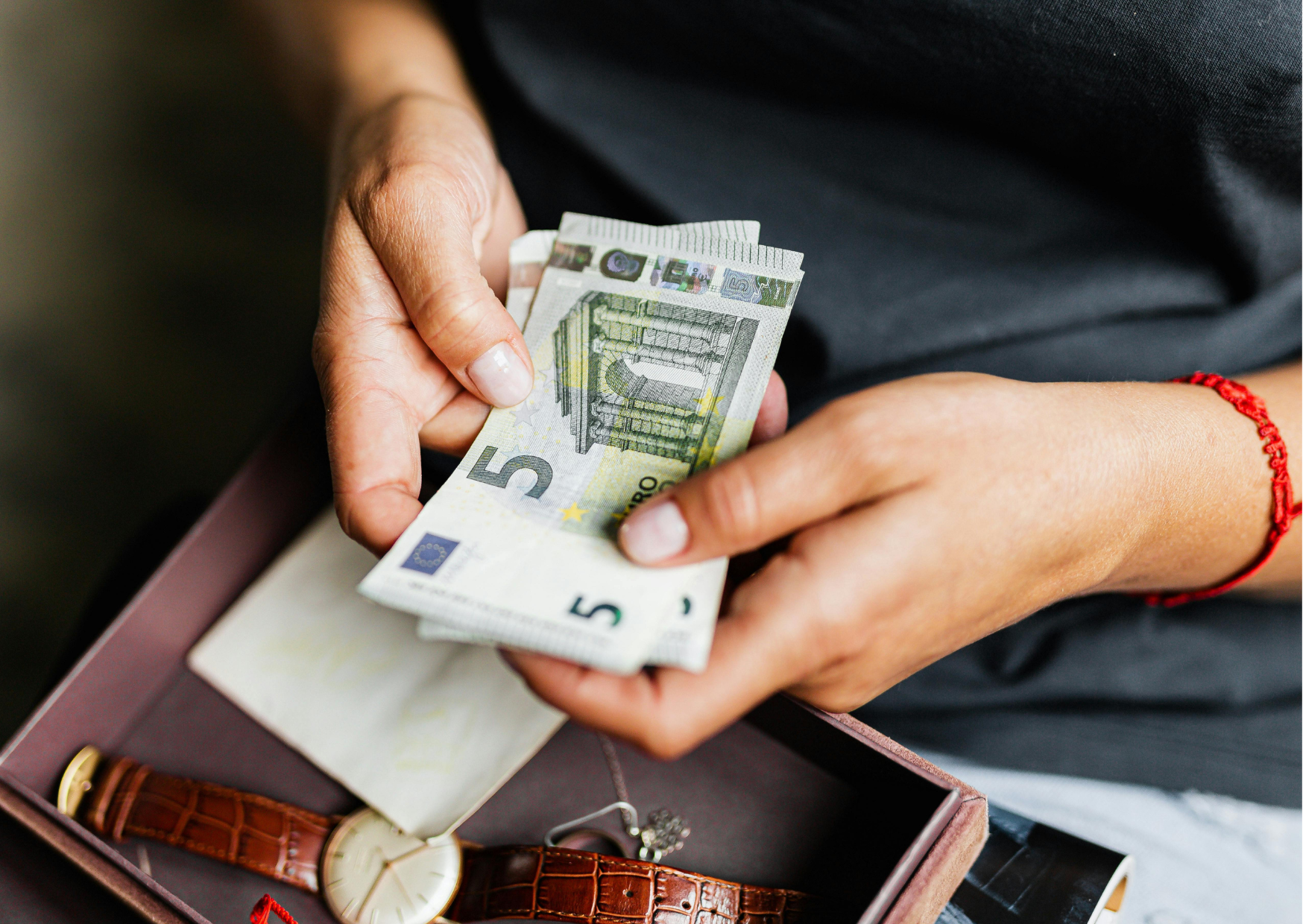
In Spain, you’ll hear people say they “domiciled” a bill, meaning it gets pulled automatically from the bank account as a direct debit. The Bank of Spain describes these as adeudos domiciliados, payments made by a charge to your account, and it lays out basic consumer rights like revoking an authorization and time windows for returning certain debits. It’s boring, but it matters.
Once bills run through direct debit, the weekly conversation shifts from “did you pay the bill” to “did the bill jump.”
That’s the key difference.
Instead of remembering twenty due dates, families watch for spikes:
- electricity above €120 this month, why
- building fee above €90, what changed
- insurance renewal pulled early, did we miss a notice
A very Spanish household habit is having a mental list of “non-negotiables” that must clear the account every month, then everything else is flexible.
A realistic fixed-cost list for a couple renting in a Spanish city might include:
- Rent: €1,200 to €1,800
- Electricity: €60 to €140
- Water and gas: €20 to €70
- Internet: €30 to €50
- Two mobile lines: €20 to €50
- Transport passes: €40 to €120
- Home insurance: €15 to €40
Americans often avoid this conversation because it forces the truth: fixed costs are the life you chose. If your fixed costs are too high, there is no clever budgeting trick that will save you.
European families talk about it weekly because the system makes it easy to see, and because they would rather adjust early than pretend until the account dips.
3) “What are we eating this week?” is a money conversation, not a food conversation

This one is where Americans roll their eyes, until they see the grocery numbers.
In a lot of European households, especially in Spain, food spending is controlled through planning, not through willpower.
The weekly question is not “how do we eat healthier.” It’s “what are we eating, and where are we buying it.”
That leads to practical decisions:
- two main cooked meals that create leftovers
- one cheap convenience meal that is still food, not a snack pile
- a deliberate plan for lunches, so lunch does not become a daily purchase
A typical week plan that keeps costs sane:
- Big shop: €70 to €110
- Two top-up shops: €15 to €30 each
- One market splurge: €10 to €25 for better produce or fish
- One meal out, not “whenever”
This is also where the European approach to eating out changes the budget. Lunch is often the value meal. Dinner is where people get financially sloppy.
In Spain, you see families and workers using lunch, sometimes a menu del día, as the structured meal that keeps the rest of the day calmer. Americans often do the opposite, they skip lunch, then overpay at night when they are tired.
Weekly food planning is not cute. It is how households avoid the American pattern of constant small spending that magically becomes $1,500 a month.
If you want one move that changes everything, it is this: decide your lunches on Sunday. Not the whole week, just lunches. The weekly savings can be uncomfortable in how obvious it is.
4) “What are the kids’ costs this week?” is discussed openly, even when the numbers are annoying
American families often treat kid costs as a background tragedy. Europe is cheaper in some categories, but kids still cost money, and European families discuss it directly.
In Spain, school and kid spending often shows up in predictable weekly beats:
- school lunch program, comedor, if applicable
- extracurriculars, extraescolares
- transport, sports fees, small class trips
- birthday gifts, which are constant once your kid has friends
The weekly conversation tends to be very practical:
- “Do we owe €35 for the field trip?”
- “Are we keeping the two activities, or just one this term?”
- “Are we doing a €15 gift or a €30 gift this weekend?”
And then there’s the silent category Americans under-plan: the social obligations around kids. If your child is invited to three birthdays in a month, your budget feels it.
European families do not always love these costs, but they talk about them early. They do not wait until the card statement arrives and then pretend it was unavoidable.
This also extends to childcare and family help. In many European families, grandparents are part of the weekly logistics. That changes money flows:
- less paid childcare, more family time
- more “help each other” spending, less outsourcing
It’s not universal, and it depends on proximity, health, and relationships. But where it exists, families talk about it weekly because it is a real resource with real limits.
5) “Are we paying for a car, or are we paying for a life?” gets revisited constantly
In many parts of the U.S., a car is not a choice. It is a body part.
In many European cities, it is a recurring decision: keep the car, downgrade the car, or design your life so you do not need one.
European families talk about it weekly because transport costs show up everywhere:
- fuel, even if it is only €40 this week
- parking, tickets, tolls, repairs
- the mental load of driving and parking
- whether the second car is actually doing anything useful
A common “city family” pattern in Spain is one car for weekend trips, and daily life handled by transit and walking. The weekly check-in is often:
- “Did we use the car more than twice this week?”
- “Would a €40 abono mensual plus taxis cover what we did?”
- “Are we keeping the car because we need it, or because it feels safe?”
Americans avoid this conversation because car ownership is emotionally charged. It is identity, freedom, and adulthood all mixed together.
European families treat it more like a subscription. If it is not earning its keep, it gets questioned.
This is also one reason some American budgets feel lighter in Europe. When you can build life around walkability and transit, your spending stops hemorrhaging in invisible ways.
6) “What health costs could hit us next?” is handled with buffers, not denial
Here is the reality check: Europe can reduce the financial brutality of healthcare, but it does not eliminate health spending.
Families still face:
- dental bills
- glasses
- prescriptions
- private coverage add-ons
- travel for specialist appointments
- the small pharmacy purchases that accumulate
European households talk about this weekly because they plan for it like adults.
The conversation is usually some version of:
- “We keep a €300 dental buffer at all times.”
- “Refill month, that’s €25 to €60.”
- “If we need a private specialist consult, we can cover €120 without panic.”
In Spain specifically, people also use the pharmacist more. The pharmacy is not only a retail counter, it is a weekly support system for small problems. That changes spending too, because you can solve minor issues early instead of letting them grow.
Americans avoid this conversation because it triggers fear. In the U.S., health spending can be catastrophic and unpredictable, so people mentally shove it in a drawer and hope.
European families are more likely to treat health costs as a known category with a buffer. That single habit reduces stress more than most “wellness” routines.
7) “What are we saving for, and what will break?” is discussed as a normal monthly math problem

This is the conversation Americans avoid until something breaks, and then they act like they were ambushed by fate.
European families often keep small “sinking funds,” not because they love budgeting, but because life is full of predictable surprises.
Common categories:
- appliances, because something will die
- a yearly trip to see family
- school costs that do not fit neatly into monthly categories
- home repairs, even in rentals, because you still buy stuff
- paperwork and fees that pop up randomly
A practical approach I see often is the 12-month average method:
- add up your annual irregulars
- divide by 12
- save that amount monthly
A realistic “life breaks” sinking fund for a household might be €150 to €300/month, depending on whether you own or rent, have kids, and travel frequently.
This is also where the difference between European and American money stress becomes obvious.
Americans often live in a system where many essential costs are high and unpredictable, so saving can feel hopeless.
European families still deal with inflation, rent pressure, and all the usual headaches. But they can often make progress by controlling the smaller categories, because the big categories are less likely to explode overnight.
In Spain, this is reflected in how households think about budgets. In 2024, Spain’s household budget survey reported that the category “housing, water, electricity, gas and other fuels” represented about 32.4% of average household spending. When one category is that large, you either talk about it regularly or you lie to yourself. Many families choose the talking.
Your next 7 days: make money talk boring again
If your household avoids money talk because it always turns into tension, do not start with a giant budget overhaul. Start with boring, repeatable conversations that do not require a personality transplant.
Here is a seven-day reset that works even if you hate talking about money.
Day 1: Pick a weekly time and keep it short
Choose one slot, same day each week, and set a hard limit of 12 minutes. If you need longer, you are doing too much.
Day 2: Name your weekly variable number
Set one number for groceries, household basics, and small social spending, like €250 for the week. This becomes your steering wheel.
Day 3: List the bills that can spike
Electricity, insurance renewals, building fees, phone plans. You are not tracking everything, you are watching the jump points.
Day 4: Decide lunches for the week
Write down five lunches, even if two are leftovers. This single move cuts a shocking amount of spending.
Day 5: Choose one transport experiment
One week without using the car on weekdays, or one week tracking every taxi. Make it measurable.
Day 6: Create one health buffer
Pick one amount, like €300, and treat it as untouchable. Dental, meds, private consults, whatever.
Day 7: Start one sinking fund
Set up a separate account or envelope and put €25 in it. Not because it is enough, but because it starts the habit.
Then repeat next week. The goal is not perfection. The goal is reducing the emotional drama of money so you can make sane decisions.
Because that’s the real European advantage in family finances: the conversations happen while the numbers are still small.

About the Author: Ruben, co-founder of Gamintraveler.com since 2014, is a seasoned traveler from Spain who has explored over 100 countries since 2009. Known for his extensive travel adventures across South America, Europe, the US, Australia, New Zealand, Asia, and Africa, Ruben combines his passion for adventurous yet sustainable living with his love for cycling, highlighted by his remarkable 5-month bicycle journey from Spain to Norway. He currently resides in Spain, where he continues sharing his travel experiences with his partner, Rachel, and their son, Han.