

In 2024, the “move abroad” lists were basically the same five countries wearing different hats. Sunny. Affordable-ish. “Great healthcare.” Cue the stock photos of a laptop by a pool.
Now the vibe is different. People are not chasing a fantasy country. They’re chasing a set of conditions.
They want to stay longer than 90 days without playing airport roulette. They want a place where the numbers make sense on a normal income, not just on paper. They want to avoid the two classic American mistakes: overpaying for comfort and under-planning the paperwork.
And they’re quietly choosing places that weren’t on the glossy lists because those lists were written for daydreaming, not for living.
You’ll notice a pattern in the countries below: they have some combination of long stays, remote-work routes, and lower “daily friction” costs. Not zero friction. Just less of the expensive kind.
The 2026 list is not about “best.” It’s about being able to stay.
If you’re 45 to 65 and thinking about Europe, you’re not looking for a party. You’re looking for a life that doesn’t feel like it’s priced for a hedge fund.
The 2026 shift is simple: more Americans are trying to buy time, not status. Time to test a place slowly. Time to rent before buying. Time to see how winter feels. Time to find out if the local clinic treats you like a person and not like a billing code.
That’s why a bunch of countries that felt “random” in 2024 suddenly look rational.
What made them pop:
- Longer legal stays without constant visa resets.
- Remote-work pathways that look boring on paper and glorious in real life.
- Costs that don’t punish you for existing: basic transport, basic admin, basic meals.
- The ability to live well on a planning budget like €2,500 to €3,500/month, instead of a nervous $7,000 “just in case.”
Also, Americans are learning a slightly uncomfortable truth: the most Instagrammable countries are often the most exhausted by newcomers. The “hidden” places are not hidden because they’re worse. They’re hidden because they’re not good marketing products.
You don’t need a perfect country. You need a country where the rules match your life.
The bargain belt: Albania, Montenegro, Romania, Georgia

These four show up for the same reason: you can build a real-life test run without lighting money on fire.
Albania
The headline is boring and powerful: in U.S. travel guidance updated in Dec 2024, U.S. citizens may be able to stay up to one year without a visa. That single detail changes everything. You can rent a normal apartment, set up a rhythm, and see if you actually like the place once the novelty wears off.
What people miss: Albania is not “cheap Italy.” In summer, coastal towns can price like a tourist trap. In winter, some areas feel like the volume knob got turned down to 2.
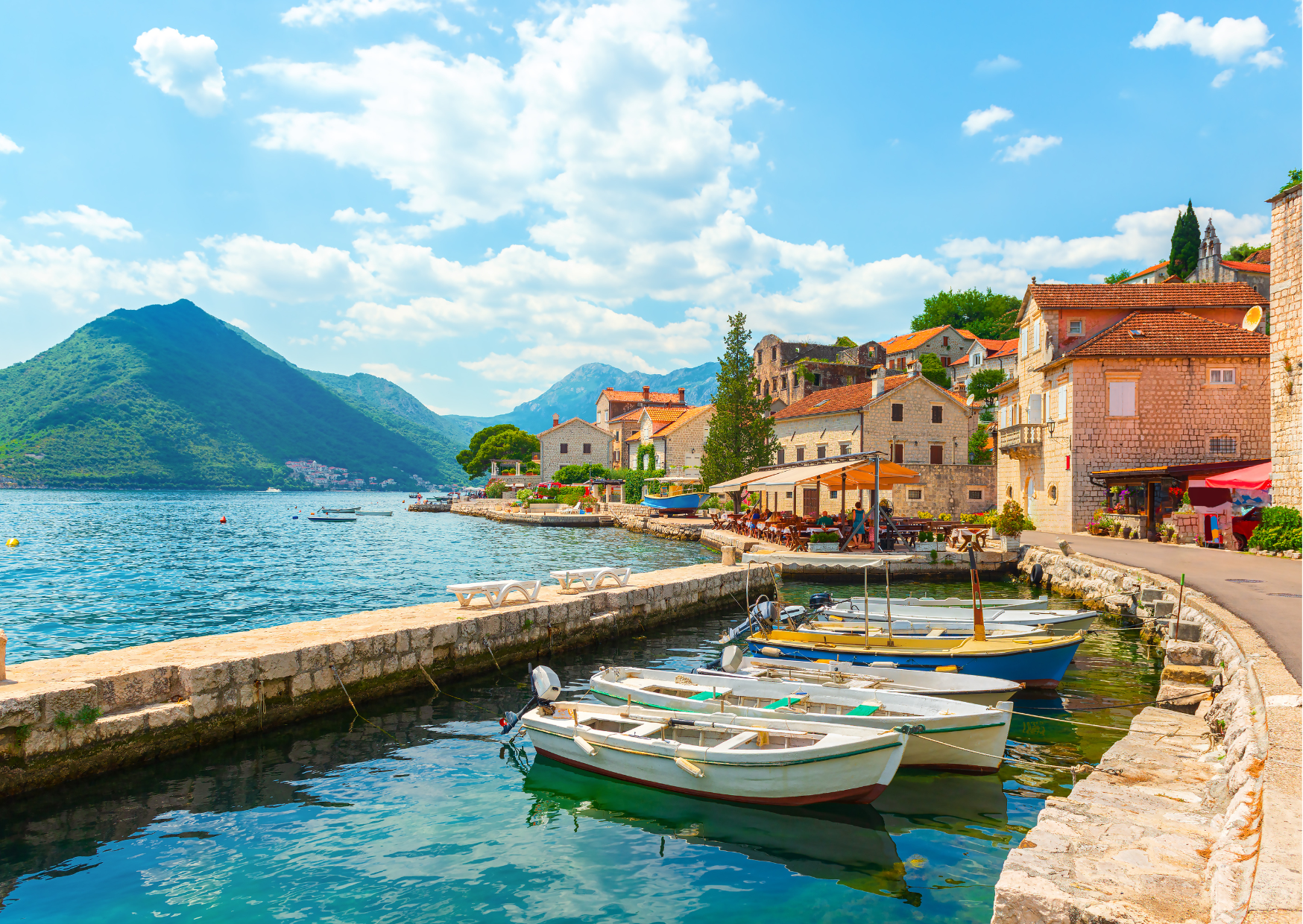
Montenegro
Think Adriatic views without the constant feeling you’re paying a “famous coastline tax.” It’s also been building out digital-nomad positioning, which signals something important: the country wants longer-stay foreigners who spend steadily, not just weekenders. If you’re the kind of person who needs mountains and sea in the same frame, this one keeps coming up.
Trade-off: Montenegro is small. That’s a benefit and a limitation. If you need endless big-city variety, you might feel boxed in.

Romania
It’s an EU country that still has “not yet priced like it knows it” energy in many cities. That’s why it’s showing up more: you get European infrastructure without paying Western Europe’s premium for it.
Reality check: the weather is real. If you are allergic to winter, don’t romanticize it from a sunny American state.
Georgia
The pull here is the time runway. In U.S. government travel guidance updated in Dec 2025, U.S. citizens can generally enter visa-free and stay 365 days. That is not a typo. That is a full-year test drive without the constant background panic.
Georgia is not “Europe-lite,” though. It’s its own thing. If you want your comfort to be automatic, you’ll struggle. If you can handle a little friction in exchange for time and affordability, it makes sense.
The Asia tilt: Japan, South Korea, Malaysia, Taiwan

This is the part that surprises people: Asia is showing up again for older Americans, not just for 28-year-old remote workers.
The difference is paperwork. These are not “wing it” destinations if you want to stay.
Japan
Japan introduced a digital nomad route tied to “Designated Activities,” dated Mar 2024 in official guidance. One of the most important details is that applicants must meet a high income bar, and there’s also a required insurance coverage level of JPY 10 million for medical treatment coverage. This is not a budget path. It’s a high-control, high-comfort path.
Why it’s on the list anyway: for the people who qualify, Japan is predictable. That’s the whole appeal. Predictable transit. Predictable public behavior. Predictable systems.
South Korea
Korea’s “workation” style visa route has been actively described by Korean consular offices, with the Seattle consulate page updated Jan 2026. The big point is simple: it’s designed for remote workers who are not taking local jobs, and it’s structured like a real status, not a casual tourist extension.
Korea is not a soft landing culturally, but it’s a very functional landing if you like order.
Malaysia
Malaysia has been aggressively courting longer-stay remote workers. In Jun 2024, Malaysia expanded eligibility for the DE Rantau Nomad Pass beyond only “digital” work, and highlighted an income threshold of US$60,000/year for the broader category. That matters because it widens who can qualify, especially mid-career professionals who are remote but not “tech.”
Malaysia is also a practical choice if you want English as a real day-to-day tool, not a “maybe” tool.
Taiwan
Taiwan keeps rising in the “serious people” conversations: stable daily life, strong infrastructure, and a high-trust feeling in many neighborhoods. A widely circulated guide updated Dec 2025 points to an evolving digital-nomad setup and references reporting about expanded validity.
The trade-off is emotional: Taiwan is not a place you choose because you want lazy bureaucracy. You choose it because you want things to work, and you’re willing to do the paperwork cleanly.
The calm picks: Uruguay and Mauritius
These are the choices for people who are tired. Not “I need a nap” tired. Life tired.

Uruguay
Uruguay’s government has an official “provisional identity sheet” process explicitly labeled for digital nomads, updated Jun 2025. That alone tells you what kind of destination this is: it wants remote earners to exist legally and quietly.
Uruguay’s appeal is not flash. It’s stability and normalcy. If you’re retiring or semi-retiring, that matters more than beaches.
Trade-off: it can feel slow. If you need everything to happen fast, you will hate it. If you need your nervous system to relax, you might love it.
Mauritius
Mauritius has an official Premium Visa designed for long stays (tourists, retirees, professionals working remotely). The government describes it as one year, renewable. This is the “island reset” option that isn’t trying to be a party destination.
The catch is obvious: island logistics cost money. Imported goods cost money. Flights cost money. You do not pick Mauritius to save $17 on groceries. You pick it to buy a calmer daily life, and you accept the trade-offs like an adult.
The money math that makes these countries feel “new”
Let’s be blunt: most Americans don’t go broke on rent alone. They go broke on the pile of secondary costs glued to American life.
So here’s the planning math that actually matters, using a conservative “test run” budget for a couple:
- Housing: €900 to €1,600 (country and city dependent)
- Utilities + internet: €120 to €250
- Groceries: €350 to €650
- Eating out: €200 to €500
- Local transport: €50 to €150
- Health insurance (private): €150 to €450 (age and coverage matter)
- Admin buffer: €100 to €250
- “Life happens” buffer: €250 to €500
That lands many couples in the €2,500 to €4,000/month planning range for a real trial year, before flights and one-offs. In U.S. terms, that can feel like relief, not because Europe is magical, but because your money stops leaking out in weird places.
The trick is not to chase the cheapest rent. The trick is to chase the best total system.
If your rent is cheap but the visa situation is chaos and the winter heating is brutal and you need a car for everything, you didn’t save money. You just relocated your stress.
The calendar that makes this work (and keeps you out of trouble)

Most people fail because they treat relocation like travel. The calendar is different.
A workable rhythm looks like this:
Month 1: arrive like a scout
Short lease. Walkable neighborhood. You’re collecting evidence, not committing. Your job is to learn how the city behaves on a Tuesday.
Months 2 to 3: paperwork and routines
Banking, phone plan, medical setup, and a basic admin folder. This is also when you test your “daily cost reality” instead of living like you’re still on vacation.
Months 4 to 6: the tax line starts to matter
Many countries use a 183-day concept for tax residency in some form. Don’t be casual about it. If you might cross that line, act like a grown-up and get competent advice.
Months 7 to 12: decide if you’re staying or leaving
This is where Timing beats willpower. You don’t wait until day 85 of your legal stay to “look into it.” You set decision deadlines early, because your future self will be tired and busy.
If you do nothing else, do this: put three dates on your calendar the moment you arrive, your “paperwork start,” your “stay or go” decision, and your “exit plan.” That alone prevents 80% of disasters.
Mistakes Americans keep repeating in these “new” countries
You can spot the avoidable failures a mile away.
- Renting the dream apartment before learning the boring details
Heating, mold, noise, and neighborhood winter vibe. The first apartment is a test, not your forever home. - Treating a long stay like a long vacation
Vacation spending will trick you into thinking you can afford a country you can’t. - Believing “digital nomad visa” means “tax-free forever”
Sometimes it does not. Sometimes it’s unclear. Sometimes it changes. Get clarity before you build your whole plan on it. - Buying a car out of anxiety
In many places, walkability and transit are the real savings. The car is often the expensive emotional support animal. - Underestimating language friction
You don’t need fluency, but you do need competence: clinics, landlords, government counters, banking. If you refuse that reality, you’ll pay for it in stress and money. - Over-focusing on the country and ignoring the neighborhood
A country is not a lifestyle. A neighborhood is. You live on three streets, not in a national anthem.
The next 7 days: pick two countries and start acting like a resident

If you’re serious, don’t “research” for three months. Do seven days of action and force clarity.
- Write your non-negotiables in one line: monthly ceiling, climate, healthcare access, walkability.
If you can’t state it, you can’t choose it. - Pick two countries from this list, not ten.
Too many options is how you never leave your couch. - Choose one city and one backup city in each country.
A capital and a second-tier city. Prices and vibe can swing hard. - Build a one-page budget with only six categories.
Rent, utilities, groceries, transport, health insurance, buffer. Keep it ugly and honest. - Book a 21 to 30 day test stay in your top city, ideally off-peak.
You are trying to see normal life, not summer life. - Create a document checklist folder today.
Passport, birth certificate copies, proof of income, insurance docs, bank statements. The boring stack is what makes the fun life possible. - Decide your “legal stay strategy” in plain English.
Tourist stay only? Long-stay visa? Remote-work route? If you cannot explain it in one minute, you’re not ready. - Put three admin days into your future calendar.
Not “when I feel like it.” Real days. Morning blocks. This is how people actually pull it off.
The decision is not “where should I move.” It’s “what kind of life can I run?”
These ten countries are not a new trend because they’re suddenly perfect.
They’re a trend because they match a new American mood: less appetite for hype, more appetite for time runway and predictable daily costs.
If you want maximum comfort with minimum paperwork, be honest and choose a more conventional path, and pay for it.
If you want a longer, calmer trial life and you can tolerate some admin, these “off-list” countries start to look less like random picks and more like the obvious next step.
Either way, the goal is the same: stop planning a fantasy. Start planning a week.

About the Author: Ruben, co-founder of Gamintraveler.com since 2014, is a seasoned traveler from Spain who has explored over 100 countries since 2009. Known for his extensive travel adventures across South America, Europe, the US, Australia, New Zealand, Asia, and Africa, Ruben combines his passion for adventurous yet sustainable living with his love for cycling, highlighted by his remarkable 5-month bicycle journey from Spain to Norway. He currently resides in Spain, where he continues sharing his travel experiences with his partner, Rachel, and their son, Han.