
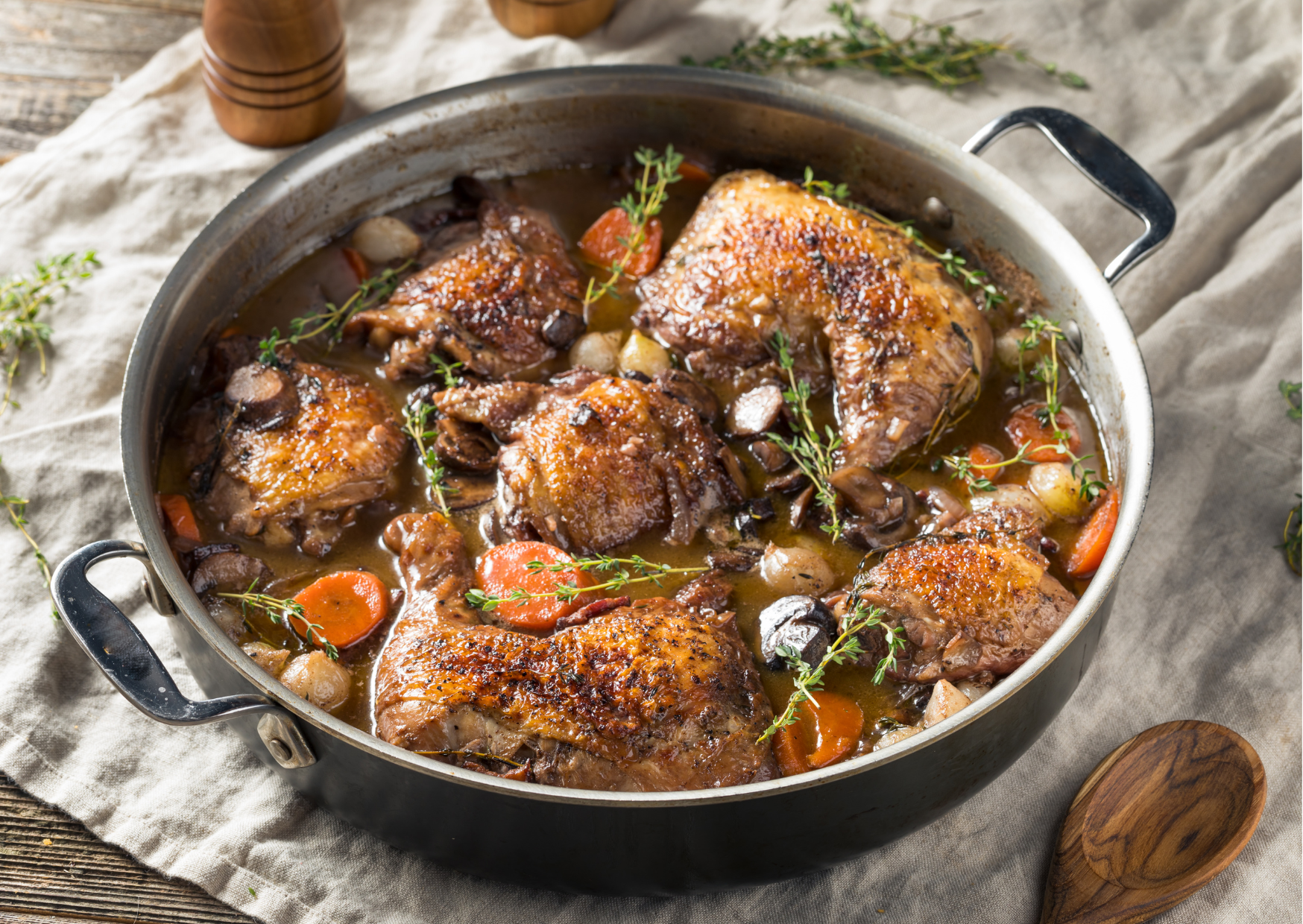
Three cold months. One heavy pot. A sauce that tastes like you tried harder than you did. This is the dish that keeps weeknights civilized when winter turns everything into a negotiation.
January in Spain has a particular sound: rain on shutters, the elevator groaning, someone dragging a shopping trolley across wet pavement. It’s not the cozy Paris movie version of winter. It’s real winter, the kind that makes you want dinner to be decided before 18:00.
From January to March, I make one recipe on repeat. Not “often.” Not “when I’m inspired.” I mean it becomes the default meal I can run half-asleep, feed to people without apology, and stretch into three different dinners without anyone noticing.
Coq au vin.
Not the precious, museum-piece version that requires a rooster, Burgundy, and a free afternoon. The working version. Chicken thighs, a normal bottle of red, bacon, mushrooms, onions, and a pot that does the heavy lifting.
The reason it’s the only recipe I make in those months is blunt: it solves winter. It tastes like comfort, it reheats like a dream, and it turns a random Tuesday into something that feels planned.
Also, it makes the house smell good for two straight hours, which is a criminally underrated form of mental health.
Why this dish wins the winter calendar
People love to talk about “cozy recipes” like they’re a personality type. In real life, winter cooking is logistics.
January to March is the season of:
- short daylight
- unpredictable schedules
- low motivation for fussy meals
- that slightly desperate desire to eat something warm without ordering delivery again
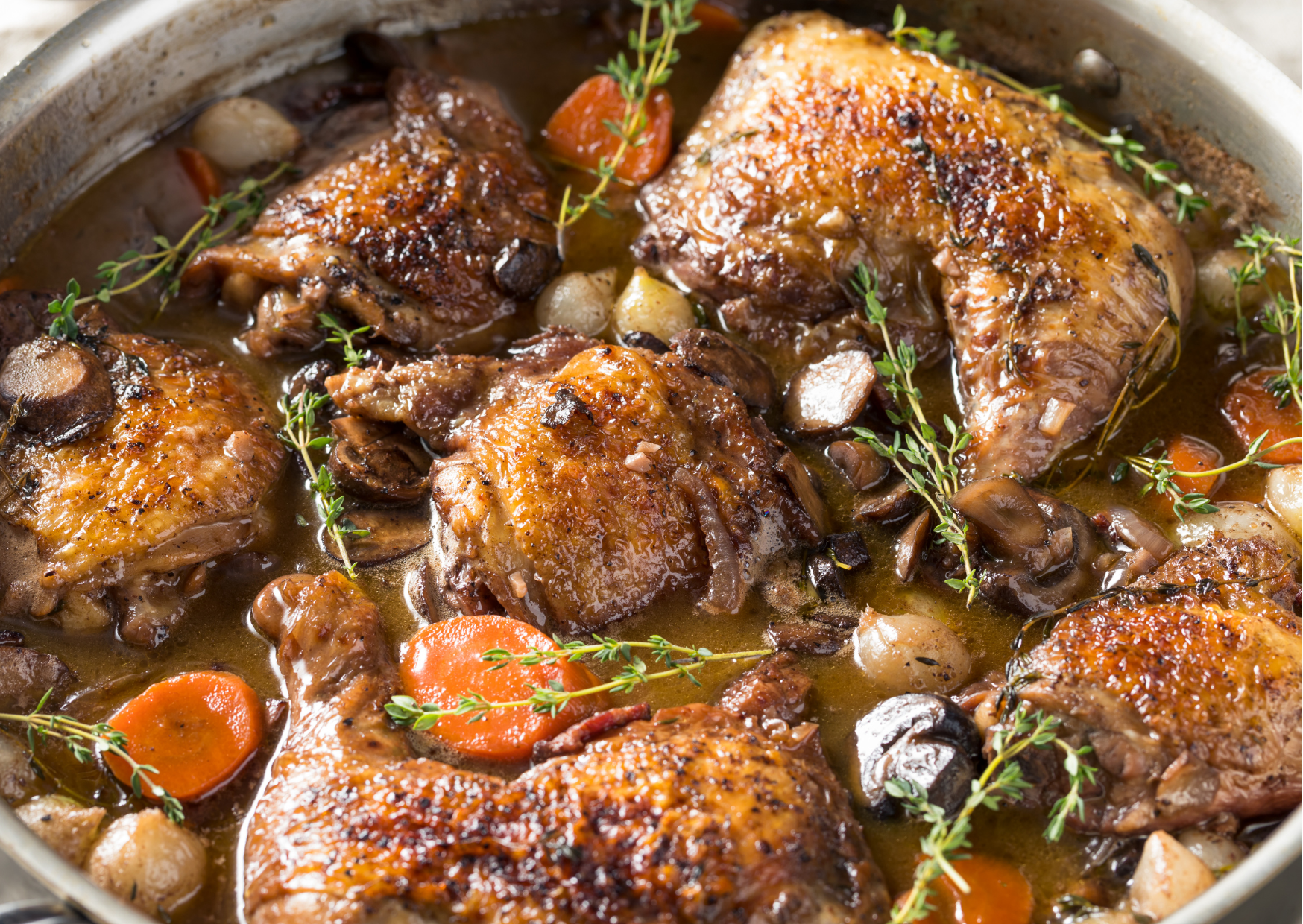
Coq au vin works because it’s one pot, high impact. You do a few things up front, then you let time do the rest. Winter food should be like that. Winter food should not require six pans and optimism.
It also fits the way life actually runs here.
A lot of Spain’s daily rhythm is built around lunch being the bigger meal, but winter evenings still demand something comforting. Coq au vin gives you that comfort without needing a late-night cooking session. You can make it on a Sunday afternoon and ride leftovers through the week, or cook it on a weekday and have it improve by tomorrow.
That “improves by tomorrow” part is the real secret. This dish tastes better after it rests. Not in a poetic way. In a measurable, sauce-gets-deeper way. A braise that sits overnight becomes more unified, more rounded, more coherent.
If you’re cooking for a household, this matters because it removes decision fatigue. Dinner is not “what are we doing tonight.” Dinner is “heat the good thing.”
And when dinner is already solved, you spend less money. Fewer “quick” supermarket runs. Fewer snacky meals. Less kitchen chaos.
A quiet bonus: it’s also the rare dish that feels vaguely fancy while being built from cheap, forgiving ingredients. Chicken thighs do not care if you had a hard day. They become tender anyway.
The local method: how to make coq au vin feel easy, not theatrical
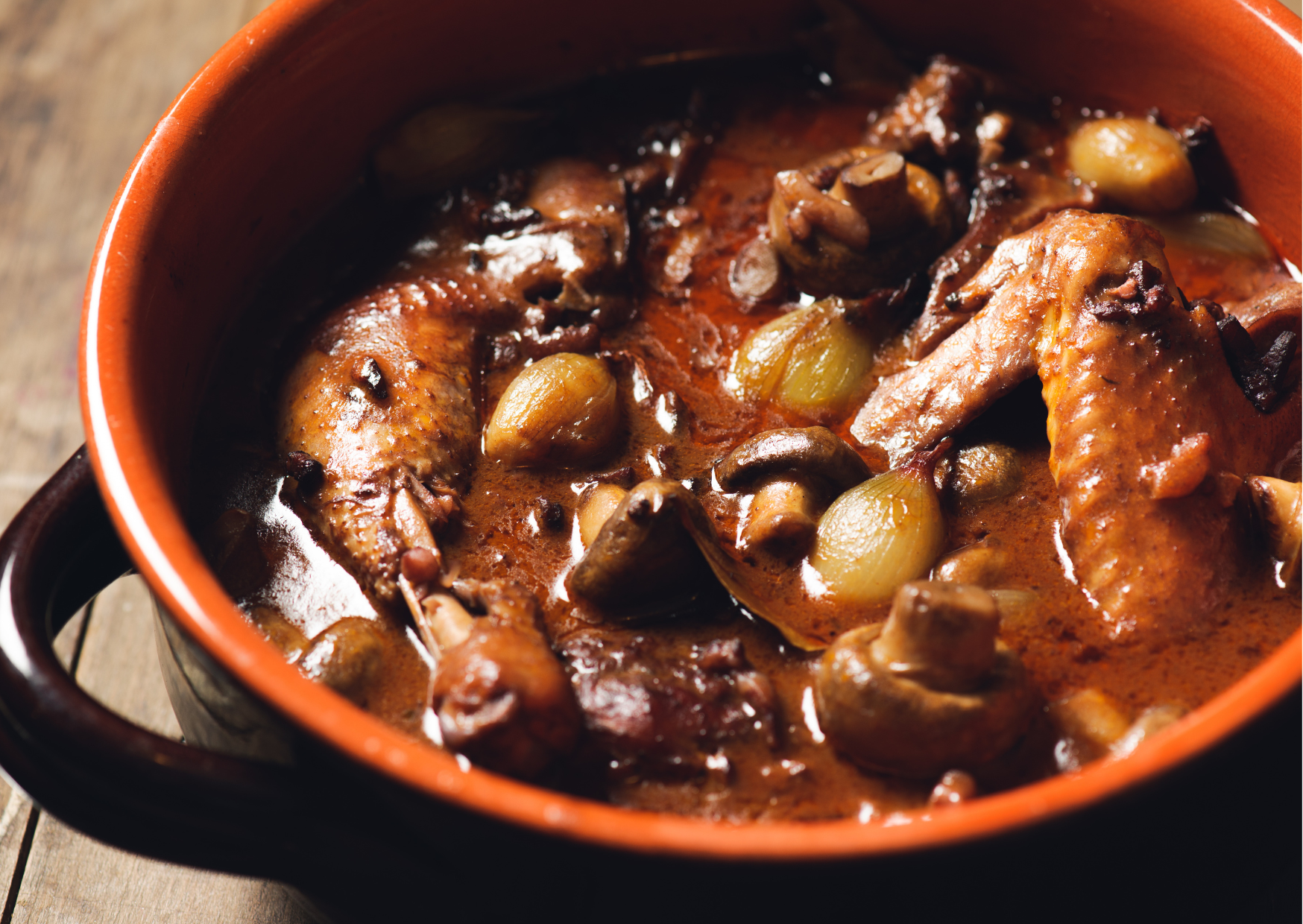
The internet loves turning classic dishes into performances. That’s fine if you enjoy it. I don’t, not in winter.
Here’s how I make this recipe behave like a weeknight tool.
- I use bone-in chicken thighs and drumsticks. They stay moist, they’re hard to ruin, and the bones make the sauce richer without extra work. If I can only find thighs, I do thighs.
- I don’t marinate overnight unless I have a spare evening. Traditional versions sometimes start with a wine marinade. It’s great, but it’s not required. The sauce still gets deep because you’re reducing wine and braising slowly.
- I cook the mushrooms separately, or at least brown them hard before the braise. Otherwise they weep water and turn spongy. This is one of those details that separates “restaurant-ish” from “stew vibes.”
- I pick a red wine I’d drink in a glass. Not expensive. Just not harsh. In Spain, a basic Tempranillo works beautifully. The point is no vinegar wine.
- I thicken lightly, not with a heavy flour bomb. A small amount of flour on the chicken plus a final simmer usually gives you a sauce that coats a spoon without becoming gravy.
Equipment is the other part that makes this easy.
You want:
- a heavy pot with a lid, 5 to 6 liters
- tongs
- a thermometer if you’re the cautious type
- a wooden spoon
If you don’t have a Dutch oven, use the heaviest pot you own. If your lid is loose, cover with foil and then the lid.
This dish is forgiving, but it demands one thing: time at a gentle heat. That’s it.
The recipe that proves it
Servings, timing, and equipment
- Serves: 6
- Prep time: 25 minutes
- Active time: 35 minutes
- Cook time: 1 hour 35 minutes
- Rest time: 10 minutes (and it’s even better after 12 to 24 hours in the fridge)
Equipment
- Heavy pot or Dutch oven, 5 to 6 L
- Large frying pan (optional but helpful for mushrooms)
- Cutting board and knife
- Tongs
- Ladle
- Instant-read thermometer (optional but useful)
Shopping list you can take to the store
- Bone-in chicken thighs and drumsticks (about 1.8 kg total)
- Bacon or pancetta (about 200 g)
- Mushrooms (400 g)
- Pearl onions or shallots (250 g)
- Carrots (2)
- Garlic (4 cloves)
- Tomato paste
- Flour
- Red wine (750 ml)
- Chicken stock
- Bay leaf, thyme
- Butter (optional)
- Parsley (optional)
Ingredients
Chicken and base
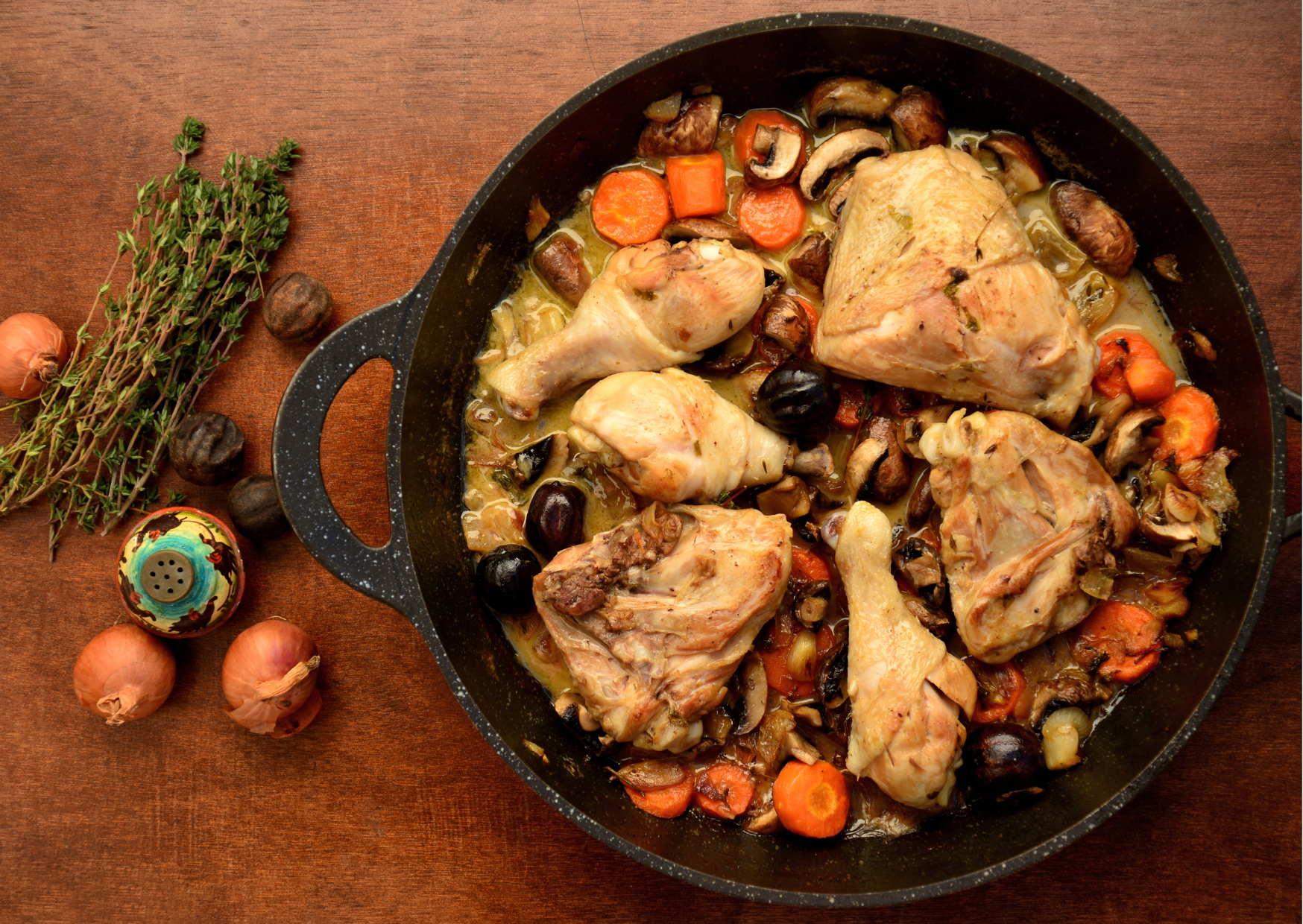
- 1.8 kg chicken pieces, bone-in, skin-on preferred (about 4 thighs + 4 drumsticks)
- 1 ½ tsp fine salt (plus more to taste)
- 1 tsp black pepper
- 30 g flour (about ¼ cup)
- 200 g bacon or pancetta, diced (about 1 cup diced)
- 2 tbsp olive oil (30 ml), only if your bacon is lean
Vegetables
- 250 g pearl onions, peeled (or 10 to 12 small shallots)
- 2 medium carrots, sliced thick (about 200 g)
- 400 g mushrooms, halved or quartered (about 4 to 5 cups)
- 4 garlic cloves, smashed
- 2 tbsp tomato paste (about 30 g)
Liquids and aromatics
- 750 ml dry red wine (1 bottle)
- 350 ml chicken stock (about 1 ½ cups)
- 2 bay leaves
- 6 to 8 sprigs thyme (or 1 ½ tsp dried)
- 1 tbsp brandy or cognac (15 ml), optional but lovely
Finish
- 15 g butter (about 1 tbsp), optional for sheen
- Chopped parsley, optional
- Salt and pepper to adjust
Method
- Dry and season the chicken. Pat chicken very dry. Season with salt and pepper. Sprinkle flour over the chicken and toss to coat lightly. You want a thin dusting, not a breaded situation.
- Render the bacon. Heat your pot over medium. Add bacon and cook until browned and the fat is rendered, about 6 to 8 minutes. Remove bacon to a bowl, leaving the fat in the pot. If it looks dry, add the olive oil.
- Brown the chicken. Raise heat to medium-high. Brown chicken in batches, skin-side down first, 4 to 5 minutes per side until deeply golden. Don’t rush this. Color equals flavor. Transfer browned chicken to a plate.
- Brown the mushrooms. If you have a second pan, do this separately while the chicken browns. If not, do it now in the same pot. Add mushrooms and cook until they release water, then continue until that water evaporates and they brown, about 8 to 10 minutes. Remove mushrooms to a bowl.
- Cook the aromatics. Lower heat to medium. Add onions and carrots, cook 5 minutes. Add garlic and tomato paste, cook 1 minute, stirring. The tomato paste should darken slightly.
- Deglaze. Pour in the brandy (if using) and let it bubble for 30 seconds. Then add wine. Scrape the bottom hard with a wooden spoon to lift the browned bits. Let the wine simmer 8 to 10 minutes to reduce slightly.
- Braise. Add stock, bay leaves, and thyme. Return chicken and bacon to the pot. Bring to a gentle simmer.
- Oven or stovetop.
- Oven method: cover and cook at 160°C (320°F) for 75 minutes.
- Stovetop method: cover and simmer very gently for 75 minutes, stirring once or twice to prevent sticking.
- Add mushrooms and finish. Remove lid, add mushrooms, and simmer uncovered 10 to 15 minutes to thicken the sauce. If the sauce is still thin, simmer longer uncovered. If it’s too thick, splash in a little stock or water.
- Check doneness. Chicken should be tender and the thickest part should reach 74°C (165°F).
- Rest and serve. Rest 10 minutes. Taste and adjust salt and pepper. Add butter if you want a glossy finish, and parsley if you want it to look like you’re in control of your life.
How to serve it
- With mashed potatoes, rice, polenta, or crusty bread.
- With a simple green salad to keep the meal from feeling heavy.
Storage, reheating, and freezing
- Refrigerate in a shallow container for up to 3 to 4 days.
- Reheat until piping hot and the chicken reaches 74°C (165°F).
- Freeze for best quality up to 3 to 4 months. Thaw overnight in the fridge and reheat gently.
Substitutions that actually work
- No pearl onions: use small shallots or thick-sliced yellow onion.
- No bacon: use pancetta, or a small amount of smoked ham, but bacon gives the best base.
- No brandy: skip it. The dish still works.
- Gluten-free: skip flour, and thicken at the end with a cornstarch slurry (1 tbsp cornstarch + 1 tbsp cold water).
- Lower alcohol taste: reduce wine longer before braising, and use more stock (up to 500 ml stock, 600 ml wine).
Why this works, and why it tastes better the next day
Coq au vin is basically an argument for patience.
The method is doing three things at once:
- Browning builds the foundation. When you brown chicken and bacon properly, you’re creating the deep base that makes the sauce taste like it came from a restaurant. Those browned bits on the pot are not mess. They are the whole point.
- Wine becomes sauce, not just liquid. Wine isn’t there to taste “wine-y.” It’s there to bring acidity, fruit, and bitterness in a controlled way. When you simmer it first, you cook off some harsh edge and concentrate flavor. That’s why the dish can handle a normal, everyday bottle.
- Gentle heat turns tough into tender. Chicken thighs and drumsticks have connective tissue. Low, slow cooking breaks it down and makes the meat silky instead of dry. The sauce also picks up body as gelatin and rendered fat emulsify into it.
This is why it improves overnight. The flavors meld, the sauce thickens slightly, and the edges smooth out. Day-one coq au vin can taste a bit separated: sauce over chicken. Day-two coq au vin tastes like one idea.
It’s also forgiving. If you overcook a chicken breast, you get sadness. If you braise thighs a little longer than planned, you get tenderness.
That’s why it becomes the winter default. In January, you don’t need a recipe that requires perfect timing and high spirits. You need a recipe that rewards steady heat and a lid.
And this is the part most “healthy eating” talk misses: consistency matters. When you have one reliable, satisfying pot meal, you snack less, order less, and your week becomes calmer. Your body notices, not as a miracle, but as fewer chaotic food decisions.
The cost math: why this is a cheap luxury dish in Spain
Coq au vin has a fancy reputation, but the shopping list is not inherently expensive. The cost depends on two things: chicken cut choice and wine choice.
In Spain, chicken thighs and drumsticks are usually priced more gently than premium cuts, and mushrooms, onions, carrots, and herbs are standard winter ingredients. The wine can be the wild card, but it does not need to be Burgundy.
A realistic cost range for one pot (6 servings) in Spain, buying normal supermarket ingredients:
- Chicken (1.8 kg): €8 to €14
- Bacon or pancetta: €2.50 to €4
- Mushrooms and onions and carrots: €4 to €7
- Wine: €4 to €8
- Stock, herbs, pantry items: €2 to €4
Total: roughly €20.5 to €37.
That’s €3.40 to €6.20 per serving, and that’s for a main dish that tastes like you had a plan.
If you’re feeding two adults and you stretch it with potatoes or rice, this becomes a money-saving recipe without feeling like one. The side dish does the stretching quietly.
Now compare that to the “January survival” alternative: delivery, or those random, expensive mini-shopping trips where you buy snacks and end up with no actual dinner.
The other cost benefit is leftovers.
This dish reliably gives you:
- one proper dinner
- one next-day dinner that tastes better
- one “use it differently” meal, like pasta or toast
It’s basically three dinners for the price of one cook.
There’s also a very real winter efficiency: your oven is on, your kitchen is warm, and you’re not doing the “cold salad plus regret” routine that makes you buy snacks later.
If you want to keep this recipe in the “cheap luxury” lane, two rules:
- Don’t overbuy wine.
- Don’t buy boneless, skinless chicken and then wonder why it cost more and tasted less good.
How to use leftovers for 7 days without getting bored
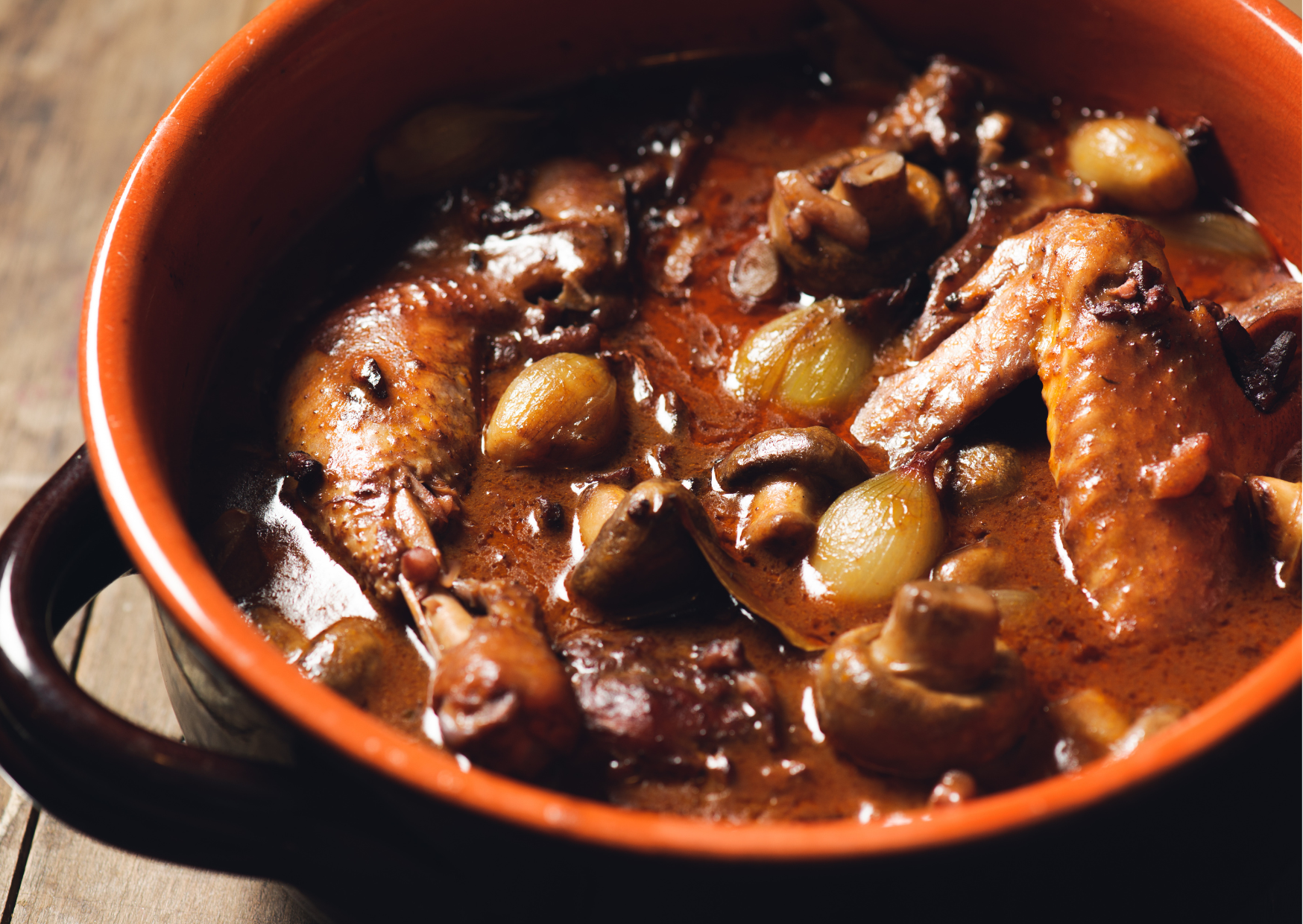
Coq au vin is not a one-night dish. It’s a winter infrastructure dish.
Here’s a realistic 7-day plan for two people, assuming you cooked a full pot and you want to enjoy it without feeling like you’re eating the same bowl forever.
Day 1: Coq au vin night
Serve with mashed potatoes or rice and a salad. Eat it properly. This is where the week feels hopeful.
Day 2: The better version
Reheat gently. The sauce will be deeper. Serve with bread. Keep it simple and let the dish show off.
Day 3: Pasta night
Shred a portion of chicken into the sauce, toss with pasta, add parsley. It becomes a different meal. This is where leftovers stop feeling like leftovers.
Day 4: Toast or polenta
Warm sauce over toasted bread, or spoon it over polenta. You get comfort without a full cooking session.
Day 5: Freeze two portions
Portion into containers and freeze. Future you will be smug.
Day 6: Salad plus warm leftovers
A bitter green salad with a warm bowl of coq au vin is surprisingly balanced. The contrast makes it feel new.
Day 7: Soup trick
Add a splash of stock to leftover sauce, toss in a handful of beans or lentils, and you’ve got a rich soup base. It feels like cooking, but it’s basically reheating with ambition.
Food safety reality that matters: don’t keep reheating the same pot for four days straight. Portion what you’ll eat, reheat that portion thoroughly, and keep the rest cold until needed. Your fridge is not a holding pen for lukewarm stew.
This is also where the rhythm saves you. When dinner is already solved, you snack less. When you snack less, you sleep better. When you sleep better, winter stops feeling like a test of character.
The common mistakes that make people think coq au vin is “hard”
Coq au vin gets labeled “fancy,” and people psych themselves out. Most failures come from a few predictable missteps.
- They don’t brown anything.
If you skip browning, you get a stew that tastes flat. The sauce needs real color from chicken and bacon. - They crowd the pot.
Crowding steams instead of browns. Brown in batches. It’s annoying for 10 minutes and worth it for 10 servings. - They use harsh wine and don’t reduce it.
If the wine tastes sharp and unpleasant in the glass, it will taste sharp in the sauce. Choose a wine you’d drink. Simmer it before braising so the edge softens. - They cook it too hard.
A rolling boil makes chicken tough and sauce greasy. You want a gentle simmer or a low oven. - They add mushrooms too early.
Mushrooms can turn spongy and sad. Brown them first, then add near the end so they stay meaty. - They forget salt at the end.
Braises can taste underseasoned until the final adjustment. Taste and correct. This is where the dish becomes “wow.” - They serve it immediately and judge it too soon.
It’s good day one. It’s better day two. If you want to understand why people get obsessed with this dish, eat it the next day.
This is why it becomes the January-to-March default. It’s not delicate. It’s not fragile. It’s built for cold months and normal humans.
Why this is the only recipe I make, and the quiet choice it creates
From January to March, I don’t want variety. I want reliability.
Coq au vin gives me:
- a pot that feeds people
- leftovers that improve
- a week with fewer food decisions
- a dinner that feels comforting without being heavy-handed
It also creates a choice I like making in winter: cook once, eat well multiple times, and stop treating dinner as a nightly crisis.
If you make this once and it clicks, you’ll understand why it becomes a seasonal habit. Not because it’s trendy. Because it’s useful.
There are months for salads and quick grilling.
January to March is the season for a lid, a low oven, and a sauce that tastes like the world is fine.
Make the pot. Let it simmer. Eat it tomorrow too.

About the Author: Ruben, co-founder of Gamintraveler.com since 2014, is a seasoned traveler from Spain who has explored over 100 countries since 2009. Known for his extensive travel adventures across South America, Europe, the US, Australia, New Zealand, Asia, and Africa, Ruben combines his passion for adventurous yet sustainable living with his love for cycling, highlighted by his remarkable 5-month bicycle journey from Spain to Norway. He currently resides in Spain, where he continues sharing his travel experiences with his partner, Rachel, and their son, Han.