

There’s a specific kind of anger that hits when you buy the same boring groceries, week after week, and the totals keep coming out insultingly higher in one country. Not “a little higher.” Higher enough to change how you live.
We didn’t set out to prove a point. We just wanted to stop guessing. So we tracked every grocery receipt for a full year in Spain, and we pulled the same category of spending from our previous year in the U.S.
Same household, same two adults, same appetite for normal food.
The result was not a cute “Europe is cheaper” travel blog moment. It was the kind of gap that makes you stare at your cart like it personally betrayed you.
And yes, part of it is currency. But most of it is something more annoying: the American grocery system has become a sneaky monthly subscription. You pay more, more often, and you are still expected to feel grateful because there are 24 cereal options.
Here’s what the numbers looked like, how we kept the comparison fair, and what changed once we saw the pattern.
The number that finally ended the arguments

Over 12 months:
- Spain grocery spending total: €6,084
- U.S. grocery spending total: $10,452
To compare apples to apples, we used the rough late-2025 conversion of €1 ≈ $1.17 for the math, because it keeps the scale honest without turning this into an exchange-rate hobby.
Converted, our Spain total landed around $7,100. That puts the gap at roughly $3,300 for the year.
Monthly averages:
- Spain: €507/month
- U.S.: $871/month
That is not a small difference. It is the difference between “we can travel a bit” and “we should probably stop buying berries.”
What made us angry was not just the total. It was the rhythm of it.
In the U.S., our spending spiked constantly. A normal week would get wrecked by one “restock” trip where you didn’t even buy dinner, you just bought paper towels, dish soap, coffee, and a few things you swore were on sale.
In Spain, the spending was steadier. We still had expensive weeks, especially when we hosted people or stocked a pantry, but the baseline didn’t feel like it was being pulled upward by invisible hands.
Also, national data matches the shape of this. Average annual “food at home” spending in the U.S. was reported at $6,224 per consumer unit in 2024, and Spain’s household budget survey put “food and non-alcoholic beverages” at €5,391 per household in 2024. Our household numbers aren’t those exact averages, but the direction is not a personal fluke. The systems really are different.
What we counted, and what we didn’t

The easiest way to lie with grocery comparisons is to quietly change what counts.
So we were strict.
What counted as “grocery spending” for both countries:
- Supermarket and big-box food
- Toiletries and household basics bought at the grocery store (toilet paper, detergent, toothpaste)
- Coffee and tea bought for home
- Basic pantry refills (oil, rice, pasta, beans, spices)
What we excluded in both countries:
- Restaurants and cafés
- Alcohol beyond the occasional bottle for cooking or hosting
- Pharmacy-only purchases (true pharmacy receipts, not supermarket shampoo)
- Delivery fees (if we ordered delivery in the U.S., we treated that as eating out, not groceries)
We also tried to keep our eating style consistent. Not identical, because life isn’t a lab, but consistent enough to be fair:
- We cook at home most days.
- We eat a lot of eggs, yogurt, vegetables, rice, beans, chicken, and fish.
- We are not a “protein powder and steak every night” household.
- We’re also not living on lentils as a personality.
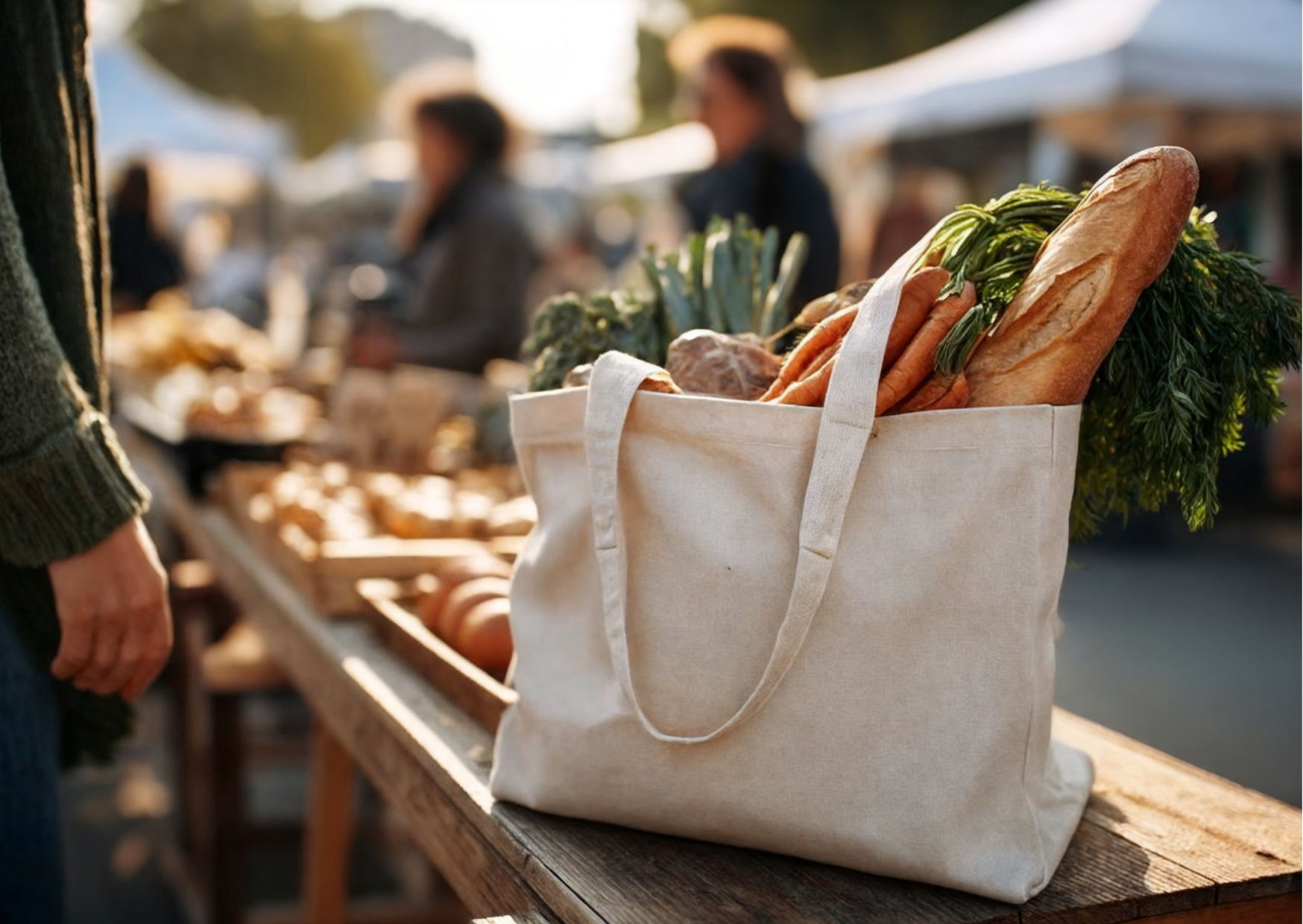
The comparison year in the U.S. was a normal year in a big metro area, with most shopping split between H-E-B, Costco, and Trader Joe’s. In Spain, most shopping was Mercadona and Lidl, plus a neighborhood fruit shop and a weekly mercado run when we were organized.
The point here is not that Spain is magically cheap. The point is that a normal household routine in Spain doesn’t punish you every time you try to feed yourself.
The same basket test that exposed everything
We did one thing that made the difference impossible to rationalize: we built a repeat basket.
Not a fantasy basket. A dull, realistic basket that could be dinner, breakfast, lunches, and snacks for several days.
A typical week basket for us in Spain:
- Chicken thighs (1.2 kg)
- Eggs (24)
- Yogurt (plain, 8 to 12 cups)
- Milk (2 L)
- Olive oil (when needed, not weekly)
- Rice (1 kg)
- Pasta (1 kg)
- Lentils or chickpeas
- Tomatoes, onions, garlic, carrots
- Greens (spinach or similar)
- Seasonal fruit (oranges, apples, whatever is behaving)
- Coffee
- One “treat” item (chocolate, jamón, or nicer cheese)
- One household item (dish soap or detergent)
That basket in Spain usually landed around €65 to €85, depending on whether it was an “oil week” or a “nice cheese week.”
The comparable basket in the U.S. was regularly $110 to $145.
This is where the anger shows up, because it’s not one dramatic item. It’s ten little ones.
In the U.S., eggs feel like a headline. In Spain, eggs are a normal purchase. In the U.S., cheese and yogurt jump in price unless you play the loyalty-card game. In Spain, dairy is still a basic category that behaves like a basic category.
And household items are where the U.S. gets quietly brutal. Detergent, paper products, soap, and trash bags can destroy a week’s budget in a way that feels completely detached from reality.
That’s why the “monthly average” gap matters more than any single receipt. If you only compare one dramatic American grocery run to one Spanish grocery run, people will argue. If you compare 52 weeks of boring baskets, the argument dies.
Where Spain is cheaper, and where it still punches back

Spain is not a grocery utopia. There are categories that can sting, especially in the last few years.
Here’s how it shook out for us.
Cheaper in Spain, consistently:
- Produce, especially seasonal fruit and basic vegetables
- Yogurt and milk
- Bread and “normal carbs” that aren’t packaged as lifestyle products
- Legumes and pantry staples
- Basic frozen vegetables and fish options
- Mid-range cheese, if you buy local styles instead of imported brands
Not always cheaper in Spain:
- Some imported items (American peanut butter cravings, specialty cereals, niche sauces)
- Certain cuts of meat, depending on where you shop
- Anything marketed to foreigners, including “expat supermarkets”
- Olive oil in the recent spike era, where one bottle can suddenly feel like a purchase you have to justify
Spain’s own institutions have noted that food prices rose sharply from mid-2022 and were still elevated relative to earlier trends by the end of 2024. That matches the lived reality. You can feel it in oil, in some dairy, and in anything that rides energy and transport costs.
But the key difference is still structural: even when Spanish food prices rise, the baseline basket does not get drowned by hidden add-ons. You are not constantly paying extra for packaging, branding, and convenience you didn’t ask for.
Meanwhile, in the U.S., food inflation has cooled compared with the peak years, but “cooling” does not mean “back to normal.” In late 2025, the U.S. CPI “food at home” category was still rising year over year, and Spain’s CPI category for food and non-alcoholic beverages was also up year over year. Both countries have inflation. Only one of them made us feel like feeding ourselves required a strategy meeting.
The weekly rhythm that keeps Spanish grocery spending calm
This is the part people miss when they do country comparisons: the calendar changes the budget.
The Spanish grocery pattern that keeps spending steady is small and frequent, not “one giant weekly haul plus emergency runs.”
A normal week for us looks like this:
- One bigger supermarket trip (usually Monday or Tuesday)
- One fruit shop top-up midweek
- One quick “missing ingredient” run that stays small because the store is nearby
- A pantry restock every few weeks, not every week
Because shops are close, you don’t stock up out of fear. You buy what you’ll actually eat.
That changes everything.
In the U.S., the weekly rhythm tends to be:
- One big drive-based haul
- One or two “quick” trips that become expensive because you’re already there
- More packaged food because it feels safer for planning
- More waste, because you bought for the fantasy week, not the real one
In Spain, you can plan dinner on the same day you buy it. You can buy two tomatoes without feeling like you wasted a trip. You can adjust.
And there’s another quiet thing: Spanish life is more tolerant of repetition. If you eat lentils twice a week, nobody thinks you’re depriving yourself. It’s just food. That makes a budget behave.
If you want the simplest way to describe the difference, it’s this: in Spain, grocery shopping is a routine. In the U.S., grocery shopping has started to feel like a negotiation with a system that wants you to spend more than you planned.
Pitfalls Most Buyers Miss
If you move to Spain and still manage to spend American grocery money, it’s usually one of these.
- You shop like you’re still driving
You do one huge “weekly haul,” then you buy extras “just in case.” In Spain, that habit creates waste. Smaller carts win here. - You live on imported comfort foods
Imported cereals, sauces, snacks, and specialty products are where Spain gets expensive fast. This isn’t moral. It’s math. If your pantry is mostly imported brands, your receipts will look like a tourist’s. - You buy everything at the most expensive format
Corner shops are great, but some are pricey for staples. If you buy all staples at a convenience format store, you will pay for convenience. - You ignore the local produce rhythm
Buying berries and out-of-season fruit constantly is a budget killer anywhere. In Spain, seasonal fruit is one of the big wins. Use it. Oranges in winter are not a hardship, they’re a discount. - You treat snacks as a separate grocery category
In the U.S., snacks become a whole aisle. In Spain, snacking exists, but it doesn’t have to become a weekly budget event unless you make it one. - You never build a pantry base
The calm Spanish grocery budget depends on having legumes, rice, pasta, canned tomatoes, and a few spices at home. Without that, every meal becomes a purchase, and the receipts grow.
The point is not to “eat like locals” as a performance. The point is to stop paying for a lifestyle you don’t even enjoy.
Your next 7 days: run the grocery audit and stop the leaks
If you want to test this in your own life, don’t start with ideology. Start with tracking.
Day 1: Pull your last 30 days of grocery spending
Include supermarket, big-box, and “quick trips.” Write the total down. No guessing.
Day 2: Split it into three buckets
- Food you cooked
- Packaged snacks and drinks
- Household and toiletries
Most Americans get angry on day 2, because the “household” bucket is bigger than expected.
Day 3: Build one repeat basket
Pick 12 to 15 items you buy constantly. Price it at your current stores. This becomes your baseline.
Day 4: Cut two categories, not everything
Choose one snack category and one household category and set a weekly cap. Not forever. Just for one week.
Day 5: Run the “two shop” method
One main shop, one top-up. No extra “browse trips.” Keep it boring.
Day 6: Cook one big pot meal and one tray meal
If you do this, your week becomes cheaper automatically. You stop improvising with expensive ingredients.
Day 7: Compare your week to your normal week
If you saved money, you didn’t “get disciplined.” You removed friction and impulse spending. That is the whole game.
This is the part people underestimate: you don’t need a perfect budget. You need a grocery routine that doesn’t punish you for being a normal person with a normal week.
The real point is what groceries do to your life, not your palate
Groceries are not just food. They are time, stress, and the feeling of whether your life is manageable.
In the U.S., our grocery spending wasn’t just higher. It felt like it demanded attention. It created the sense that we had to optimize constantly, clip deals, make a plan, fail the plan, then pay for failing the plan.
In Spain, groceries are still a cost, and yes, prices rise here too. But the system doesn’t make you feel like you’re doing it wrong every time you walk into a store.
That’s why the gap made us angry. Not because we wanted to complain. Because once you see the numbers, it becomes hard to accept the American version as normal.
If your retirement plan, your health plan, and your daily routine all require you to be an “optimized consumer,” you will feel broke no matter what you earn.
A grocery system should feed you. It shouldn’t manage you.

About the Author: Ruben, co-founder of Gamintraveler.com since 2014, is a seasoned traveler from Spain who has explored over 100 countries since 2009. Known for his extensive travel adventures across South America, Europe, the US, Australia, New Zealand, Asia, and Africa, Ruben combines his passion for adventurous yet sustainable living with his love for cycling, highlighted by his remarkable 5-month bicycle journey from Spain to Norway. He currently resides in Spain, where he continues sharing his travel experiences with his partner, Rachel, and their son, Han.