
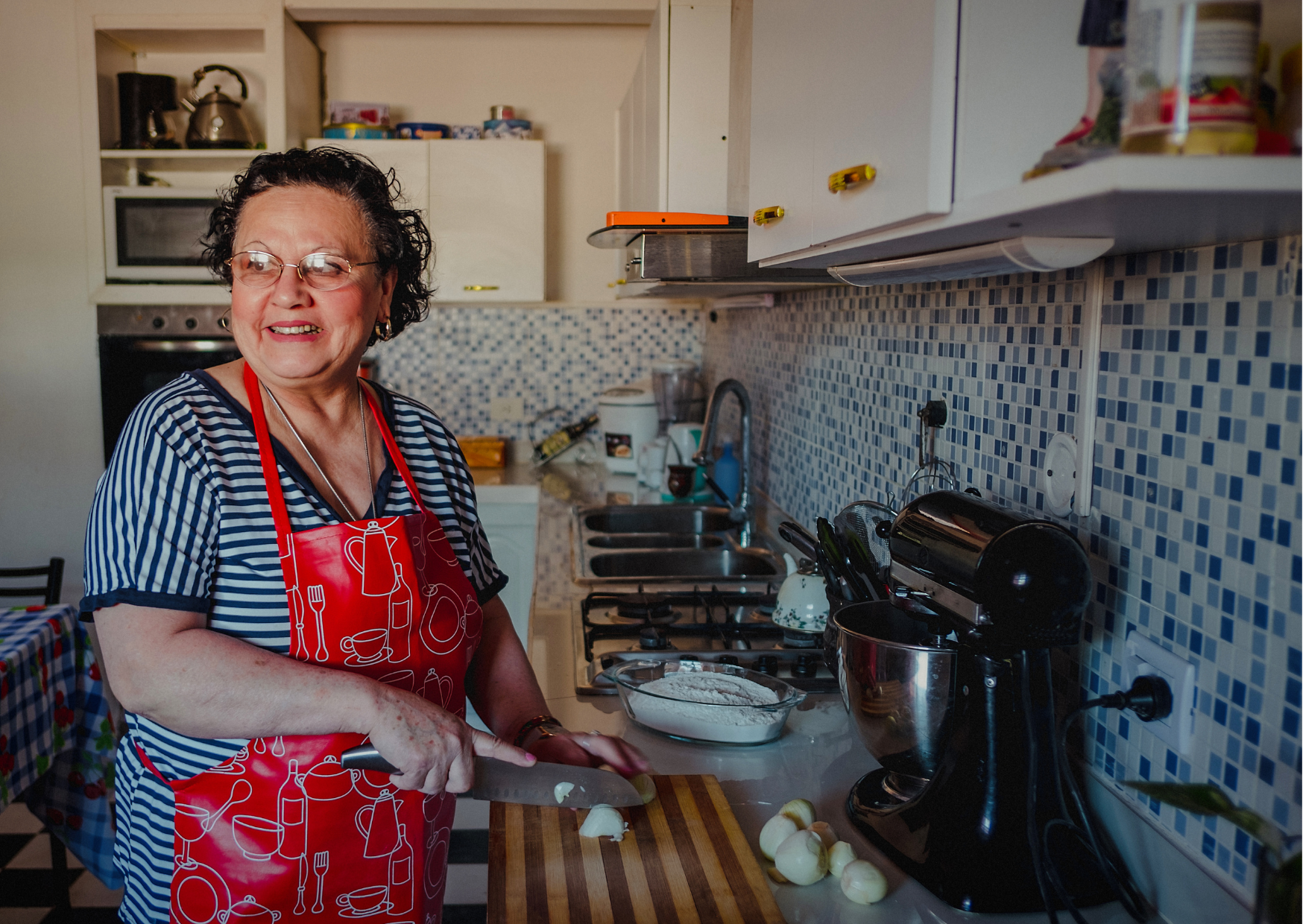
French grandmothers are not doing “wellness.” They’re running a kitchen that keeps people fed, calm, and lightly regulated without turning food into a moral project. Most modern nutrition advice is just catching up to that.
If you’ve ever watched an older French woman cook, the vibe is not “clean eating.” It’s competence.
The food is normal. There’s butter. There’s bread. There’s wine sometimes. Dessert exists. Nobody is measuring chia seeds like it’s a lab.
And yet the pattern quietly produces a diet that looks a lot like what American nutritionists keep prescribing: more home cooking, fewer ultra-processed foods, fewer sugary drinks, more fiber, steadier meals, slower eating.
Not because French grandmothers read research journals. Because they built a routine that works in real life.
Living in Spain, I see the overlap constantly. Mediterranean kitchens are not perfect, but they share the same core idea: the kitchen is infrastructure, not entertainment.
Here are the eight habits that make the difference, with the specific moves you can copy without changing your entire personality.
1) They keep three meals sacred, and snacking is not a lifestyle

This is the most important habit, and also the one Americans resist hardest because it feels “restrictive.”
In many French households, the default is still a structured three-meal pattern, and snacking between meals tends to be less common than in North America.
The practical impact is huge:
- Your appetite organizes itself.
- Your grocery list gets simpler.
- Your day stops turning into a continuous grazing situation.
A typical French rhythm looks like:
- Breakfast around 07:00 to 08:30
- Lunch around 12:00 to 13:30
- Dinner around 19:00 to 20:30
In Spain, the clock shifts later, but the principle stays the same. The day has eating windows, and then it doesn’t.
The American trap is the “responsible meals + constant little bites” combo:
- a bar at 10:30
- a latte that’s basically dessert
- almonds at 15:00
- a “quick snack” while cooking
- something sweet at 22:30
None of those bites feel big. Together they build a day where your hunger signals are just static.
Trade-off: structured meals mean you will feel hunger sometimes. Not emergency hunger, just normal. That’s not a problem. That’s a body doing body things.
The mistake people make: skipping lunch because they’re busy, then acting shocked when dinner turns into a hunger event. If you want this to work, lunch has to be real.
2) They start meals with a vegetable first course, usually soup or salad
This is the most boring “French secret,” and it works because it’s boring.
A simple starter, almost always plant-based:
- leek soup
- carrot soup
- lentil soup
- grated carrot salad
- a green salad with vinaigrette
That starter does three things at once:
- It increases volume without relying on sugar or ultra-processed snacks.
- It pushes fiber earlier in the meal.
- It slows down the start, which reduces the speed-eating spiral.
Most American nutrition advice is obsessed with “eat more vegetables,” but it often fails because people try to add vegetables as a side dish they don’t want.
French grandmothers solve it by making vegetables the opening act. Not a punishment. Just part of the meal.
A concrete kitchen habit you can copy this week:
- Keep one soup in the fridge, even a simple blended one.
- Or keep a salad base ready, washed greens, lemon, mustard, olive oil.
Number to make it real: aim for a starter that’s 1 to 2 cups of soup or a small salad bowl. It doesn’t need to be huge. It needs to be consistent.
Trade-off: this requires one extra pot once or twice a week. The payoff is fewer cravings later.
3) They cook at home often, but they’re not martyrs about it

The stereotype is that French grandmothers cook elaborate food every day.
In reality, the daily cooking is often simple: a protein, a vegetable, a starch, and a sauce that makes it feel like a meal.
Home cooking frequency is consistently associated with better diet quality in U.S. research too, including analyses that link cooking at home with healthier diet patterns.
The French difference is that cooking is treated like basic competence, not a hobby.
What that looks like in practice:
- A pot of lentils becomes two meals.
- Roast chicken becomes sandwiches, soup, and salad add-ons.
- Vegetables get sautéed or roasted, not reinvented.
They also keep a mental “default dinner list.” Not a Pinterest list. A real list you can do tired.
Examples:
- omelet + salad
- soup + bread + yogurt
- fish + potatoes + greens
- lentils + carrots + a little sausage
- roast vegetables + eggs
If you want to steal this habit, the move is not “start cooking gourmet French food.”
The move is: decide your five default dinners and repeat them without shame.
Trade-off: repetition can feel unsexy. It’s also the reason the routine sticks.
4) They keep the pantry boring, and it quietly kills cravings
American kitchens often look like a convenience store:
- snacks
- bars
- cereal options
- flavored yogurts
- sauces with sugar
- “healthy” packaged food that is still packaged food
French grandmother kitchens tend to be simpler:
- legumes
- pasta, rice, potatoes
- canned tomatoes
- eggs
- plain yogurt
- fruit
- bread
- cheese
- a few condiments that actually get used
This matters because ultra-processed foods are strongly associated with worse health outcomes across many studies, and large umbrella reviews have reported higher risks tied to greater ultra-processed food exposure.
Nobody needs to be perfect about this. The French pattern is not purity. It’s environment design.
If the pantry is built from ingredients, your default choices improve automatically. If the pantry is built from snacks, you will snack. That’s not a personal failure. That’s physics.
A concrete rule that works:
- Don’t create a snack drawer.
- Create a “make a meal” shelf.
If someone wants a snack, it becomes:
- yogurt and fruit
- bread and cheese
- nuts and fruit
Those are snacks that behave like mini-meals. They don’t trigger the same “eat the whole bag” effect.
Trade-off: you lose the dopamine of constant novelty food. Most people also lose the constant food noise.
5) They use fat on purpose, and the portions are small but real

Here’s where Americans get confused.
French grandmothers cook with butter, and they’re not apologizing. But the fat is used intentionally:
- a small knob of butter to finish vegetables
- a spoon of olive oil in vinaigrette
- a bit of bacon for flavor, not a pound of bacon as the meal
The point isn’t “low fat.” The point is “enough fat to make real food satisfying.”
This is one reason the snacking stays lower. When meals are satisfying, you don’t need a constant stream of little treats to stay emotionally upright.
A useful portion reality:
- Vinaigrette is often 1 to 2 tablespoons on a salad, not half a cup.
- Butter is often 1 tablespoon to finish a whole pan of vegetables, not “more is more.”
Americans often swing between two extremes:
- fat-free everything, then binge on snacks
- high-fat everything, then wonder why calories explode
French kitchens tend to live in the middle. A little fat, consistently, on real food.
Trade-off: you have to stop being scared of fat, and you also have to stop pretending fat doesn’t count. The win is satisfaction without chaos.
6) Dessert is allowed, but it’s after a meal, and sweet drinks are rare
This is where the French approach looks almost aggressive compared to American habits.
Dessert is not banned. It’s contained.
Common “grandmother desserts” are not massive:
- fruit
- yogurt
- a small piece of chocolate
- a pastry on a specific day, not a nightly coping mechanism
Also, dessert is usually eaten after a meal, not alone in the car, not at 16:00 with stress, not at midnight in front of a screen.
That containment lines up with modern guidance on added sugars. The American Heart Association gives specific daily limits for added sugar, and WHO recommends reducing free sugars to less than 10% of total energy, with an additional suggested target below 5% for further benefit.
French grandmothers didn’t memorize percentages. They just didn’t build a daily life around sweet drinks.
If you want one change with outsized impact, it’s this:
- Remove sweet drinks first.
Not just soda. Also:
- sweetened coffee drinks
- juice as a daily habit
- bottled teas
- “healthy” smoothies that are basically liquid sugar
Trade-off: your first week feels emotionally weird. Your second week usually feels calmer.
7) They eat slowly at the table, and the phone is not invited
The “French eating model” isn’t only about what’s on the plate. It’s also about pace.
Research on eating rate consistently finds that slower eating is associated with lower energy intake compared with faster eating.
French grandmothers are not “mindful eating influencers.” They’re just sitting down and eating like it matters.
This is what it looks like:
- food is eaten at the table
- meals are not eaten standing up
- you don’t multitask through the whole thing
- conversation slows the pace naturally
In Spain, you see the same thing at lunch tables. Meals are social, not squeezed into a corner of the day.
A practical experiment:
- Take 15 minutes minimum for lunch, sitting down.
- Put the phone across the room for the first half.
- Chew like you’re not late for a flight.
The mistake Americans make is trying to “eat healthy” while keeping the same frantic pace. Then they wonder why they still overeat. Fast eating makes it easy to blow past fullness.
Timing beats willpower, and slowing down is one of the simplest ways to change intake without counting anything.
Trade-off: you lose some speed. You gain a body that can actually notice you ate.
8) They buy seasonal food in small trips, which quietly increases fiber

This habit is half culture, half logistics.
If you shop more often and buy seasonal produce, your kitchen naturally contains more:
- fruit you’ll actually eat
- vegetables that taste good
- legumes and soups that support winter eating
Fiber is one of the least glamorous parts of nutrition, and it’s also one of the most consistently recommended. Adequate Intake targets are often described as 14 g per 1,000 kcal, roughly 25 g/day for women and 38 g/day for men, depending on energy intake.
Most Americans do not hit those numbers because their “food” is too often packaged snacks and refined carbs that don’t carry fiber.
French grandmother habit: the produce bowl is visible, and fruit is the default sweet thing.
Seasonal examples that make this easy:
- winter citrus
- apples and pears
- carrots, leeks, onions
- lentils and beans
The Spanish overlap is obvious. When you eat with the season, the budget behaves and the diet improves without a battle.
Trade-off: you stop trying to force berries in January. Your wallet and digestion usually forgive you.
A 7-day French-kitchen reset that doesn’t require a new personality
If you want to test these habits, don’t attempt all eight at once. Pick a week where you’re not traveling and do a simple reset.
Day 1: Set meal windows
- Breakfast, lunch, dinner, and that’s it.
- Choose times you can actually repeat.
Day 2: Make one starter
- A simple soup or salad base that can appear before dinner.
- Keep it 2 ingredients plus seasoning if you want it to stick.
Day 3: Build your boring pantry shelf
- Eggs, plain yogurt, lentils, rice, canned tomatoes, fruit, greens.
- Remove one ultra-processed “snack staple” you buy on autopilot.
Day 4: Remove sweet drinks
- Water, coffee, tea.
- Dessert can stay, but keep it after lunch or dinner.
Day 5: Pick five default dinners
- Write them down.
- Repeat them without shame.
Day 6: Slow one meal
- Sit down.
- 15 minutes, no phone for the first half.
Day 7: Shop small and seasonal
- One fruit and veg trip.
- One protein trip.
- One pot meal for leftovers.
At the end of the week, you’ll know if this works for your life because the signs are not subtle:
- cravings are quieter
- cooking feels easier
- grocery spending gets steadier
- meals feel more satisfying without needing “treats” all day
Then the decision is simple. Keep the pieces that made your week calmer, and drop the ones that felt like theater.
That’s how older European kitchens stay effective for decades. Nothing is heroic. It’s all repeatable.

About the Author: Ruben, co-founder of Gamintraveler.com since 2014, is a seasoned traveler from Spain who has explored over 100 countries since 2009. Known for his extensive travel adventures across South America, Europe, the US, Australia, New Zealand, Asia, and Africa, Ruben combines his passion for adventurous yet sustainable living with his love for cycling, highlighted by his remarkable 5-month bicycle journey from Spain to Norway. He currently resides in Spain, where he continues sharing his travel experiences with his partner, Rachel, and their son, Han.