
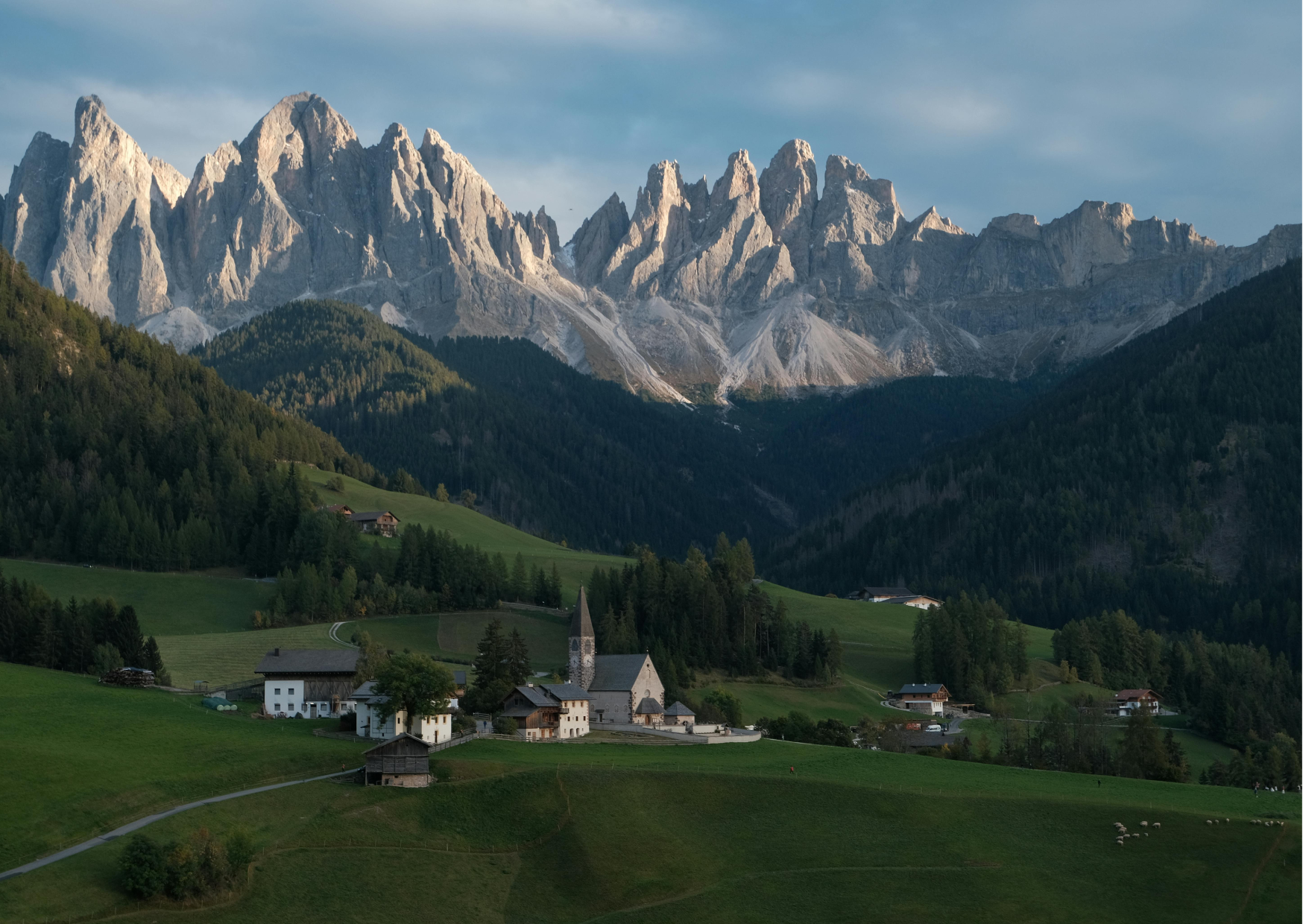
In Italy, winter mornings have this quiet competence to them.
You see it in the espresso bars at 07:30, people standing at the counter, drinking a coffee that lasts two minutes, then moving on. You see it in the way the streets slow down after lunch, shutters half-closed, a little lull that feels almost illegal to an American nervous system. You see it again at night, when dinner ends and people actually downshift instead of revving themselves back up with screens and snacks.
Americans tend to describe this as “slow.” Sometimes they mean it as a compliment. Sometimes they mean it as an accusation.
But on sleep, Italians are not slow. They’re consistent.
Not perfect sleepers, not mystical Mediterranean unicorns. Just people living in a rhythm that treats sleep as part of the day’s architecture, not a leftover.
Here are six habits that show up again and again, especially in the families and neighborhoods that still run on a traditional cadence. They’re “non-negotiable” in the sense that they’re woven into the day, not a self-improvement project you try for three weeks and abandon.
Italians protect the clock, not the fantasy of eight perfect hours
A lot of American sleep advice gets treated like a moral checklist. You either do it “right” or you failed.
In Italy, the sleep conversation is usually more practical. The day has a shape, and sleep fits into it.
Time-use research from Italy has reported average nighttime sleep around 7h54 for people aged 15 and over, and it also describes a very normal-looking social pattern: on weekdays and Sundays, about half of people go to bed by 11:00 pm, and weekday alarm clocks commonly land at 7:00. Saturday shifts later by about half an hour, and Sunday shifts by about an hour.
That’s not a flawless eight-hour utopia. It’s a schedule that most bodies can actually live with.
The American mistake is chasing the “perfect number” while keeping a day that guarantees chaos:
- inconsistent wake-up times
- late caffeine
- heavy late dinners
- screens right up to bedtime
- weekend sleep blowouts that punish Monday
Italy’s advantage, when it shows up, is that the day doesn’t constantly punch the circadian rhythm in the face.
If you want to steal the Italian approach, stop obsessing about “sleeping perfectly” and start building a week where your body can predict what comes next.
1) The wake time is steady, and morning light is treated like medicine

In a lot of Italian households, the wake-up time is not negotiable in the way Americans sometimes treat it.
It is not “I’ll sleep in because I earned it.” It’s more like, “The day starts, and we start with it.”
The habit is simple: wake within a narrow window, then get light in your eyes early. Not because everyone read a study. Because the culture is built around morning errands, school schedules, and a morning coffee that happens out in the world.
Even when people sleep later on weekends, the shift often stays smaller than what many Americans do, where Saturday becomes a full-blown jet lag event.
The practical “Italian” version of morning light is not a sunrise hike. It’s ordinary:
- open shutters, let real daylight in
- walk to the bar for coffee
- take the dog out
- do the first errand on foot
If you work remotely, this matters even more. Remote work makes it easy to stay indoors until noon, then wonder why you feel tired at night but wired in your head.
Try this for a week: within 30 minutes of waking, get 10 to 15 minutes of outdoor light. If the weather is ugly, go anyway. A gray morning still beats indoor lighting.
The American trap is treating mornings like something to survive, then trying to “fix” sleep with a nighttime routine only. You can do all the lavender tea you want, but if your mornings are dark and your wake time swings wildly, your nights will keep feeling fragile.
Trade-off: you lose the comfort of lingering in bed with your phone. You gain a nervous system that stops guessing what day it is.
2) The midday reset exists, and it’s short enough to not ruin the night

Italy is famous for the afternoon lull, the riposo idea, especially in smaller towns and in the south. It’s not always a literal nap for everyone, and in big cities it can be more about a quieter pace than closed shutters.
But the underlying habit is real: there’s a permission slip to downshift after lunch.
Americans often skip this entirely and then try to brute-force the afternoon with more caffeine. That’s how you end up with the 17:30 coffee that quietly destroys bedtime.
The Italian version is more strategic. If there is a nap, it tends to be short. Think 15 to 30 minutes, early afternoon. Not a two-hour coma that makes you wake up disoriented and then stare at the ceiling at 01:30.
If you want to copy this without wrecking your night:
- keep the nap to 20 minutes
- keep it before 15:00
- treat it as a reset, not a replacement for sleep
If you can’t nap, the same habit can be “quiet time” instead:
- sit with coffee, no screen
- a short walk
- lie down with eyes closed, alarm set
The mistake Americans make is thinking rest has to be earned, and then using sugar and caffeine as the only legal way to keep going. That is a sleep debt strategy disguised as productivity.
Trade-off: you may feel “lazy” the first few times you downshift mid-day. That feeling is cultural conditioning, not evidence.
3) Dinner can be later, but it’s lighter, and eating actually ends
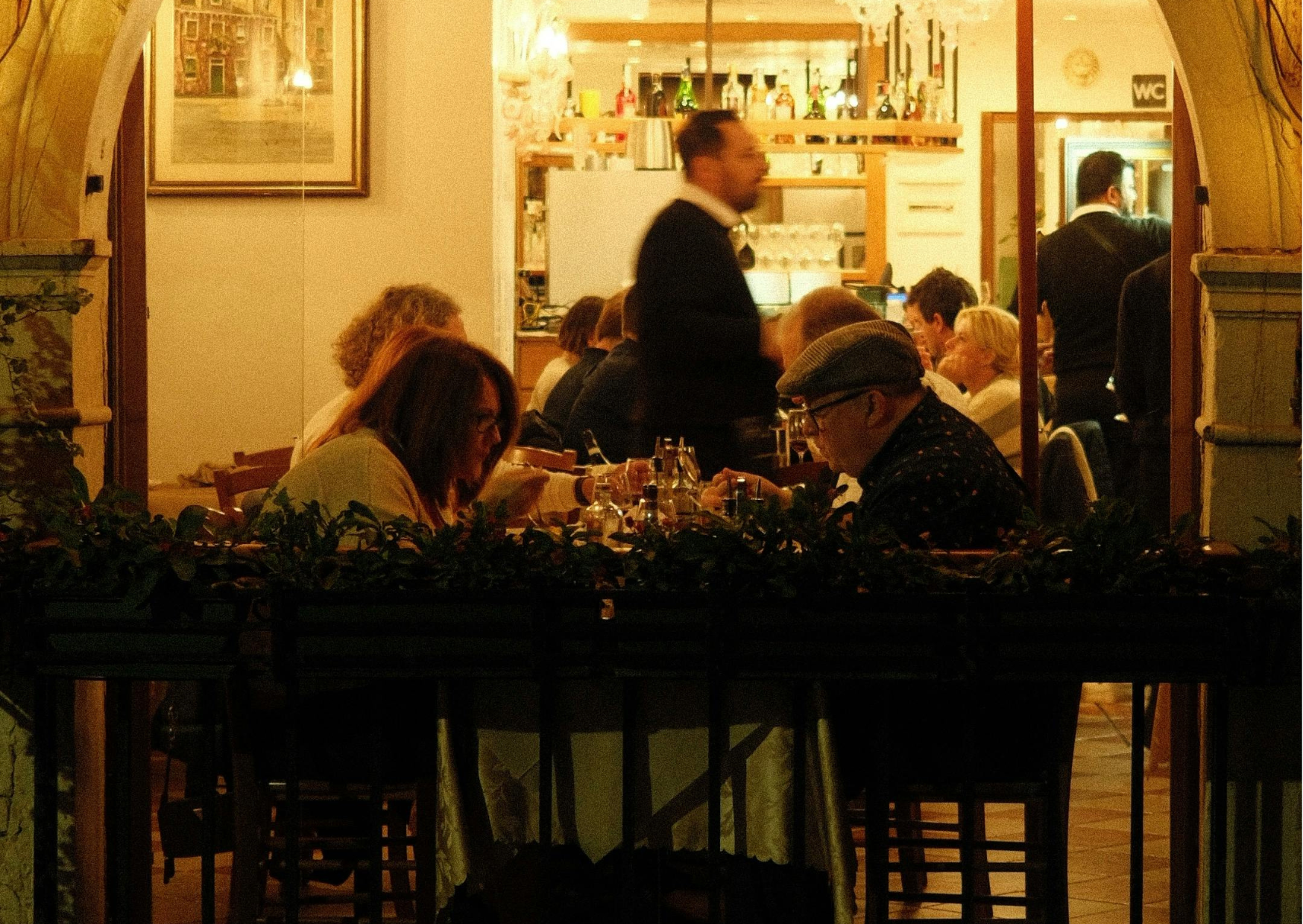
Here’s the part Americans misunderstand because they confuse “late dinner” with “late chaos.”
Many Italians eat dinner later than what’s common in parts of the U.S., especially compared with the early dinner culture in some American suburbs. In Mediterranean Europe more broadly, main meals often land around 09:00, 14:00, and 21:00 in many places, and Italy sits in that late-meal orbit.
But the key sleep habit is not the clock time. It’s the boundary.
Dinner is a meal. Then eating stops.
What Americans often do instead:
- a late dinner that is huge
- dessert that turns into snacks
- “just a little something” while watching TV
- alcohol close to bedtime
- then lying down with a stomach that never got the memo
In Italy, especially in more traditional households, you’ll often see:
- a real lunch, so dinner doesn’t have to be enormous
- dinner that is satisfying but not a food marathon
- fewer random snacks after the meal
If you want to borrow the habit, this is the usable version:
- keep dinner at least 2 to 3 hours before bed when you can
- if dinner is late, keep it lighter, soup, eggs, fish, vegetables, leftovers in smaller portions
- keep dessert with dinner, not as an open-ended evening activity
This is where Americans get mad because it sounds like restriction. It’s not restriction, it’s closure.
A closed kitchen is one of the most underrated sleep tools on earth. It reduces reflux, reduces blood sugar swings, reduces the “I’ll just eat because I’m tired” loop.
Trade-off: you will have to separate “evening comfort” from “evening eating.” Italians tend to do comfort through people, walking, and conversation more than through constant grazing.
4) Evenings have a downshift ritual that doesn’t involve adrenaline

In Italy, one of the most common sleep-friendly habits is also one of the least discussed: evenings are not designed to hype you up.
After dinner, there’s often a walk, the passeggiata culture, or just slow movement through the neighborhood. You see families, older couples, teenagers, people moving at a pace that makes Americans want to check if something is wrong.
Nothing is wrong. They’re landing the day.
This matters because Americans often run evenings like a second workday:
- intense workouts late
- stimulating TV
- doomscrolling
- email “just to clear the inbox”
- snacks to stay awake through the stimulation
- then surprise that sleep won’t happen
The Italian habit is basically the opposite:
- lower-stimulation social time
- slow movement
- fewer bright lights
- a gradual reduction in intensity
If you want to steal this, do one simple ritual for seven nights:
- after dinner, do a 15-minute walk
- keep the pace easy, no fitness heroics
- come home, keep lights warmer and lower
- keep the last hour before bed for the lowest-stimulation activity you can tolerate
Yes, this touches screens. Italy is not a screen-free utopia. People scroll here too. The difference is that for many households, the phone is not treated like the final event of the day. Conversation, TV at a normal hour, and then bed still exists as a default.
Trade-off: you might feel restless the first few nights because you’re used to using stimulation to push through fatigue. Once you stop doing that, sleep starts to feel like an actual landing, not a sudden crash.
5) The bedroom is treated like a sleep tool, not a second living room

Italian bedrooms, especially in older buildings, teach you something fast: people care about darkness and temperature.
Shutters, thick curtains, and a general dislike of bright bedroom lighting show up a lot. Partly it’s climate, partly it’s tradition, partly it’s common sense. A dark room makes sleeping easier.
The habit is not aesthetic. It’s functional.
A practical Italian-style bedroom setup looks like:
- the room is dark enough that you cannot read in bed without a lamp
- the room is cooler, often around 16°C to 19°C if heating and insulation allow
- the bed is used for sleep, not for eating, working, and scrolling for two hours
Americans often treat the bedroom as a flexible lounge:
- laptop in bed
- snacks in bed
- bright overhead light at 23:30
- then “why am I awake”
Also, light matters more than people want it to. Blue-heavy evening light can suppress melatonin and shift circadian rhythms. The Italian habit of warmer, lower lighting, shutters, and less aggressive bedroom brightness is unintentionally smart.
You don’t need to live in a Tuscan stone house to copy it. You need:
- blackout curtains or a sleep mask
- a lamp with warm light, not overhead brightness at night
- a phone that charges outside the bed area if you have the discipline for it
Trade-off: your bedroom becomes less entertaining. That is exactly why it works.
6) Weekends don’t wreck Monday, even when social life runs late

This one is quietly huge, especially for Americans in their 40s, 50s, and 60s who feel like sleep is getting more fragile with age.
Italian time-use data describes “social jet lag,” the shift between weekday and weekend sleep timing. The pattern in Italy is not that it never happens. It’s that it’s often smaller: Saturday bedtime slides later by about half an hour, Sunday wake time slides by about an hour.
That’s normal. That’s human.
What Americans often do is bigger:
- Friday night becomes a second evening
- Saturday sleep-in becomes a rescue mission
- Sunday becomes a nap day plus late-night dread
- Monday becomes punishment
The Italian “non-negotiable” habit is protecting the wake-up anchor. Even if the night ran late, the morning does not become a free-for-all.
If you want a number to hold onto:
- keep wake time within 60 to 90 minutes of your usual time, even on weekends
That one habit alone reduces the Monday headache and makes it easier to fall asleep on Sunday night.
The American trap is thinking sleep is something you can “catch up on” in one long weekend. You can recover some, sure. But wildly shifting your schedule often creates the exact insomnia you’re trying to fix.
Trade-off: you give up the fantasy of sleeping until noon. You gain a week that feels less like whiplash.
The American mistakes that break Italian-style sleep in five minutes
If you want to know why Americans struggle with sleep even in countries with better daily rhythm, it’s usually not the country. It’s the imported habits.
The usual culprits:
- caffeine too late, like a 16:00 coffee that quietly pushes bedtime back
- skipping lunch, then overeating at dinner
- treating the evening as the only personal time, then using screens to stretch it
- using alcohol to “relax” and then waking up at 03:00
- letting weekend sleep become a full schedule shift
Also, the big one that nobody wants to hear: stress.
Americans often carry a stress tempo that makes stillness feel unsafe. Italy’s slower evenings can feel uncomfortable at first because you’re not used to downshifting without stimulation.
This is why the Italian approach looks like “wasting time” from the outside. It’s not wasted. It’s the scaffolding that prevents burnout.
You can live in Rome and still sleep like you live in New Jersey. Plenty of people do. The difference is whether you let the daily rhythm train you or whether you insist on dragging your old schedule through a new place.
Seven nights to rebuild your sleep like an Italian adult
If you want something you can actually run, here’s a seven-night reset that borrows the core habits without requiring a total life overhaul.
Night 1: Set one wake time
Pick a wake time you can repeat. Put it on the calendar. Tomorrow morning, get outside light within 30 minutes of waking.
Night 2: Move caffeine earlier
If you drink coffee, stop “substantial caffeine” at least 6 hours before bed. If you want a cleaner rule, make it after 17:00, no caffeine.
Night 3: Build a real lunch
Make lunch the anchor. If lunch is solid, dinner naturally shrinks. Aim for lunch around 13:00 to 14:00 if your schedule allows.
Night 4: Close the kitchen after dinner
Pick a hard stop. If dinner ends at 20:30, kitchen is closed at 21:00. Water and tea are fine. Food is done.
Night 5: Add the downshift walk
After dinner, do 15 minutes outside. Slow. No podcasts if you can stand it. Let the day land.
Night 6: Fix the bedroom environment
Make it dark. Make it cooler. Put the phone away from the bed. If you need a number, aim for 18°C and adjust based on comfort.
Night 7: Keep the weekend swing small
If it’s a weekend night, fine, go to bed later. Keep the wake time within 90 minutes of normal. Timing beats willpower, and your body learns by repetition, not by motivation.
If you do this for one week, you’ll feel the shift even if you don’t hit perfect sleep every night:
- you get sleepier earlier
- you wake up less panicked
- late-night cravings calm down
- the “wired but tired” feeling shrinks
Then you face the real decision.
You can keep running the American pattern, where evenings are the only time that feels yours, so you stretch them until your sleep collapses.
Or you can adopt the adult pattern that shows up across a lot of Italy: smaller shifts, earlier light, real meals, and evenings designed to bring your nervous system down instead of cranking it up.
Neither choice is glamorous. One of them is repeatable.

About the Author: Ruben, co-founder of Gamintraveler.com since 2014, is a seasoned traveler from Spain who has explored over 100 countries since 2009. Known for his extensive travel adventures across South America, Europe, the US, Australia, New Zealand, Asia, and Africa, Ruben combines his passion for adventurous yet sustainable living with his love for cycling, highlighted by his remarkable 5-month bicycle journey from Spain to Norway. He currently resides in Spain, where he continues sharing his travel experiences with his partner, Rachel, and their son, Han.