
Imagine ordering “Greek salad,” then watching a mound of spring mix arrive under a blizzard of crumbled “feta,” sticky balsamic glaze, and three heroic cherry tomatoes trying to prove a point.
You picked up your fork and felt the betrayal. This is not Greece. It is a hotel buffet with confidence. Somewhere, a farmer who grew perfect field tomatoes just winced.
In Greece, a real Greek salad is horiatiki, village salad. It is a plate of big summer pieces, not a bowl of chopped leaf. You taste tomato, cucumber, green pepper, red onion, good olives, a slab of real feta, extra virgin olive oil, oregano, a little salt, maybe a splash of red wine vinegar if the cook likes it, maybe a few capers if the island insists. No lettuce. No ranch. No sugar. Bread sits on the table to soak the juices, not to fake fullness.
This piece shows you exactly what belongs on that plate, why lettuce never made the cut, how American menus drifted, and how to make the real thing at home with a method that takes ten minutes and needs no “dressing.” There is also a weekend variation for Santorini lovers, and a short list of red flags so you never get duped again.
What a Real Greek Salad Is, And What It Is Not
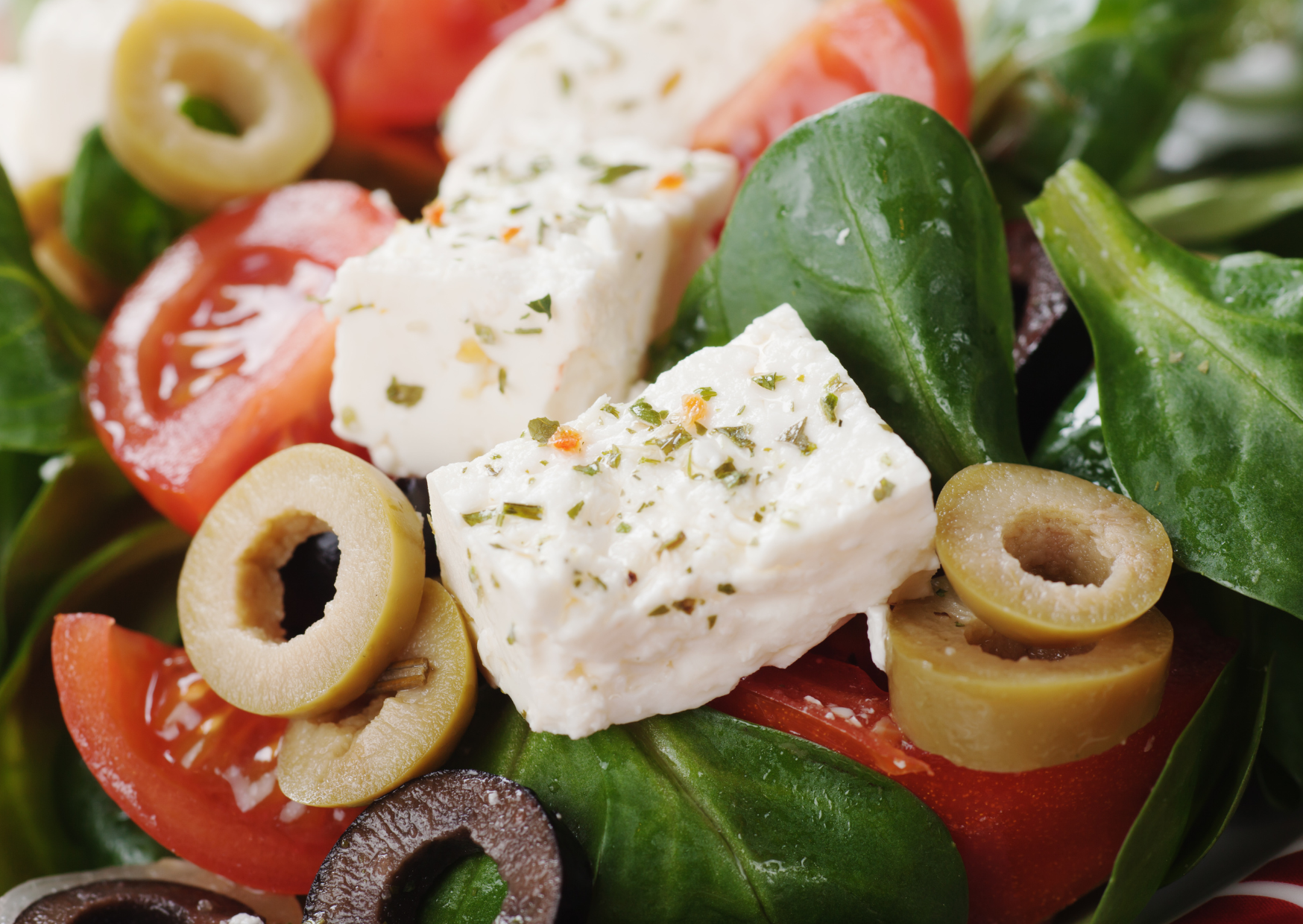
A real horiatiki has three non-negotiables. No lettuce, big-cut vegetables, feta on top.
The ingredients are few. Tomatoes, cucumber, green bell pepper, red onion, good black olives, feta, olive oil, oregano, salt, and sometimes a little red wine vinegar. The feta sits as a slab or chunky blocks on top, which lets you decide how much to take with each bite. Olives arrive as they are, often with pits. The pieces are large enough to feel rustic because the salad is meant to be eaten with bread and company, not speared alone from a plastic clamshell. Reputable Greek and culinary sources describe this set clearly, and none of them add lettuce. The point of horiatiki is summer produce with real olive oil, not filler that waters the plate.
The “no lettuce” part is not contrarian, it is context. Horiatiki is a summer table salad built around sun-ripe tomatoes. Lettuce thrives in cooler months and belongs to a different dish entirely, maroulosalata, a crisp chopped lettuce salad with dill and scallion. Calling a bowl of lettuce “Greek salad” confuses two separate ideas. If you want the lettuce one, ask for marouli. If you want Greece in a bowl in July, order horiatiki.
The flavor comes from the vegetables and the oil, not from a bottled vinaigrette. The salt on the tomatoes pulls juices into the bottom of the plate, which combine with olive oil and oregano into a natural sauce. Greeks have a word for mopping that juice with bread, papara, which tells you how central those juices are to the experience.
How American “Greek Salad” Drifted So Far
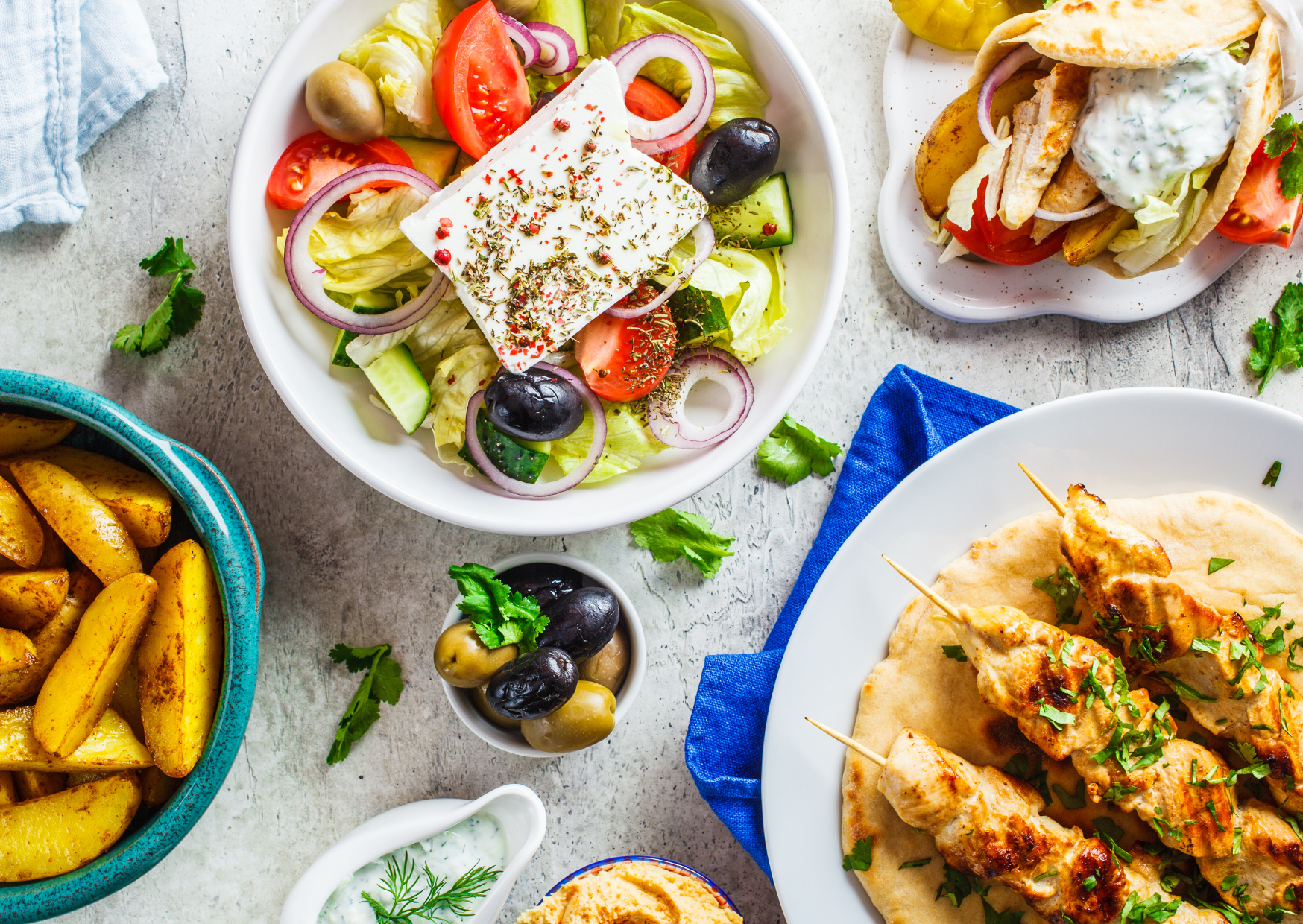
Once you see the Greek version, the American bowl makes sense as an industrial convenience. Year-round supply demanded a core of steady, shippable leaf, so lettuce slid in. Bulk-prep convenience pushed cooks to crumble feta so it coats every bite and disappears into a milky dressing. House vinaigrettes wanted a sweet acid, so balsamic snuck on from Italy. The chain menu needed a salad that could sit dressed for thirty minutes, so tomatoes got small and hard.
Every one of those choices makes a kitchen easier and a salad worse. Lettuce dilutes flavor and swallows oil. Crumbled feta loses control, you cannot decide your bite. Thick dressings mask average oil. The sweet balsamic note fights the tomatoes and the brine in the cheese. What looks generous is mostly water and sugar. That is why the real thing feels like a slap in the best way, salty, juicy, herbal, clean.
If you want an easy rule, use this one. If you can toss it, it is not horiatiki. Greek salad dresses itself in the plate. You toss bread into the juices at the end, not leaves in a bowl at the start.
How It Actually Works, With Numbers You Can Use
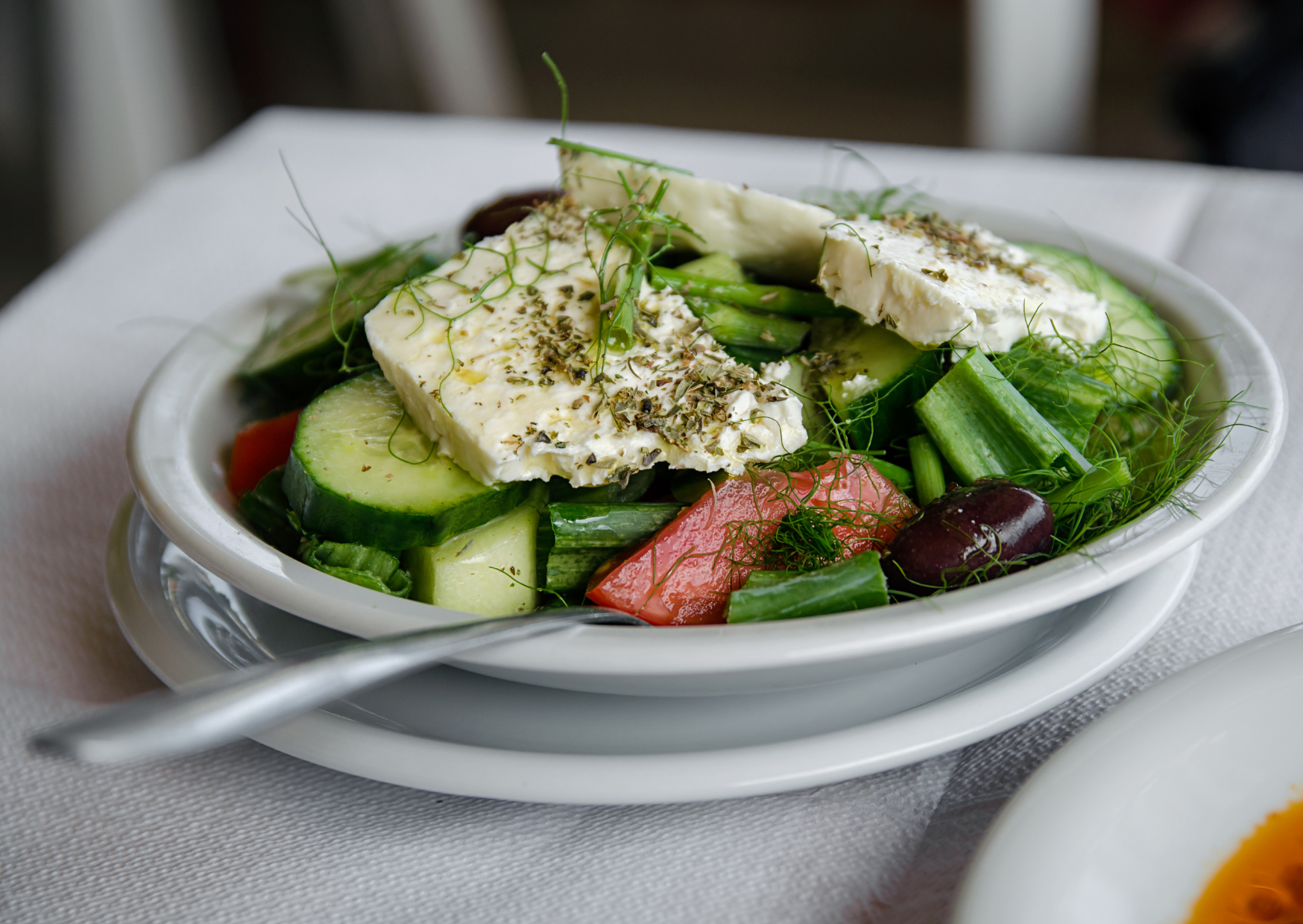
You do not need a grandmother to get this right, only good parts and simple math. The power moves are feta as slab, olive oil, not dressing, salt your tomatoes.
For four people, use 4 ripe tomatoes cut into chunky wedges, 1 large cucumber halved lengthwise and sliced, 1 green bell pepper cut in rings, 1 small red onion sliced thin and briefly rinsed or splashed with red wine vinegar, a handful of good olives with pits if you can manage them, and 200 to 250 g of real feta from Greece. Dress at the table with 4 to 6 tablespoons of extra virgin olive oil, 1 to 2 generous pinches of dried oregano, and a pinch or two of salt on the tomatoes first. If you like a sharper edge, add 1 to 2 teaspoons of red wine vinegar. There is no balsamic in this story.
Two quality notes matter. First, feta is a named Greek cheese with PDO status. The real stuff is made in Greece from sheep’s milk with up to 30 percent goat allowed, then aged in brine. Cow’s milk “feta-style” is not the same food. Buy blocks in brine and keep them cold in their liquid, then place a slab on top of the salad instead of crumbling. Second, extra virgin olive oil should be, well, extra virgin, which means low free acidity and clean fruit. Use your best bottle here, because the oil is the dressing.
The cut matters more than people admit. Big, uneven pieces make a rustic salad that eats like food, not confetti. They hold on to oil, let you drag edges through feta, and create the right tomato-oil-juice at the bottom of the plate. If you dice to neat cubes, you lose the countryside and end up with cafeteria chic.
The At-Home Playbook: Real Horiatiki, Ten Minutes, No “Dressing”
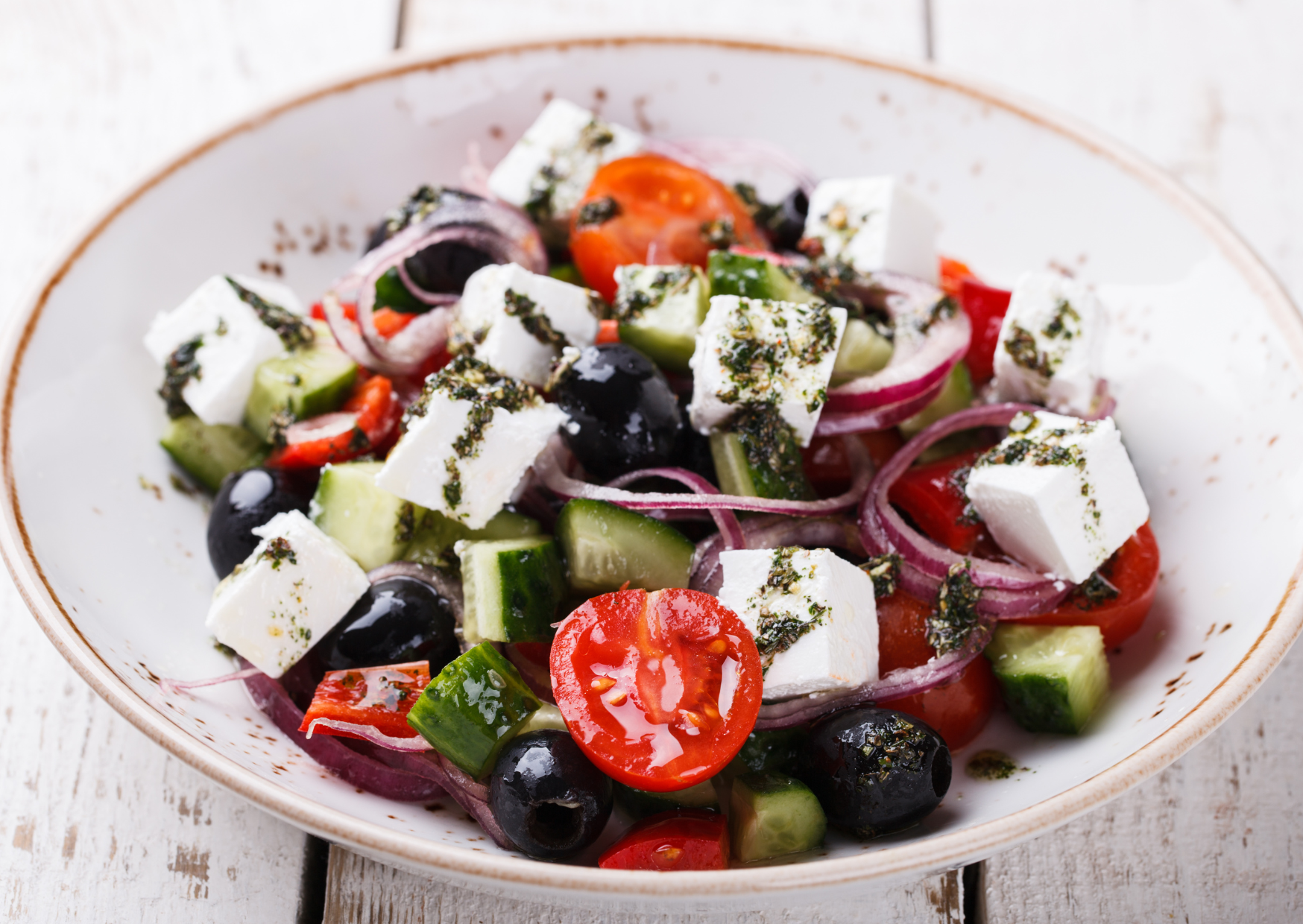
You can make the real thing on any Tuesday. Follow the sequence, and you will never reach for a bottle again. The scan-hooks are simple: cut big, not dice, do not crumble feta, oil first, not vinaigrette.
Ingredients, serves 4
- 4 ripe tomatoes, cut in large wedges
- 1 large cucumber, halved lengthwise, sliced in half moons
- 1 firm green bell pepper, sliced in rings
- 1 small red onion, sliced thin
- 12 to 16 good black olives
- 200 to 250 g Greek feta, in a block, drained
- 4 to 6 tbsp extra virgin olive oil
- 1 to 2 tsp red wine vinegar (optional, taste-dependent)
- 2 big pinches dried oregano
- Sea salt
Method
- Salt the tomatoes in a wide bowl and let them sit while you prep the rest. Those first grains start the juice that will become your “dressing.”
- Add cucumber, green pepper, onion, and olives. Do not toss yet.
- Sprinkle oregano between the vegetables, then pour the olive oil over the top. Add vinegar if you like a little bite. Taste a tomato and adjust salt.
- Transfer to a wide plate or shallow bowl. Set the block of feta on top. Drizzle a little more oil and a pinch of oregano over the cheese.
- Bring bread. Sop the juices at the end. That last spoonful in the plate is the point.
Do not add lettuce, spring mix, baby spinach, balsamic, garlic powder, or a bottle labeled “Greek dressing.” The oil and the tomato juice already did that job.
Why this works
- Salting tomatoes first gives you the papara-ready tomato broth that Greeks expect.
- The slab of feta lets the table control intensity, which keeps the salad from turning salty everywhere.
- Olive oil over vegetables extracts aroma from oregano and onion, which is why the salad smells like summer.
Variations That Are Still Greek, And the Ones That Are Not
There are regional touches that stay inside the family. The scan-hooks here are capers and barley rusk, green pepper optional, marouli is a different salad.
On Santorini you may meet a few capers scattered over the plate, or a dakos-style move where chopped tomato and feta sit on a barley rusk. Both belong to real Greek eating and keep the lettuce banished. In parts of the islands, cooks like a modest splash of red wine vinegar. In the Peloponnese you will see slightly different olives. In urban tavernas, onions might rest in a splash of vinegar to tame their bite. All of this is fine. The core stays.
Green pepper is common but not absolute. Some cooks skip it, some insist. If you add it, keep it simple and crisp.
Maroulosalata deserves a second mention. It is a Greek lettuce salad with dill, scallion, and an olive-oil-and-lemon dressing. It is refreshing, it is Greek, it is not horiatiki. Do not mash the two and call it “Greek salad.” Order them both and learn the difference.
American “house Greek” habits, on the other hand, are out. Balsamic is Italian, not Greek. Crumbled cow’s-milk “feta” misses the point and the PDO. Pepperoncini belong to pizza joints, not this plate. Spring mix is a salad, it is just not this one.
Buying Guide: Feta, Olives, Oil, And What To Avoid
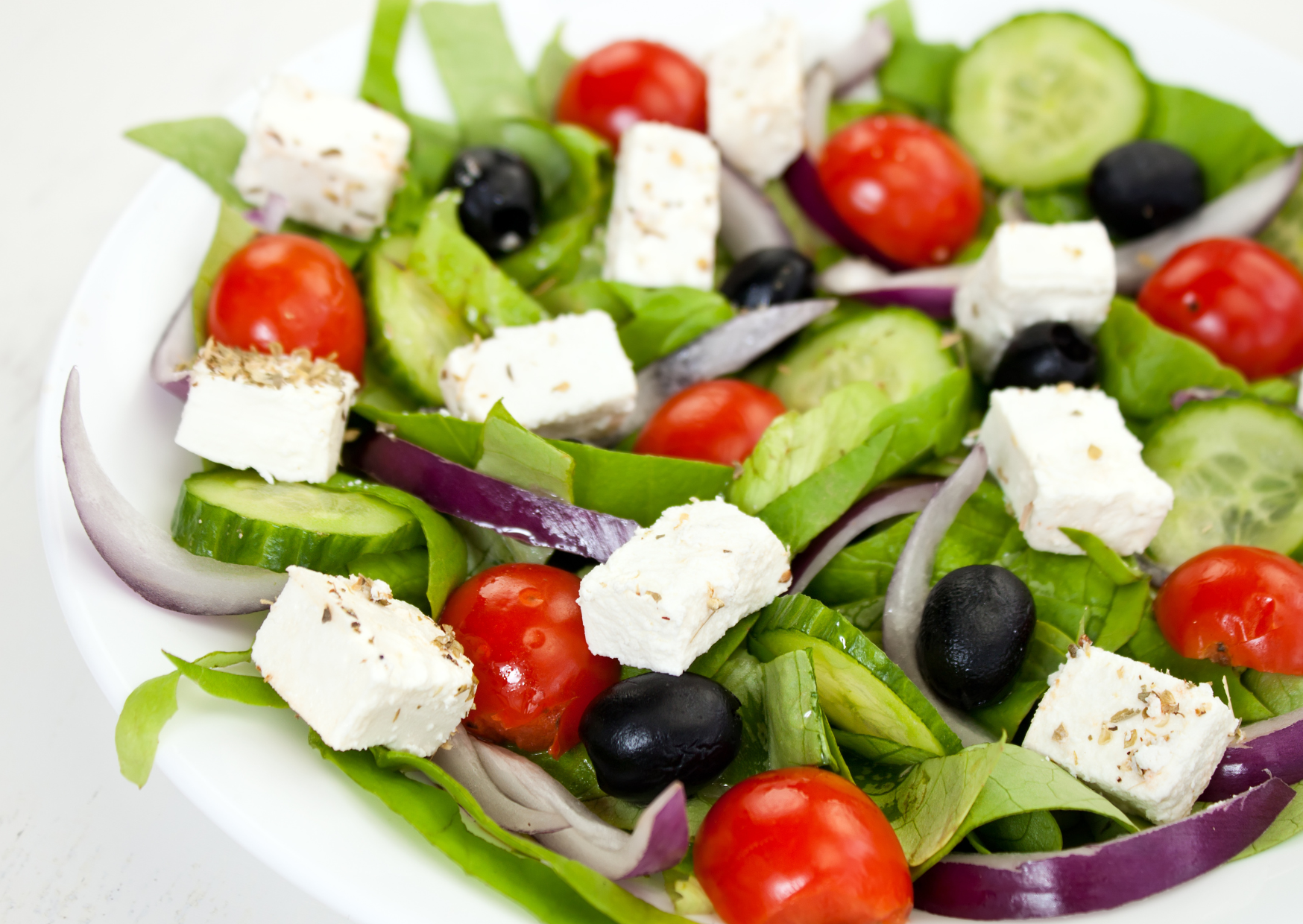
If you want authentic flavor, buy like someone who cares about what goes on the plate. The anchors are Greek feta, real olives, extra virgin olive oil.
Feta: look for the PDO stamp and Greek origin. Real feta is made in Greece from sheep’s milk with up to 30 percent goat, aged in brine. Buy blocks in brine, not dry crumbles. Keep the cheese submerged in its liquid so it stays creamy and not chalky. Put a slab on the salad, then break off what you want at the table.
Olives: Kalamata-type olives are classic, but any full-flavored, naturally fermented black olive works. Choose whole olives with pits for best texture. If you prefer pitted, fine, but accept the textural trade-off.
Olive oil: use extra virgin with clean fruit and bite. The International Olive Council’s baseline definition for extra virgin includes free acidity at or below 0.8 percent and no sensory defects. You do not need jargon on the label to taste quality, but if you have a “best bottle,” this is where you pour it.
Vinegar: optional. When used, it is red wine vinegar, in a small splash. You are seasoning the vegetables, not building a separate sauce.
Things to avoid: “Greek dressing” in a bottle, balsamic glaze, garlic powder dust, spring-mix filler, cow’s-milk crumbles sold as feta. If the ingredient list on a “Greek salad kit” reads like a snack aisle, walk away.
Red Flags On Menus: How To Spot an Insult Before It Arrives
You can see a fake from three meters away. Keep these no-thank-you tells in mind and order something else.
- Listed with “mixed greens” or “romaine.” That is a lettuce salad with Greek ambitions.
- “Crumbled feta” baked into a dressing. The cheese should be on top, in a block or solid chunks.
- Balsamic reduction stripes. Pretty, wrong cuisine.
- Cherry tomatoes in January bragging about “Greek.” Horiatiki is a summer dish. In winter, order cabbage-carrot politiki or marouli and be happier for it.
- No bread on the table. How are you going to make papara at the end. You are not, which means the cook forgot the point.
If you are in a Greek restaurant and want the authentic plate, use the magic word. Ask for horiatiki. Any kitchen that cares will know.
The Weekend Bonus: Santorini-Style Dakos, With Rules Intact
When you want something that eats like a light meal, make a dakos-style plate. It keeps the spirit of horiatiki and adds crunch.
You need: 2 large barley rusks or very dry country bread slices, 4 ripe tomatoes, 1 small cucumber, a few capers, a handful of good olives, 150 g feta in a block, olive oil, oregano, salt. Soften the rusks with a spoon or two of water and a streak of oil so they do not shatter. Spoon salted chopped tomatoes over the top, add small cucumber pieces, scatter capers and olives, lay feta in chunks, drizzle olive oil, oregano, and a pinch of salt. Eat with a knife and fork. The bread catches the juices and you will not miss a leaf.
What This Means For You
Greek salad is not a canvas for salad bar creativity. It is a specific summer dish with a short ingredient list and a clear method that protects flavor. If you want the Greek experience at home or in a restaurant, do three things. Drop the lettuce, put a real slab of feta on top, and use olive oil, not “dressing.” Salt your tomatoes, cut big, and let the plate make its own sauce. Mop the juices with bread and call it what it is, a simple, perfect meal that never needed a drizzle of anything sweet to earn your love.
Order horiatiki when you see it, teach your table the word papara, and stop paying twelve dollars for a bowl of wet leaves with a Greek accent. The countryside version traveled the world for a reason. Put the village back in the bowl.
Origin and History
The dish known globally as “Greek salad” originates from rural Greece, where it is called horiatiki, meaning “village salad.” It was never designed as a light starter or decorative side, but as a practical meal built from ingredients farmers had on hand. Tomatoes, cucumbers, onions, olives, and cheese required no cooking and could withstand heat, making them ideal for long days in the sun.
Olive oil, not lettuce, formed the foundation of the salad. In a land where olive trees were central to daily life, oil served as both flavor and sustenance. Combined with briny olives and sharp cheese, it created a dish rich enough to replace bread when necessary.
Feta was traditionally served as a slab placed on top, not crumbled throughout. This wasn’t for aesthetics, but for preservation. Cheese lasted longer when left intact, and diners could portion it themselves as they ate.
The absence of lettuce was intentional. Lettuce wilts quickly, adds water, and offers little nutritional value compared to the core ingredients. Greek salad evolved to be sturdy, satisfying, and resistant to heat—qualities that lettuce undermines entirely.
In the U.S., Greek salad has been rebranded as a “healthy” leafy dish, often bulked up with lettuce to increase volume and lower perceived calories. This fundamentally alters the dish’s purpose and flavor balance.
The controversy isn’t just culinary, but cultural. Adding lettuce reflects a misunderstanding of how Mediterranean diets function. Greek food isn’t built around filler ingredients meant to dilute calories; it’s built around nutrient-dense foods eaten in moderation.
Another point of contention is cheese. American versions often use crumbled feta mixed throughout, reducing its impact and changing texture. In Greece, feta is a central component, not a garnish.
Calling these adaptations “Greek salad” frustrates many Greeks because it erases context. The dish isn’t wrong because it’s different it’s wrong because it ignores the reasons the original exists in the first place.
How Long It Takes to Prepare
Authentic Greek salad is one of the fastest traditional dishes to prepare. With sharp knife work, it comes together in under 10 minutes. There is no cooking, chilling, or resting involved.
Preparation focuses on cutting ingredients into large, rustic pieces rather than fine chopping. This preserves texture and prevents excess moisture from watering down the salad.
The simplicity of preparation reflects its origins as a daily food. It was never meant to require planning or effort, only good ingredients and timing.
Compared to American versions that involve washing lettuce, drying greens, and preparing dressings, the traditional method is faster and more efficient.
Serving Suggestions
Greek salad is typically served as a shared dish, placed at the center of the table alongside bread. It’s meant to accompany a meal, not precede it as a starter.
The salad should be dressed lightly with olive oil and seasoned sparingly. Vinegar is optional and often debated, but if used, it should never dominate.
Serve it immediately after preparation. Letting it sit causes tomatoes to release liquid and softens the vegetables, diminishing contrast.
In Greece, it’s common to soak bread in the oil and juices left behind. This is not considered sloppy, but one of the most enjoyable parts of the meal.
Final Thoughts
The reason real Greek salad has no lettuce is not tradition for tradition’s sake. It’s because lettuce contributes nothing the dish needs and actively detracts from what it does best.
American versions aren’t insulting because they adapt flavors, but because they misunderstand purpose. Greek salad isn’t a low-calorie side it’s a complete, balanced dish built on quality ingredients.
Understanding this changes how you approach Mediterranean food as a whole. It’s not about adding volume or removing fat; it’s about balance and satisfaction.
Once you experience Greek salad as it was meant to be eaten, lettuce feels unnecessary. What remains is a dish that’s simple, filling, and perfectly complete without apology.

About the Author: Ruben, co-founder of Gamintraveler.com since 2014, is a seasoned traveler from Spain who has explored over 100 countries since 2009. Known for his extensive travel adventures across South America, Europe, the US, Australia, New Zealand, Asia, and Africa, Ruben combines his passion for adventurous yet sustainable living with his love for cycling, highlighted by his remarkable 5-month bicycle journey from Spain to Norway. He currently resides in Spain, where he continues sharing his travel experiences with his partner, Rachel, and their son, Han.