
Sunday starts innocent. You tell yourself you’ll “prep a little,” maybe roast some vegetables, maybe cook a pot of rice, maybe do the kind of calm planning that only exists in imagination.
Then real life shows up. Laundry. A kid who suddenly needs a school thing. A work call that bleeds into lunch. And by Monday night, you’re back to that familiar European-expat problem: you’re tired, it’s dark early, and you’re about to pay for dinner with your wallet and your mood.
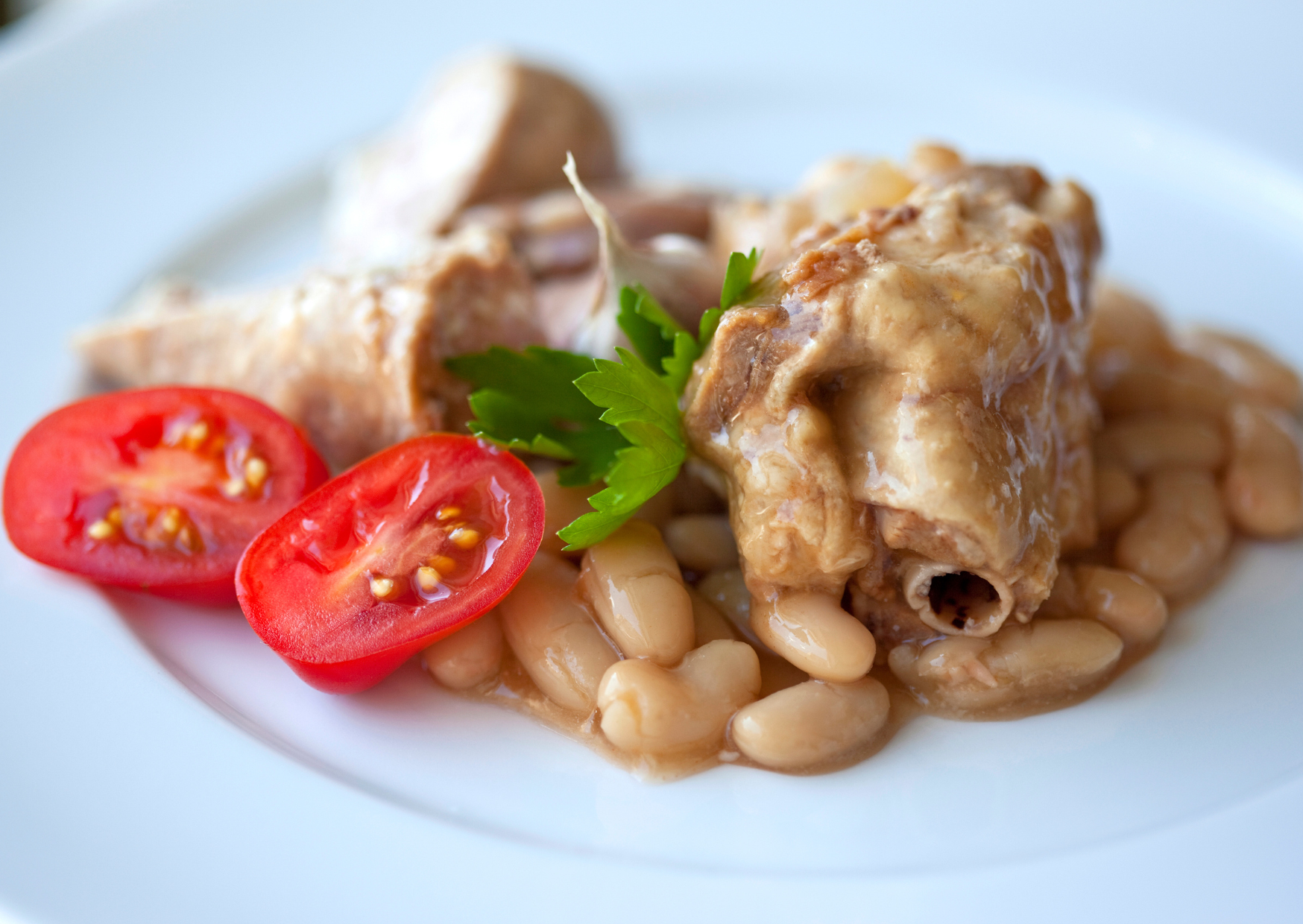
This is the exact moment a French-style bean casserole starts making sense.
Not because it’s fancy. Because it’s one big decision that buys you five small ones later.
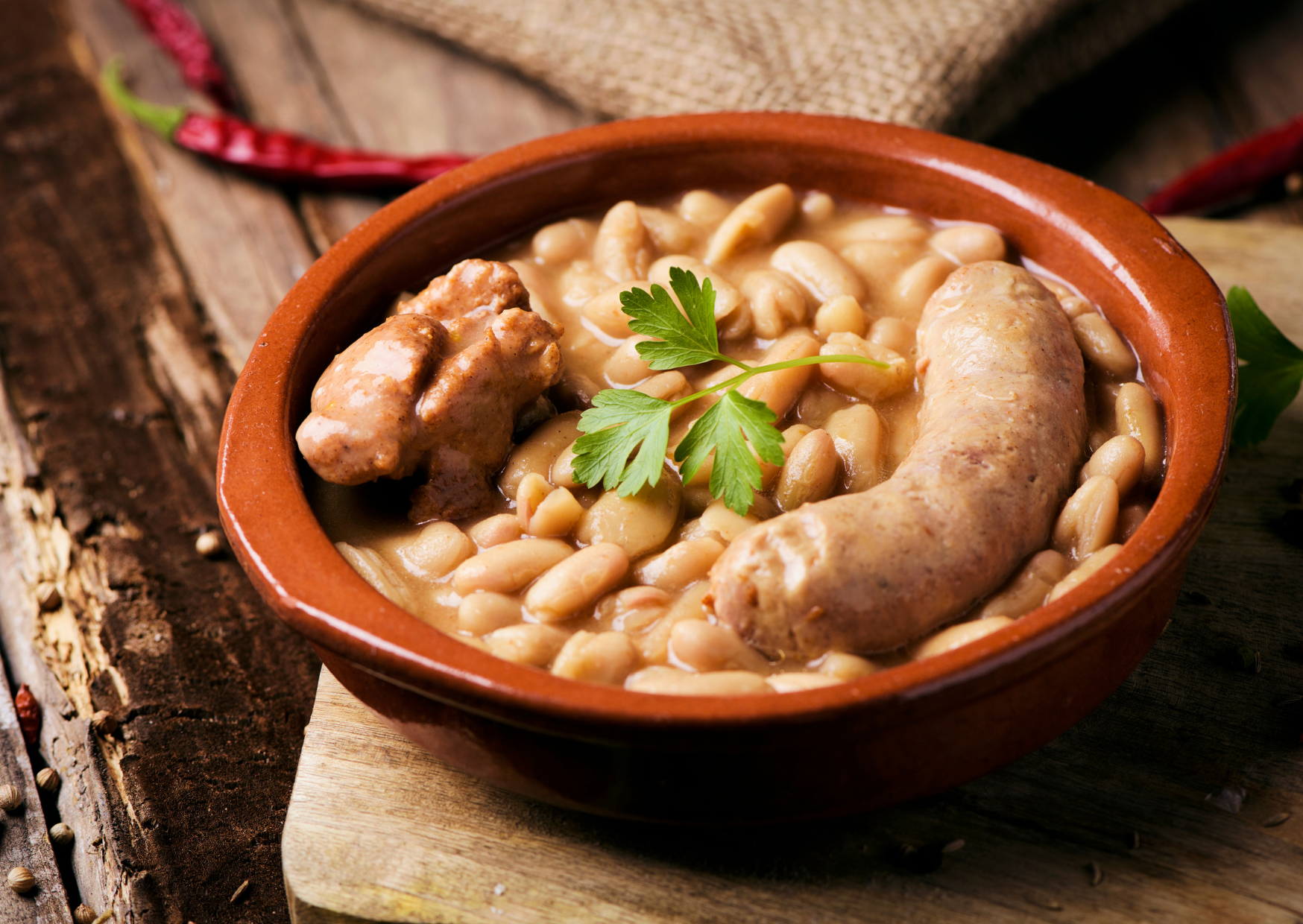
The dish is cassoulet logic without the perfectionism: white beans, garlicky meat, slow heat, and a crust that forms on top like it’s trying to prove a point. It takes all day, yes. But most of that time is hands-off. You’re not chained to the stove. You’re just letting a pot do the slow work so your week doesn’t have to.
It’s the opposite of modern cooking advice. No hacks. No “15-minute dinner.” Just one Sunday where you cook like a slightly stubborn French aunt, and suddenly weeknights feel less like a negotiation.
The problem it solves is not dinner, it’s decision fatigue
Weeknight cooking isn’t hard because you can’t cook.
It’s hard because you have to decide, again. What to make. What to buy. What to thaw. What to clean. And you have to do it at the exact time of day when your brain is already fried.
In Spain, I’ve watched Americans chase the wrong solution. They try to become more disciplined. They buy gadgets. They download meal plans. They try to “eat clean” like it’s a moral project. Meanwhile, the actual issue is that weeknights punish people who rely on motivation.
A slow casserole fixes this because it turns a chaotic week into a predictable one. You cook once, you eat repeatedly, and you stop spending money on panic meals.
Also, this is a very European way to live, even if it’s not always labeled as such. People cook big when they have time. Then they coast on it. Not in a depressing “leftovers again” way. In a we already handled dinner way.
The casserole also does something else that matters if you’re living abroad. It makes your home feel like a home. There’s a smell, a rhythm, a pot in the oven that quietly says, we live here, we’re not just passing through.
And yes, it changes your budget. Delivery and last-minute dinners out are usually the first leak for remote workers and new arrivals. This dish is basically a polite, flavorful barrier between you and that leak.
If you want one sentence to hold onto, it’s this: Sunday effort buys weekday peace.
What “French casserole” means here, and why cassoulet people get intense about it
Cassoulet is one of those dishes people argue about like it’s politics.
Which town did it right, which sausage counts, whether duck confit is required, how many times you must break the crust. There are whole regional identities wrapped up in a pot of beans.
For our purposes, you don’t need the argument. You need the structure.
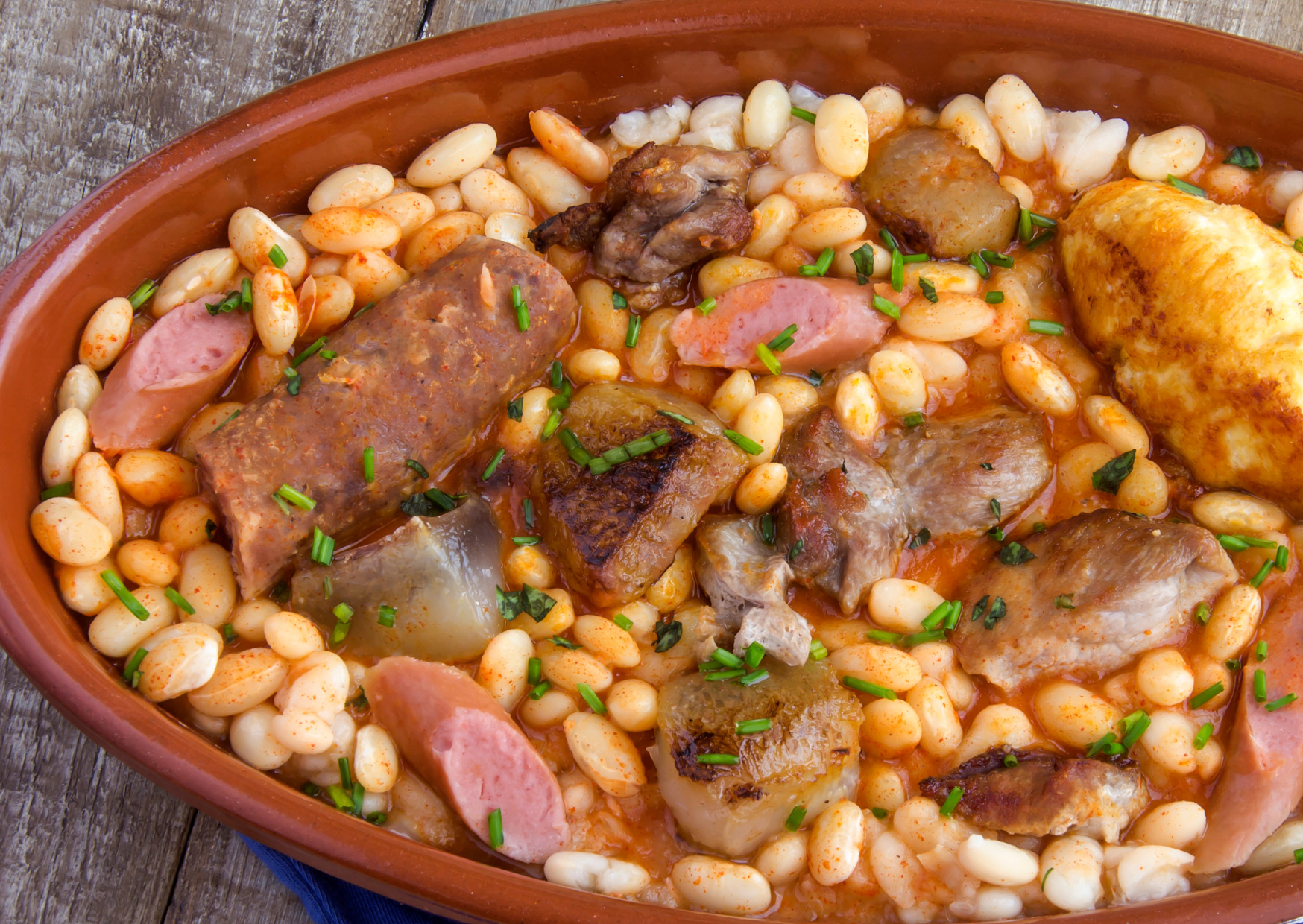
Cassoulet is a southern French bean and meat casserole, traditionally baked slowly so the beans become creamy, the meat becomes tender, and the top forms a dark, savory crust. That crust is not decoration. It’s part of the texture, and part of the emotional experience.
The magic is simple and annoyingly reliable:
- White beans that hold their shape but go creamy inside
- Garlic and aromatics that perfume the whole pot
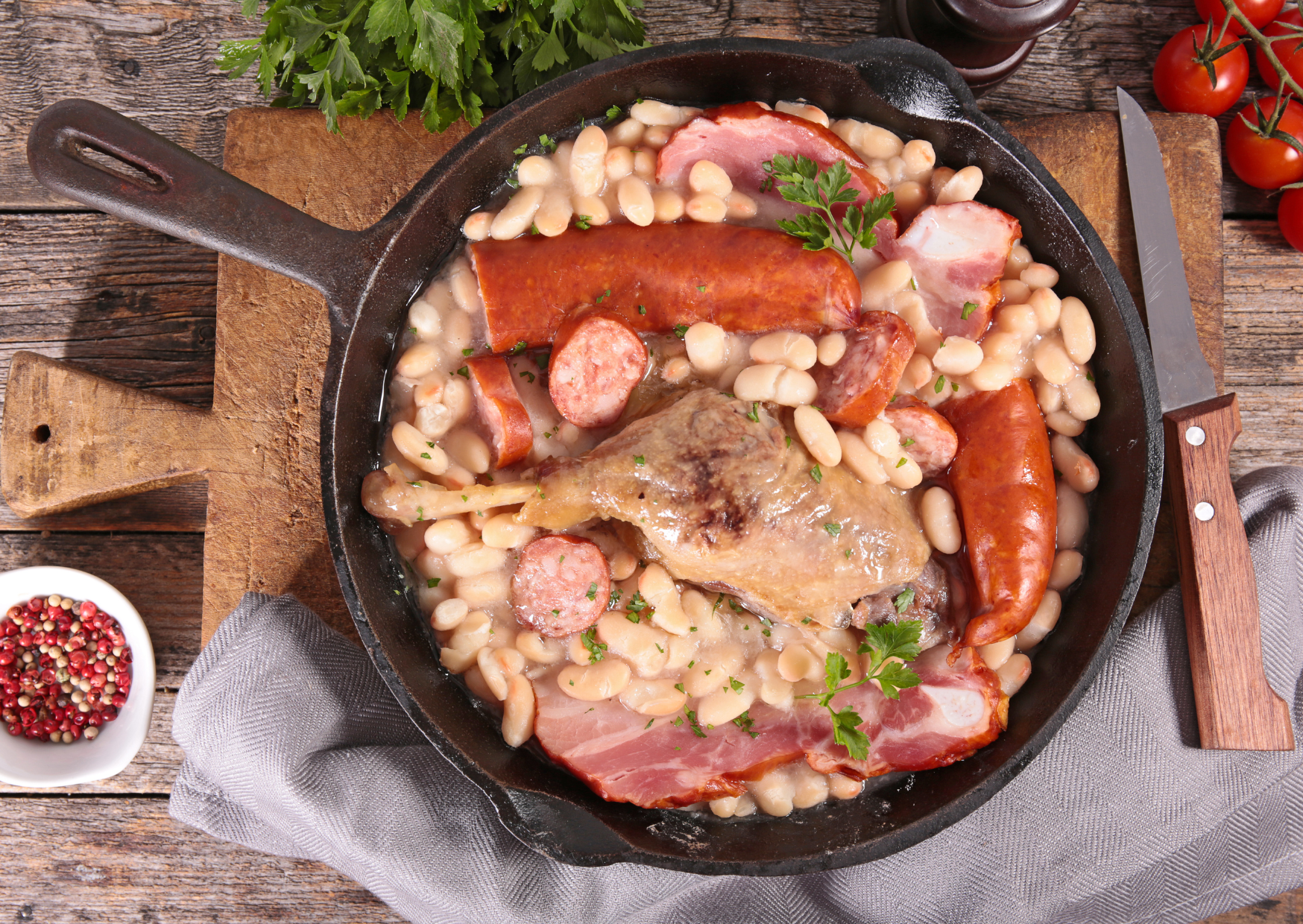
- A mix of meats that give fat and depth
- Slow oven heat that reduces the liquid into something richer
- A top crust that you break and re-form a few times until it looks dramatic
That last part sounds fussy, but it’s actually forgiving. You’re just letting the top dry slightly, then pushing it down so fresh liquid comes up. You do it a few times, and the top gets better.
If you live in Spain, you can make this without hunting for rare French ingredients. Use alubias blancas or judión style beans, panceta, and good garlicky sausage. If you can find duck confit, great. If not, chicken thighs work beautifully.
This is not a museum recipe. It’s a weeknight strategy disguised as comfort food.
The all-day cassoulet-style casserole you can make in a Spanish kitchen
This version is built for normal Spanish shopping, normal equipment, and a day where you want the oven to do the heavy lifting.
Servings and timing
- Serves: 6 to 8
- Prep time: 25 minutes
- Active time: 45 minutes
- Bake time: 3 to 3.5 hours
- Rest time: 20 minutes
- Total “all day” time: about 4.5 hours, but only a small chunk is hands-on
Equipment
- Dutch oven or heavy pot with lid, or a deep oven-safe casserole (4 to 6 liters)
- Baking sheet (to catch drips)
- Fine mesh strainer (optional, helpful if you want very clean beans)
- Wooden spoon
- Instant-read thermometer (optional)
Ingredients
Beans
- Dried white beans: 500 g (about 2 1/2 cups)
(Cannellini works, so do most Spanish white beans) - Water for soaking and cooking
Meat
- Pork belly or panceta: 250 g (about 9 oz), cut into chunks
- Garlicky pork sausage: 400 g (about 14 oz)
(A Toulouse-style sausage is classic, but any good coarse sausage works) - Chicken thighs, bone-in: 4 (about 900 g to 1 kg total)
Aromatics and flavor
- Onion: 1 large (about 250 g), diced
- Carrots: 2 (about 200 g), diced
- Celery: 2 stalks (about 120 g), diced (optional)
- Garlic: 6 cloves, sliced
- Tomato paste: 2 tbsp (30 g)
- Dry white wine: 200 ml (about 3/4 cup) optional
- Chicken stock: 1.2 liters (about 5 cups)
(Stock cube plus water is fine) - Bay leaves: 2
- Thyme: 1 tsp dried or 6 sprigs fresh
- Black pepper: 1 tsp
- Salt: start with 1 tsp, adjust at the end
- Breadcrumbs: 60 g (about 1/2 cup) optional but great for crust
Method
- Soak beans overnight in plenty of water. If you forgot, do a quick soak: boil 2 minutes, turn off heat, cover 1 hour.
- Cook beans in fresh water at a gentle simmer until mostly tender, usually 45 to 70 minutes depending on the bean. Drain. They should still have a little bite because they’ll finish in the oven.
- Heat oven to 160°C (320°F).
- In your Dutch oven, brown panceta chunks over medium heat until they give off fat and get color. Remove to a plate.
- Brown sausages lightly, remove. Brown chicken thighs skin-side down until golden, remove. You’re building flavor, not fully cooking.
- In the same pot, sauté onion, carrots, celery (if using), and garlic until soft, about 8 minutes. Stir in tomato paste for 1 minute.
- Add wine (if using) and scrape the bottom. Add stock, bay, thyme, pepper, and the browned meats back in. Add beans. Liquid should come just to the top of the beans and meat, not drown it.
- Cover and bake 2 hours. Uncover and bake 1 to 1.5 hours more. Every 30 minutes, push the crust down gently once so new liquid rises. This is the crust ritual, and it’s worth doing.
- Rest 20 minutes before serving. The pot thickens as it sits.
Storage and reheating
- Fridge: 3 to 4 days
- Freezer: up to 3 months for best texture
- Reheat: oven or pot on low until hot, and if you’re being strict about safety, reheat leftovers to 74°C (165°F)
Substitutions that keep the soul
- No panceta: use bacon lardons or a bit of jamón plus olive oil
- No chicken thighs: use pork shoulder chunks
- No wine: skip it and add a splash of lemon at the table
- Vegetarian-ish: beans, stock, aromatics, tomato paste, lots of olive oil, and smoked paprika, still deeply good
This is a long cook, but it’s low drama cooking once it’s in the oven.
The cost math, and how this becomes cheaper than “simple weeknights”
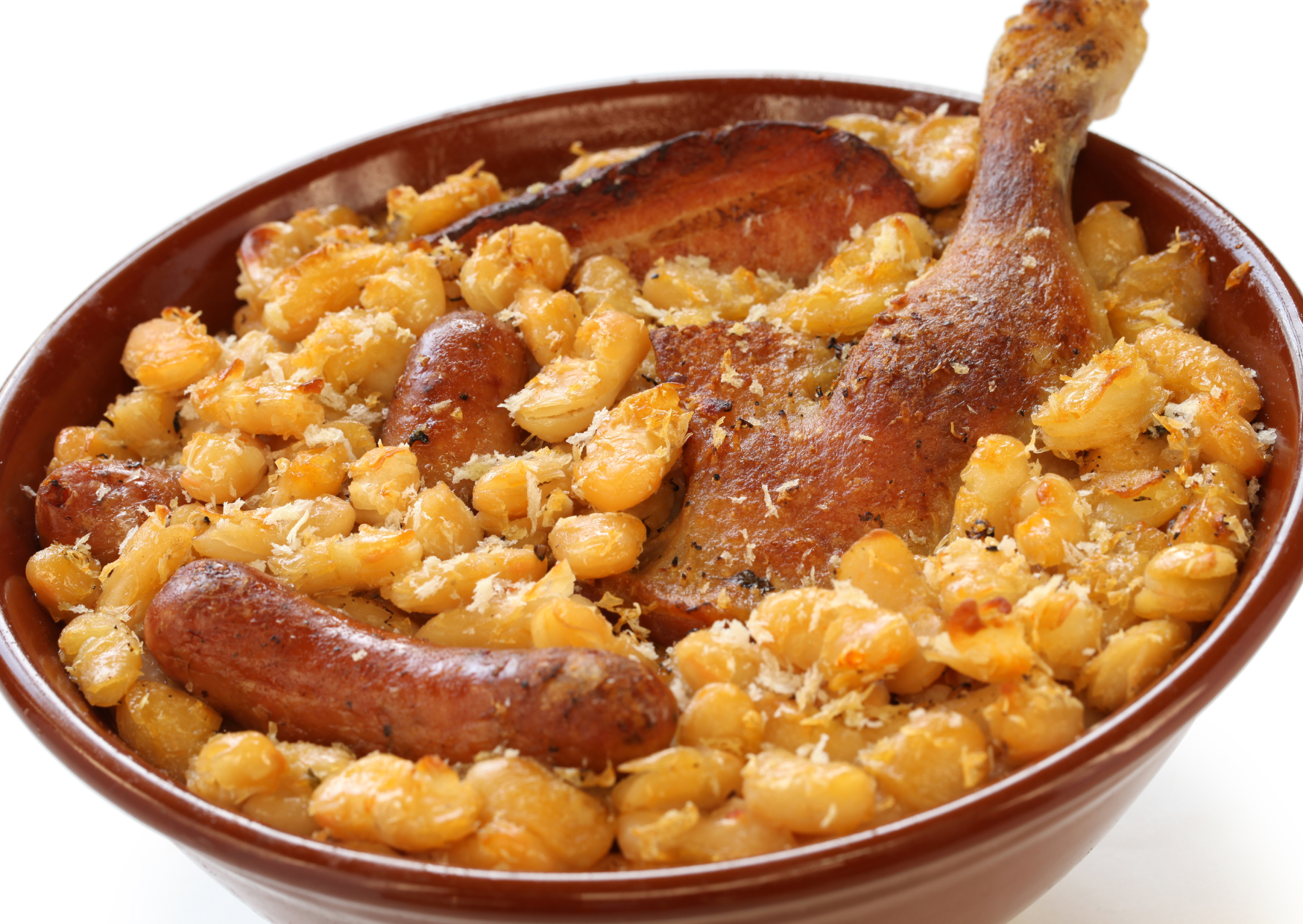
This dish looks expensive because it has meat and time.
But the actual budget win is that it replaces multiple dinners and reduces impulse spending. That’s why it changes weeknight cooking. It makes “we’ll just grab something” less likely.
Here’s a realistic Spain cost lane, depending on what you buy and where you shop:
- Dried white beans 500 g: €1.50 to €3.00
- Panceta 250 g: €2.00 to €4.00
- Sausage 400 g: €3.50 to €7.00
- Chicken thighs (4): €4.00 to €7.50
- Onion, carrots, celery, garlic: €1.50 to €3.00
- Stock: €0.50 to €2.00
- Tomato paste, herbs, bay: pantry pennies per pot
Total: roughly €13 to €26 for 6 to 8 servings.
That’s about €2 to €4 per serving if you’re realistic and don’t buy luxury meat. Even if you splurge and add duck confit, you’re still often cheaper than two nights of delivery.
The other thing people forget to price is the “side” spending that comes with chaotic dinners: extra snacks, extra drinks, the random dessert because you’re stressed. A big, satisfying casserole tends to reduce that because it’s filling and it makes you feel like you already handled life.
If you want the cost to stay sane, there are two rules:
- Beans are the base, not an afterthought. Beans are the budget lever.
- Use meat for flavor and fat, not for volume. Panceta plus sausage plus chicken is plenty.
Also, don’t overdo the sides. Cassoulet logic is “one bowl and bread.” If you start adding salads, cheeses, and extra courses, you’re turning a budget tool into a party. Parties are fun. Parties are not the point.
How to eat this for seven days without feeling like you’re being punished
Cassoulet-style casseroles are one of those foods that taste better the next day. The flavors knit, the beans go creamier, the whole thing becomes more coherent.
The trick is to use it like a base, not like the only thing you eat.
Day 1: Big bowl, bread, done.
This is dinner. Don’t complicate it. One bowl is enough.
Day 2: Lunch is value, dinner is theater.
Have cassoulet for lunch, then a lighter dinner (tortilla, salad, yogurt, fruit). This keeps you from feeling “heavy food” fatigue.
Day 3: Crispy top reset.
Spoon leftovers into a small baking dish, add a tiny sprinkle of breadcrumbs, and bake 15 minutes at 200°C (392°F). The crust comes back, and it feels new.
Day 4: Soup trick.
Add a ladle of stock or water to leftovers in a pot, warm gently, and you suddenly have a bean stew. A squeeze of lemon makes it feel brighter.
Day 5: Pasta night that still feels like cooking.
Warm a small portion and spoon it over pasta or rice. It sounds odd, but it works, and it turns “leftovers” into planned repurposing.
Day 6: Freeze two portions.
Do it before you’re sick of it. Frozen portions are insurance for a future weeknight.
Day 7: Clean-out bowl with greens.
Warm the last portion and stir in spinach for one minute. It cuts the richness and ends the week on something that feels balanced.
Two practical notes:
- Don’t reheat the whole pot five times. Reheat what you’ll eat, keep the rest cold.
- If the casserole looks dry after a day or two, add a splash of stock. Beans keep absorbing liquid.
That’s it. This dish is not a prison sentence. It’s a strategy.
The mistakes that make people hate cassoulet, and how to avoid them
Most cassoulet failures are texture failures.
Mushy beans
This happens when beans are fully cooked before the oven, or boiled hard. Cook them until mostly tender, then let the oven finish. Gentle simmer matters.
Dry casserole
If your liquid level starts too low, the oven will dry it out before the beans go creamy. Start with liquid just covering the beans, and check once or twice. Add stock if needed.
Salty pot
Sausage and panceta carry salt. Stock can carry salt. Salt lightly early, then adjust at the end. You can always add. You can’t remove.
Greasy mouthfeel
A little fat is part of the dish. Too much fat is unpleasant. If your panceta is very fatty, spoon off a little surface fat after baking. Don’t obsess, just remove the obvious excess.
No crust, no joy
The crust is part of the pleasure. Bake uncovered for the last stretch and push the crust down a few times so it reforms. It’s not a superstition, it’s how you get texture.
Bland flavor
This is usually a browning issue. Brown the meats. Cook the tomato paste for a minute. Use enough garlic. Browning builds the base.
And one more Spain-specific reality: ovens vary wildly. If yours runs hot, lower the temp to 150°C and extend time slightly. If yours runs weak, you might need 170°C. The goal is slow bubbling, not aggressive boiling.
The thing this dish changed for me, and why it matters if you’re building a life abroad
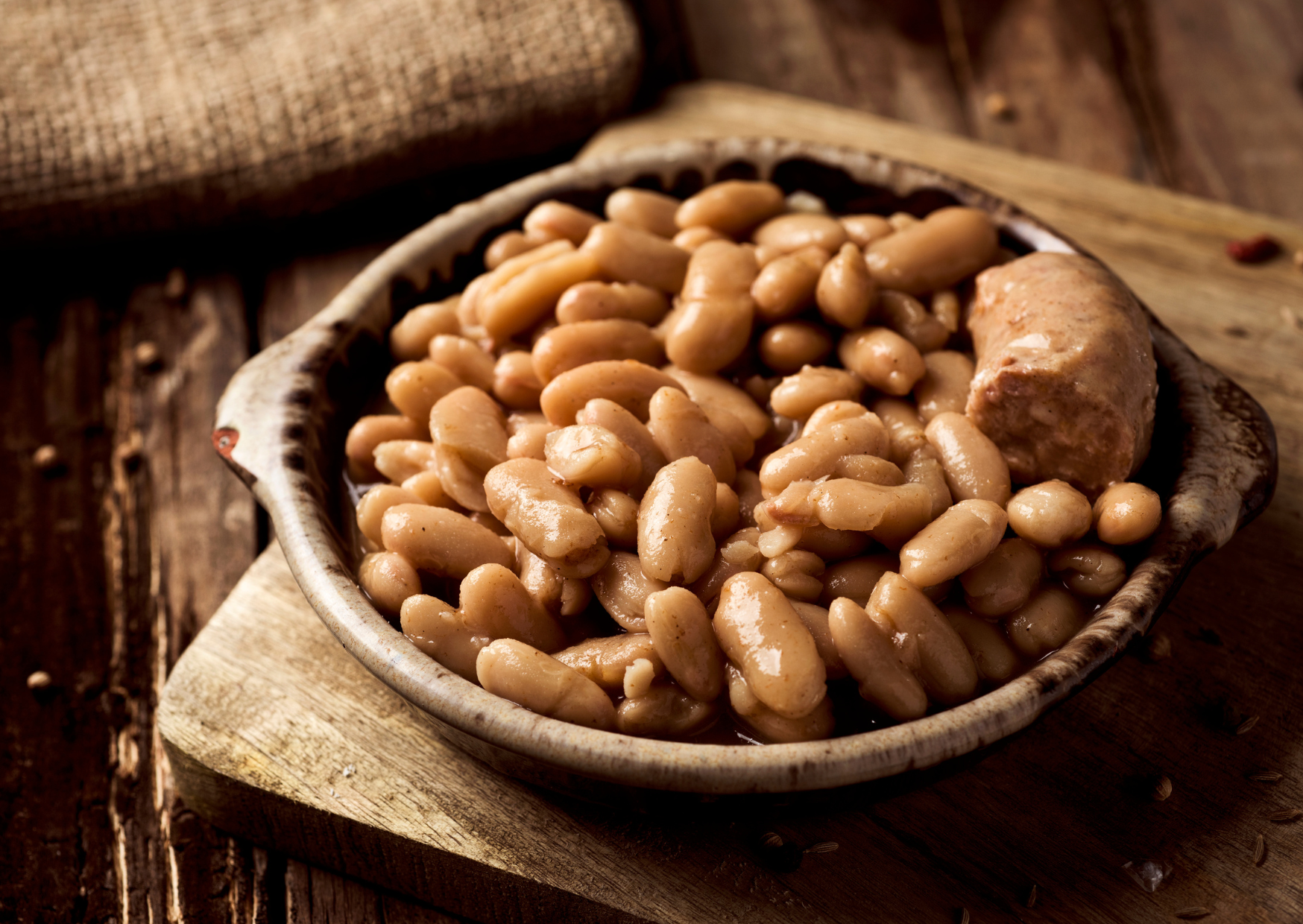
This casserole didn’t make me a better cook. It made me a more realistic one.
It taught me that weeknight cooking is mostly about structure, not inspiration. If you wait to feel inspired at 19:30 on a Tuesday, you’re going to end up paying for dinner in the most expensive way possible.
It also taught me a very European lesson: you don’t need novelty every day. You need a few reliable foods that create calm. Then you spend your energy on the parts of life that actually deserve it.
This is why French “all day” dishes are not just culinary nostalgia. They’re household engineering. They turn cheap ingredients into something rich, and they turn one day of attention into a week of less chaos.
If you’re trying to live well in Europe, especially if you’re juggling remote work, kids, paperwork, or just the mental load of living in a second language, you need more meals like this. Meals that remove options, reduce spending, and make you feel taken care of by your own kitchen.
Not every week needs a cassoulet day.
But having one dish in your back pocket that can stabilize the week is the kind of boring skill that makes a new country feel livable.
And honestly, that’s the whole point.

About the Author: Ruben, co-founder of Gamintraveler.com since 2014, is a seasoned traveler from Spain who has explored over 100 countries since 2009. Known for his extensive travel adventures across South America, Europe, the US, Australia, New Zealand, Asia, and Africa, Ruben combines his passion for adventurous yet sustainable living with his love for cycling, highlighted by his remarkable 5-month bicycle journey from Spain to Norway. He currently resides in Spain, where he continues sharing his travel experiences with his partner, Rachel, and their son, Han.