

If your mental picture of a “golden visa” is a villa, a lawyer in a linen suit, and a wire transfer with six zeros, you’re not wrong.
You’re just trapped in the headline version.
On the ground, most people trying to live abroad long-term are doing something much less cinematic: they’re parking money in the right place, proving they can support themselves, and renewing paperwork on schedule like it’s a second job.
And yes, there’s a lane where the total buy-in stays under €100,000, but it’s not the yacht lane. It’s the “be boring and organized for 12 months” lane.
The under-€100k reality check most people skip

First, language matters. “Golden visa” gets used for three different things:
- A true residency-by-investment program (you invest in real estate, a business, a deposit, or a fund).
- A “proof-of-funds” residence visa (you show income or savings and you agree not to work locally).
- A pay-to-stay membership visa (you pay a big fee and the government gives you a long stay permission that behaves like residency, even if it’s not a classic residence permit).
Under €100k, you’re mostly shopping in the last two categories. You can still get a perfectly real, legal right to live somewhere long-term, but you are not buying “freedom.” You’re buying a system, and you will be maintaining it.
A small weekly habit makes or breaks these: pick one day a week to keep your documents clean. Bank statements filed. Insurance paid. Address updated. Deadlines on a calendar. If you wait until the month your card expires, you’re volunteering for a stress ulcer.
The most common mistake is treating the buy-in like a one-time event instead of a routine. This is the trade: lower cash requirement, higher consistency requirement.
The 9-country shortlist (and what the money actually is)
Here are nine places where the “money gate” can stay under €100k, using current published thresholds in local currency. I’m listing the number that usually triggers eligibility, not your full cost of living.
- Latvia (EU): invest €50,000 into a Latvian company’s share capital, plus a state payment and ongoing business compliance.
- Georgia: property-owner residence permits are commonly tied to real estate around $100,000, depending on how the property is valued and documented.
- Ecuador: investor residence tied to a minimum investment measured in “salarios básicos unificados,” usually done via deposit certificate, property, or shares.
- Costa Rica: “rentista” residency based on proving $2,500/month income (often handled via a bank deposit that covers the period).
- Mexico: temporary residence via economic solvency, typically based on either monthly income or maintaining a minimum balance over time.
- Brazil: investor visa routes that can start with a lower investment when tied to startups or specific categories, instead of a massive real estate threshold.
- Thailand: Thailand Privilege membership with a one-time fee (entry tiers are far below €100k).
- Philippines: SRRV options with deposits that can remain well under €100k depending on age and program type.
- Cambodia: “My 2nd Home” style residency-by-investment is widely advertised around a $100,000 minimum investment.
If you’re scanning this thinking, “Okay but which one feels the least like immigration homework,” the honest answer is Thailand. If you’re thinking, “Which one puts me on the most ‘normal’ residency track,” Latvia, Mexico, Costa Rica, and Ecuador are more traditional, but they demand routine.
Europe lane: Latvia and the Georgia wildcard
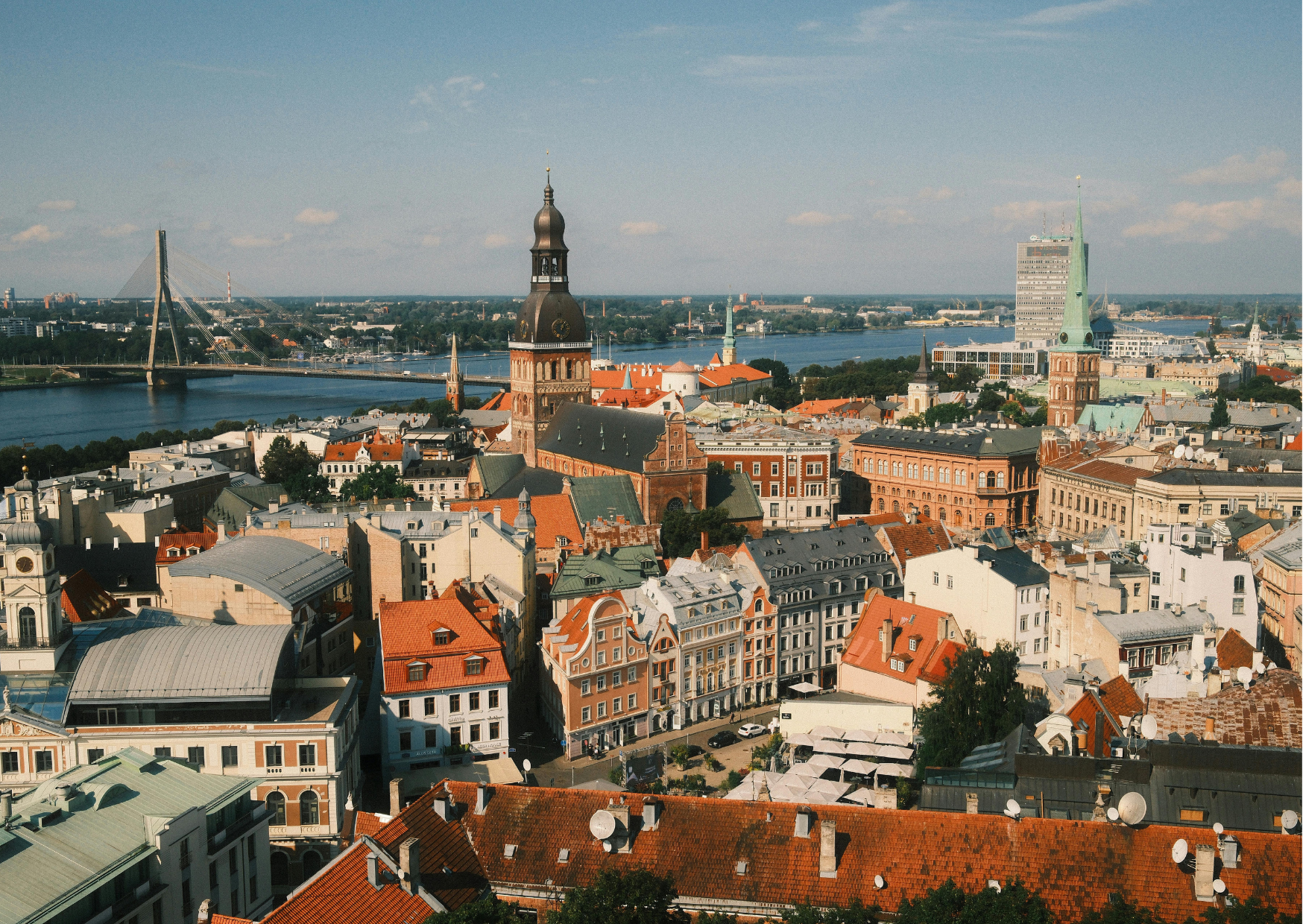
Latvia is one of the few places in the European orbit where the numbers can still pencil out below €100,000 if you approach it as business compliance, not fantasy property flipping.
Latvia’s investor track is commonly structured around investing into a company’s share capital, and then meeting conditions tied to that company existing in reality: taxes, reporting, and basic financial hygiene. Your weekly rhythm here looks like: one admin day per week, plus a monthly check-in with whoever handles your accounting. If that sounds annoying, it is. It’s also why this route stays cheaper than the countries that let you just buy property and disappear.
Georgia is a different vibe. It’s often pitched as “buy property, get residency,” and people love it because it feels tangible. The trade-off is that property valuation and documentation can be the whole game. You don’t want a situation where you paid the money, but the valuation for residency purposes doesn’t match what you think you bought. Your weekly rhythm here is not accounting, it’s document control: deeds, valuation paperwork, proof of funds, and renewal timing.
Common mistake in both: people budget for the investment but forget the supporting costs that show up in slow motion. Translation, notarization, local fees, tax filings, renewals, and the quiet cost of doing things twice because you guessed wrong the first time.
The blunt guidance: Latvia is paperwork-heavy but predictable. Georgia is often cash-light for what you get, but you want to be obsessive about the paperwork trail.
Americas lane: Ecuador, Costa Rica, Mexico

This is where the under-€100k world gets surprisingly practical, because a lot of residency systems here care more about “can you support yourself” than “did you buy a condo.”
Ecuador’s investor path is straightforward on paper: you qualify by meeting a minimum investment amount that’s pegged to a national wage benchmark, and you do it through specific accepted vehicles (deposit certificates, property, shares). It’s not glamorous, but it’s legible. A good weekly rhythm is simple: keep your investment documentation and bank proof tidy, and set reminders around validity dates because these systems are allergic to expired paperwork.
Costa Rica’s rentista residency is basically a lifestyle filter. Prove steady income, don’t be a problem, renew correctly. Many people handle the income proof through a deposit mechanism that supports the monthly requirement across the qualifying period. Your weekly rhythm here is boring in a good way: keep your bank statements consistent, avoid weird cash deposits that look like a movie plot, and track renewal windows early.
Mexico’s temporary residence via solvency is the one Americans ask about constantly because it’s nearby, culturally familiar, and the requirements often map cleanly to retirement reality: Social Security, pension income, investment accounts. The practical detail that matters is that consulates apply the rules, and requirements can vary by location. Your weekly rhythm becomes “clean financial paper trail,” especially if you’re qualifying via minimum balance over time.
The common mistake across all three: people assume they can “sort it out later” after they arrive. These systems reward planning. The best outcomes usually come from treating it like a quarterly project, not a spontaneous identity change.
Business lane: Brazil without the million-euro fiction

Brazil belongs in this list because there are investor visa routes that don’t start with a giant real estate purchase. The number you’ll see depends on which investment category you’re using, but the concept is consistent: invest into a business structure that qualifies, document the investment properly, and be able to explain what the business is and why it exists.
The weekly rhythm here is the same as Latvia but with higher stakes: business paperwork, banking compliance, and staying aligned with the category you applied under. If you are the kind of person who hates meetings, hates bookkeeping, and calls anything administrative “red tape,” Brazil will punish you.
If you’re a person who can run a small process every week, Brazil can be one of the more realistic “I want a real life, not a resort life” options under €100,000.
The main trade-off: a business-linked residency is not just money. It’s proof. You’re not buying a stamp. You’re building an ongoing story that immigration can verify.
Asia lane: Thailand, Philippines, Cambodia

Thailand is the cleanest example of a paid long-stay path that feels like residency. You pay a one-time membership fee, you get multi-year permission to stay, and the whole thing is designed for people who want stability without the complexity of a classic work permit. The weekly rhythm is minimal. It’s basically: keep your passport valid, follow stay rules, don’t get cute with overstay math. The big mistake people make is treating it like a citizenship pathway. It’s not that. It’s paid, long-term permission to be there.
The Philippines SRRV is similar in the sense that deposits can be accessible relative to Western “investor” numbers. Which SRRV option you qualify for depends heavily on age and program type. The weekly rhythm is again simple: keep your deposit conditions intact, renew properly, and do not assume “retirement visa” means “no paperwork ever again.”
Cambodia’s “My 2nd Home” style program is usually discussed around a $100,000 minimum investment. This is the edge of the under-€100k category, and exchange rates will decide whether it’s comfortably under or annoyingly close. The rhythm here is more like “property documentation plus membership compliance,” depending on how the program is structured at the time you apply. The mistake people make is thinking Cambodia is a “set it and forget it” hack. It can be smooth, but only if the project you invest in is actually eligible and your paperwork is clean.
If you want the lowest ongoing admin load, Thailand tends to win. If you want something that behaves more like classic residency, Mexico and Costa Rica are usually easier to explain to your own nervous brain.
Pitfalls most buyers miss

People don’t fail because they can’t afford it. They fail because they treat it like a travel purchase instead of a legal status.
Here’s what usually blows up:
- Choosing a route that bans local work, then quietly planning to work locally anyway.
- Letting bank balances dip below the minimum for one random month because a big expense hit.
- Using joint accounts or unclear ownership and assuming “it’ll be fine.”
- Buying property that looks like it qualifies, but the valuation or registration trail does not support the application.
- Missing renewals because “we were traveling,” which is the least sympathetic excuse on earth to an immigration office.
- Underestimating the cost of document prep: apostilles, translations, notarizations, certified copies, and time.
The trade-off you need to accept is admin discipline. Under €100k, you don’t buy your way out of bureaucracy. You buy your way into a smaller, more manageable version of it.
The next 7 days: pick one track and do the boring work first
If you do nothing else, do this in the next week. It saves months later.
- Decide which of the three categories you’re actually pursuing: investment, solvency, or paid long-stay.
- Pull 12 months of statements for every account you might use. Put them in one folder. Name the files like a sane adult.
- Write down your minimum qualifying number and add a buffer. If the requirement is a minimum balance, don’t sit on the minimum. Give yourself room to breathe.
- Make a one-page “status file” with your passport expiry, marriage certificate status if relevant, and where your birth certificate actually is.
- Identify your renewal cadence and put it on a calendar with reminders at 90, 60, and 30 days. Timing beats willpower, and immigration offices love people who act early.
- If property is involved, list the exact documents you need before you wire anything. Not after. Before.
- Run a reality budget for the first year: application costs, document costs, flights, and a cushion for “we had to redo it.”
- Pick one country and commit to learning its system for two weeks. Don’t window-shop nine bureaucracies at once. That’s how people stall for a year.
The actual decision you’re making
This isn’t really about visas.
It’s about what kind of life you’re buying with your attention.
You can keep your money and pay with stress, or you can spend some money and pay with consistency. Under €100,000, the deal is almost always: less cash up front, more personal responsibility week to week.
If you want the lightest paperwork lifestyle, choose the paid long-stay route and accept what it is.
If you want classic residency that feels “real,” choose solvency or investor residency and accept that your new hobby is calendar reminders.
Either way, the people who win are the ones who treat this like a system, not an escape.

About the Author: Ruben, co-founder of Gamintraveler.com since 2014, is a seasoned traveler from Spain who has explored over 100 countries since 2009. Known for his extensive travel adventures across South America, Europe, the US, Australia, New Zealand, Asia, and Africa, Ruben combines his passion for adventurous yet sustainable living with his love for cycling, highlighted by his remarkable 5-month bicycle journey from Spain to Norway. He currently resides in Spain, where he continues sharing his travel experiences with his partner, Rachel, and their son, Han.