
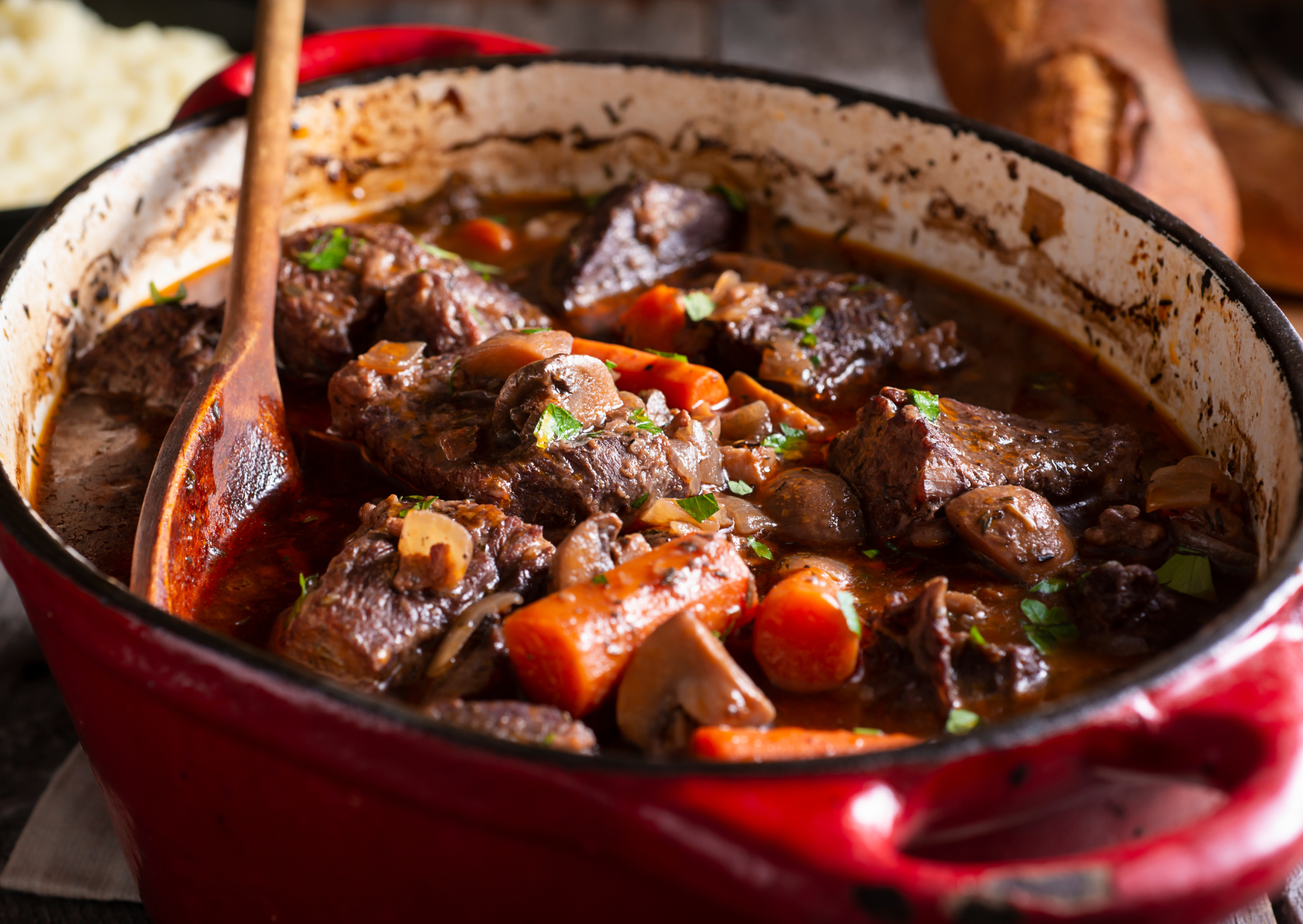
So here is the thing you learn at a French table after your third winter. The stews everyone keeps praising are not really recipes. They are time management. Collagen turns to silk on a clock you cannot speed up, and every shortcut tastes like it. If you want the beef to fall apart, the sauce to glaze instead of pool, and the whole kitchen to smell like a promise, you give it the afternoon.
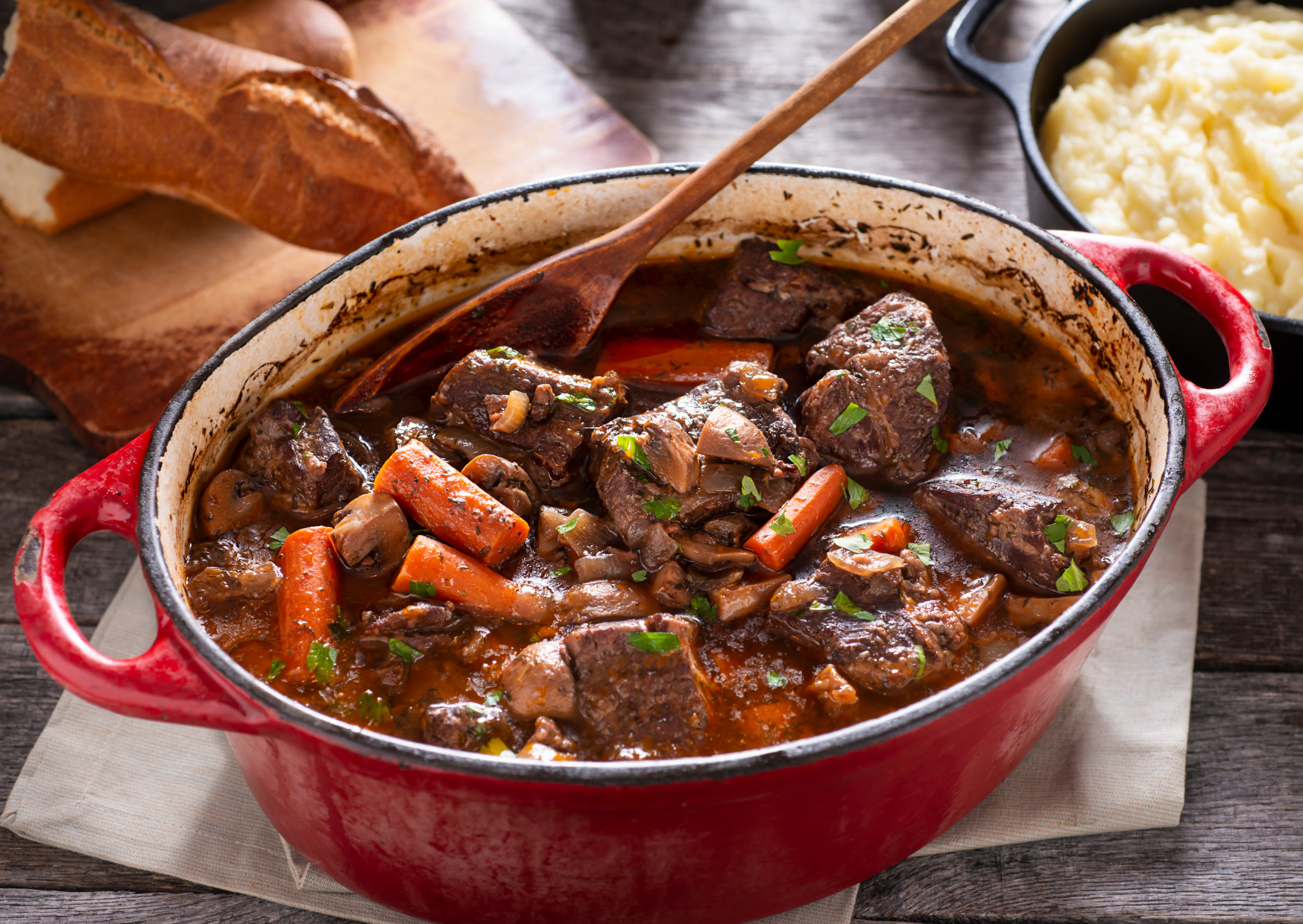
I am talking about boeuf bourguignon, the Burgundy pot that looks fancy on menus and lives like an ordinary Sunday in real homes. You can push parts of it, yes. You can use a pressure cooker and make something beefy in ninety minutes. But the thing you remember a year later comes from a low pot, small bubbles, and a house that knows lunch will be late. Good stew is a lesson in patience disguised as dinner.
Where were we. Right. Why six hours is not a joke, the science without the lab coat, the exact shopping list that works on both sides of the Atlantic, the step by step that never burns you, a fix list for common mistakes, and two weeknight cheats that keep most of the magic when life is loud.
Why six hours is the point, not the problem
French grandmothers are not performing tradition. They are protecting texture. Tough cuts are bundles of collagen and flavor. Heat slowly unwinds that collagen into gelatin. Gelatin thickens the sauce and makes your lips feel like someone glazed them with butter. If you go fast, the muscle fibers lock up before the collagen melts and you get dry meat swimming in a watery sauce. That is why the old rule says low simmer for hours, lid on, then lid off, then rest.
There are three clocks inside this stew:
- Marinate or salt early so flavor moves in and the meat seasons to the center.
- Slow simmer until a fork meets no resistance. Tiny bubbles mean tenderness.
- Cool and rest so the sauce sets and the flavors marry. Reheat gently and it tastes deeper than it did the day before.
Remember: you cannot microwave collagen. The texture you want happens when you stop rushing.
What you are making, in one sentence
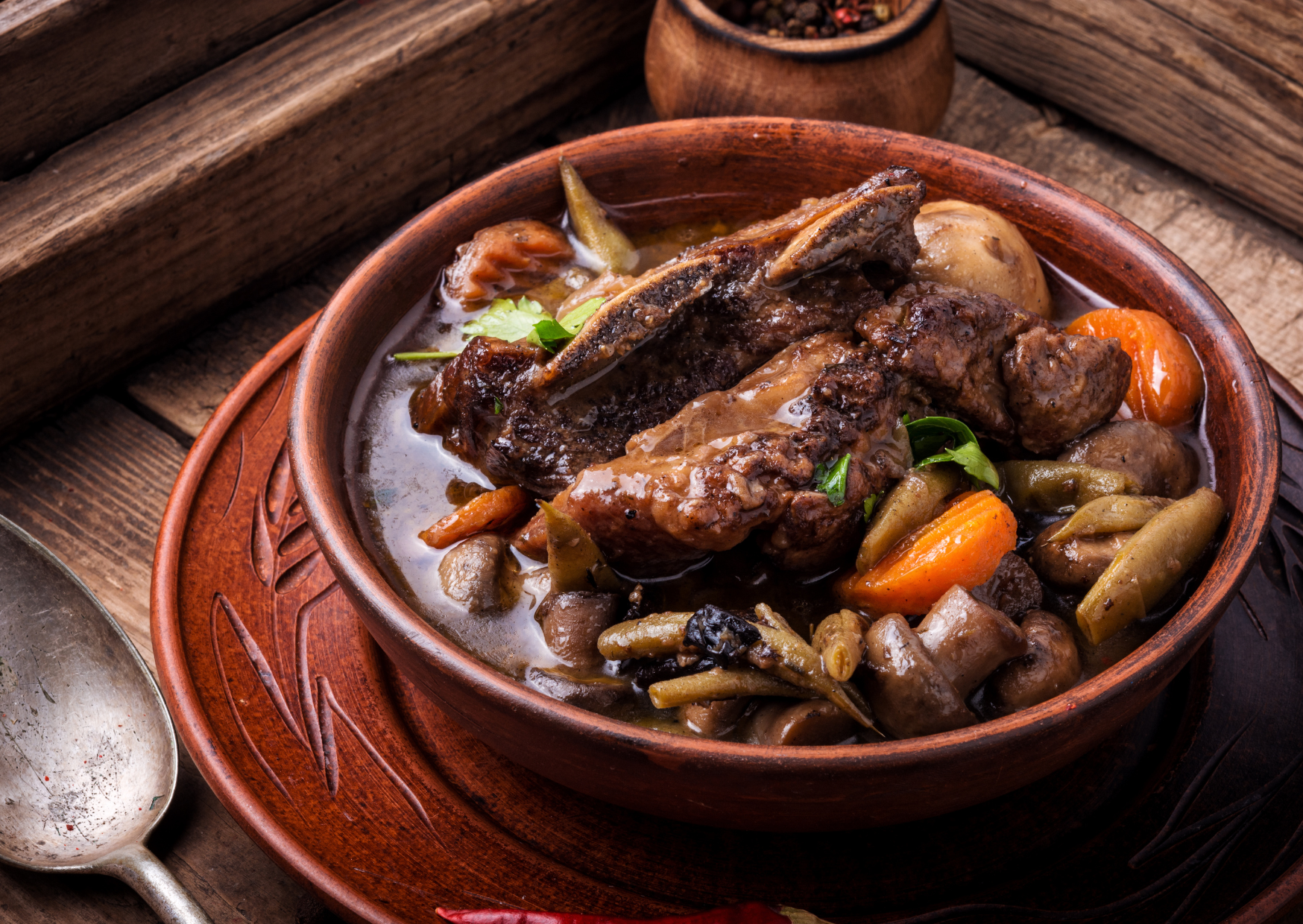
Boeuf bourguignon is wine braised beef with bacon, mushrooms, and glazed onions. The sauce is wine and stock reduced until it coats the spoon. It is glossy because of gelatin and reduction, not cream. The garnish goes in at the end so it keeps its shape. That is the secret everyone already knows.
The right cut, the right pot, the right heat
- Cut: chuck, shoulder, beef shin, paleron, or any well marbled, collagen heavy piece. Lean stew meat is a trap because it dries out before it softens.
- Pot: heavy Dutch oven, 4.5 to 6 quarts. Enamel or bare cast iron both work. Weight equals even heat.
- Heat: you want a lazy simmer. A bubble every second or two, not a boil. Boiling shreds meat and clouds sauce.
Bold line to keep in your head: choose collagen first, manage heat second, everything else is garnish.
Shopping list with amounts and real prices
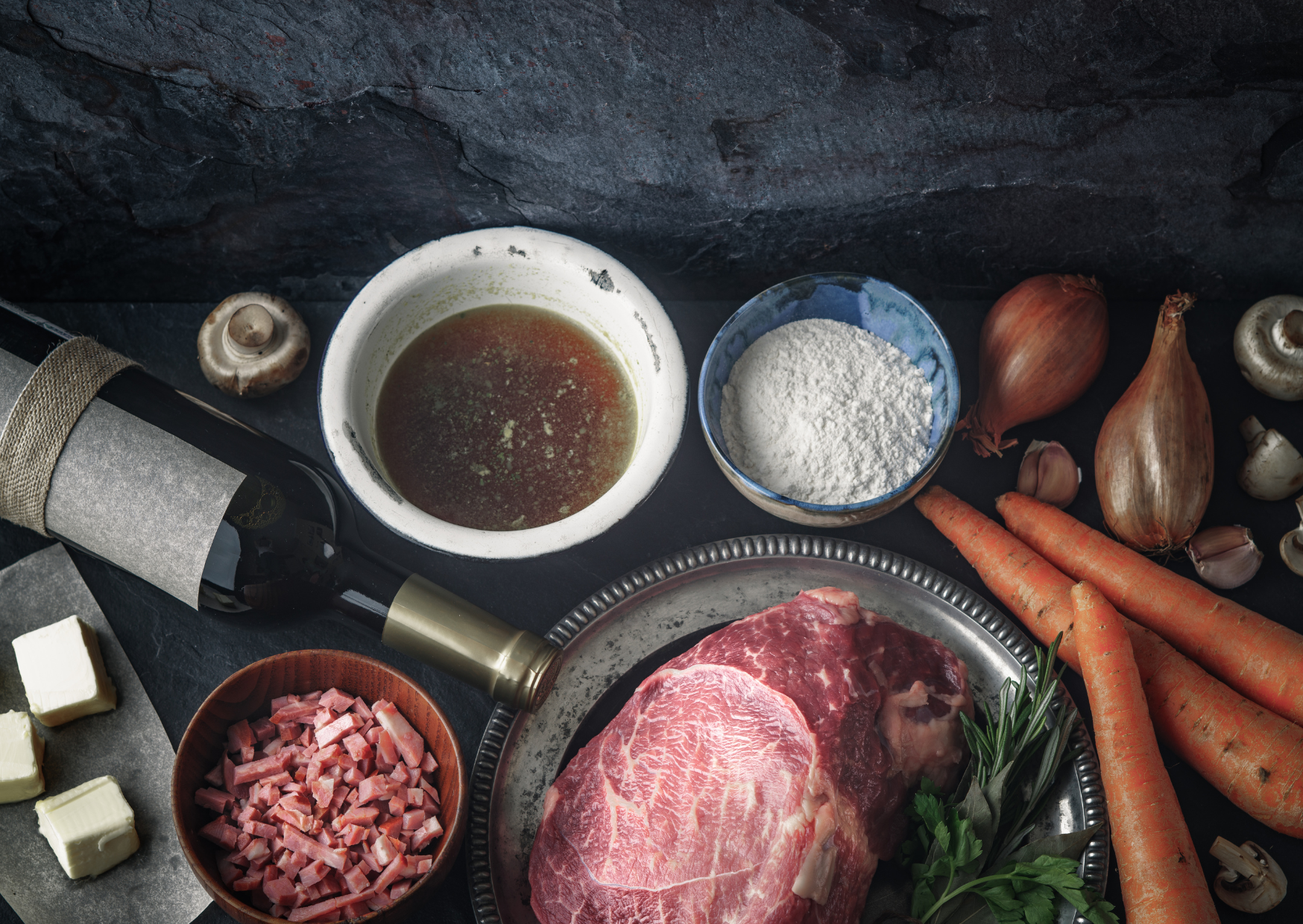
Serves 6 generously, with leftovers that get better on day two.
Beef and basics
- 1.5 kg beef chuck or shin, cut in 5 cm cubes (about 3.3 lb)
- 150 g smoked bacon or slab pancetta, cut in lardons (about 5 oz)
- 2 tbsp tomato paste
- 2 medium onions, diced
- 2 carrots, sliced thick
- 4 garlic cloves, smashed
- 2 tbsp flour
- 750 ml red wine, Burgundy style if you have it, any honest dry red if you do not (about 3 cups)
- 750 ml beef stock or water (about 3 cups)
- 2 bay leaves, 6 thyme sprigs, 6 parsley stems
- Salt and black pepper
- 2 tbsp olive oil or neutral oil, plus bacon fat
Garnish
- 300 g pearl onions or small shallots, peeled (about 2 cups)
- 300 g mushrooms, halved or quartered (about 10 oz)
- 25 g butter for onions, 25 g butter for mushrooms
- Pinch of sugar for glazing onions
- Parsley to finish
Optional finish
- 1 tbsp softened butter mashed with 1 tbsp flour for emergency thickening
Ballpark prices in Spain or France
- Beef chuck 1.5 kg: €18 to €24
- Bacon slab 150 g: €2.50 to €4
- Wine decent bottle: €5 to €10
- Stock: €1 to €2 or homemade
- Vegetables and herbs: €6 to €9
Total roughly €35 to €45 for six heavy servings with leftovers. Real food that feeds a table for under eight euros a head.
The six hour timeline that never fails
You can spread parts of this over two days. The stew prefers it. It tastes better after a night in the fridge.
0:00 to 0:20 Season and set up
- Pat the beef dry. Toss with 2.5 tsp salt and 1 tsp black pepper. If you can, do this the night before and refrigerate. If not, do it now and let it sit while you chop. Early salt equals deeper seasoning.
- Tie bay, thyme, parsley stems into a bundle if you care about fishing them out later.
0:20 to 1:00 Brown the meat and build the base
- Put your heavy pot over medium heat. Add bacon. Cook until the fat renders and the pieces are crisping. Remove bacon to a plate, leave fat in the pot.
- Raise heat a notch. Add half the beef in one layer. Brown without moving for 3 to 4 minutes, then turn and brown another side. Do not chase perfect color on all faces. Remove to the plate with bacon. Repeat with remaining beef. Browned fond equals flavor.
- Lower heat to medium. Add onions and carrots to the pot with a spoon of oil if the pot looks dry. Scrape the bottom. Cook until glossy and starting to color, 6 to 8 minutes. Add garlic for 30 seconds. Stir in tomato paste and cook until brick red, about 90 seconds. Cooked tomato paste adds depth without sweetness.
- Sprinkle flour over the vegetables. Stir 60 seconds. This light roux helps the sauce cling.
1:00 to 1:15 Deglaze and assemble
- Pour in wine. It will hiss. Scrape the bottom. Bring to a simmer and reduce by about a third, 6 to 8 minutes. Reducing now prevents watery stew later.
- Return beef and bacon to the pot. Add stock or water to barely cover. Tuck in the herb bundle. Bring just to a simmer. Skim foam.
1:15 to 3:45 Low simmer, lid on
- Cover with a lid slightly ajar or with a parchment circle under a lid. Adjust heat to the laziest simmer. Cook 2.5 hours. Stir a couple of times. If you see a rolling boil, lower heat or move the pot to a smaller burner.
3:45 to 4:15 Reduce and test
- Uncover. Simmer 30 minutes to concentrate. Fish out the herb bundle. Test a piece of beef. A fork should slide in with little resistance. If it fights, give it 20 more minutes.
4:15 to 5:00 Make the garnish
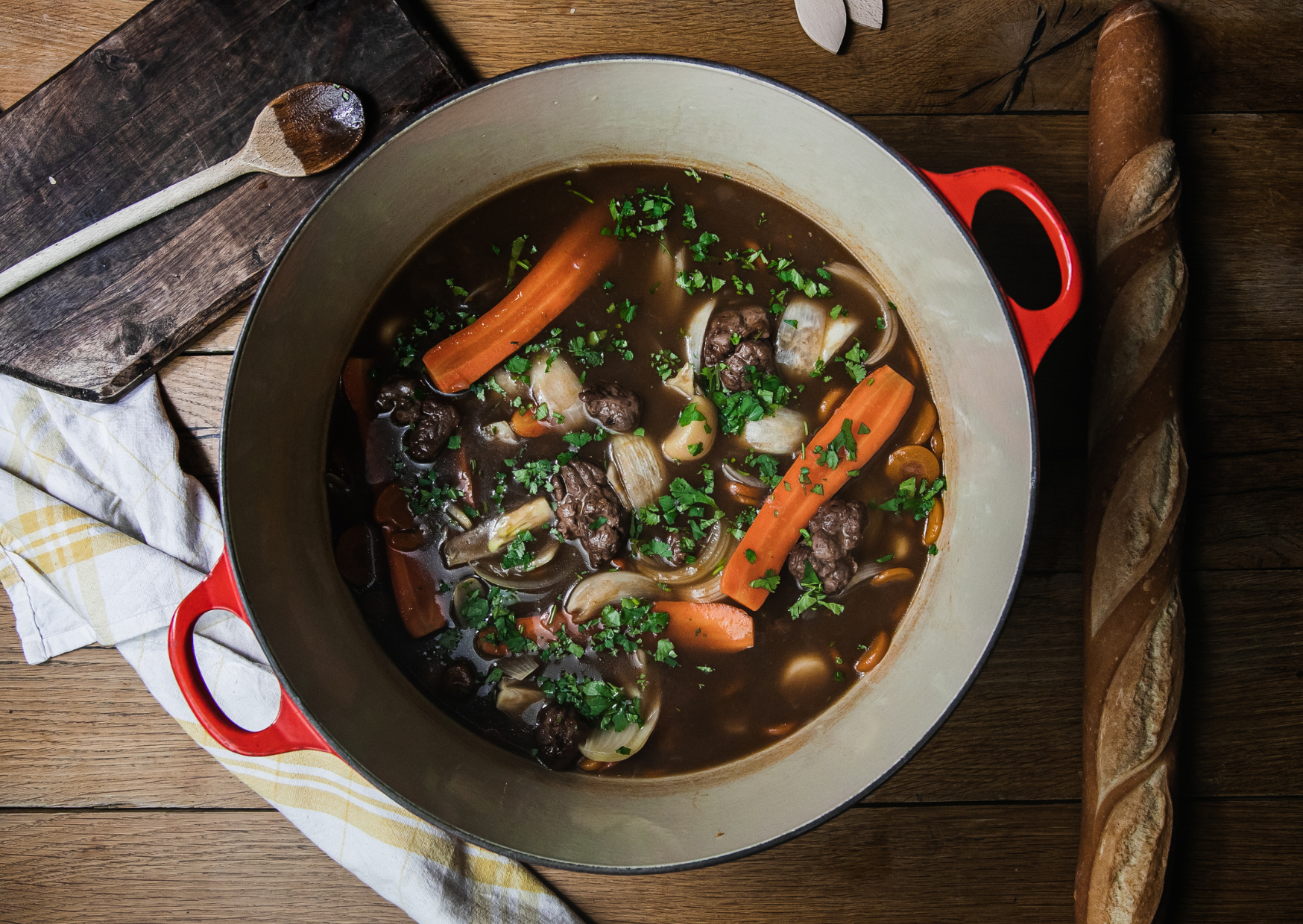
- In a skillet, melt 25 g butter with a spoon of water and a small pinch of sugar. Add pearl onions with a pinch of salt. Cover and cook on medium low until tender and glazed, 12 to 15 minutes, shaking occasionally. They should be shiny and intact. Glazed onions bring sweetness you control.
- In the same or a second skillet, melt 25 g butter. Add mushrooms in a single layer. Brown without fussing for 4 to 5 minutes, then stir once and finish another 3 minutes. Salt at the end. Browned mushrooms add meatiness without heaviness.
5:00 to 5:15 Finish the stew
- Stir onions and mushrooms into the pot. Taste the sauce. If it feels thin, simmer uncovered 10 to 15 minutes. If it tastes balanced but needs body, whisk in the optional butter flour paste in small dots and simmer 2 to 3 minutes. You want a sauce that clings to a spoon and leaves a light coat.
5:15 to 6:00 Rest or cool
- The best version rests. Either turn off the heat and let the pot sit 30 to 45 minutes before serving, or cool, refrigerate, and reheat the next day. Resting makes the sauce coherent. Reheat gently until steamy, not boiling.
Remember: tiny bubbles, patience, and a rest at the end are the three non negotiables.
The science in a paragraph you can read while stirring
Collagen starts to melt into gelatin around 70 to 80°C when held for time. Gentle heat plus time equals tenderness. Flour and gelatin thicken differently. Gelatin gives sauce a silk that reads as restaurant quality. Flour adds body with a matte finish. Your goal is gelatin first, flour last and only if needed. Wine brings acidity that helps break down muscle fibers and adds flavor compounds that deepen during reduction. Bacon gives you fat and salt to carry everything. That is the whole lab.
Key reminder: texture is chemistry plus calendar.
Common mistakes and clean fixes
- Watery sauce
You did not reduce enough. Uncover and simmer 10 to 20 minutes. If the meat is already perfect, remove it to a bowl while you reduce the liquid, then return it so it does not overcook. Sauce should coat, not run. - Tough meat
You boiled or you stopped too soon. Add 30 to 45 minutes of low simmer. Tough stew almost always fixes with more time, not more heat. - Broken mushrooms
You salted too early or crowded the pan. Brown in batches, salt at the end. Brown first, season second. - Greasy top
Calm down the heat and skim. If you are chilling overnight, the fat will set and you can lift it off in one piece. Cold solves grease better than paper towels. - Too winey
You used a harsh bottle or did not reduce. Simmer uncovered a little longer. A knob of butter at the end softens edges. Next time, choose a simple drinkable red.
Bold line: every problem here is solved by time, reduction, or restraint.
What to serve it with so the sauce has a job
- Buttered potatoes smashed gently with olive oil and parsley
- Egg noodles for an American table, simple and perfect
- Creamy polenta if you like a softer bed
- Crusty bread if you want to keep it very French bistro
Add a green thing. A bowl of simply dressed salad cuts the richness. Or do carrots roasted with thyme. Nothing complicated. The stew did the work already.
How to plan this around a normal day
You can break the work into three small windows.
Night before
Salt the beef and refrigerate. Peel onions if you are doing pearls. Tie herbs. Put the pot out on the counter so you do not lose your mind later.
Morning
Brown beef and vegetables, add wine and stock, set the low simmer. Walk away and do your life. You are cooking by absence. Stir twice so the bottom never catches.
Afternoon
Make garnish, finish the sauce, rest. If guests are late, turn the heat off and let the pot sit covered near warmth. This dish forgives schedules.
Remember: you are not chained to the stove, you are supervising a clock.
Two weeknight cheats that keep most of the soul
Cheat 1: Pressure cooker base, stovetop finish
Brown beef and vegetables in the cooker, add wine and stock, cook on high pressure 40 minutes, natural release 15 minutes. Transfer to the stovetop, reduce uncovered 15 to 20 minutes, add onions and mushrooms you browned in a pan, finish as usual. You lose some aroma in steam but keep tenderness and glaze.
Cheat 2: Daube style with orange and less garnish
Skip the pearl onions and mushrooms. Add a strip of orange peel and a few black olives in the last 20 minutes. Cook as written otherwise. Fewer steps, still luxurious.
Key point: shortcuts that respect gelatin and reduction taste like stew, not soup.
Variations that are still French at heart
- Pot au feu mood
Same beef, more vegetables, less reduction. Serve broth as a first course, then meat and vegetables with mustard and pickles. Lighter, still honest. - Bourguignon blanc
Use dry white wine, leeks instead of onions, and finish with a squeeze of lemon and a spoon of crème fraîche. Gentler and bright. - Mushroom heavy
Double the mushrooms and use a handful of dried porcini soaked in hot water. Add the soaking liquid with the stock, leaving grit behind. Deeper forest flavor without more meat.
Remember: the technique is the dish, not the label.
Leftovers that feel like a second gift
Day two is the prize. Stew thickens and flavors knit overnight.
- Shepherd’s pie shortcut
Shred leftover beef, lay in a dish, top with mashed potatoes, bake until golden. - Tagliatelle night
Reduce leftover sauce a little more, toss with egg noodles, top with warmed shredded beef and parsley. - Toast with stew
Spoon warmed stew over grilled country bread rubbed with garlic. Lunch in five minutes.
Freeze in flat bags labeled with date. Defrost gently. Good stew freezes perfectly because gelatin survives the trip.
Costs compared to eating out
A single restaurant portion of bourguignon in a major city can run €18 to €28. Cooking this at home feeds six with leftovers for €35 to €45 total. Even if you buy a nicer bottle, homemade still wins by a factor of three. And you control salt, fat, and wine quality.
Quiet truth: you are buying time, not just ingredients.
Troubleshooting by texture, not panic
- Sauce coats the spoon but tastes flat
You need salt and a small splash of wine cooked in for one minute. Or a drop of vinegar. Acid sharpens the edges. - Sauce tastes great but looks dull
Your glaze is fine. Stir in a teaspoon of butter off heat. Shine appears. - Meat shreds when you stir
You nailed tenderness. Stop stirring. Use a wide spoon to lift gently.
Key reminder: let your mouth decide what to fix. Eyes are often dramatic.
A cook’s note about wine that saves headaches
You do not need Burgundy in the pot. You need a dry red you would drink from France, Spain, Italy, Portugal, California, wherever. Avoid heavy oak and sticky sweetness. If the bottle smells like jam, your sauce will too. Buy honest and reduce.
If you worry about alcohol, remember that most of it cooks off during reduction and hours of simmering. If you cannot cook with wine, use more stock and add a spoon of red wine vinegar near the end to wake things up. It will not be bourguignon, it will still be good.
A printable recipe card you can stick to the fridge
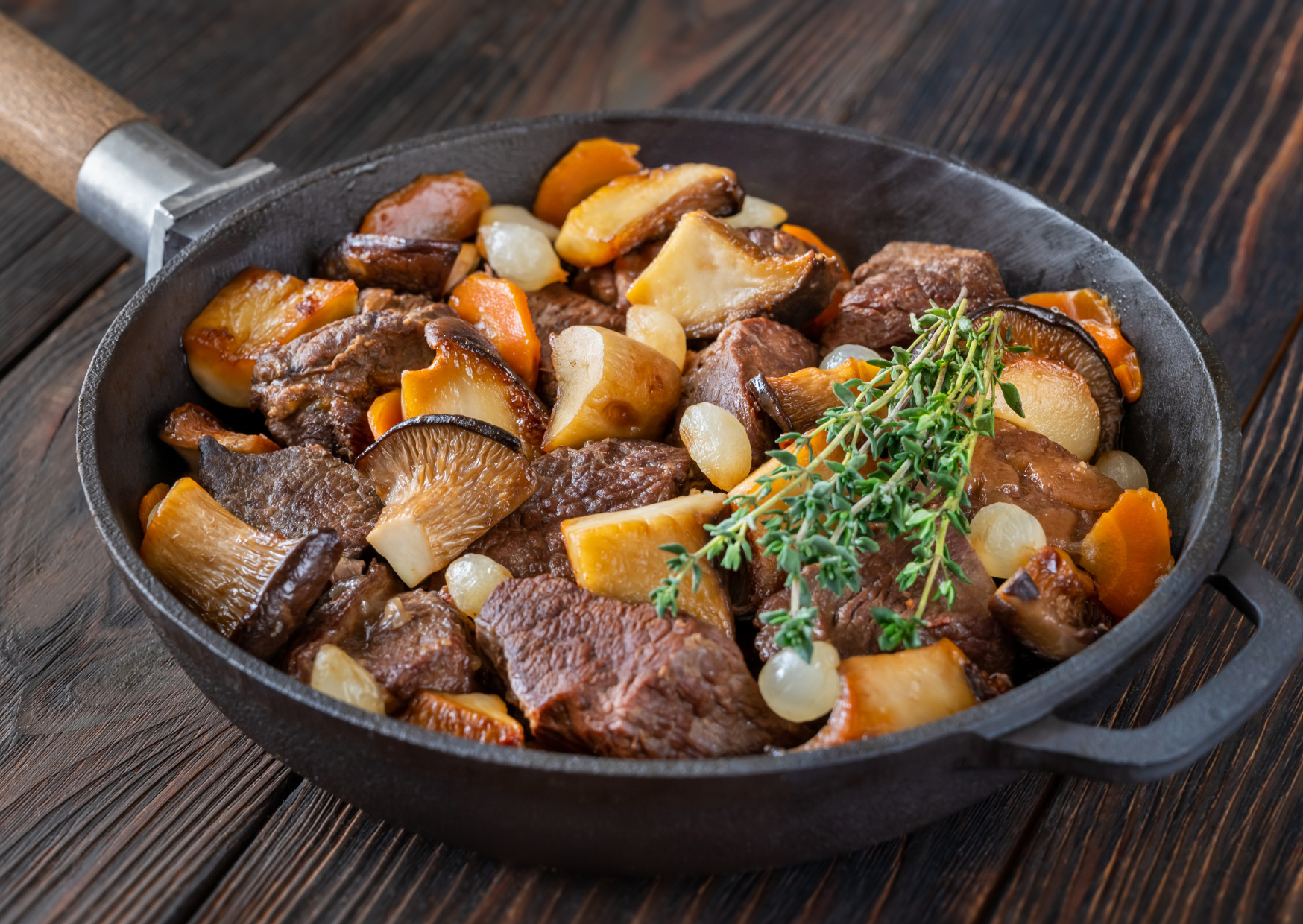
Boeuf Bourguignon, serves 6
Ingredients
1.5 kg beef chuck or shin, 5 cm cubes
150 g bacon lardons
2 onions diced, 2 carrots sliced thick
4 garlic cloves smashed
2 tbsp tomato paste, 2 tbsp flour
750 ml dry red wine, 750 ml beef stock or water
2 bay leaves, 6 thyme sprigs, 6 parsley stems
300 g pearl onions, 300 g mushrooms
25 g butter for onions, 25 g butter for mushrooms
2 tbsp oil, salt, pepper
Method
- Salt beef with 2.5 tsp salt, 1 tsp pepper.
- Render bacon in heavy pot. Brown beef in batches in bacon fat. Remove.
- Soften onions and carrots. Add garlic, tomato paste, then flour.
- Deglaze with wine, reduce by one third. Return beef and bacon. Add stock to barely cover. Add herb bundle.
- Simmer very gently, covered slightly ajar, 2.5 hours.
- Uncover, simmer 30 minutes. Test tenderness.
- Glaze pearl onions in butter, water, pinch sugar until tender. Brown mushrooms in butter.
- Stir garnish into stew. Reduce sauce to coat. Adjust salt.
- Rest 30 minutes or chill overnight. Reheat gently. Finish with parsley.
What to remember: low bubbles, real reduction, a rest before serving.
If you want the simplest path to success
- Dry the meat before browning. Wet beef steams.
- Do not crowd the pot. Brown in batches and leave space for air.
- Keep the simmer lazy. A frantic pot makes stringy stew.
- Reduce uncovered until a spoon leaves a trail.
- Let it rest so whatever magic happens in good stews can happen in yours.
That is it. Time is the ingredient you forgot to write on the list.
To Conclude
Start at ten. Salt the beef. Make coffee. Brown slowly while the house wakes. Pour the wine, scrape the pot, add stock, tuck in herbs. Set the heat low and walk away. By three the kitchen smells like you kept a promise. Glaze the onions, brown the mushrooms, finish the sauce, and let it sit while you lay the table. When you finally ladle it over potatoes and it clings like it was made for this plate, you will understand why the old people refuse to rush it. They are not being precious. They are protecting the one thing you cannot buy, which is time turning hard things tender.

About the Author: Ruben, co-founder of Gamintraveler.com since 2014, is a seasoned traveler from Spain who has explored over 100 countries since 2009. Known for his extensive travel adventures across South America, Europe, the US, Australia, New Zealand, Asia, and Africa, Ruben combines his passion for adventurous yet sustainable living with his love for cycling, highlighted by his remarkable 5-month bicycle journey from Spain to Norway. He currently resides in Spain, where he continues sharing his travel experiences with his partner, Rachel, and their son, Han.