
€35,000 sounds like a scam, a ruin, or a miracle. In southern Italy, it can be none of those, but only if you treat the purchase like paperwork first and a dream second.
The listing was the kind Americans forward to each other with twelve exclamation points.
“€35,000 apartment near the coast.”
You already know the fantasy version: espresso on the balcony, slow mornings, your money finally stretching.
Here’s the real version: you can absolutely buy a place for €35,000, but the purchase price is the cover. The real story is what you pay to close it, set it up, keep it legal, keep the utilities on, and not lose your mind doing it from another country.
So we tracked every euro for 24 months, including the boring stuff people “forget,” like travel for signatures, municipal taxes, and the little repairs that appear the moment you get keys.
Assumptions (so the math stays honest, not dramatic):
- A €35,000 two-bedroom, 55–70 m², in a small southern town (think Calabria, inland Puglia, parts of Sicily), not a postcard beach address.
- Bought from a private seller.
- Used as a second home, not your main legal residence.
- Light refresh, not a full gut renovation.
If your deal is different, your numbers will move. The categories will not.
What you’re actually buying for €35,000
At €35,000, you’re usually buying one of three things:
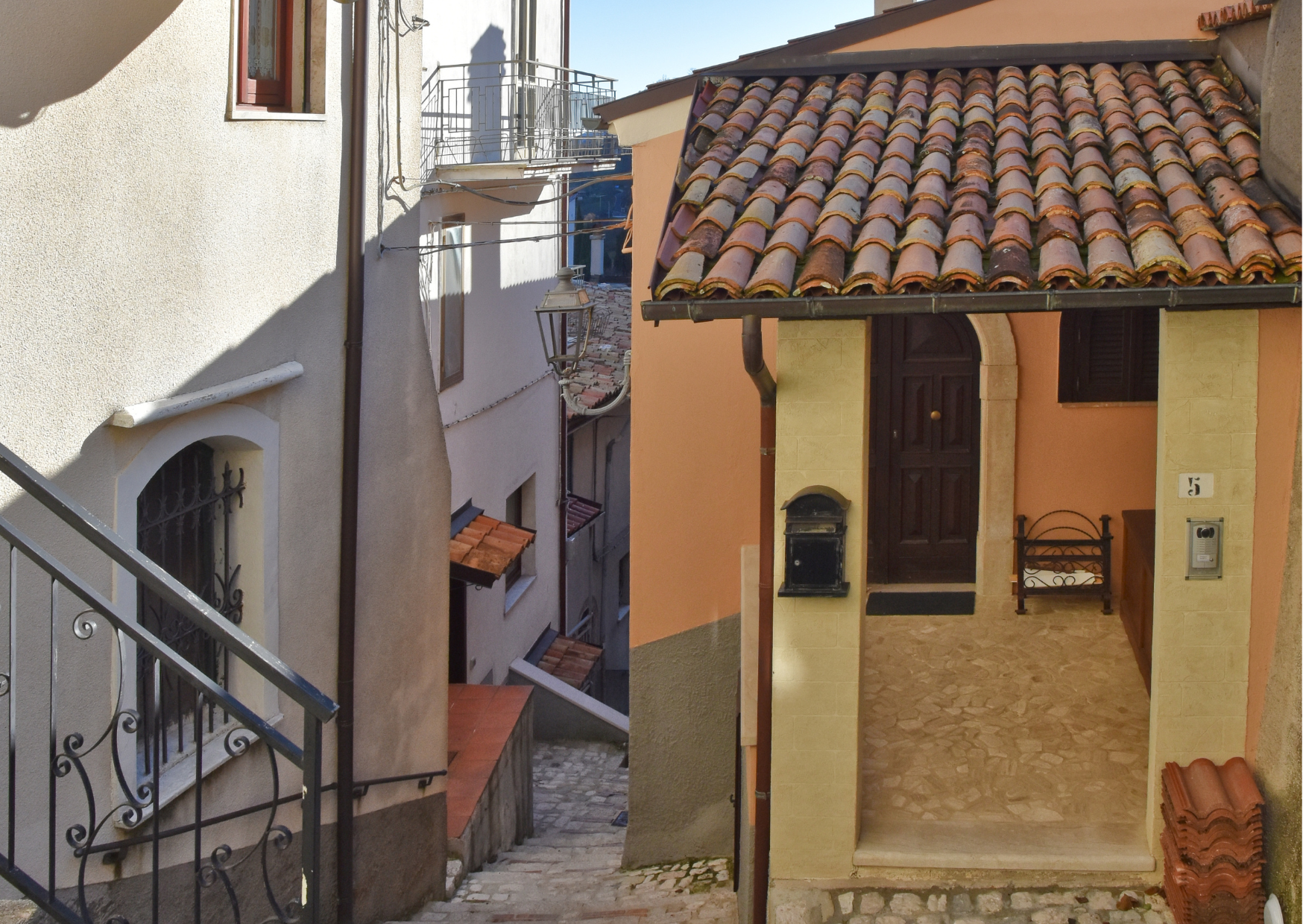
- An older apartment that is structurally fine but cosmetically tired. Bad tile, old kitchen, questionable lighting, a bathroom that feels like 1993 and not in a charming way.
- A place with one “small” legal or technical issue. Missing a document, mismatched floor plan, a previous owner did work without proper paperwork.
- A place that is cheap because the town is cheap. This is the most common, and the least scandalous.
The weekly rhythm of a €35,000 purchase is not romantic. It’s admin.
- Monday: you ask for the cadastral details and the energy certificate.
- Wednesday: you chase a document that should be easy but somehow is not.
- Friday: you learn a new Italian word for a fee you did not plan for.
Two trade-offs show up early.
First, cheap properties tend to be in places where you will spend more time coordinating help, because everything is slower and fewer people cater to foreigners.
Second, if the apartment is cheap because it’s in the centro storico, you may be trading price for comfort. Windows and heat pumps are money in the south too. Humidity is not cute.
Your first job is not negotiating price. Your first job is making sure the property is real, saleable, and not carrying problems that will cost more than the apartment.
The closing costs nobody includes in their “€35,000 dream” screenshot
Let’s talk about the stuff you pay before you ever buy a sofa.
If you buy from a private seller, you’ll typically pay purchase taxes, notary costs, and sometimes an agency commission.
Purchase taxes (private seller, second home)
If this is not your “prima casa” situation, the standard purchase tax is typically:
- Registration tax at 9% of the taxable value (often the cadastral value under the price-value method), with a minimum of €1,000
- Plus fixed mortgage and cadastral taxes, often €50 + €50 in the private-sale scenario
That tax base is the part Americans miss. In many cases, the tax is not calculated on the €35,000 you pay, but on a cadastral-based value that can be lower.
For our apartment, we assumed a taxable value of €22,000.
So purchase taxes looked like:
- Registration tax: €22,000 x 9% = €1,980
- Fixed taxes: €100
Taxes due at closing: €2,080
If you qualify for “prima casa” benefits and actually move legal residence, the rate can drop sharply. That is a different lifestyle decision, and it changes the 24-month ledger.
Notary and closing admin
Notary costs vary by region and complexity, but at this low price point, the notary fee often does not shrink in proportion to the purchase price.
We budgeted:
- Notary and related charges: €1,800
Real estate agent (if used)
In many Italian markets, commissions are negotiated and can be charged to both sides. The common range people run into is a few percent plus VAT.
We assumed:
- Agent commission: 3% of €35,000 = €1,050
- VAT on commission: 22% = €231
Total: €1,281
If you buy directly from an owner, you can reduce this. The trade-off is you do more work yourself, in Italian, with less protection.
Small professionals you will be glad you paid
This is where the “cheap apartment” becomes expensive if you skip it.
We paid for:
- A local technical check, often via a geometra: €450
- Interpreter support for signing and calls: €350
- Miscellaneous stamps, visure, certified copies: €150
Closing costs total
Here is the total of everything paid around purchase and closing, excluding the €35,000 price:
- Taxes: €2,080
- Notary: €1,800
- Agent: €1,281
- Geometra: €450
- Interpreter: €350
- Admin and documents: €150
Total closing extras: €6,111
The weekly rhythm here is simple: you pay, then you wait, then you pay again. The mistake is assuming “closing costs” means one check on one day.
The first 90 days: utilities, keys, and the first round of fixes
This is the phase where the apartment stops being a listing and starts being a responsibility.
Also, you discover what “light refresh” really means.
Utility activation and baseline living setup
Even if you only use the apartment part-time, you usually need the basics active.
We spent:
- Utility transfers and activation fees: €250
- New locks and basic security: €120
- A starter furniture setup (bed, table, chairs, basic kitchen): €1,800
You can do it cheaper with secondhand. You can do it more expensive by walking into an Italian furniture store and falling in love with something you do not need.
The light refresh that makes the place livable
This is where you decide whether you’re buying a home or buying a project.
Our “light refresh” was not structural:
- Paint and patching: €700
- Basic electrical fixes and new fixtures: €400
- Plumbing fixes, taps, and one annoying leak: €500
- Appliance replacements (fridge, washer): €900
- Miscellaneous materials and labor: €500
Total: €3,000
This is not the dramatic renovation that goes viral on YouTube. It’s the normal, unsexy work that makes an older apartment feel clean and functional.
The travel nobody budgets
If you live in Spain and your property is in southern Italy, you will travel.
Even if you try to compress it into one trip, you’ll often end up with at least two:
- One trip for viewing and due diligence
- One trip for signing and setup
We did three trips across 24 months because something always comes up: contractor coordination, a municipal office request, a utility issue, a family trip that doubles as a check-in.
Our travel budget for two people:
- 3 trips total (flights, trains, lodging, meals): €1,800
If you live in the U.S., this line item can blow up fast. A €35,000 deal is less cute when you’re paying transatlantic flights to solve a €200 problem.
First 90 days total (excluding purchase price)
- Setup and utilities: €2,170
- Light refresh: €3,000
- Travel (portion of the 24-month total): €1,000
First 90 days out-of-pocket: €6,170
The trade-off is obvious: you’re buying low entry price, but you are paying with your weekends and your calendar.
The boring two-year costs that keep the place “yours” and usable
This is the part Americans rarely understand until they own something in Europe.
Owning a property is not just a mortgage-free fantasy. It’s a set of small recurring costs that arrive even when you are not there.
Property taxes and municipal bills
Two common categories:
- IMU (municipal property tax) often applies to second homes, with rates set by the municipality within a national framework.
- TARI (waste tax) is a local tax funding trash collection, usually based on square meters and occupants, and set by the municipality.
We assumed small-town rates and a modest apartment.
Over two years:
- IMU: €700 total (about €350/year)
- TARI: €500 total (about €250/year)
These numbers can be lower or higher depending on the comune, the cadastral category, and whether the property is considered your principal residence. The category decision matters.
Condominium fees and shared building costs
Even cheap apartments can have shared costs: stairwell lights, building insurance, occasional repairs.
We budgeted:
- Condominio: €600 over two years (about €25/month)
Utilities during low usage
Even if you only stay a few months a year, the fixed charges still appear.
We kept utilities minimal:
- Electricity, water, and occasional gas: €1,440 over two years (average €60/month)
If you stay full-time, this rises. If you shut things off entirely, you risk humidity issues and you complicate reactivation.
Insurance and maintenance buffer
We kept it simple:
- Home insurance: €360 over two years
- Maintenance buffer: €1,000 over two years
Maintenance is the line item that separates the calm owners from the angry owners. You either budget it or you pretend you are “lucky” until you are not.
Ongoing costs total (24 months)
- IMU: €700
- TARI: €500
- Condominio: €600
- Utilities: €1,440
- Insurance: €360
- Maintenance buffer: €1,000
Two-year ownership costs: €4,600
This is the part that makes the deal feel real. The purchase is a one-time event. Ownership is a recurring relationship.
The full 24-month ledger: what €35,000 really cost
Here’s the clean breakdown, with everything included.
One-time purchase and closing
- Purchase price: €35,000
- Closing extras (taxes, notary, agent, pros): €6,111
Subtotal: €41,111
Setup and early fixes
- Utilities activation, locks, basics: €2,170
- Light refresh: €3,000
Subtotal: €5,170
Travel over 24 months
- 3 trips for two people: €1,800
Ongoing ownership costs (24 months)
- IMU, TARI, condominio, utilities, insurance, maintenance: €4,600
Total spent in 24 months
€35,000 + €6,111 + €5,170 + €1,800 + €4,600 = €52,681
Round it to €52,700 because real life always rounds up.
Now the two numbers that actually help you plan:
- Total spent excluding purchase price: €17,700 over 24 months
That’s about €737/month in ownership, setup, and logistics. - Total spent including purchase price: €52,700 over 24 months
That’s €2,196/month, but it’s misleading because you are counting the asset purchase as “monthly living.”
This is why Americans love cheap European properties and then feel emotionally confused. A €35,000 apartment is not a €35,000 decision. It’s a system of costs.
If you hold the apartment for 10 years, the “monthly” feeling becomes dramatically lower. If you panic and sell after 18 months, you will hate every euro you spent.
Pitfalls most buyers miss when the price is this low
This is the section that saves you money.
- Confusing “cheap” with “simple”
The cheaper the property, the more likely you need to verify documents, conformity, and outstanding issues. A €35,000 deal can still come with paperwork friction that costs time and professionals. - Skipping the technical check
You do not need an architect for everything, but you do need someone local to confirm the apartment matches the cadastral reality. If it does not, you can inherit a mess that blocks resale. - Underestimating notary costs at low price points
Notary fees do not scale neatly. A €35,000 purchase can still carry a notary bill that feels disproportionate. - Forgetting the travel cost of ownership
If you are not local, every small issue has an airfare shadow. The cheapest homes are often in places where you cannot just pop over easily. - Not deciding how you will use it
A second home used two months a year is emotionally satisfying, but the fixed costs land all year. If you want it to pay for itself, you need a rental plan, a local manager, and tolerance for headaches. - Picking the wrong town
Some towns are cheap because they are sleepy and stable. Others are cheap because they are hollowed out. Those are different experiences, and you will feel it by month three.
The trade-off you’re always making is time versus money. If you want the deal, you will spend time managing it.
Your first 7 days: prove the bargain is not a trap
If you’re tempted by a €35,000 apartment, do not start with the plane ticket. Start with a week of disciplined verification.
Day 1: Ask for the core docs
Request the cadastral details, energy certificate, and any condo information. If the seller cannot produce basics, slow down.
Day 2: Confirm how taxes will be calculated
Ask the notary about the taxable base and whether the price-value method applies in your situation. The number matters more than the headline price.
Day 3: Hire a local technical check
Pay a geometra or similar professional to verify conformity and flag obvious issues. This is the cheapest insurance you will ever buy.
Day 4: Price the “light refresh” honestly
Get one or two local quotes, even rough ones. If you cannot get quotes, assume your refresh cost will be higher, not lower.
Day 5: Build your travel plan
Decide how many trips you will realistically take in the first year. Put a euro number on it. If you do not, your budget will quietly break.
Day 6: Decide whether you are going to pursue residency benefits
If your plan is to claim “prima casa,” you need to understand what that requires in practice. If your plan is a second home, accept the second-home tax profile.
Day 7: Set your all-in ceiling
Write a maximum total you will spend in year one, including fees, fixes, and travel. For many people, €50,000 all-in is the psychological line. If your deal pushes past it, you either renegotiate or walk.
If you cannot do this week cleanly, ownership will feel like chaos.
The decision you’re actually making
A €35,000 apartment in southern Italy can be a smart, grounded purchase.
It can also be a slow leak that drains your time and attention because you bought a project without admitting it.
In our 24-month ledger, the apartment cost €52,700 to buy, make usable, and carry for two years. That is still a bargain compared to many American housing markets, but only if you treat it like a long hold and a real responsibility.
So the choice is simple and unromantic:
Do you want a cheap European property that becomes a second job, or do you want a slightly more expensive property that behaves like a home?
At €35,000, you are buying the right to answer that question with your own weekends.

About the Author: Ruben, co-founder of Gamintraveler.com since 2014, is a seasoned traveler from Spain who has explored over 100 countries since 2009. Known for his extensive travel adventures across South America, Europe, the US, Australia, New Zealand, Asia, and Africa, Ruben combines his passion for adventurous yet sustainable living with his love for cycling, highlighted by his remarkable 5-month bicycle journey from Spain to Norway. He currently resides in Spain, where he continues sharing his travel experiences with his partner, Rachel, and their son, Han.
John Arellano
Saturday 10th of January 2026
Amazing. Thank you.