
Two real-life budgets, one nest egg, and a clear view of how housing, healthcare, and everyday costs stretch or snap a fixed pot of money in 2026.
You can love California’s weather and still do a double take when you run the math. One pot of money, say $300,000, barely clears a decade in many California metros once rent, healthcare, and taxes start taking their slice. Fly six thousand miles east and live at Croatia’s pace and prices, and that same pot can cover two decades plus a buffer. This is not magic. It is arithmetic you can check, built with 2026 prices that move slowly enough to plan around.
The goal here is simple. We will price a modest, comfortable retired life in both places, line by line, using today’s rents, real insurance premiums, and normal person groceries and transit. Then we will divide the same $300,000 by each annual budget and show how long it lasts. The answer is not a vague “Croatia is cheaper.” It is a number you can test with your own rent and health plan.
The assumptions are the most important part, so we put them in plain sight. No extreme frugality. No luxury splurges. Just an honest one-bedroom, paid-up utilities, Medicare or HZZO with a sensible supplement, and the little costs that sneak up, like HOA or telecom lock-ins. Swap in your own numbers and watch the years move.
Quick Easy Tips
Track your current monthly expenses honestly before projecting retirement costs.
Compare healthcare, rent, and food prices internationally, not just locally.
Consider countries with strong public healthcare systems and lower private insurance costs.
Visit long-term destinations first to understand real, not tourist-level, expenses.
One uncomfortable truth is that many Americans underestimate how much lifestyle inflation is baked into California living. High costs are normalized to the point where financial strain feels inevitable rather than optional.
Another controversial reality is that retirement advice often assumes staying put. The idea that moving abroad is “extreme” persists, even as domestic costs outpace savings for millions of retirees.
There is also resistance rooted in identity. Leaving the U.S. can feel like failure or retreat, despite being a strategic financial decision that improves quality of life.
Perhaps the hardest truth to accept is that retirement systems are not designed to protect middle-class Americans indefinitely. They assume continued income, rising costs, and shrinking margins. Countries like Croatia expose how artificial that pressure really is.
The California Basket: A Comfortable One-Bedroom Life, Priced For 2026

Start with rent, because in California it decides everything. A statewide snapshot puts average apartment rent around $2,600 to $2,800 per month in 2026, with big metros like Los Angeles and San Diego hovering near or just under $3,000, and San Francisco still higher. You can spend less in smaller cities, more in coastal ZIP codes, but statewide gravity is clear: housing is the largest line. Housing sets the burn rate.
Healthcare is the second anchor. Most retirees use Medicare. In 2026 the Part B premium is $185 per month, and many people pair it with a Medigap Plan G in the $140 to $250 range depending on age and carrier, plus a Part D drug plan that often sits near $40 to $50. Some use Medicare Advantage at lower sticker prices, but many pay with narrower networks. In a straightforward budget, plan for $350 to $500 per month for premiums before co-pays. Insurance is a monthly bill, not a mystery.
Round out the basics: utilities for an average apartment, internet and mobile, groceries, local transit or modest car costs, and HOA or community fees if applicable. For a solo retiree living in a normal one-bedroom (not luxury, not subsidized) and using transit plus the occasional rideshare, a realistic 2026 monthly basket looks like this:
- Rent: $2,650
- Utilities (power, water, trash, gas where applicable): $170
- Internet + mobile: $90
- Groceries and household: $500
- Transit or light car use (pass, occasional rideshare, fuel): $140
- Medical premiums (Medicare B + Medigap G midrange + Part D): $420
- Out-of-pocket medical (co-pays, OTC, incidentals average): $80
- Miscellaneous (clothes, haircuts, small home items, gifts): $150
That totals $4,200 per month, or $50,400 per year. With a $300,000 fixed pot and no investment growth, that covers 5.95 years. If you find a sub-$2,000 one-bedroom and shave $800 off rent, the total falls to about $3,400 per month or $40,800 per year, which stretches the same pot to 7.35 years. Hit a lucky smaller-city lease near $1,600 and the yearly spend can slide near $35,000, nudging 8.5 years. Rent alone moves your horizon by years.
Those are sober numbers. They do not assume car loans, long commutes, or luxe dining. They also do not assume subsidized housing. If your California plan includes HOA fees common in 55+ communities, add $300 to $400 and you trim another two to four months off the runway. Small monthly fees erase big calendar pages.
The Croatia Basket: A City-Center One-Bedroom, State Coverage, And Slow Days

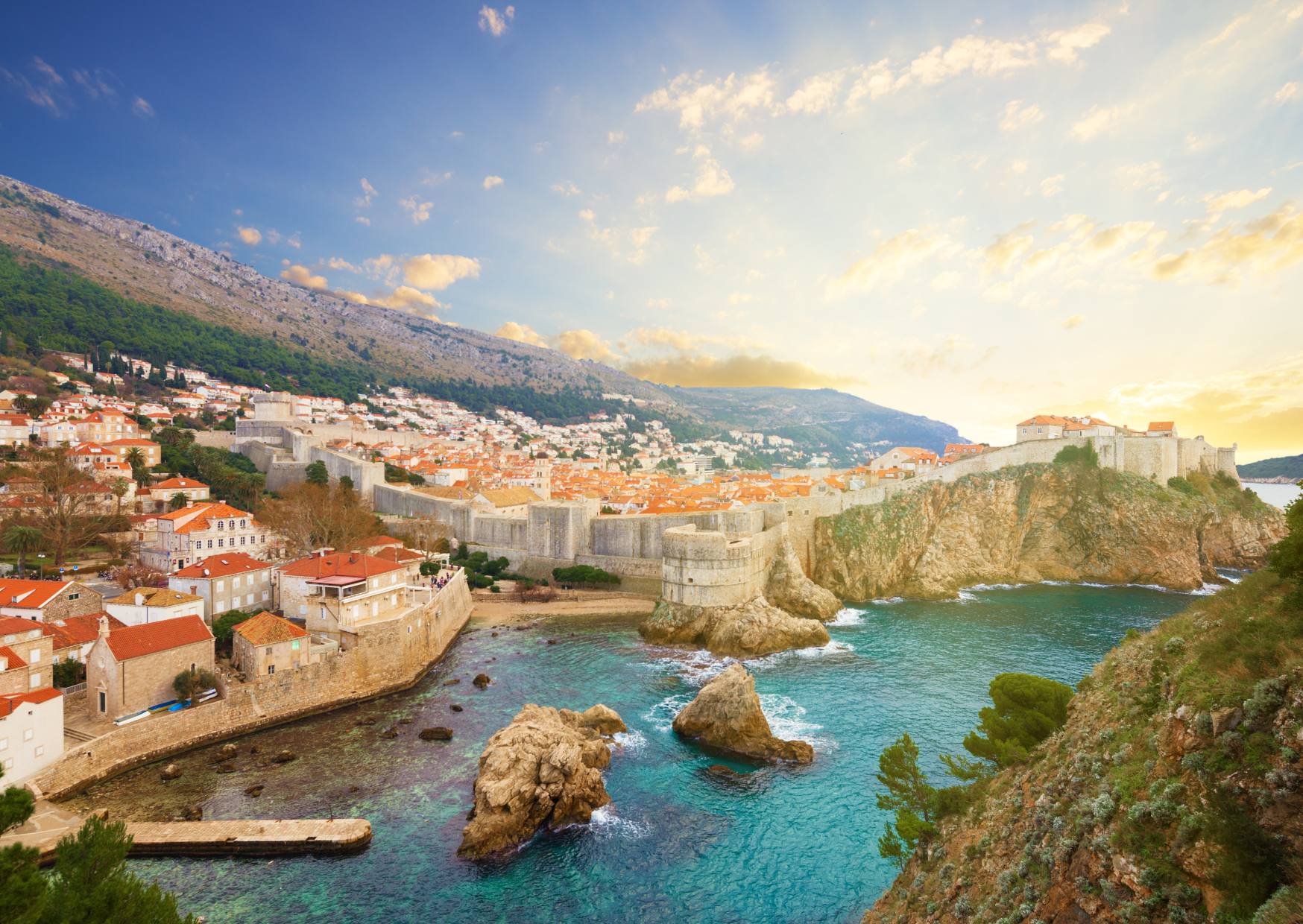
Croatia is not “cheap Europe.” It is predictable Europe. The win for retirees comes from moderate rents, lower out-of-pocket healthcare, and everyday prices that do not punish routine. Your result depends on city and season, but major 2026 sources converge: one-bedroom apartments in Zagreb and many inland towns rent around €520 to €760 outside the most touristed blocks, with utilities near €150 for a modest flat. Rent does not dominate your month.
Healthcare looks very different from Medicare. After you are approved for temporary residence, you enroll in the state system (HZZO), and most residents add dopunsko, the low-cost supplemental that caps co-pays. The mechanics vary by status, but the ongoing monthly cost retirees report for the pair is typically a few dozen euros, not hundreds, once you are in the system. Some newcomers pay back premiums upon joining; model that as a one-time cost, not a monthly budget killer. Once enrolled, health costs settle.
Food and daily life track with wages. Groceries are sane. Transit passes are modest. Mobile service and broadband are lower than U.S. norms. Put it in a monthly basket for a solo retiree in Zagreb or an inland coastal town outside peak tourist grids:
- Rent (1-bed, non-luxury): €650
- Utilities (electric, water, heating, refuse): €150
- Internet + mobile: €30
- Groceries and household: €250
- Transit (monthly pass) or light fuel if you keep a small car: €40
- Healthcare (HZZO ongoing + dopunsko typical): €30
- Out-of-pocket medical (co-pays, pharmacy, dentist cleanings): €25
- Miscellaneous (clothes, haircuts, gifts, small repairs): €80
That totals €1,255 per month, or €15,060 per year. At the early January2026reference rate near €1 = $1.17, that is about $17,600 per year. With $300,000, that covers 17 years with no growth. If you choose a €550 flat outside the center, the basket drops to roughly €1,155, or about $16,200 per year, which stretches the pot to 18.5 years. Live inland or in a smaller city at €500 rent and you are near €1,105 a month, $15,500 a year, and 19.3 years. Rents in Croatia bend the curve without sacrificing basics.
So where does 22 years appear? Two honest ways:
- Split a long lease outside tourist centers and keep rent near €450–€500, and you can drive the total monthly near €1,000–€1,050 with no heroism, or about $12,500–$13,000 a year at current exchange rates. $300,000 divided by $13,500 is 22.2 years.
- Hold a small euro-earning side income or a partial Social Security stream and apply it to rent, and your draw from the pot shrinks to $12–14k. Small income trims big years.
The point is not to squeeze. It is to show that normal Croatian rents plus state health produce a total that your pot can cover more than twice as long as many California budgets. Structure, not sacrifice, does the work.
The Three Lines That Decide Your Timeline

You can argue about lattes. You cannot argue with these.
Rent
California’s statewide averages keep a one-bedroom close to $2,400–$2,800, with big coastal cities clustering near or above $3,000. Croatia’s city-center one-beds commonly sit in the €550–€750 band in Zagreb and inland. Even Split and Dubrovnik outside peak months often price below major California metros. Housing is the lever.
Healthcare
Medicare is good coverage, but the premium stack adds $300–$500 per month for many people before co-pays. Croatia’s HZZO + dopunsko lands in the tens of euros, not hundreds, for ongoing monthly costs after enrollment. Insurance shape matters more than brand.
Exchange rate
Your life is priced in euros there, dollars here. As of early January 2026, the euro is roughly 1.17 dollars. When the dollar weakens, your Croatia years tick down. When it strengthens, they tick up. FX drift is not noise for retirees.
Two Transparent Retirement Scenarios You Can Copy
Here are complete annual budgets you can change with your own rent and plan names. The only trick: be honest with rent and health premiums.
Scenario A: California Coastal Metro, No Car Loan
- Rent: $2,700 × 12 = $32,400
- Utilities: $170 × 12 = $2,040
- Internet + mobile: $90 × 12 = $1,080
- Groceries and household: $500 × 12 = $6,000
- Transit and rideshare: $140 × 12 = $1,680
- Medical premiums (B + G + D): $420 × 12 = $5,040
- Out-of-pocket medical: $960
- Miscellaneous: $150 × 12 = $1,800
Total annual: $50,? Wait, do the exact math: $50,? Let’s be exact.
Add them cleanly: 32,400 + 2,040 + 1,080 + 6,000 + 1,680 + 5,040 + 960 + 1,800 = $51,000.
Longevity of $300,000 at zero growth: 5.9 years. If you drop rent to $2,000, your total falls to $42,? Re-sum: 24,000 + 2,040 + 1,080 + 6,000 + 1,680 + 5,040 + 960 + 1,800 = $42,600, or 7.0 years. Rent is destiny here.
Scenario B: Zagreb Or Similar, Center-Adjacent, Transit
- Rent: €650 × 12 = €7,800
- Utilities: €150 × 12 = €1,800
- Internet + mobile: €30 × 12 = €360
- Groceries and household: €250 × 12 = €3,000
- Transit: €40 × 12 = €480
- Healthcare ongoing (HZZO + dopunsko typical): €30 × 12 = €360
- Out-of-pocket medical: €25 × 12 = €300
- Miscellaneous: €80 × 12 = €960
Total annual: €15,? Sum it exactly: 7,800 + 1,800 + 360 + 3,000 + 480 + 360 + 300 + 960 = €15,060. Convert at 1.17: ~$17,600. Longevity of $300,000 at zero growth: 17.0 years. Lower rent to €500 and your annual total is €13,? Re-sum: 6,000 + 1,800 + 360 + 3,000 + 480 + 360 + 300 + 960 = €13,260, or ~$15,500, which stretches to 19.3 years. If you live inland on €450 rent, the same math lands near €12,? Re-sum: 5,400 + 1,800 + 360 + 3,000 + 480 + 360 + 300 + 960 = €12,660 or ~$14,800, which is ~20.3 years. Add €100 more in rent support from a small euro side hustle and the draw falls toward $13–14k, which gets you ~22 years from the pot. Croatia rewards moderate rent, not austerity.
What Makes California So Expensive For Retirees
There is no villain, only structure.
Housing scarcity keeps the median one-bedroom above what a fixed pot likes. Statewide averages above $2,600 leave little room for error in non-subsidized, non-roommate scenarios. Housing policy shows up on your calendar.
Healthcare premiums look low in isolation, then add up. $185 for Part B is universal for most, and a Plan G in a big state leans higher than national averages. The protection is worth it, but it is cash every month. Coverage comes with a bill.
Price level and taxes compound the rest. Groceries, utilities, and services run hotter than national averages, and local fees from HOA to parking add friction. Every extra $50 per month is one fewer month of runway in the end. Small line items shorten long horizons.
What Can Shrink A Croatia Budget If You Are Not Careful
There is plenty of room, but there are traps.
Tourist belts like Split or Dubrovnik spike rents in summer. Long leases at shoulder-season rates play nice with a budget. Short or furnished tourist contracts do not. Avoid peak-season pricing if you are living, not vacationing.
Visa basics matter. Americans typically apply for temporary residence based on sufficient resources or other eligible grounds. You must show health insurance at application and then enroll in HZZO after approval unless you are in a special category. Treat any back-premium as a one-time cost and move on. Legal status organizes your bills.
Exchange rate drift moves your dollars. A weaker dollar means you withdraw more to buy the same euros. Keep 3–6 months of euros in a local account and transfer in lumps when rates are friendly. FX timing is a quiet raise or a quiet cut.
Pitfalls Most People Miss
Budgeting to averages you cannot rent. In California, a statewide average is meaningless if your ZIP code sits $600 above it. In Croatia, a country average is useless if you insist on harbor-view Dubrovnik. Price the unit you can actually sign.
Ignoring health plan fine print. Medigap premiums vary by age and carrier, and Part D drugs can swing out-of-pocket. Croatia’s dopunsko is cheap, but you still need to enroll and keep the card handy. Paperwork is part of the price.
Leaving exchange rate risk to luck. Your pot is in dollars, your rent in euros. Set rate alerts and move money when the euro dips. FX is a monthly line, not a trivia item.
Exactly How To Add Five Years To The Same Pot
In California
- Downshift the ZIP code. Find a one-bedroom $600 under your area average and you add ~1.5 years to the runway.
- Pick the right Medigap. Plan G is popular for a reason, but quotes vary. Shop carriers and let your doctor list guide you. Premiums are not sacred.
- If you drive, cash flow the car. No loans, minimal miles, and insurance quotes from at least three carriers. Cars eat years.
In Croatia
- Sign outside the postcard. A €500–€600 flat in center-adjacent Zagreb or inland cuts thousands a year compared with tourist belts. Address beats view.
- Finish HZZO setup fast. Close the loop on enrollment and add dopunsko so small co-pays do not snowball. Small premiums save big surprises.
- Hold euros. Keep 3–6 months of expenses in a local account and transfer when the euro softens. FX timing is free money.
Do those and a $300,000 pot can look like 8 years in California or 22 in Croatia without heroics. The choice is not moral. It is math.
What This Means For You
If your plan is to retire on a fixed pot without heavy investment risk, where you live is the biggest lever you have. In California, rent plus Medicare premiums pull your monthly to a level that burns a $300,000 pot in a single-digit number of years unless you find an unusually inexpensive lease or share housing. In Croatia, moderate rents, state healthcare, and lower day-to-day prices turn the same pot into two decades of ordinary living with room for airfare and a few splurges.
This is not a romance with Europe. It is a budget with elbows. If you want to stretch years without sacrificing comfort, move the three lines that matter: housing, healthcare, exchange rate. Everything else is noise.
What shocks most people isn’t the math, but how predictable it is once you look closely. California’s high housing costs, healthcare expenses, taxes, and daily living prices quietly drain savings faster than retirees expect. The money doesn’t disappear suddenly; it erodes steadily.
Croatia tells a different story. Lower housing costs, affordable healthcare, walkable cities, and slower consumption patterns stretch the same savings dramatically. The lifestyle itself reduces spending without feeling restrictive.
This comparison isn’t about choosing one place over another emotionally. It’s about understanding that geography determines financial reality more than discipline alone. Two retirees with identical savings can experience entirely different futures.
Retirement security isn’t just about how much you save. It’s about where you choose to spend it.

About the Author: Ruben, co-founder of Gamintraveler.com since 2014, is a seasoned traveler from Spain who has explored over 100 countries since 2009. Known for his extensive travel adventures across South America, Europe, the US, Australia, New Zealand, Asia, and Africa, Ruben combines his passion for adventurous yet sustainable living with his love for cycling, highlighted by his remarkable 5-month bicycle journey from Spain to Norway. He currently resides in Spain, where he continues sharing his travel experiences with his partner, Rachel, and their son, Han.