
If you land in Rome craving “vodka sauce,” you are about to have a tiny identity crisis in public.
Not because Italians are mean. Not because you are “doing Italy wrong.” It’s simpler than that: vodka sauce is a category in America, and in Italy it’s mostly… not. There’s no universal Italian mental file called “vodka sauce” the way there’s a mental file called amatriciana, pesto, ragù, or just “pomodoro.”
So you end up doing that American thing where you assume the dish is missing because the restaurant is being difficult, when really the dish is missing because the idea is missing.
And the funny part is, Italy absolutely has sauces that hit the same comfort buttons. Creamy. Spicy. Tomatoey. Rich. The difference is Italians get there with techniques and ingredients they actually use, not a shot of vodka that makes you feel like you’re ordering something “special.”
What Americans mean by “vodka sauce” (and why Italy doesn’t)
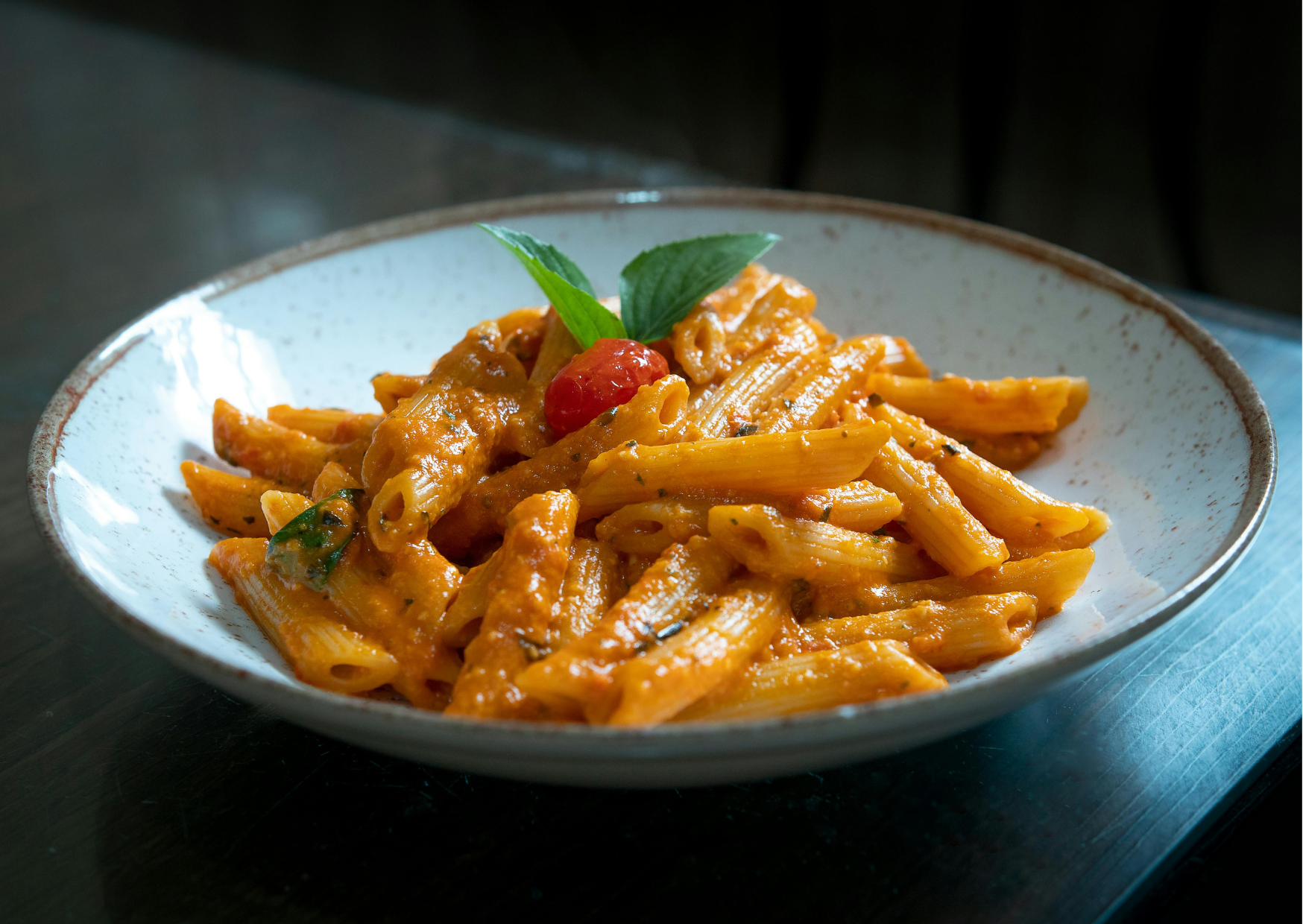
In the U.S., vodka sauce usually means a pink, creamy tomato sauce that leans slightly sweet, slightly spicy, and extremely comforting. It’s often built on tomato paste, garlic, maybe shallot, cream, parmesan, chili flakes, and a splash of vodka.
It’s also been marketed into something bigger than a sauce. It’s a vibe. It’s “rigatoni vodka.” It’s the thing you order when you want a guaranteed good time and don’t feel like gambling on the rest of the menu.
In Italy, the closest cousin is penne alla vodka, which had its own moment as a retro 1970s–1980s dish, and then mostly got filed away under “that era.” It’s not tied to a regional tradition the way other classics are, which is why you can spend a week in Italy and never see it once unless you go looking.
So when people say “vodka sauce doesn’t exist in Italy,” what they really mean is: it’s not a normal default, and it’s not a sauce you can reliably expect to find in everyday places.
If you stop expecting Italy to mirror an American menu, the whole thing gets easier fast. And your pasta gets better.
What happens when you try to order it in Italy
Most Italian restaurants are not built around custom sauce requests. They’re built around dishes as written.
So if you ask a waiter for “vodka sauce” (especially in English), you’ll often get one of three reactions:
- A polite blank look.
- A friendly “we don’t have that.”
- A yes that turns into something else entirely, because they’re trying to get you to a tomato-cream comfort zone using ingredients they actually have.
The practical move is to stop requesting “vodka sauce” and start ordering the feeling you want.
Ask yourself what you actually like about it:
- Is it creamy tomato you want?
- Is it spicy tomato you want?
- Is it that sweet tomato paste depth?
- Is it the silky texture that clings to pasta?
Italy has answers for all of that, you just have to order them in their native form.
And if you do happen to spot penne alla vodka on a menu, take it as a fun retro sighting, not as proof that vodka sauce is a daily Italian staple. It’s more like seeing a 1980s song come back on the radio.
The Italian substitutes that actually match the craving
Here’s the translation table that saves you from disappointment.
If you want creamy and tomato-forward, look for:
- Sugo al pomodoro with a dairy note (sometimes mascarpone, sometimes a little cream, sometimes just cheese and emulsification doing the work)
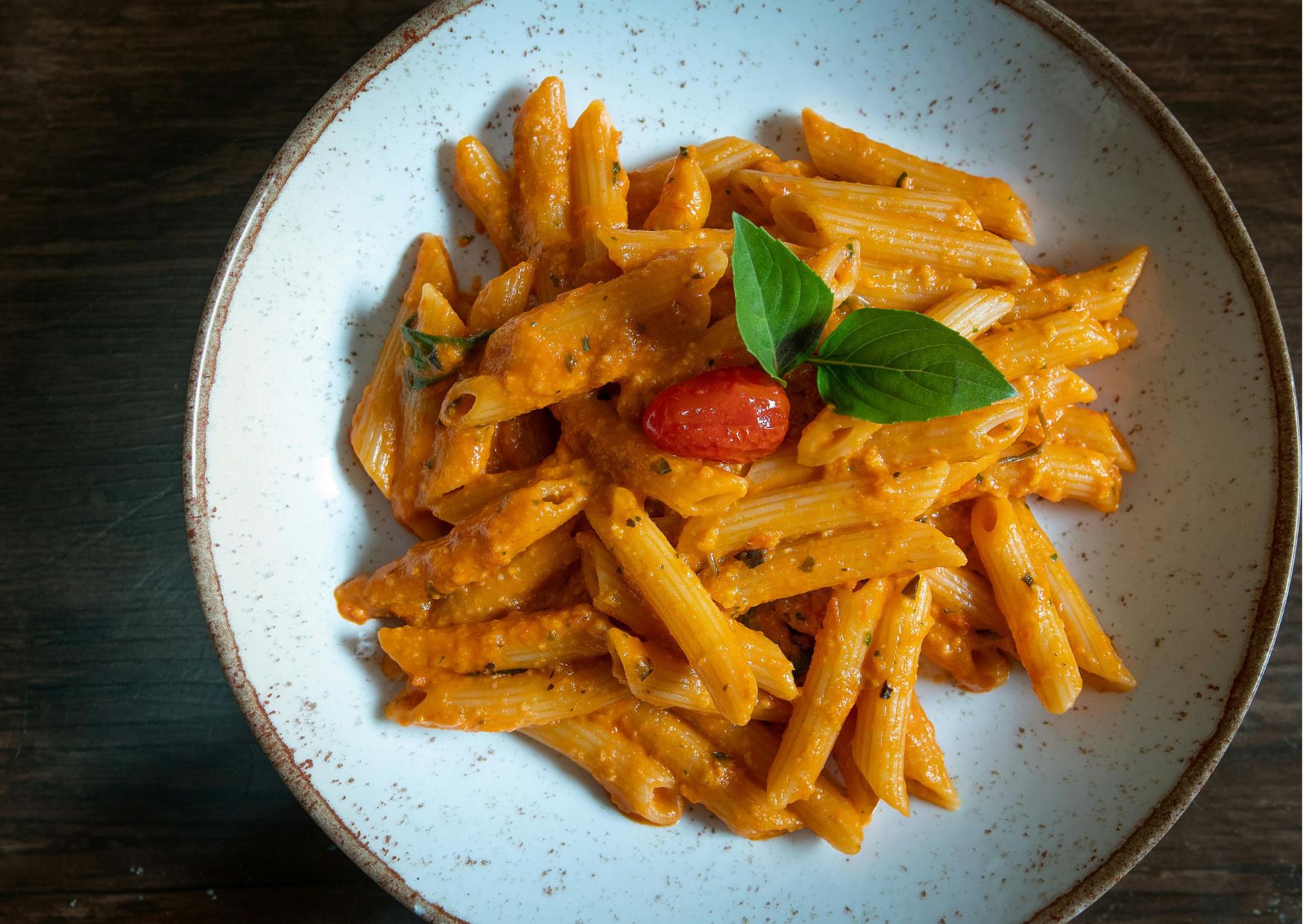
- Pink-sauce style pastas that Italians actually cook at home, like penne al baffo in its many variations
If you want spicy and tomato-forward, look for:
- Arrabbiata, which is basically the grown-up version of “spicy red sauce” when it’s done right
If you want rich, salty, porky, and intensely satisfying, look for:
- Amatriciana (tomato + guanciale + pecorino, sharp and perfect)
- Or its white sibling, gricia (guanciale + pecorino, no tomato)
If you want the “vodka sauce” texture, that clingy glossy thing, the real driver is not vodka. It’s technique: starch + fat + heat + timing.
That is the part Americans usually skip because jar sauce trained you to believe the sauce arrives finished.
In Italy, the finish happens in the pan with the pasta.
Make this instead: penne al baffo, the polite Italian cousin of vodka sauce
If you love vodka sauce, penne al baffo will feel like someone quietly fixed your order without telling you.
The name basically nods at the “mustache-licking” effect, because it’s that kind of creamy sauce. It’s also very 70s–80s in spirit, which is exactly where vodka sauce lives too.
Here’s a home version that works in Spain, the U.S., anywhere with a supermarket.
Serves: 4
Prep time: 10 minutes
Active time: 20 minutes
Rest time: none
Equipment: large pan, pot, wooden spoon, microplane or grater
Ingredients
- 320–400 g penne or rigatoni
- 2 tbsp olive oil
- 1 small onion, finely chopped
- 100–150 g pancetta (or diced ham in a pinch)
- 2 tbsp tomato paste
- 400 g passata (or crushed tomatoes)
- 120 ml cream (or 2–3 tbsp mascarpone instead)
- Chili flakes to taste
- Salt, black pepper
- A handful of grated cheese to finish (parmigiano or grana works)
Method
- Warm the oil, cook onion slowly until soft. Keep it gentle, no browning frenzy.
- Add pancetta, let it render and get lightly golden.
- Stir in tomato paste and cook it for 60–90 seconds until it darkens slightly. That’s the flavor engine, not vodka.
- Add passata, simmer 8–10 minutes.
- Stir in cream (or mascarpone), add chili flakes, salt, pepper.
- Cook pasta until almost al dente, then finish it in the sauce with a splash of pasta water until it turns glossy.
- Cheese at the end, not in the simmer, so it stays clean and sharp.
What you’ll notice is that you don’t miss vodka. You miss the toasted tomato paste and the way the pasta finishes in the pan. Once you get those, the craving is handled.
Make this instead: arrabbiata, the sauce vodka sauce keeps copying
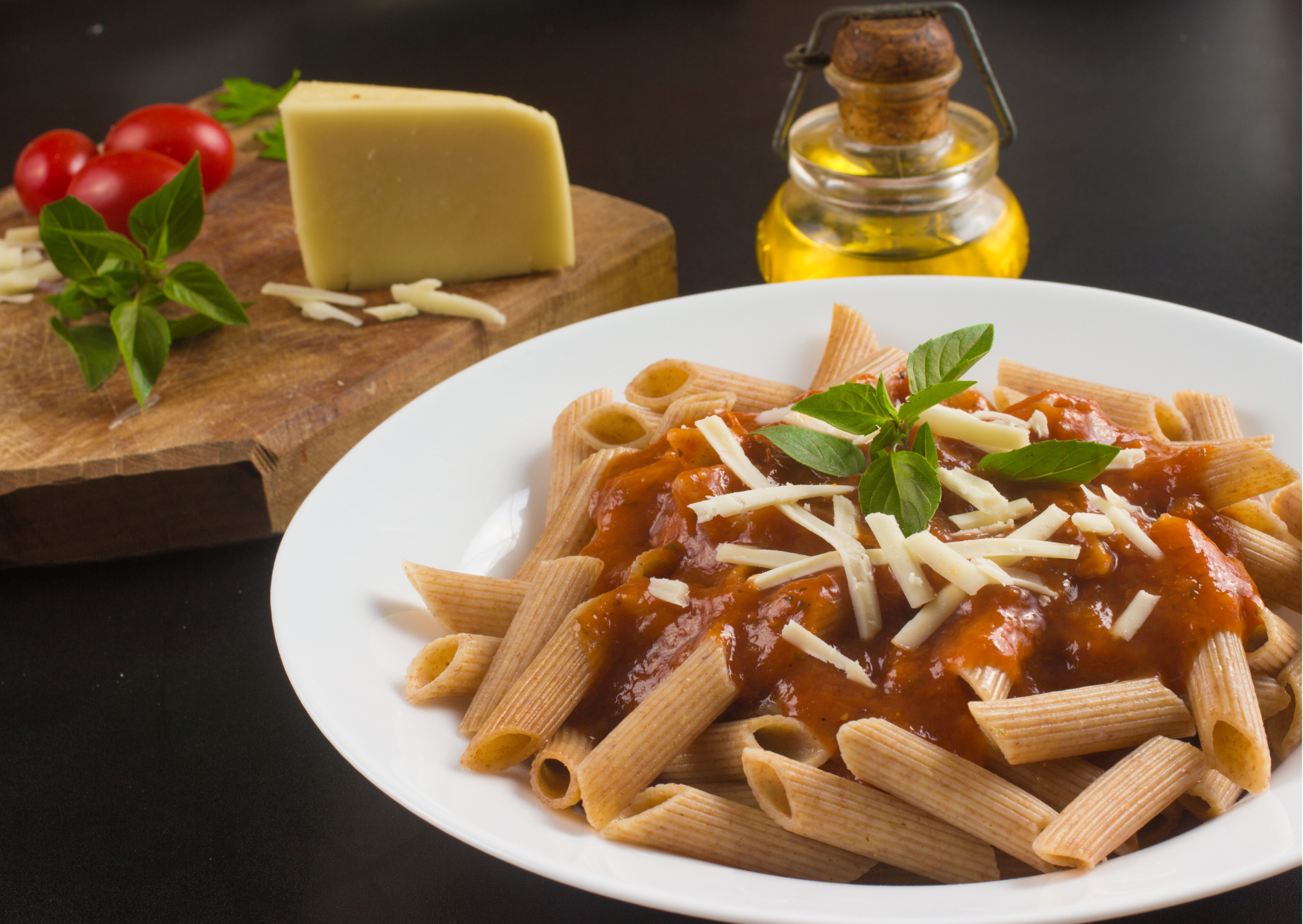
Arrabbiata is the simplest way to get that spicy satisfaction without turning it into a dairy situation.
It also exposes a common American problem: people make “arrabbiata” by dumping chili flakes into marinara and calling it a day.
Real arrabbiata is about hot fat + garlic + chili, then tomato, then pasta finished in the pan.
Serves: 4
Prep: 5 minutes
Cook: 20 minutes
Equipment: pan, pot
Ingredients
- 320–400 g pasta (penne is classic, but any short shape works)
- 3 tbsp olive oil
- 2–3 garlic cloves, lightly smashed
- Chili flakes or dried chili to taste
- 400–500 g passata or crushed tomatoes
- Salt
- Optional: a small knob of butter at the end if you want it rounder
Method
- Warm olive oil, add garlic and chili. Let it infuse without scorching. Burnt garlic ruins everything.
- Add tomatoes, salt, simmer 15 minutes.
- Cook pasta, finish in sauce with pasta water until it clings.
- Remove garlic if you like, finish with a tiny bit of butter if you want that glossy mouthfeel.
Arrabbiata is what vodka sauce pretends to be when it says “spicy,” but it’s cleaner. More direct. And it actually belongs in Italy.
If you want “Roman comfort,” skip the pink and go amatriciana
This is the part Americans don’t want to hear, but it’s true.
A lot of people who love vodka sauce are actually craving three things: salt, fat, and a sauce that sticks to pasta.
Rome has that solved already.
Amatriciana is guanciale + tomato + pecorino. It’s sharp and rich and makes you understand why Italians roll their eyes at creamy red sauces. Not because cream is evil, but because they don’t need it to make pasta feel luxurious.
If you can’t find guanciale, you can use pancetta, but the flavor is different. Still good, just different.
And if you want the even simpler version, gricia is the white base of amatriciana, no tomato, just pork fat, pepper, and pecorino turning into a sauce with pasta water. It’s basically a lesson in emulsification you can eat.
This is the kind of pasta that makes American “vodka sauce nights” feel a little… loud. Like you brought a foghorn to a small room.
The vodka myth: what vodka actually does, and why it’s not the point
Vodka sauce has two real “science” advantages:
- A little alcohol can help volatile aromas lift and read more strongly.
- Alcohol can help dissolve some compounds that don’t fully show up in water-only cooking.
That’s real. But here’s the twist: Italians already use alcohol in cooking, they just don’t treat vodka as magical. They use wine when it makes sense, and they rely on pasta water and technique the rest of the time.
Also, most of what people love about vodka sauce is not “vodka flavor.” It’s the combo of:
- tomato paste cooked in fat
- cream rounding out acidity
- starch emulsifying everything into that glossy cling
So if you’re trying to recreate that at home, obsessing over vodka is missing the point. Focus on the parts that do the heavy lifting.
If you still want to keep vodka in your version, fine, use it. Just don’t call it “authentic Italian” as a personality trait. Call it what it is: a great comfort sauce with a messy passport history.
Your next 7 days: get off the jarred pink sauce without feeling deprived
If this is a real habit in your kitchen, don’t try to quit it with discipline. Replace it with a system.
Day 1: Buy the core trio
Passata, tomato paste, a hard cheese. This is your base pantry.
Day 2: Learn the one move
Finish pasta in the sauce with pasta water. Timing beats willpower, even in cooking.
Day 3: Make arrabbiata once
Get comfortable with chili in oil, not chili dumped into tomato.
Day 4: Make penne al baffo
Do it once so you realize you can hit the same comfort note without chasing “vodka sauce” as a brand name.
Day 5: Order smarter when you eat out
Pick one classic: amatriciana, gricia, cacio e pepe, pesto, ragù. Stop hunting for the American greatest hits.
Day 6: Repeat one dish
Repetition is how food becomes normal. Repetition makes you visible, even to your own palate.
Day 7: Decide your “comfort rotation”
Two red sauces, one creamy option, one Roman-style option. Now you have a plan instead of cravings.
That’s the whole upgrade. You stop needing vodka sauce because you’ve built better defaults.

About the Author: Ruben, co-founder of Gamintraveler.com since 2014, is a seasoned traveler from Spain who has explored over 100 countries since 2009. Known for his extensive travel adventures across South America, Europe, the US, Australia, New Zealand, Asia, and Africa, Ruben combines his passion for adventurous yet sustainable living with his love for cycling, highlighted by his remarkable 5-month bicycle journey from Spain to Norway. He currently resides in Spain, where he continues sharing his travel experiences with his partner, Rachel, and their son, Han.