
You take a fork through the top and expect velvet. Instead you get an oil slick. The fix is not a new pan. It is the order you stack the layers.
Greasy moussaka is almost always an assembly problem. Americans slice eggplant thick, fry it like cutlets, spoon on a loose meat sauce, then bury it under béchamel. Oil from the eggplant and fat from the ragù have nowhere to go. They pool at the base and run when you cut the first square.
Greek cooks avoid this with two quiet moves. They bake or grill the vegetables instead of frying, and they use a starch-first, crumb-shielded stack that channels juices into potatoes and breadcrumbs before they ever touch your plate. The result is a tall, clean slice with a creamy top, plush vegetables, and no puddle.
Below is the exact order, a step-by-step recipe sized for a home oven, and the kitchen science that makes the slices hold. If you already love moussaka, this is how you love it on a Tuesday without a sink full of oil.
What Causes Greasy Moussaka In The First Place
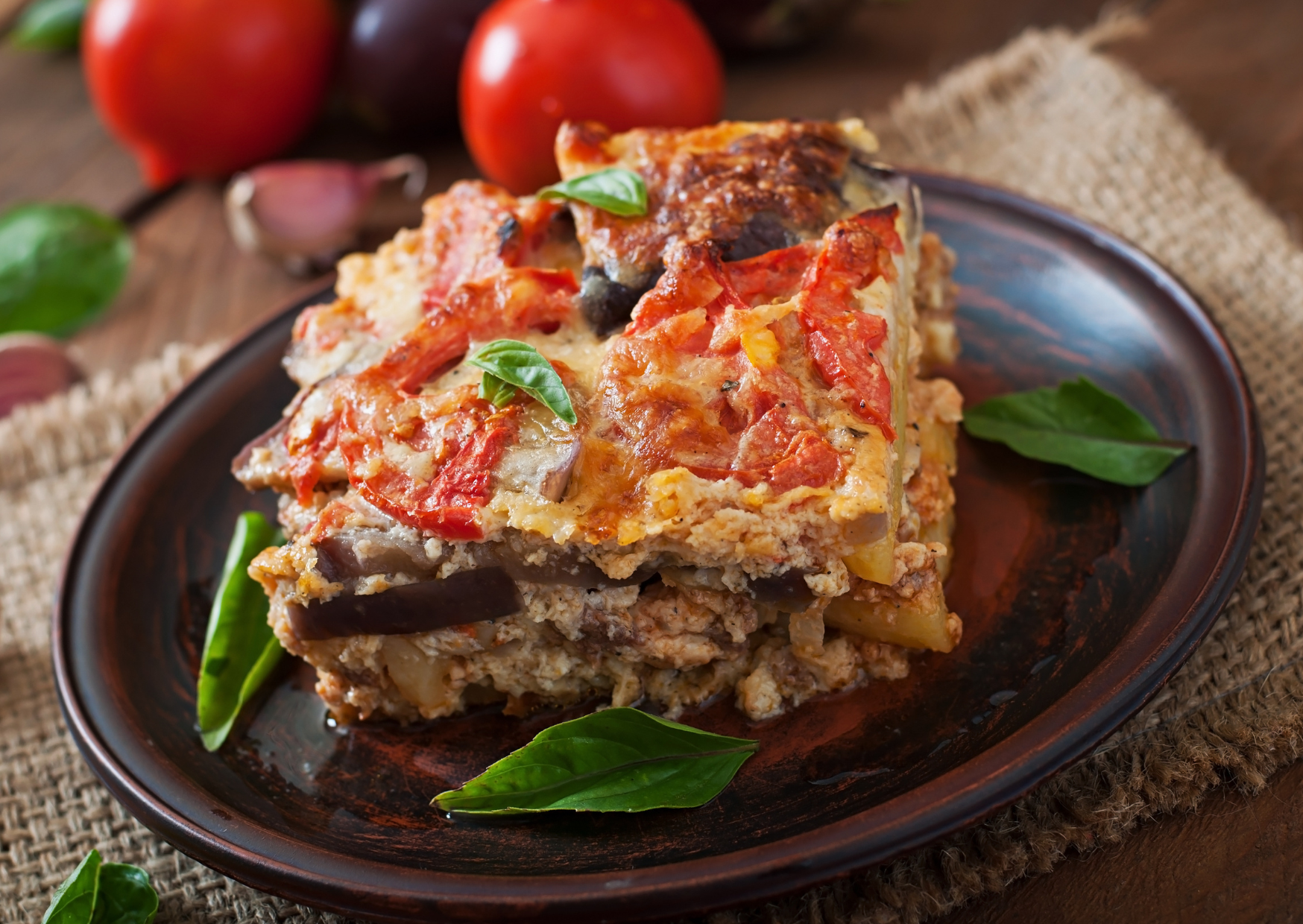
Grease in moussaka is not random. It comes from predictable choices, which means you can fix them with predictable counter moves.
The first culprit is fried eggplant. Eggplant is porous, and when you fry it, it behaves like a sponge. If you pan-fry slice after slice, each one can pull in tablespoons of oil that later release into the pan. Baking or broiling with a thin brush of oil gives you tender slices with far less trapped fat. Baked slices stay silky, fewer grams of oil ride into the casserole, your béchamel does not fight a flood.
The second culprit is a wet ragù. Moussaka wants a concentrated, almost jammy meat sauce. If yours still looks like a quick weeknight Bolognese, the excess water and fat will leak into the lower layers and turn the base slick. You want a sauce that mounds on a spoon and leaves only a gloss behind, not a moat. Cook the ragù until spoon-thick, skim or drain excess fat, season at the end.
Third is layer order. Stack wrong, and the liquids have no sponge to soak into. Stack right, and gravity works for you. This is where potatoes and breadcrumbs do the heavy lifting. Thin potato slices at the base catch drips and turn them into flavor. A light snow of dry breadcrumbs under and between layers acts as a hidden oil absorber, the way Greek cooks line pans and layers to prevent sticking and pooling. Starch at the bottom, crumbs as gutters, juices go where you want.
Finally, impatience. Cutting too soon guarantees a mess. Give the pan 30 to 45 minutes to cool and set. The starches firm up, the béchamel tightens, and the slice holds. Resting is non-negotiable, structure forms as it cools, your squares cut clean.
The Layer Order That Keeps It Clean
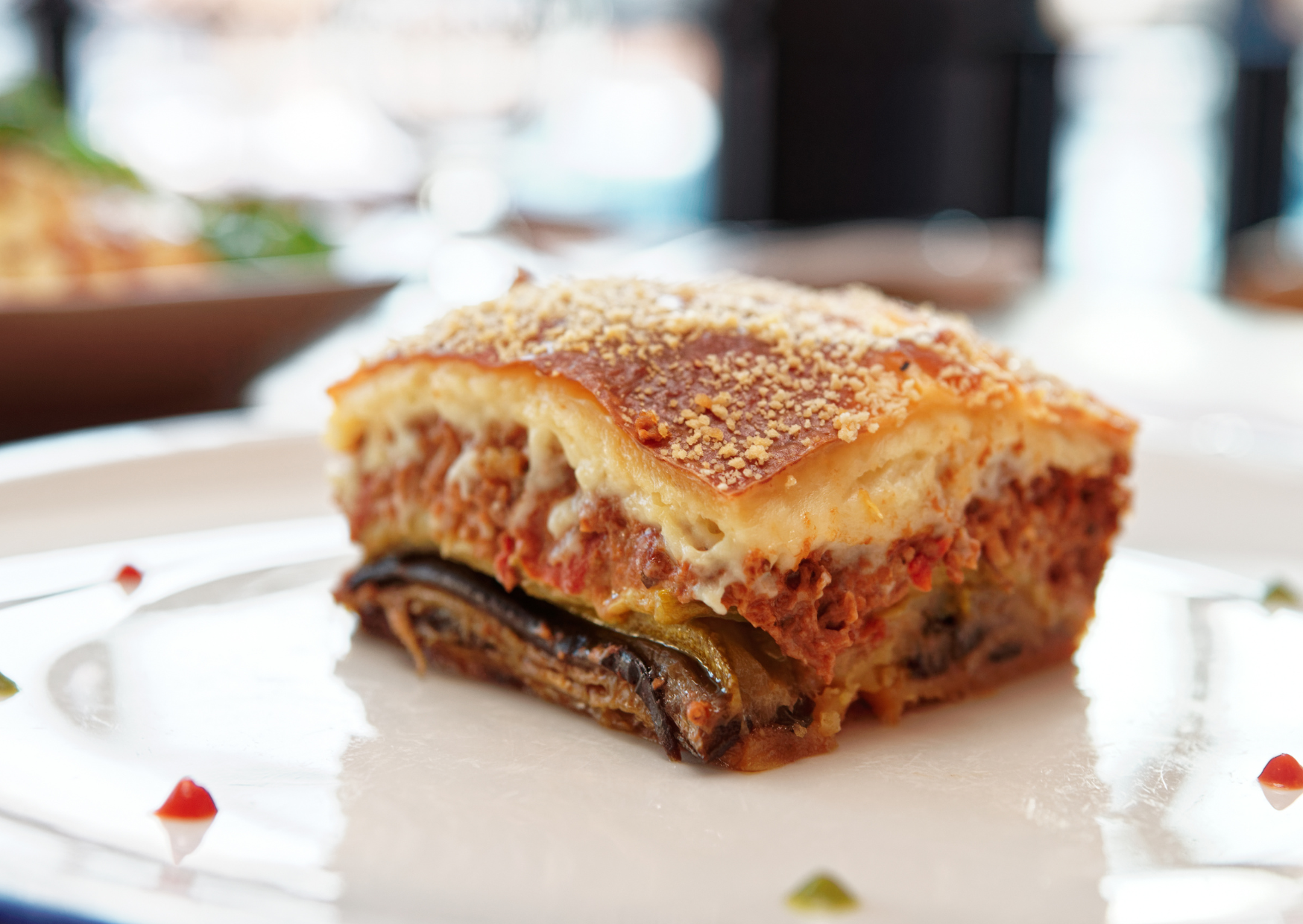
Here is the stack that tames grease and gives you tall, restaurant-neat slices. Read it once, then build it exactly this way.
- Potato base
Shingle par-cooked potato slices across the bottom. They are the sponge. They trap juices and fat, and they keep the bottom from frying in its own oil. Starch first, juices meet potato, no puddle on the plate. - Breadcrumb shield
Dust the potatoes with a fine layer of dry breadcrumbs. This simple shield catches surface fat and prevents the potatoes from sticking. Crumbs catch drips, release stays clean, flavor concentrates, not leaks. - First eggplant layer
Lay a tight layer of baked or broiled eggplant slices. Press them gently to sit flat. Because you did not fry, you are not importing excess oil here. Baked, not fried, flat and tight, no oil load. - Half the ragù
Spread on half your reduced meat sauce. It should be thick enough to hold soft peaks. A sauce with this body clings to vegetables instead of seeping between them. Spoon-thick ragù, fat already managed, flavor not water. - Second breadcrumb shield
Another whisper of breadcrumbs over the ragù. This keeps any remaining surface fat from creeping into the next vegetable layer. Second catch layer, no upward bleed, clean flavor lines. - Second eggplant layer
Lay the rest of the eggplant slices. Press again. If you like zucchini, you can split this layer into half eggplant, half zucchini for texture. Even grid, vegetable lift, stability for the top. - Remaining ragù
Spread the rest of the meat sauce to level. A smooth top gives béchamel a flat base to set on. Even cap of sauce, no peaks or valleys, béchamel glides. - Béchamel and grated cheese
Pour on a thick, egg-enriched béchamel and smooth it to the edges. Finish with grated kefalotyri, kefalograviera, or Parmesan. The béchamel is an emulsifier and a lid that holds aroma and moisture in during the final bake. Emulsifying top, golden crust, aromatic seal.
That is it. The power is not in an exotic ingredient. It is in where you put what, and in how dry each component is before you assemble.
The Recipe: Clean-Slice Greek Moussaka
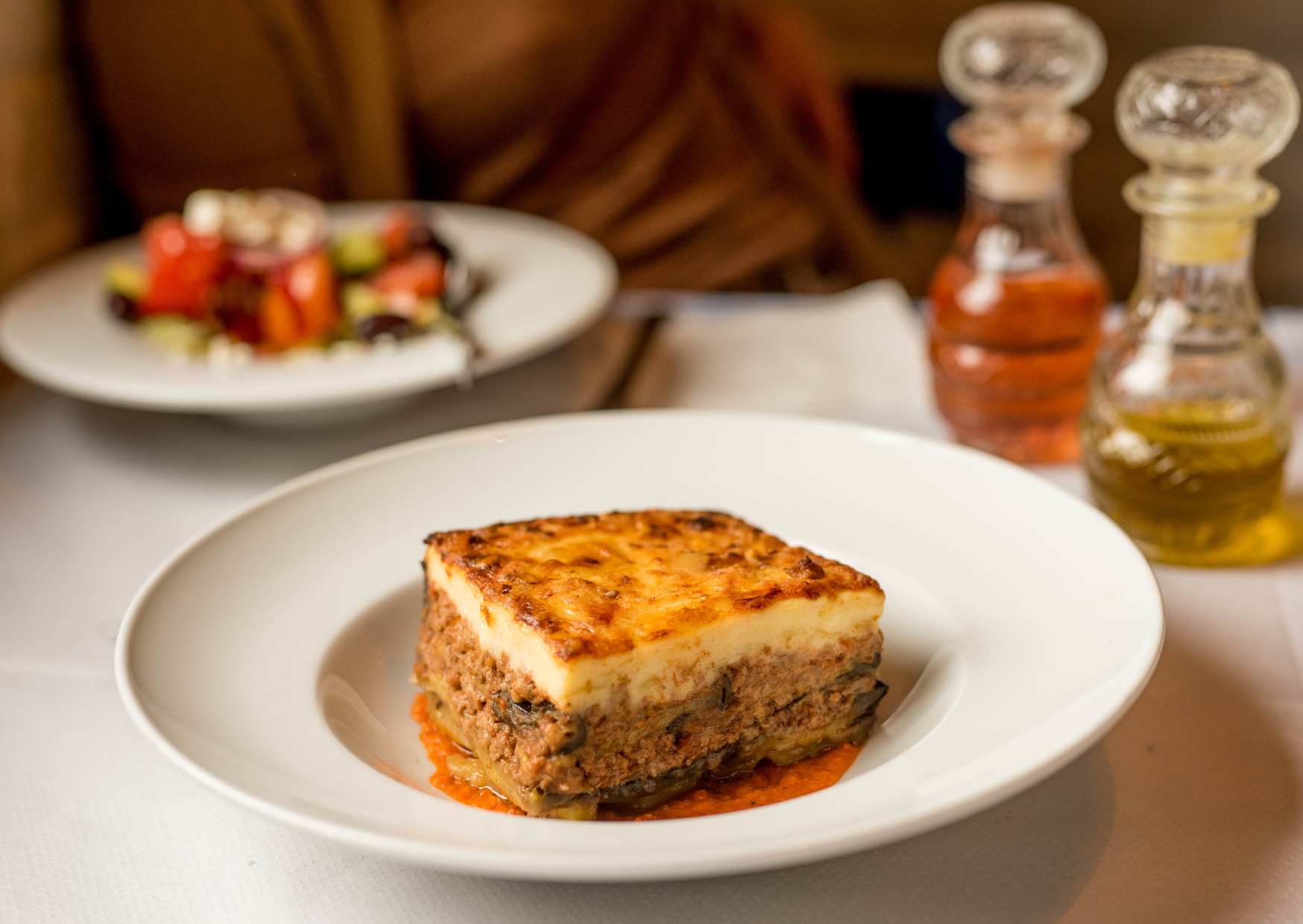
Yield: One 23 by 33 cm pan, 8 generous squares
Time: About 2 hours active, plus 45 minutes resting
Ingredients
Vegetables and base
- 3 medium eggplants, about 1.2 to 1.4 kg total, sliced lengthwise 1 cm thick
- 3 medium starchy potatoes, about 700 g, peeled and sliced 5 mm thick
- 4 tbsp extra-virgin olive oil, for brushing
- Fine sea salt and black pepper
- 60 g dry breadcrumbs, plain
Meat sauce
- 700 g ground lamb or beef, or half of each
- 1 large onion, finely diced
- 3 garlic cloves, minced
- 200 ml dry red wine
- 500 g crushed tomatoes or passata
- 2 tbsp tomato paste
- 1 tsp ground cinnamon
- 1 tsp dried oregano
- 1 bay leaf
- 1 tsp fine salt, plus more to taste
- Black pepper
- 2 tbsp olive oil
Béchamel
- 80 g unsalted butter or olive oil
- 80 g all-purpose flour
- 900 ml whole milk, warmed
- 2 large eggs
- 60 g grated kefalotyri, kefalograviera, or Parmesan, plus 30 g for the top
- A good pinch of freshly grated nutmeg
- ¾ tsp fine salt
Optional for a lighter top
- Swap 200 ml of the milk with full-fat Greek yogurt whisked in at the end before the eggs, for a tangy, lighter béchamel.
Gear
- Large sheet pans and racks for baking eggplant
- 23 by 33 cm baking dish, at least 6 cm deep
- Medium saucepan for ragù
- Medium saucepan for béchamel
Method
1) Bake the eggplant, do not fry.
Heat the oven to 220 C. Brush both sides of the eggplant slices with olive oil, season lightly, and arrange on racks set over sheet pans so air circulates. Bake 15 to 20 minutes, turning once, until pliable and lightly browned. They should be tender but not collapsing. Set aside to cool. Baked eggplant brings flavor without excess oil.
2) Par-cook the potatoes.
Lower the oven to 200 C. Put the sliced potatoes on a sheet pan, brush with a little oil, season, and bake 12 to 15 minutes until just tender and flexible, not fully cooked. They should bend without breaking. Par-cooked slices absorb juices without turning to mush.
3) Make a spoon-thick ragù.
Warm olive oil in a saucepan over medium heat. Cook onion with a pinch of salt until translucent, 6 to 8 minutes. Add garlic for 1 minute. Raise heat, add the ground meat, cook until well browned, breaking it up, and spoon off excess fat. Stir in tomato paste and cook 1 minute. Add wine, simmer until nearly dry. Add tomatoes, cinnamon, oregano, bay, salt, and pepper. Simmer uncovered 25 to 35 minutes, stirring, until very thick. It should mound on a spoon with only a gloss of fat. Taste for salt and remove bay. Dry ragù is structural insurance.
4) Cook the béchamel thick enough to slice.
In a clean saucepan, melt butter over medium heat. Whisk in flour to a smooth paste. Cook 2 minutes, whisking. Slowly add warm milk, whisking until smooth after each addition. Simmer gently 5 to 7 minutes until thick enough to coat a spoon. Off heat, whisk in salt, nutmeg, and 60 g grated cheese. Let cool 5 minutes, then whisk the eggs in a separate bowl and temper with a ladle of béchamel. Whisk eggs into the sauce until silky. If using yogurt, whisk it in before the eggs. A firm béchamel sets the slice and traps aroma.
5) Build the stack in the clean order.
Lightly oil the baking dish. Shingle the par-cooked potatoes across the bottom. Season lightly. Dust with 2 tbsp breadcrumbs. Lay half the eggplant in a tight layer. Spread on half the ragù. Dust with 1 tbsp breadcrumbs. Lay the rest of the eggplant. Spread the remaining ragù. Pour on the béchamel and smooth to the edges. Sprinkle the top with the remaining 30 g cheese.
6) Bake and rest.
Bake at 190 C for 40 to 50 minutes until the top is puffed and deeply golden in spots. If color is shy, finish under the broiler for 1 to 2 minutes. Remove and rest at least 30 to 45 minutes before cutting. Cut with a sharp knife, wipe the blade between slices, and lift squares with a thin spatula.
7) Serve.
A lemony salad and crusty bread are all you need. The slices will hold, the plate will be clean, and the top will eat like custard.
Why This Order Works
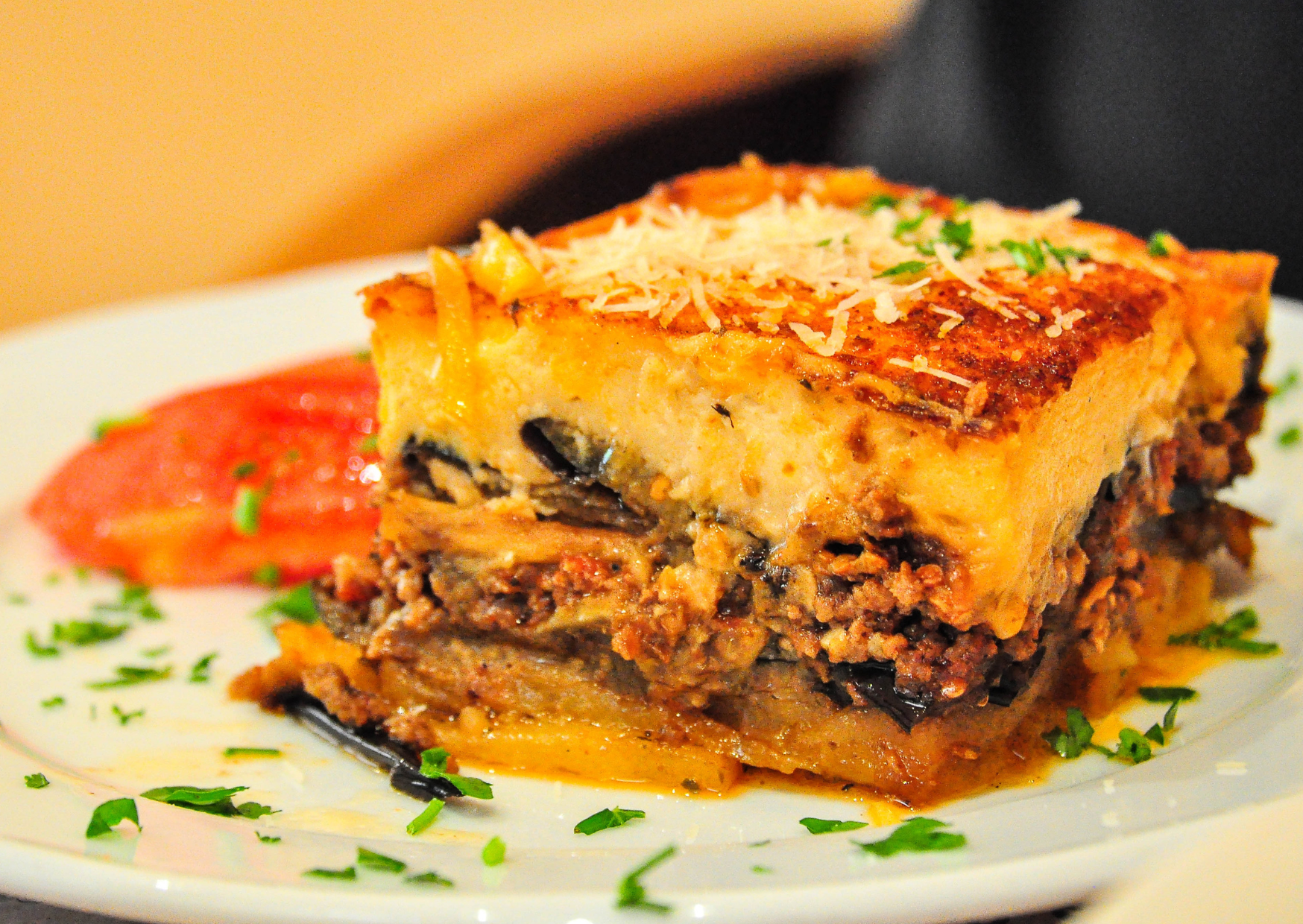
A good slice is physics and pantry, not magic.
Potatoes are the sump. Starch at the base catches fat and liquid the way a crouton catches sauce in a gratin. Thin, par-cooked potato slices drink flavor and keep the bottom from frying in a lake of oil. This is why many Greek cooks line the pan with potatoes first or sprinkle dry breadcrumbs at the base. Starch plus crumbs equals a clean release, flavor gets absorbed, not lost, no greasy heel on your slice.
Breadcrumbs are gutters. A light shake of dry crumbs under and above the ragù is not about breadiness. It is a hidden oil and steam management layer. Crumbs trap surface fat, let vapor escape, and help each layer stay in its lane. Because they are so light, they do the job without turning the dish heavy.
Eggplant that is baked does not flood the pan. Fried eggplant is delicious, but it imports oil. Baked or broiled slices give you smoke and browning without turning every cell into a reservoir. You still get silk after baking, especially when the slices finish in béchamel steam.
Thick ragù anchors the middle. Water is the enemy of neat squares. A concentrated, well-reduced meat sauce sits where you put it and seasons every bite without running out the sides. Skimming or draining excess fat during browning also reduces the load the base has to catch.
Béchamel is a lid and an emulsifier. The top sauce is not just a creamy crown. The roux and egg mix emulsify surface fat, prevent split, and set into a custard that slices. A béchamel that is too thin will weep. A thick béchamel sets like a savory flan.
Resting time sets the grid. The last step is the least glamorous. Cooling lets starches gel, proteins firm, and steam drift off. Cut early and you release that pressure onto the plate. Wait and the layers behave.
Ingredient Choices That Keep It Light Without Losing Greek Soul
You can change a few variables and keep the result unmistakably Greek.
Meat. Lamb is classic and aromatic. Beef is easy and leaner. A 50–50 blend gives you perfume with structure. If fat renders aggressively, spoon it off before tomatoes.
Cheese. Kefalotyri and kefalograviera melt with a savory edge. Parmesan is a fine stand-in in the U.S. A spoon of grated cheese inside the béchamel plus a little on top gives you both body and crust.
Spices. Cinnamon is the signature. Some cooks add a whisper of allspice or clove. Keep it restrained. You want warmth, not a holiday candle.
Oil. You do not need much. Brushing eggplant lightly and baking on racks limits oil to what clings to the surface, not what fills the cells.
Yogurt béchamel. Swapping a portion of milk for full-fat Greek yogurt makes the top tangy and a little lighter without losing the silk. Whisk it in off heat before the eggs.
Gluten-free. Use gluten-free breadcrumbs and swap rice flour or a gluten-free flour blend in the béchamel. The ratios hold.
American Mistakes And How To Fix Them
You can save a lot of frustration by sidestepping the most common traps.
Frying the eggplant. It tastes good, then it betrays you. Bake or broil with a brush of oil. Use racks so hot air circulates and both sides color. Flip once for even browning. Baked slices bring flavor, not a flood.
Loose sauce. If your ragù spreads like soup, you will have grease and water at the base. Keep it on a low bubble until it is spoon-thick and glossy. Drain or skim fat right after browning the meat, when it is easiest to remove.
Skipping the crumbs. A dusting under the potatoes and over the first ragù layer keeps everything tidy. Dry store-bought breadcrumbs are perfect. You need only a few tablespoons.
No rest. The smell will tempt you. Cut early and you will think you messed up. You did not. You just did not wait. Give it time.
Wrong pan. Use a pan with straight sides at least 6 cm deep. A too-shallow dish forces you to skinny the layers, which pushes water around instead of trapping it.
Variations That Still Slice Clean
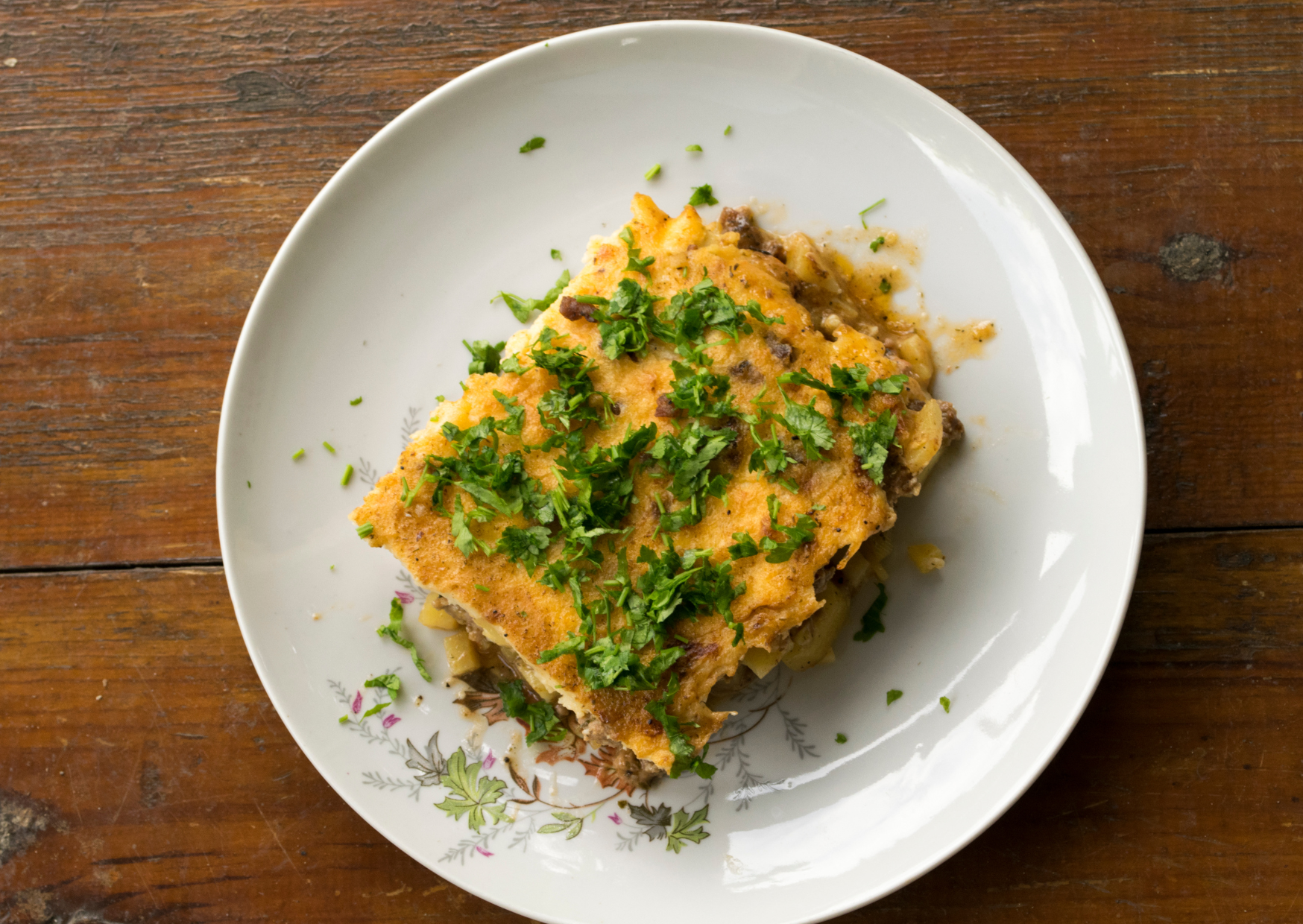
You can adjust for season and pantry while keeping the structure.
Zucchini twist. Replace half the eggplant with baked zucchini planks for a sweeter profile. Keep the same layer order.
Potato-free version. If you skip potatoes, double the breadcrumb shields and keep the ragù extra thick. Expect a slightly looser base, but still clean.
Vegetarian swap. Trade the meat for a mix of cooked lentils and finely chopped sautéed mushrooms reduced with tomatoes. Keep the same order and the béchamel. The crumb shields matter even more here.
Olive-oil béchamel. Many Greek home cooks use olive oil instead of butter for the roux. It is classic and delicious. Use a fruity oil you like, and keep the thick consistency.
Make-ahead. Build the whole pan, chill, then bake from cold, adding 10 to 15 minutes. Or bake, cool, chill, and reheat covered at 175 C until hot, then uncover to re-crisp the top. The slice will be even neater the second day.
Why This Is Greek, Not a Hack
The layer order above is not a trick imported from somewhere else. It leans into moves Greek cooks have used for decades. Potatoes at the bottom or breadcrumbs under the first layer are common. Meat sauce is often cooked dry and layered between vegetables rather than drowning them. Béchamel is intentionally thick and sometimes enriched with egg. The only modernization here is choosing the oven over the frying pan and being disciplined about the shields and rests. The payoff is the taste you want with the clean slice you see in your head.
Build it this way once and you will never go back to frying rounds of eggplant on a Tuesday. The table will be quiet in the right way, with people taking seconds and the pan staying neat to the last corner.
Origin and History
Moussaka is often treated as a single, fixed recipe, but its history is layered and regional. Versions of layered eggplant dishes existed across the Eastern Mediterranean long before moussaka took its modern form in Greece. These early dishes were simpler, often oil-heavy, and designed for sustenance rather than refinement.
The version most people recognize today was formalized in the early twentieth century, when Greek cooks began incorporating a thick béchamel topping. This addition transformed moussaka from a rustic casserole into a structured, oven-baked dish with clear layers and balance.
Eggplant, central to moussaka, has always presented a challenge. In traditional Greek kitchens, cooks learned through experience how to manage its tendency to absorb oil. The methods used were practical solutions developed long before written recipes existed.
Over time, families passed down specific techniques rather than exact measurements. The “rule” that keeps moussaka from becoming oily is less about ingredients and more about respecting how each component behaves under heat.
One of the most controversial truths about moussaka is that too much olive oil ruins it. This challenges the common assumption that generous oil automatically improves Mediterranean dishes. In moussaka, excess oil overwhelms texture and masks flavor.
Another debated point is frying eggplant. Many recipes insist on deep-frying, but this is precisely where most oil problems begin. Traditional home cooks often pan-cook or bake eggplant to control absorption.
There is also disagreement about layering order. Some believe stacking everything raw saves time, but this shortcut prevents moisture from evaporating properly. Proper pre-cooking is not optional if balance is the goal.
Perhaps the most uncomfortable reality is that moussaka requires restraint. It is not meant to be indulgent in the way lasagna often is. Its richness comes from structure, not saturation.
How Long You Take to Prepare
Moussaka has a reputation for being time-consuming, but most of that time is passive rather than active. Preparation typically takes about forty-five minutes, with baking adding another forty to fifty minutes.
The eggplant stage is the most critical. Allowing time to cook and drain it properly prevents oil buildup later. Rushing this step is the most common mistake home cooks make.
The meat sauce comes together relatively quickly, usually in twenty minutes. Letting it simmer uncovered helps excess moisture evaporate, which is essential for a clean final dish.
When managed efficiently, moussaka becomes a project rather than a burden. The time invested upfront eliminates problems that cannot be fixed after baking.
Serving Suggestions
Moussaka is traditionally served warm, not piping hot. Allowing it to rest helps the layers set and prevents oil from pooling on the plate.
A simple salad with acidity, such as tomatoes or greens with lemon, balances the dish’s richness. This contrast is intentional in Greek meals.
Portions should be moderate. Moussaka is filling by design, and smaller servings highlight its structure rather than its heaviness.
Leftovers often improve overnight as the layers firm up. Reheating gently preserves texture and prevents oil from resurfacing.
Final Thoughts
The rule that keeps moussaka from turning oily is not a single trick, but a mindset. Control, patience, and respect for ingredients matter more than abundance.
Greek cooking often appears generous, but its generosity lies in technique rather than excess. Moussaka is a perfect example of this philosophy.
When each component is handled correctly, the dish feels rich without being heavy. The absence of oiliness allows the flavors to remain distinct.
Mastering moussaka is less about following a recipe and more about understanding balance. Once that principle is learned, the dish becomes both reliable and rewarding.

About the Author: Ruben, co-founder of Gamintraveler.com since 2014, is a seasoned traveler from Spain who has explored over 100 countries since 2009. Known for his extensive travel adventures across South America, Europe, the US, Australia, New Zealand, Asia, and Africa, Ruben combines his passion for adventurous yet sustainable living with his love for cycling, highlighted by his remarkable 5-month bicycle journey from Spain to Norway. He currently resides in Spain, where he continues sharing his travel experiences with his partner, Rachel, and their son, Han.