
There is a quiet number inside Naples that decides whether your crust lifts like silk or sag like cardboard. Learn it, and your home pies change overnight.
Walk a block in Naples and you see it happen in seconds.
A peel slides a pale disc into flame, a minute later it lifts out, freckles of char across a soft, airy rim.
That lift is not an accident, it is water, the exact amount of water in the dough, tuned to flour strength, fermentation, and a 60 to 90 second bake.
Once you understand the number Neapolitans aim for, you also understand why a chain dough built for conveyor belts and long holding times tastes like something else entirely.
This is the hydration rule, the single most useful detail Naples does not put on a billboard.
Want More Deep Dives into Other Cultures?
– 9 Italian Style Rules That Instantly Outshine American Fashion
– Why Europeans Walk Everywhere (And Americans Should Too)
– How Europeans Actually Afford Living in Cities Without Six-Figure Salaries
– 9 ‘Luxury’ Items in America That Europeans Consider Basic Necessities
1) The Number, And Why It Works
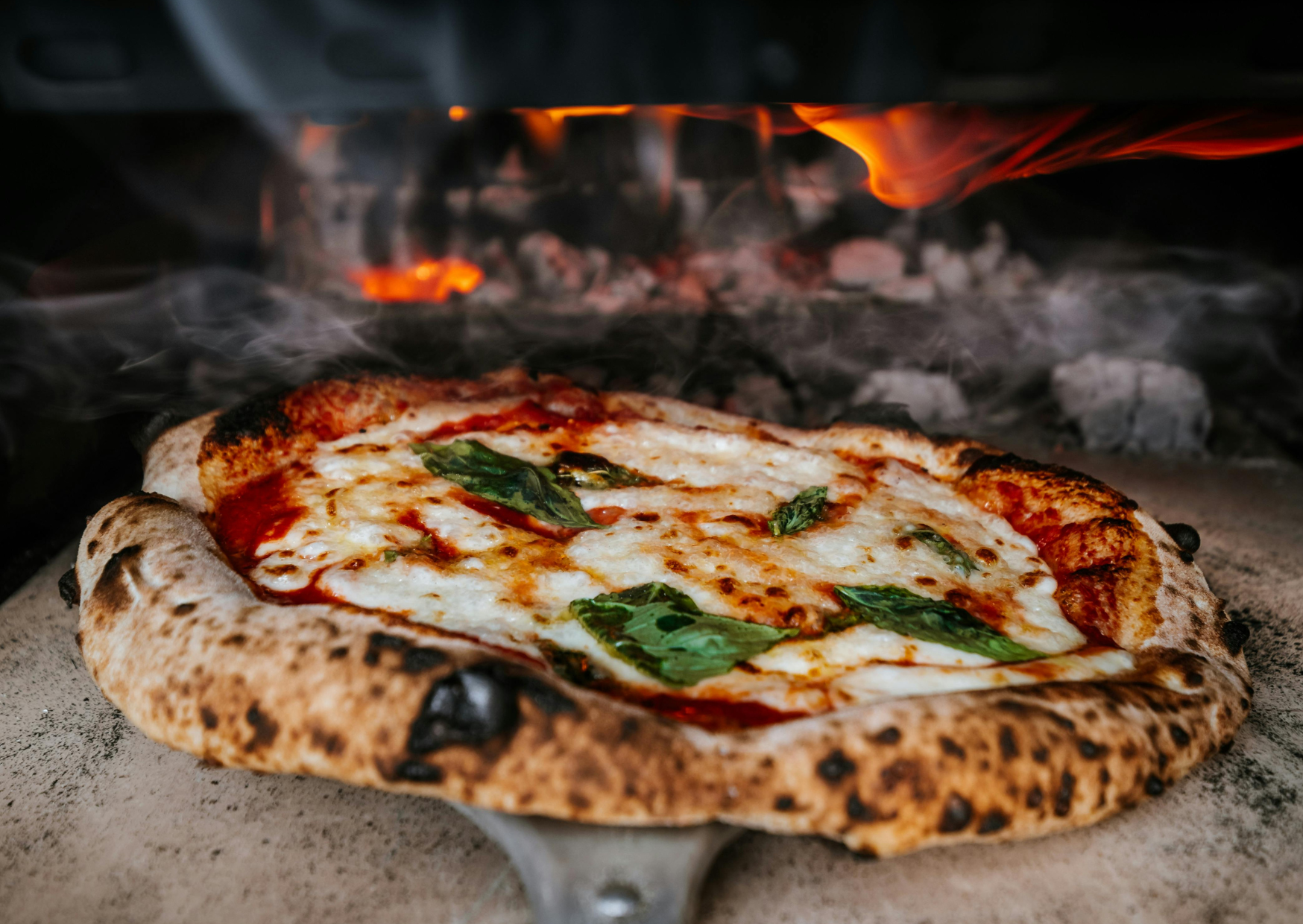
Neapolitan dough lives around 60 percent hydration, with a traditional window that runs roughly 55 to 62.5 percent. That range is not a rumor. The official Neapolitan standards specify flours with 55 to 62 percent absorption and give a worked example that effectively lands between 55.6 and 62.5 percent hydration, one liter of water to 1.6 to 1.8 kilos of flour. As of September 2025, that guidance is still on the books.
Why those numbers? Because Neapolitan pizza is a high-heat, short bake. A 430 to 480 °C wood or gas fire turns water to steam fast. Around 60 percent hydration builds a dough that stretches without tearing, traps steam in the rim, and dries just enough in the center without going cracker hard. Push hydration much lower and you lose tenderness. Push it much higher and you invite a soupy middle unless your oven and technique are flawless. The sweet spot is soft, extensible, and strong.
A second reason is flour. Neapolitan-style 00 flours sit in a medium strength band, with W roughly 250 to 320 and a balanced P/L. Those flours absorb water in the same zone the tradition prefers, so the dough reaches the “punto di pasta,” the point where it feels moist, non-sticky, and plastic, with gluten organized but not over-tight. That tactile target is written into the rules for a reason.
2) Why Chain Dough Tastes Different
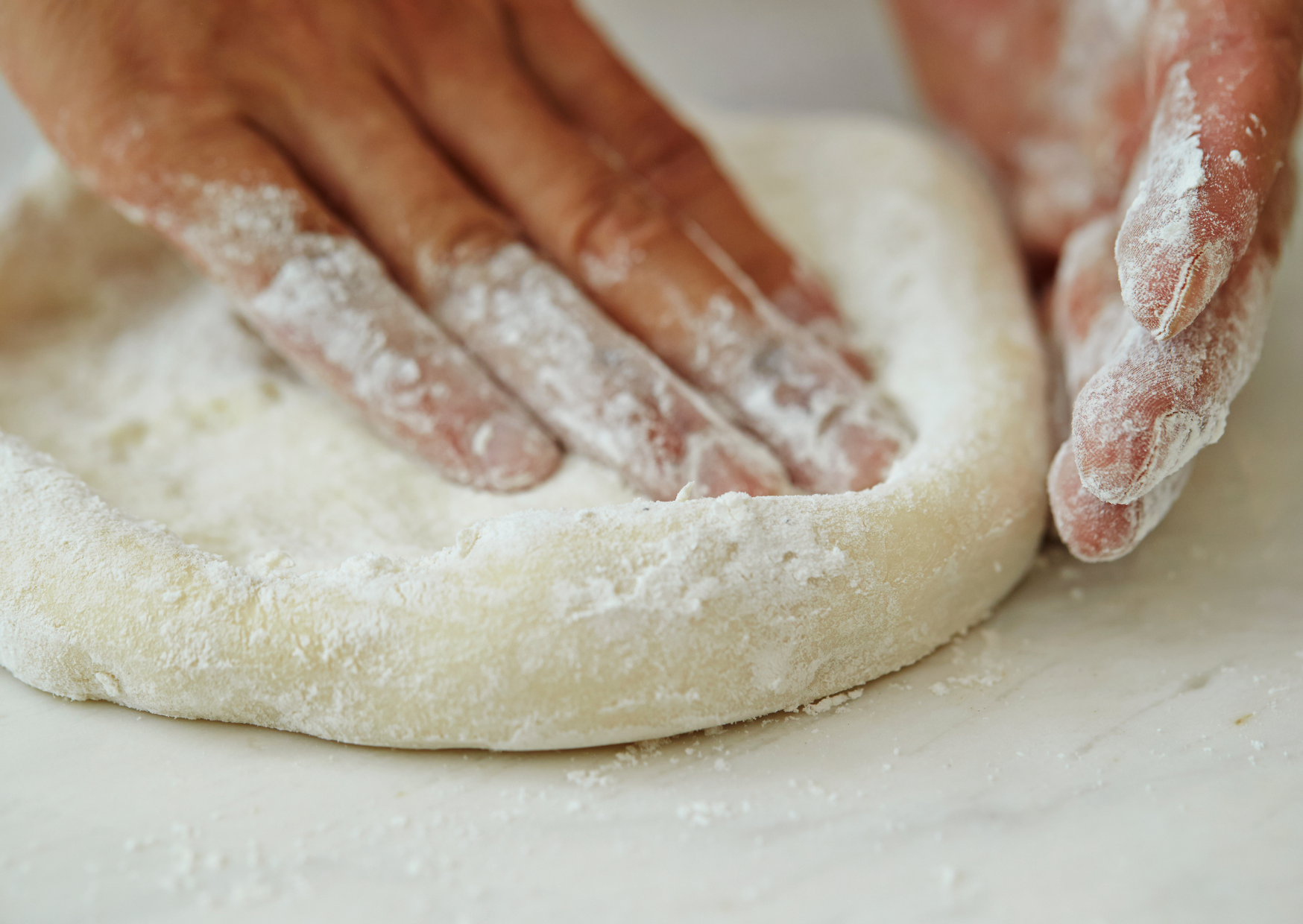
Domino’s dough is engineered for consistency, not a 90-second flame. The U.S. ingredient list tells the story, enriched flour and water, yes, but also soybean oil and sugar, plus conditioners that help dough tolerate factory mixing, trucking, and air-impingement ovens. That is a smart formula for a global chain, it is also a completely different path than Naples, where the code explicitly says no oil, no sugar in the dough.
Hydration gets tuned differently when oil and sugar enter the picture. Oil “wets” the dough without counting as water, and sugar speeds browning at lower temperatures. Commercial formulations in U.S. chain style tend to land around 56 to 60 percent water for manageable handling with added oil, which helps dough survive mechanized processing and screens. The result is delicious in its own lane, but the crumb, aroma, and tenderness are not Neapolitan.
If you want Naples in your kitchen, copy Naples. Flour, water, salt, yeast, time. Then pick hydration like a local and let the oven do the rest.
3) Hydration, Flour Power, And Fermentation, The Simple Math
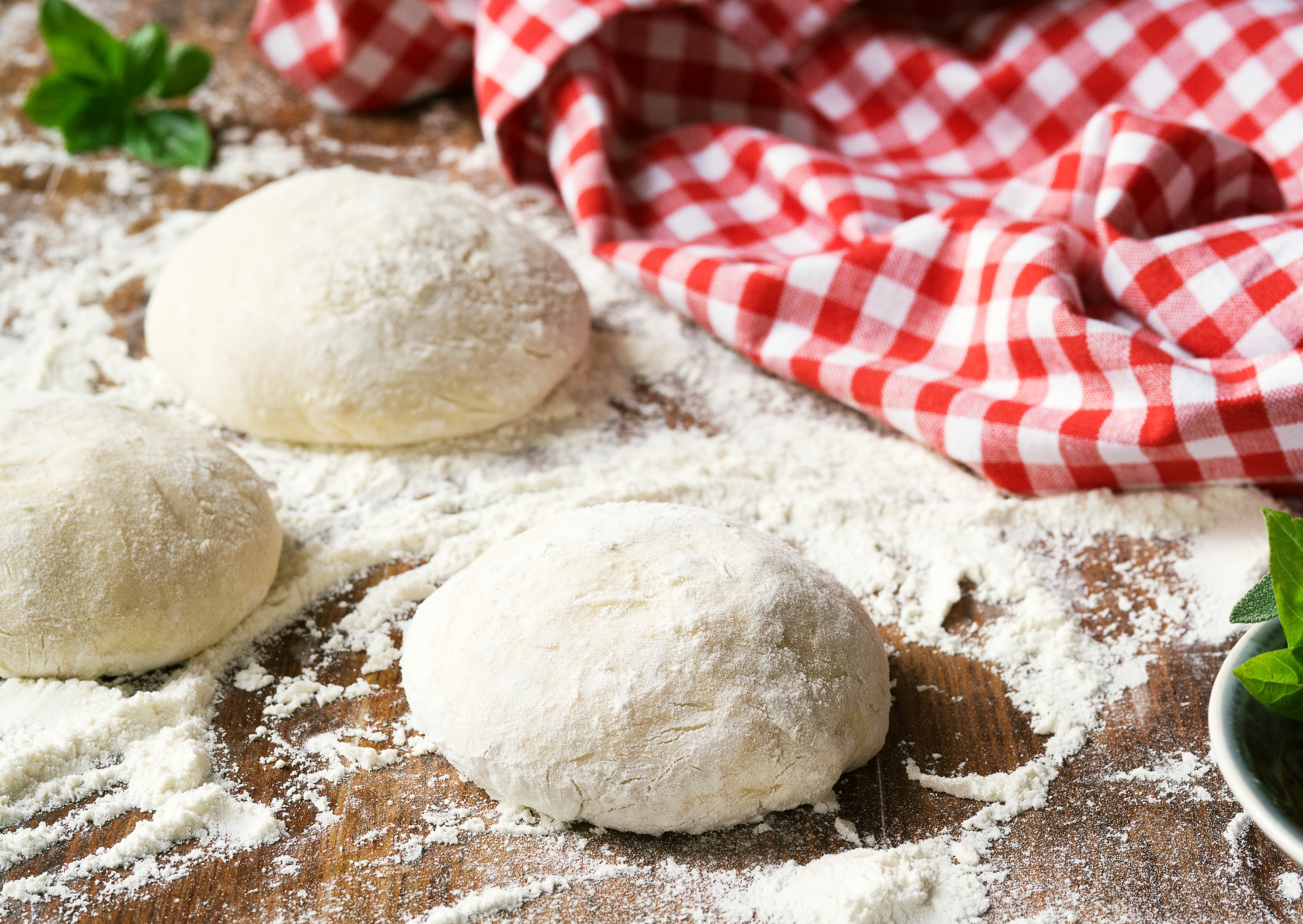
Hydration is just water weight divided by flour weight. If you use one kilo of flour, 60 percent hydration means 600 grams of water. The AVPN’s own “ingredients and amounts” table implies two bookends, 1,000 grams of water to either 1,600 grams of flour, about 62.5 percent, or to 1,800 grams of flour, about 55.6 percent. Both are canon, the choice depends on season, flour, and your schedule.
Flour strength matters because stronger flours absorb more and hold gas longer. The spec calls for medium-strength 00 or 0 flours, W roughly 250 to 320, P/L around 0.6, with absorption listed at 55 to 62 percent. That is the bullseye for a dough that shapes easily by hand, proofs 12 to 24 hours, and bakes in a flash.
Fermentation ties the system together. A 12 to 24 hour rise at cool room temperature or a controlled proofing chamber lets enzymes work and gluten relax. Warmer kitchens tend to push you toward the lower end of the hydration range and less yeast, cooler rooms allow a touch more water without losing control. Naples writes that flexibility into the discipline, including ideal proof conditions, because the point is repeatable texture and flavor, not a fixed lab number.
For home cooks with strong outdoor ovens or steels, borrowing the Neapolitan window and adjusting yeast to your schedule is the easiest way to stop chasing your tail.
4) The Practical Playbook, So You Can Taste It Tonight
Here is a Neapolitan-style dough you can run at 58, 60, or 62 percent hydration depending on your gear. Pick one and stick with it for three bakes before changing anything.
Ingredients
- 1000 g 00 pizza flour, W in the 250–320 range
- 580–620 g water at 18–22 °C, see note below
- 28 g fine sea salt
- 1 g fresh yeast, or 0.3 g instant dry yeast, adjust with temperature
Tools
- Scale, large mixing bowl or spiral mixer, dough scraper
- Proofing box or covered tray, pizza peel, stone or steel, high-heat oven
Method
- Start with water. Dissolve the salt, then whisk in the yeast. Add about a third of the flour and mix to a batter. Add the rest gradually until you hit a smooth, unified dough. Knead until the dough is soft and slightly tacky, not sticky. Rest 10 minutes, then finish kneading to a gentle windowpane.
- Bulk ferment 1 to 2 hours at cool room temp until slightly puffy. Divide into 240–260 g balls, tighten lightly, and set in a covered box.
- Second rise 10 to 20 hours at 18–20 °C. If your room runs warmer, shorten the rise and move your hydration toward 58 percent. If it runs cooler, 60–62 percent will keep the dough relaxed.
- Heat the oven as hot as it will safely go. For true Neapolitan ovens, aim near 450 °C. For outdoor gas ovens, follow the maker’s high-heat instructions. For a home oven, preheat a steel on the top rack for 45 to 60 minutes, then switch to broil to saturate heat.
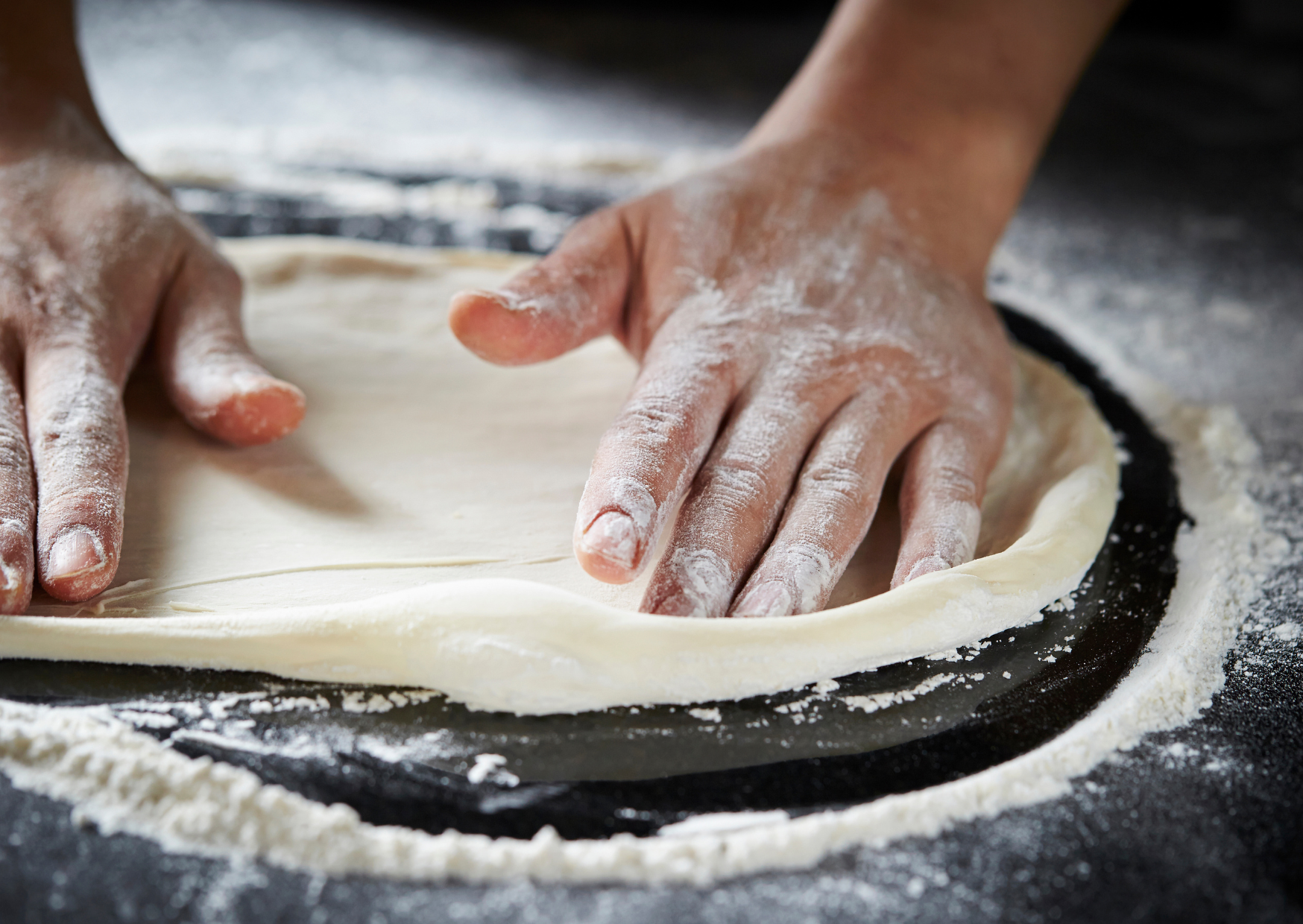
- Open by hand. Dust lightly, press from center out, keep the rim full of air, no rolling pin. Top with restraint.
- Bake fast. In a 430–480 °C oven you want 60 to 90 seconds. On a steel under a broiler, launch, then finish under the broiler until the rim leaps and spots. Aim for a tender center that folds, with a light, airy cornicione.
Which hydration should you pick?
- 58% if your oven is modest, your kitchen is warm, or your flour is on the softer side.
- 60% as the default for balanced strength and handling.
- 62% if your oven is blazing and you want a looser, silkier crumb.
Note that this is classic Naples, flour, water, salt, yeast. No oil, no sugar. That is on purpose, because oil and sugar tilt dough toward lower-temp bakes, different browning, and different handling.
5) High-Hydration Temptations, And How To Avoid Wet Cardboard
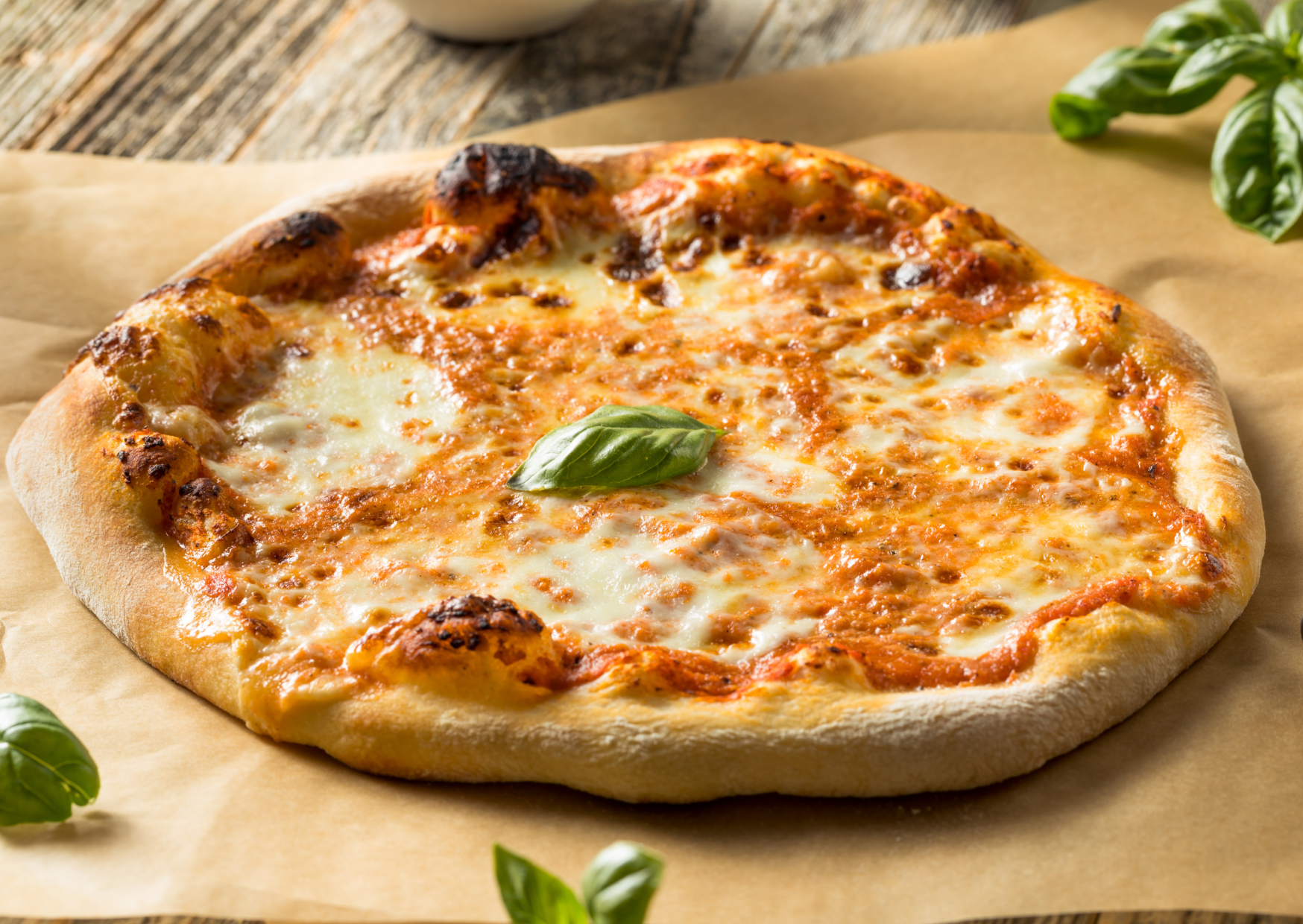
The internet loves very wet doughs, but Naples is not a contest to see who can pour the most water into flour. If your oven cannot vaporize excess water in a minute, your center goes soupy while the rim lags behind. Start near 60 percent, then rise and bake your way up only if your gear and technique support it. Serious high-hydration methods are great, they are just a different style or a different workflow.
Another trap is fighting the dough with raw flour. When hydration creeps up, you need gentle mixing and rest cycles, not a snowstorm on the bench, which would secretly drag hydration back down and rough up your gluten. A few sets of stretch-and-folds with small rests make the dough cohesive and easy to handle without cheating the water you chose.
Finally, do not let yeast cover for time. High yeast and short ferments make dough bouncy and bland. The Neapolitan schedule expects patience, a 12 to 24 hour arc that gives you flavor and a rim that inflates on its own. If your day is too busy, drop the yeast and push the cold box, do not spike and rush.
6) Seasons, Flour, And Small Edits That Matter
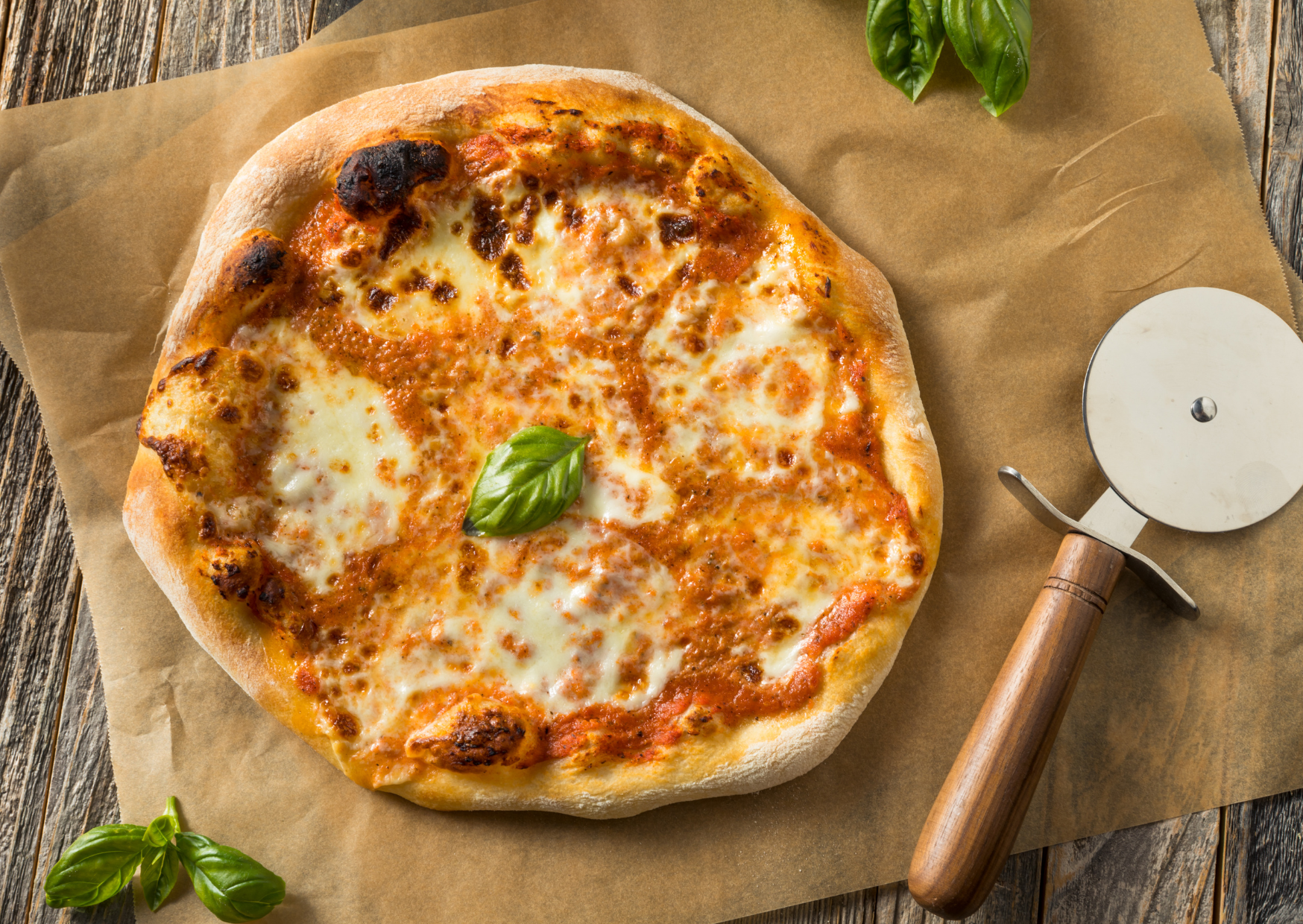
Neapolitans adjust hydration with the weather. Summer heat encourages faster fermentation and looser dough, so many pizzerias shade toward 58–60 percent. Winter kitchens are cooler and drier, so 60–62 percent helps dough open without tearing. Same flour, same yeast, different month, different water.
Flour choice nudges the dial as well. Classic 00 pizza flours that hit the AVPN spec, W about 250–320 with listed absorption of 55–62 percent, are built for this window. If you swap in a domestic all-purpose flour or a very strong bread flour, you will need to test. Start at 60 percent, then creep up or down 1 to 2 points until the dough opens in your hands with minimal bench flour and bakes with a tender, elastic bite.
Humidity plays games. In sticky, humid rooms, your dough will feel wetter at the same hydration. The fix is simple, mix cooler and shorter, ball tighter, and keep your proof box covered. If your room is parched, you may need an extra gram or two of water per 100 grams of flour to get the same feel.
The rule that never changes is this, the Neapolitan dough should feel moist, non-sticky, and plastic after mixing, and it should stretch easily by hand after proof. If you chase that feel, your number will land where Naples has kept it for generations.
7) A Quick Contrast, So You Can Taste The Difference
Try this two-pie experiment. Make one batch at 60 percent hydration, classic Naples ingredients. Make a second batch at 58 percent water with 2 percent oil and 2 percent sugar. Proof both overnight. Bake them back to back in your best setup.
The first pie will lift and leopard with a tender fold, sauce bright, cheese fused, crust aromatic like good bread. The second will brown faster at lower heat and eat more like a New York-leaning chain pie, a little denser, a little sweeter, sturdier under toppings. Both are valid. Only one is Neapolitan, and the number in the water is a big part of why.
If you have ever wondered what Neapolitans “guard,” it is not a secret recipe, it is discipline, hydration in a narrow, purposeful band that works with their flour and their fire. Learn that band, and you are already most of the way to Naples from your own kitchen.
What This Means For You
You do not need a wood oven to get closer to Naples. You need a clear hydration target aligned with the flour you buy and the heat you can produce. As of September 2025, the tradition still points to a 55 to 62.5 percent window, with 60 percent as the center of gravity. Build your dough there, give it time, and bake it hot.
Chains do what chains must, oil, sugar, conditioning, long logistics. Naples does the opposite, water, flour, salt, yeast, a tight hydration range, and a fire that finishes the job in a minute. When you taste that difference, your shopping list, your process, and your pies will never be the same.
Origin and History
Neapolitan pizza was not created for scalability, consistency, or mass production. It was born in Naples as street food, shaped by local flour, water, climate, and wood-fired ovens. Dough hydration evolved organically through trial, error, and daily repetition rather than written formulas.
In Naples, pizza makers learned early that water content controlled everything: fermentation speed, extensibility, oven spring, and texture. Too little hydration produced stiff, bready crusts. Too much created dough that collapsed under its own weight. Balance became tradition.
As pizza spread beyond Naples, hydration percentages were often adjusted downward to accommodate commercial ovens, faster production, and less skilled handling. What remained in Naples was a dough philosophy that prioritized feel and fermentation over convenience.
This is why Neapolitan hydration is treated less like a recipe and more like a guarded standard. It is not secret in theory, but difficult to replicate without the surrounding conditions that shaped it.
One controversial truth is that hydration percentage alone does not guarantee great pizza. Many assume copying a number will recreate Neapolitan results, but without proper fermentation, heat, and handling, hydration becomes meaningless.
Another debated point is that higher hydration is not always better. Social media glorifies extreme hydration levels, yet traditional Neapolitan dough sits within a narrow range designed for balance, not spectacle.
There is also tension between craft and commerce. Large pizza chains prioritize dough that can survive freezing, transport, and mechanical shaping. Neapolitan dough is fragile by comparison, which makes it incompatible with industrial systems.
Perhaps the most uncomfortable reality is that Neapolitans are not guarding numbers so much as rejecting shortcuts. The hydration works because the entire process supports it, not because the percentage is magical.
How Long You Take to Prepare
Neapolitan-style dough requires patience more than effort. Mixing takes only minutes, but fermentation stretches over many hours.
Bulk fermentation typically lasts eight to twenty-four hours, depending on temperature and hydration. This slow process develops flavor and structure without excessive yeast.
Shaping and baking are fast. Once the dough is ready, forming a pizza takes under a minute, and baking in a high-heat oven lasts less than ninety seconds.
From start to finish, the process spans a full day. The time investment is intentional, trading speed for digestibility and texture.
Serving Suggestions
Neapolitan pizza is best served immediately after baking. Its structure is delicate, and waiting too long causes moisture loss and texture collapse.
Toppings should be minimal. High-hydration dough shines when paired with simple ingredients that do not weigh it down.
Serve pizzas whole or lightly sliced, encouraging shared eating rather than individual portions. This reflects the dish’s social roots.
Avoid stacking or boxing if possible. Neapolitan pizza is meant to breathe, not steam.
Final Thoughts
The hydration percentage Neapolitans protect is not a secret weapon, but a boundary. It defines what the dough can and cannot do.
Chains struggle to replicate it because the dough resists automation, speed, and compromise. It demands attention and restraint.
Understanding Neapolitan hydration is less about copying Naples and more about respecting its logic. The dough works because the process honors it.
In the end, the real secret is not water, flour, or numbers. It is the refusal to sacrifice balance for convenience, even when scale demands it.

About the Author: Ruben, co-founder of Gamintraveler.com since 2014, is a seasoned traveler from Spain who has explored over 100 countries since 2009. Known for his extensive travel adventures across South America, Europe, the US, Australia, New Zealand, Asia, and Africa, Ruben combines his passion for adventurous yet sustainable living with his love for cycling, highlighted by his remarkable 5-month bicycle journey from Spain to Norway. He currently resides in Spain, where he continues sharing his travel experiences with his partner, Rachel, and their son, Han.