
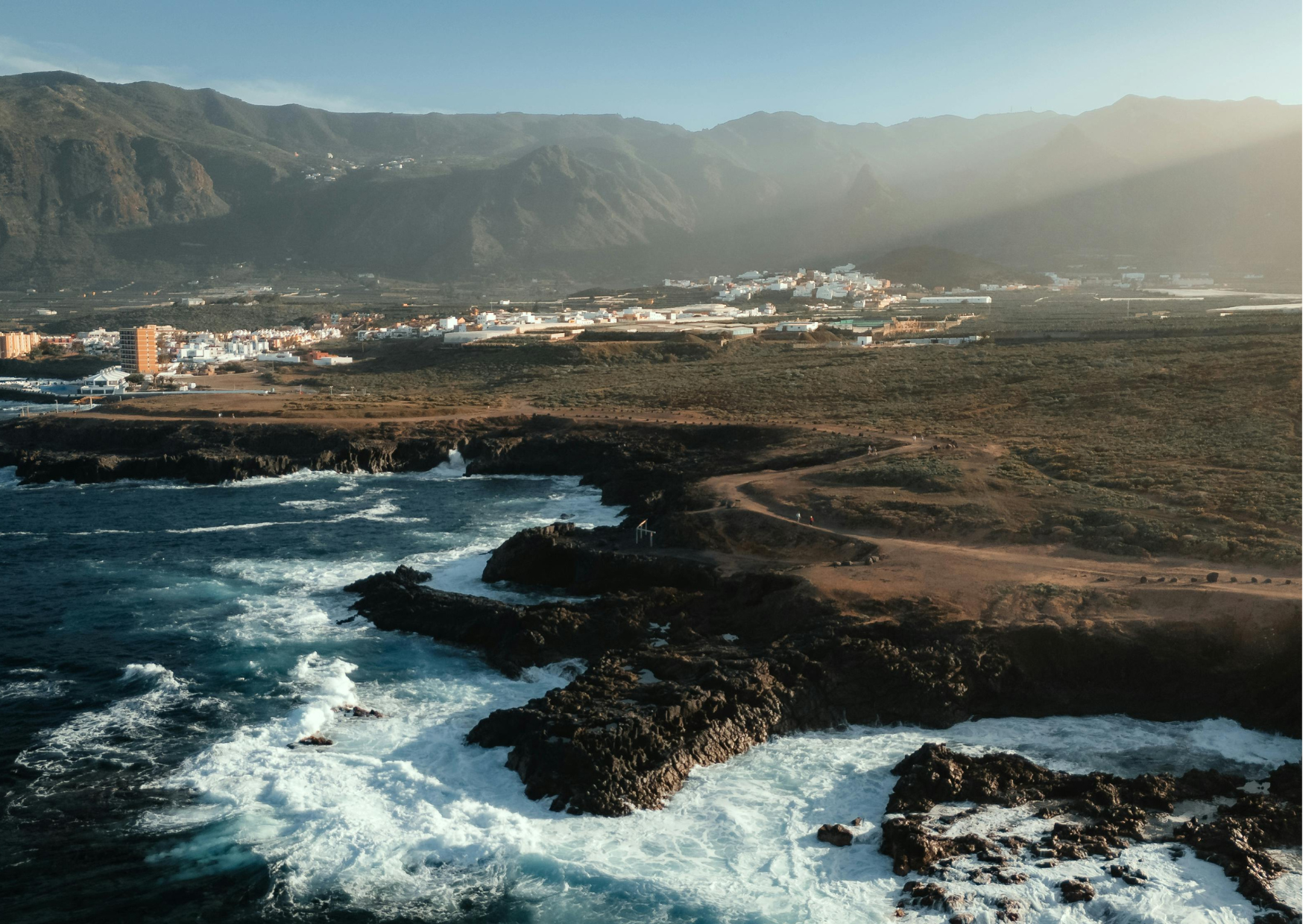
Europe has treated the Canaries like a winter pressure valve for decades. The only “new” thing is that Americans are starting to notice there’s a place in Spain where January feels oddly… normal on your skin.
In January, mainland Spain is doing its usual winter thing: bright sun, cold shade, that annoying moment where you dress for the morning and regret it by lunch.
Then you land in the Canaries and the whole temperature argument stops. You can walk for an hour without sweating. You can sit outside without shivering. You can eat lunch slowly without your shoulders climbing up to your ears.
Europeans have known this forever. Brits, Germans, Scandinavians, they’ve been doing the winter escape for so long it barely counts as a trend.
What’s changing is the American side of the pipeline. People who are done with Florida chaos and done with Caribbean resort pricing are realizing there’s a Spanish archipelago that feels like spring, runs on European infrastructure, and still lets you live like an adult, not like a tourist on a sugar high.
It’s not a secret, it’s just not on the American circuit
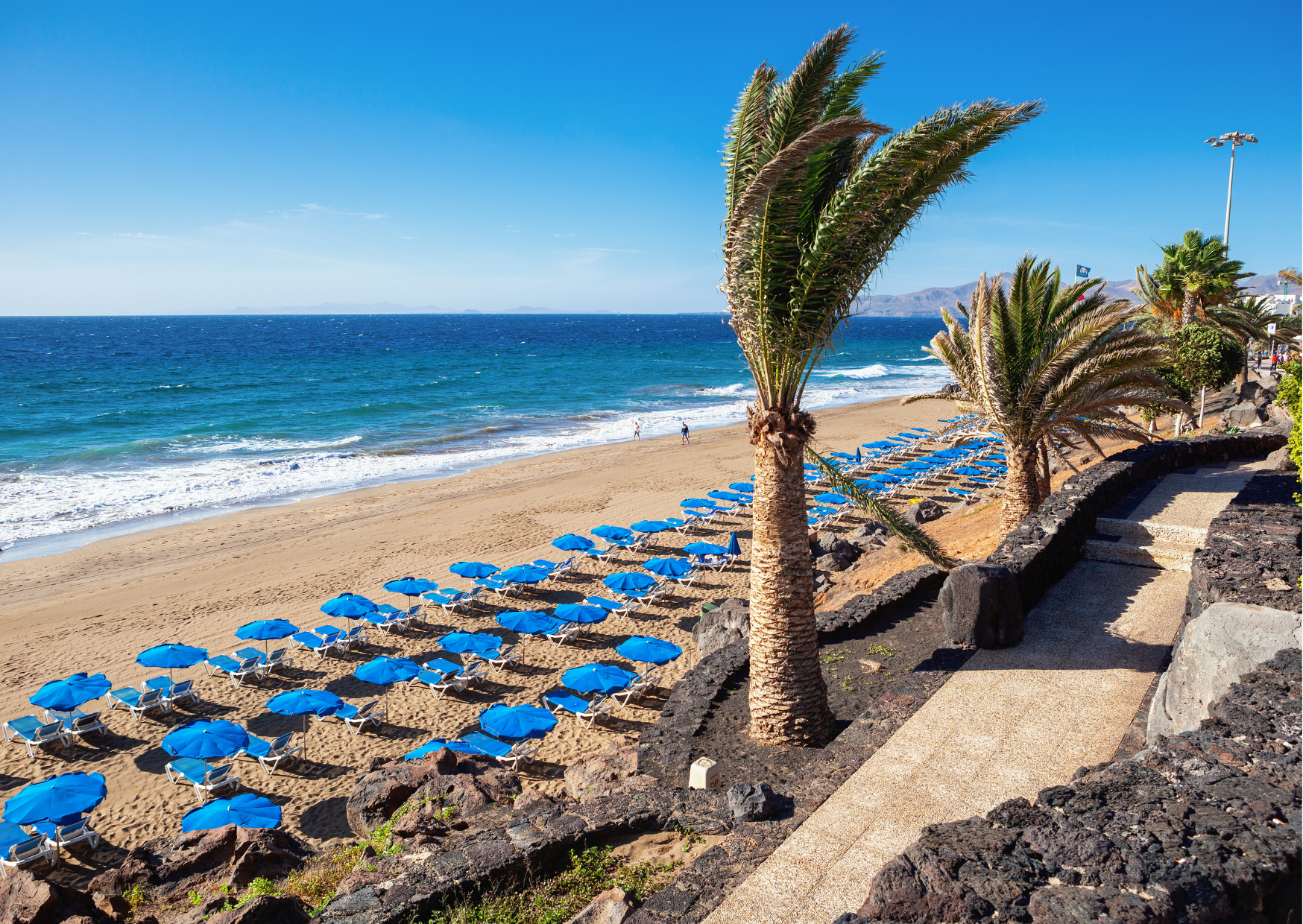
Calling the Canary Islands a “best-kept secret” is technically wrong. It’s only a secret if your map of Europe ends at Barcelona.
The Canaries get huge tourism volume. In 2024, the islands logged 17.77 million tourists across the year, which is not “hidden,” that’s an entire industry with receipts. Americans were still a small slice of that, around 0.5% of tourists in one major tourism spending survey, which is why the islands can feel oddly under-discussed in US relocation and winter-escape conversations.
But here’s the part that matters if you’re an American deciding where to spend a winter month: the Americans who do show up tend to spend more than you’d expect.
Average spend in that same survey runs roughly €230 per person per day (including flight) and about €144 per day once you strip the flight out. The average trip spend is around €1,456, with an average stay of 7.6 nights. If you do the boring math on the total spend reported, it suggests roughly 50,000 adult US visitors in 2024, which is small, but not nothing.
So yes, Europeans aren’t “discovering” anything. The shift is that Americans with money and stamina for a long flight are starting to view the Canaries as a winter base, not a once-in-a-lifetime vacation.
And once that clicks, it’s hard to unsee. You get Spain, but with winter that behaves.
Winter weather that behaves, but only if you pick the right side of the island
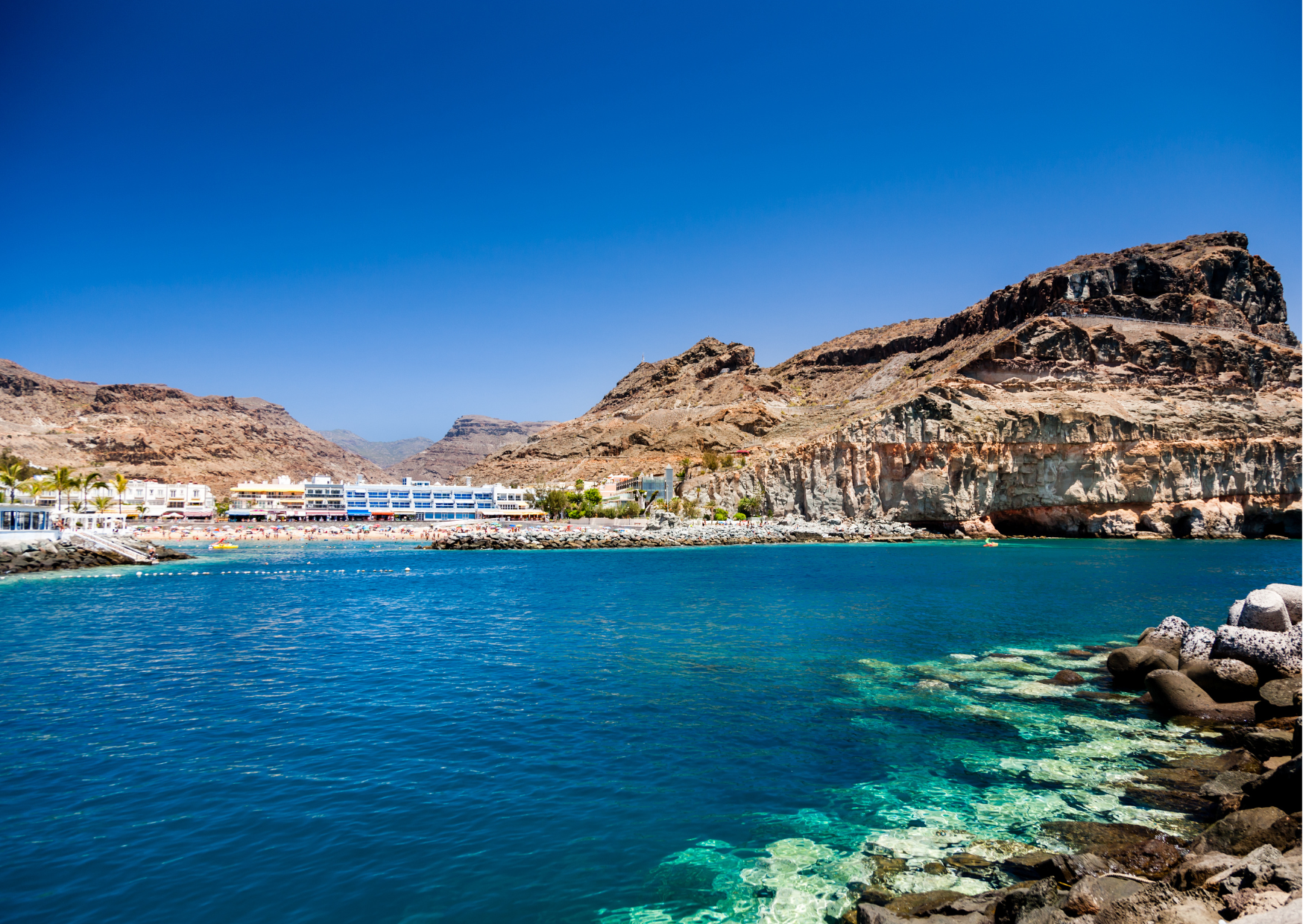
Americans hear “winter sun” and assume it means hot. That’s not what the Canary Islands are selling, and that’s why they work.
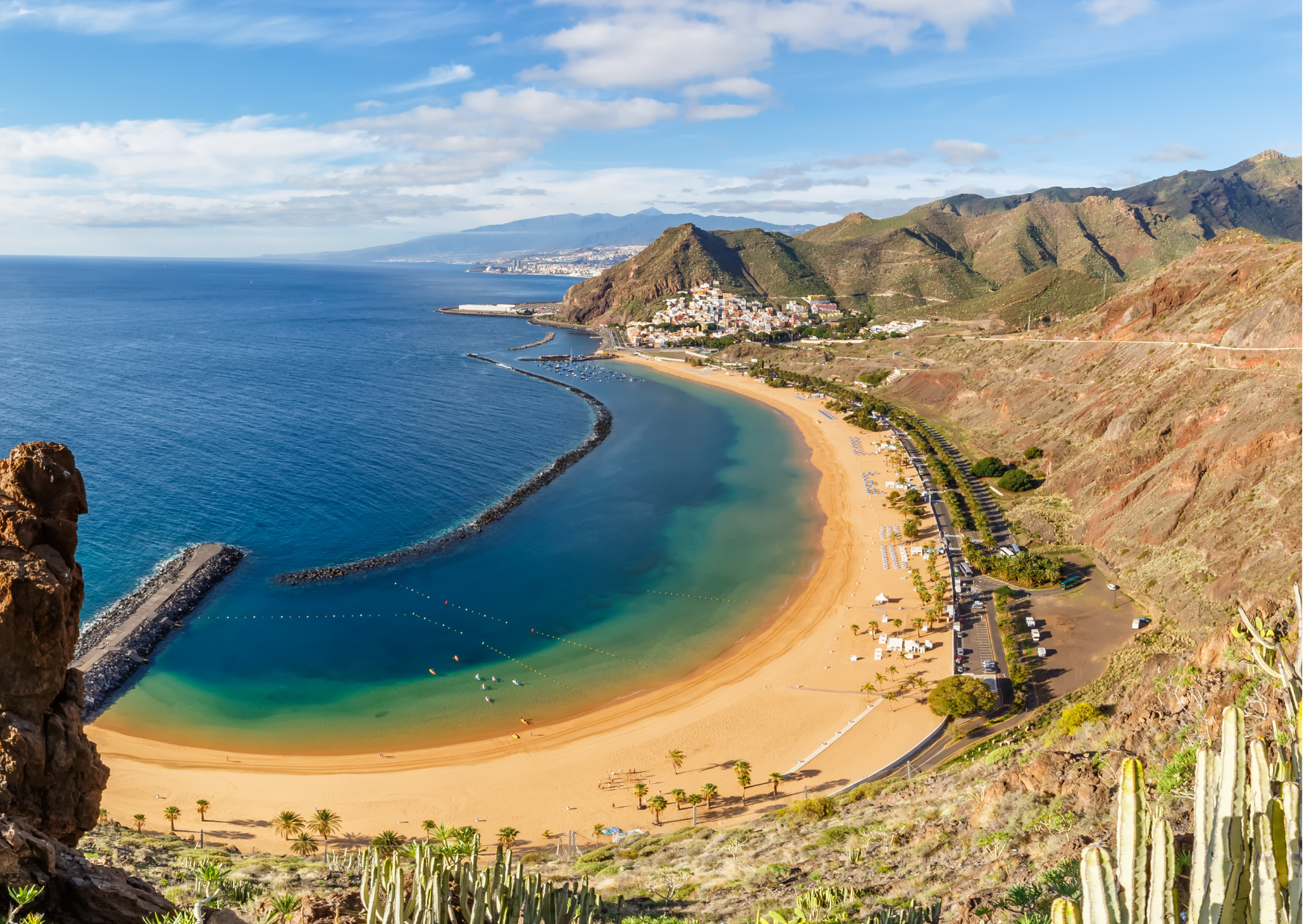
In the coastal zones where most people live and stay, winter is mild, steady, and heavily shaped by wind and microclimates. A good anchor is airport climate normals: Gran Canaria’s main airport sits around 18°C (about 64°F) average in January, with average highs around 21°C (about 70°F) and average lows around 15°C (about 59°F). Tenerife’s common winter ranges look similar, with typical January highs around 21°C (70°F) and lows around 16°C (61°F).
That’s the truth behind the “70°F year-round” vibe. It’s not a constant 70 everywhere. It’s that the winter range is narrow enough that your body stops negotiating.
Two important reality checks:
First, the islands have real elevation. Tenerife has Teide, and you can absolutely have a day where the beach feels like spring and the high areas feel like winter. Microclimates are the whole game.
Second, wind is not a glitch. It’s part of why the weather stays comfortable and why some beaches are perfect for walking but annoying for sunbathing.
If you want the easiest winter experience, do what long-term visitors do: prioritize the sunnier southern zones for warmth, and pick a base where daily errands do not require constant taxis. Your winter happiness will be decided by walkability plus sun exposure, not by how pretty the balcony looks in photos.
Which island fits your winter personality
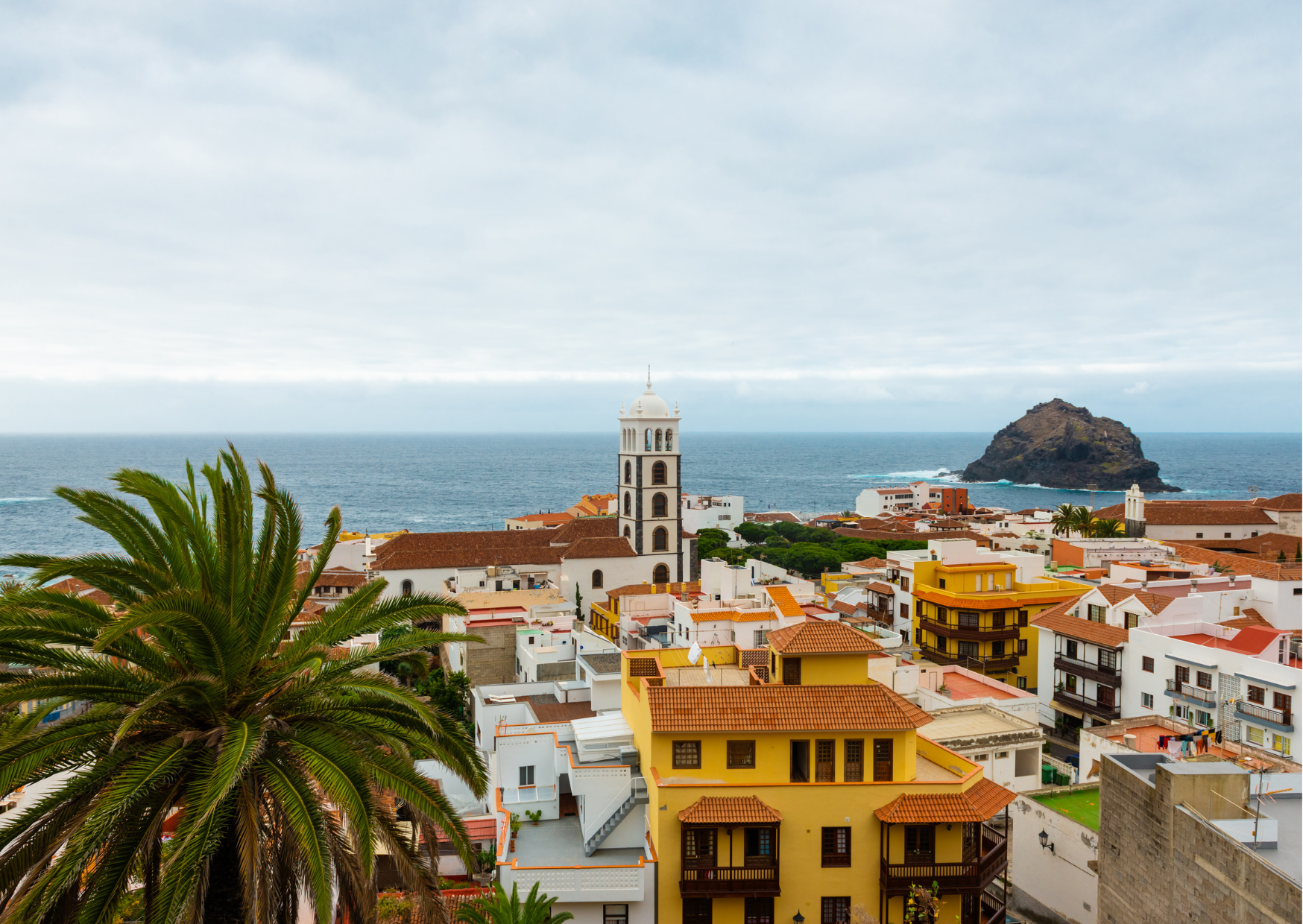
Most Americans pick Tenerife or Gran Canaria because it’s simple: bigger airports, more lodging, more “I can figure this out without a PhD” infrastructure. That choice is not wrong.
It’s also not the only choice, and the right island depends on what you actually want your days to feel like.
Gran Canaria is the easiest “live here for a month” island. Las Palmas gives you city-beach life with a real rhythm, and the south gives you resort warmth without forcing you to go full resort person. US visitors in the tourism survey skew heavily toward Gran Canaria, which tracks with how livable it is.
Tenerife is variety. You can do coastal calm, mountain drama, small towns, and bigger tourist zones. It’s also the island where people accidentally book the wrong side and then complain about clouds. Know what you’re doing.
Lanzarote is for people who like quiet, design, and volcanic landscapes that make the mainland feel boring. It’s not “lush,” it’s stark. If that sounds like a compliment, you’ll love it.
Fuerteventura is wide beaches and wind. Amazing if you want space and water sports. Less amazing if you’re easily irritated by breezy days and long drives between things.
La Palma is hiking and green, more of a nature island, with a slower vibe that rewards longer stays.
La Gomera and El Hierro are for people who want to disappear a little. Not “nothing to do,” more like less noise by design.
The blunt advice: if you’re doing your first Canary winter, pick Tenerife or Gran Canaria, then branch out. People who start on the quieter islands sometimes love it, but if you misjudge your tolerance for stillness, the trip can feel longer than it is.
The money math for a 30-day winter base
This is where the Canaries surprise Americans in both directions.
If you book like a tourist, winter can get expensive fast. If you set up like a temporary resident, it can be shockingly reasonable for Spain-in-spring.
For currency conversion here, I’m using the European Central Bank’s reference rate on 5 January 2026: €1 = $1.1664.
Let’s build a realistic 30-day winter budget for two adults, assuming you want comfort, not luxury, and you plan to cook most breakfasts and some dinners.
A sensible monthly budget for two adults (Gran Canaria or Tenerife)
- Rent, 1-bedroom or small 2-bedroom, long-stay style: €1,200 to €2,000 ($1,400 to $2,333)
- Utilities and internet if you’re on a long stay: €130 to €220 ($152 to $257)
- Groceries: €450 to €650 ($525 to $758)
- Eating out and coffees, controlled but enjoyable: €350 to €700 ($408 to $816)
- Local transport plus taxis: €90 to €180 ($105 to $210)
- Car rental for part of the month plus fuel: €350 to €650 ($408 to $758)
- Activities and random fees: €150 to €300 ($175 to $350)
- Buffer: €200 to €400 ($233 to $466)
All-in: €2,920 to €5,100 per month ($3,406 to $5,948).
That range is wide because winter pricing depends heavily on two things: whether you’re paying tourist rates for a furnished short-term apartment, and whether you live in a walkable base that keeps taxis and “we’ll just eat out again” from becoming your personality.
If you’re solo, you don’t cut the budget in half. Housing stays stubborn. A realistic solo 30-day range is often €2,000 to €3,600 ($2,333 to $4,199), depending on rent.
The Canary Islands are not a magic trick. Housing is still the dictator, and winter demand makes that louder.
The weekly rhythm that makes the Canaries feel easy
If you try to “vacation” for 30 days, you’ll get bored, then you’ll start spending money to fix the boredom. That’s when people decide the islands are overrated.
The trick is to live like you’re there for a season.
A Canary winter week that feels good usually has three anchors:
You walk almost every day, not as a fitness flex, but because promenades and coastal paths make it easy.
You treat lunch as the main event. Lunch is value, dinner is theater, and that alone can cut your food spending without making you feel deprived.
You plan your logistics so you’re not driving constantly. If you choose the right base, errands become simple and the week feels light.
Here’s a realistic weekly rhythm for a couple:
- Monday: grocery run, cook two default dinners, set the week up.
- Tuesday: long walk, café, simple lunch out, early dinner at home.
- Wednesday: beach time or a short hike, one taxi if needed, not five.
- Thursday: day trip by car, then stay in the neighborhood at night.
- Friday: dinner out, not because it’s Friday, but because you planned for it.
- Saturday: market morning, home lunch, late afternoon walk.
- Sunday: do nothing on purpose, the week needs a soft edge.
That’s the part Americans underestimate. Timing beats willpower. If your base forces you into constant transport, constant driving, and constant decision fatigue, you spend more and enjoy less.
The Canaries feel like a cheat code when the week has structure. Without structure, it becomes an expensive form of drifting.
Pitfalls that make people swear off the islands
This is where the hype gets people. The Canary Islands are wonderful, and they have very specific ways of annoying you if you arrive with the wrong expectations.
Pitfall 1: Booking the wrong microclimate
People pick an island, then accidentally choose the cloudier or windier zone for their personal taste and spend the whole trip saying, “I thought it would be warmer.” The islands can be warm and also breezy and also variable. Pick the side, not just the island.
Pitfall 2: Paying tourist rent for too long
A week at tourist pricing is fine. A month at tourist pricing can be painful. If you want a winter base, you need a longer-stay mindset and you need to book earlier than you think.
Pitfall 3: Trying to do everything
The Canaries are not a checklist destination if you’re there for a month. Too many day trips turn into constant driving, then you “reward” yourself with restaurants and shopping, and your budget quietly breaks.
Pitfall 4: Underestimating the older-body stuff
If you’re over 50, the details matter. Mattress quality matters. Noise matters. Windows and insulation are money, not aesthetics. Cheap lodging with thin windows can wreck your sleep, and then you spend the week trying to compensate.
Pitfall 5: Forgetting the 90-day reality
For US passport holders, short stays in the Schengen Area are limited, and enforcement is getting more automated. If you’re planning a long winter, you need to track your days and plan your exits or your residency pathway. Do not wing it.
Pitfall 6: Expecting “secret island pricing”
Europe has been coming here for decades. Winter is peak season. You can still make it affordable, but you do it through choices, not through wishful thinking.
Your first 7 days of planning, so you do not waste the trip
If you want a Canary winter escape that actually feels restorative, do this in order. Not because it’s cute, because it saves money and regret.
Day 1: Decide your island based on your day-to-day
City-beach life, pick Gran Canaria and base in Las Palmas. Variety and landscapes, pick Tenerife. Quiet and volcanic, pick Lanzarote. Write down what you want your Tuesday to look like.
Day 2: Choose the side of the island
Warmth and sun usually means southern zones. Walkability and daily life often means specific city neighborhoods. Microclimate choice is budget choice.
Day 3: Lock your stay length
If you want long-stay pricing, you need a long-stay commitment. Pick 21, 30, or 45 days and plan around that.
Day 4: Set a rent ceiling and stick to it
Decide the number you will not cross, then search within it. Do not “just see what’s available” and emotionally drift upward.
Day 5: Map your daily triangle
From your top lodging choices, check walking distance to a grocery store, pharmacy, and a café you’d actually use. If that triangle is bad, you will pay for it later.
Day 6: Build a weekly rhythm
Pick two default lunches and three default dinners you can repeat. Add two planned meals out. That’s your food budget guardrail.
Day 7: Do the paperwork reality check
Count your Schengen days. Check your passport validity. If you’re thinking beyond 90 days, start reading residency options now, not after you fall in love with the idea.
If you do those seven days honestly, the Canary Islands stop being “a winter escape” and become something more useful: a place where winter doesn’t run your life.

About the Author: Ruben, co-founder of Gamintraveler.com since 2014, is a seasoned traveler from Spain who has explored over 100 countries since 2009. Known for his extensive travel adventures across South America, Europe, the US, Australia, New Zealand, Asia, and Africa, Ruben combines his passion for adventurous yet sustainable living with his love for cycling, highlighted by his remarkable 5-month bicycle journey from Spain to Norway. He currently resides in Spain, where he continues sharing his travel experiences with his partner, Rachel, and their son, Han.