
Last week, I watched my kid eat a plain yogurt in Spain like it was normal food. No cartoon. No fluorescent swirl. No “birthday cake” flavor pretending to be breakfast.
Then I thought about what “yogurt” often means back in the U.S. It’s not dairy plus bacteria. It’s dessert wearing athleisure.
That’s the quiet mind game Americans live inside. You start believing your body is the problem because you’re hungry again an hour later, or you can’t stop snacking, or you’re exhausted at 3 p.m. You assume you’re undisciplined. Or broken. Or “getting older.”
But what if the environment is doing exactly what it was designed to do?
Not in a conspiracy way. In a boring business way.
The moment you stop blaming yourself
Here’s the first shift that feels almost rude: your appetite is not a character flaw.
In Spain, when a day goes sideways, it’s usually because of time, not food. Someone missed lunch. The afternoon got eaten by errands. Dinner gets pushed too late and everyone’s cranky. You fix it by eating earlier tomorrow and keeping something simple at home.
In the U.S., a day goes sideways because the default food landscape is engineered to keep you grazing. You can be surrounded by calories and still feel like you ate nothing. You can spend $18 on lunch and be hungry again by mid-afternoon. You can “eat healthy” and still accidentally mainline sugar, because it’s hiding in the most random places.
So you blame your body. You start collecting rules like Pokémon.
No carbs. No fat. No gluten. No joy. Then you crack at 9 p.m. and decide you’re weak.
The uglier truth is more comforting: the system is loud and you’re human.
Spain has ultra-processed food too. Every country does now. But the center of gravity is different. The default meal rhythm is different. The portions are different. The walking is built into life. The food doesn’t constantly cosplay as something it’s not.
Once you see that, the goal changes.
It’s not “fix yourself.”
It’s “stop playing on hard mode.”
What American food does to a normal person
Let’s talk about the big, boring number that explains a lot.
In a CDC analysis of NHANES dietary data from August 2021 to August 2023, ultra-processed foods made up about 55% of calories for Americans age 1 and older, and about 53% for adults. That’s not “some junk.” That’s the baseline.
If more than half your calories come from foods designed to be convenient, hyper-palatable, and shelf-stable, your body is constantly negotiating with a product.
Not a meal. A product.
And products have incentives:
- They should make you want more.
- They should travel well.
- They should taste identical in every state.
- They should survive fluorescent lighting and long logistics.
- They should feel like a treat even when they’re daily.
That’s why the American pattern often looks like this:
Breakfast: sweet or semi-sweet, eaten fast, not satisfying for long.
Lunch: eaten at a desk, built around convenience, with a drink that quietly adds sugar.
Afternoon: a snack that pretends to be “protein,” plus another coffee.
Dinner: either a huge restaurant portion or a “healthy” bowl that still doesn’t calm hunger.
Night: grazing.
Then people say, “I don’t understand, I’m barely eating.”
You’re eating constantly. You’re just not eating meals that shut the appetite down.
In Spain, the cultural default still tries to do one thing right: meals are supposed to end hunger. Lunch is the hinge point. If lunch is real, the day is calmer.
In the U.S., lunch is often a speed bump.
That’s not your fault. That’s the water you’re swimming in.
The ultra-processed trap is not just “calories”
There’s a study I bring up because it’s brutally simple.
Researchers at the NIH Clinical Center ran an inpatient randomized controlled trial where people were fed ultra-processed diets versus minimally processed diets. The meals were designed to be matched for presented calories and key nutrients, and people could eat as much or as little as they wanted.
On the ultra-processed diet, participants ate about 500 extra calories per day and gained weight. On the unprocessed diet, they ate less and lost weight.
No motivational speeches. No willpower boot camp. Just exposure.
This is the part Americans hate, because it insults the moral story they’ve been sold. The story says weight and health are primarily discipline.
But the trial suggests something else: processing changes behavior. Not because you’re weak, but because certain foods get eaten faster, don’t satisfy the same way, and make “just stop” feel weirdly hard.
Ultra-processed foods are often easier to chew, easier to swallow, and easier to eat quickly. They also tend to combine refined carbs and fats in a way that’s ridiculously rewarding. You can blow past fullness before your body catches up.
In Spain, people still snack. But a lot of snacking is boring: fruit, yogurt, nuts, a small bocadillo. Not a neon bag that disappears in five minutes.
So when Americans land in Europe and suddenly feel calmer around food, they think it’s magic.
It’s not magic.
It’s fewer landmines per day.
Why Europe can feel “easier” without being perfect
It’s tempting to turn this into a smug Europe-versus-America rant. That’s lazy. Europe has plenty of packaged food, sugar, and marketing.
The difference is more about guardrails.
One example that’s easy to verify: regulators make different calls on additives. The EU banned titanium dioxide (E171) as a food additive starting in 2022 after EFSA concluded it could not be considered safe due to genotoxicity concerns. The U.S. approach has been different, and FDA continues to review various chemicals and additives over time.
Another example: the FDA revoked authorization for brominated vegetable oil (BVO) in food, with action finalized in 2024, after the agency concluded it was no longer considered safe based on studies done with the NIH. That’s not “Europe is perfect.” That’s “the U.S. system changes slowly, then it moves.”
And then there’s the structural difference that matters more than any single additive list: Europe still defaults to meals.
Spain pushes you toward:
- Grocery shopping that’s more frequent and smaller.
- Home cooking that’s repetitive and functional.
- Lunch as a real event.
- Walking because it’s how you get places.
- Portion sizes that don’t require heroic restraint.
America pushes you toward:
- Driving everywhere.
- Eating in transit.
- Meals replaced by snacks.
- Beverages doing a lot of hidden caloric work.
- “Healthy” foods that are still engineered products.
If you’re reading this and thinking, “Okay but I still feel awful even when I try,” that’s the point. Trying inside a hostile environment is exhausting.
Change the defaults and your “discipline” suddenly improves, like a miracle.
The Spanish week that quietly resets appetite
If you want the closest thing to a “Europe effect,” it’s not a superfood.
It’s a calendar.
A very unsexy rhythm that makes your appetite predictable again. Timing beats willpower is not a motivational quote here, it’s a survival tactic.
A typical weekday pattern we see around us looks like:
- Breakfast: small. Toast with tomato and olive oil, yogurt, fruit, coffee.
- Mid-morning: optional, but common. Something simple if breakfast was light.
- Lunch: real. Protein, vegetables, legumes, rice, soup, whatever, but a full plate.
- Afternoon: calmer. Maybe coffee. Maybe nothing.
- Dinner: lighter than lunch. Often late, and often simpler.
The American brain hears “small breakfast” and panics. Because in America, small breakfast often means you’ll be starving by 10 a.m. and make chaotic choices.
In Spain, lunch is waiting for you like a safety net. You’re not trying to white-knuckle through the day on a protein bar.
This is why Americans who move here sometimes lose weight without “dieting.” Not because Spaniards have secret genes. Because the day is structured to reduce constant decision-making.
If you want one concrete meal template that feels very normal here:
Lunch: lentils or chickpeas plus vegetables, with a little meat or fish if you want.
Dinner: tortilla francesa (thin omelet), salad, yogurt, fruit.
Boring food is not punishment. It’s stability.
The money math that changes how you eat
Food doesn’t just affect health. It affects behavior because price shapes habits.
In many U.S. cities, it can feel cheaper to buy engineered convenience than to build meals. In Spain, the math often nudges you the other way, especially if you cook.
Not always, and not in every neighborhood, but the pattern is common:
- Legumes are cheap and culturally normal.
- Seasonal produce is everywhere.
- Yogurt and basic dairy are everyday items, not “wellness.”
- Bread is not a luxury product.
- Fish can be affordable if you buy what’s local and not Instagram-famous.
And then there’s the restaurant structure: menu del día culture still exists in a lot of places. Lunch can be decent value. Dinner is where the “theater” spending happens.
That creates a behavioral constraint that helps people without them even thinking about it: lunch is value, dinner is theater.
In the U.S., dinner can be both value and theater, because portions are enormous, and delivery is frictionless.
In Spain, friction still exists:
- You walk to get food.
- Shops close.
- Meals take time.
- “Convenience” costs more relative to cooking.
So you cook more. Not because you’re virtuous. Because it’s the normal move.
That’s why Americans often feel calmer around food here. They’re not fighting the same economic incentives every day.
The mistakes Americans make when they try to “eat European”
If you want to keep this honest, here are the most common faceplants:
- Trying to copy the look, not the structure
They buy olive oil and anchovies, then keep eating on the American schedule. Nothing changes. - Making breakfast too big and lunch too small
Then they snack all afternoon and feel “out of control.” In Spain, lunch does the heavy lifting. - Turning every meal into a food identity project
Imported “health” brands, specialty products, constant novelty. The local pattern is repetitive on purpose. - Thinking walking is optional
In many Spanish cities, walking is the glue. Skip it and the system feels less forgiving. - Assuming all European packaged food is automatically better
No. There’s plenty of junk here too. The difference is that junk is less likely to be the center of your day unless you make it. - Drinking calories without realizing it
In the U.S., beverages quietly run the show. In Spain, many people drink water, coffee, wine sometimes, and not much else day to day. Liquid calories are the stealth tax.
The core mistake is trying to “diet” instead of changing defaults.
You don’t need to be perfect. You need fewer ambushes.
Your next 7 days: run the “not broken” experiment at home
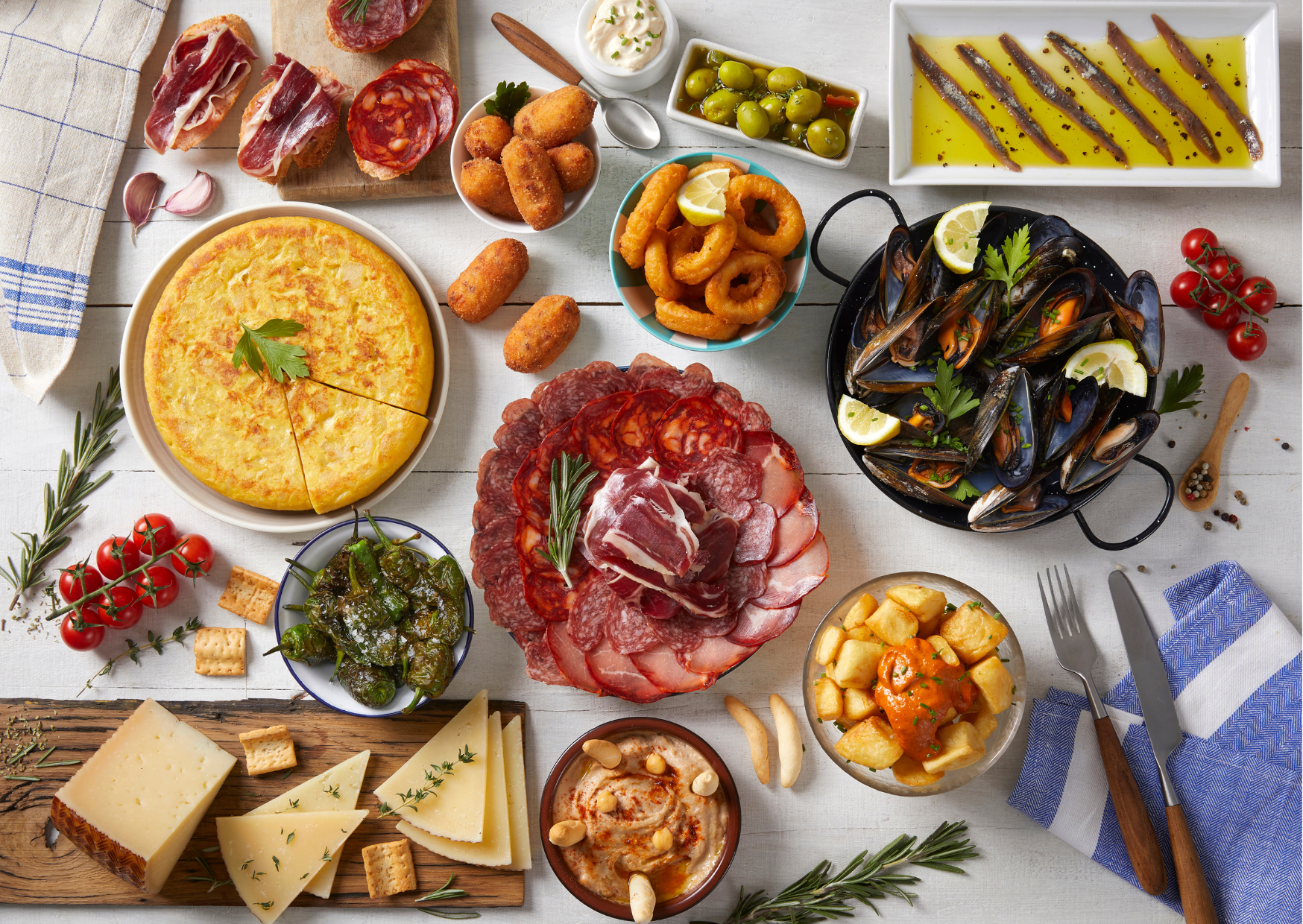
You don’t have to move to Spain to test this. You just need to change the shape of one week.
Do this for seven days like a calm experiment, not a personality reinvention.
Day 1: Remove the loud snacks
Not all snacks. The loud ones. The ones you can’t stop eating once opened. If it disappears without a plate, it’s suspicious.
Day 2: Make lunch the main meal
Plan a real lunch. Leftovers count. Soup plus bread plus fruit counts. Lentils plus rice counts. Just make it a meal.
Day 3: Shrink dinner on purpose
Dinner becomes eggs, salad, yogurt, fruit, or a simple bowl. The goal is to end the day fed, not stuffed.
Day 4: Put walking in the calendar
Twenty to forty minutes, most days. Not a workout. A default. Treat it like brushing your teeth.
Day 5: Stop drinking your sugar
For one week, make drinks boring. Water, coffee, tea. If you want something sweet, eat it, don’t sip it.
Day 6: Build two repeatable meals
One lunch you can repeat twice. One dinner you can repeat twice. Repetition makes you visible in your own life, too. You notice what actually affects you.
Day 7: Review without drama
What changed: hunger, cravings, energy, mood, sleep. Don’t moralize it. Just notice it.
A lot of people are shocked by how fast the noise drops when the environment gets quieter.
Not because their body suddenly became “good.”
Because they stopped feeding it like a slot machine.
The actual choice hiding under the food debate
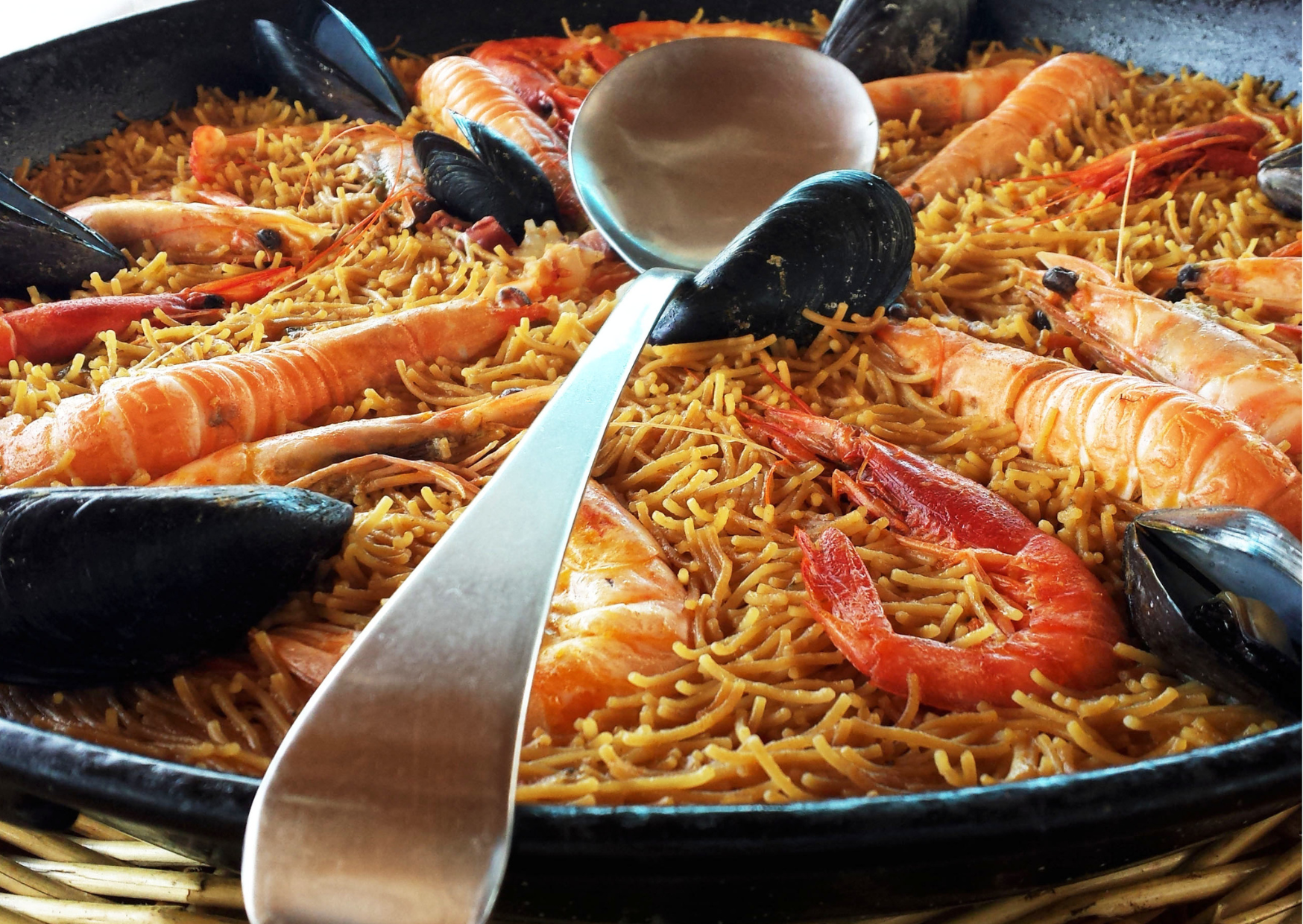
This isn’t about perfection or purity. It’s about whether you want your daily life to be a negotiation with an industry.
If you stay in the U.S., you can still build a calmer food life. But you’ll need to create guardrails that Europe bakes in for free. You’ll need to design your schedule, your kitchen defaults, and your snack environment like you’re protecting someone you care about.
If you move to Europe, you’re not escaping food problems. You’re changing the baseline so the “healthy” choice stops feeling like a constant fight.
Either way, the question isn’t “What’s wrong with me?”
It’s: what environment am I asking my body to survive in, every day, forever?
And once you see that clearly, you can stop trying to fix yourself like a broken machine.
You can start changing the inputs.

About the Author: Ruben, co-founder of Gamintraveler.com since 2014, is a seasoned traveler from Spain who has explored over 100 countries since 2009. Known for his extensive travel adventures across South America, Europe, the US, Australia, New Zealand, Asia, and Africa, Ruben combines his passion for adventurous yet sustainable living with his love for cycling, highlighted by his remarkable 5-month bicycle journey from Spain to Norway. He currently resides in Spain, where he continues sharing his travel experiences with his partner, Rachel, and their son, Han.