
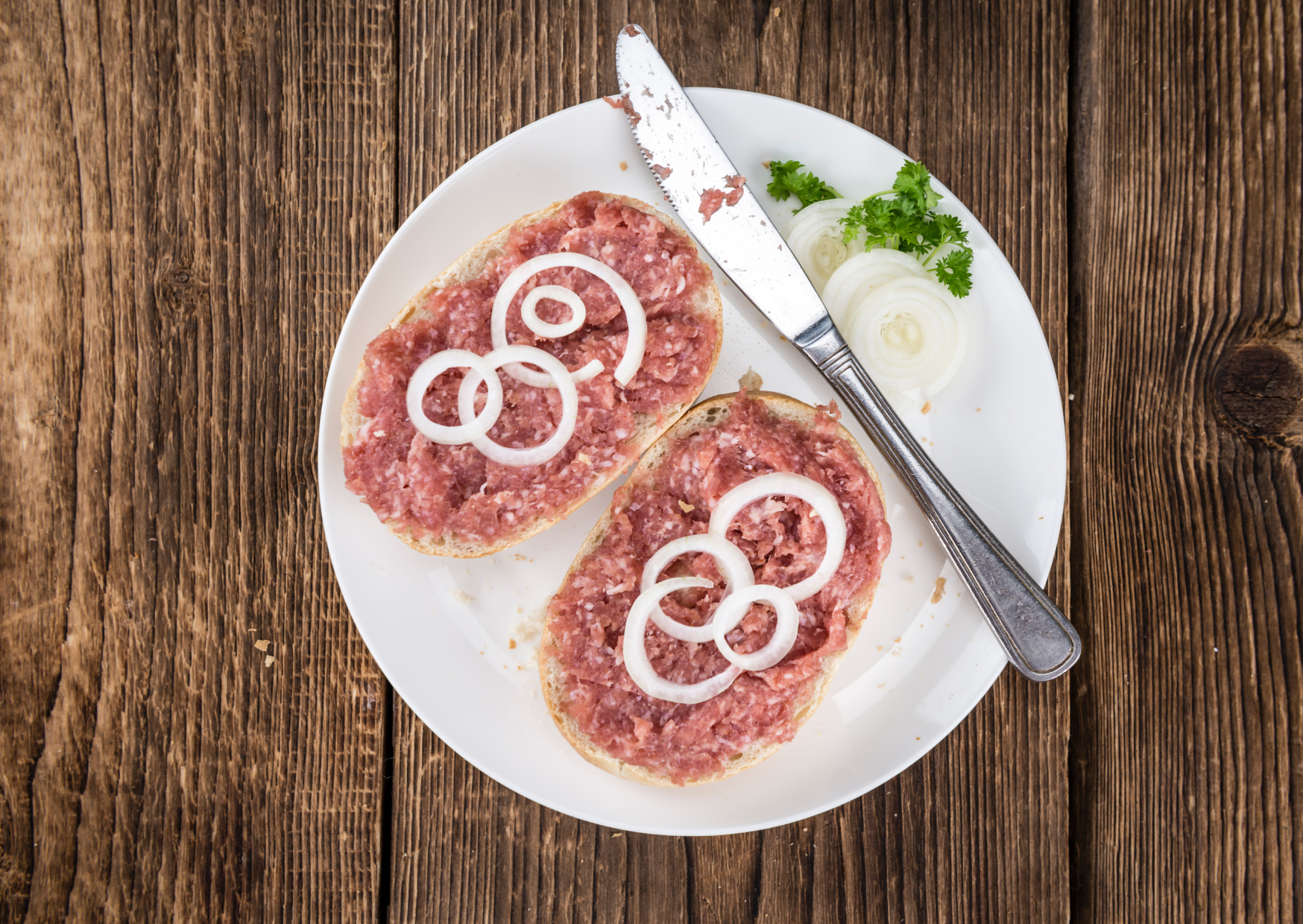
You walk into a bakery at 8 a.m., order a coffee, and watch the person ahead of you spread pink, glistening pork on a roll, top it with raw onions, and take a happy bite.
The shock is real the first time you meet Mettbrötchen, a roll crowned with seasoned raw minced pork. In parts of Germany it is an ordinary morning bite, the cousin of a bagel with lox in New York or a bacon bap in London. It shows up at office breakfasts, on butcher counters, and at weekend markets.
Americans see raw pork and picture an emergency room. Germans see something familiar that, if done right, fits into a system of rules, inspections, and timing that make raw pork on bread a normal start to the day. The key words are done right, not magic.
This is not a dare and it is not a fairy tale about iron stomachs. It is a description of how the German supply chain, labeling, and same-day rules work in practice, why outbreaks are uncommon but not impossible, and why copying the idea at home in the United States is a bad plan. If you understand the mechanics, you understand the breakfast.
Want More Deep Dives into Other Cultures?
– 9 Italian Style Rules That Instantly Outshine American Fashion
– Why Europeans Walk Everywhere (And Americans Should Too)
– How Europeans Actually Afford Living in Cities Without Six-Figure Salaries
– 9 ‘Luxury’ Items in America That Europeans Consider Basic Necessities
Quick Easy Tips
Never assume food practices are transferable between countries.
Understand sourcing and regulation before judging a tradition.
Respect cultural habits without trying to replicate them blindly.
When traveling, follow local guidance rather than personal experimentation.
One controversial assumption is that raw pork is inherently unsafe everywhere. In reality, risk depends on farming practices, inspection standards, and supply chains, all of which vary widely by country.
Another misunderstanding is that Germans are casual about food safety. Germany enforces some of the strictest meat regulations in Europe, making practices like this possible within controlled boundaries.
There is also a tendency to label unfamiliar food customs as primitive or irresponsible. This overlooks the role of modern systems that support traditional habits safely.
Finally, this challenges the belief that progress always means abandoning old practices. In some cases, tradition survives precisely because it evolved alongside robust safeguards, not in spite of them.
What You’re Actually Looking At When You See “Mett”
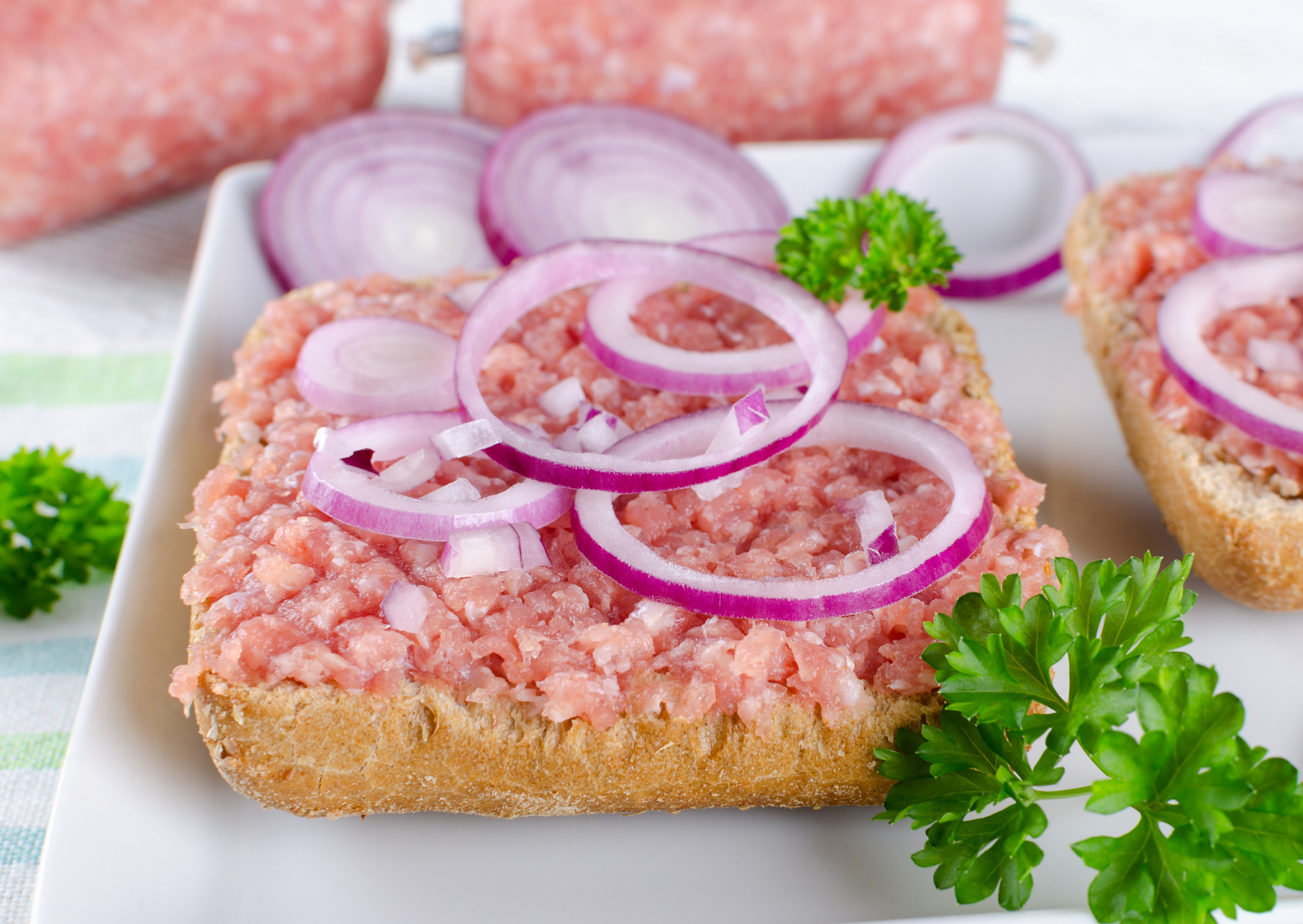
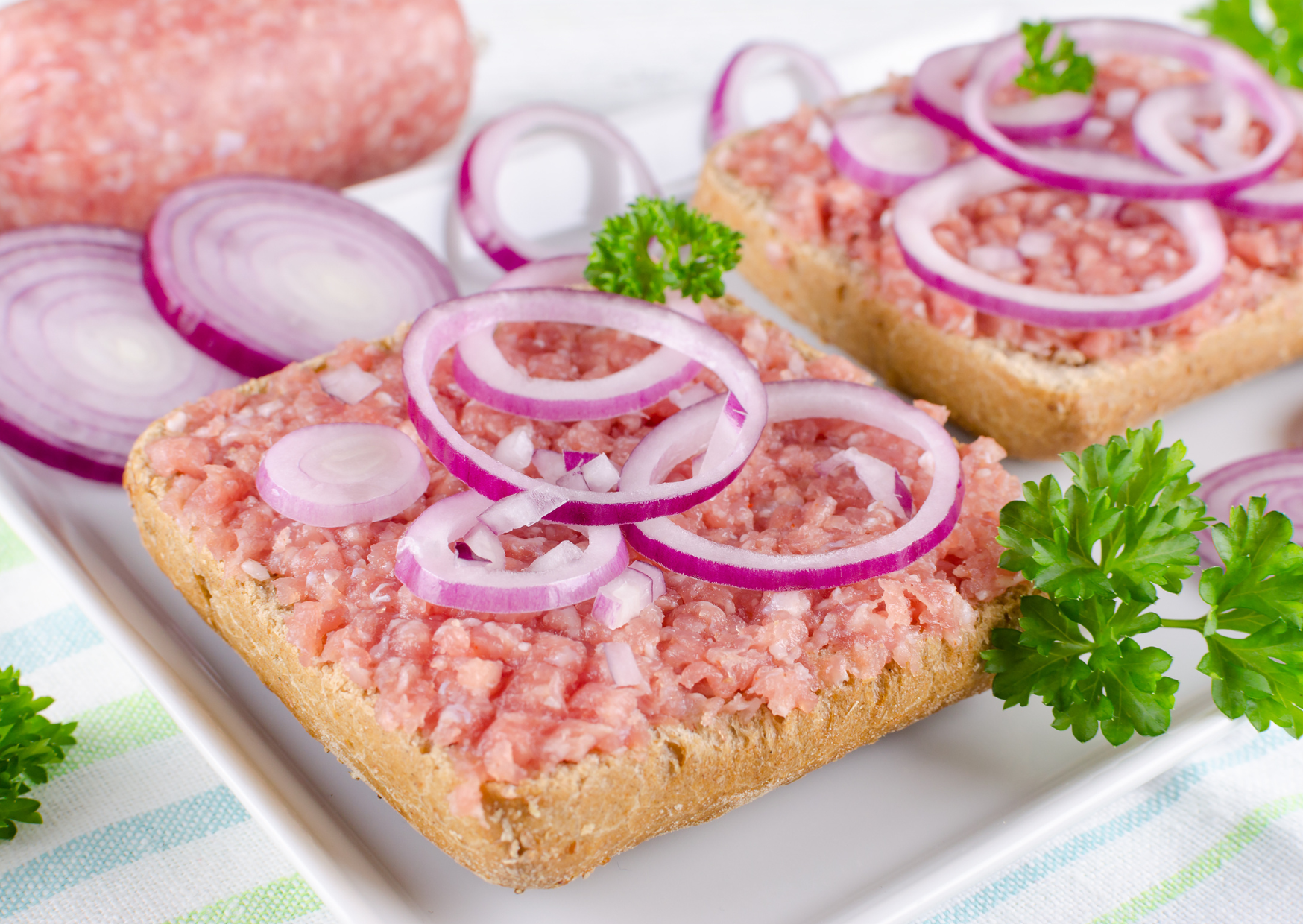
Mett is simply finely minced raw pork, lightly salted and sometimes peppered, spread thick on a fresh Brötchen and often finished with minced raw onion. The open-faced sandwich is called a Mettbrötchen, and you will see it at bakeries and butcher counters in northern and western Germany far more than on tourist menus. It is not a tasting-menu stunt. It is a working-day snack with rules behind it.
One important distinction lives in the label. German food law and trade guidelines distinguish pork that is “zum Rohverzehr bestimmt”—intended for raw consumption—from pork mince to be cooked, and the former carries stricter handling and shelf-life limits. You will see that logic echoed in Germany’s guidance for minced meat and in the Leitsätze that define what products are and how they should be named for consumers. If a tray is marked for cooking or looks like anonymous supermarket mince, it is not meant for a breakfast roll. Look for a raw-consumption designation, do not improvise with random mince, trust the counter, not the plastic tub.
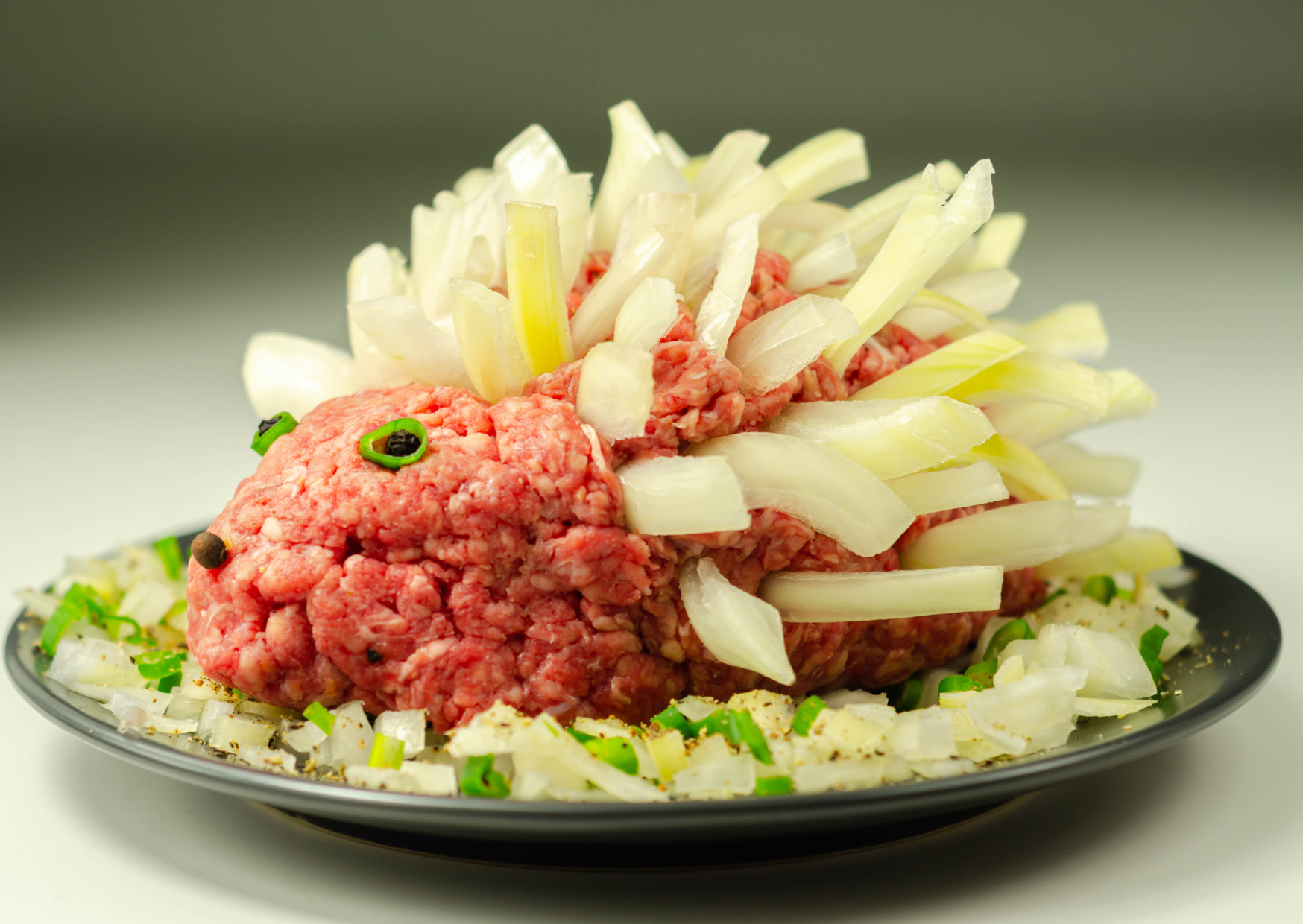
Culture fills in the rest. In many towns a Mettbrötchen is a second-breakfast habit for people who start early. You see them on morning trays, at office spreads, and at weekend markets. You also see a kitschy party version shaped like a little hedgehog with onion spikes, the Mettigel, which exists because something ordinary had time to become a joke. The point is simple. This food sits inside a daily rhythm, not at the edge of it.
The Boring Reason Germans Rarely Get Sick: The System, Not the Stomach
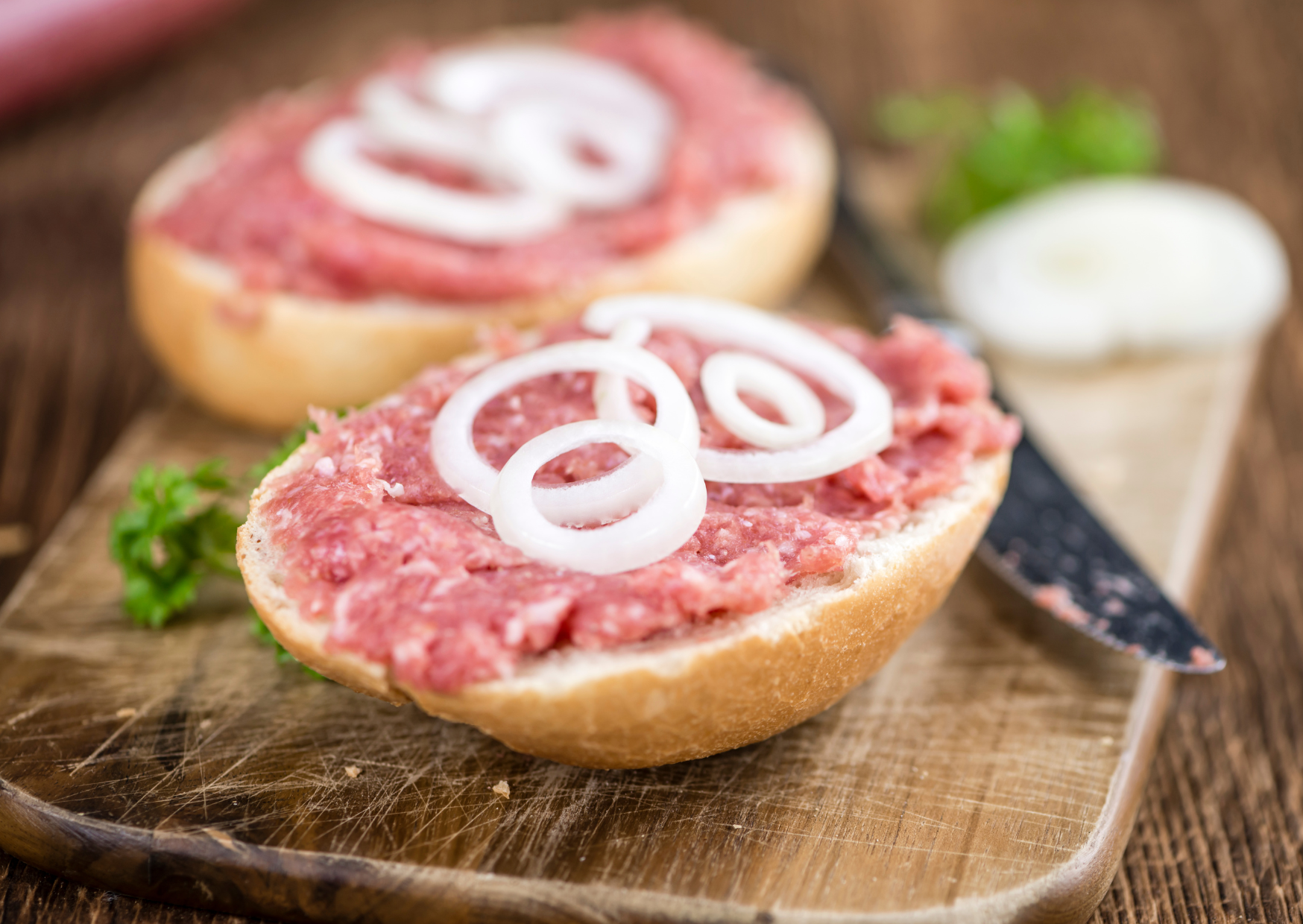
Raw pork is not safe because Germans are different. It is safer in context because the rules and timing are different.
First, same-day production and sale. The old Hackfleisch rules have been folded into modern hygiene law, but the core practice remains: raw minced pork intended to be eaten raw is produced fresh and sold the same day, under tight temperature control. State food-safety authorities still repeat this in plain language for retail and food service, and they enforce it during inspections. That single constraint—today or not at all—removes most of the time window in which bacteria love to multiply. Same day, cold chain, sell and serve fast.
Second, hygiene and labeling. German guidance for minced meat lays out process temperatures, display temperatures, and use-by requirements that are stricter for minced products than for many whole cuts. Butchers and bakeries that sell raw-consumption mince operate under these expectations. The intent is blunt. Raw ground meat is a high-risk food, so handling is scripted and shelf-life is short.
Third, pathogen control in the supply chain. Europe runs a dedicated program for Trichinella control in domestic pigs and other species, with testing and housing standards that have dramatically cut human trichinellosis from commercial pork. Trichinella is the parasite that powered your grandparents’ stories about raw pork. The risk from domestic, inspected pork under EU rules is low compared with the past, especially relative to wild game. That does not make raw pork harmless, it makes it less likely to carry one specific parasite when sourced correctly. Controlled herds, routine testing, low domestic Trichinella risk.
Fourth, enforcement and monitoring. When German labs go look at the product, the results tell you why breakfast can be uneventful. In a recent Lower Saxony survey of seasoned pork mince for raw consumption—Mett—the state lab found no Salmonella and no VTEC in 123 samples, though they did ding some shops for labeling mistakes. Microbiology did not come back perfect for all time, it came back reassuring for that window, which is what same-day rules aim to achieve. Tested lots, few pathogens detected, labeling still policed.
Put those pieces together and you get the quiet picture. Success in Germany is procedural. Minced fresh, kept cold, sold today, from a regulated supply, under inspection. None of that transfers by osmosis to a different country or to pre-packed mince sitting in a home fridge.
The Real Risks That Still Exist, Explained Without Drama
This is the part most online myths skip. Germans do sometimes get sick from raw pork. The risk is real, it is just managed.
The pathogen that worries European scientists the most here is hepatitis E virus. The European Food Safety Authority has said for years that raw or undercooked pork and pork liver are the most common sources of hepatitis E infection in the EU. Hepatitis E often goes unnoticed in healthy adults, but it can be nasty, and it is a serious risk for pregnant women and immunocompromised people. Virus risk exists, liver products are particularly risky, vulnerable groups should avoid.
Germany’s own risk-assessment body, the BfR, has repeated the same core message in different contexts. Heat is your friend, brief warming does not neutralize HEV, freezing does not either, and consumers in sensitive groups should avoid raw animal foods. Another BfR note that triggered headlines a few years back reminded parents that raw minced pork and Hackepeter are not for small children, after a study found surprising rates of raw-pork exposure among sick kids. HEV is heat-stable, freezing is not a cure, children and other vulnerable people should not eat raw pork.
Bacteria are part of the picture too. Yersinia, Salmonella, and toxoplasma are not bedtime stories. Surveillance and shelf-life rules exist precisely because minced meat is a bacterial playground if you give it warmth and time. That Lower Saxony snapshot above is encouraging, but it is not a forever pass. The controls make bad outcomes rarer, they do not make them impossible. Rules reduce risk, they do not erase it.
Keep one practical separation in mind. When Germans eat raw pork safely, they are eating the day’s product under those controls. When articles warn about raw pork dangers, they are often looking at liver-based products, wild game, or home handling where rules get fuzzy. Those are not the same scenario, which is why one can be common in a bakery and the other still generates health advisories.
Why Americans Would Get Sick Copying This At Home
If you are in the United States, your regulatory and retail reality is different.
Start with the FDA Food Code. It allows serving raw or undercooked animal foods only with consumer advisories and only under strict controls, and most operators choose to avoid raw ground pork entirely because the liability looks awful compared to the payoff. When U.S. menus offer raw ground meat, it is typically beef in a controlled format like steak tartare, with advisory language asterisked on the page. Advisory required, controls required, many restaurants opt out.
Next, check temperature guidance. USDA and CDC recommend cooking pork to safe internal temperatures, and U.S. consumer materials still treat raw ground pork as a no-go for home kitchens. Yes, trichinellosis from commercial pork in the U.S. is rarer than it once was, but it still shows up in outbreaks tied to wild game and to home recipes that skip cooking. The most publicized recent outbreaks involved wild boar, not supermarket pork, and the lesson authorities printed in bold was simple: cook ground pork to 71 °C. Cook ground pork, wild game is high risk, consumer advisories are not decoration.
Then there is time and handling. The U.S. retail system leans on central processing and packaging, longer distribution, and consumer fridges that range widely in temperature. None of that is compatible with same-day mince for raw consumption as a default expectation. Copying the German breakfast with yesterday’s pre-pack is exactly how you turn a curiosity into a hospital bill. Longer chain, home refrigerators, no same-day rule.
Finally, the U.S. risk picture is not identical. Trichinella in commercial pork is low, yet other pathogens and cross-contamination remain everyday hazards in home kitchens. The FDA’s basic food-handling rules read like a checklist of ways raw mince can go wrong in a typical household. Germany’s success depends on procedural discipline. Replicating that discipline in a random home kitchen is hard. Cross-contamination is easy, discipline is hard, better to skip the experiment.
If You Are Going To Try It In Germany, This Is The Smart Way
No pep talk, just harm-reduction for travelers who are curious.
Buy it early from a butcher or bakery that preps mince that morning. Inquire with simple phrases if you need them, like “Mett, zum Rohverzehr” or “frisch gewolft”, and watch it come straight from the cold case. Skip pre-packed mince for raw eating. The same-day expectation is part of the safety case. Same morning, from the counter, not the plastic tray.
Eat it immediately or within the hour. A Mettbrötchen is not picnic food for a warm backpack. If onions are pre-mixed, all the more reason to eat now. It is common to spoon onions on top at the last minute, which keeps moisture and microbes from getting a head start inside the meat. Now, not later, top just before serving, keep it cold until you eat.
If you are pregnant, immunocompromised, feeding small children, or just recovering from something, skip it. Germany’s risk assessors have been very clear on that population list. There is nothing to prove at breakfast. Sensitive groups should avoid, there are a hundred other good things to eat, no exception proves a rule.
Mind the store cues. A tidy, busy counter turning over trays quickly is the right setting. A sleepy display of pre-ground pork in a warm case at 3 p.m. is the wrong one. You do not need a lab. You need common sense: fast turnover, cold case, clear labeling. If you do not like what you see, order a Leberkäsebrötchen or a cheese roll and call it a win.
What The “Don’t Get Sick” Line Ignores
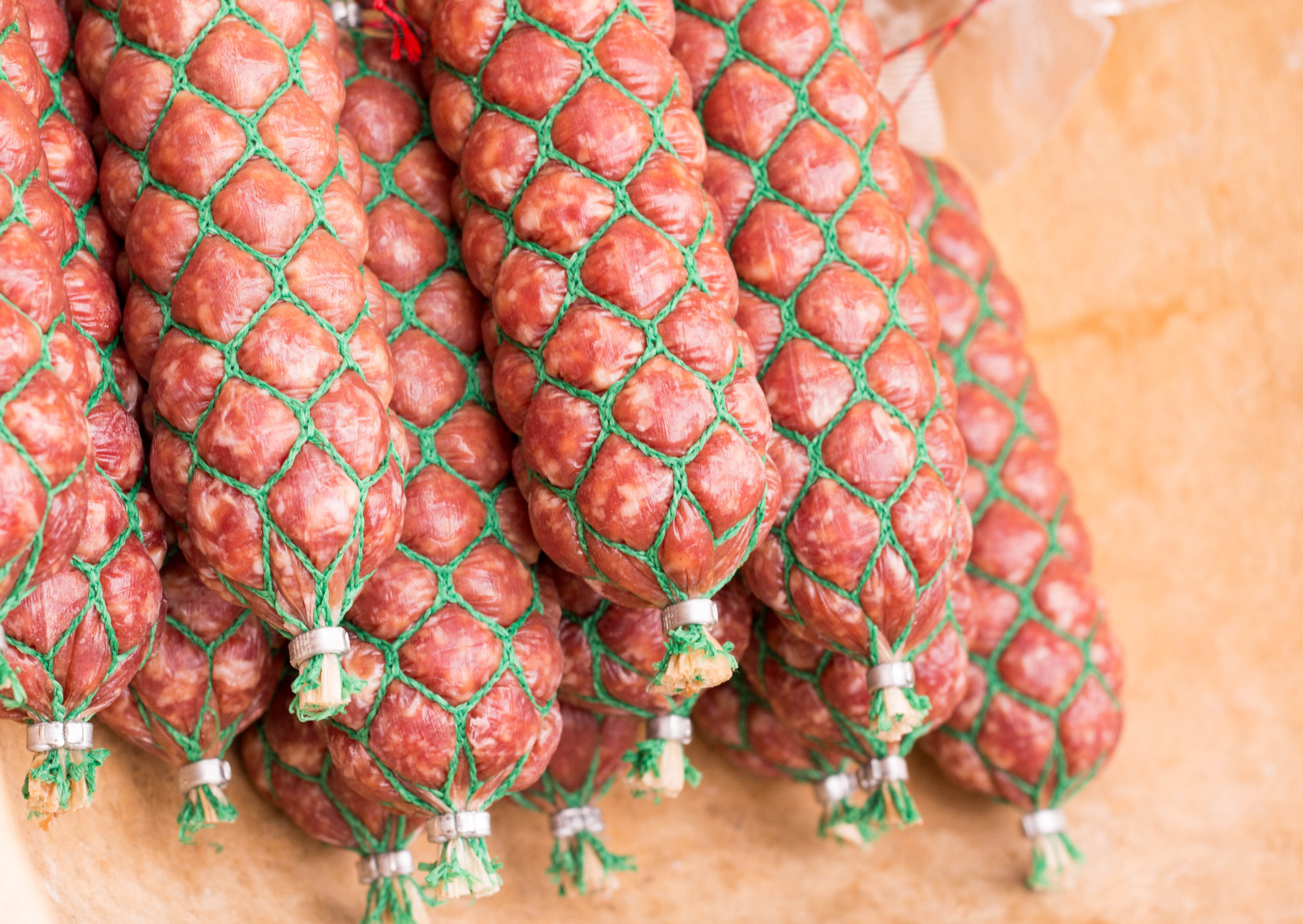
The internet loves a neat contrast. Germans eat raw pork for breakfast and never get sick. Americans would eat it and land in the ER. Reality is messier, and more interesting.
Germans do get sick sometimes, and health agencies publish advisories and data to keep the risk in front of people. EFSA has said repeatedly that raw or undercooked pork is the main driver of hepatitis E cases across the EU, and German authorities keep reminding specific groups to avoid raw animal foods. Those are not footnotes. They are the reason the rules exist in the first place. Risk exists, rules manage it, advice targets vulnerable people.
At the same time, it is unfair to pretend Americans are delicate flowers. The U.S. has its own raw-animal traditions—oysters, tartare, ceviche—backed by advisories and controls. The difference with raw pork is that Germany maintained a specialized, rule-bound niche for one product, and the U.S. chose to discourage it in retail and food service because the risk-to-reward ratio looks poor at scale. Two systems, two choices. Germany builds a lane, the U.S. closes a lane, both aim to keep hospitals quiet.
If you want numbers, Germany’s own labs sometimes return comforting snapshots, like the Lower Saxony survey that found no Salmonella or VTEC in a run of raw-consumption pork mince samples, while other European reviews focus attention on HEV in pork and pork liver and on toxoplasma. That mix of good news and ongoing caution is exactly how mature food systems talk. Snapshots reassure, science still warns, nuance wins.
The Breakfast Lens: Why It Works In The Morning And What To Order Instead
Timing is not just a romantic detail. Morning is when today’s mince exists, and when cold cases are full and turnover is fastest. That is why you see Mettbrötchen with the morning coffee and during second breakfast at work. If you are tempted and healthy, the morning window is the right one. If it is late afternoon on a hot day, skip it and order something that likes the heat. Morning suits the product, turnover is safety, weather matters.
If you want the same pleasure with less risk, Germany offers cousins. Try a Schinkenbrötchen with cured ham, a Leberkäse roll, or the classic cheese and tomato on a crusty bun. You are here to enjoy yourself, not to run a lab experiment. If you are deeply curious about raw animal foods, save your risk budget for beef tartare at a serious restaurant, where hazard controls look different and the advisory is printed on the menu. Plenty of options, no need to force a moment, there tomorrow as well.
What This Means For You
The headline is not that Germans have invincible guts. It is that Germany designed a narrow, rule-based window in which a raw-pork breakfast is a normal act. Same-day mince, cold chain discipline, regulated supply, clear labels, and surveillance get them most of the way there. On the other side of the Atlantic, the system is built differently, and the easiest way to avoid a problem is not to copy the idea at home.
If you are healthy and curious in Germany, buy it early, buy it from a counter that looks alive, and eat it now. If you are pregnant, immunocompromised, or shopping for kids, choose anything else. If you want to understand why the person ahead of you did not get sick, skip the jokes about iron stomachs and look at the rules on the wall. The answer is not romance. It is procedure.
The idea of eating raw pork for breakfast sounds shocking only when stripped of context. In Germany, it exists within a tightly regulated food system, long-standing tradition, and shared understanding of risk. What seems reckless from the outside is actually controlled and deliberate.
This practice highlights how food safety is cultural as much as scientific. Standards, sourcing, and preparation determine whether a food is risky or routine. Germans aren’t ignoring danger; they’re managing it differently.
It also reveals how assumptions travel poorly. When habits cross borders without systems following them, confusion and fear fill the gap. The problem is not the food itself, but the conditions surrounding it.
Ultimately, this tradition isn’t about bravado or shock value. It’s about trust in regulation, butchers, and freshness—elements that don’t translate universally.

About the Author: Ruben, co-founder of Gamintraveler.com since 2014, is a seasoned traveler from Spain who has explored over 100 countries since 2009. Known for his extensive travel adventures across South America, Europe, the US, Australia, New Zealand, Asia, and Africa, Ruben combines his passion for adventurous yet sustainable living with his love for cycling, highlighted by his remarkable 5-month bicycle journey from Spain to Norway. He currently resides in Spain, where he continues sharing his travel experiences with his partner, Rachel, and their son, Han.