
You open the pot and the sauce coats the spoon like chocolate. A cube of beef breaks with a nudge, not a knife. That texture is not luck. It is method.
American stew often tastes fine but eats tough. The meat is cut too small, boiled too hot, drowned in liquid, and rushed off the stove the minute it is merely cooked. Classic French bourguignon does the opposite. It chooses the right cut, browns without burning, braises low and steady, and finishes the sauce to a glaze. Hit those four notes and three hours later the beef will spoon apart, the sauce will shine, and the vegetables will still have a voice.
Below is the clean map: what actually makes beef tender, how to buy and cut it, the wine and stock math that keeps sauce glossy instead of watery, the oven schedule that works every time, a from-scratch recipe sized for a home Dutch oven, and the fixes for the stew mistakes everyone makes once.
What Makes Bourguignon Melt Instead of Chew
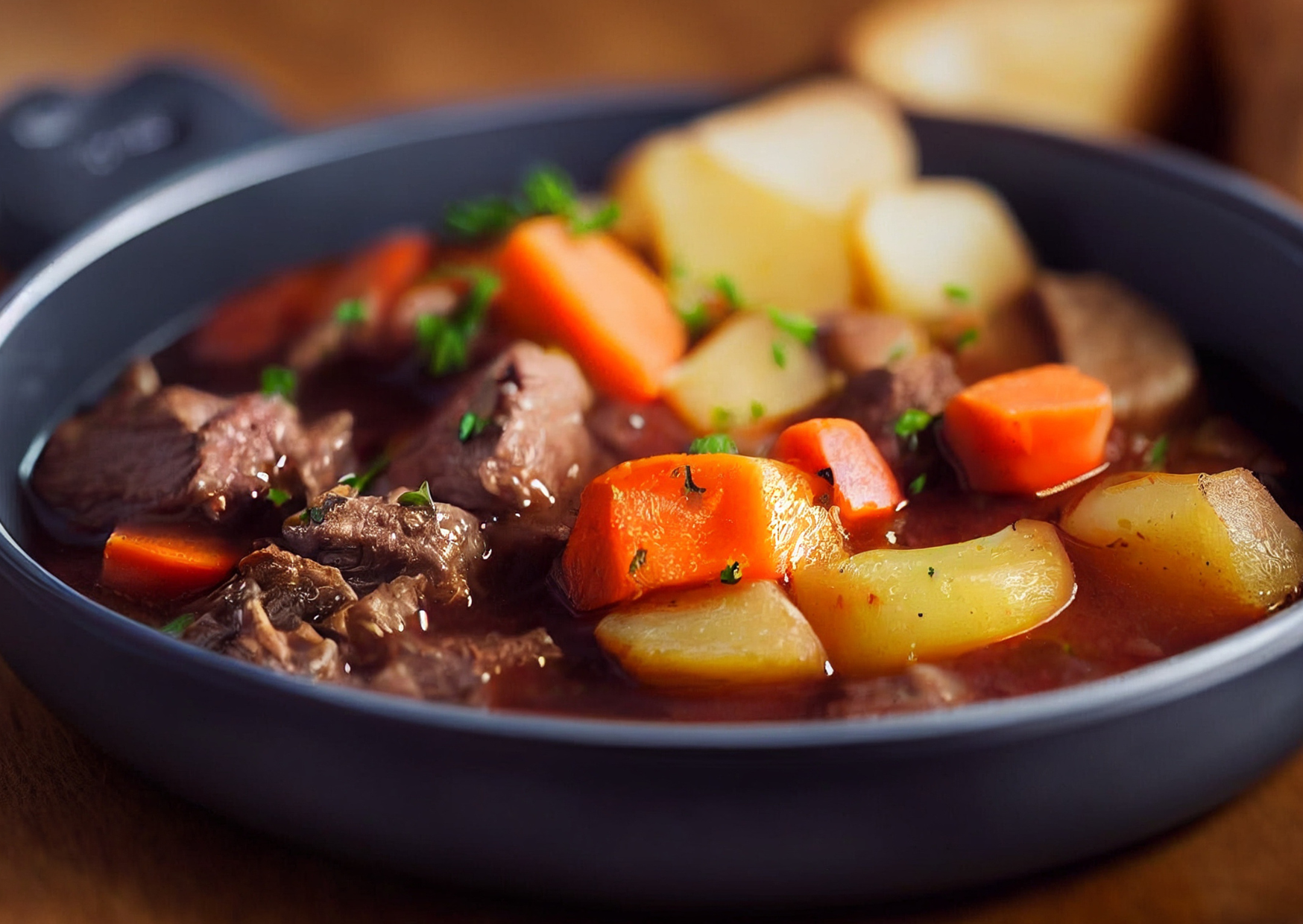
The difference is not magic. It is chemistry and restraint.
Tender stew is about collagen to gelatin, not about time on a clock alone. Collagen in working muscles like shoulder and shin slowly melts into gelatin when held gently around the braising zone. When that conversion happens, strands that felt ropey at two hours suddenly slide apart at three. The key is time at temperature, not a hard simmer that shreds protein. Keep the pot around a feathering simmer and the oven steady and the fibers relax instead of contract.
Second, the meat touches steam and sauce, not a rolling boil. Bourguignon is a braise, which means meat half submerged and the lid on. Steam keeps the top moist while the lower half exchanges juices with the liquid. If you drown the pot, you do not braise, you boil. Boil drives tough fibers tighter and leaches flavor.
Third, glaze beats broth. French stews finish with nappe texture, the thickness that lightly coats the back of a spoon. That comes from reduced wine and stock, a little flour transformed during the oven time, and a final simmer uncovered to tighten. Watery liquid is why American stew tastes fine and then runs off the plate.
Finally, pieces matter. Large, even chunks cook evenly and hold moisture. Tiny “stew meat” cubes finish early, overcook at the edges while the center is still tight, and shed juices into the pot. Use big, uniform pieces and the meat will hold together until the collagen has melted, then fall apart at the table.
Remember the three pillars: collagen to gelatin, low oven, tight lid, glaze not broth. Keep those in your head and the rest is just shopping and patience.
Buy the Right Beef and Cut It Right
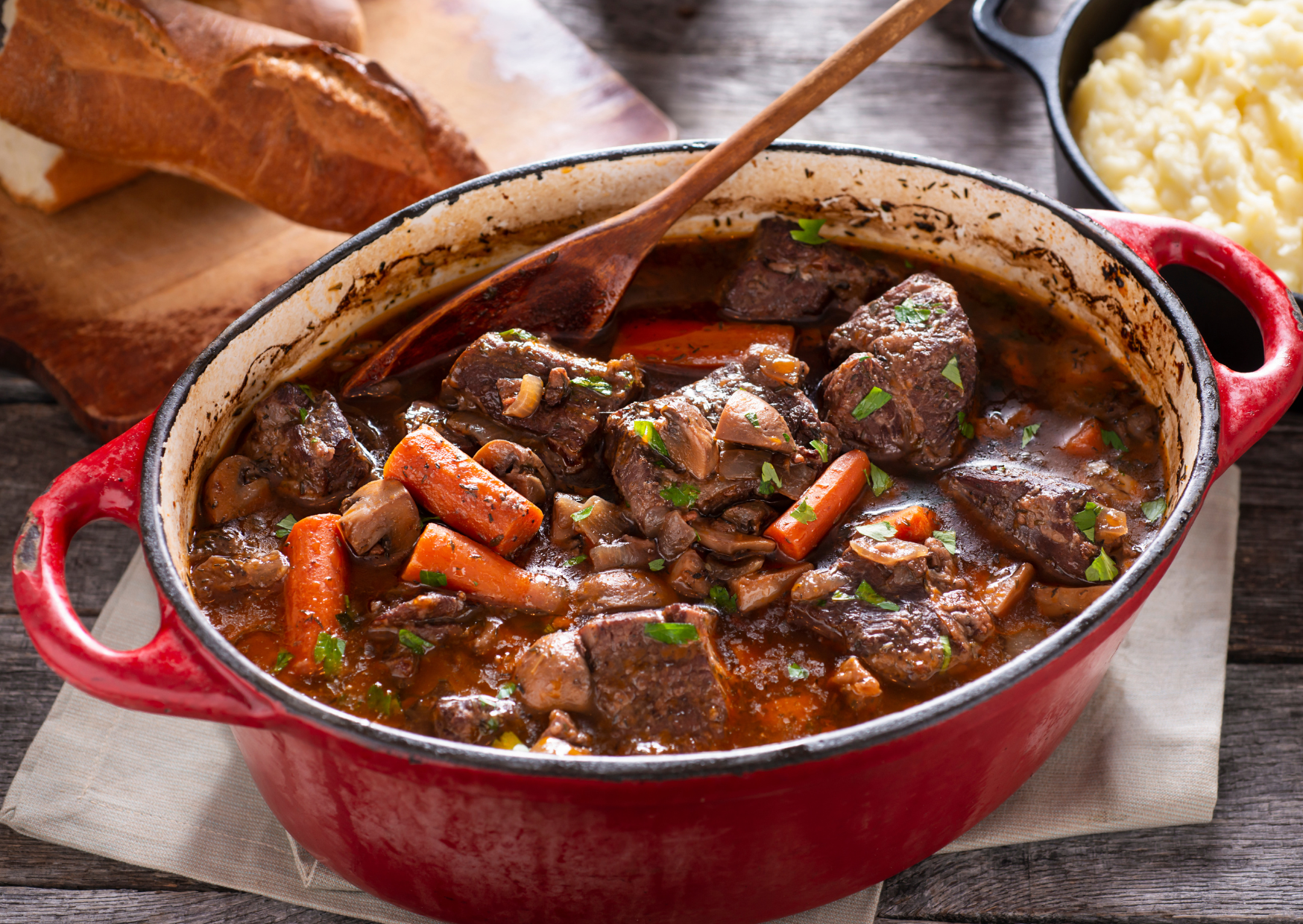
Most tough stews start at the butcher counter.
You want well exercised cuts with connective tissue, not lean roasts. In French terms, think paleron and macreuse from the shoulder, gîte or jarret from the shin. In American shops that translates to chuck roast, chuck eye, chuck flap, boneless beef short rib, or beef shank. These have the collagen you need for silk.
Skip mixed “stew beef.” It is a grab bag that cooks unevenly. Buy a single cut and cube it yourself into 5 cm pieces. Large cubes keep their moisture, present good surface area for browning, and are easy to turn without shredding.
Marbling is your friend, but you want connective tissue more than fat. Visible seams and silver skin that will melt are worth more to tenderness than a heavily marbled steak muscle that dries out once you braise it.
Salt the beef early. A light, even seasoning an hour or two before you brown helps it hold moisture and seasons from within. Pat dry before it hits the pan. Wet beef steams, dry beef browns.
Lardons are not optional if you want the real thing. Diced slab bacon or salt pork rendered gently at the start adds smoke and savor the wine alone cannot bring. You will brown the beef in that fat and build your fond on top of it.
Short list at the shop: one connective cut, large cubes, slab bacon. Everything else is pantry.
Build Flavor Before the Lid Goes On
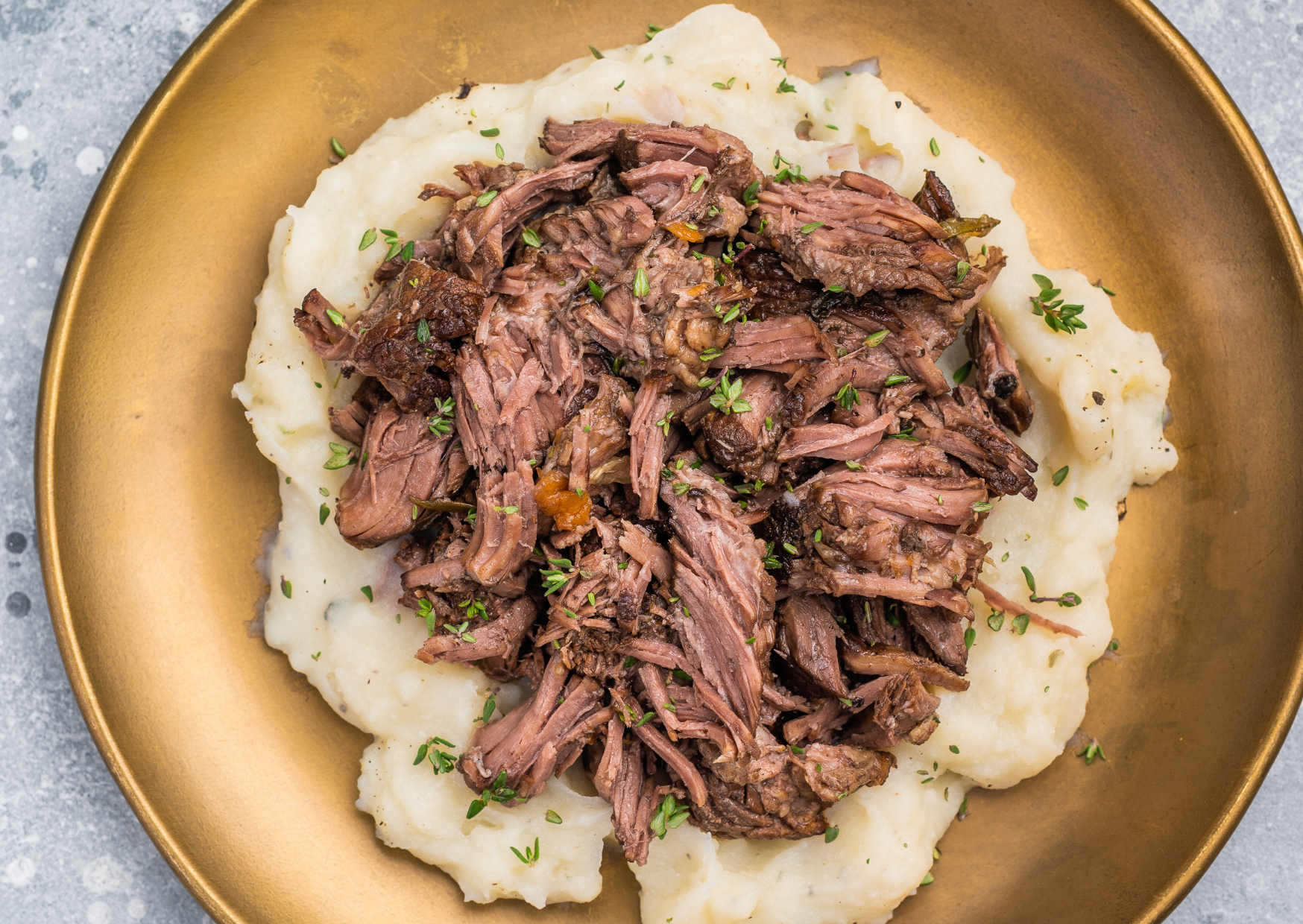
Heat and order matter more than tricks.
Brown in batches over medium heat in a mix of bacon fat and a little neutral oil or butter. You are after even, deep browning, not a dark crust that tastes bitter. If the fond starts to darken too quickly, lower the heat and add a splash of oil. Crowding is how you get gray meat and burned spots.
Cook a slow soffritto of finely diced onion, carrot, and celery in the rendered fat with a pinch of salt until sweet. Add garlic only at the end so it never burns. This base sweetens the sauce and gives the beef something soft to sit in.
Stir in tomato paste and cook it until it goes brick red. This concentrates flavor and the paste’s natural glutamates, then melts into the wine.
Dust the vegetables with a spoon or two of flour and stir for a minute. You are not dredging the beef heavily here. You are making a light roux that will thicken gently over hours. Heavy dredging can create a pasty sauce.
Deglaze with dry red wine and reduce it hard until almost syrupy. This is one of the quiet secrets. Reducing cooks off raw alcohol and concentrates fruit and acidity so the sauce later tastes like wine, not like wine was poured in. Burgundy or any good Pinot Noir is classic, but a Côtes du Rhône or other medium-bodied dry red is fine. You want lift without heavy tannins.
Add beef stock to reach halfway up the meat once it goes back in, then tuck in a bouquet garni and a piece of orange peel. A mashed anchovy fillet or a teaspoon of anchovy paste disappears into the pot and deepens savor without reading as fish. It is a classic cook’s move.
Three small levers define the base: hard wine reduction, a little flour cooked in, herbs and peel for lift. Those choices prevent thin sauce and flat flavor.
Wine, Stock, and the Sauce That Glazes
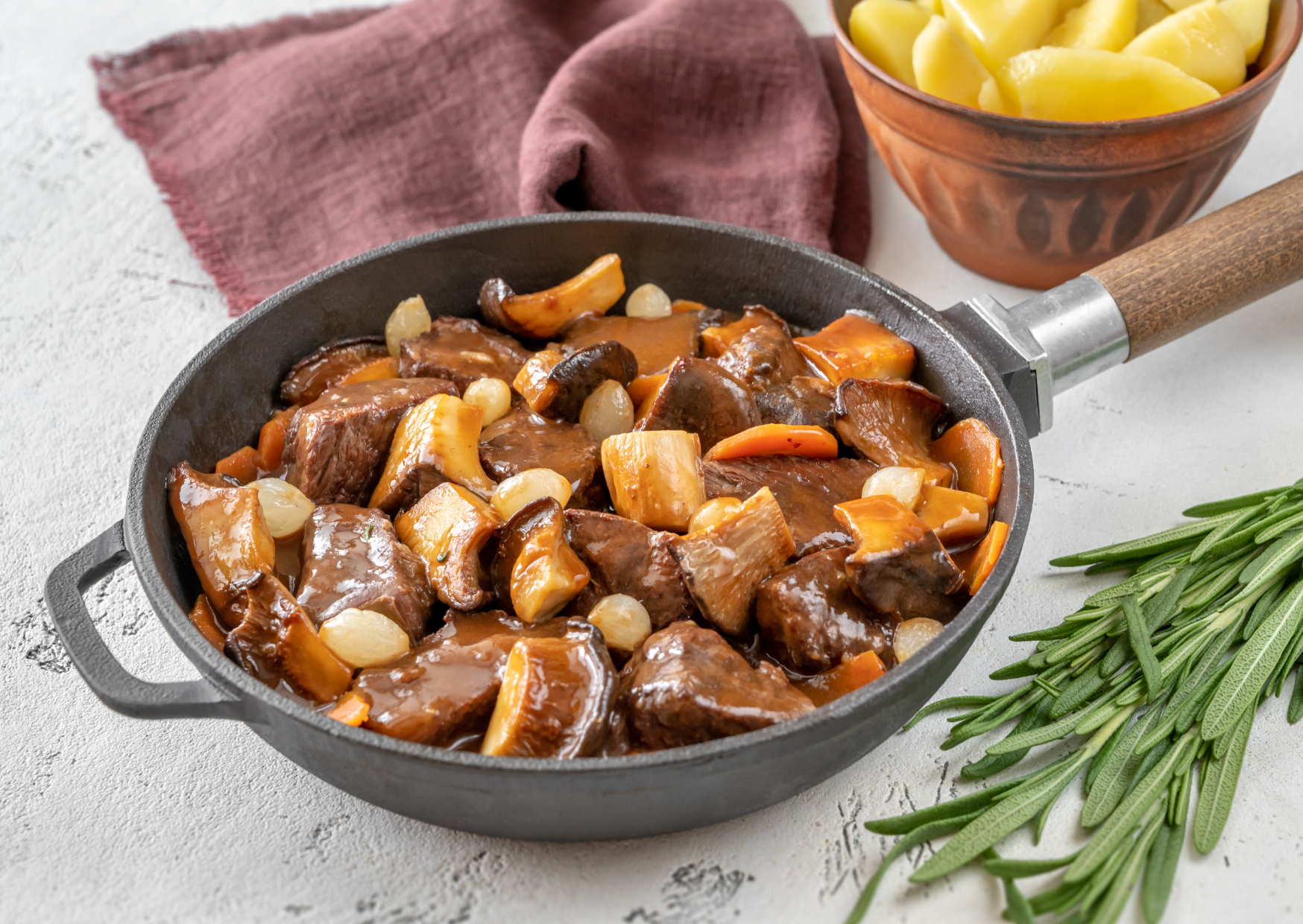
Bourguignon is red wine first, stock second, and you taste that when it is done right. Use the pot like a measuring cup.
Return the browned beef to the pot with its juices. Pour in your reduced wine and enough stock to come just to the top of the meat without drowning it. The oven and lid will create steam. The surface will not dry. There is no need to flood.
The ratio that keeps you honest is one standard bottle of wine to about 500 to 700 ml stock for 1.6 to 1.8 kg beef. That gives you reduction room and leaves enough liquid for the final glaze. If you start with a quart of stock, you will end with soup.
Tannic monsters make bitter stews. Pick a dry, medium-bodied wine you would drink with dinner. You do not need a grand cru. You do need clean fruit and acidity. Pinot Noir and light blends are friendly. If a wine tastes harsh and green in the glass, it will taste harsh under a lid.
American stew often tastes watery because nothing is reduced at the start and every step adds more liquid. Bourguignon fixes this twice. Reduce the wine first, then reduce the finished sauce at the end until it coats a spoon. That is why the sauce clings to the beef instead of sinking into mashed potatoes like rain.
Remember the rule: halfway up, never to the brim. Your oven will do the rest.
The Three Hour Oven Schedule That Works
The stove is fussy. The oven is steady. Let it do the holding.
- Brown and build, 30 to 40 minutes. Bacon renders, beef browns, soffritto sweetens, tomato paste cooks, flour toasts, wine reduces, stock goes in.
- Tight lid and oven, 160 C, 2 hours. Slide the braiser onto the middle rack. You want a bare simmer at the edges, not a boil. Do not open for two hours. Collagen needs time without interruption.
- Turn and check, 20 minutes. Pull the lid, turn the beef gently, spoon some liquid over, and check the simmer. If it is too lively, drop the oven temp 10 degrees. Return the lid.
- Finish, 30 to 40 minutes. At around 2 hours 50 minutes to 3 hours 10 minutes total oven time, the beef should offer almost no resistance to a skewer and break with a nudge. If you used boneless short ribs or shank, you might be at the upper end.
- Reduce and rest, 20 minutes. Lift beef to a warm tray. Strain the sauce, defat, and simmer uncovered until it lightly coats a spoon. Return the beef and any lardons to the pot, add the garnish vegetables, simmer 5 minutes, then rest off heat 10 to 15 minutes with the lid set slightly ajar. Resting lets gelatin relax and the sauce settle on the meat.
Keep the oven gentle and closed. No poking every fifteen minutes, no rolling boil on the stove, no frantic topping up. The quiet pot rewards you.
The Recipe: Beef Bourguignon That Spoons Apart
Serves 6, active time about 45 minutes, total about 3 hours plus resting
Ingredients
Beef and base
- 1.6 to 1.8 kg beef chuck roast, chuck eye, boneless short rib, or beef shank, cut in 5 cm cubes
- 150 g slab bacon or salt pork, cut in small lardons
- 2 tsp fine sea salt, divided, plus black pepper
- 2 tbsp neutral oil or olive oil, as needed
- 1 large onion, finely diced
- 2 medium carrots, finely diced
- 1 celery stalk, finely diced
- 3 garlic cloves, minced
- 2 tbsp tomato paste
- 2 tbsp all-purpose flour
- 750 ml dry red wine, such as Pinot Noir
- 500 to 700 ml unsalted beef stock, warmed
- 1 bay leaf, 2 thyme sprigs
- Strip of orange peel, 6 to 8 cm, no white pith
- 1 anchovy fillet, minced, or 1 tsp anchovy paste
Garnish vegetables
- 300 g pearl onions, peeled
- 400 to 500 g mushrooms, quartered
- 2 tbsp butter, divided
- 1 tsp sugar
- 150 ml beef stock or water
- Salt and pepper
Finish
- 1 tbsp red wine vinegar or a squeeze of lemon, to taste
- Flat leaf parsley, chopped
Method
1) Season and brown.
Salt the beef lightly and evenly 1 to 2 hours ahead if you can. Pat dry. Warm a heavy Dutch oven over medium heat. Add the bacon and render until golden. Scoop to a bowl. Add a spoon of oil if the pot is dry. Brown the beef in batches until deep blond with browned patches. Do not rush. Move browned pieces to a tray.
2) Soffritto and paste.
Lower heat. Add onion, carrot, and celery with a pinch of salt. Cook slowly until soft and sweet, 8 to 10 minutes. Stir in garlic for 30 seconds. Add tomato paste and cook, stirring, until it turns brick red and leaves a film on the bottom, about 1 to 2 minutes.
3) Flour and deglaze.
Sprinkle flour over the vegetables and stir for 1 minute. Pour in the wine and scrape the fond. Raise heat and reduce the wine until it is syrupy and nearly half gone. Stir in 500 ml warm stock, the bay, thyme, orange peel, anchovy, and the rendered bacon. Bring to a gentle simmer.
4) Braise.
Return the beef and any juices. The liquid should come just to the top of the meat. If needed, add a bit more stock to reach that level. Cover tightly and put in a 160 C oven. Do not open for 2 hours.
5) Garnish vegetables while it braises.
For onions, melt 1 tbsp butter in a skillet. Add pearl onions, 1 tsp sugar, a pinch of salt, and 150 ml stock or water. Cover and simmer until just tender and glazed, 10 to 12 minutes. Uncover and reduce until shiny. For mushrooms, heat the remaining butter until foaming. Sauté mushrooms in batches over high heat until well browned and caramelized. Season with salt and pepper. Set both aside.
6) Turn and finish.
After 2 hours, turn the beef gently, baste with liquid, re-cover, and return to the oven for 40 to 60 minutes until a skewer meets minimal resistance and cubes break at a nudge. Total time will be about 3 hours.
7) Strain and glaze.
Lift the beef to a warm tray. Strain the liquid into a saucepan, pressing on the vegetables to capture juices. Skim fat. Simmer the sauce briskly until it coats a spoon. You are seeking nappe, not gravy. Taste for salt. Add a few drops of red wine vinegar or lemon to wake the edges if needed.
8) Bring together and rest.
Slide the beef, onions, mushrooms, and any bacon back into the pot with the sauce. Simmer 5 minutes to marry. Remove from heat, cover loosely, and rest 10 to 15 minutes. Scatter parsley at the table.
Serve with buttery mashed potatoes, buttered egg noodles, or a slab of toasted country bread. The sauce should cling to the meat and the plate should not puddle.
Why this works
- Connective cuts have collagen that melts into gelatin.
- Hard wine reduction gives flavor without raw alcohol.
- Half-submerged braise and a tight lid keep fibers moist.
- Separate garnish vegetables stay bright and textured instead of falling apart.
- Strain and reduce guarantees gloss, not soup.
- Short rest relaxes the sauce onto the beef.
Fixing the Stew Mistakes You Do Not Need To Make Twice
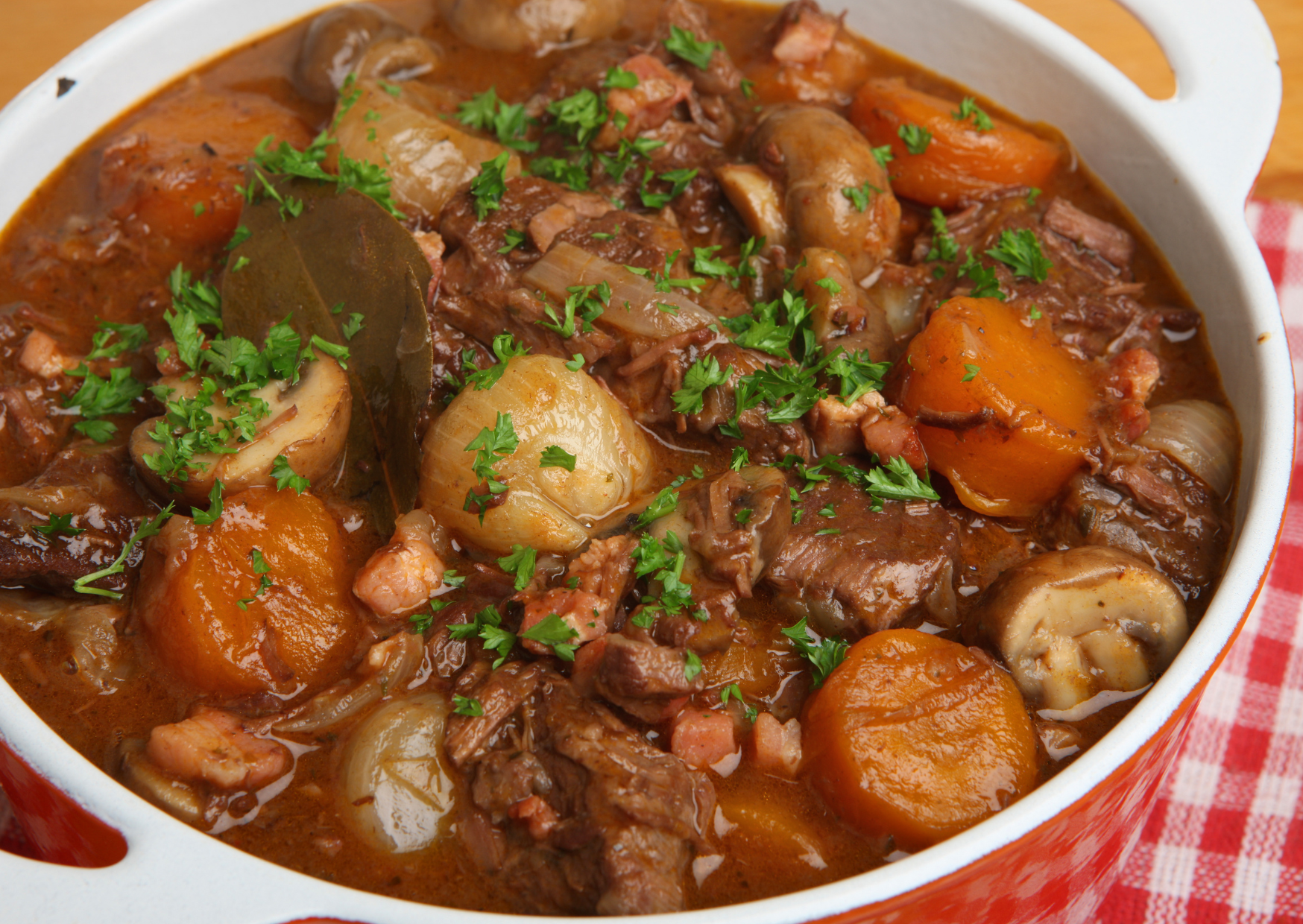
If your bourguignon is stubborn, the fix is usually simple.
Meat still tough at 2½ hours.
Keep going. The conversion from collagen to gelatin is not linear. Many cuts are stubborn until just before they are perfect. Time at gentle heat is the fix, not raising the oven or boiling.
Watery sauce.
You started with too much stock or did not reduce at the end. Lift meat, boil the liquid hard until it coats a spoon, then return meat. If you want more body, mash a ladle of the braised vegetables through the strainer or whisk in a teaspoon of cold butter.
Bitter, harsh wine taste.
The wine was not reduced enough or it was too tannic. Reduce longer next time. A small knob of butter and a few drops of vinegar can round edges in the moment.
Gray meat, no fond.
The pot was crowded or the meat was wet. Brown in batches, and dry the beef first. Fond is flavor and body later in the sauce.
Vegetables mushy.
They were simmered with the beef. Cook pearl onions and mushrooms separately, then fold in at the end. Texture is as important as flavor.
Too tomato forward.
You used a can like a sauce base. Bourguignon uses tomato as an accent. Keep it to a few tablespoons of paste or a scant cup of passata for a full pot.
Greasy top.
Use unsalted stock and render bacon fully. At the end, skim fat or chill overnight and lift the cap. Next-day bourguignon is a gift.
Stovetop vs oven.
You can simmer on the stove, but the oven gives steady, all-around heat. If you must use the stove, set a heat diffuser and keep the barest bubble.
Slow cooker.
Brown everything first, then cook on low for 8 hours. You will still need to strain and reduce on the stove for gloss. The appliance saves time, not reduction.
Why Bourguignon Is Not Just “Beef Stew With Wine”
A few quiet customs give the dish its identity.
- Lardons at the start for smoke and savor that wine does not deliver alone.
- Pinot-forward wine profile for fruit and lift rather than heavy tannin.
- Separate glaze for onions and a real sauté for mushrooms, folded in late so they are distinct components, not background.
- Sauce strained and polished, which is why restaurant plates look and taste coherent.
- Garnish of parsley and a touch of acid right at the end. It is not sour. It is awake.
Bourguignon respects the beef. American stew often tastes like broth with beef in it. The French version tastes like beef carrying a sauce that exists to serve the meat.
Make It Yours Without Breaking The Idea
Keep the bones and move the details.
Beef choices. Chuck is the baseline. Boneless short rib gives a richer, silkier result. Beef shank gives deeper savor and a more old-school feel. All work at the same schedule with small time tweaks.
Mushroom mix. Brown a blend of cremini and a handful of sliced shiitakes for extra bass, or add a few dried porcini soaked and chopped to the sauce reduction. Soak liquid can replace part of the stock.
Bacon swap. Pancetta works well. If you prefer to reduce smoke, render salt pork and finish the sauce with a little butter for gloss.
Wine swap. If Pinot is out of reach, pick a dry, medium-bodied red you like to drink. Avoid heavy oak and big tannins. Reduce longer and you will be fine.
Make ahead. Bourguignon improves overnight. Chill in the pot, lift the fat cap tomorrow, reheat gently, and add a few drops of vinegar and fresh parsley before serving. The second day is the one you serve to guests.
Serving. Mashed potatoes are the house favorite. Buttered noodles are perfect. Soft polenta is indulgent and catches sauce like a dream. Good bread needs no pitch.
What This Means For Your Kitchen
You do not need a French diploma. You need a connective cut, a steady oven, and three honest hours. Brown with care. Reduce the wine properly. Keep the liquid halfway up. Cover tight. Strain and reduce to glaze. Rest before you ladle.
Do that and your beef will not just be tender. It will melt, the sauce will cling, and the plate will look like you meant it. Which you did.

About the Author: Ruben, co-founder of Gamintraveler.com since 2014, is a seasoned traveler from Spain who has explored over 100 countries since 2009. Known for his extensive travel adventures across South America, Europe, the US, Australia, New Zealand, Asia, and Africa, Ruben combines his passion for adventurous yet sustainable living with his love for cycling, highlighted by his remarkable 5-month bicycle journey from Spain to Norway. He currently resides in Spain, where he continues sharing his travel experiences with his partner, Rachel, and their son, Han.