
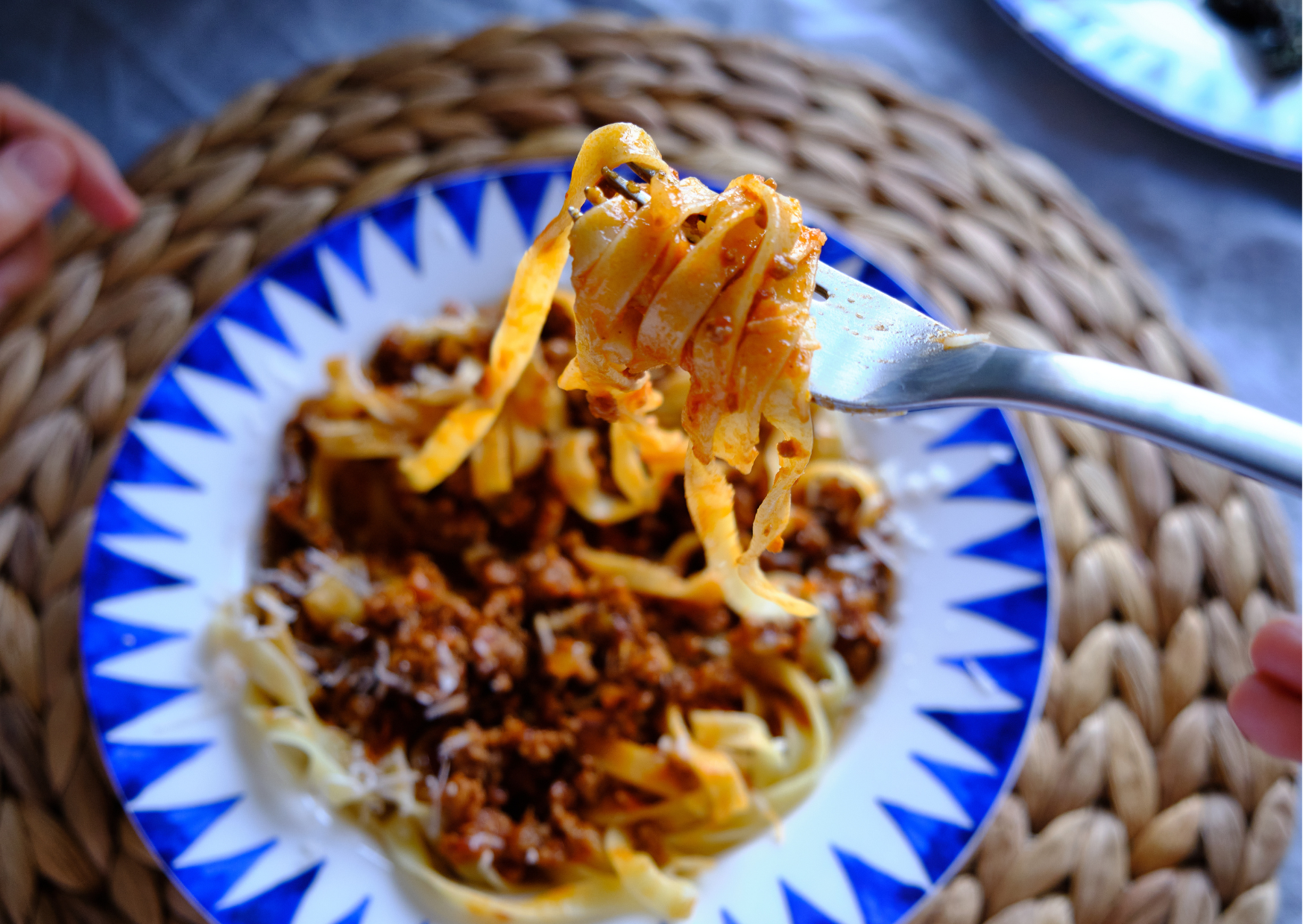
The first time I made Bolognese sauce in Italy, my neighbor watched me reach for the garlic.
She did not say anything. She just tilted her head slightly, the way you might look at someone about to step into traffic. When I asked what was wrong, she smiled and said, very gently, that I could make the sauce however I wanted.
But if I wanted to make it the way they make it in Bologna, the garlic would need to go back in the drawer.
I thought she was joking. Every Italian-American red sauce I had ever made started with garlic sizzling in olive oil. It was automatic. It was muscle memory. It was, I assumed, the foundation of all Italian cooking.
It is not. And realizing this changed how I understood Italian food entirely.
What ragù alla bolognese actually contains
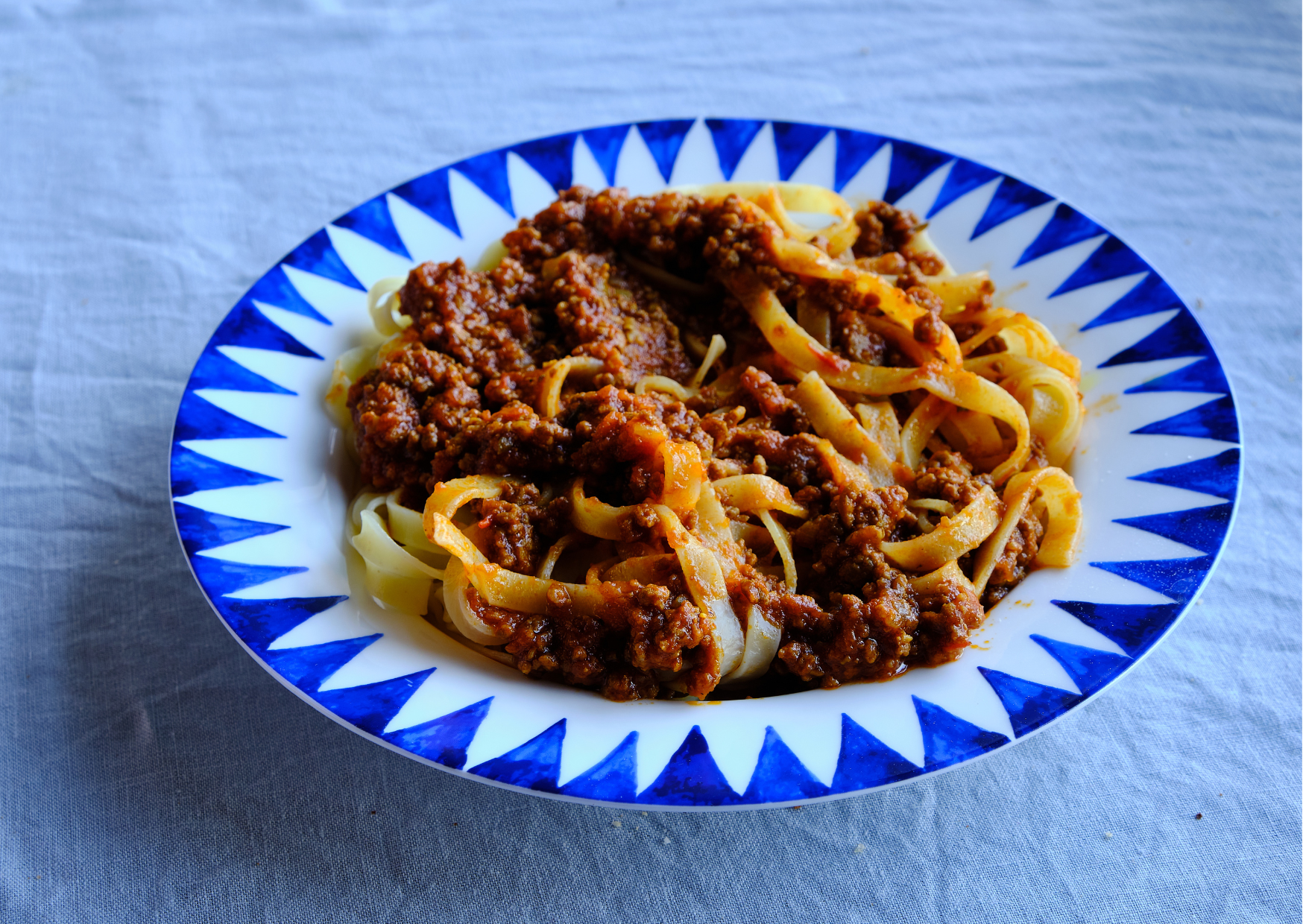
In 1982, the Accademia Italiana della Cucina did something unusual. They deposited an official recipe for ragù alla bolognese with the Chamber of Commerce in Bologna. A notarized document establishing exactly what this sauce should contain. The act was a response to decades of watching their regional dish mutate beyond recognition as it traveled around the world.
The ingredients listed:
- 300g coarsely ground beef (from the thin skirt or cartella cut)
- 150g pancetta, diced and finely chopped
- 50g carrot, finely diced
- 50g celery, finely diced
- 50g onion, finely diced
- 300g tomato passata or peeled tomatoes
- ½ glass dry white wine
- ½ glass whole milk
- Salt and pepper
That is the complete list.
No garlic. No oregano. No basil. No bay leaves. No red pepper flakes. No Italian seasoning blend from a jar. Just meat, pork fat, vegetables, wine, milk, and a modest amount of tomato.
In April 2023, the Accademia updated the recipe, adjusting proportions and clarifying acceptable variations. The new official version explicitly states what is not allowed: veal, smoked pancetta, garlic, herbs, or brandy.
Garlic is specifically prohibited in the authentic recipe. So are the dried Italian herbs that Americans consider essential.
Why garlic does not belong
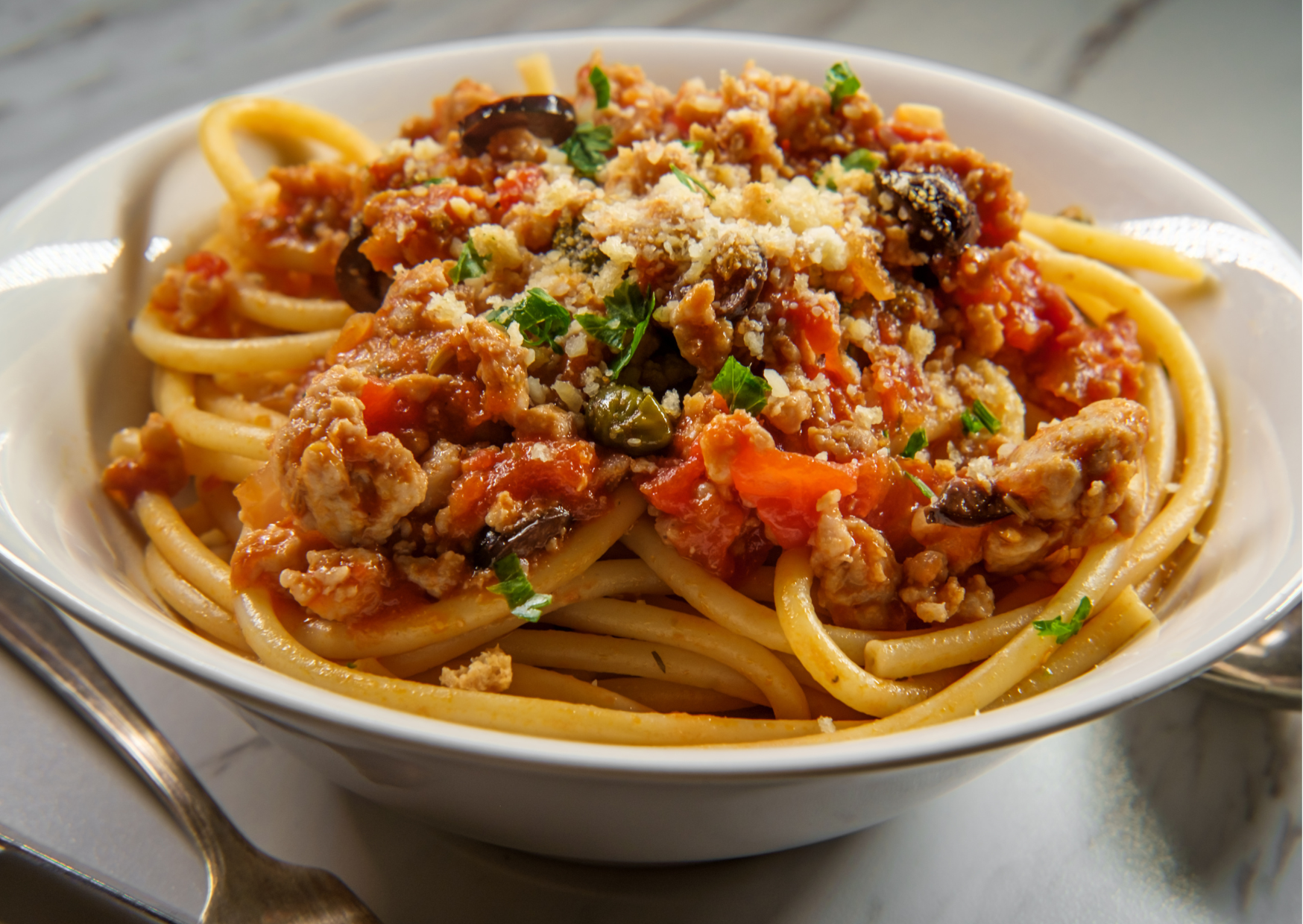
The logic is not arbitrary. Ragù alla bolognese is a meat sauce, not an herb sauce. The meat is the star. Everything else exists to support it.
Garlic has a strong, distinctive flavor that competes with the subtle sweetness of slow-cooked beef and pork. In southern Italian cooking, where tomatoes dominate and sauces are brighter and more acidic, garlic makes sense. It cuts through the acidity and adds depth.
But Bologna is in Emilia-Romagna, the north. The cooking tradition here favors richness over brightness, subtlety over punch. The soffritto of onion, carrot, and celery provides an aromatic base that enhances the meat without overwhelming it.
Garlic would throw off the balance. It would announce itself in every bite instead of letting the beef speak. The same applies to oregano, basil, and the other herbs Americans automatically reach for.
This is not snobbery. It is regional cooking logic that has developed over centuries. Different ingredients serve different sauces. What works in Naples does not necessarily work in Bologna.
The ingredient Americans always skip
If the absence of garlic surprises Americans, the presence of milk shocks them.
Traditional ragù alla bolognese contains milk. The 1982 recipe calls for half a glass, added after the meat browns and before the tomatoes go in. The milk simmers until it nearly evaporates, then the wine is added and the same process repeats.
This step accomplishes several things:
- Tenderizes the meat – the lactic acid breaks down tough muscle fibers over the long simmer
- Balances acidity – milk neutralizes the sharpness of tomatoes and wine
- Adds subtle sweetness – lactose provides depth without adding sugar
- Creates silky texture – the milk proteins contribute to a velvety mouthfeel that coats pasta beautifully
Marcella Hazan, whose cookbook Essentials of Classic Italian Cooking introduced millions of Americans to authentic Italian techniques, emphasized this step. The milk, she wrote, makes the meat “melt in your mouth.”
Most American recipes skip the milk entirely. They assume it would taste strange or curdle. In fact, it disappears into the sauce, leaving only its effects behind. You would never know it was there except that the meat is impossibly tender and the sauce is remarkably smooth.
The tomato problem
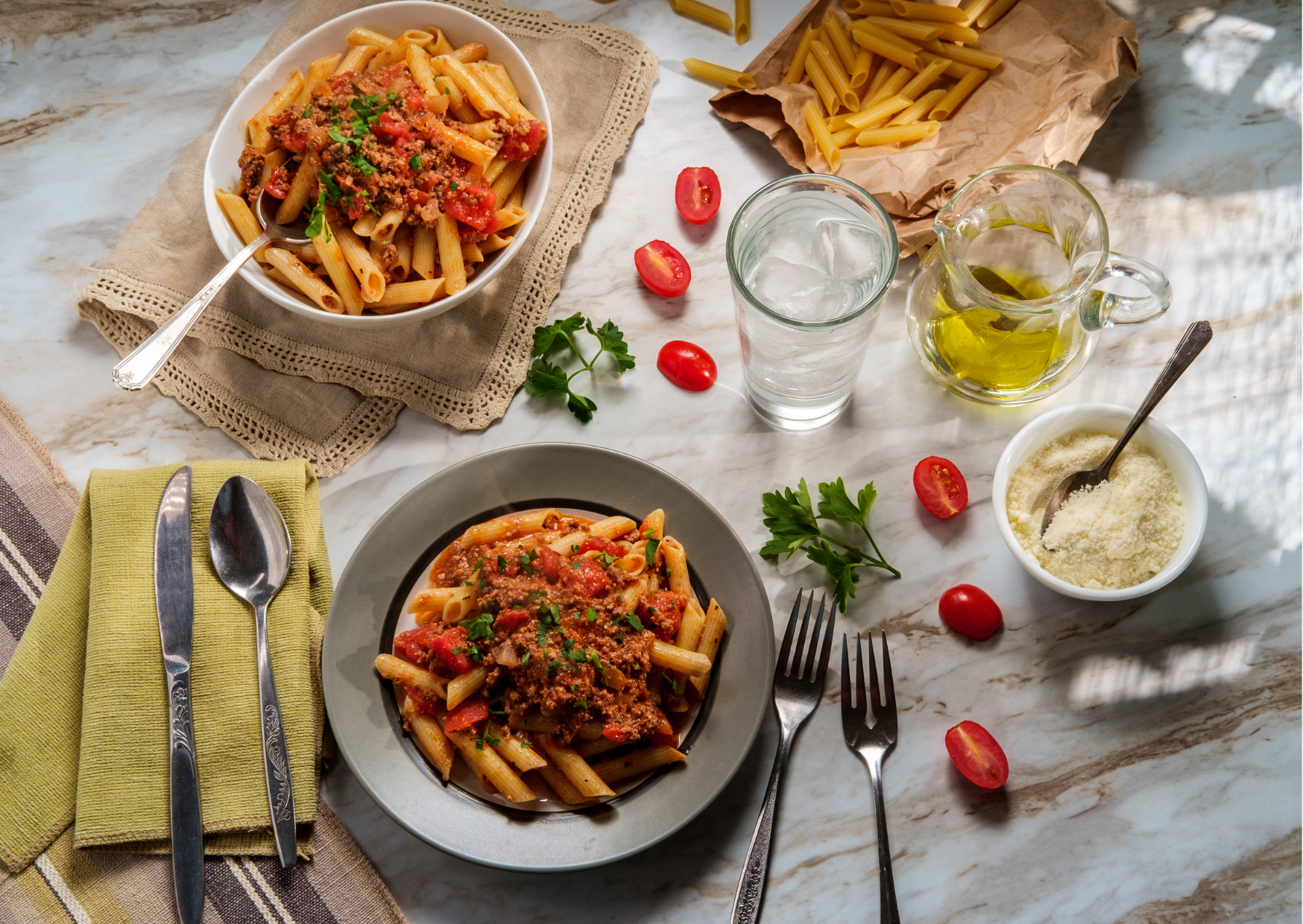
American Bolognese is a tomato sauce with meat in it. Italian ragù alla bolognese is a meat sauce with a touch of tomato.
The difference is fundamental.
The 2023 official recipe calls for 200g of passata plus one tablespoon of concentrated tomato paste for 400g of meat. That ratio—roughly 1:2 tomato to meat—ensures the sauce remains amber-brown rather than bright red.
American recipes often reverse this ratio or worse. I have seen recipes calling for two large cans of crushed tomatoes plus tomato paste for one pound of ground beef. The result looks like marinara with hamburger floating in it.
The original versions of ragù alla bolognese contained no tomato at all. Tomatoes only arrived in Italian cuisine in the late 18th century, imported from the Americas and initially treated with suspicion. Pellegrino Artusi’s 1891 recipe, which helped codify the dish in his influential cookbook La Scienza in Cucina, was still white—a meat and vegetable sauce enriched with cream and broth.
When tomato eventually entered the recipe, it came as an accent, not a foundation. The sauce remained fundamentally about beef. The tomato added color and a touch of brightness, but it never took over.
Compare this to the American version, where tomato dominates everything else.
The pasta pairing that makes Italians cringe
Spaghetti Bolognese does not exist in Italy.
The people of Bologna serve their ragù with tagliatelle, a flat egg pasta about 8 millimeters wide. The broad surface and slight texture of fresh tagliatelle holds the chunky meat sauce far better than slippery spaghetti.
Ragù slides off spaghetti. It pools at the bottom of the bowl while the naked noodles sit on top. The pairing makes no culinary sense.
Other acceptable options include pappardelle (even wider ribbons), short tubular pasta like rigatoni, or layered into lasagna alla bolognese. But never spaghetti.
This is not gatekeeping. It is physics. The sauce and the pasta need to work together, and some combinations simply do not function. Restaurants in Bologna do not serve spaghetti bolognese because it does not make sense, not because they are being difficult.
What slow cooking actually means
An authentic ragù alla bolognese simmers for a minimum of two hours. Three is better. Four is traditional.
The long cooking time serves multiple purposes:
- Breaks down connective tissue – tough cuts become tender
- Develops fond – caramelization builds complexity
- Melds flavors – distinct ingredients become unified
- Concentrates sauce – liquid evaporates, intensity increases
American weeknight Bolognese often simmers for 30 to 45 minutes. This is enough time to cook the meat through but not enough to transform it. The sauce tastes like cooked ingredients rather than a unified whole.
The traditional approach also involves multiple stages of reduction. First the meat browns. Then milk is added and cooked until nearly dry. Then wine is added and cooked until nearly dry. Only then do the tomatoes go in for the long simmer.
Each evaporation concentrates flavor. Skipping these steps produces a waterier, less intense sauce. The difference between a 45-minute simmer and a 4-hour simmer is the difference between cooking and transformation.
The five mistakes Americans always make
Mistake one: Adding garlic.
Every American I know adds garlic to Bolognese. It seems instinctive. But garlic belongs in southern Italian cooking, not Emilian ragù. The soffritto of onion, carrot, and celery provides all the aromatic base the sauce needs.
Mistake two: Skipping the milk.
This is the step that transforms adequate Bolognese into exceptional Bolognese. The milk tenderizes, balances, and enriches. Without it, the meat stays tough and the sauce stays acidic.
Mistake three: Using too much tomato.
The sauce should be amber-brown, not bright red. Tomato is a supporting player, not the star. Reduce the tomato quantity by at least half from what most American recipes call for.
Mistake four: Cooking too fast.
Thirty minutes is not Bolognese. Two hours is the minimum. Three hours is better. Four hours is traditional. The long simmer develops flavors that cannot be rushed. Plan accordingly or make something else.
Mistake five: Serving with spaghetti.
Use tagliatelle, pappardelle, or rigatoni. The sauce needs something it can cling to. Spaghetti and ragù do not belong together, no matter what the jar says.
The actual recipe
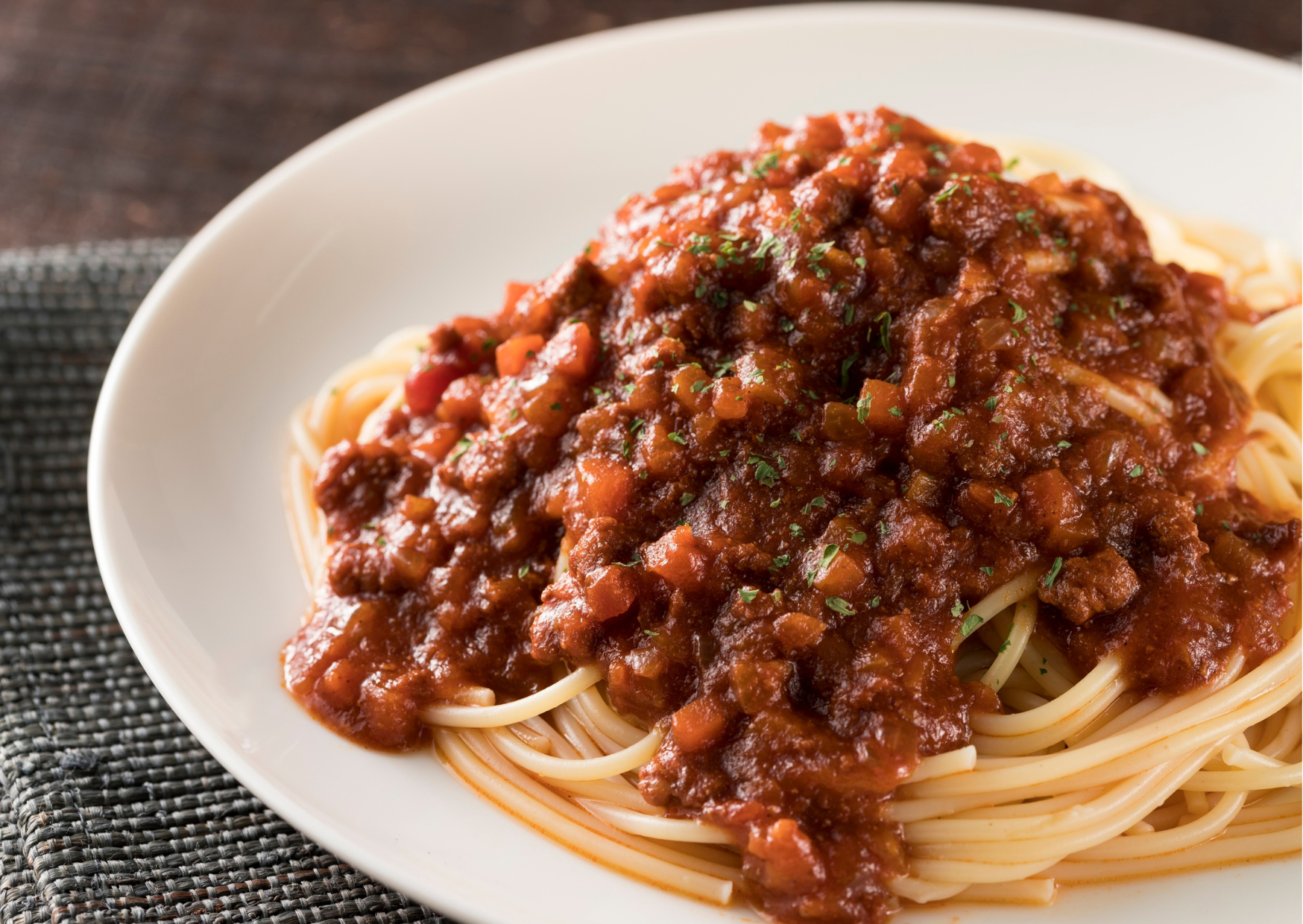
Ingredients (serves 6)
- 400g coarsely ground beef (chuck or brisket)
- 150g pancetta, finely diced
- 60g onion, finely diced
- 60g carrot, finely diced
- 60g celery, finely diced
- 200g tomato passata
- 1 tablespoon double-concentrated tomato paste
- 100ml whole milk
- 100ml dry white wine
- Light meat or vegetable broth as needed
- 3 tablespoons extra virgin olive oil
- Salt and black pepper to taste
- Pinch of nutmeg (optional, per 2023 recipe)
Instructions
Step one: Render the pancetta.
Place the diced pancetta in a cold, heavy-bottomed pot. Turn the heat to medium. Cook, stirring occasionally, until the fat renders and the meat begins to crisp. This takes about 8 minutes.
Step two: Build the soffritto.
Add the olive oil to the pot. Add the onion, carrot, and celery. Cook slowly over medium-low heat for 15 to 20 minutes, stirring occasionally, until the vegetables are completely soft and beginning to caramelize. This is where the flavor foundation is built. Do not rush. Do not add garlic.
Step three: Brown the beef.
Increase heat to medium-high. Add the ground beef. Season with salt and pepper. Cook, breaking up the meat with a wooden spoon, until browned and beginning to stick to the pot. Do not rush this step.
Step four: Add the milk.
Pour in the milk. Stir to combine. Reduce heat to low and simmer until the milk has almost completely evaporated. This takes 15 to 20 minutes. The pot should be nearly dry before proceeding.
Step five: Add the wine.
Pour in the wine. Increase heat briefly to bring to a simmer, then reduce again. Cook until the wine has almost completely evaporated, another 10 to 15 minutes.
Step six: Add the tomatoes.
Stir in the passata and tomato paste. Add a pinch of nutmeg if using. Bring to the barest simmer—the surface should barely bubble.
Step seven: The long cook.
Simmer for a minimum of 2 hours, preferably 3 to 4. Add small splashes of broth if the sauce becomes too thick or begins sticking. Stir occasionally but not constantly—you want the bottom to develop some fond without burning. The sauce is ready when the meat is completely tender and the flavors have melded into a unified whole. It should look amber-brown, not red.
Step eight: Serve properly.
Toss with fresh tagliatelle or pappardelle. Add a ladleful of pasta cooking water to help the sauce cling. Finish with grated Parmigiano-Reggiano. Do not add garlic bread on the side. Do not sprinkle with dried oregano. The sauce is complete as it is.
What my neighbor actually made
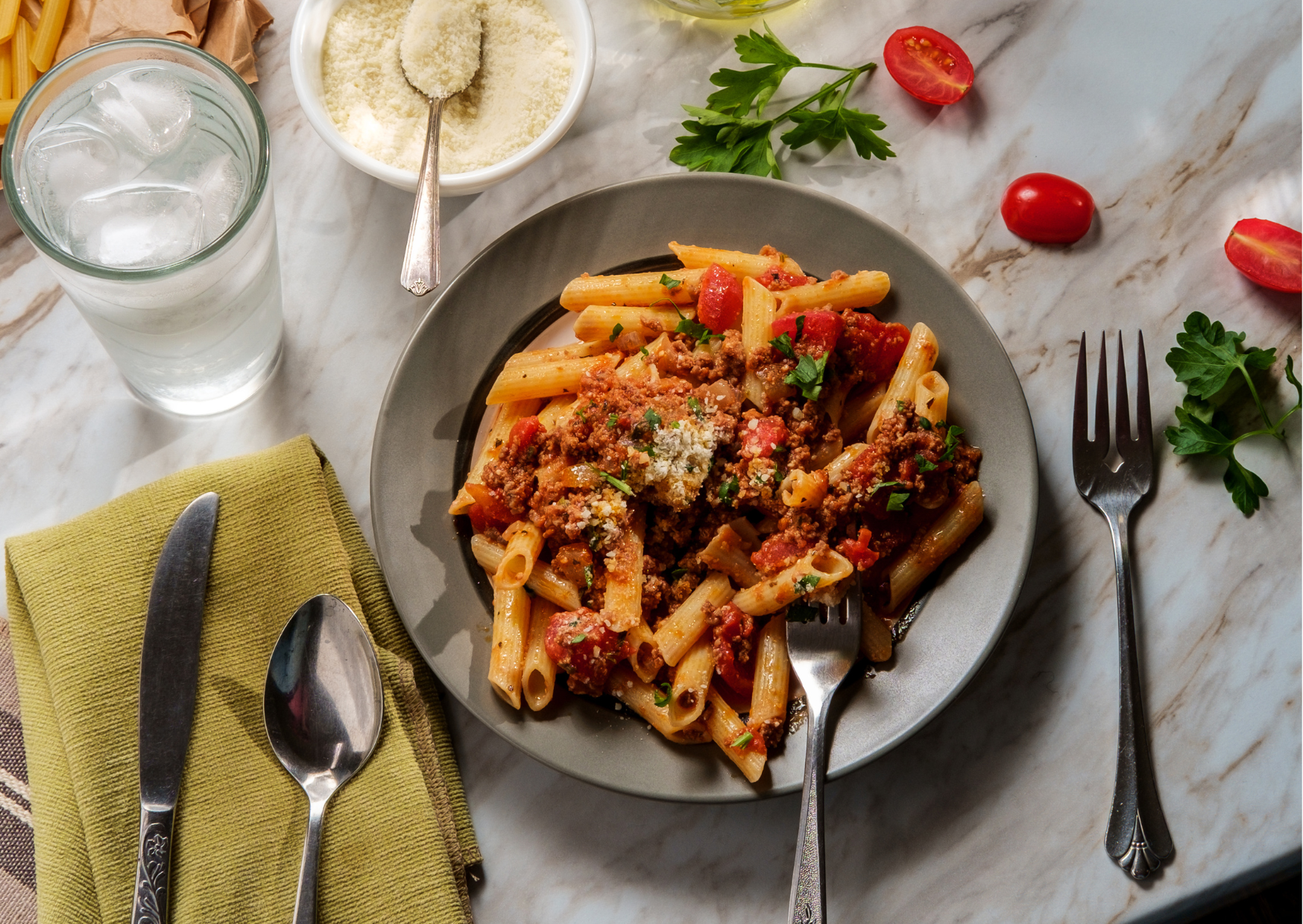
After my garlic incident, she invited me to watch her cook.
The process took all afternoon. She chopped the vegetables by hand with a mezzaluna, the half-moon knife that ensures the perfect texture. She let the soffritto cook so slowly I thought the heat was off. She added the milk and wine in stages, waiting patiently for each to nearly disappear.
There was no garlic. There were no dried herbs. There was no hurry.
The sauce simmered while we talked about her children and my son’s school and the price of bread at the bakery down the street. She stirred it occasionally without looking, the way you might adjust a pillow on a couch.
When she finally ladled it over fresh tagliatelle her daughter had rolled that morning, the color surprised me. Amber-brown, not tomato red. The meat glistened with rendered fat. The sauce clung to every ribbon of pasta without pooling at the bottom of the bowl.
One bite and I understood why the garlic had to go. There was nothing missing. Every flavor was in its place. The meat tasted more like itself than any Bolognese I had ever made.
That is what 400 years of regional refinement produces. Not more ingredients, but fewer. Not stronger flavors, but balanced ones. Not shortcuts, but time. Not garlic shouting over everything, but beef allowed to be beef.
The American version is fine. It fills the belly and tastes familiar. But it is not what they make in Bologna, and once you have tasted the original, you understand why they bothered to register it with the Chamber of Commerce.
Some recipes are worth protecting. This is one of them.
Quick reference
Traditional ragù alla bolognese contains:
- Ground beef (and often pork)
- Pancetta
- Onion, carrot, celery (soffritto)
- Milk
- White wine
- Minimal tomato
- Salt, pepper, optional nutmeg
Traditional ragù alla bolognese does NOT contain:
- Garlic
- Oregano
- Basil
- Bay leaves
- Red pepper flakes
- Excessive tomato
Serve with: Tagliatelle, pappardelle, rigatoni, or in lasagna
Never serve with: Spaghetti
Minimum cooking time: 2 hours (3-4 hours preferred for best results)

About the Author: Ruben, co-founder of Gamintraveler.com since 2014, is a seasoned traveler from Spain who has explored over 100 countries since 2009. Known for his extensive travel adventures across South America, Europe, the US, Australia, New Zealand, Asia, and Africa, Ruben combines his passion for adventurous yet sustainable living with his love for cycling, highlighted by his remarkable 5-month bicycle journey from Spain to Norway. He currently resides in Spain, where he continues sharing his travel experiences with his partner, Rachel, and their son, Han.