
You crack the caramel, take two slow bites, and feel awake, not woozy. The difference is not magic. It is portion, structure, and where the sugar sits.
Walk into a bistro and order crème brûlée. What lands is shallow and elegant, a custard the size of your palm with a thin pane of burnt sugar on top. Order cheesecake in an American diner and you get a wedge as tall as a deck of cards, cream cheese sweetened to a shine, a cookie crust underneath, and often a berry sauce on top. Both desserts are rich. Both are delicious. Only one is designed to hit your bloodstream quietly.
This is not a morality play about pastry. It is a practical look at why the crème brûlée format usually leads to a gentler glucose and insulin response than a standard American cheesecake slice. The win is not because brûlée sugar turns healthy. It is because the total sugar load is smaller, the starch is missing, and the fat-and-protein custard matrix slows the ride. Cheesecake, by contrast, concentrates sugar in both the filling and crust, comes in larger default servings, and often brings extra syrups to the table.
Below is the clear map. First, what each dessert actually is and how it lands on the plate. Then, where the sugar hides and how much you truly swallow with a normal portion. After that, what a custard’s fat and protein do to the glucose curve, and why dairy can be insulinotropic in a way recipes rarely explain. You will get an everyday home method for a balanced crème brûlée and a simple ordering playbook for restaurants, plus a fix list so you avoid soggy sugar lids, rubbery custard, and portions that undo the logic.
What You Are Really Eating When You Order Each One
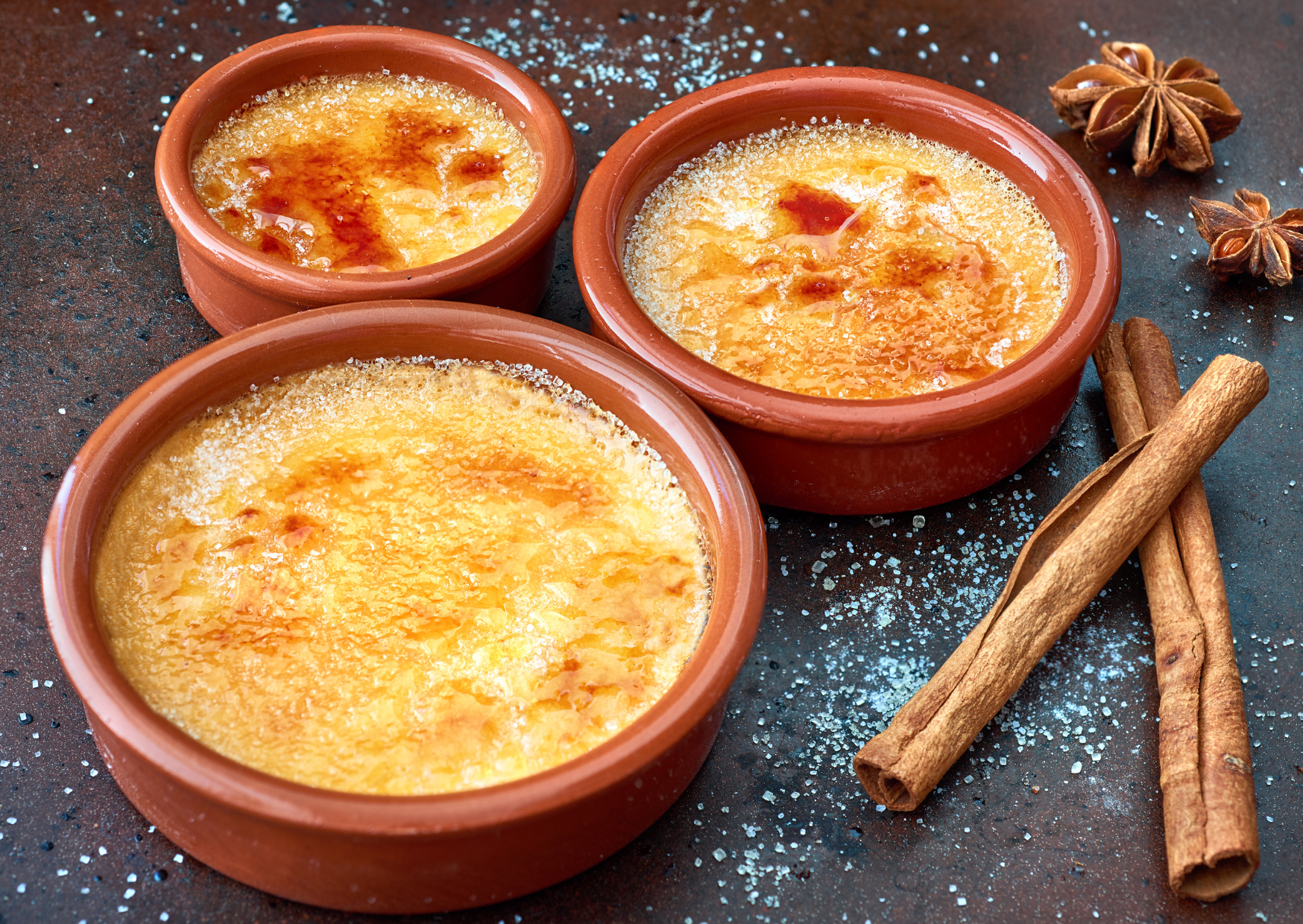
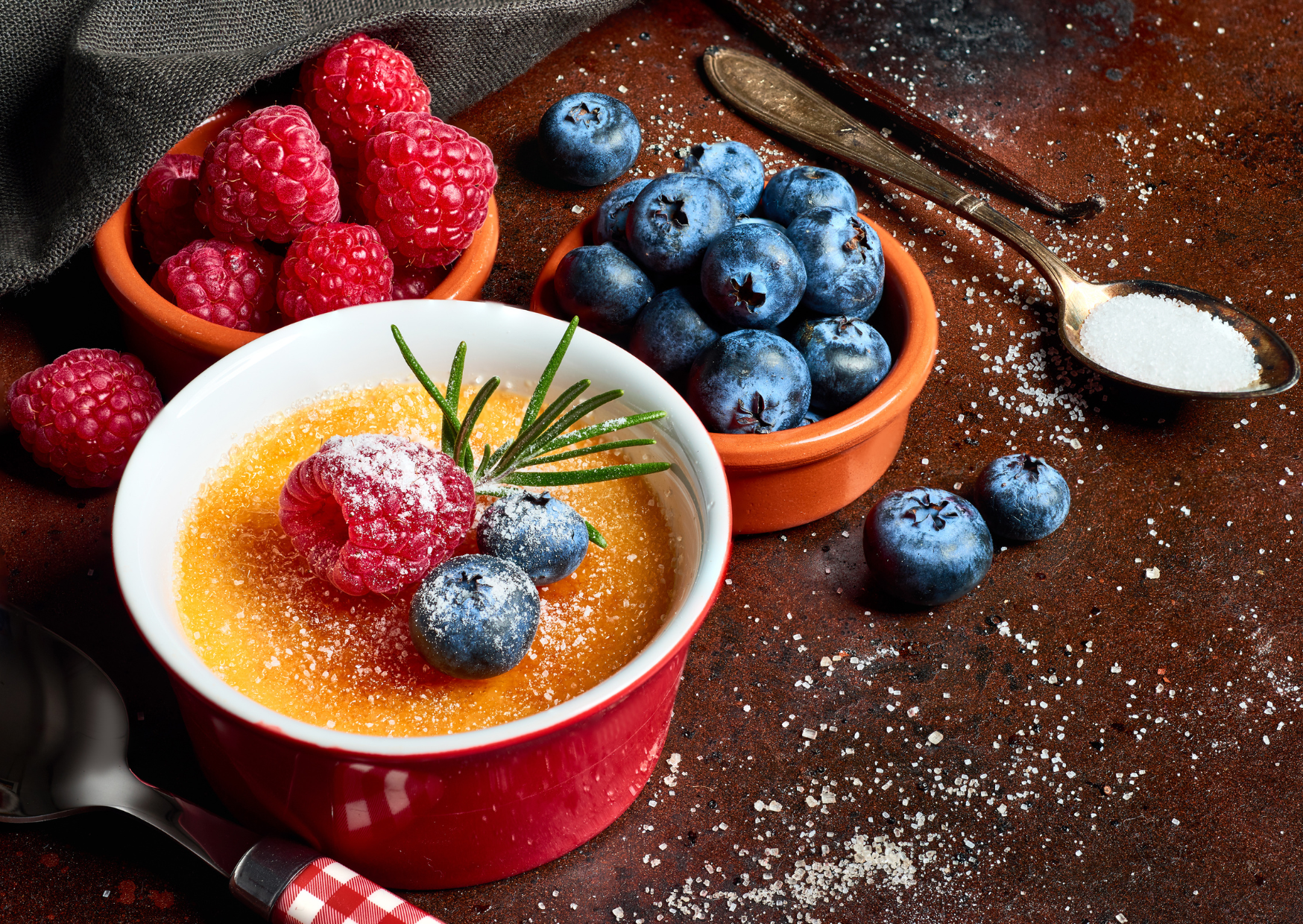
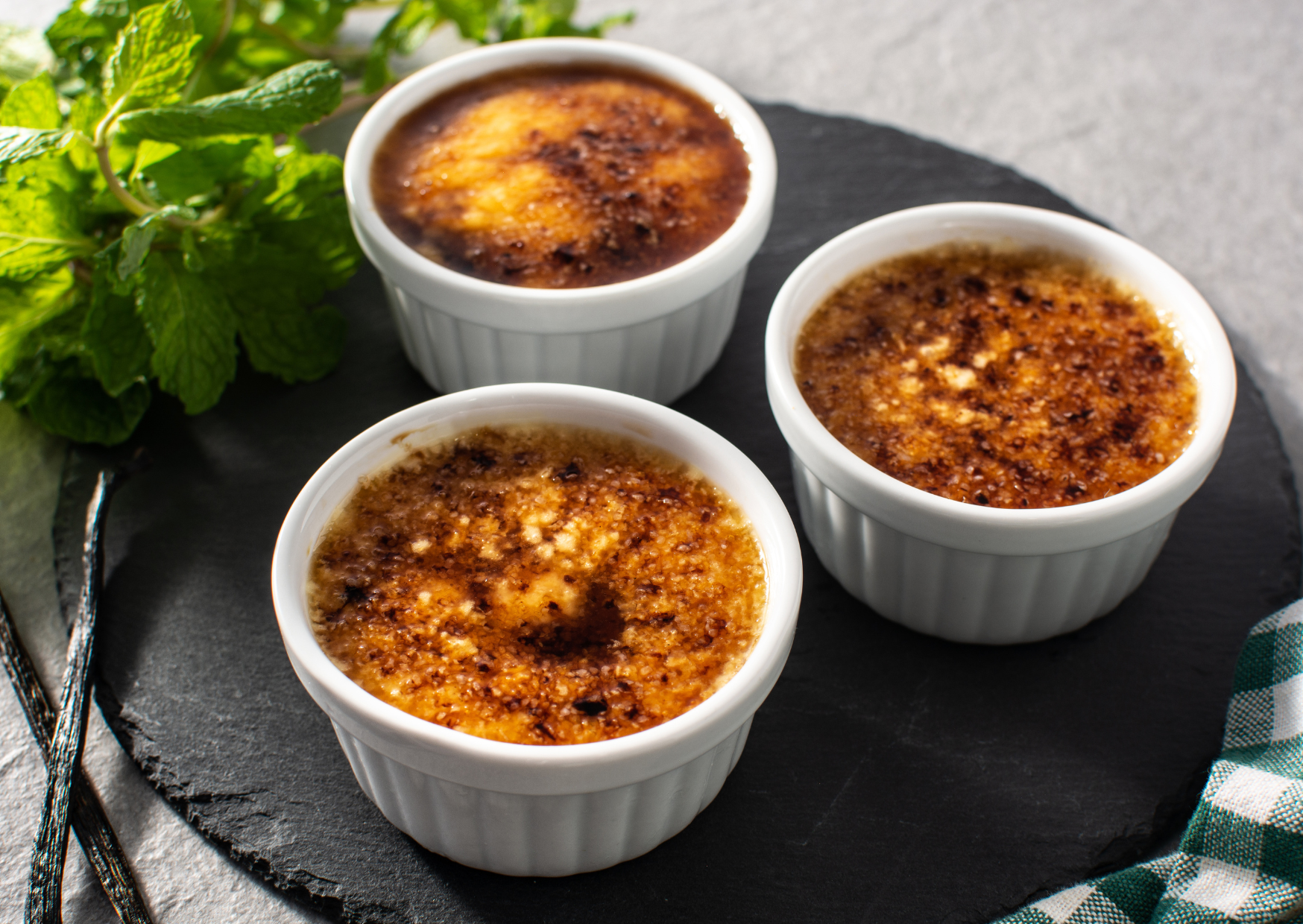
Crème brûlée is a baked custard of cream, egg yolks, sugar, and vanilla. It sets in shallow ramekins, typically 100 to 150 milliliters. Right before service, the surface is dusted with a teaspoon or so of sugar and torched or broiled to glass. The custard underneath is mostly fat from cream and protein from yolks, with comparatively little dissolved sugar. The top is a thin, brittle sheet of caramelized sucrose that you crack and eat slowly with a spoon. There is no flour in the base recipe, no starch in the classic version, and the serving is small by design.
American cheesecake is a baked emulsion of cream cheese, sugar, eggs, and often sour cream, poured over a cookie crumb crust that is itself butter and sugar bound with refined flour. Slices in restaurants commonly weigh 120 to 150 grams. Sugar is not a garnish, it is integral to both the filling and the crust. Sauces and sweet toppings are common. You are not meant to eat cheesecake with the same restraint as a crème brûlée. The format invites a bigger, faster intake of carbohydrate.
Those format choices matter because your body responds to amount and context. A modest, low-starch custard covered in a few grams of caramelized sugar does not behave like a large, sugar-and-starch cake with added sauces. That is the whole story in one sentence.
Where The Sugar Actually Sits, And How Much You Eat
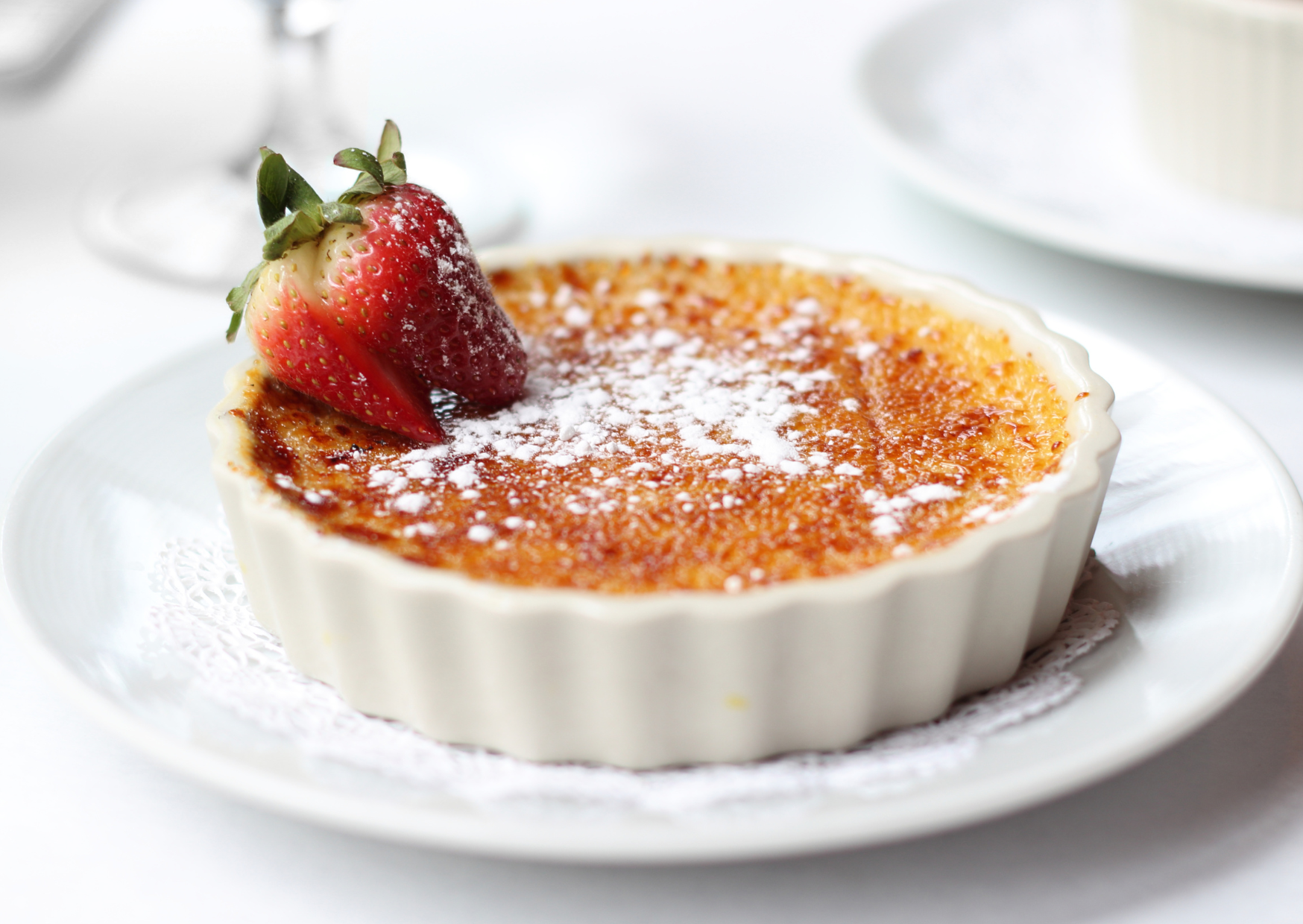
With brûlée, most of the sweetness lives in two places: a small amount dissolved in the custard and a very thin, crunchy lid. Standard professional ratios put 80 to 100 grams of sugar into a batch that fills six ramekins, plus about a teaspoon of sugar per ramekin for the crust. That lands you in the neighborhood of 16 to 20 grams of sugar per serving, give or take a few grams depending on how generous you are with the sprinkle. You taste a laser-focused hit of caramel on the surface and a barely sweet custard under it, which is why the dessert reads as rich rather than syrupy.
With cheesecake, sugar shows up through the whole build. A typical commercially prepared cheesecake clocks about 6 grams of sugar per 28 grams of cake. A standard slice at 125 grams lands around 27 to 30 grams of sugar, sometimes more with toppings. The crust brings refined starch that converts to glucose quickly. The filling adds more sugar. The serving size multiplies all of it. None of this is a surprise if you grew up with American bakery economics. Big wedges sell. Your body simply keeps score.
Portion size seals the difference. A brûlée ramekin often holds a third to a half of the net carbohydrate of a diner wedge of cheesecake, and it delivers that sugar over a longer bite-by-bite timeline because you are cracking and spooning, not forking through a dense slab on a crust. That alone will not write your glucose story for you, but it shapes the plot.
Why The Custard Matrix Changes The Ride
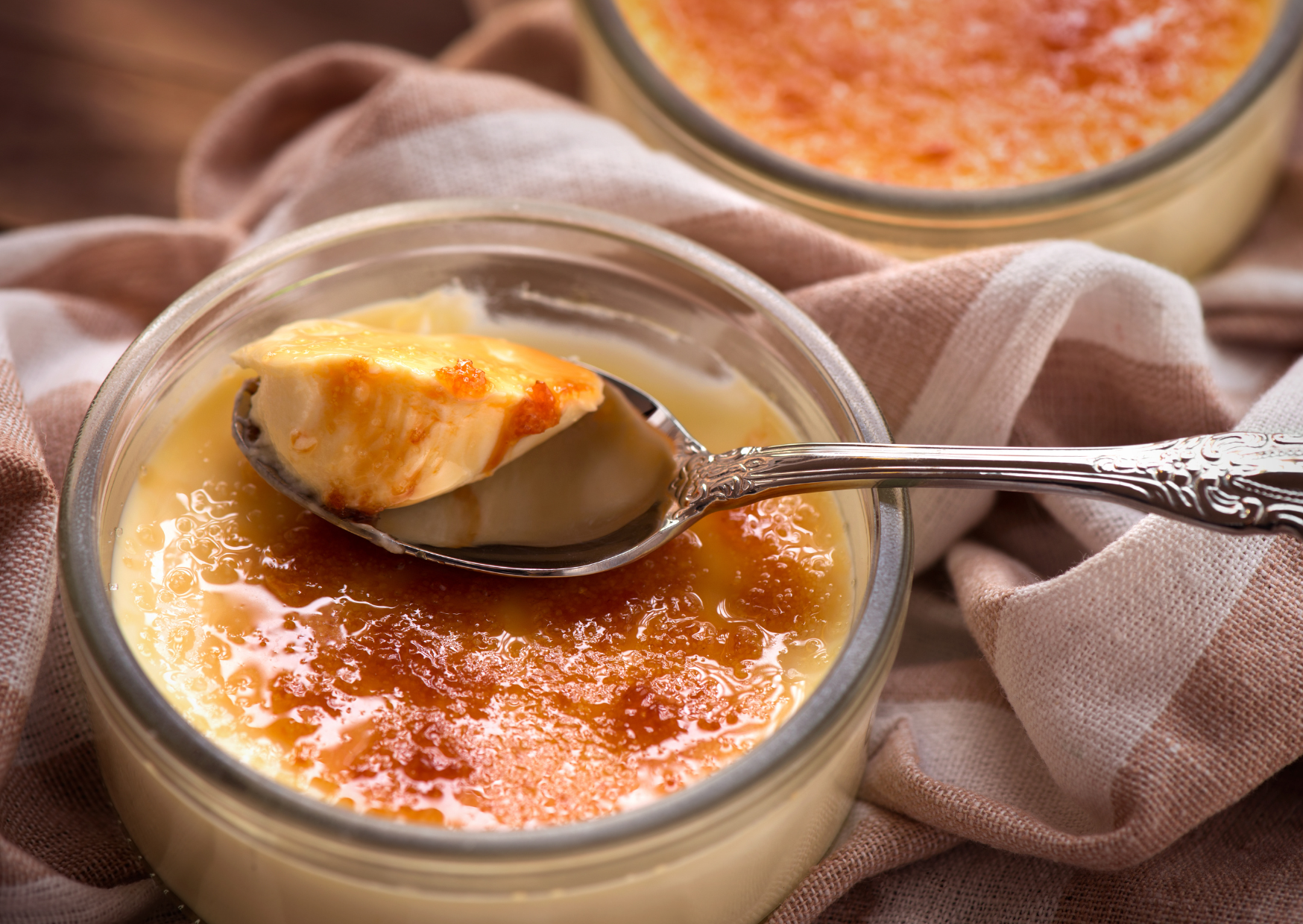
Two things steady a mixed-meal glucose curve. First, fat and protein slow gastric emptying and slow carbohydrate absorption. Second, total available carbohydrate is lower when the starch is missing. Crème brûlée benefits from both. Heavy cream brings fat with very little milk sugar. Egg yolks bring protein and emulsifiers. There is no flour. The glycemic load of the portion is modest, and the matrix holds the sugar in a rich gel rather than a sweet, aerated batter. Mixed-meal studies consistently show that when fat and protein are present, the post-meal glucose rise is slower and the peak is lower than with the same carbohydrate eaten alone.
There is a wrinkle you should know, and it favors honesty over hype. Dairy proteins can be insulinotropic, meaning they stimulate insulin release more than you would expect from their low glycemic index. Whey and certain amino acids, along with incretin hormones, are implicated. Yogurt and milk show this clearly in labs, with low glycemic index but relatively high insulinemic index. Cheesecake contains plenty of dairy protein. Crème brûlée contains less whey and casein, because cream is mostly fat and egg yolks supply the structure. That difference in protein payload and in total sugar plus starch helps explain why a small ramekin of custard with a thin sugar lid tends to be easier on your post-meal numbers than a large wedge of dairy-rich cake on a crust. The principle to remember is simple. Matrix and dose matter as much as the name of the dessert.
Caramelizing the top does not turn sucrose into health food. Heating table sugar splits it into glucose and fructose and creates hundreds of aromatic compounds that make the glass taste deeper and toastier. What helps you is how thin that layer is and how slowly you eat it, not a change in its chemistry that would reduce impact. Keep the lid thin and you keep the math in line.
What Cheesecake Adds That Changes The Curve
Cheesecake is not secretly low carb. It is high fat and high sugar, and the crust brings refined starch. The sugar is woven through the batter to soften the tang of cream cheese, and commercial and grocery-store slices regularly push 30 grams of added sugar per piece even before toppings. The crust’s cookie crumbs act like any sweet biscuit in digestion, and sauces push more sugar on top. The serving size is the biggest lever. A 125 gram wedge is two or three ramekins’ worth of dessert by volume. Your body sees that scale and responds accordingly.
Dairy’s insulinotropic effect also shows up more with cheesecake because there is more dairy protein present than in cream-heavy brûlée. That can mean a larger insulin response than you would predict from the glycemic index alone. For many people, that insulin surge is not dangerous in isolation. For others who are tracking post-meal glucose and insulin closely, it explains why a small, low-starch custard can feel calmer than a large, sweet, dairy-dense cake.
None of this says cheesecake must leave you sluggish. It says the default build makes spikes more likely. You can shrink the wedge, split it, skip the sauce, and pair it with strawberries for acid and fiber. The point is to see the structure on your plate and steer it.
A Brûlée That Eats Like Dessert And Lands Like A Mixed Meal
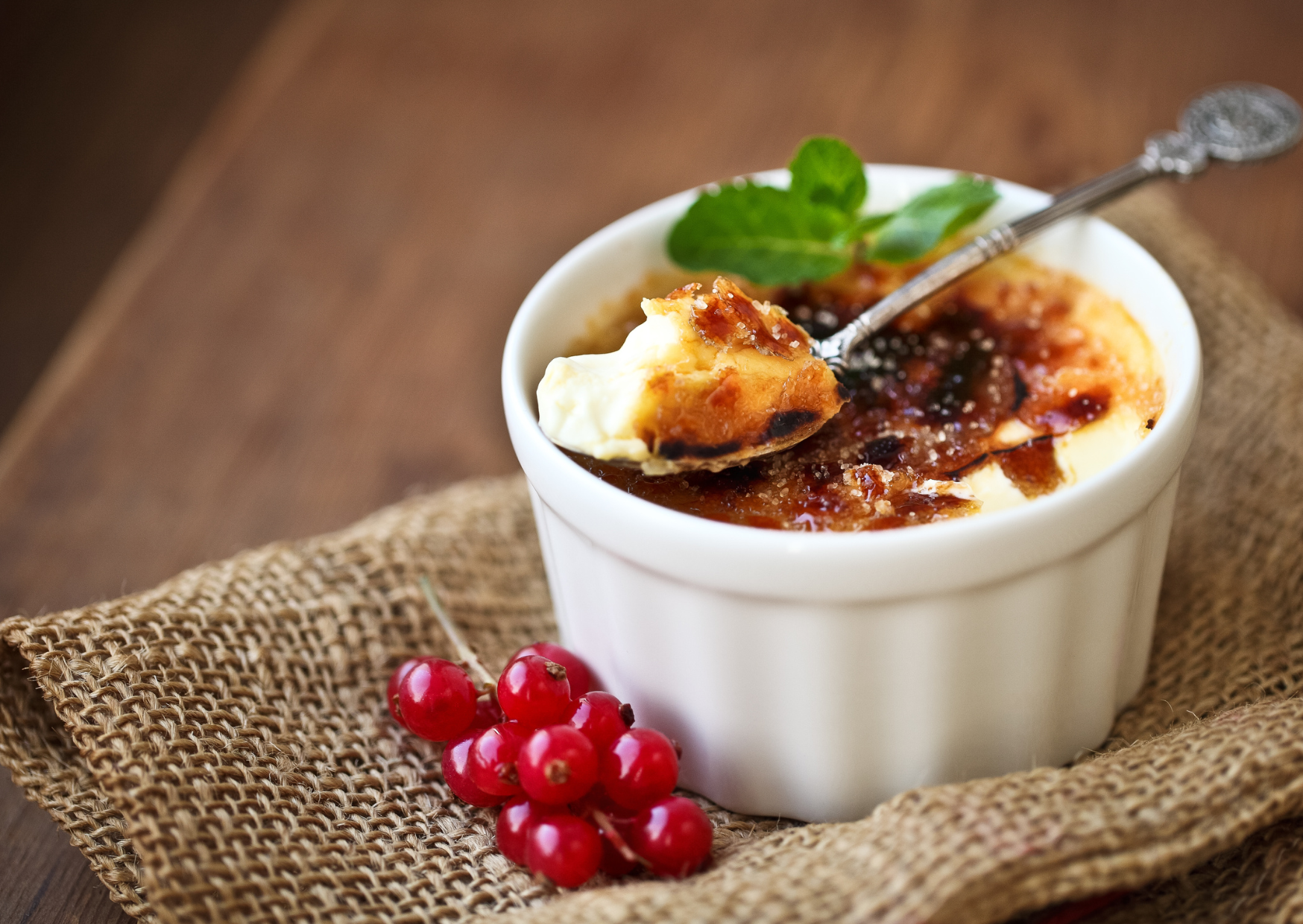
Here is a crème brûlée tuned for the balance you want. It tastes classic. It keeps the sugar modest. It behaves well the next day.
Yield: 6 small ramekins
Time: 25 minutes active, plus chilling
Ingredients
- 500 ml heavy cream
- 100 g granulated sugar, divided 80 g for custard, 20 g for tops
- 5 large egg yolks
- 1 vanilla bean or 2 teaspoons vanilla extract
- Small pinch fine salt
Method
- Heat and infuse. Warm the cream with the split vanilla bean until just steaming. Take off the heat and rest ten minutes. If using extract, add it later with the yolks.
- Whisk the base. Whisk yolks with 80 g sugar and a small pinch of salt until glossy. Stir in vanilla extract if not using a bean.
- Temper. Stream the warm cream into the yolks while whisking. Strain into a jug.
- Bake gently. Pour into six 120 to 150 ml ramekins. Set the ramekins in a pan. Add hot tap water to come halfway up the sides. Bake at 150 degrees until just set at the edges and still trembling in the middle, about 30 minutes.
- Chill. Cool to room temperature, cover, and refrigerate at least 4 hours.
- Brûlée thin. Right before serving, sprinkle each surface with about 1 teaspoon sugar, tilt to coat, and torch to a thin glass. If broiling, freeze the custards fifteen minutes first, sprinkle, then broil cold and close. Let the tops harden one minute before serving.
Why this version works
The custard carries about 13 grams of sugar from the base plus about 4 grams from the lid per serving, right in the middle of the classic French range. The portion is small and shallow, which means the fat-and-protein matrix is doing a lot of work for a small sugar load. The top is crunchy, fragrant, and thin, so the pleasure is high and the math stays reasonable.
Variations that stay balanced
- Swap a quarter of the cream for whole milk to lighten the fat without adding starch.
- Serve with tart berries without syrup. Acid and fiber help more than extra sweetness.
- Flavor the custard with espresso or citrus zest instead of adding sugary sauces.
How To Order Dessert And Keep The Curve Calm
You do not need a spreadsheet. You need defaults.
Choose format first. If the table wants dessert, look for low-starch formats served in small containers. Crème brûlée, pots de crème, panna cotta, flan. These usually keep carbohydrate lower per spoon than cake on crust.
Ask for no sauce. Fruit coulis and caramel add fast sugar without adding satisfaction once the custard is good. If you want fruit, ask for fresh on the side.
Share big formats. Cheesecake slices, layer cakes, brownies on ice cream. Split them. Two forks turn a spike into a blip.
Mind the drink. A sweet cocktail plus dessert stacks sugar. Coffee or tea keeps it simple. If you want wine, small and dry is easier than sticky and sweet.
Read the plate. Starch, sugar, and size. If the dessert ticks all three boxes, either share it or pivot to a ramekin.
What Can Go Wrong, And How To Fix It
Your brûlée turns watery underneath.
You baked too hot or too long, or you broiled warm custards so the top melted the set. Bake at a gentle 150 degrees in a water bath and stop while the centers still wobble. For broiling, chill hard or briefly freeze, brûlée fast, and serve.
The sugar lid is thick and sticky.
You used too much sugar or did not take it to a full, even caramel. Aim for a flat teaspoon per ramekin, tilt to coat evenly, and torch until the surface is amber and glassy. Thick sugar means bigger, faster sugar.
Your custard tastes too sweet.
Reduce custard sugar to 70 g for the batch and keep the same one teaspoon on top. Do not replace with syrups. The thin crack of caramel is what you taste first, so keep the base restrained.
You burned the top bitter.
Caramel wants attention. Move the flame constantly and stop at deep amber. If you go past that, you are eating carbon. A broiler can work, but chill the custards hard, place them close to the element, and watch without walking away.
You still want cheesecake sometimes.
Split the slice, skip the sauce, and order coffee, not a milkshake of a drink. You will enjoy it just as much with half the sugar and less dairy protein to provoke a strong insulin response.
The Fine Print Nobody Tells You In A Recipe
Two clarifications help you make better choices without drama.
Glycemic index is not the only dial. Low GI does not guarantee a small insulin response, especially with dairy. Milk products can have low GI but high insulin index because of their protein profile and incretin signaling. That is not a problem in itself. It is a reminder that your body cares about protein and hormones as well as sugar grams. Cheesecake leans into dairy protein more than cream-heavy custards do. If you sense that your post-dessert energy feels flatter with custard than with a giant wedge of cheesecake, you are reading those differences correctly.
Glycemic load and portion beat labels. A brûlée is not “healthy” because it sounds French, just as cheesecake is not “bad” because it sounds American. The load per serving and the matrix call the tune. Choose smaller, lower-starch formats more often and you will feel it in the afternoon.
What This Means For You
If you want dessert that tastes like dessert and does not knock you off your day, change the format, not your personality. A classic crème brûlée concentrates pleasure in a small, slow, low-starch package with a thin sugar lid. An American cheesecake concentrates sugar and starch in a large, fast package. When you see that difference, the choice gets easy. Order the ramekin on a weeknight, share the wedge on a birthday, and enjoy both without pretending either one is a salad.
The trick is simple. Keep sugar thin. Keep portions modest. Let fat and protein do their smoothing job. Your spoon will be happy, and so will your afternoon.
Origin and History
Crème brûlée emerged from European custard traditions that emphasized eggs, dairy, and gentle heat rather than flour or heavy structure. Its roots are often associated with France, where the dessert became a study in restraint: a smooth custard base topped with a thin, caramelized sugar crust.
Cheesecake followed a different historical path. While ancient versions existed, the modern American cheesecake evolved with cream cheese, dense fillings, and a baked crust designed for height and richness. The goal shifted toward indulgence and visual abundance.
French pastry culture historically prioritized balance and portion control. Desserts were meant to end a meal, not overwhelm it. Crème brûlée fit that role perfectly, offering richness without bulk.
American dessert culture developed in a different context, where larger portions and layered textures became the norm. Cheesecake reflects that evolution, favoring density and sweetness as defining traits.
A common misconception is that sugar behaves the same in every dessert. In reality, how sugar is consumed matters as much as how much is consumed. Crème brûlée contains a relatively small amount of sugar, much of it bound within fat and protein.
Cheesecake, by contrast, combines sugar with refined carbohydrates from crusts and fillers. This pairing accelerates digestion and absorption, leading to a faster glucose response for many people.
Another point of confusion is caramelization. The sugar crust on crème brûlée looks intense, but it is thin and consumed slowly, often cracked and shared across bites. Cheesecake distributes sugar throughout the entire portion.
The controversy lies in labeling desserts as simply “healthy” or “unhealthy.” Traditional French desserts rely on structure and portioning, while American versions often emphasize volume, altering how the body processes them.
How Long You Take to Prepare
Crème brûlée preparation is deceptively simple. The custard base comes together quickly with eggs, cream, and minimal sugar. Most of the time is spent baking gently and cooling properly.
The slow bake allows proteins and fats to set softly without incorporating air or starch. This creates a smooth texture that digests more slowly than flour-based desserts.
Cheesecake requires longer active preparation. Mixing, baking, cooling, and chilling are all critical to prevent cracking and density issues. The process introduces more variables and more ingredients.
Both desserts require patience, but crème brûlée’s simplicity minimizes manipulation. Fewer steps often mean fewer spikes in sweetness concentration.
Serving Suggestions
Crème brûlée is traditionally served in small ramekins, reinforcing portion awareness. The dessert is meant to be savored slowly, with the sugar crust broken gradually.
It is typically served on its own, without crusts, sauces, or toppings. This keeps the focus on texture rather than sweetness overload.
Cheesecake is often served in large slices, sometimes with additional sweet toppings. These additions increase sugar density and speed of consumption.
Serving size and pacing matter. Crème brûlée naturally encourages moderation through design, while cheesecake invites overconsumption through scale.
Final Thoughts
The difference between crème brûlée and cheesecake is not about sugar avoidance, but sugar context. Fat, protein, and portion size influence how the body responds far more than labels alone.
French desserts evolved to complement meals, not dominate them. Their structure slows eating and digestion, which changes how sweetness is experienced.
American cheesecake reflects abundance and celebration, but that density comes with metabolic consequences when consumed quickly or in large portions.
Understanding these differences reframes dessert choices. It is not about eliminating indulgence, but about recognizing how tradition, structure, and restraint shape the body’s response to sweetness.

About the Author: Ruben, co-founder of Gamintraveler.com since 2014, is a seasoned traveler from Spain who has explored over 100 countries since 2009. Known for his extensive travel adventures across South America, Europe, the US, Australia, New Zealand, Asia, and Africa, Ruben combines his passion for adventurous yet sustainable living with his love for cycling, highlighted by his remarkable 5-month bicycle journey from Spain to Norway. He currently resides in Spain, where he continues sharing his travel experiences with his partner, Rachel, and their son, Han.