
You lift a spoon to the bone, the marrow slides like butter, and the meat gives at a nudge because time did the cooking, not tricks.
Osso buco is not a weeknight sprint. The Milanese original is a slow braise of cross cut veal shanks, finished with a bright gremolata, and served with a saffron risotto that tastes like the city’s sunshine. It asks for three hours, sometimes a little more, because that is how collagen turns silky, marrow turns lush, and the sauce turns from thin to glossy. The result is elegant and calm on the plate, which is hilarious when you remember what it looked like at the start, four knobby pieces of shank tied with kitchen string, waiting for their long bath.
If you have only met fast versions, this one will feel new. The method is simple, not fussy. You season, dust lightly with flour, brown with care, build a small soffritto, add wine, then braise slowly in broth until the shanks relax. Right before serving, you stir in lemon zest, parsley, and a whisper of garlic. That fresh top note keeps the richness honest and links the meat to the risotto sitting beside it. There are no shortcuts worth taking here. What you can do is make the timeline work for you, so a Saturday afternoon turns into dinner without drama.
This is the clear, Milan leaning path. You will see why Italians pair it with saffron risotto, what to buy if veal is not your thing, how to keep the shanks from curling, and how to fix the four problems that trip home cooks new to braising. Recipe first, then the architecture that makes it sing.
What Makes Osso Buco alla Milanese Different
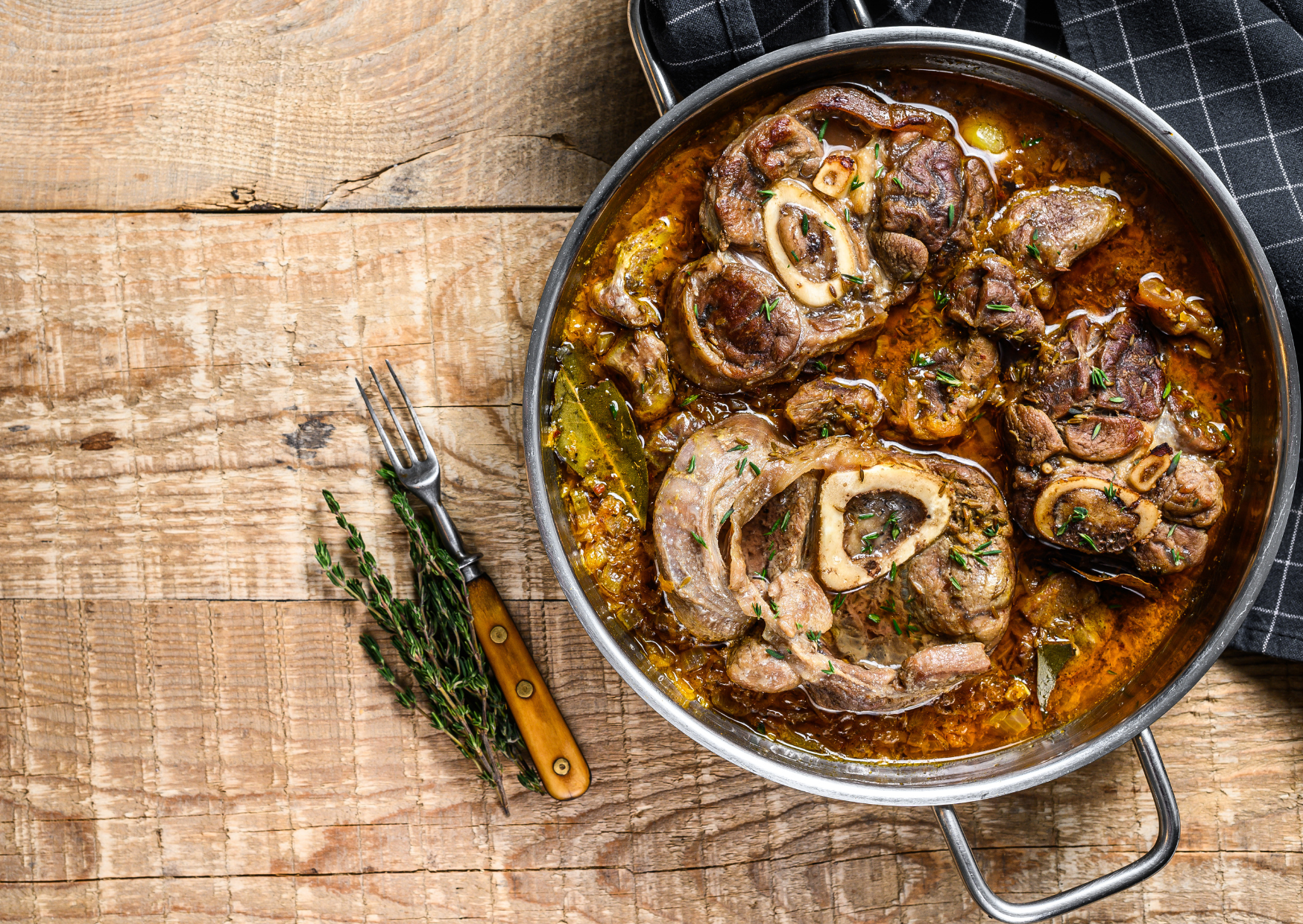
Milan’s osso buco is built around four ideas that travel well to any kitchen.
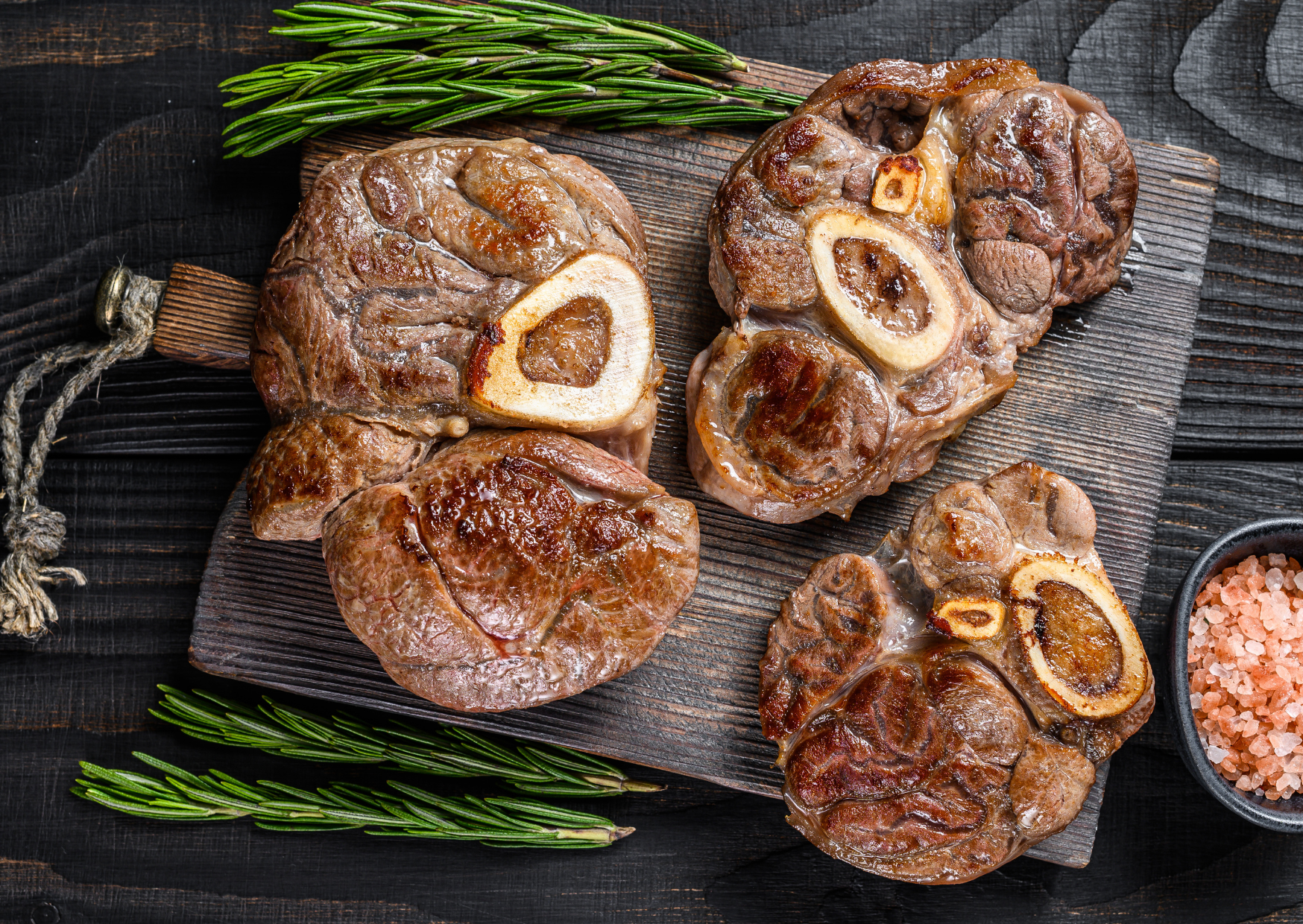
First, the cut is non negotiable if you want the right result. You need cross cut shanks, bone in, about 4 to 5 centimeters thick. The hole in the center is marrow. That is not garnish. It is part of the dish and part of the sauce. Traditional guides in Lombardy describe choosing pieces from the lower part of the veal shank, where the bone is smaller and packed with pure marrow.
Second, the braise is gentle. Seared meat plus low heat plus time. You know you have it right when the shank meat holds its shape yet relaxes off the bone with a spoon. Many old school Milanese cooks use a mix of butter and oil to brown, then keep the liquid exchange quiet under a lid for two and a half to three hours.
Third, the finish is gremolata. Parsley, lemon zest, and a little garlic, chopped fine. You fold it in at the end, not at the beginning, so the aroma stays alive. It lifts the braise the way a squeeze of lemon lifts fried fish.
Fourth, the classic partner is risotto alla milanese, a saffron risotto often enriched with beef marrow. The two plates together are one story. The rice carries the sauce, the saffron links to the lemon, and the marrow in both dishes ties the meal together.
None of that is complicated. It only looks fancy from the dining room. In the kitchen it reads like a plan.
The Three Hour Osso Buco, Step by Step
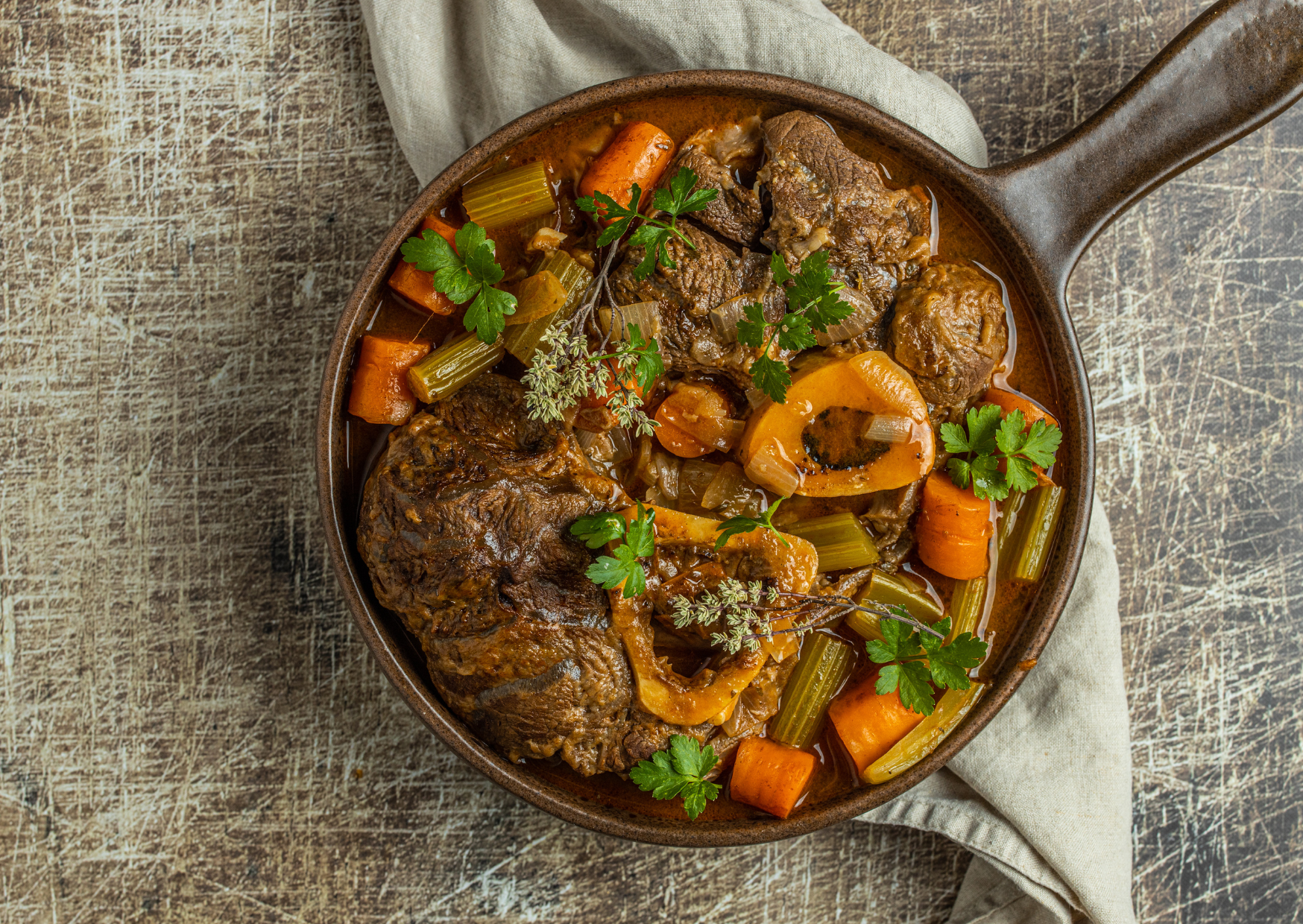
Serves 4, with risotto alongside. You need a wide heavy pot with a tight lid, large enough to hold the shanks in one layer.
Shopping list, EU and US friendly
- 4 veal shanks, cross cut, 4 to 5 cm thick, about 300 g each
If you do not eat veal, buy beef shanks of the same cut and thickness. They take longer to tenderize and taste more rustic. - Fine salt and black pepper
- 40 g all purpose flour for dusting
- 2 tbsp extra virgin olive oil
- 40 g unsalted butter
- 1 small onion, finely chopped
- 1 small carrot, finely chopped
- 1 small celery stalk, finely chopped
- 180 ml dry white wine
- 600 to 750 ml hot light stock, veal or beef preferred, chicken acceptable
- 1 small bay leaf and a sprig of thyme or a few sage leaves, optional
- 1 small tomato peeled and chopped, or 1 tsp tomato paste, optional and used lightly
Gremolata
- A handful of flat leaf parsley, minced
- Zest of 1 untreated lemon, finely grated
- 1 small garlic clove, very finely minced
For serving
- Risotto alla milanese, recipe below
- A small marrow spoon if you have one, optional
Method that never rushes
- Tie and season. Tie each shank with kitchen string around the perimeter so the meat keeps its round shape as it cooks. Pat dry. Season both sides with salt and pepper. Lightly dust with flour on both sides. Tap off excess. The flour is there to help the sauce emulsify, not to make a crust.
- Brown with patience. Heat the oil and butter over medium heat in your pot. When the foam subsides, brown the shanks in one layer until golden on both sides. This can take 12 to 15 minutes total. Do not puncture the meat with a fork. Use a spatula and tongs. Move the shanks to a warm plate.
- Soffritto. Reduce the heat a notch. Add onion, carrot, and celery to the same pot with a pinch of salt. Cook until sweet and softened, about 6 to 8 minutes. If the pot looks dry, add a spoon of oil or a splash of stock.
- Deglaze with wine. Raise heat to medium high, pour in the wine, and scrape up the browned bits. Let it bubble until nearly evaporated. If you use a tiny amount of tomato, stir it in now for color and gentle acidity. Traditional Milanese versions use little to none.
- Braise. Return shanks to the pot, nestle them in the soffritto, and add enough hot stock to come halfway up the sides. Add the bay and thyme if using. Bring to a bare simmer. Cover tightly and lower the heat to maintain a slow, steady simmer. Cook 2 hours 30 minutes to 3 hours, turning the shanks once or twice. Add a splash of hot stock if the pot looks dry. Do not let it boil hard or you will toughen the meat and break the sauce.
- Check for tenderness and taste. When the meat is ready, a spoon slides in easily and the shanks look relaxed but intact. Reduce the sauce uncovered for a few minutes if it needs body, or add a small knob of cold butter off the heat to bring it together. Taste for salt.
- Finish with gremolata. Mix parsley, lemon zest, and garlic. Sprinkle half over the shanks in the pot, stir gently into the sauce, and cook one minute. Save the rest to scatter at the table.
- Serve. Spoon risotto onto warm plates, set a shank on top or beside it, nap with sauce, and finish with the remaining gremolata. Offer the marrow to the table. It belongs on a forkful of rice and sauce.
Why this timing works
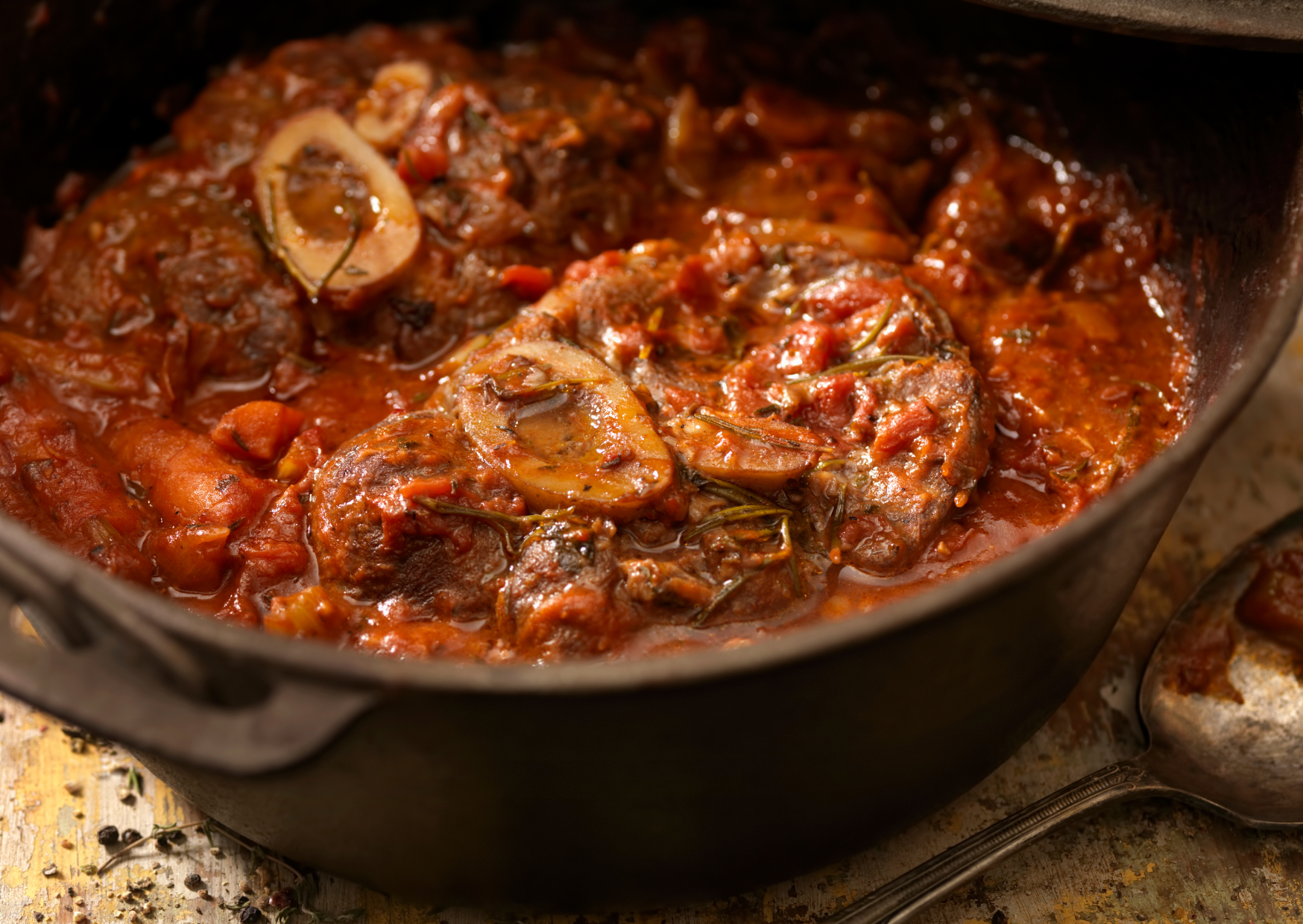
The first hour builds flavor and structure. The second hour melts collagen. The last stretch is where the sauce tightens and the meat crosses the line from stubborn to cooperative. Turning the shanks gently prevents the top from drying and keeps the sauce even. The gremolata belongs at the end so the oils in the zest bloom over heat for only a moment, not an hour.
The Saffron Risotto Partner
You do not need a second recipe to make one dish taste complete, but here you do. Risotto alla milanese is short grained rice, toasted, cooked with stock, perfumed with saffron, finished with butter and cheese, often enriched with bone marrow at the start. It is a classic for a reason. The saffron carries citrus and hay notes that resonate with the lemon zest in the gremolata. The starch gives the sauce a place to land that is better than any mashed potato.
Risotto alla milanese, for 4
- 320 g carnaroli or vialone nano rice
- 40 g beef marrow, finely chopped, optional but traditional
- 30 g unsalted butter, plus 20 g cold butter for finishing
- 1 small onion or shallot, minced
- 120 ml dry white wine
- 1.2 liters light beef or veal stock, kept at a bare simmer
- A large pinch of saffron threads
- 50 g finely grated grana padano or parmigiano
- Warm a ladle of stock and steep the saffron in it.
- In a wide pan, melt the marrow and 30 g butter over medium heat. Add the onion and cook until translucent.
- Add the rice, stir to coat, and toast until hot and slightly pearly, about 2 minutes.
- Deglaze with wine and let it evaporate.
- Add stock a ladle at a time, stirring often, keeping the rice at a gentle simmer. After about 10 minutes, pour in the saffron stock. Continue adding plain stock and stirring until the rice is al dente and the texture is creamy, 15 to 18 minutes total.
- Off the heat, beat in the remaining cold butter and the cheese. Taste for salt. The risotto should relax on a plate, not sit like a mound.
Make the risotto in the last 20 minutes of the braise so both parts meet on time. If you are cooking solo, pull the shanks off the heat and keep them covered while you finish the rice.
Why This Classic Works As Written
The technique looks humble until you notice how many small design choices solve problems before they happen.
Tying the shanks keeps the meat from contracting away from the bone and turning into a ragged skirt. You remove the string before serving.
Light flouring does not pancake the meat. It gives the sauce a little help emulsifying as the gelatin develops. If you are gluten free, skip the flour and reduce the sauce longer.
Butter and oil together give you browning plus flavor without burning milk solids. Many Milanese recipes use only butter and manage heat carefully. If your pot runs hot, keep the oil.
Low and steady is what melts connective tissue. A hard simmer dries the top of the shanks and clouds the sauce. The best braises look boring if you stand there. That is good news. You can clean up the kitchen, set the table, or start the saffron stock while the pot hums.
Gremolata at the end preserves lemon oil and parsley brightness. If you add it early, it fades into the sauce and stops doing its job.
Risotto beside, not under helps you control texture. If you want restaurant polish, spoon the risotto in a shallow ring and set the shank within. At home, a side by side arrangement makes it easy to keep rice creamy and sauce glossy.
Ingredient Swaps And Sourcing Notes
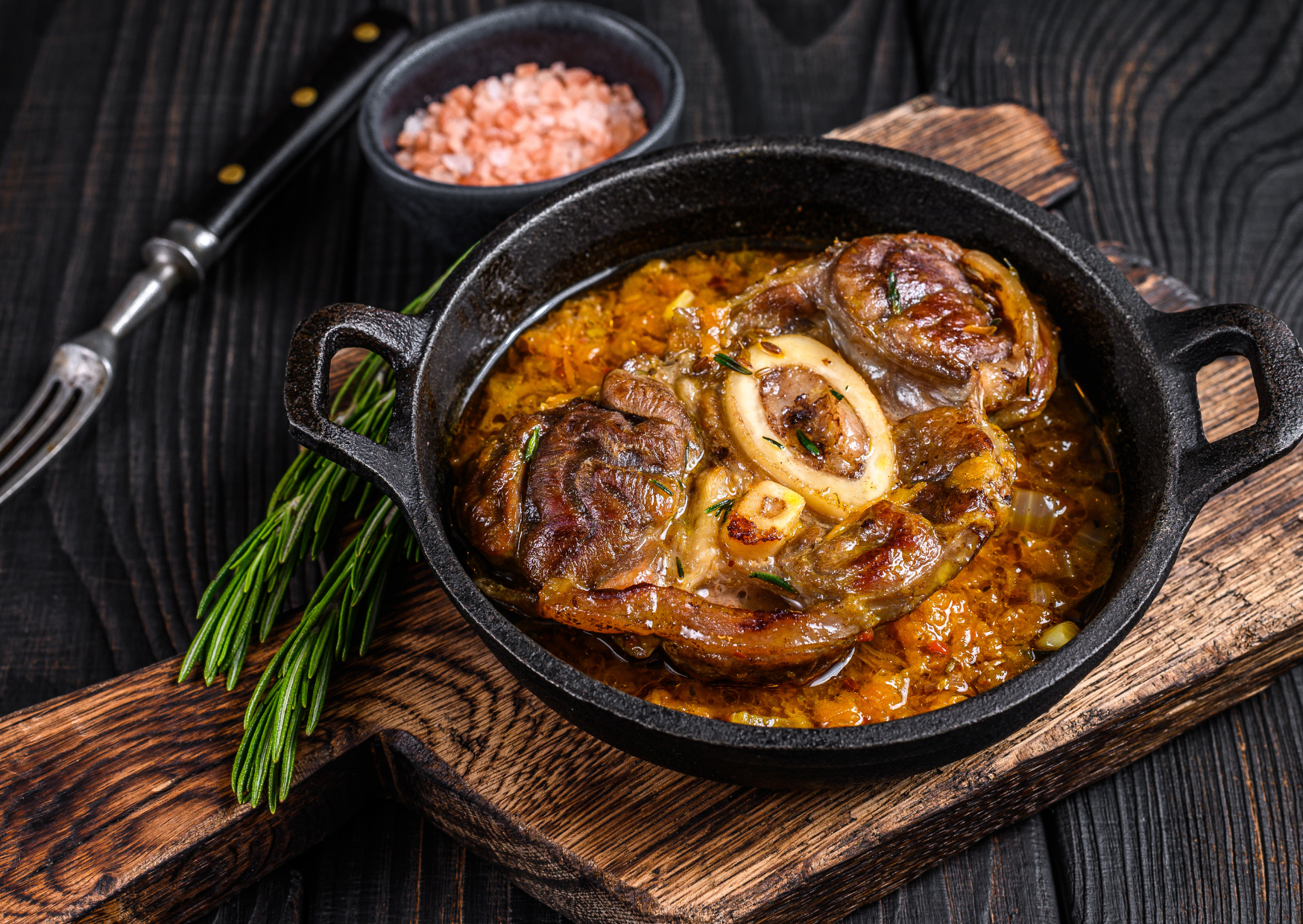
Veal versus beef. Veal is traditional. It cooks more quickly and tastes mild. Beef shanks are more robust, often cheaper, and take longer to relax. If you use beef, add 45 to 60 minutes to the braise and check for tenderness more than by the clock.
Stock. A light homemade beef or veal stock is best. If you use boxed stock, dilute it slightly and reduce salt elsewhere. The braise will concentrate whatever you pour in. Salt late.
Tomato or no. Many Milanese cooks add a small amount of tomato or paste. Many skip it entirely. If you use it, keep it minimal. You are looking for gentle color, not a red sauce.
Fat. Butter tastes correct with veal and saffron. Olive oil works and is helpful for browning. Use a little of both and you get the flavor of butter with the resilience of oil.
Wine. Dry white wine is classic. Do not use sweet wine. If you avoid alcohol, replace with an extra splash of stock and a teaspoon of white wine vinegar added with the parsley at the end.
Rice. Carnaroli holds texture well, vialone nano is silkier, arborio is serviceable. Rinse nothing. The surface starch helps the cream.
Saffron. Use threads, not powder. Steep in hot stock and add mid cook so the color blooms and the aroma does not evaporate early.
Bone marrow for the risotto. Traditional and excellent, but optional. If you skip it, add a little extra butter at the finish.
Citrus. Lemon zest is not optional. It defines the dish. Grate only the yellow. The white pith is bitter.
What Can Go Wrong (and How to Fix It)
The shanks curl into cups.
You forgot the string or the butcher cut thin. Tie each shank before browning. If they are already curling, seat a small round of parchment on top during the braise and weigh it with a heatproof plate to encourage a flatter finish.
The sauce is thin at the end.
Remove the shanks to a warm plate and reduce the liquid uncovered until it coats a spoon. Whisk in a small knob of cold butter off the heat to help it gloss. Do not thicken with starch. Gelatin and time give you a better texture.
The meat is tender but dry on the surface.
Your simmer was too aggressive or your liquid did not come halfway up the shanks. Add hot stock as needed during cooking and keep the surface glistening. Turn the shanks once or twice so each side spends time under the liquid.
The marrow leaked out.
It happens if the marrow is loose or if you puncture the shanks with a fork. The fix is to spoon the sauce over the shanks several times in the last ten minutes so any escaped marrow enriches the glaze. Serve a little extra gremolata to add brightness.
Your risotto clumps while you plate.
It sat a minute too long. Rescue it with a small splash of hot stock and a brisk stir. Calm yourself and stir in another teaspoon of cold butter if needed. Plate immediately.
You find the dish too rich.
Use a lighter stock, limit butter to the browning stage, and add a little extra gremolata. Balance the plate with a bitter leaf salad dressed with olive oil and lemon.
You cooked beef shanks and they are still tough at three hours.
Keep going. Beef collagen needs more time than veal. Check every 20 minutes. Add stock if the pot looks dry. The window between tough and tender can be short. Once it drops, it drops.
Make Ahead, Freezing, And Leftovers
Osso buco loves a rest. You can braise the shanks a day ahead, cool in the sauce, and rewarm gently on the stove. The flavor deepens and the meat firms just enough to handle without falling apart. Reheat to a bare simmer, correct the salt, then add gremolata fresh.
Leftovers are a gift. Pull the meat, chop it with a little sauce, and fold it into short pasta with a squeeze of lemon. Or warm a slice of toasted country bread, spoon on the meat and juices, and call it lunch. If you have leftover risotto, fry small cakes the next day and top with a spoon of warmed sauce.
Freeze braised shanks in their sauce for up to three months. Thaw overnight in the fridge and reheat gently. Do not freeze the gremolata. Make it fresh every time.
Regional Notes And Quiet Debates
Milan claims osso buco as its own and pairs it with saffron risotto. Plenty of cooks across Lombardy and the rest of Italy serve it with soft polenta or mashed potatoes instead, especially in colder months. Some recipes include tomato, some do not. Some stir the gremolata into the sauce, some keep it raw as a sprinkle. All of those choices are within the family as long as the heart is the same, shanks, slow braise, bright finish.
Thickness varies by butcher. A good cut is 4 to 5 centimeters. Thinner cooks faster and dries faster. Thicker needs more time and gives you a more dramatic slice. If you can, ask your butcher to cut from the part of the leg where the bone is narrow and packed with pure marrow rather than spongy bone.
Wine pairings travel the North. Barbera and Bonarda are local favorites for the plate. With saffron risotto, many people prefer a structured white. You can drink what you like. The dish is generous.
What This Means For You
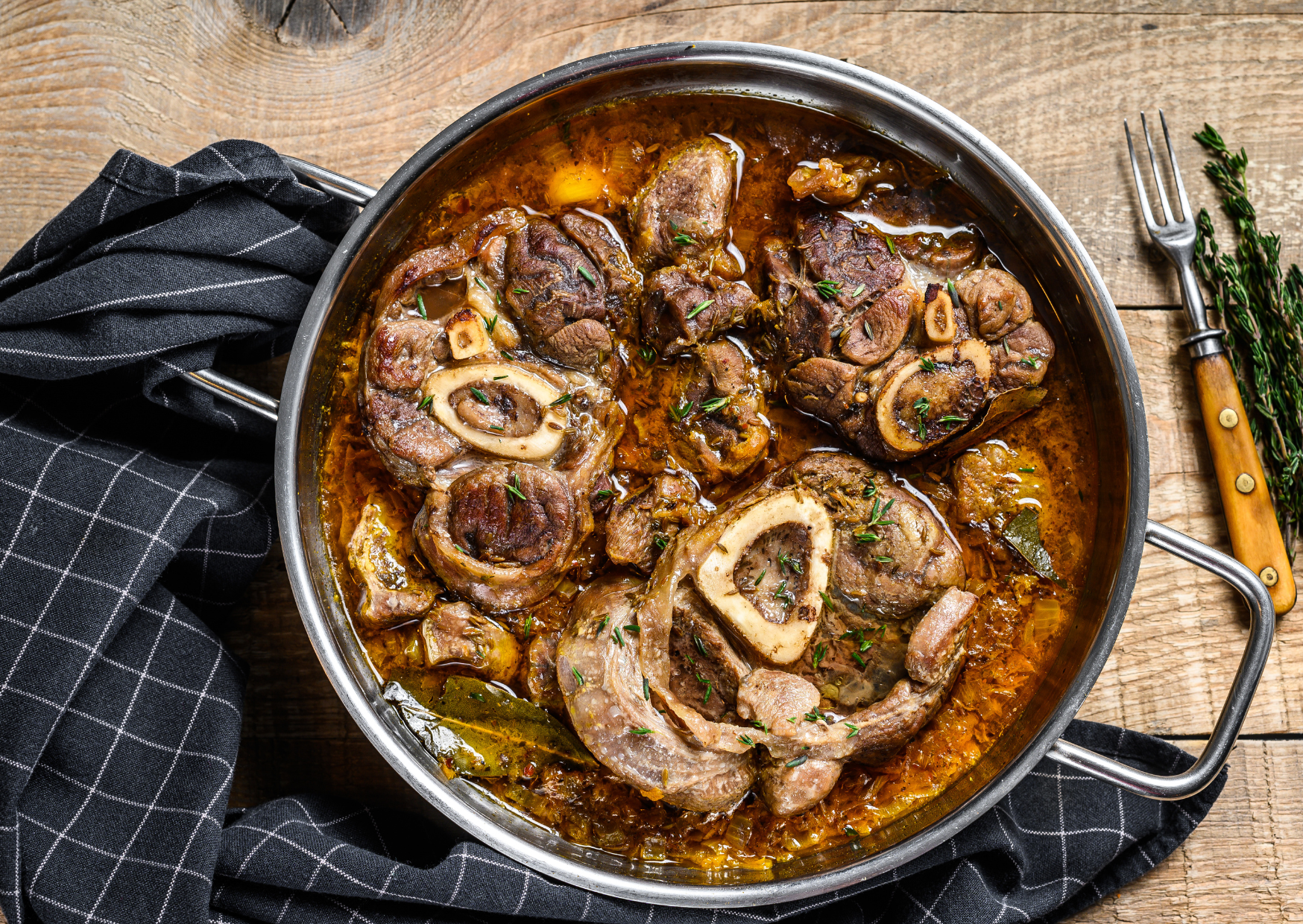
If you want the Milanese experience, you do not need a temple kitchen. You need time, a pot with a lid, and the discipline to let low heat do its quiet work. Tie the shanks, brown them without rushing, build a small soffritto, then keep the simmer steady until a spoon slides in with no pushback. Finish with lemon, parsley, and a touch of garlic. Serve beside a saffron risotto that you finished moments ago so it flows on the plate.
Three hours sounds long until you taste why you waited. The texture, the sheen, the perfume, and the way the marrow melts into rice are not available at speed. This is one of those dishes that makes your kitchen feel bigger than it is, because you borrowed the most powerful tool good cooks use, patience.
Origin and History
Osso buco was born in Milan, in the Lombardy region of northern Italy, where slow cooking has long been essential to transforming tough cuts of meat into refined dishes. The name translates to “bone with a hole,” referring to the cross-cut veal shank that defines the recipe. This cut was once considered humble, valued more for nourishment than elegance.
In its earliest form, osso buco was a practical meal prepared by working households. The long braise allowed connective tissue and marrow to soften, creating richness without expensive ingredients. The dish reflected the Milanese philosophy of patience, where time itself was treated as a core component.
Osso buco Milanese later became associated with gremolata, a fresh mixture of lemon zest, garlic, and parsley added at the end. This finishing touch balanced the deep, slow-cooked flavors with brightness, a contrast that helped elevate the dish beyond rustic origins.
As Italian cuisine gained international recognition, osso buco spread beyond Milan. However, many adaptations simplified or rushed the process, sacrificing the defining characteristics that originally made the dish special.
One of the most controversial misunderstandings surrounding osso buco is the belief that it can be prepared quickly. In reality, speed undermines the very purpose of the dish. The veal shank requires prolonged heat to break down collagen and achieve the signature tenderness.
Restaurant versions outside Italy often substitute shortcuts for time. Pressure cooking, thin cuts, or heavy sauces may mimic richness, but they fail to reproduce the silky texture that only slow braising creates. The result may be flavorful, but it is not truly osso buco Milanese.
Another point of contention is ingredient substitution. Traditional Milanese versions avoid tomatoes or use them sparingly, focusing instead on white wine, broth, and aromatics. Tomato-heavy sauces shift the dish toward a generic braise rather than a regional specialty.
There is also debate around portion expectations. Osso buco is not meant to be a quick, casual plate. Treating it as fast comfort food ignores the discipline and patience embedded in its preparation and cultural context.
How Long You Take to Prepare
Preparing authentic osso buco begins long before it reaches the oven. The veal shanks must be properly trimmed, tied, and seasoned to ensure even cooking. Browning the meat alone takes time and attention, as proper caramelization builds the foundation of flavor.
Once braised, the dish enters its most critical phase: slow cooking. The shanks must simmer gently for several hours, allowing marrow to melt and connective tissue to transform into gelatin. Rushing this step results in chewy meat and a thin, unbalanced sauce.
During the braise, the dish demands monitoring rather than constant activity. Heat must remain low and steady, and the liquid level carefully maintained. This controlled environment is what produces the luxurious texture associated with authentic osso buco.
From start to finish, the process easily spans three hours or more. This duration is not excessive; it is essential. Time is not an inconvenience in osso buco Milanese, but its most important ingredient.
Serving Suggestions
Osso buco Milanese is traditionally served with risotto alla Milanese, whose saffron-infused creaminess complements the richness of the braised veal. The pairing is deliberate, designed to balance textures and flavors without competition.
Gremolata should be added just before serving. Its citrus and herbal notes cut through the richness of the dish, preventing it from becoming heavy. Skipping this step flattens the overall experience.
The marrow inside the bone is a central feature and should be treated as such. Small spoons are often provided so diners can enjoy it fully. This detail underscores the dish’s identity and respect for the ingredient.
Serving portions should remain restrained. Osso buco is rich and satisfying, meant to be savored rather than consumed quickly. Presentation should emphasize simplicity and allow the dish to speak for itself.
Final Thoughts
Osso buco Milanese is a lesson in patience and respect for tradition. It is not designed to fit into fast dining culture or rushed schedules. Attempting to compress it into a short cooking window changes the dish entirely.
The contrast between slow, intentional cooking and quick imitations highlights a broader misunderstanding of Italian cuisine. Authenticity is not about luxury ingredients, but about technique, time, and restraint.
When prepared correctly, osso buco offers depth that cannot be replicated through shortcuts. The texture, aroma, and balance come only from allowing the process to unfold naturally.
Understanding why osso buco takes hours to make changes how it is valued. It becomes more than a meal; it becomes an expression of culinary patience, where time is not wasted but transformed into flavor.

About the Author: Ruben, co-founder of Gamintraveler.com since 2014, is a seasoned traveler from Spain who has explored over 100 countries since 2009. Known for his extensive travel adventures across South America, Europe, the US, Australia, New Zealand, Asia, and Africa, Ruben combines his passion for adventurous yet sustainable living with his love for cycling, highlighted by his remarkable 5-month bicycle journey from Spain to Norway. He currently resides in Spain, where he continues sharing his travel experiences with his partner, Rachel, and their son, Han.