
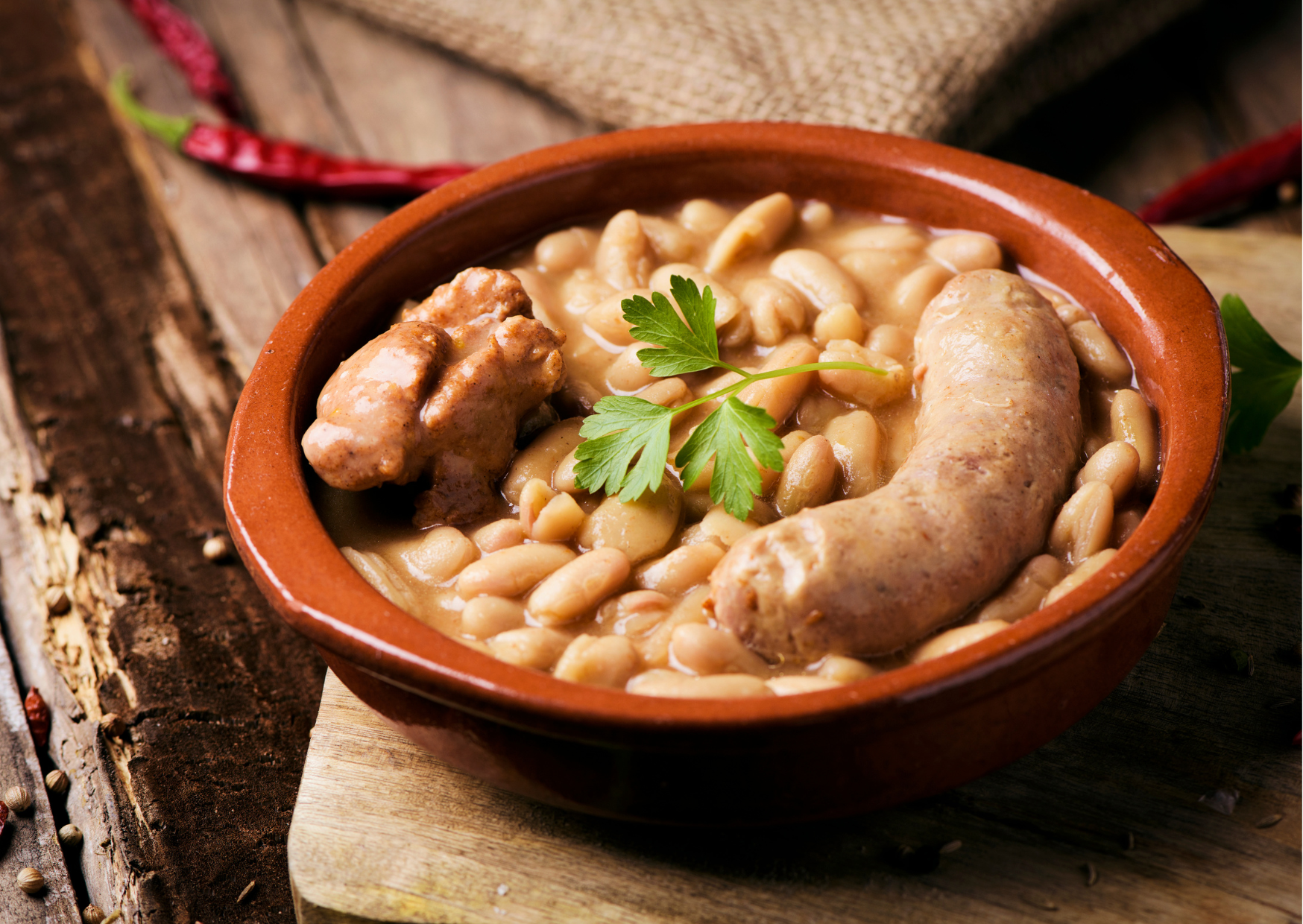
The writer Anatole France once described a Parisian restaurant where the cassoulet had been cooking continuously for twenty years.
The owner, Mère Clémence, would add goose one day, pork fat the next, sometimes a sausage or a handful of beans. But it was always the same cassoulet. The pot never emptied. The flame never went out. She replenished but never restarted.
I thought this was poetic exaggeration until I started making cassoulet myself. The dish does not improve with speed. It improves with time—days of it, layered one on top of another like the beans and meats in the pot.
A proper cassoulet takes three days. Not because the recipe is complicated, but because the flavors need time to find each other.
What cassoulet actually is
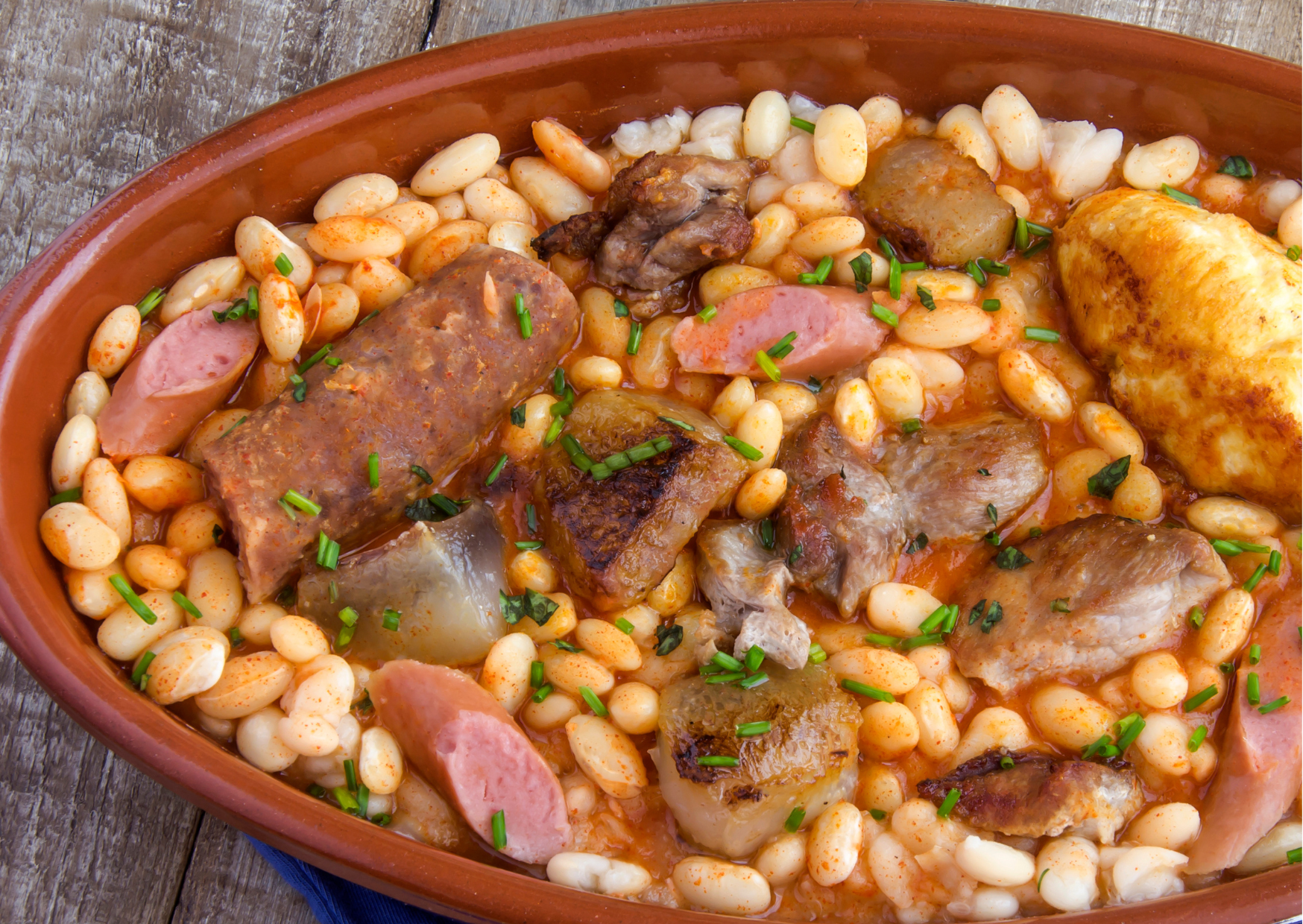
At its simplest, cassoulet is white beans cooked with preserved meat. That description is technically accurate and completely inadequate—like calling the Sistine Chapel a painted ceiling.
The dish originated in the Languedoc region of southwestern France, a sun-baked landscape of vineyards and medieval towns along the Canal du Midi. It is peasant food elevated to obsession. Every family has their version. Every town claims theirs is authentic. Arguments about cassoulet have ended friendships.
The name comes from the cassole, a conical earthenware pot traditionally made in the village of Issel. The pot is narrow at the bottom and broad at the rim, a shape that maximizes the surface area exposed to oven heat. This matters because cassoulet develops a crust—and what happens to that crust determines everything.
A proper cassole holds heat evenly and releases moisture slowly. Modern Dutch ovens work adequately, but something is lost. The clay pot breathes in a way that metal cannot.
In 1966, the États Généraux de la Gastronomie Française attempted to settle centuries of dispute by decreeing official proportions: 30% meat, 70% beans. The meats could be pork, mutton, or preserved goose, flavored with stock, pork rinds, herbs, and vegetables.
This helped nothing. The arguing continues.
The three towns that will never agree
Three towns claim cassoulet as their birthright: Castelnaudary, Carcassonne, and Toulouse. Each has its own version, and each considers the others heretical.
Castelnaudary is generally granted origin rights. Their cassoulet is considered the purest:
- White beans (traditionally Haricot de Castelnaudary)
- Duck or goose confit
- Pork shoulder and belly
- Fresh pork rinds
- Toulouse sausage
- No lamb, no game, no elaboration
Carcassonne adds leg of mutton and, when in season, partridge. The lamb gives the dish a deeper, gamier character that purists from Castelnaudary find suspicious.
Toulouse uses smaller quantities of the same meats as Castelnaudary but adds more Toulouse sausage—the coarse-ground pork sausage seasoned with garlic and wine that bears the city’s name.
The legendary origin story claims cassoulet was invented in 1355 when the people of Castelnaudary, under siege by the English during the Hundred Years’ War, pooled their remaining food and created a dish so fortifying that their soldiers drove the invaders back.
This is almost certainly fiction. Historical records show the Black Prince simply ransacked the town, killed much of the population, and left. But the story persists because it captures something true about cassoulet: it is food that sustains people through hard times.
Why three days matters
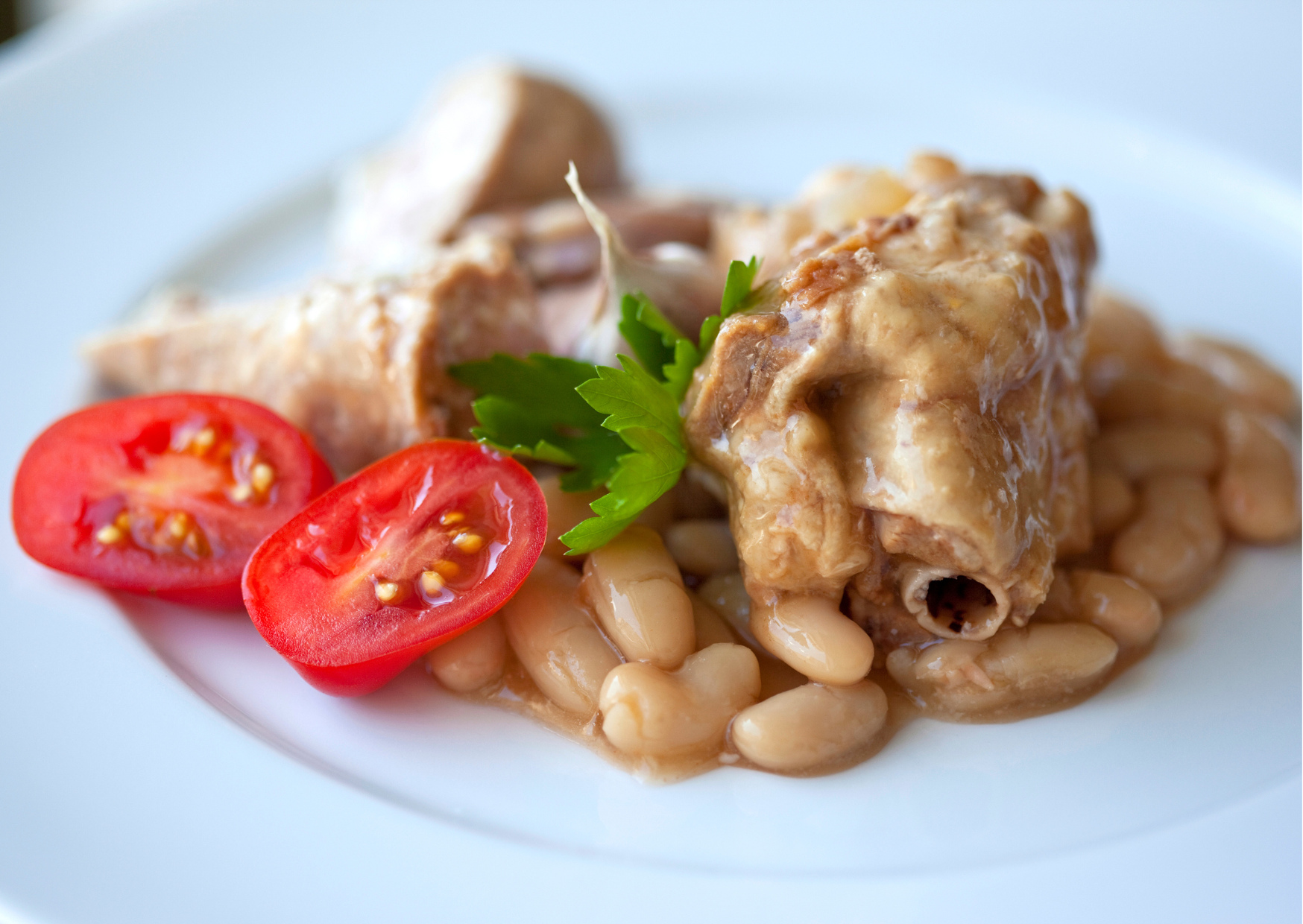
A last-minute cassoulet is, according to local wisdom, “catastrophic.”
The dish should be cooked, then cooled overnight, then cooked again—at least three times. Each cycle allows the beans to absorb more flavor from the meats. Each cooling period lets the fats solidify and redistribute. Each reheating deepens the integration of flavors until the separate components become inseparable.
Here is what the three days actually involve:
Day one: The foundations.
- Beans soak overnight in cold water
- Duck confit cures in salt (24-36 hours)
- Pork shoulder roasts separately until browned
- Toulouse sausages brown in their own fat
- Rich stock simmers from pork bones and vegetables
Day two: The assembly and first bake.
- Soaked beans cook with aromatics until tender (about 1 hour)
- Pork rinds line the bottom of the cassole
- Layers build: beans, meats, beans, sausages on top
- Stock covers everything
- Cassoulet bakes 3-4 hours at low heat
- Crust forms and is broken 2-3 times
- Dish cools overnight
Day three: The finishing.
- Cooled cassoulet returns to oven for 1-2 hours
- Crust reforms and is broken again
- Beans achieve final creamy-yet-intact texture
- Flavors unify completely
- Dish rests 20-30 minutes before serving
The seven times tradition
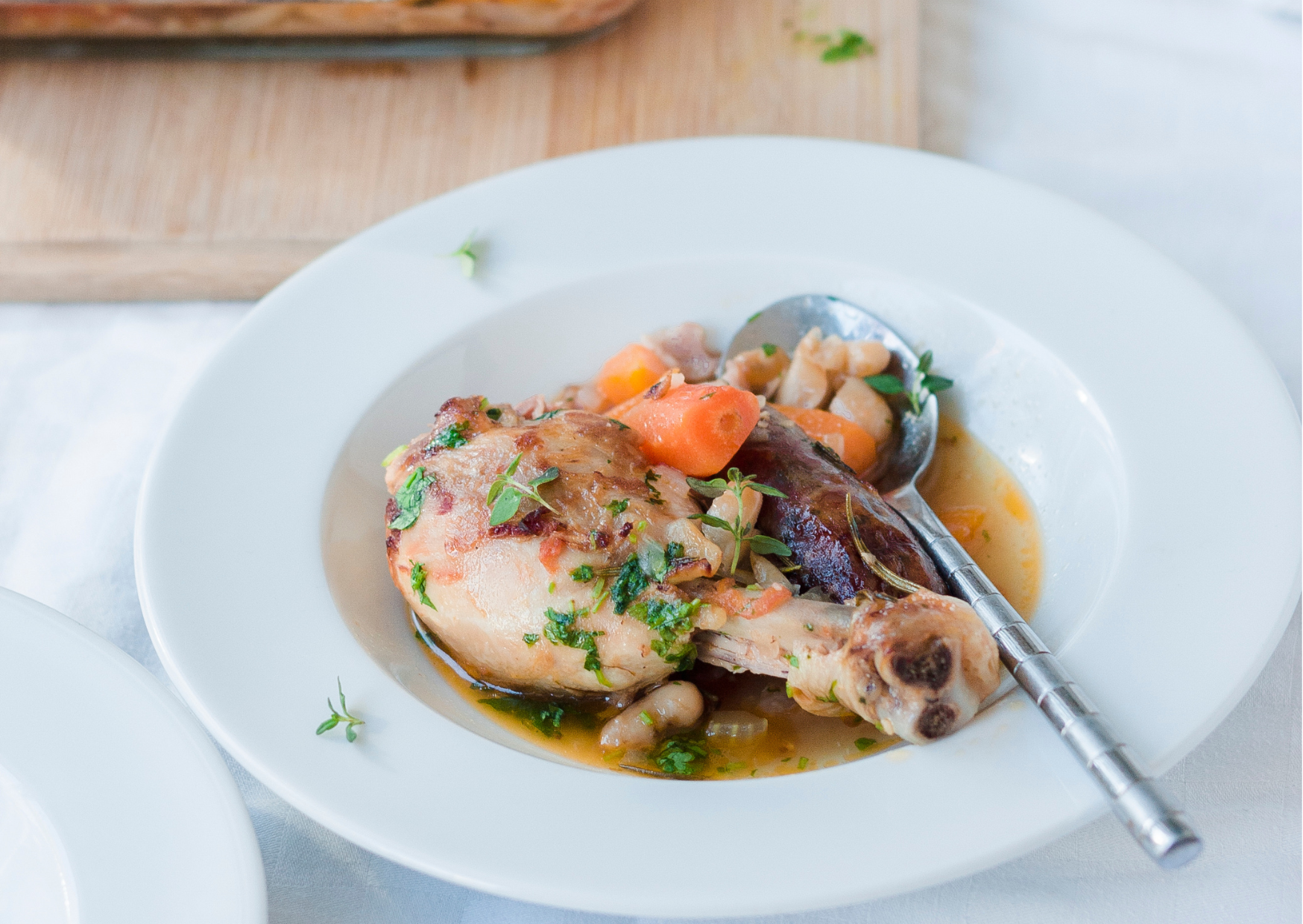
There is an old wives’ tale in Languedoc: the crust must be broken and pushed back into the cassoulet seven times during cooking.
Some cooks insist on this ritual. Others say three times is sufficient. A few claim the crust should never be disturbed at all.
The truth is that breaking the crust serves a purpose. Each time you push the golden-brown layer back into the beans, you are incorporating caramelized proteins and concentrated flavors into the body of the dish. You are also ensuring the cassoulet does not dry out—the liquid redistributes, the fat melts again, and a new crust forms.
Whether the magic number is three or seven depends on your oven, your pot, and possibly your relationship with tradition. But the principle remains: the crust is not a lid to be preserved. It is an ingredient to be incorporated.
At restaurants in Castelnaudary, the crust often emerges almost black after six hours of cooking. The beans underneath have caramelized against the sides of the cassole. The whole dish pulses with a concentration of flavor that can only come from time.
The beans that make it possible
Not all white beans are equal.
The traditional bean for cassoulet is the haricot Tarbais, grown at the foot of the Pyrénées since the 17th century. These beans were among the first in France to receive Label Rouge certification in 1997 and IGP protection in 2000. Only members of a small cooperative in the Tarbes region can legally sell beans under this name.
What makes Tarbais beans special:
- Thin skin that becomes tender without disintegrating
- Creamy interior that holds its shape through hours of cooking
- Natural thickening as enough beans burst to create sauce
- Hand-harvested using traditional methods
- Interplanted with corn that serves as natural support structure
The beans are still harvested by hand. They grow intertwined with corn stalks—a symbiotic planting method that uses the corn as a natural support structure. This labor-intensive cultivation is part of why authentic Tarbais beans can cost $30 per pound in the United States.
Substitutes exist. Great Northern beans work well. Cannellini beans are acceptable. But something is always lost.
The Haricot de Castelnaudary—the bean variety native to cassoulet’s birthplace—also received IGP protection in December 2020. These beans, grown in the specific terroir around Castelnaudary, have their own characteristics that distinguish them from the Tarbais.
Regional pride runs deep enough that people argue about beans.
The confit that cannot be rushed
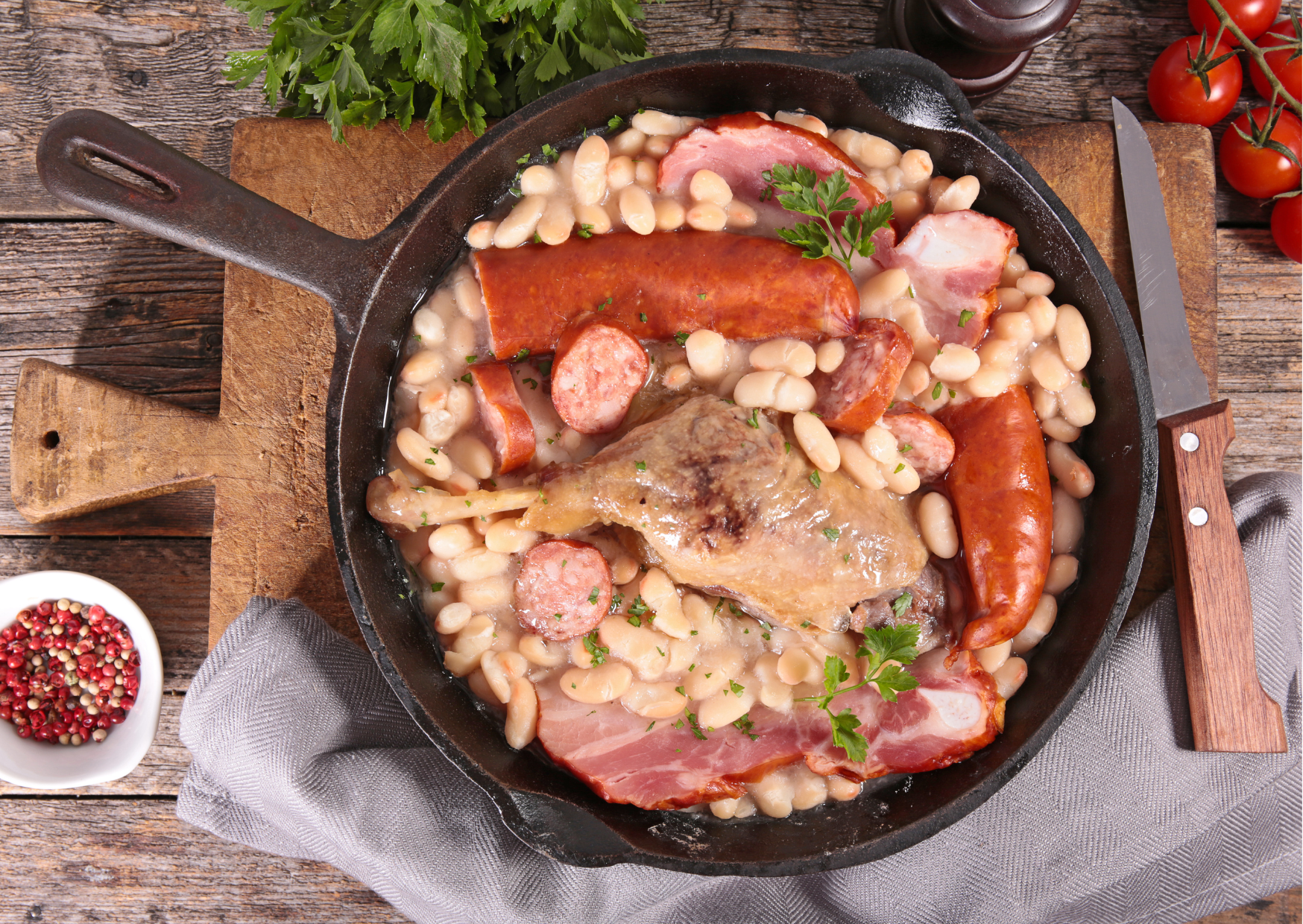
Duck confit is cassoulet’s soul. It is also a two-day process on its own.
The French word confire means “to preserve.” Confit de canard is among the oldest preservation techniques in European cooking—salting meat and cooking it slowly in its own fat until it can be stored for months without refrigeration.
Day one of confit: Duck legs are rubbed generously with coarse salt, black pepper, garlic, and fresh thyme. They rest in this cure for 24 to 36 hours in the refrigerator. The salt draws moisture from the meat while simultaneously seasoning it through to the bone.
Day two of confit: The cured legs are rinsed, patted dry, and submerged completely in rendered duck fat. They cook at a low temperature—around 200°F to 225°F—for 3 to 4 hours, until the meat is tender enough to fall from the bone but still holds together. The fat should never bubble vigorously.
The cooked legs can be stored submerged in the fat for months. In traditional Gascon households, confit de canard was a pantry staple, pulled from earthenware crocks throughout the winter to enrich cassoulets, soups, and simple suppers.
The depth of flavor comes from following all the time-honored steps. Modern shortcut recipes skip the curing phase or reduce the cooking time. The results are edible but hollow—duck cooked in fat rather than duck transformed by the confit process.
The brotherhood that guards the tradition
In 1970, La Grande Confrérie du Cassoulet de Castelnaudary was established. This brotherhood—complete with ceremonial robes and medieval titles—exists to defend the traditions and quality of authentic cassoulet.
Together with the town council, the confrérie created the Fête du Cassoulet in 2000, a three-day annual festival celebrating the dish with tastings, concerts, parades, and competitions.
They take their mission seriously. The confrérie publishes guidelines, judges authenticity, and wages polite war against innovations they consider violations. Breadcrumb toppings are frowned upon. Tomatoes are disputed. Anything that strays too far from the ancestral template invites critique.
But even within this orthodoxy, every family has secrets.
One grandmother adds a splash of Armagnac to the cooking liquid. Another insists the pork must come from a specific butcher whose grandfather supplied the original recipe. A third swears that the cassole must face east in the oven.
These contradictions are the point. Cassoulet is not a recipe to be standardized. It is a living tradition, passed from grandmother to granddaughter, argued over at every Sunday lunch, adjusted for each season’s available ingredients.
The mistakes Americans always make
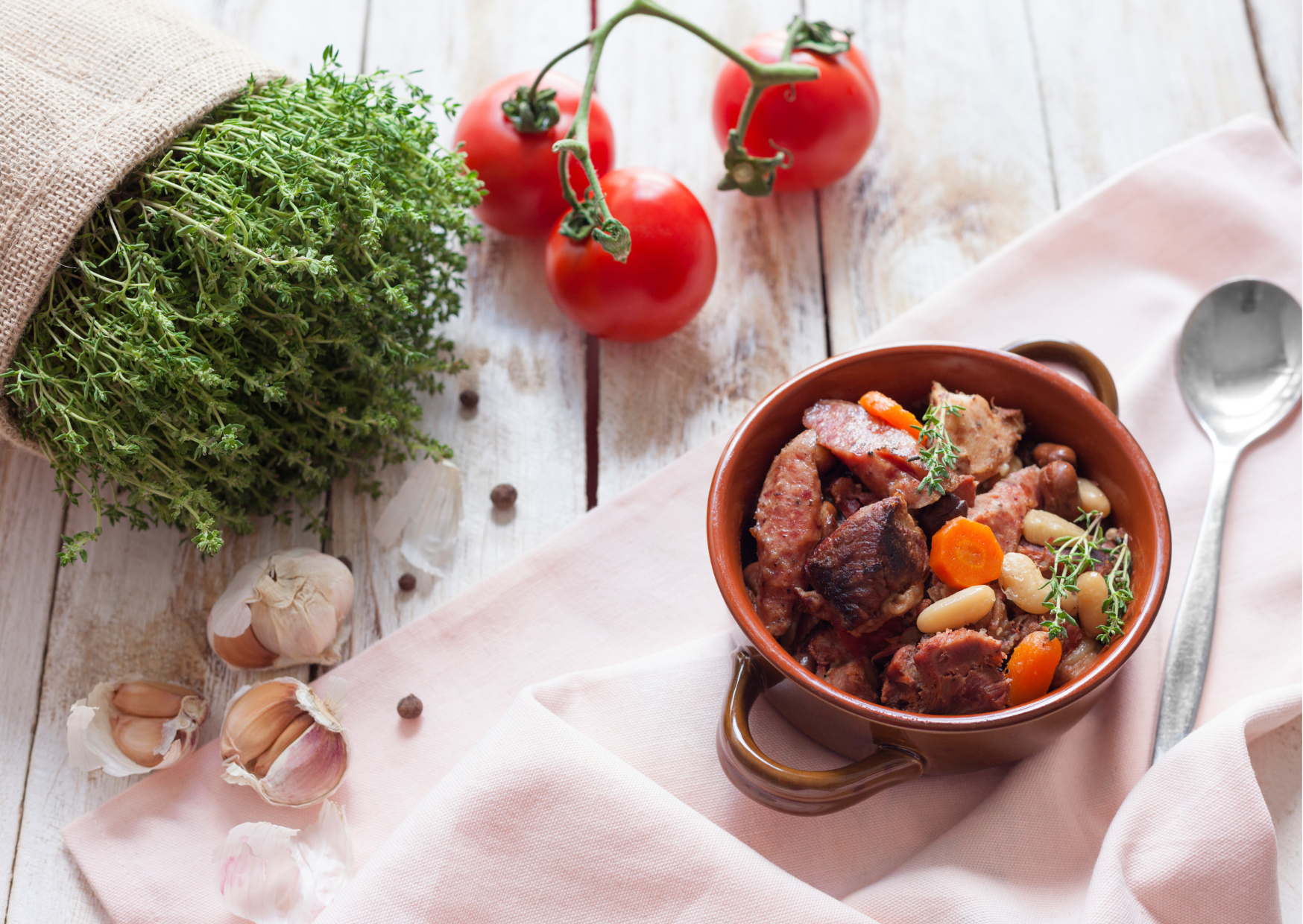
Mistake one: Using breadcrumbs.
Many American recipes call for a topping of toasted breadcrumbs. This is not traditional. The authentic crust forms naturally from the beans, fat, and proteins as they concentrate in the oven’s heat. Breadcrumbs create a different texture—crusty rather than caramelized—and prevent the proper development of the dish. If you want crunch, you are misunderstanding cassoulet.
Mistake two: Treating it as a one-pot meal.
Cassoulet requires components cooked separately before assembly. The duck confit, the pork, the sausages, and the beans each need individual attention. Dumping everything into a pot together produces a stew, not a cassoulet. The magic happens in the layering, not the dumping.
Mistake three: Rushing the cooking.
Two hours is not enough. Three hours is marginal. The traditional baking time is 4 to 6 hours, with overnight rest between sessions. The slow cooking breaks down collagen, develops the crust, and allows the beans to absorb flavor. There are no shortcuts worth taking.
Mistake four: Serving it immediately.
Cassoulet tastes good when first assembled. It tastes better the next day. It reaches its peak on the third day. The resting period is not optional. The flavors need time to marry, and the fats need time to redistribute.
Mistake five: Skipping the crust ritual.
The crust should be broken and stirred back in at least twice during cooking. This incorporates concentrated flavors and prevents the surface from burning while the interior remains undercooked. The crust is an ingredient, not a lid.
What the grandmother actually does
I once watched a French grandmother make cassoulet in her farmhouse kitchen outside Toulouse.
She did not measure anything. She did not consult a recipe. She did not rush.
On Thursday, she started the duck confit. On Friday, she soaked the beans, roasted the pork, and made the stock. On Saturday morning, she assembled the cassoulet in a blackened cassole that had belonged to her mother. It went into the oven before noon.
Every hour, she checked the crust. When it had formed properly, she broke it gently with a wooden spoon, pushing the golden layer back into the beans. Then she closed the oven door and returned to other tasks.
The cassoulet came out at dinnertime but was not served. It cooled overnight on the kitchen counter. On Sunday morning, it went back into the oven for two more hours. By lunch, the aroma had filled every room of the house.
When she finally set the cassole on the table, still bubbling, the crust was nearly black in places. Underneath, the beans had become something beyond beans—creamy, rich, saturated with duck fat and pork essence and slow time.
Her husband served each plate using a georgette, the wide flat spoon with tines traditionally used for cassoulet. Everyone received an equal portion of beans to meat. The wine was a Madiran from the next valley over.
No one spoke for the first few bites. There was nothing to say. The three days had done the talking.
The simplified version that still works
You may not have three days. You may not have Tarbais beans or homemade duck confit. Here is what you can do without betraying the spirit of the dish.
Buy good duck confit. D’Artagnan and other specialty suppliers sell excellent prepared confit. It will not match homemade, but it will work.
Use quality dried white beans. Great Northern or cannellini beans, soaked overnight and cooked gently until just tender, will perform admirably.
Take two days, not one. Assemble the cassoulet on Saturday. Bake it for 3 hours, breaking the crust twice. Cool it overnight. Reheat it on Sunday for 90 minutes before serving.
Do not skip the pork fat. Fresh pork rinds on the bottom of the pot add body and richness nothing else can match. If you cannot find rinds, use thick-cut bacon.
Let it rest after cooking. Even 30 minutes of resting allows the fats to settle and the flavors to coalesce. An hour is better.
The result will not be what that grandmother made in her farmhouse kitchen. But it will be closer than anything you could produce in three hours on a Wednesday night.
Why this matters
Cassoulet is impractical. It requires planning, patience, and the kind of sustained attention modern life discourages. It cannot be meal-prepped or batch-cooked efficiently. It does not fit into a busy schedule.
That is precisely the point.
Some dishes exist to feed us quickly. Cassoulet exists to remind us that some things cannot be rushed. The three days are not an inconvenience to be minimized. They are the recipe.
When you commit to making cassoulet properly, you are committing to a different relationship with food and time. You are choosing depth over convenience. You are cooking the way grandmothers have always cooked—not because they had nothing better to do, but because they understood that some things require exactly as long as they take.
The pot at Mère Clémence’s restaurant may be legendary exaggeration. But the principle behind it is real. The best cassoulet is always the one that has been cooking longest.
Start the beans soaking. Cure the duck. Clear your weekend.
Some recipes are worth three days.
Quick reference
Traditional cassoulet requires:
- White beans (Tarbais or Haricot de Castelnaudary preferred)
- Duck or goose confit
- Pork shoulder
- Toulouse sausage
- Fresh pork rinds
- Rich pork stock
- Aromatics (onion, carrot, garlic, bouquet garni)
Traditional cassoulet does NOT require:
- Breadcrumb topping
- Tomatoes (disputed)
- Herbs beyond bay leaf and thyme
The three versions:
- Castelnaudary: Duck confit, pork, Toulouse sausage (purest form)
- Carcassonne: Adds mutton and sometimes partridge
- Toulouse: More sausage, smaller meat quantities
Cooking timeline:
- Day 1: Soak beans, prepare confit, make stock
- Day 2: Assemble and bake 3-4 hours, cool overnight
- Day 3: Reheat 1-2 hours, serve bubbling
The crust: Break and push back into beans 3-7 times during cooking

About the Author: Ruben, co-founder of Gamintraveler.com since 2014, is a seasoned traveler from Spain who has explored over 100 countries since 2009. Known for his extensive travel adventures across South America, Europe, the US, Australia, New Zealand, Asia, and Africa, Ruben combines his passion for adventurous yet sustainable living with his love for cycling, highlighted by his remarkable 5-month bicycle journey from Spain to Norway. He currently resides in Spain, where he continues sharing his travel experiences with his partner, Rachel, and their son, Han.