
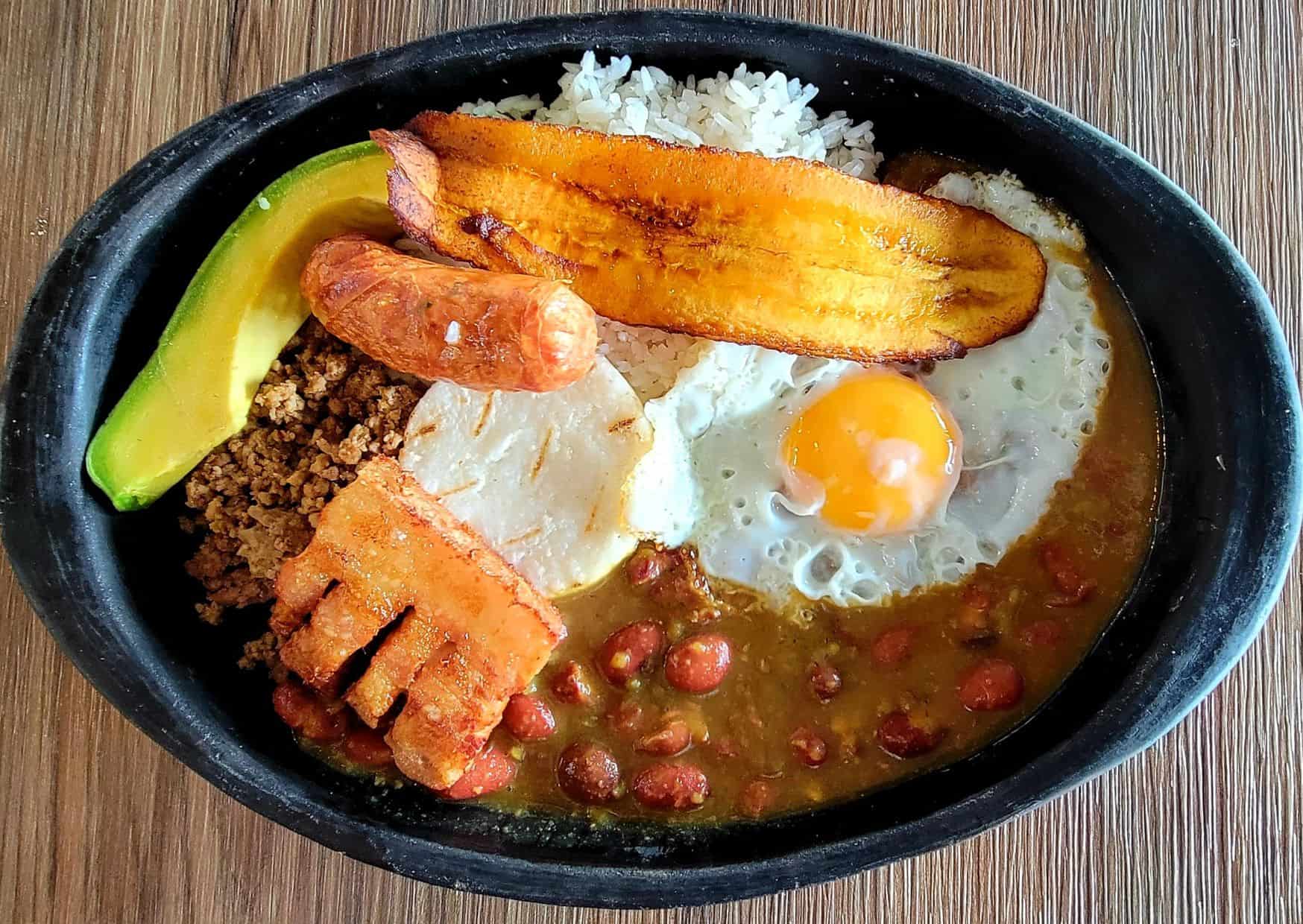
Bandeja Paisa is one of Colombia’s most iconic and beloved dishes, known for its generous portions and hearty flavours. Originating from the Paisa region, particularly Antioquia, this traditional meal is a true reflection of Colombian hospitality and culture. In this recipe guide, you will learn how to make an authentic Bandeja Paisa at home, bringing the taste of Colombia straight to your kitchen.
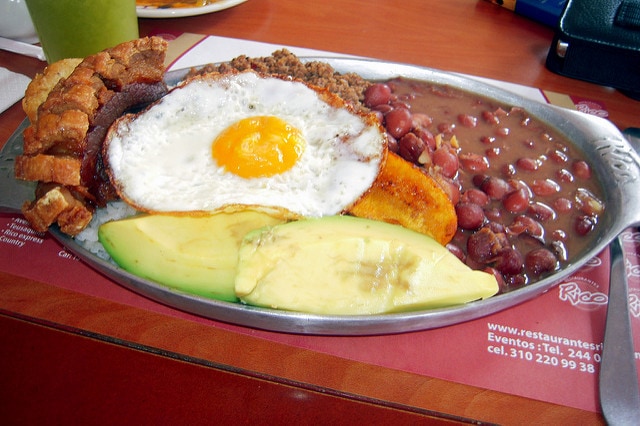
This impressive dish is often served on a large platter and includes a combination of rice, red beans, ground beef, chicharrón (crispy pork belly), chorizo, fried egg, ripe plantain, avocado, and arepa. Each element adds texture and flavour, creating a satisfying meal that celebrates Colombia’s rich culinary heritage. Although it might look elaborate, with a bit of preparation, you can recreate this famous feast to impress your family or guests.
Bandeja Paisa is more than just a meal – it’s a celebration of abundance and tradition. Whether you want to experience authentic Colombian cuisine or prepare a hearty dish for a special occasion, this recipe will guide you through each component step by step. Get ready to enjoy a plate that is comforting, filling, and full of vibrant flavours.
Read here Colombian food, best Colombian breakfast and Colombian drinks.
BOOK YOUR TRAVEL INSURANCE
Two of our favorite travel insurance: Heymondo Vs Safetwing cheapest travel Insurance. You can get for $135 USD your Heymondo Travel Insurance with Heymondo discount code valid for 90 days. Read our full comparison of Genki vs Safetywing Travel Insurance Review and the comparison Heymondo vs Genki
How to Eat Bandeja Paisa
Bandeja Paisa is a dish meant to be enjoyed slowly and communally, reflecting Colombia’s warm hospitality and rich culinary traditions. The generous platter features a mix of beans, rice, fried plantains, chicharrón, ground beef, avocado, and a fried egg, often accompanied by an arepa. To eat it authentically, savor each element separately before mixing flavors together on your plate. The dish is intentionally hearty, designed to nourish farmers and laborers who needed energy for long workdays.
How to Partner Bandeja Paisa
This Colombian classic pairs beautifully with fresh fruit juices like guanábana, passionfruit, or lulo, which help balance the richness of the meats and beans. For an even more authentic experience, serve it with a simple side salad or hogao sauce to add brightness to the platter. A light, crisp beer also complements the hearty flavors without overwhelming the dish. Minimal extras are needed, as Bandeja Paisa is a meal in itself.
Bandeja Paisa is beloved across Colombia, but its size and richness spark controversy. Originally created as a farmer’s meal in the Antioquia region, it was meant to fuel long hours of labor. Today, the dish’s oversized portions have drawn criticism from nutritionists and health advocates who see it as excessive, particularly when served in urban restaurants where physical activity levels are lower. This raises a debate about whether culinary tradition should adapt to modern lifestyles.
There’s also disagreement over what ingredients truly define Bandeja Paisa. Purists argue it must include all its signature components—beans, rice, egg, avocado, chicharrón, ground beef, and plantains—while modern chefs often simplify or substitute elements to cater to different diets. These adjustments spark tension between preserving authenticity and making the dish accessible to a global audience.
Additionally, Bandeja Paisa has become a symbol of Colombian identity, especially internationally, but this cultural pride sometimes leads to commercialization. High-end restaurants often charge steep prices for what was once a humble, home-cooked meal. This shift has sparked conversations about culinary heritage, accessibility, and the balance between honoring tradition and profiting from it.
How to Make Bandeja Paisa
Bandeja Paisa Recipe Ingredients
For the Beans:
2 cups red kidney beans, soaked overnight
1 onion, finely chopped
2 cloves garlic, minced
1 bell pepper, chopped
1 tomato, chopped
1 tablespoon vegetable oil
Salt and pepper to taste
For the Rice:
2 cups white rice
4 cups water
1 tablespoon vegetable oil
Salt to taste
For the Meat:
1 pound flank steak or skirt steak
Salt and pepper to taste
1 tablespoon vegetable oil
For the Chorizo:
4 chorizo sausages
For the Pork Belly (Chicharrón):
1 pound pork belly, cut into strips
Salt to taste
For the Plantains:
2 ripe plantains, peeled and sliced
Vegetable oil for frying
Additional Components:
4 eggs
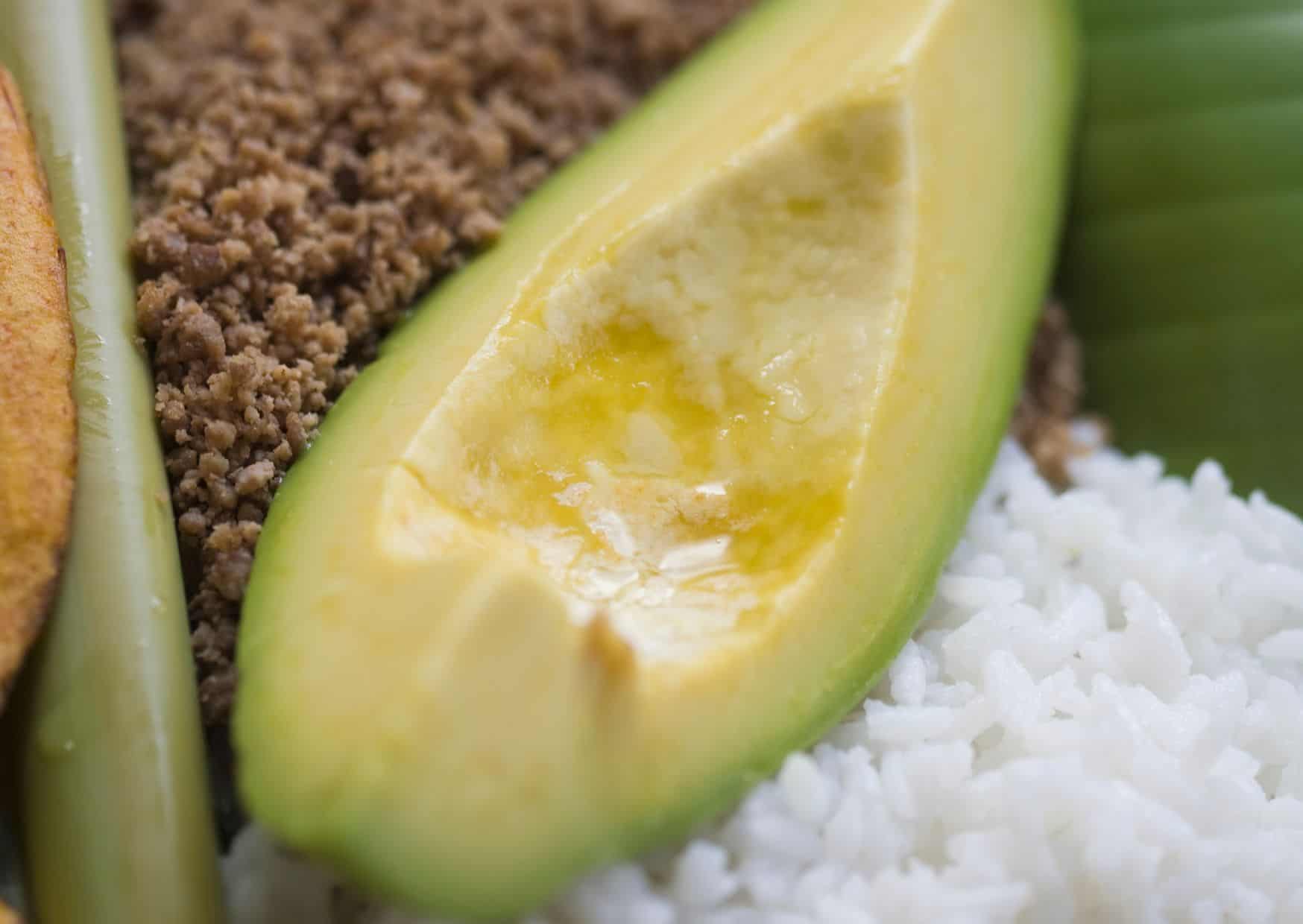
2 avocados, sliced
4 arepas
Lime wedges for serving
Get the best deals for your home and kitchen needs
Step By Step How to Make Bandeja Paisa
Prepare the Beans
In a large pot, heat the vegetable oil over medium heat. Add the onion, garlic, bell pepper, and tomato. Sauté until the vegetables are soft.
Add the soaked beans and enough water to cover them. Season with salt and pepper.
Bring to a boil, then reduce the heat and simmer until the beans are tender, about 1.5 to 2 hours.
Cook the Rice
In a medium saucepan, bring 4 cups of water to a boil. Add the rice, vegetable oil, and salt.
Reduce the heat to low, cover, and simmer until the rice is cooked and the water is absorbed, about 20 minutes.
Cook the Meat
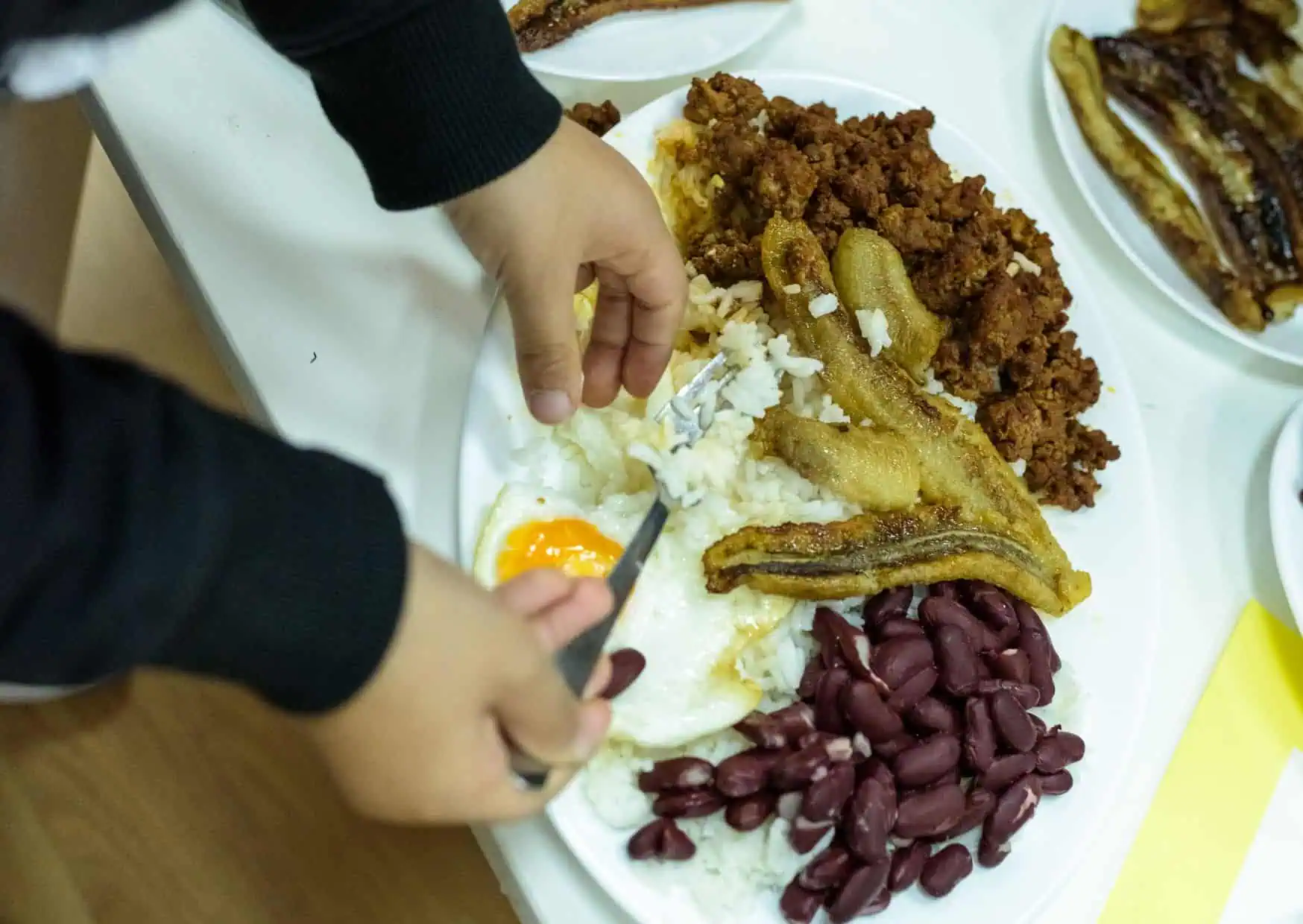
Season the steak with salt and pepper. Heat the vegetable oil in a skillet over medium-high heat.
Cook the steak to your desired doneness, about 4-5 minutes per side for medium-rare. Let it rest, then slice it thinly.
Cook the Chorizo and Pork Belly
In the same skillet, cook the chorizo sausages until they are browned and cooked through, about 10-12 minutes. Season the pork belly strips with salt. In a separate skillet, cook the pork belly over medium-high heat until crispy and golden brown, about 10-15 minutes.
Prepare the Plantains and Eggs
In a skillet, heat vegetable oil over medium heat. Fry the plantain slices until they are golden brown and caramelized, about 2-3 minutes per side. Drain on paper towels. In another skillet, fry the eggs to your desired doneness.
Assemble the Bandeja Paisa
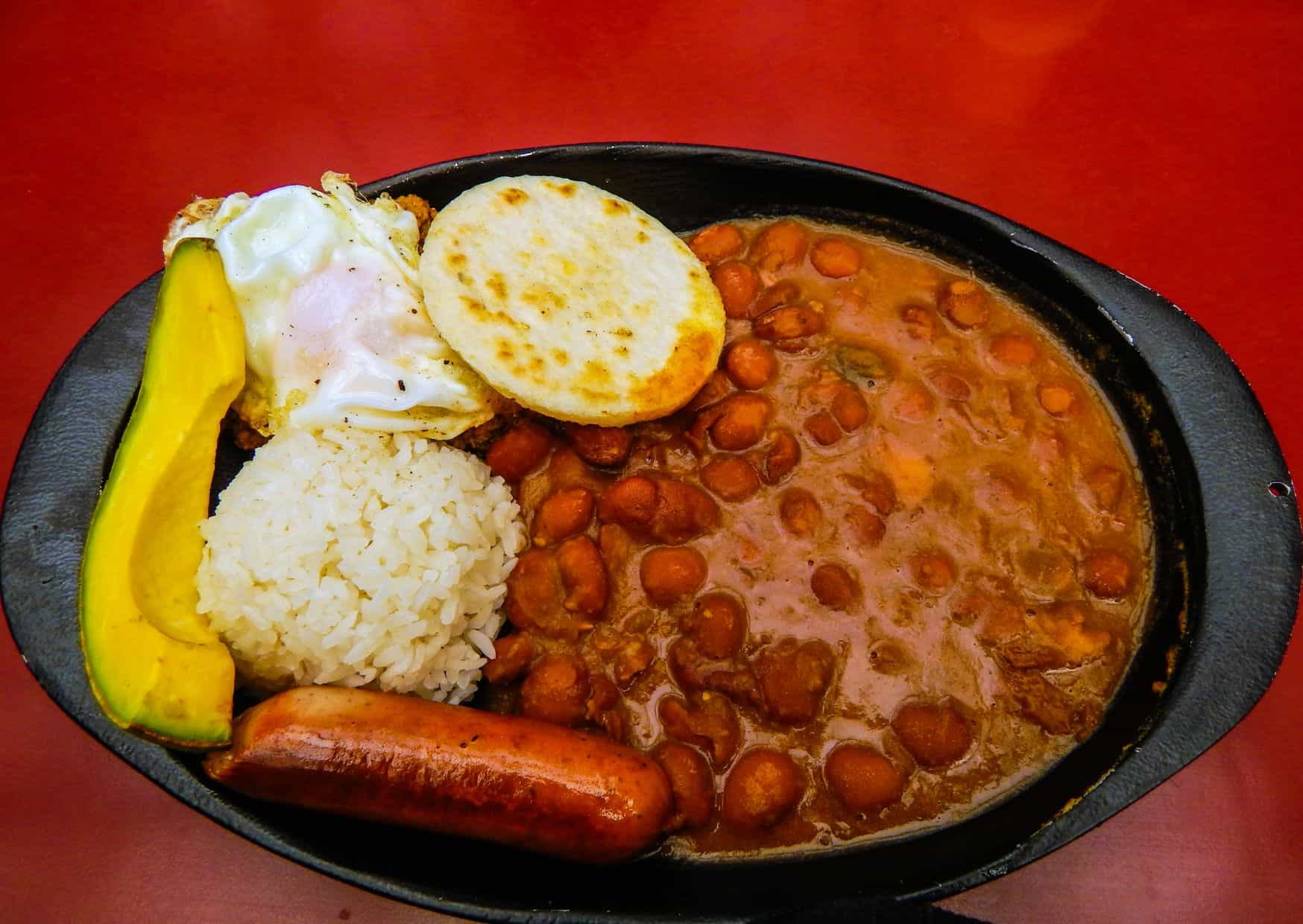
On a large platter or individual plates, arrange a serving of rice and beans. Add slices of steak, a chorizo sausage, and a strip of crispy pork belly. Place a fried egg on top and add fried plantains and avocado slices on the side. Serve with an arepa and a lime wedge.
Tips To Make Bandeja Paisa
This dish has many components, so it’s helpful to prepare and cook some elements ahead of time. Use high-quality meats and fresh produce for the best flavor. Bandeja Paisa is traditionally served as a large, hearty meal, so make sure to use large plates or platters.
How Many Calories Have Bandeja Paisa
Beans: 150 calories
Rice: 200 calories
Steak: 300 calories
Chorizo: 250 calories
Pork Belly: 400 calories
Plantains: 150 calories
Egg: 90 calories
Avocado: 120 calories
Arepa: 150 calories
Total Estimated Calories per Serving: Approximately 1810 calories.
Origin and History
Bandeja paisa comes from Colombia’s Antioquia region, where rural life demanded meals that could sustain long days of physical labor. The dish developed as a practical solution, combining multiple calorie-dense ingredients into one plate. It was never meant to be elegant, only sufficient.
Its roots trace back to the paisa people, whose farming and mining work required strength and endurance. Ingredients like beans, rice, plantains, and pork were accessible and filling, making them natural building blocks for daily meals.
Over time, bandeja paisa evolved from a functional meal into a regional symbol. As Colombia urbanized, what was once everyday food became a marker of identity, representing resilience, abundance, and tradition.
Today, the dish is often labeled Colombia’s national plate, though this status remains debated. Its prominence reflects both regional pride and the country’s diverse culinary landscape.
One of the biggest controversies surrounding bandeja paisa is its sheer size. Critics argue that it promotes excess, while defenders point out that it was designed for shared or labor-intensive contexts, not modern sedentary lifestyles.
There is also debate over authenticity. Some versions include additional items like avocado or chorizo, while others strip the dish down to core elements. These variations spark disagreement over what qualifies as “real” bandeja paisa.
Another point of contention is health perception. Outside Colombia, the dish is often judged through a nutritional lens detached from its cultural context. This framing overlooks its role as an occasional or communal meal rather than daily fare.
Finally, regional representation is controversial. While bandeja paisa is widely recognized, some Colombians question its elevation above other regional dishes, highlighting tensions between national branding and local diversity.
How Long You Take to Prepare
Preparing bandeja paisa is time-intensive due to the number of components involved. Beans alone require soaking and long simmering to reach proper texture and depth of flavor.
Pork elements such as chicharrón and sausage demand careful timing. Achieving crispness without dryness requires attention and experience, especially when multiple items are cooked simultaneously.
Rice, plantains, and eggs must be prepared fresh and coordinated so everything comes together at the same time. This orchestration is part of what makes the dish challenging at home.
From start to finish, bandeja paisa can take several hours. The complexity lies not in technique, but in managing multiple preparations efficiently.
Serving Suggestions
Bandeja paisa is traditionally served on a large platter, emphasizing abundance and generosity. The presentation reflects its origins as a meal meant to satisfy fully.
Each component is arranged separately rather than mixed, allowing diners to experience contrast in texture and flavor. This separation also encourages mindful eating rather than uniform bites.
It is often served with simple accompaniments like arepas or avocado, which provide balance without overshadowing the main elements.
The dish is best enjoyed slowly and, in many cases, shared. Its size invites conversation and communal dining rather than hurried consumption.
Final Thoughts
Bandeja Paisa is more than a platter of food; it’s a story of Colombia’s agricultural roots, resourcefulness, and community spirit. Every bite reflects the country’s history, from its rural beginnings to its place on the world stage as a culinary icon. Embracing this dish means honoring a piece of Colombian culture.
Preparing Bandeja Paisa at home is a labor of love that rewards patience and care. It allows you to connect deeply with Colombian cooking, learning how simple, hearty ingredients come together to create something extraordinary. The process itself cooking beans slowly, crisping the pork, and layering each element captures the essence of traditional Latin American kitchens.
Ultimately, Bandeja Paisa is a reminder that food is both nourishment and heritage. Whether enjoyed in a bustling Colombian restaurant or at your own table, it carries a sense of pride and connection that transcends borders. To cook it authentically is to celebrate not just a recipe, but the cultural narrative behind it.

About the Author: Ruben, co-founder of Gamintraveler.com since 2014, is a seasoned traveler from Spain who has explored over 100 countries since 2009. Known for his extensive travel adventures across South America, Europe, the US, Australia, New Zealand, Asia, and Africa, Ruben combines his passion for adventurous yet sustainable living with his love for cycling, highlighted by his remarkable 5-month bicycle journey from Spain to Norway. He currently resides in Spain, where he continues sharing his travel experiences with his partner, Rachel, and their son, Han.